
How Long Does a Tankless Water Heater Last? Here’s the Quick Answer

How long does a tankless water heater last is one of the most important questions you can ask before investing in a new system — and the answer might surprise you.
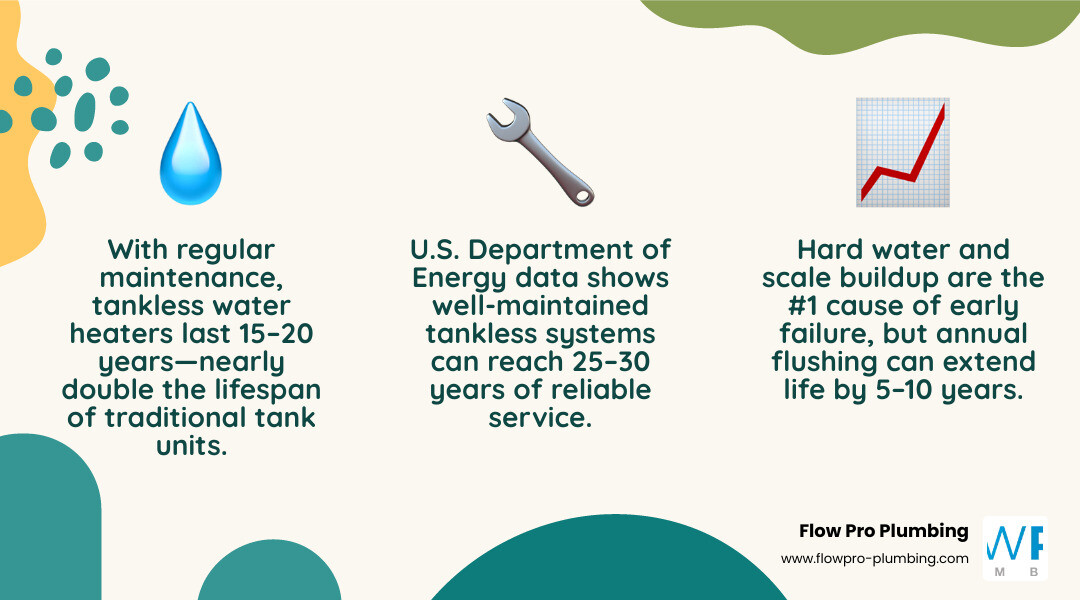
Most tankless water heaters last 15 to 20 years with proper care. That’s nearly double the lifespan of a traditional tank water heater, which typically lasts just 8 to 12 years. According to the U.S. Department of Energy, most tankless units have a life expectancy of more than 20 years — and well-maintained systems can reach 25 to 30 years of reliable service.
Here’s a quick breakdown:
| Condition | Expected Lifespan |
|---|---|
| Tankless — with regular maintenance | 15–20 years (up to 25–30 years) |
| Tankless — without maintenance | 8–12 years |
| Traditional tank — with maintenance | 8–12 years |
| Traditional tank — without maintenance | 6–8 years |
The difference between a 10-year unit and a 25-year unit often comes down to one thing: how well it’s maintained. Water quality, installation, usage patterns, and annual servicing all play a major role in whether your system reaches its full potential — or falls short of it.
In this guide, we’ll walk you through everything you need to know: what shortens a tankless water heater’s life, what extends it, and how to recognize the warning signs before a small problem becomes a costly failure.
I’m Jesse Delgado, owner of Flow Pro Plumbing in Brentwood, California, and I’ve spent years helping homeowners across Contra Costa County understand exactly how long a tankless water heater lasts — and what it takes to get every year out of it. Whether you’re evaluating a new installation or trying to protect the system you already have, this guide gives you the honest, practical information you need to make a confident decision.
Explore more about how long does a tankless water heater last:
- how does a tankless water heater work
- tankless hot water heater repair
- tankless water heater pros and cons
Tank vs. Tankless: How Long Does a Tankless Water Heater Last?
When we talk about water heater lifespans, the comparison between traditional tanks and modern tankless systems is night and day.
Traditional tank water heaters are constantly under stress. They hold 40 to 50 gallons of water at a high temperature 24 hours a day, 7 days a week. This constant exposure to standing water inevitably leads to sediment buildup, rust, and internal corrosion. Over time, the protective anode rod inside the tank dissolves, leaving the steel tank vulnerable. Once the tank rusts through and begins to leak, there is no repairing it — the unit must be replaced. Because of this built-in vulnerability, traditional tanks usually call it quits after 8 to 12 years.
Tankless water heaters, on the other hand, are engineered for long-term durability. They don’t store water. Instead, they heat water instantly on demand using a high-powered burner or electrical element. When you turn off the hot water faucet, the system goes dormant. This design virtually eliminates the risk of standby heat loss and dramatically reduces water-based corrosion inside the unit.
By eliminating the giant tank of standing water, tankless systems avoid the rapid sediment accumulation that dooms traditional systems. Furthermore, tankless heaters are built with easily replaceable individual parts. If a control board, flow sensor, or heating element goes bad on a tankless unit, we can swap out that specific component to keep the system running. With a traditional tank, a single leak in the shell means the whole water heater is garbage.
This fundamental design difference is why tankless systems easily double the lifespan of their tank-style counterparts. To help you weigh your options, we’ve broken down the key differences below:
| Feature | Traditional Tank Water Heaters | Tankless Water Heaters |
|---|---|---|
| Average Lifespan | 8 to 12 years | 15 to 20+ years (up to 30 years) |
| Energy Efficiency | High standby energy loss | 24% to 34% more efficient (under 41 gal/day) |
| Primary Failure Mode | Tank rust, corrosion, and catastrophic leaks | Mineral scale buildup on heat exchanger |
| Repairability | Low (leaking tank cannot be repaired) | High (individual components can be replaced) |
| Space Required | Large footprint (up to 6 feet tall) | Compact, wall-mounted (2 to 3 feet tall) |
If you are trying to decide which system fits your household goals, check out our comprehensive breakdown of Which is Better Tankless or Tank Water Heaters Explained. If you suspect your current system is on its last legs, read through How Old is Too Old The Ultimate Guide to Water Heater Lifespans to evaluate your risks. For a complete look at how these systems improve your daily comfort, check out our Tankless Water Heater Benefits Guide.
Key Factors That Determine Tankless Longevity
While a tankless system is designed to go the distance, it isn’t indestructible. Several real-world factors dictate whether your unit will celebrate its 20th birthday or break down prematurely.
Understanding these variables helps you take proactive steps to protect your investment:
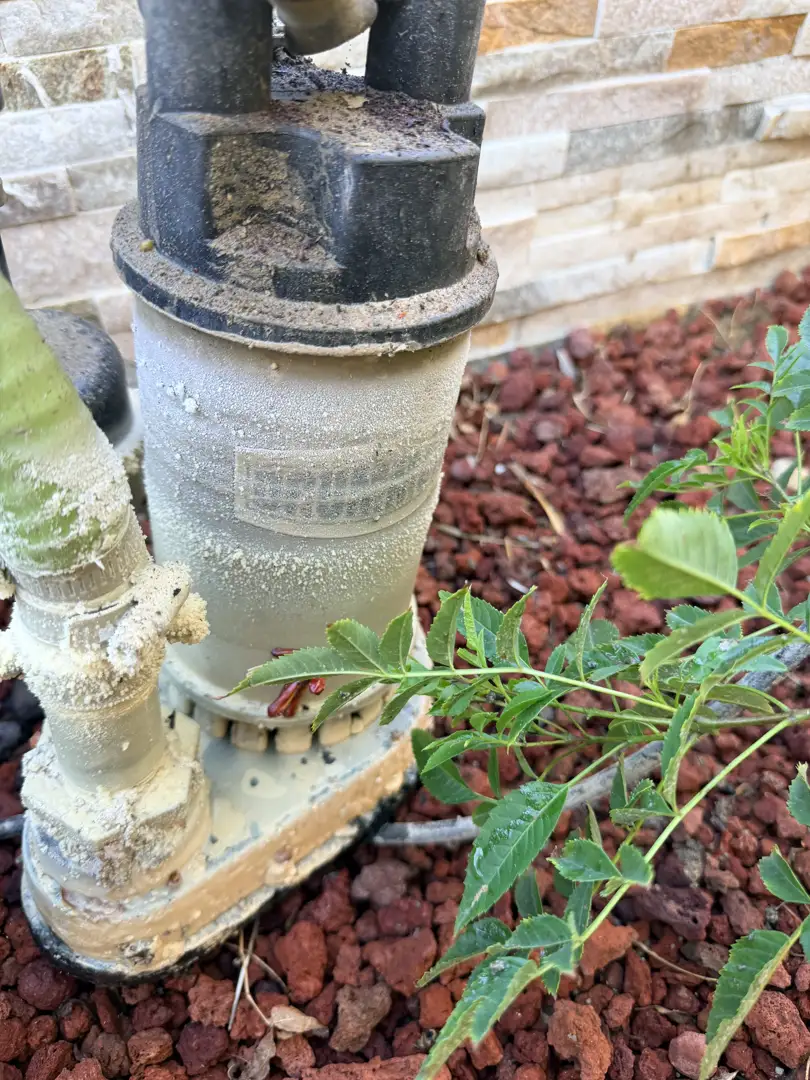
- Water Quality: The minerals dissolved in your home’s water supply are the single greatest threat to your tankless water heater. High levels of calcium and magnesium lead to scale buildup, which acts as an insulating barrier inside the heat exchanger.
- Installation Quality: A tankless water heater requires precise gas pressure, correct venting, and proper sizing to run efficiently. Poor installation causes the burner to short-cycle or run too hot, putting unnecessary thermal stress on the heat exchanger.
- Usage Volume: A large family using hundreds of gallons of hot water daily will naturally put more wear and tear on the system’s components than a single-occupant household.
- Climate & Installation Location: Units installed in unconditioned spaces (like a freezing garage or an outdoor wall exposed to the elements) have to work much harder to raise incoming water temperatures during winter. Keeping the unit in a tempered space reduces operational stress.
To weigh the potential challenges alongside the benefits, take a look at our Tankless Water Heater Downsides Guide.
How long does a tankless water heater last with hard water?
In areas with hard water, mineral scale is the ultimate “silent killer” of tankless water heaters.
When hard water passes through the ultra-hot heat exchanger, dissolved calcium and magnesium crystallize and cling to the metal surfaces. Over time, this scale forms a thick, rocky crust. Because scale is a poor conductor of heat, the heat exchanger has to get much hotter to warm the water to your desired temperature.
This chronic overheating causes “thermal fatigue.” The metal heat exchanger expands and contracts excessively under the extreme heat, eventually leading to microscopic cracks, water leaks, and total system failure. Without regular descaling or water treatment, hard water can cut a tankless unit’s lifespan in half — causing it to fail in just 7 to 10 years.
Fortunately, this is entirely preventable. Installing a water softener or utilizing a dedicated scale-prevention system removes these minerals before they ever reach your water heater. For a deeper dive into troubleshooting these mineral-related issues, read our Tankless Water Heater Problems Guide.
How long does a tankless water heater last based on fuel type?
Your choice of fuel — gas or electric — also influences how long your system will last and what kind of attention it will need over the years.
Gas Tankless Water Heaters
Gas-fired units typically last 20 to 25 years when properly maintained. They utilize robust stainless steel or copper heat exchangers to transfer heat from a gas burner directly to the water. However, because they rely on combustion, they have more moving parts and require more complex venting systems.
Over time, gas burners can accumulate carbon soot, and exhaust vents can become blocked by debris or nesting pests. Gas units require regular inspections of the combustion chamber, fan blower, and venting system to ensure safe, long-term operation.
Electric Tankless Water Heaters
Electric tankless units have an average lifespan of 15 to 20 years. Because they use electric heating elements immersed directly in the water flow, they don’t produce combustion byproducts, meaning they don’t require venting or burner cleanings.
However, electric elements are highly susceptible to direct scale accumulation, which can cause them to burn out prematurely. Additionally, electric tankless units require an immense amount of electrical power (often requiring multiple 60-amp circuits), which puts a heavy load on the unit’s electrical relays and control boards.
For a comprehensive comparison of how these fuel types match up in real-world homes, check out The Great Water Heater Debate Gas vs Electric.
Essential Maintenance to Maximize Your Investment
If you want your tankless water heater to easily cross the 15- or 20-year finish line, regular maintenance is not optional. Think of it like changing the oil in your car — skip it, and you’re fast-tracking a major engine failure.
A comprehensive maintenance routine includes several key tasks:
- Annual Flushing and Descaling: This is the most crucial maintenance step. Flushing the system with a food-grade descaling solution (like citric acid or virgin white vinegar) dissolves the accumulated calcium and magnesium, restoring the heat exchanger to pristine condition.
- Cleaning the Water Inlet Filter: Tankless units have a small screen filter at the water inlet to catch sediment and rust particles from the main water line. If this screen gets clogged, water flow drops, causing the unit to work harder or shut down completely.
- Inspecting the Air Intake and Exhaust: For gas units, keeping the air intake and exhaust vents clear of dust, cobwebs, and debris ensures proper combustion and prevents dangerous exhaust backdrafts.
- Sensor Calibration and Burner Cleaning: Over time, flame sensors and flow sensors can accumulate dust or oxidation. Having a professional clean and calibrate these components prevents ignition failures and erratic water temperatures.
For a step-by-step breakdown of what a proper service looks like, refer to our Tankless Water Heater Maintenance Guide. If you live in our primary service area, you can learn more about local upkeep needs at Water Heater Maintenance Brentwood.
Warning Signs and the Repair vs. Replace Decision
How do you know when your tankless water heater is simply asking for a quick tune-up versus when it’s time to start shopping for a replacement? Recognizing the early warning signs can save you from an unexpected cold shower.
Keep an eye out for these common red flags:
- Fluctuating Water Temperatures: If you experience the dreaded “cold water sandwich” (where the water goes from hot to freezing cold and back again), your unit’s flow sensor or heat exchanger may be failing.
- Frequent Error Codes: Modern tankless heaters are highly intelligent. They will display specific error codes on their digital screens when something is wrong. If you are constantly resetting the unit to clear error codes, there is an underlying issue that needs professional attention.
- Reduced Hot Water Pressure: If your home has great cold-water pressure but weak hot-water pressure, mineral scale has likely narrowed the passages inside your heat exchanger.
- Strange Noises: Clicking, humming, or rumbling noises during operation often point to a failing fan motor, burner ignition issues, or severe scale buildup.
When deciding whether to repair or replace your system, we recommend using the 50% Rule. If your tankless water heater is over 15 years old and a single repair costs more than half the price of a brand-new system, replacing the unit is almost always the smarter, more cost-effective long-term move. Newer models also offer improved efficiency, faster heating times, and advanced self-diagnostic features.
To help you make the right choice, read through The Great Water Heater Debate and When to Finally Say Goodbye. For immediate troubleshooting tips, check out our Water Heater Repair Brentwood Tips.
Frequently Asked Questions About Tankless Lifespans
Can a tankless water heater last 30 years?
Yes, it is entirely possible for a premium tankless water heater to last 30 years, but it requires a “perfect storm” of ideal conditions. To hit the three-decade mark, the unit must be installed in a conditioned indoor space, run on softened water (virtually eliminating scale), use a high-quality stainless steel heat exchanger, and receive meticulous annual maintenance from professional plumbers.
What is the primary cause of early tankless failure?
The leading cause of premature tankless water heater failure is scale buildup resulting from hard water and a lack of regular flushing. When scale insulates the heat exchanger, the metal overheats, warps, and eventually cracks. Once the heat exchanger leaks water onto the internal electronics, the system is usually beyond repair.
Does a water softener extend tankless lifespan?
Absolutely. A water softener removes calcium and magnesium ions from your water supply, replacing them with sodium ions that do not form scale. By preventing scale from ever entering your tankless water heater, a water softener protects the heat exchanger, maintains peak energy efficiency, and can easily add 5 to 10 years to your system’s operational life.
Conclusion
Investing in a tankless water heater is one of the smartest upgrades you can make for your home’s comfort, efficiency, and long-term value. With an average lifespan of 15 to 20 years — and the potential to reach 30 years under the right conditions — these systems deliver endless hot water while cutting down on your energy footprint.
However, achieving that maximum lifespan requires professional installation, an understanding of your local water quality, and a commitment to routine maintenance.
At Flow Pro Plumbing, we pride ourselves on building long-term customer relationships through fast, clean, and courteous service. As a locally owned and licensed team, we understand the specific water conditions and plumbing needs of our neighbors throughout Contra Costa County. Whether you are in Brentwood, Oakley, Antioch, Discovery Bay, Pittsburg, Concord, or any of our surrounding service areas, we are here to provide the peace of mind you deserve.
Don’t wait for your hot water to run out. Whether you need a brand-new installation or a professional system flush to protect your existing unit, we’ve got you covered. Schedule your tankless water heater service with Flow Pro Plumbing today!