

What Homeowners in the East Bay Area Need to Know About Tankless Water Heaters
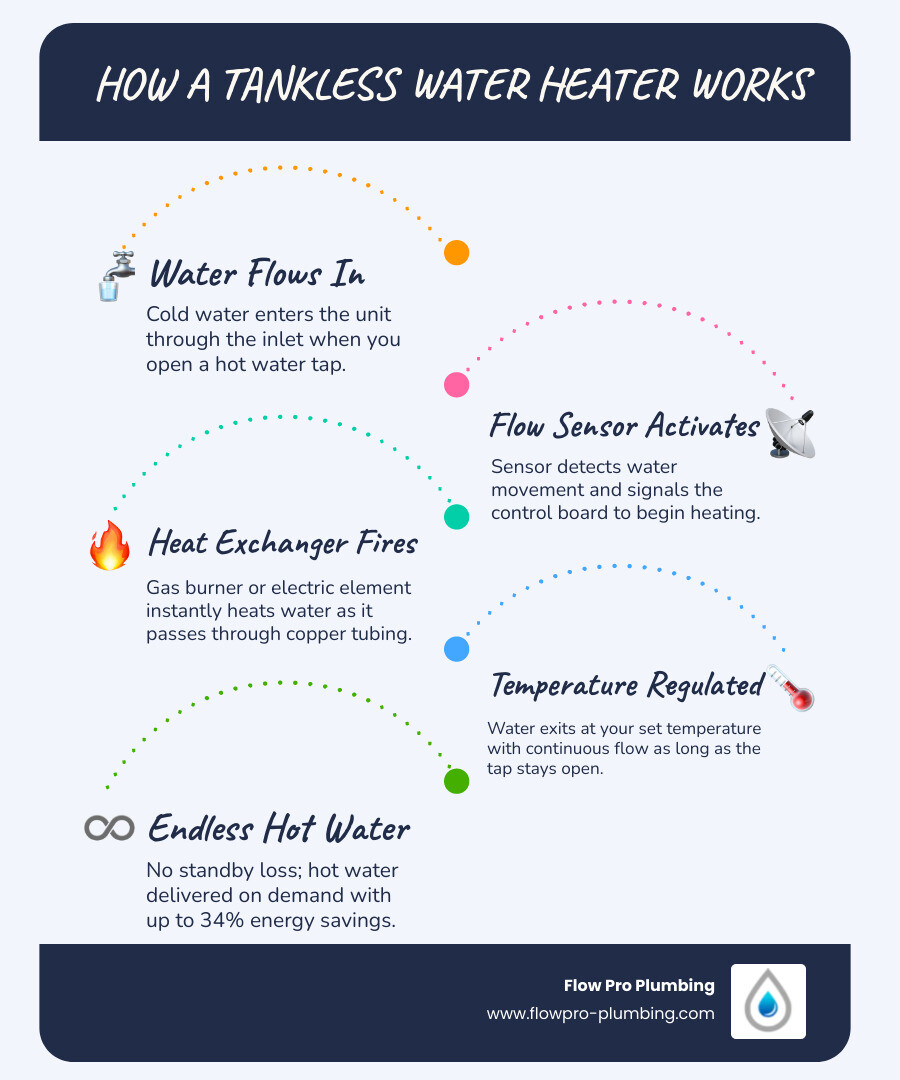
How does a tankless water heater work? Here’s the short answer:
- Water flows in — You open a hot tap, and cold water enters the unit.
- A flow sensor activates — The sensor detects movement and signals the control board to start heating.
- The heat exchanger fires up — A gas burner or electric element heats the water instantly as it passes through.
- Hot water flows out — Water exits at your set temperature, continuously, for as long as the tap is open.
No storage tank. No standby heat loss. Hot water only when you actually need it.
That’s the core mechanic — and it’s why so many homeowners across Brentwood, Oakley, and the wider East Bay Area are making the switch. Tankless units eliminate the energy waste that comes from keeping 40 to 80 gallons of water hot around the clock, which is exactly what a traditional tank heater does every single day. According to the U.S. Department of Energy, homes that use 41 gallons or less of hot water daily can see energy savings of 24% to 34% by going tankless. Even high-usage households using around 86 gallons per day can expect gains of 8% to 14%.
But understanding the mechanics matters before you commit. Knowing what’s happening inside the unit helps you size it correctly, maintain it properly, and avoid the most common frustrations — like lukewarm water during a busy morning or unexpected shutdowns in winter.
I’m Jesse Delgado, owner of Flow Pro Plumbing and a licensed plumber with over a decade of hands-on experience helping East Bay homeowners understand how a tankless water heater works and whether it’s the right fit for their home. In the sections below, I’ll walk you through the full process — step by step, without the jargon.
Easy how does a tankless water heater work word list:
How Does a Tankless Water Heater Work? The 4-Step Process
To understand the magic behind on-demand hot water, we need to look under the hood. Unlike a traditional tank that relies on a large reservoir and a thermostat, a tankless unit is a sophisticated piece of engineering designed for speed and efficiency. It stays in a “ready” state, consuming almost no energy until the moment you turn on a faucet.
When you choose a Tankless Water Heater Installation Guide, you’re looking at a system that prioritizes flow over storage. Here is the technical breakdown of that 4-step journey.
Step 1: Detecting Water Flow
The process begins the millisecond you turn the hot water handle on your shower or sink. Cold water travels from your home’s main line and enters the unit through the cold water inlet pipe. Inside, a high-precision flow sensor (or turbine) detects this movement.
This sensor is the “brain” of the operation. It doesn’t just see that water is moving; it measures exactly how much water is flowing in Gallons Per Minute (GPM). Most units have a “minimum flow rate” required for activation—usually around 0.5 GPM. If you only crack the faucet a tiny bit, the unit might not fire up. But once that threshold is met, the sensor sends a signal to the internal control board to wake up the system.
Step 2: Igniting the Heat Source
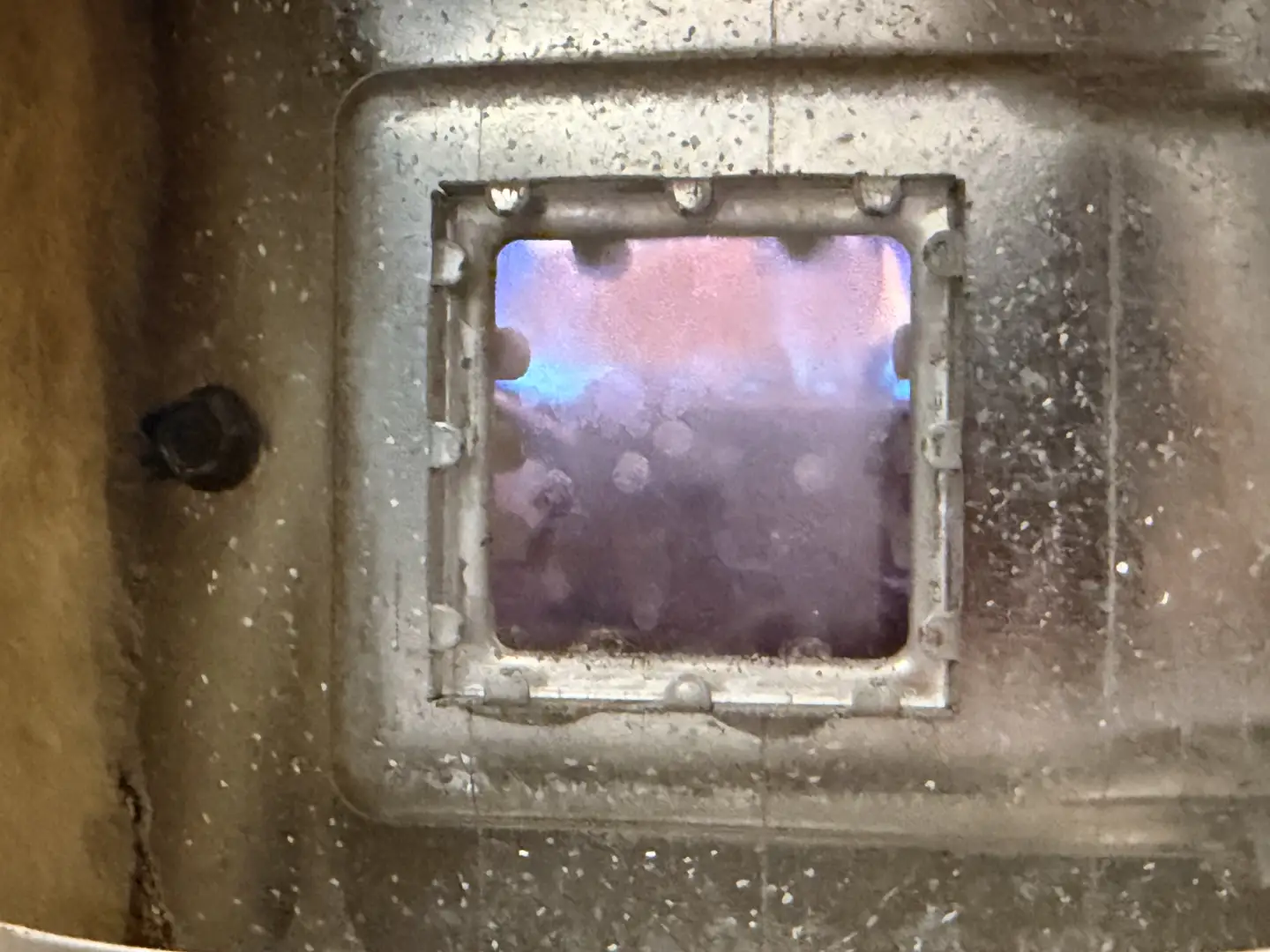
Once the control board receives the signal from the flow sensor, it initiates the heating sequence. For a gas-powered unit, the control board opens the gas valve and triggers an electronic ignition (much like a modern stove) to light the gas burner. There are no standing pilot lights here, which is one of the many Tankless Water Heater Benefits Guide that saves you money on your monthly utility bill.
In an electric model, the control board sends a surge of electricity to heavy-duty heating elements submerged in the water path. The unit calculates exactly how much energy is needed based on the incoming water temperature and the desired set point on your thermostat. If you’re just washing your hands, it might only use one element; if you’re running two showers, it will “stage” all available elements to meet the demand.
Step 3: The Heat Exchanger at Work
This is where the actual “heating” happens. The water doesn’t just sit in a chamber; it travels through a heat exchanger. This component usually consists of a series of tightly looped copper tubing or stainless steel pipes.
Copper is favored for its incredible thermal conductivity, allowing heat from the gas burner or electric elements to transfer to the water almost instantly. As the cold water winds its way through these hot coils, its temperature rises rapidly. In a gas unit, the hot combustion gases wrap around these tubes, transferring their energy to the water before the gases are safely vented outside.
Step 4: Delivering Endless Hot Water
Finally, the heated water reaches the outlet. But before it leaves the unit, a temperature sensor checks to see if the water matches your desired setting (usually 120°F). If the water is too hot, the unit may use a mixing valve to add a tiny bit of cold water to ensure safety and precision.
The water then travels through your pipes to your open faucet. As long as the water keeps flowing, the unit keeps heating. This is why we call it “endless” hot water. Once you turn off the tap, the flow sensor stops detecting movement, the control board shuts down the burner or elements, and the unit goes back to sleep.
Comparing Tankless vs. Traditional Tank Systems
When we talk to homeowners in Antioch or Pittsburg, the big question is usually: “Is it worth the switch?” The answer often lies in the comparison between the two technologies.
| Feature | Tankless Water Heater | Traditional Tank Heater |
|---|---|---|
| Energy Efficiency | 24%–34% higher (for low use) | Significant standby heat loss |
| Lifespan | 20+ years | 10–15 years |
| Space Required | Small, wall-mounted | 40-80 gallon footprint |
| Hot Water Supply | Endless (within GPM limit) | Limited to tank size |
| Maintenance | Annual descaling required | Occasional flushing |
The most significant difference is standby heat loss. A traditional tank is like a giant pot of water on a stove that stays on low heat all day and night. Even when you’re at work or sleeping, that tank is firing up to keep those 50 gallons warm. A tankless unit eliminates this entirely. Furthermore, while a tank heater might start leaking and flood your garage after 12 years, a well-maintained tankless unit can easily last two decades. For a deeper dive, check out our article on Which Is Better Tankless or Tank Water Heaters Explained.
Different Types: Gas, Electric, and Condensing Models
Not all tankless heaters are built the same. Depending on your home’s infrastructure in Concord or Discovery Bay, you might choose between several types.
- Gas Tankless: These are the workhorses of the industry. They generally offer higher flow rates (GPM) than electric models, making them better for whole-house use. They require a gas line and a dedicated venting system to move exhaust outside.
- Electric Tankless: These are often smaller and easier to install since they don’t require venting. However, they demand a lot of power—often requiring an upgrade to your home’s electrical panel. They are excellent as “point-of-use” heaters for a remote bathroom or a kitchen sink.
- Indoor vs. Outdoor: In our California climate, outdoor models are quite popular. They save even more indoor space and don’t require complex indoor venting, as they can breathe freely outside.
If you are considering a switch, our Tankless Water Heater Installation page covers what to expect during the process.
Understanding How a Tankless Water Heater Works with Condensing Technology
If you’re looking for the absolute peak of efficiency, you want a condensing model. Standard tankless units lose some heat through the exhaust vent. A condensing unit features a secondary heat exchanger that captures that “waste” heat and uses it to pre-heat the incoming cold water.
This process is so efficient that the exhaust gases cool down significantly—so much so that they turn into a watery “condensate.” Because the exhaust is cooler, these units can often be vented with inexpensive PVC pipe rather than high-temperature metal. These models are typically ENERGY STAR certified and can be about 9% more efficient than non-condensing gas models.
Gas vs. Electric Tankless Mechanics
The “engine” of these units differs greatly. Gas units are rated in BTUs (British Thermal Units). A whole-home gas unit might range from 150,000 to 199,000 BTUs. They require a larger gas line than your old tank heater to provide that massive “burst” of heat needed for instantaneous delivery.
Electric units are rated in kilowatts (kW). A whole-house electric unit can draw 15,000 to 36,000 watts. Because they have to heat water using resistance coils, they often struggle in very cold climates or in large homes where multiple showers run at once. We usually recommend gas for our customers in the East Bay who have large families.
Sizing and Maintenance for Long-Term Efficiency
Sizing a tankless water heater isn’t about how many gallons it holds; it’s about the Flow Rate (GPM) and Temperature Rise.
To size a unit, we add up the GPM of all fixtures you might use at once. For example:
- Standard Shower: 2.5 GPM
- Kitchen Sink: 1.5 GPM
- Dishwasher: 1.0 GPM
- Total Needed: 5.0 GPM
If your unit is only rated for 4.0 GPM, and you try to run all three, your shower will get cold. This is why professional sizing is critical. Maintenance is equally vital. Because these units heat water so quickly, minerals like calcium and magnesium can “flash” out of the water and create scale buildup inside the heat exchanger. We recommend a Tankless Water Heater Maintenance Guide that includes an annual descaling flush to keep the unit running at 100% efficiency.
How Does a Tankless Water Heater Work in Cold Climates?
Even in California, winter groundwater temperatures can drop. In areas like Oakley or Brentwood, the incoming water might be 50°F in January but 70°F in July.
If you want your shower at 120°F, the unit has to work much harder in the winter to achieve a 70-degree “temperature rise.” This can actually lower your available GPM. A unit that provides 7 GPM in the summer might only provide 4.5 GPM in the winter. If you experience issues during a cold snap, you might need a Tankless Water Heater Repair Oakley CA to check if the unit is struggling with scale or if it’s simply undersized for the winter load.
Frequently Asked Questions
Do tankless water heaters provide truly endless hot water?
Yes, but with a caveat. They provide endless hot water as long as you stay within the unit’s GPM capacity. You can take a 3-hour shower and the water will never get cold. However, if you try to take three 20-minute showers simultaneously on a unit only sized for two, the water temperature will drop for everyone. It’s “endless,” not “infinite.”
What are the main downsides of going tankless?
The most common complaint is the “cold water sandwich.” This happens when you turn the water off and then right back on; a small pocket of cold water that was in the unit during the brief shutdown travels through the line. Many modern units, like those from Rheem or Navien, use “Hot Start Programming” or small internal buffer tanks to solve this. Additionally, the upfront installation is more complex. You can read more in our Tankless Water Heater Downsides Guide.
How long do these units typically last?
You can expect a high-quality tankless water heater to last 20 to 25 years. This is roughly double the lifespan of a traditional tank. The key to hitting that 20-year mark is annual maintenance. Without descaling, the heat exchanger can overheat and crack, leading to an early death for the machine.
Conclusion: Making the Switch in the East Bay
Understanding how does a tankless water heater work is the first step toward a more efficient, comfortable home. By eliminating the bulky tank and heating water only when you need it, you save space, reduce energy bills, and enjoy the luxury of a shower that never runs cold.
At Flow Pro Plumbing, we’ve built our reputation on being the friendly, licensed experts that East Bay homeowners trust. Whether you are in Brentwood, Oakley, Antioch, Discovery Bay, Pittsburg, or Concord, our team is ready to help you choose the right unit and ensure it’s installed to the highest standards. We pride ourselves on fast response times, clear communication, and workmanship that lasts.
Ready to reclaim your closet space and upgrade your home’s efficiency? Schedule your tankless service today to ensure your hot water is always there when you need it!