

The Gas vs Electric Water Heater Comparison Every Homeowner Should See
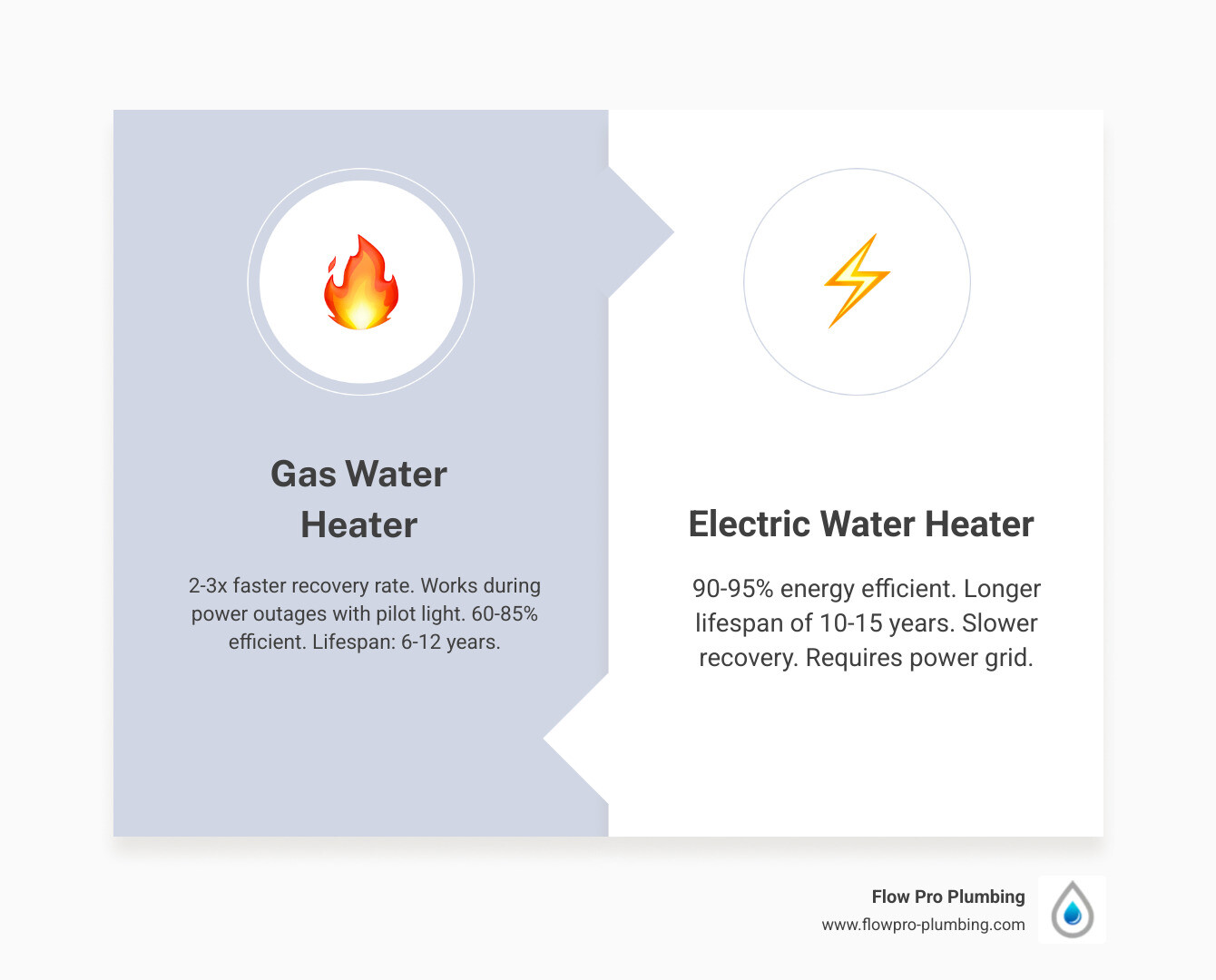
A gas vs electric water heater comparison comes down to five key factors most homeowners care about:
| Factor | Gas Water Heater | Electric Water Heater |
|---|---|---|
| Heating Speed | 2-3x faster recovery | Slower recovery rate |
| Energy Efficiency | 60-85% efficient | 90-95% efficient |
| Lifespan | 6-12 years | 10-15 years |
| Power Outage | Works with pilot light | Does not work |
| Best For | Large households, high demand | Small households, simple setup |
Your water heater quietly does one of the most important jobs in your home. Every shower, load of dishes, and load of laundry depends on it. Yet most homeowners only think about it when something goes wrong — like when the hot water runs out mid-shower, or worse, when it stops working entirely.
Choosing between gas and electric isn’t just about picking a fuel type. It affects how fast your water heats back up after back-to-back showers, how much you spend every month, how long the unit lasts, and whether you’ll have hot water during a power outage. These are real, everyday differences that add up over the life of the unit.
I’m Jesse Delgado, owner of Flow Pro Plumbing in Brentwood, California, and I’ve spent over a decade helping East Bay homeowners navigate decisions like this gas vs electric water heater comparison — drawing on a lifetime in the trade that started working alongside my father on residential jobsites. In the sections below, I’ll walk you through everything you need to know to make the right call for your home.
The Core Gas vs Electric Water Heater Comparison
When we sit down with a family in Antioch or Oakley to discuss a new installation, the first thing we look at is the energy source. Water heating is no small matter; it typically accounts for about 17% to 18% of the average home’s energy use. Whether you choose a flame or a heating element changes the DNA of how your home functions.
Gas water heaters typically run on natural gas or propane. They use a burner assembly located at the bottom of the tank to create a flame that heats the water from below. On the flip side, electric models use high-voltage electric resistance heating elements that sit directly inside the water tank, much like the coils in an electric oven or a toaster.
At Flow Pro Plumbing, we see both types daily. While gas has traditionally been the go-to for larger homes in the East Bay, modern electric technology is quickly closing the gap.
Operational Differences
The way these two units “wake up” to heat your water is fundamentally different. Standard gas water heaters often utilize a standing pilot light—a small, constant flame—to ignite the main burner when the thermostat calls for heat. However, many modern high-efficiency gas units now use electronic ignition to save fuel. Once ignited, the combustion gases travel through a central flue, heating the water as they rise before being vented out of the home.
Electric water heaters are much simpler. They don’t have burners or flues. Instead, they feature upper and lower heating coils. When the water temperature drops, the thermostat sends electricity to these coils, which get incredibly hot and transfer that heat directly into the water. Because there is no combustion, there is no need for a chimney or vent, making the operation much quieter and “cleaner” in terms of indoor air quality.
Infrastructure Requirements
Before you get your heart set on one or the other, we have to look at what your home can actually handle. A gas water heater requires a dedicated gas line and a proper venting system to safely move carbon monoxide and other combustion byproducts out of your house. If you are looking to install a gas unit where one didn’t exist before, you’ll need to consult our Gas Line Repair and Installation Guide to understand the scope of adding those lines.
Electric units have their own “heavy lifting” to do. They require a dedicated 240-volt circuit. If your electrical panel is already crowded—common in some of our older Brentwood or Concord homes—you might need an upgrade to handle the 30-amp load a standard electric water heater demands.
Performance and Recovery: Which Heats Faster?
If you have a house full of teenagers or frequently host guests in Discovery Bay, “recovery rate” is the most important term you’ll learn today. Recovery rate refers to how many gallons of water the heater can raise by 90 degrees Fahrenheit in one hour.
| Feature | Gas Tank (50 Gal) | Electric Tank (50 Gal) |
|---|---|---|
| Recovery Rate | 30–45 Gallons/Hour | 14–20 Gallons/Hour |
| Heating Time | 30–40 Minutes | 60–90 Minutes |
| Household Size | 4–6 People | 2–4 People |
In any gas vs electric water heater comparison, gas is the undisputed champion of speed. Because a gas burner can generate intense heat almost instantly, it can recover a 50-gallon tank in about half the time it takes an electric unit.
Why Recovery Rate Matters in a Gas vs Electric Water Heater Comparison
Imagine this: It’s Monday morning. You take a shower, your spouse takes a shower, and then the dishwasher starts. If you have an electric heater, the third person in line is likely going to have a very brisk, cold surprise. Electric elements simply take longer to bring cold incoming water up to 120 degrees.
For large households with peak demands, gas is often the more practical choice. It ensures that even during back-to-back usage, the “First Hour Rating” (the total amount of hot water the unit can supply in its first hour of operation) remains high. If you find yourself constantly running out of hot water, it might not be a fuel problem—it could be a repair issue. You can learn more about these signs in our guide to Water Heater Repair and Installation.
Reliability During Power Outages
Living in Northern California means being prepared for the occasional power shut-off or storm-related outage. This is where the gas vs electric water heater comparison takes a turn toward reliability.
Traditional gas water heaters with a standing pilot light and a mechanical gas valve do not require electricity to operate. This means while the lights are out, you can still enjoy a hot shower. However, be aware that many modern “power-vent” gas heaters or those with electronic ignitions do require a small amount of electricity to function. Standard electric water heaters, unfortunately, are completely sidelined during a blackout.
Efficiency and Environmental Considerations
When we talk about efficiency, we usually look at the Energy Factor (EF) or the newer Uniform Energy Factor (UEF). This rating tells you how much of the energy put into the heater actually ends up as hot water.
Electric water heaters are technically more efficient at the “point of use.” They convert nearly 98% of the electricity they consume into heat because there is no venting process. Gas water heaters lose a significant amount of heat through the flue—standard models are often only 60% to 70% efficient, though high-efficiency units can reach 80% or more.
If you are looking for the ultimate in efficiency, you might want to Explore Tankless Water Heaters. These units only heat water when you turn on the tap, eliminating “standby heat loss”—the energy wasted keeping a big tank of water hot while you’re asleep or at work.
Maximizing Efficiency in Your Gas vs Electric Water Heater Comparison
For those who want to stay electric but hate high utility bills, the Hybrid Heat Pump water heater is a game-changer. Instead of just using resistance coils, it pulls heat from the surrounding air and moves it into the tank. These units can be 200% to 300% efficient.
Furthermore, electric heaters are the perfect partner for homes in Brentwood or Walnut Creek with solar panels. By pairing your water heater with renewable energy, you can significantly reduce your home’s carbon footprint. To see if this path is right for you, check out the Benefits of a Tankless Water Heater.
Safety and Ventilation
Safety is always our top priority at Flow Pro Plumbing. Gas water heaters come with the inherent (though small) risk of gas leaks or carbon monoxide buildup if the venting system fails or the burner isn’t maintained. This is why we always emphasize Safety with Gas Line Installation.
Electric water heaters eliminate the risk of combustion entirely. There’s no flame, no gas, and no risk of CO poisoning. The primary safety concern with electric units is electrical—ensuring the wiring is up to code and the unit is properly grounded to prevent shorts.
Longevity and Maintenance Needs
How long will your investment last? Generally, electric water heaters have a longer lifespan than gas models. Because gas burners create intense heat and corrosive exhaust, the tank and components tend to wear out faster. You can expect a gas tank to last 6 to 12 years, while an electric tank often reaches 10 to 15 years.
Average Lifespan Expectations
Regardless of the fuel type, the “silent killer” of water heaters in our area is sediment. Minerals in the water settle at the bottom of the tank, creating an insulating layer that makes the heater work harder and eventually causes the tank to crack.
Tankless models are the exception to the rule; they can last 20 years or more because they don’t store water that can lead to heavy sediment buildup. If you’re interested in a long-term solution, look into Tankless Water Heater Installation.
Routine Maintenance Tasks
To get the most out of your unit, we recommend a few simple tasks:
- Flush the Tank: Do this annually to remove sediment.
- Check the Anode Rod: This “sacrificial” rod attracts corrosion so your tank doesn’t. Replace it every 3–5 years.
- Test the T&P Valve: The Temperature and Pressure relief valve is a critical safety feature that prevents the tank from exploding.
- Gas-Specific Care: If you have gas, you also need to check the burner and ensure the vent pipe is clear. For more on gas-specific infrastructure, see our page on Gas Line Repair Installation.
Frequently Asked Questions about Water Heaters
Is it practical to switch from gas to electric?
It is possible, but it requires a plan. Switching from gas to electric usually involves capping the gas line, sealing the vent, and—most importantly—running a new 240V electrical line from your panel to the water heater. Conversely, switching from electric to gas requires installing a new gas line and a venting system through your roof or wall. While it’s a big project, many people find it worthwhile for the performance gains of gas or the efficiency of a heat pump. Here’s Why You Should Upgrade to a Tankless Water Heater if you are considering a major change.
Which type is safer for indoor installation?
Both are safe when installed by professionals like us. However, electric water heaters are often preferred for tight indoor spaces like closets or apartments because they don’t require air for combustion or a vent pipe. If you install a gas unit indoors, it must have adequate ventilation to prevent carbon monoxide from entering your living space.
How do tankless models change the comparison?
Tankless units flip the script. A gas tankless heater provides an endless supply of hot water, solving the recovery rate issue entirely. While electric tankless units exist, they often require massive electrical upgrades to heat water fast enough for a whole house in our climate. For most East Bay families, gas tankless is the gold standard for performance. You can Explore Tankless Water Heaters to see the different flow rates available.
Conclusion
Choosing the winner in the gas vs electric water heater comparison depends entirely on your home’s unique needs. If you have a large family in Brentwood and need hot water fast, gas is likely your best bet. If you live in a smaller home in Pleasant Hill or Walnut Creek and want a simpler, longer-lasting unit with lower maintenance, electric might be the way to go.
At Flow Pro Plumbing, we pride ourselves on being more than just installers; we are your neighbors. Whether you are in Oakley, Pittsburg, or Concord, our experienced and friendly team is here to help you weigh these factors and choose the unit that will keep your showers hot for years to come.
Don’t wait for a cold morning to realize your water heater is on its last legs. Schedule Water Heater Service in Brentwood today, and let us help you find the perfect fit for your home!