

Why Drains Clog — and What’s Actually Behind It
What causes drains to clog most often comes down to a short list of everyday culprits that build up quietly over time — until the water stops moving.
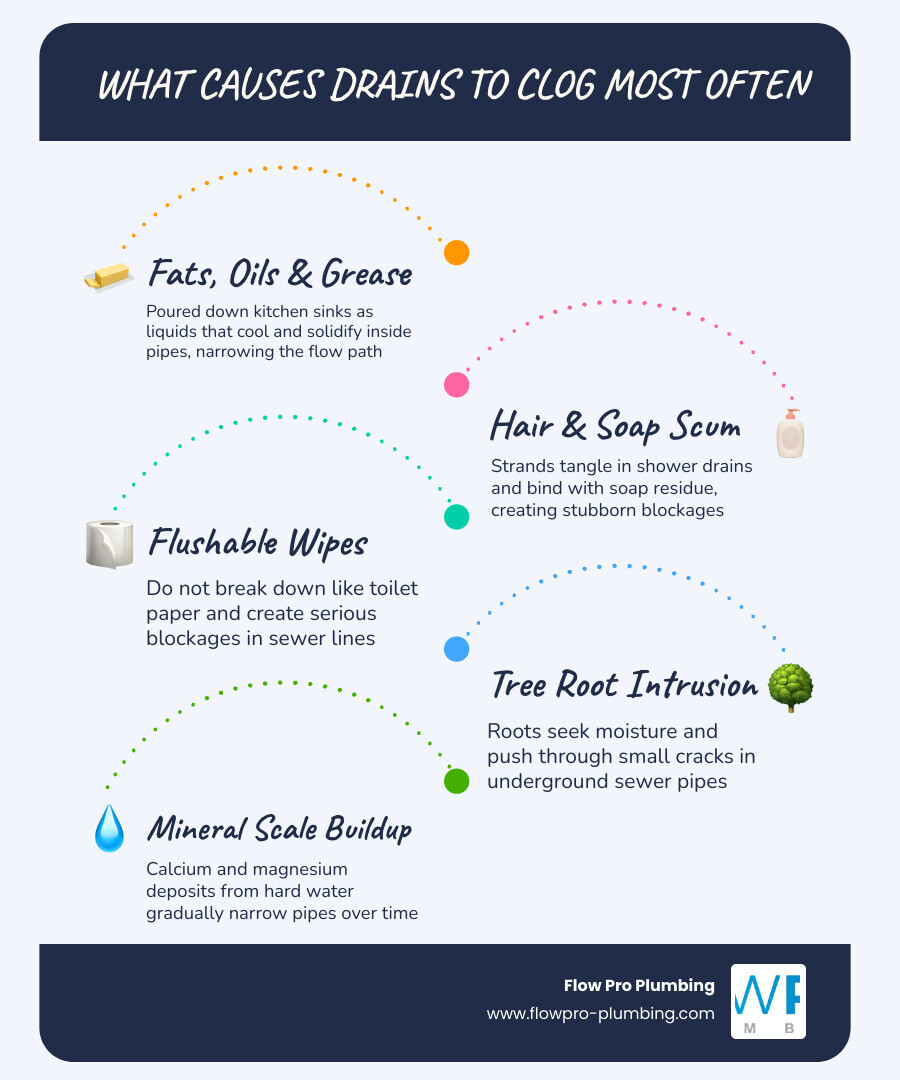
Here are the most common causes:
- Fats, oils, and grease (FOG) — poured down kitchen sinks as liquids, they cool and solidify inside pipes
- Hair and soap scum — strands tangle in shower and bathroom drains, binding together with soap residue
- Flushable wipes and hygiene products — these do not break down like toilet paper and create serious blockages
- Tree root intrusion — roots seek moisture and push through small cracks in sewer lines
- Mineral scale and hard water buildup — calcium and magnesium deposits narrow pipes over time, slowing flow
Most drain clogs don’t happen suddenly. A sink that drains slowly on Monday can be completely backed up by Friday. The buildup is gradual, driven by daily habits that seem harmless in the moment — rinsing a greasy pan, letting hair wash down the shower, or flushing a wipe labeled “safe to flush.” Over weeks and months, these materials accumulate on pipe walls, reduce the interior diameter, and eventually stop water flow entirely.
In the East Bay Area, homeowners in Brentwood, Oakley, and Antioch deal with this regularly — and the fix is almost always more straightforward when caught early. Whether the issue is in a kitchen sink, a bathroom shower drain, or deeper in the main sewer line, understanding what’s causing the blockage is the first step toward clearing it for good.
I’m Jesse Delgado, owner of Flow Pro Plumbing and a licensed plumber with over a decade of hands-on experience helping homeowners understand what causes drains to clog most often and how to address it the right way. Growing up working alongside my father on residential and commercial plumbing jobs gave me an early foundation in diagnosing exactly where and why clogs form — knowledge I bring to every service call we run across Contra Costa County.
What causes drains to clog most often basics:
- how to fix a clogged sink
- how to prevent clogged drains at home
- things you should never put down a drain
What Causes Drains to Clog Most Often?
To understand why our pipes constantly fight against blockages, we have to look at how a home’s plumbing system is structured. Think of your plumbing as a tree. The leaves and small twigs are your fixture-level drains—the kitchen sink, the bathroom shower, and the toilet. These small lines feed into slightly larger branch lines, which eventually run down into the trunk: your main sewer line.
When we talk about what causes drains to clog most often, the issue usually starts at the fixture level before migrating deeper into the system. If a clog is isolated to a single bathroom sink, it is a fixture-level clog. If flushing the toilet causes water to bubble up in your bathtub, the blockage has moved down into the branch line or the main sewer lateral.
Wastewater flow relies heavily on gravity and a very specific pipe slope. According to plumbing codes, wastewater pipes must have a downward slope of at least 1/4 inch per foot. If a pipe sags (often called a “belly”) or if the slope is off, water slows down, allowing heavy debris to settle to the bottom of the pipe. Once a small pile of sediment or grease forms, it acts like a speed bump, catching hair, soap scum, and food particles. If you want to dive deeper into protecting your system, check out our guide on how to Stop the Stop: How to Prevent Clogged Drains at Home.
5 Common Reasons for Blocked Pipes
Different rooms in your home face entirely different plumbing threats. Your kitchen sink deals with organic food waste and heavy cooking fats, while your bathroom drains contend with hair, dental hygiene products, and heavy soaps.
| Drain Location | Primary Clog Culprits | How the Clog Forms |
|---|---|---|
| Kitchen Sink | Fats, Oils, Grease (FOG), Coffee Grounds, Starchy Foods | Liquid fats cool, solidify, and catch food scraps |
| Bathroom Sink / Shower | Hair, Soap Scum, Toothpaste, Cosmetic Debris | Hair strands tangle in the drain grate and bind with sticky soap film |
| Toilets | “Flushable” Wipes, Paper Towels, Feminine Products | Non-woven fibers do not disintegrate and get stuck in the toilet trap |
| Main Sewer Line | Tree Roots, Mineral Scale, Pipe Corrosion | Roots enter through pipe joints; scale narrows the metal interior |
When these materials enter your plumbing, they trigger a physical process of pipe diameter reduction. It is a slow, compounding cycle. Every layer of soap scum or grease that sticks to the pipe wall creates a rougher surface. This rough texture makes it even easier for the next wave of debris to catch and stick. Over time, a three-inch pipe can easily be restricted to a one-inch opening, causing slow drainage and eventual backups. Let’s look at the five primary culprits behind this structural narrowing.
1. Fats, Oils, and Grease (FOG)
It is incredibly easy to make the mistake of pouring warm cooking oil or bacon grease down the kitchen sink. When it is hot, grease behaves like a harmless liquid. However, as soon as it enters your cool underground plumbing, a process of emulsification and re-solidification takes place.
The grease cools rapidly, transforming from a clear liquid into a thick, waxy solid that clings to the upper and side walls of your pipes. This waxy layer acts like a super-glue for anything else you wash down the sink. When food remnants, coffee grounds, and starchy residues like rice or pasta pass through, they get trapped in the sticky grease.
Even if you run hot water while pouring grease, you are simply pushing the problem further down the line into your main sewer lateral where the pipes are even colder. To protect your kitchen, read about Why Things You Should Never Put Down a Drain Cause Clogs and learn how to keep your sink clear with our tips on why you should Don’t Let Your Disposal Choke on These Common Kitchen Scraps.
2. Hair and Soap Scum
If grease is the king of kitchen clogs, hair is the undisputed ruler of bathroom blockages. Every time we shower, shave, or wash our hair, hundreds of tiny hair strands slip down the drain. Because hair is incredibly durable and does not decompose easily, it quickly gets caught on the crossbars of your drain grate or inside the P-trap.
Once a few strands of hair get stuck, they begin to catch soap scum. Soap scum is not just leftover soap; it is a chemical reaction. When the fatty acids and waxes in bar soap mix with the calcium and magnesium minerals in our local water, they form a sticky, chalky curd. This curd coats the hair, binding it together into a dense, fibrous mat that acts like a net inside your pipe.
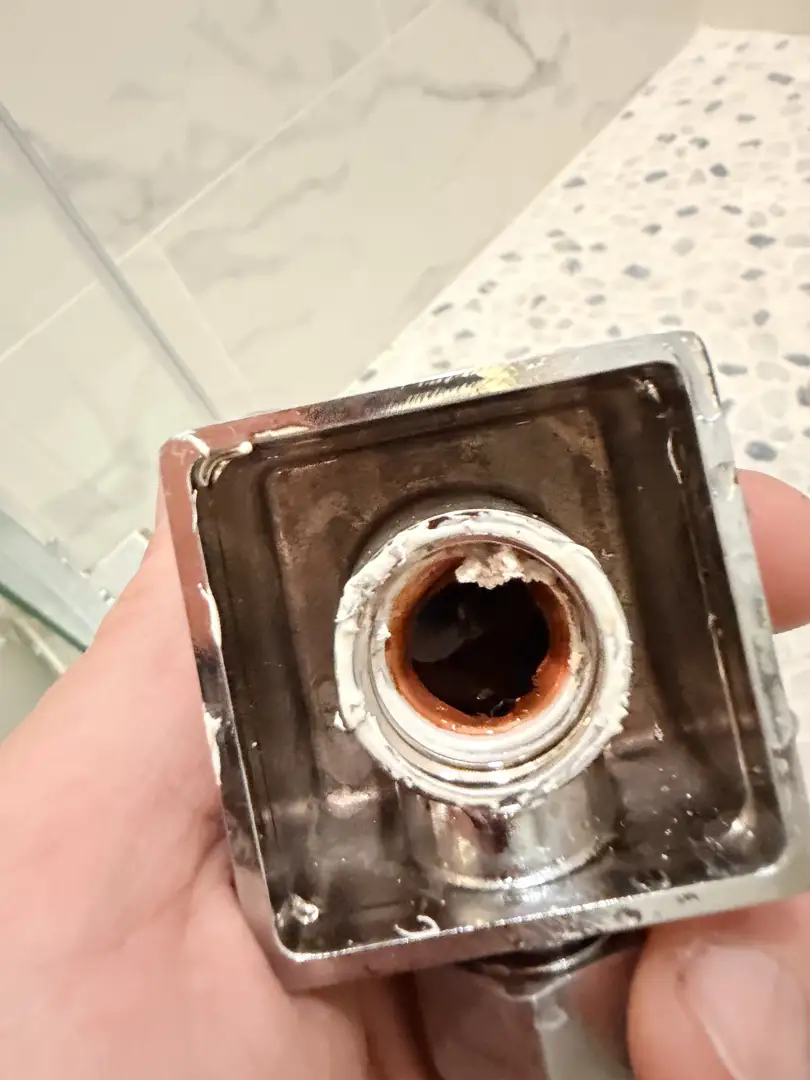
This combination of hair and soap residue is incredibly difficult to clear with simple flushing because it is anchored tightly to the metal or plastic parts of your P-trap. To stop this cycle before it starts, read our expert guide on How to Prevent Hair Clogs in Shower Drains for Good.
3. Flushable Wipes and Hygiene Products
One of the biggest plumbing myths of the modern era is the “flushable” wipe. While these wipes are technically capable of being flushed down a toilet bowl, they do not disintegrate in water.
Standard toilet paper is made from short wood fibers designed to break apart within seconds of hitting water. Non-woven wipes, baby wipes, paper towels, and feminine hygiene products are engineered to be strong, durable, and absorbent. They remain completely intact as they travel through your home’s drains.
When these products reach your toilet’s internal trap or the main sewer line, they snag on pipe joints, rough cast iron scale, or tree roots. Once one wipe snags, it creates a barrier that catches every subsequent wipe, piece of toilet paper, and solid waste that follows. This leads to sudden, messy toilet overflows. To understand more about how these blockages affect your toilet’s mechanics, explore our articles on Common Toilet Problems and Why Does My Toilet Keep Running?.
4. Tree Root Intrusion
For homeowners in established neighborhoods across Brentwood, Concord, and Walnut Creek, tree roots are a massive outdoor plumbing threat. Tree roots are highly sensitive to moisture and nutrients, both of which are constantly flowing through your underground sewer main.
As sewer pipes age—especially older clay, concrete, or cast-iron lines—they develop tiny hairline cracks or loose joints. As warm water flows through the pipe, moisture escapes into the surrounding soil. Nearby trees detect this moisture and send micro-roots toward the source.
Once a root finds a tiny crack, it forces its way inside. Inside the pipe, the root finds a perfect environment of water, oxygen, and nutrients. The root system expands rapidly, forming a thick, woody web that completely fills the pipe. This web catches toilet paper, waste, and grease, eventually causing a total sewer backup. Because this happens underground, it is almost impossible to diagnose without a professional sewer camera inspection.
5. Mineral Scale and Hard Water Buildup
Many parts of Contra Costa County have moderately hard to hard water. Hard water contains high concentrations of dissolved minerals, specifically calcium and magnesium.
Over time, as water heats up and cools down within your plumbing system, these minerals precipitate out of the water and cling to the interior walls of your pipes. This process is called mineral scaling. It is highly common in copper, galvanized steel, and cast-iron pipes.
As scale builds up, it forms a rough, white, rock-hard crust. This crust does two things: it narrows the physical space water has to flow through, and it creates a highly abrasive surface that catches hair, food particles, and soap scum. If your sinks are draining slower than they used to, mineral scale might be the hidden culprit. Learn how to address this gradual buildup with our Tips to Fix a Slow Draining Sink.
Warning Signs of a Developing Blockage
A total plumbing backup is rarely a sudden surprise. Your pipes will almost always give you several warning signs that a clog is forming deeper in the system. Recognizing these signs early can save you from a messy sewage backup in your home.
- Slow Drainage: If water pools around your feet in the shower or takes minutes to empty from the kitchen sink, a partial clog is already restricting flow.
- Gurgling Noises: When air is trapped in your pipes by a developing blockage, it has to push past the water to escape. This creates a distinct gurgling or bubbling sound from your drains or toilet bowl when you run water elsewhere.
- Foul Odors: Organic materials like food scraps, hair, and grease caught in your pipes will eventually begin to decay, sending a rotten egg or musty smell up through your drains.
- Water Backups: If running your washing machine causes water to back up into your kitchen sink, or if flushing your toilet causes water to rise in your shower, you are dealing with a serious main-line or branch-line blockage.
If you want to keep your home running smoothly, check out our comprehensive guide on How to Keep Your Home Clog-Free.
How Hair and Soap Scum Show What Causes Drains to Clog Most Often
In the bathroom, the warning signs of a hair and soap scum clog are highly visible. You will notice water pooling around your ankles during a shower, or toothpaste residue sitting in the sink bowl long after you have turned off the tap. This slow runoff is a clear indication that a sticky web of hair and soap curd has formed inside your P-trap, slowly choking off the flow.
How Grease and Food Waste Show What Causes Drains to Clog Most Often
In the kitchen, clogs show themselves through foul odors and strange noises. When grease solidifies inside your pipes, it traps organic food particles that rot over time, causing a persistent, unpleasant smell. If you turn on your garbage disposal and hear a wet, gurgling sound, or if water backs up into the adjacent sink bowl, grease and food waste have narrowed the drain line downstream of the disposal unit.
Frequently Asked Questions About Clogged Drains
Are flushable wipes actually safe to flush?
No, they are not. Despite what the packaging claims, flushable wipes do not break down in water like toilet paper. They are made of synthetic, non-woven fibers that remain completely intact as they travel through your plumbing. They are a leading cause of emergency plumbing calls and municipal sewer blockages across the country. The safest rule of thumb is to only flush the “Three Ps”: pee, poop, and toilet paper.
Can I use chemical drain cleaners to clear a stubborn clog?
We highly advise against using harsh chemical drain cleaners. These products use strong acids or caustic chemicals that generate intense heat to dissolve blockages. This heat can easily warp or melt PVC pipes, and the highly corrosive chemicals accelerate rust and decay in older cast-iron or galvanized steel lines. Furthermore, they are highly toxic to the environment and dangerous to have around children and pets. For a safer look at clearing pipes, read our review of The Best Drain Clog Remover.
How can I safely clear a minor drain clog at home?
For minor, localized clogs, a standard cup or flange plunger is your best tool. Make sure there is enough water in the sink or tub to cover the rubber cup, seal off any overflow drains with a wet rag, and use firm, steady plunges to break up the clog. For a natural maintenance option that helps clear away minor organic buildup and bad smells, you can use a simple combination of baking soda, vinegar, and hot water. Learn the exact steps with our guide on How to Unclog Pipes with Baking Soda & Vinegar: 3 Methods That Guarantee Results.
Conclusion
Understanding what causes drains to clog most often is the best way to protect your home’s plumbing system from unexpected and messy failures. From kitchen grease to bathroom hair and invasive tree roots, our drains fight a daily battle against buildup. While simple preventative habits like using drain screens and disposing of grease in the trash go a long way, serious or recurring clogs require professional tools to clear safely.
At Flow Pro Plumbing, we specialize in keeping your home’s pipes flowing perfectly. Whether you need a professional drain camera inspection to check for tree roots, hydro jetting to blast away years of stubborn grease and mineral scale, or fast help with a sudden backup, our experienced team is here to help. We proudly provide fast, clean, and courteous service to homeowners throughout Brentwood, Oakley, Antioch, Discovery Bay, Pittsburg, and Concord.
Don’t let a slow drain turn into a major plumbing emergency. Schedule professional drain clearing services with Flow Pro Plumbing today for expert plumbing help you can count on!