

Why Clog Prevention Matters for Your Home’s Plumbing
Knowing how to prevent clogged drains at home can save you from extensive repairs, water damage, and the frustration of a backed-up sink right when you need it least. Here’s a quick overview of the most effective prevention steps:
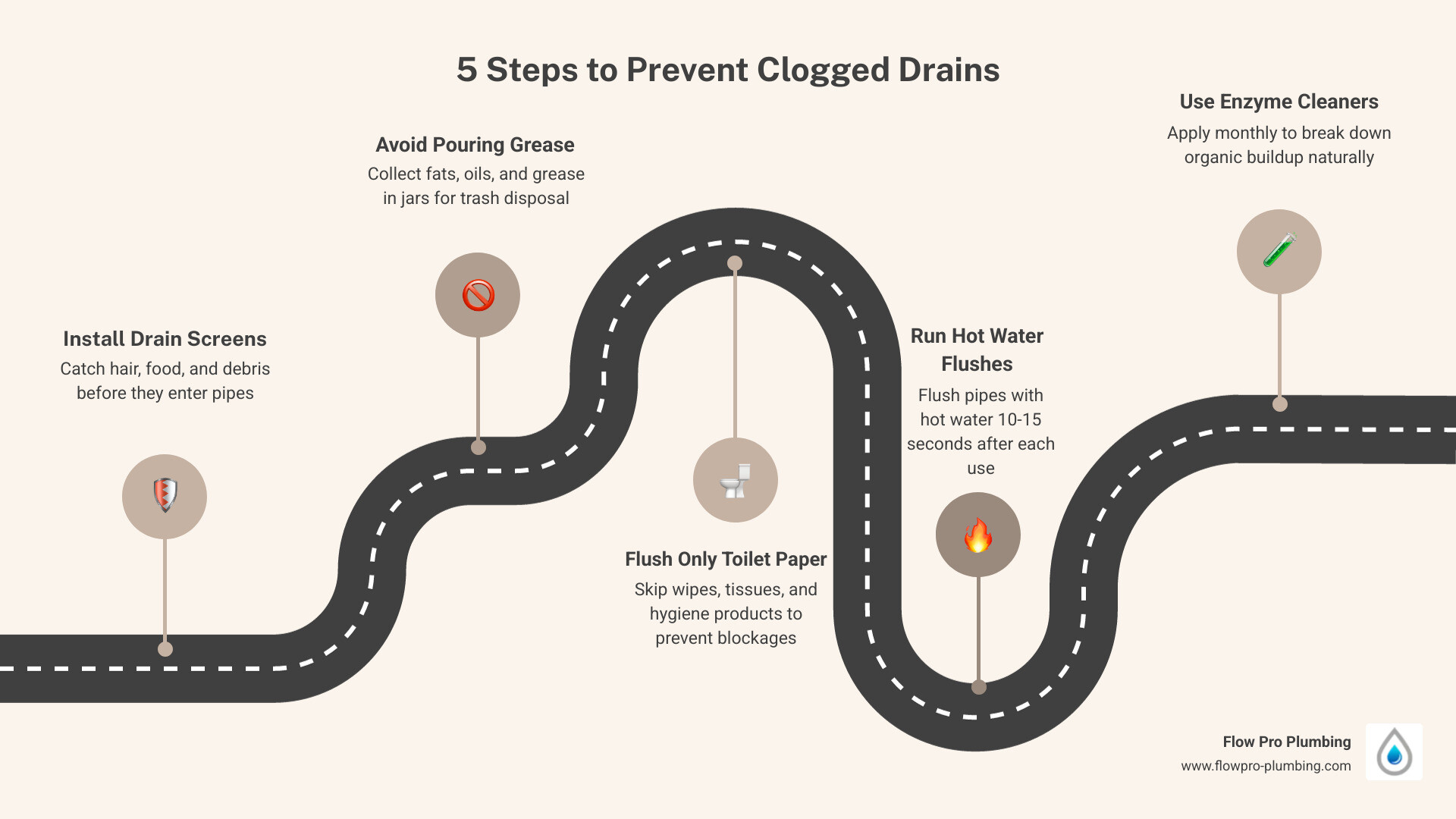
- Use drain screens and hair catchers in every sink, shower, and tub
- Never pour grease or oil down any drain — collect it in a jar and trash it
- Only flush toilet paper — no wipes, tissues, or hygiene products
- Run hot water for 10–15 seconds after each sink use to flush residue
- Apply enzyme-based cleaners monthly to break down organic buildup
- Scrape food scraps into the trash before rinsing dishes
- Schedule a professional drain inspection at least once a year
Residential drain clogs are one of the most frequently reported plumbing service triggers in the United States — and the majority of them are preventable with simple, consistent habits. The problem is that most homeowners don’t think about their drains until something goes wrong. A slow drain today can quietly become a full blockage tomorrow, and what starts as a minor inconvenience can escalate into a major main sewer line issue.
Whether it’s grease hardening in your kitchen pipes, hair wrapping around your shower drain, or so-called “flushable” wipes compacting deep in your sewer line, the culprits are predictable. And because they’re predictable, they’re stoppable.
I’m Jesse Delgado, owner of Flow Pro Plumbing in Brentwood, California, and I’ve spent years helping East Bay homeowners understand how to prevent clogged drains at home before a small problem turns into a plumbing emergency. Growing up in a family of plumbers and working in residential service and repair for over a decade, I’ve seen how the right habits make all the difference in keeping your pipes flowing smoothly.
Common Culprits and How to Prevent Clogged Drains at Home
Understanding the “why” behind a clog is the first step toward stopping it. Most residential drains are less than two inches in diameter. When you consider how much waste we expect those small pipes to carry, it’s a wonder they don’t clog more often!
FOG: The Kitchen’s Silent Killer
FOG stands for Fats, Oils, and Grease. This is arguably the leading cause of kitchen clogs. When grease is hot, it’s a liquid. It looks harmless. But as soon as it hits the relatively cool environment of your underground pipes, it solidifies. It acts like a “glue,” trapping food particles, coffee grounds, and other debris. Over three to six months of continuous disposal, FOG layers can narrow a pipe significantly, leading to a total backup.
The Bathroom Battle: Hair and Soap Scum
In the bathroom, the primary enemies are hair and soap scum. Hair is incredibly durable and easily snags on the rough interior of older pipes or the mechanical parts of a pop-up stopper. Once a few strands get caught, they act as a net for everything else. Soap scum forms when the fatty acids in bar soap react with the minerals in our local water. This creates a sticky, waxy substance that coats the pipe walls.
To keep things moving, we recommend reading our guide on How to Prevent Common Toilet Clogs to ensure your bathroom remains a “no-clog zone.”
The “Flushable” Wipe Myth
One of the most frustrating things we see in Brentwood and Antioch is the “flushable” wipe. Despite the marketing, these wipes do not disperse in water like toilet paper. Instead, they stay intact and can compact over time, creating blockages up to 30 feet long in your sewer lateral. To keep your plumbing system healthy, keep a trash can next to the toilet for all wipes, hygiene products, and cotton swabs.
Mineral Scale and Tree Roots
If you live in a home with older clay or cast-iron pipes, you face two hidden threats: scale and roots.
- Mineral Scale: 85% of U.S. households are supplied with hard water. Over time, calcium and magnesium deposits create a rough “scale” on the inside of pipes, catching debris and narrowing the flow.
- Tree Roots: Roots are naturally drawn to the moisture and nutrients inside your sewer line. They can enter through microscopic cracks in the pipe joints. Once inside, they grow rapidly, creating a “root mat” that no plunger can fix.
For more on managing these large-scale issues, check out our tips on Preventing Sewer Blockages.
Room-by-Room Prevention Strategies
Every room in your house has a different relationship with the plumbing system. To effectively master how to prevent clogged drains at home, you need a targeted approach for each area.
Kitchen Habits to Prevent Clogged Drains at Home
The kitchen is the heart of the home, but it’s also the most common place for a “Clogville” one-way ticket.
- The Grease Jar: Keep a dedicated glass jar or old tin can under the sink. Pour cooled grease into the jar, let it solidify, and toss it in the trash.
- The Plate Scrape: Even if you have a high-end garbage disposal, it is not a trash can. Scrape every plate into the compost or trash before it hits the sink.
- Cold Water Disposal Use: When you do run the disposal, use cold water. Hot water melts grease, allowing it to travel further into your pipes before it solidifies. Cold water keeps grease solid so the disposal blades can chop it into tiny bits that flow all the way through the system.
Garbage Disposal: Safe vs. Harmful
| Disposal Safe | Harmful (Avoid!) |
|---|---|
| Most soft fruit scraps | Coffee grounds (act like sediment) |
| Small vegetable bits | Pasta and Rice (expand in water) |
| Ice cubes (to clean blades) | Potato peels (create a starchy paste) |
| Citrus peels (for odor) | Fibrous veggies (celery, corn husks) |
| Liquid dish soap | Eggshells (membranes wrap around blades) |
If you’re already dealing with a sluggish kitchen sink, our Tips to Fix a Slow Draining Sink can help you get things moving again.
Bathroom Maintenance to Prevent Clogged Drains at Home
In the bathroom, prevention is all about “catching” before “flushing.”
- Hair Catchers: Install a mesh screen or a “TubShroom” in every shower and tub. These simple tools can catch enough hair in 30 to 60 days to completely block a drain if left to enter the pipes.
- Brush Before You Wash: A simple trick is to brush your hair before hopping in the shower. This removes loose strands that would otherwise end up in the drain.
- Liquid Soap vs. Bar Soap: Switching to liquid body wash can significantly reduce soap scum buildup in your pipes, as liquid soaps don’t contain the same binding fats as traditional bar soaps.
- The Mouthwash Mystery: Did you know mouthwash can cause “bio-slime”? Bacteria from your mouth react with the chemicals in mouthwash to create a repugnant black slime. To prevent this, avoid running the water immediately after spitting mouthwash, or squirt a little disinfectant down the drain weekly.
For those times when the toilet just won’t cooperate, see our Solutions for Severely Clogged Toilets. For a general overview of keeping the whole house clear, visit How to Keep Your Home Clog-Free.
Natural Maintenance and Safe Cleaning Techniques
Many homeowners reach for a bottle of caustic chemical cleaner at the first sign of a slow drain. At Flow Pro Plumbing, we strongly advise against this. These chemicals are toxic, can damage your pipes (especially older metal ones), and often only burn a small hole through the clog rather than clearing it.
The Power of Hot Water
One of the simplest ways to maintain your drains is a weekly hot water flush. For kitchen sinks, pour a kettle of nearly boiling water down the drain to help melt away any residual grease. For bathroom drains, filling the sink or tub and then pulling the plug creates enough “head pressure” to help flush out light debris.
Enzyme and Biological Cleaners
For long-term maintenance, we love enzyme-based cleaners. These contain natural bacteria or enzymes that “eat” organic matter like hair, food, and grease. They are much slower than chemical cleaners, but they are safe for all pipe materials and excellent for preventing the “gunk” from building up in the first place. Use them monthly to keep your pipes “clean as a whistle.”
The Baking Soda and Vinegar Debate
You’ve likely heard that baking soda and vinegar is a miracle cure for clogs. While the fizzing action is great for neutralizing odors and cleaning the top of a drain, it is rarely effective at clearing a deep, stubborn blockage. In fact, we have a dedicated article on why you should Never Use Baking Soda & Vinegar to Unclog Drain if you’re facing a real emergency.
Instead of harsh chemicals, look for The Best Drain Clog Remover options that prioritize pipe health over quick, corrosive fixes.
Professional Maintenance and Warning Signs
Even with the best habits, some things are out of your control—like the shifting clay soils in Brentwood or the aggressive roots of a neighbor’s oak tree.
Early Warning Signs
Don’t wait for a total backup. Watch for these “cries for help” from your plumbing:
- Gurgling Sounds: This often means air is trapped in the pipes by a partial blockage or a venting issue.
- Slow Drainage: If you’re standing in ankle-deep water in the shower, the clog is already well-established.
- Unpleasant Odors: The smell of rotting food or sewage is a clear sign that debris is stuck and decomposing in your lines.
- Multiple Clogs: If the kitchen, bathroom, and laundry are all slow at once, you likely have a main sewer line issue.
The Value of Professional Inspections
We recommend a professional Regular Drain Cleaning once a year. During these visits, we can use a sewer lateral camera to see exactly what’s happening inside your pipes. If we find heavy grease or roots, we might recommend hydro jetting—a high-pressure water treatment that scours pipes clean. You might wonder, How Long Does Hydro Jetting Last? Generally, it can keep your pipes clear for several years, depending on your home’s conditions.
For those who want to be a bit more hands-on with minor issues, you can Effortlessly Unclog Pipes: Master the Drain Snake Technique to handle small, localized clogs near the sink surface.
Frequently Asked Questions
Why are “flushable” wipes bad for my drains?
Despite the label, “flushable” wipes do not break down like toilet paper. Toilet paper is designed to dissolve almost instantly in water. Wipes are made of synthetic fibers that stay intact for days or weeks. When they hit a snag in your pipe—like a rough spot of scale or a tiny tree root—they catch. Other wipes then catch on the first one, creating a massive, indestructible “rag ball” that can shut down your entire home’s sewer system. To Avoid Common Sewer Problems, the only thing that should go down the toilet is the “four Ps”: pee, poop, puke, and (toilet) paper.
How often should I have my main sewer line inspected?
For most homes in the Brentwood and Oakley area, we recommend a professional sewer line inspection every 18 to 22 months. If you have large trees near your sewer line or live in an older home with clay pipes, you should have it checked every 6 to 12 months. A quick camera scope can identify a small root intrusion before it becomes a major emergency. If you’re looking for Hydro Jetting Brentwood CA, we can help clear those stubborn roots and scale.
What are the signs of a hidden pipe blockage?
A hidden blockage often reveals itself through “symptom migration.” For example, you flush the toilet and hear gurgling in the shower. Or, you run the washing machine and see water backing up into the floor drain. These are signs that the water can’t get past a blockage in the main line and is looking for the next easiest exit. You might also notice a drop in performance; if you’re asking Why is My Water Pressure So Low?, it could be due to significant sediment or scale buildup in your pipes.
Conclusion
Mastering how to prevent clogged drains at home isn’t about one big fix; it’s about the small, daily habits that protect your home’s infrastructure. From using hair catchers in the shower to keeping grease out of the kitchen sink, these efforts pay off in the form of a reliable, stress-free plumbing system.
At Flow Pro Plumbing, we take pride in helping our neighbors in Brentwood, Oakley, Antioch, and the surrounding East Bay communities maintain healthy homes. Whether you need a routine annual inspection or help tackling a stubborn backup, our experienced and friendly team is here to provide unsurpassed workmanship.
Don’t wait for a plumbing nightmare to strike. Be proactive about your Drains and keep your home flowing smoothly. If you notice the warning signs of a clog, give us a call—we’re here to help you “stop the stop” for good!