

Your Drains Are Not a Trash Can: What You Need to Know
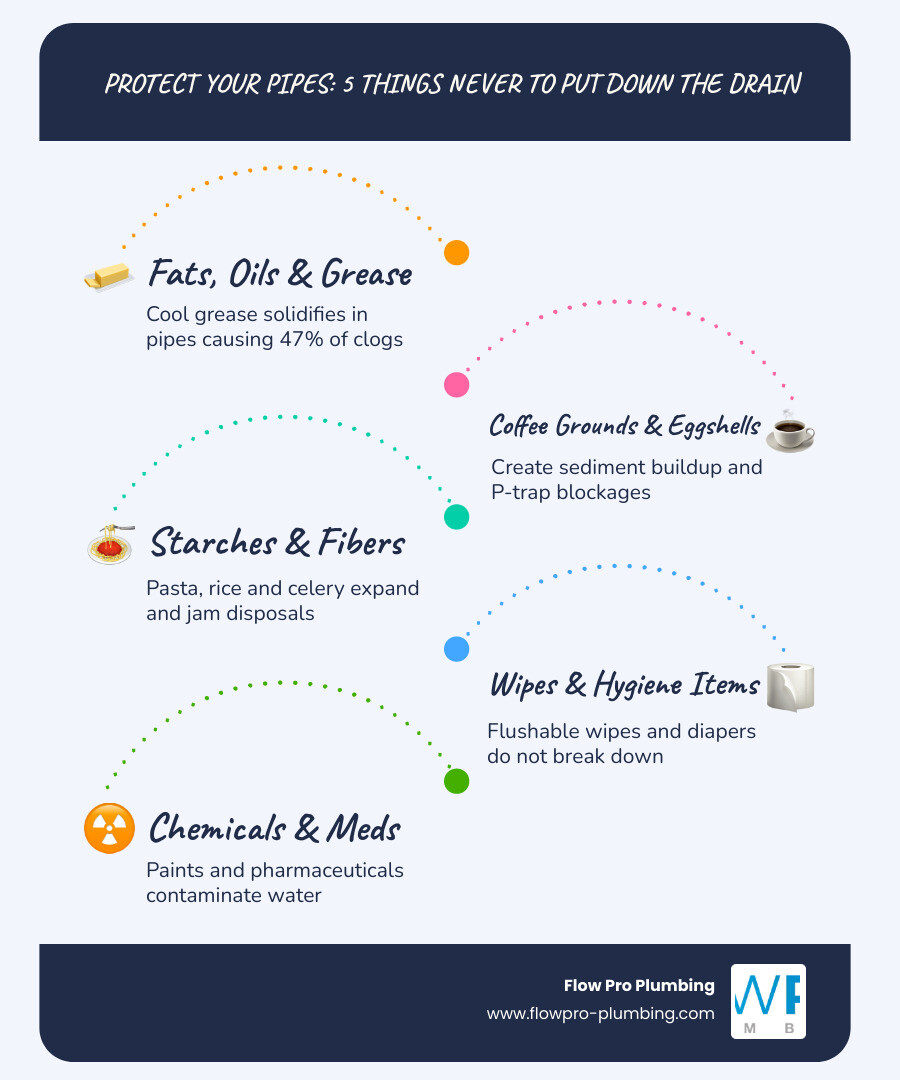
The things you should never put down a drain might surprise you — many of them are everyday kitchen and bathroom items most people dispose of without a second thought. Here is a quick reference to keep your pipes clear:
Never put these down a drain or toilet:
- Fats, oils, and grease (FOG)
- Coffee grounds and eggshells
- Pasta, rice, and potato peels
- Fibrous vegetables (celery, onion skins)
- Bones and fruit pits
- “Flushable” wipes, paper towels, and diapers
- Feminine hygiene products and kitty litter
- Medications and pharmaceuticals
- Paint, bleach, and household chemicals
- Produce stickers
Picture this: you have just finished cooking bacon on a Sunday morning, and without thinking, you tip the leftover grease straight down the kitchen sink. It seems harmless enough in the moment — the grease is liquid, the water is running, and you have a full day ahead. But somewhere inside your pipes, that grease is already beginning to cool and harden into a waxy, cement-like buildup that will eventually trap hair, food scraps, and everything else that follows. According to industry data, fats, oils, and grease are responsible for an estimated 47% of clogged drains across the United States. That one small shortcut can quietly set the stage for a slow drain, a foul smell, or a full-blown plumbing emergency — and the same is true for dozens of other common household items people send down their drains every single day.
I’m Jesse Delgado, owner of Flow Pro Plumbing in Brentwood, California, and I grew up working alongside my father in residential and commercial plumbing — so I have seen the damage caused by the things you should never put down a drain. In the sections below, I’ll walk you through exactly what to avoid and why, so you can protect your home’s plumbing before a small habit turns into a costly repair.
Things you should never put down a drain terms at a glance:
- how to fix a clogged sink
- how to prevent clogged drains at home
- unclogging pipes with baking soda and vinegar
Kitchen Culprits: Things You Should Never Put Down a Drain

When we are in the middle of preparing a quick weeknight dinner or cleaning up after a massive family gathering, the kitchen sink feels like a magical, bottomless portal. Unfortunately, your home’s wastewater drainage system is actually a highly sensitive network of pipes designed exclusively for liquids.
The biggest threat to this network is what plumbers call FOG: Fats, Oils, and Grease. This includes everything from bacon grease and cooking oil to butter, margarine, meat drippings, and even greasy salad dressings or dairy products.
When hot fats are poured down the sink, they undergo a physical transformation. As they travel deeper into your cold plumbing system, they cool down and solidify. Instead of washing away, they cling to the dark, hidden interior walls of your pipes, forming a waxy, sticky sludge. Over time, this sludge acts like glue, trapping every single hair, soap flake, and food crumb that passes by.
In municipal sewer systems, this congealing process escalates into massive, rock-hard blockages known as “fatbergs.” In 2017, a monster fatberg stretching over 750 feet was discovered in the sewers of London! While the blockages in your home’s P-trap might not be historic in size, they will easily cause water to back up into your sink. If you want to keep your kitchen running smoothly, understanding Why You Shouldn’t Put Food in Garbage Disposal is the first step toward long-term pipe health.
Why Coffee Grounds and Eggshells Are Things You Should Never Put Down a Drain
There is a stubborn, long-running myth that eggshells are actually good for your garbage disposal because they “sharpen” the blades. We are here to bust that myth once and for all: garbage disposals do not even have blades! They use blunt impellers to shred food scraps.
When you send eggshells down the drain, they get ground into tiny, sand-like granules. This granular waste does not dissolve in water. Instead, it settles at the bottom of your P-trap, combining with any grease residue to form a heavy, gritty obstruction. Furthermore, the thin, papery inner membrane of the eggshell can easily wrap around the moving parts of your disposal, causing the motor to hum, overheat, and eventually burn out.
Coffee grounds are equally deceptive. Because they are so small and fine, it is easy to assume they will wash away effortlessly. However, coffee grounds do not dissolve in water. When poured down the sink, they accumulate at the lowest point of your pipes, acting exactly like heavy sediment or silt in a riverbed. They clump together, absorb leftover oils, and quickly form a dense, muddy barrier that chokes off water flow.
If you want to protect your system, it is vital to know which organic materials are safe and which ones are dangerous. For a deeper dive into protecting your kitchen plumbing, take a look at our guide on why you should Don’t Let Your Disposal Choke on These Common Kitchen Scraps.
Starchy and Fibrous Foods That Destroy Disposals
If there is one day of the year that keeps residential plumbers on high alert, it is the day after Thanksgiving. In fact, it is historically one of the busiest plumbing crisis days of the entire year. Why? Because busy households across the country attempt to flush piles of potato peels, celery stalks, and leftover dinner scraps down their kitchen drains.
Starchy foods like pasta, rice, oatmeal, and potato peels are incredibly expandable. Even after they are cooked, they continue to absorb water. When you dump a handful of cold pasta or rice down the drain, it swells inside your P-trap. As the garbage disposal grinds these starches, they transform into a thick, sticky paste that acts like organic cement inside your pipes.
Fibrous foods are just as destructive, but they damage your plumbing through a different mechanical process. Vegetables like celery, corn husks, onion skins, artichokes, and asparagus are packed with tough, stringy fibers. When processed by a garbage disposal, these fibers do not break down. Instead, they act like strong threads, wrapping themselves tightly around the disposal’s spinning impellers. This creates a physical jam that stops the motor completely.
To keep your appliance running smoothly and safely, check out our step-by-step instructions on How to Keep Your Garbage Disposal Clean in 5 Steps.
Bathroom Blockers and Personal Care Products
Moving from the kitchen to the bathroom, the rules of plumbing care remain just as strict. Bathroom drains have to deal with a unique set of daily challenges, primarily hair and soap scum. Hair is incredibly strong, flexible, and virtually indestructible in water. As it slides down your shower or sink drain, it easily snags on the rough edges of drain stoppers, pipe joints, and small mineral deposits.
Once a few strands of hair get caught, they act as a net, catching soap scum, skin cells, and body oils. This sticky hairball slowly grows larger, eventually blocking the entire pipe.
Toilets are even more vulnerable to improper disposal habits. Many homeowners treat the toilet like a wet trash can, flushing personal care items without realizing that toilets are highly specialized fixtures designed to transport only three things: pee, poop, and toilet paper. To understand how to keep your bathroom fixtures flowing freely, read our advice on How to Prevent Common Toilet Clogs.
Bathroom Items That Are Things You Should Never Put Down a Drain
The single biggest threat to modern residential and municipal sewer systems is the infamous “flushable” wipe. Despite what the packaging claims, flushable wipes are things you should never put down a drain.
Unlike standard toilet paper, which is dry and engineered to disintegrate within seconds of hitting water, flushable wipes are wet-strength spunlace fabrics. They are designed to stay strong and intact when wet. When flushed, they do not break down. Instead, they travel intact through your pipes, snagging on minor pipe imperfections and binding with grease to create massive, stubborn blockages that require professional hydro jetting to clear.
Other common bathroom items cause similar, catastrophic clogs:
- Paper Towels and Facial Tissues: These are designed to absorb liquid and remain strong when wet, meaning they will swell up and block your pipes.
- Feminine Hygiene Products (Tampons & Pads): These products are engineered to absorb moisture and expand to multiple times their original size. Flushing them is a guaranteed way to cause an immediate toilet backup.
- Disposable Diapers: Made of super-absorbent polymers and plastic linings, diapers expand massively in water and will instantly choke your main sewer line.
- Kitty Litter: Even if the bag claims it is “flushable,” clay-based kitty litter is designed to clump when exposed to moisture. In your pipes, it forms a heavy, cement-like block that is incredibly difficult to clear. Additionally, cat waste can carry parasites like Toxoplasma gondii, which municipal wastewater treatment plants cannot filter out, leading to local water contamination.
If you are already dealing with a stubborn backup, learn the safest ways to resolve it by reviewing our guide on How to Unclog a Toilet.
Chemical and Hazardous Threats to Your Pipes
When we talk about the things you should never put down a drain, we must look beyond physical blockages. Chemical and hazardous materials poured down your sink pose a severe threat to your home’s physical plumbing and the surrounding environment.
Many homeowners believe that pouring strong chemical cleaners down the drain is a smart, preventive maintenance habit. In reality, harsh chemical drain openers are highly corrosive. Many contain sodium hydroxide or sulfuric acid, which generate intense chemical heat inside your pipes. This extreme heat can easily warp or melt modern PVC pipes, soften the glue holding your pipe joints together, or corrode older metal plumbing.
Furthermore, mixing household chemicals can lead to highly toxic reactions. For example, if you pour household bleach down a drain that contains leftover food scraps or organic waste, the bleach can react with those substances to create chloroform and other dangerous organochlorine compounds. If bleach mixes with ammonia-based cleaners, it produces toxic chloramine gas, which can be fatal if inhaled in an enclosed bathroom or kitchen. To protect your pocketbook and your pipes, read our warning on why you should Stop Pouring Money and Acid Down the Drain.
Medications, Paint, and Environmental Hazards
Our local water infrastructure in Contra Costa County is highly sophisticated, but wastewater treatment plants are simply not equipped to filter out complex chemical compounds, hormones, or synthetic materials. When you flush expired medications, painkillers, or antidepressants down the toilet, those chemical compounds pass directly through the treatment process and enter our local waterways, harming marine life and contaminating the regional watershed.
Other hazardous household materials also cause severe damage:
- Latex and Oil-Based Paint: Pouring paint down the drain is highly illegal in many regions and incredibly destructive. As paint travels through your pipes, it clings to the walls and dries, slowly choking off the water flow until the pipe is completely sealed.
- Produce Stickers: Those tiny, plastic stickers found on apples, bananas, and tomatoes are made of vinyl and synthetic adhesives. They do not dissolve in water. Instead, they stick to the inside of your pipes, catching other debris, or pass through to treatment facilities where they clog fine filters and threaten local aquatic wildlife.
- Automotive Fluids & Pesticides: Motor oil, antifreeze, and garden chemicals are highly toxic. A single gallon of motor oil can contaminate one million gallons of fresh water.
Always dispose of paint, chemicals, and old medications at designated Contra Costa County household hazardous waste collection facilities rather than pouring them down your household drains.
How to Protect Your Home’s Plumbing System
Protecting your home’s plumbing system does not require complicated equipment or expensive habits. In fact, the most effective defense against costly plumbing emergencies is simple, daily prevention.
The easiest tool you can use is a high-quality mesh sink strainer. Placing inexpensive stainless steel mesh strainers in every kitchen sink, bathroom sink, and shower drain will catch hair, food scraps, and small debris before they ever have a chance to enter your plumbing.
When it comes to cooking grease, practice the “Three Cs” of proper grease disposal: Cool, Contain, and Trash.
- Cool: Let your cooking fats, oils, and grease cool down after cooking.
- Contain: Scrape or pour the cooled liquid into an old glass jar, tin can, or disposable container.
- Trash: Once the grease has solidified inside the container, throw it directly into your household trash bin. For greasy pots and pans, use a paper towel to wipe away the excess oil before washing them in the sink.
For organic kitchen waste like coffee grounds, eggshells, and vegetable scraps, composting is a fantastic, eco-friendly alternative that keeps waste out of your pipes and provides nutrient-rich soil for your garden. Combining these simple habits with Regular Drain Cleaning will ensure your home’s plumbing remains clear, clean, and completely reliable.
Why Professional Maintenance Beats DIY Hacks
When a drain eventually slows down, many homeowners immediately reach for quick DIY fixes they found online. One of the most popular internet trends is using a mixture of baking soda and vinegar to clear stubborn clogs. While this classic science-fair volcano reaction looks impressive, it is actually highly ineffective at clearing real plumbing blockages.
The bubbling reaction between baking soda (a base) and vinegar (an acid) produces carbon dioxide gas and water. Because your sink is open to the air, the pressure from the gas simply escapes up and out of the drain, rather than pushing the clog down the pipe. The resulting mixture is mostly salty water, which has zero ability to cut through heavy grease or hair. If you want to know why this viral hack fails, read our expert breakdown: Never Use Baking Soda Vinegar to Unclog Drain.
Instead of pouring money and useless mixtures down your sink, rely on safe, mechanical methods or professional help. For safe, non-corrosive ways to maintain your drains, check out our guide on how to Stop Pouring Money Away with These Natural Drain Cleaning Hacks.
Recognizing the Signs of a Clogged or Leaking Pipe
How do you know if your pipes are already suffering from the buildup of hidden debris? Your plumbing system will almost always give you a few warning signs before a complete backup occurs:
- Slow Draining: If water pools around your feet in the shower or takes several minutes to clear from your kitchen sink, a clog is actively forming.
- Gurgling Noises: Strange gurgling or bubbling sounds coming from your drains or toilet indicate that air is trapped behind a blockage.
- Foul Odors: A persistent, rotting smell rising from your kitchen sink is a clear sign that food scraps and grease are decaying inside your P-trap.
- Water Backing Up: If running your washing machine causes water to back up into your shower, you have a serious blockage in your main sewer line.
Ignoring these warning signs can lead to excess pressure inside your pipes, which can cause them to crack, fail, and leak. If you suspect your pipes are already damaged, read our emergency guide on What to Do If a Pipe is Leaking to prevent costly water damage to your home.
Frequently Asked Questions
Is Epsom salt bad for residential plumbing?
Generally, using Epsom salts or bath salts occasionally in your bathtub is safe because magnesium sulfate dissolves completely in warm water. However, problems arise if you use them excessively or do not rinse the tub afterward.
Over time, undissolved salt crystals can settle in your drain, adding abrasion to your pipes and accelerating the corrosion of older metal plumbing. Additionally, using bath salts that contain added oils, dried flower petals, or heavy fragrances can create a sticky residue that traps hair and causes severe clogs.
What is actually safe to flush down the toilet?
To protect your home’s plumbing and municipal sewer systems, you should only ever flush the “Three Ps”: Pee, Poop, and Paper (specifically toilet paper).
Toilet paper is uniquely engineered to break down and completely disintegrate within seconds of hitting water. No other paper products — including facial tissues, napkins, paper towels, or wet wipes — are designed this way, and they should always be disposed of in your household trash bin.
Why does my garbage disposal smell bad?
A foul smell coming from your garbage disposal is usually caused by rotting food scraps, decaying grease, and bacteria accumulating on the underside of the black rubber splash guard or on the grinding ring.
Because many homeowners run their disposals with hot water, grease coats the interior walls of the appliance. To eliminate odors, regularly clean your disposal by grinding ice cubes and lemon peels while running cold water, or scrub the underside of the rubber splash guard with an old toothbrush and mild dish soap.
Conclusion
At the end of the day, protecting your home from messy, stressful plumbing emergencies comes down to breaking bad habits and treating your drains with respect. Your household plumbing is a delicate, interconnected system, and keeping the things you should never put down a drain out of your sinks and toilets is the best way to ensure peace of mind.
If you are currently dealing with a stubborn clog, a slow-draining sink, or suspect you have a hidden leak in Contra Costa County, the licensed, professional team at Flow Pro Plumbing is here to help. We proudly serve homeowners across Brentwood, Oakley, Antioch, Discovery Bay, Pittsburg, and Concord with fast, clean, and courteous service.
Let our family take care of yours. Schedule your service today with Flow Pro Plumbing for expert drain clearing and reliable plumbing solutions you can trust!