
The Foods You Should Never Put in a Garbage Disposal (And Why It Matters)
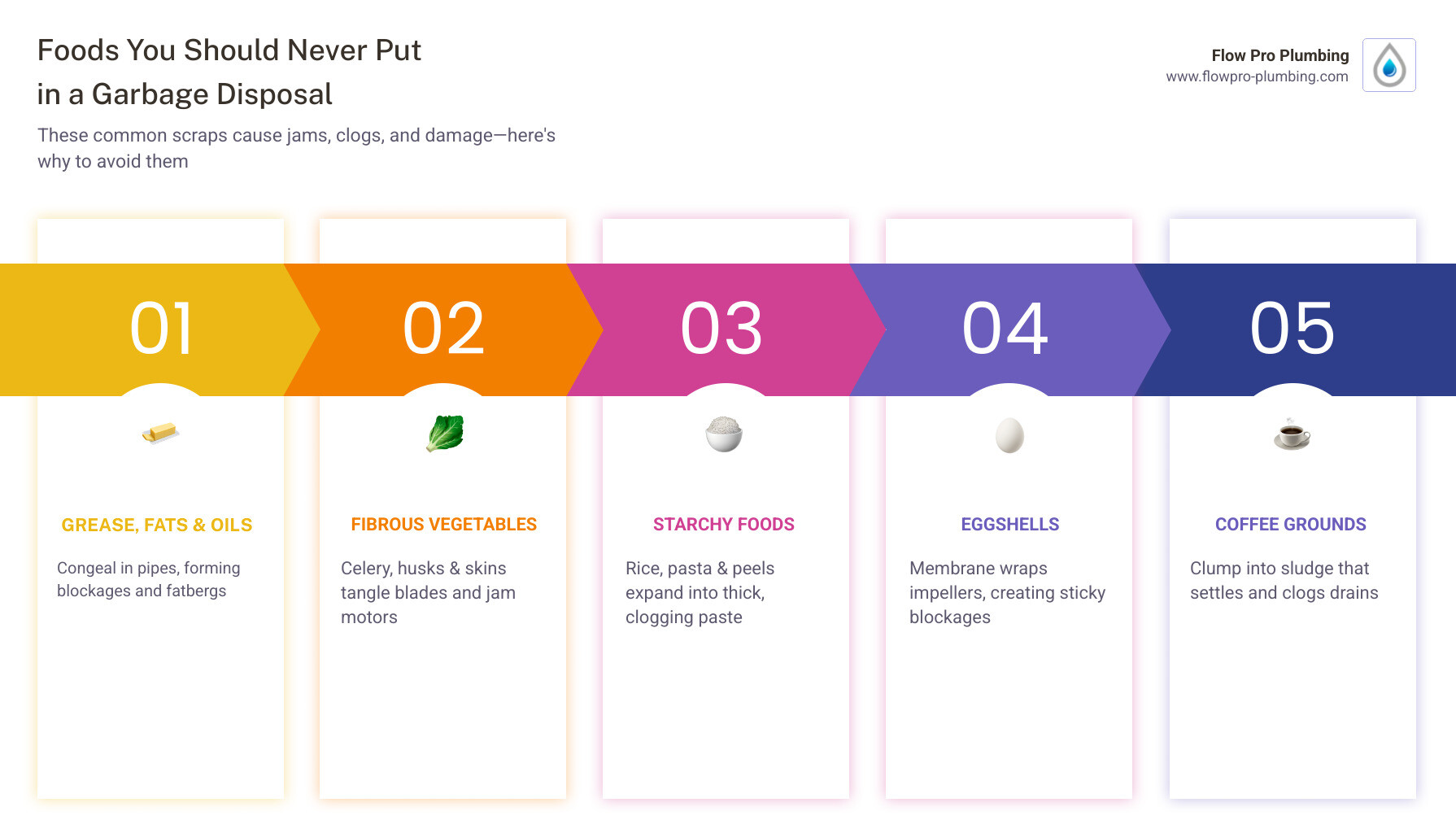
The foods you should never put in a garbage disposal include:
- Grease, fats, and oils – congeal inside pipes and cause blockages
- Fibrous vegetables (celery, corn husks, onion skins, asparagus) – tangle and jam the blades
- Starchy foods (rice, pasta, potato peels, oatmeal) – expand with water and form a paste that clogs drains
- Eggshells – the inner membrane wraps around the impeller and creates sticky blockages
- Coffee grounds – clump into a thick, sludge-like mass that settles in pipes
- Bones and fruit pits – too hard for most disposals and can damage the grinding mechanism
- Nuts and seeds – grind into a paste similar to nut butter, coating pipes
For many homeowners, the garbage disposal feels like a catch-all solution for kitchen cleanup. It’s easy to assume that if it fits down the drain, the disposal can handle it. But that assumption is exactly what leads to jammed blades, clogged pipes, and expensive plumbing calls.
I’m Jesse Delgado, owner of Flow Pro Plumbing in Brentwood, California, and I grew up working alongside my father in the plumbing trade — which means I’ve seen the damage caused by the wrong foods you should never put in a garbage disposal ending up exactly where they shouldn’t. In the sections below, I’ll walk you through what to avoid, why it matters, and how to keep your disposal running smoothly for years to come.
Why Your Kitchen Sink Isn’t a Trash Can
It is a common misconception that a garbage disposal is a motorized trash can located under your sink. In reality, these units are precision appliances designed to handle very specific types of organic waste. When we treat the sink like a universal waste bin, we aren’t just risking the appliance; we are risking the entire plumbing health of the home.
One of the biggest reasons to be cautious is the protection of your local sewer system. Did you know that grease is related to up to 65 percent of sewer overflows? When fats, oils, and grease (often called FOGs in the plumbing world) enter the drain, they don’t just disappear. They travel into the cooler pipes of the municipal sewer system, solidify, and create massive “fatbergs” that cause backups into homes and streets. This is a primary reason Why You Shouldn’t Put Food in Garbage Disposal units in large quantities; the pipes simply aren’t built for it.
Beyond the environmental impact, there is the immediate cost to you as a homeowner. If you notice slow drainage or foul odors emanating from your sink, these are the first warning signs that your disposal is struggling. A unit that is overloaded with the wrong scraps will begin to accumulate “caked” debris on the grinding components. This leads to a loss of efficiency and, eventually, mechanical failure. If you flip the switch and hear nothing but a low drone, you likely have a Garbage Disposal Humming Not Working situation, which usually indicates a jam caused by an item that should have gone in the trash.
The Ultimate List of Foods You Should Never Put in a Garbage Disposal
To keep your kitchen running smoothly in places like Brentwood or Discovery Bay, you need to know the “Heavy Hitters” of plumbing clogs. At the top of the list are Fats, Oils, and Grease (FOGs).
When grease is hot and liquid, it seems harmless. However, as soon as it hits your pipes, it cools down and solidifies. Imagine pouring candle wax down your drain—that is essentially what happens with bacon grease or cooking oil. It coats the walls of your pipes and the internal components of the disposal, trapping other food particles like a sticky spiderweb. Over time, this creates a congealed blockage that can be incredibly difficult to clear without professional equipment. For residents needing assistance with these types of stubborn clogs, we offer specialized services for Garbage Disposals Pittsburg CA.
Why Fibrous Foods You Should Never Put in a Garbage Disposal Tangle Blades
You might think that because a vegetable is “soft” or “healthy,” it’s safe for the disposal. This is a dangerous myth when it comes to “stringy” or fibrous vegetables. Think about celery, corn husks, onion skins, asparagus, and even kale stems.
These vegetables contain long, tough fibers that act like hair or high-tensile string. When the disposal’s impeller spins at high speeds, these fibers don’t always get pulverized. Instead, they wrap around the moving parts. This can cause the motor to seize, leading to motor burnout. Onion skins are particularly tricky because they are thin and can slip past the grinding ring entirely, sticking to the walls of the drain pipe and catching other debris. If your unit has become a tangled mess, you may need Expert Garbage Disposal Repair to safely clear the obstruction and restore the motor.
Starchy Foods You Should Never Put in a Garbage Disposal and Pipe Expansion
Starchy foods are the “silent killers” of kitchen plumbing. Items like rice, pasta, potato peels, oatmeal, and bread seem soft enough to grind up easily. The problem isn’t the grinding; it’s what happens afterward.
Think about how you cook rice or pasta: you add water, and the food expands. Inside your pipes, those small bits of leftover rice or spaghetti continue to absorb water. They swell and turn into a thick, gelatinous paste. Potato peels are even worse; they contain high levels of starch that, when ground up, create a glue-like substance that can completely seal off a pipe. We see a massive spike in service calls for Garbage Disposal Repair Antioch CA right after Thanksgiving, usually because a large amount of potato peels were sent down the drain all at once.
Debunking Myths: Eggshells, Coffee Grounds, and Bones
There are several “old wives’ tales” floating around about what is good for your disposal. Let’s set the record straight on a few of the most common myths.
The Eggshell Myth: Many people believe that putting eggshells down the disposal will “sharpen the blades.” First of all, most modern disposals don’t even have blades—they have blunt impellers that use centrifugal force to mash food against a stationary grind ring. Second, eggshells are terrible for your plumbing. The thin, sticky membrane on the inside of the shell can wrap around the impeller, while the shell itself breaks down into tiny, sand-like granules. This “sand” settles in the traps and elbows of your pipes, creating a gritty blockage that is very hard to flush out.
The Coffee Ground Sludge: Coffee grounds might look fine and harmless, but they are one of the leading causes of drain clogs. Because they are dense and don’t dissolve in water, they settle at the bottom of your pipes. Over time, daily coffee grounds accumulate into a heavy, sludge-like mass that resembles wet sand or mud. This sludge eventually fills the pipe, leaving no room for water to pass.
Bones and Fruit Pits: While some high-horsepower units claim they can handle small bones, our professional advice is to avoid them entirely. Hard items like beef bones, peach pits, or cherry stones can lodge themselves between the impeller and the grind ring, causing an immediate jam. Even if they don’t jam the unit, they wear down the grinding mechanism over time, significantly shortening the lifespan of your appliance.
Safe vs. Unsafe Comparison Table
| Item | Disposal Status | Why? |
|---|---|---|
| Cold Water | Safe | Flushes debris and keeps fats solid for travel. |
| Citrus Peels | Safe (Small bits) | Natural deodorizer and cleaner. |
| Ice Cubes | Safe | Helps knock off caked-on debris. |
| Coffee Grounds | Unsafe | Creates heavy sludge in the pipes. |
| Pasta/Rice | Unsafe | Expands and turns into a thick paste. |
| Eggshells | Unsafe | Membrane jams parts; shells clog traps. |
| Celery/Corn Husks | Unsafe | Fibers wrap around the motor. |
| Bones/Pits | Unsafe | Can break or jam the grinding mechanism. |
Proper Maintenance and Safe Disposal Practices
Now that you know what to avoid, how do you keep your disposal in top shape? Proper maintenance is simpler than you might think and can save you hundreds in repair costs.
First, always follow the Cold Water Protocol. You should run a steady stream of cold water for about 10 seconds before you turn on the disposal, during the entire grinding process, and for at least 30 seconds after you turn the unit off. Why cold water? Hot water melts fats and grease, allowing them to coat your pipes. Cold water keeps those fats solid so they can be chopped up and flushed all the way through the system.
To keep the unit smelling fresh, you can toss in a few small citrus wedges (lemon, lime, or orange). The citric acid helps break down grease and provides a pleasant scent. For a deep clean, every other week you can drop in a handful of ice cubes and a splash of biodegradable dish soap. The ice acts as a mild abrasive to “scrub” the internal components without damaging them. For more detailed tips, check out our guide on Maintaining Your Garbage Disposal.
What to do with the “No-Go” items?
- Compost: Fibrous vegetables, coffee grounds, and fruit scraps make excellent compost for your garden in Oakley or Walnut Creek.
- Trash: Bones, eggshells, and starchy peels should go straight into the trash or green waste bin.
- Grease Collection: Keep an old glass jar or metal tin under the sink. Pour your cooking fats into the jar, let them solidify, and then toss the jar in the trash when it’s full.
Conclusion
A garbage disposal is a tool for convenience, not a replacement for your trash can. By avoiding the foods you should never put in a garbage disposal—like grease, celery, rice, and coffee grounds—you can prevent the vast majority of common plumbing headaches. Remember the golden rule: if you wouldn’t feed it to a baby or if it’s too tough for you to chew, it probably shouldn’t go down the disposal.
At Flow Pro Plumbing, we are proud to serve our neighbors throughout Brentwood, Antioch, Pittsburg, and the surrounding areas. Whether you are dealing with a stubborn clog, a humming motor, or you are ready for a brand-new installation, our team is here to help with experienced, friendly service. We specialize in Garbage Disposals Brentwood CA and are committed to keeping your home’s plumbing system flowing perfectly.
If your disposal is giving you trouble or if you have questions about maintaining your kitchen appliances, don’t wait for a total backup. Give us a call today and let the experts handle the dirty work!