

What Is a Sump Pump and How Does It Work? Here’s the Short Answer
What is a sump pump and how does it work is one of the most common questions homeowners ask after finding water in their basement — and the answer is simpler than you might think.
A sump pump is a device installed in the lowest point of your home — usually a basement or crawl space — that automatically removes water before it can flood your living space.
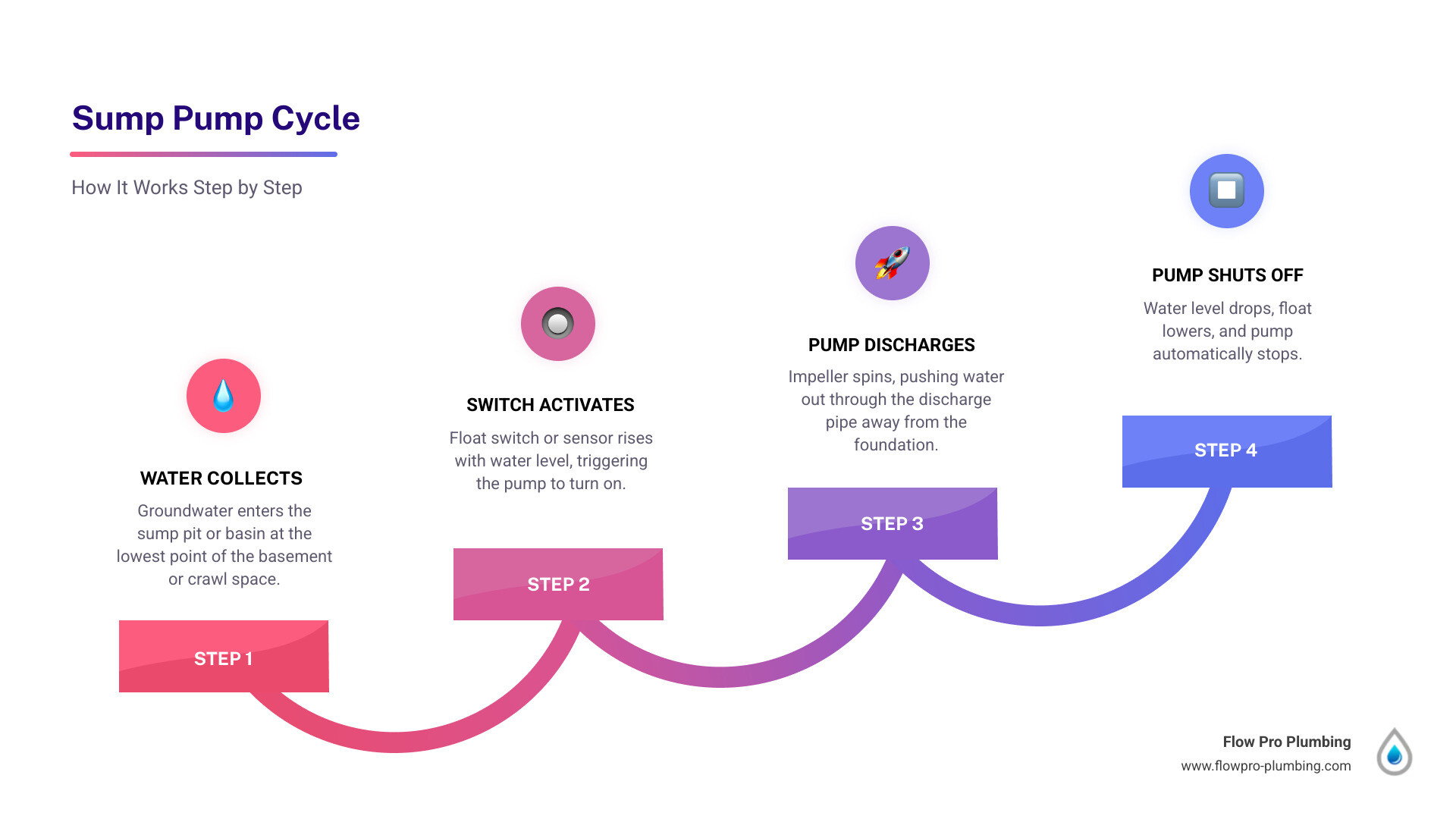
Here is how it works, step by step:
- Water collects in a pit (called a sump pit or basin) dug into the floor of your basement or crawl space
- A float switch or sensor rises as water levels climb in the pit
- The pump activates and uses a spinning impeller to push water out through a discharge pipe
- Water is directed away from your home’s foundation to a storm drain, dry well, or designated drainage area
- The pump shuts off automatically once water levels drop back down
That is the full cycle — automatic, self-contained, and running without any input from you.
More than 60 percent of American homes deal with below-ground wetness at some point. Whether it is from heavy rain, melting snow, or a naturally high water table, moisture finds its way in. A sump pump is one of the most reliable tools a homeowner has to stop that water before it causes real damage.
I’m Jesse Delgado, owner of Flow Pro Plumbing and a licensed plumber with over a decade of hands-on experience helping homeowners understand and protect their plumbing systems — including knowing what is a sump pump and how does it work well enough to install and service them correctly. In this guide, I’ll walk you through everything you need to know, from how the components fit together to how to keep your system running when you need it most.
What is a Sump Pump and How Does It Work?
To understand the mechanics, we first have to look at the environment where these machines live. In many parts of California, including Brentwood and the surrounding areas, the “water table” (the level below which the ground is saturated with water) can fluctuate. During heavy rains, that water table rises.
A sump pump sits inside a sump pit or basin. This basin is typically about 2 feet deep and 18 inches wide, acting as the lowest point in your home’s foundation. As groundwater levels rise, the water naturally follows the path of least resistance, flowing into the pit rather than seeping through your floor or walls. This is one of the primary reasons Why Would A House Need A Sump Pump—to provide a designated “collection zone” for unwanted moisture.
Once the water in the basin reaches a certain height, the pump springs into action. It uses centrifugal force created by a rapidly spinning impeller. Think of the impeller like a high-powered fan for water; it creates a low-pressure area that draws water in and then flings it outward, forcing it up and out through the discharge pipe.
The Core Components: What is a Sump Pump and How Does It Work?
While it might look like a simple bucket with a motor, a sump pump is a finely tuned piece of equipment. Here are the parts that make the magic happen:
- The Motor: This is the heart of the system. Most residential pumps use between 1/4 and 1/2 horsepower. It converts electrical energy into the mechanical force needed to spin the impeller.
- The Sump Pump Float Switch: This is the “brain” of the pump. Just like the float in your toilet tank, this switch rises with the water level. When it reaches a specific height, it completes the electrical circuit and turns the motor on.
- The Check Valve: This is a small but critical one-way valve installed in the discharge pipe. It ensures that once water is pumped out, it stays out. Without a check valve, the water remaining in the pipe would drain back into the pit the moment the pump stops, potentially causing the pump to turn right back on—a frustrating cycle known as “short cycling.”
- Pressure Sensors: Some modern pumps use a diaphragm or pressure sensor instead of a float. These detect the physical weight or pressure of the water to trigger the motor.
Where the Water Goes
Pumping the water out of the pit is only half the battle; we also have to make sure it doesn’t just soak right back into the ground next to your foundation. The discharge line carries the water away from the house.
Ideally, this water should be directed at least 10 to 20 feet away from your foundation. Depending on local plumbing codes in cities like Antioch or Walnut Creek, this water might be routed to a storm drain, a dry well, or a specific area of your yard that slopes away from the structure. It should never be discharged into the sanitary sewer system, as this can overwhelm city infrastructure and is often illegal.
Main Types of Sump Pumps and Switch Mechanisms
Not all sump pumps are created equal. Depending on the size of your sump pit and the amount of water you need to move, we generally recommend one of two main designs.
Submersible vs. Pedestal Models
| Feature | Submersible Pump | Pedestal Pump |
|---|---|---|
| Motor Location | Inside the pit (sealed/underwater) | Above the pit (on a tall shaft) |
| Noise Level | Very quiet (water muffles sound) | Louder (motor is exposed) |
| Lifespan | 7–10 years | 10–15 years |
| Cooling | Water-cooled | Air-cooled |
| Pit Size | Needs a wider pit | Fits in narrow pits |
Submersible pumps are the most common choice for finished basements. Because the motor is submerged in the water, it stays cool during heavy use and operates very quietly. However, because they live in a wet environment, they may have a slightly shorter lifespan than their pedestal cousins.
Pedestal pumps have an exposed motor that sits on a pole above the water line. They are easier to service and often last longer because the motor stays dry, but they can be a bit of an eyesore and are significantly louder. If you find your Sump Pump Not Working, a pedestal model is often easier to troubleshoot because you can see the components without diving into the pit.
Understanding Sump Pump Switches
The switch is often the first part to fail, so choosing the right type is vital:
- Vertical Float: A small float that moves up and down on a vertical rod. These are reliable and great for narrow pits.
- Tethered Switch: A float attached to a cord. As the water rises, the float tips over, activating the pump. These require a wide pit so the float doesn’t get stuck on the wall.
- Diaphragm Sensor: Uses water pressure to “squish” a membrane, which triggers the switch. These have no moving parts to get stuck on debris.
- Electronic Switch: Uses probes to detect water levels. These are highly accurate and common in high-end systems.
Why Your Home Needs a Reliable Sump Pump System
If you live in a low-lying area or a place with high groundwater, like Discovery Bay or Pittsburg, a sump pump isn’t just a “nice-to-have” feature—it’s essential for your home’s structural integrity. Below-ground wetness can lead to foundation cracks, wood rot, and the growth of mold and mildew, which can affect the air quality of your entire home.
However, a standard pump has one major weakness: it runs on electricity. Unfortunately, the times you need your pump the most—during a massive storm—are also the times you are most likely to lose power.
The Importance of Backup Systems
This is where a Battery Backup Sump Pump comes into play. A backup system includes a secondary pump and a dedicated battery. If the primary pump fails or the power goes out, the backup takes over.
Most high-quality backup batteries can provide enough power to run the pump for about 12 hours of continuous use, or several days of intermittent cycling. Because batteries don’t last forever, you should plan for a Sump Pump Battery Replacement every 3 to 5 years to ensure you aren’t left unprotected during a midnight downpour. Many modern backup systems also include an alarm that will beep to let you know if the primary pump has failed or if the battery is low.
Maintenance, Lifespan, and Signs of Failure
A sump pump is a “set it and forget it” device until it isn’t. On average, these pumps last between 7 and 10 years. If your pump is approaching a decade of service, it is time to start thinking about a replacement before an emergency happens.
Regular maintenance is the best way to extend that lifespan. We recommend an annual professional inspection, but there are things you can do yourself to keep things flowing.
Signs of a Faulty Pump
Keep an ear out for these “cries for help” from your pump:
- Strange Noises: Rattling or grinding sounds could mean a damaged impeller or a failing motor bearing.
- Constant Cycling: If the pump turns on and off every few seconds, the pit might be too small, or the check valve might be broken.
- Irregular Operation: If the pump doesn’t trigger until the water is nearly overflowing, the float switch is likely sticking.
- Visible Rust or Corrosion: This is a clear sign that the housing is beginning to fail.
- Vibration: Excessive vibrating during operation can indicate that the impeller is bent or has sucked up a stone.
If you notice any of these issues, it’s time to call for Sump Pump Repair Brentwood to prevent a total system failure.
Maintenance Checklist
We suggest following this simple schedule to keep your basement dry:
- Quarterly Testing: Pour a few buckets of water into the pit to make sure the pump activates and drains the water quickly.
- Clean the Grate: Submersible pumps have a small screen or grate at the bottom. Over time, silt and small pebbles can clog this, starving the pump of water.
- Check the GFCI: Sump pumps should always be plugged into a Ground Fault Circuit Interrupter (GFCI) outlet. Push the “test” button to make sure the outlet is still providing protection.
- Inspect the Discharge Line: Ensure the outdoor exit point isn’t blocked by leaves, debris, or ice during the winter.
- Listen: While the pump is running, listen for any unusual thumping or grinding.
Professional Sump Pump Installation: Why It Matters
While you can buy a pump at a big-box store, the actual installation is a complex job. To Install Basement Sump Pump systems correctly, you have to excavate a precise hole in your concrete floor, manage the drainage of groundwater, and ensure the electrical work is waterproof and up to code.
The Risks of Improper Installation
A DIY job gone wrong can lead to more problems than it solves. If the pit isn’t sized correctly, the pump will “short cycle,” burning out the motor in just a few years. If the discharge pipe isn’t angled correctly, water can freeze inside it or flow right back toward your foundation, potentially causing structural damage. Furthermore, working with electricity and water requires extreme caution; professional plumbers ensure that all connections are safe and that the system has the proper permits for your specific city, whether you are in Concord or Oakley.
Frequently Asked Questions: What is a Sump Pump and How Does It Work?
How long can a sump pump run continuously? Most high-quality pumps are designed to run for several hours at a time during a flood. Some can even run for 24 hours straight. However, if your pump is running for days on end without stopping, it may be undersized for the amount of water coming in, or you may have a major leak nearby.
Do I need a sump pump if I don’t have a basement? Yes! Homes with crawl spaces often need sump pumps to prevent moisture from rotting floor joists and creating mold issues that can seep into the living areas above.
Can a sump pump run without rain? Absolutely. If your home is built on a high water table or near a natural spring, the pit may fill up even on a sunny day. This is perfectly normal and actually shows the pump is doing its job by keeping the water level below your floor.
Conclusion
Understanding what is a sump pump and how does it work is the first step toward a worry-free home. These mechanical guardians stand watch in the darkest corners of our houses, ready to spring into action the moment a storm hits. By choosing the right type of pump, adding a reliable battery backup, and staying on top of basic maintenance, you can ensure your basement stays dry and your foundation stays strong for years to come.
At Flow Pro Plumbing, we take pride in providing our neighbors in Brentwood, Antioch, and the surrounding communities with expert plumbing solutions. From precision installations to emergency repairs, our friendly team is dedicated to unsurpassed workmanship and building a reputation for reliability.
Don’t wait for the next big storm to find out if your system is up to the task. Protect your home with professional sump pump services from the experts you can trust. Give us a call today, and let’s make sure your home stays high and dry!