

Why a spring plumbing inspection checklist is Vital After Winter
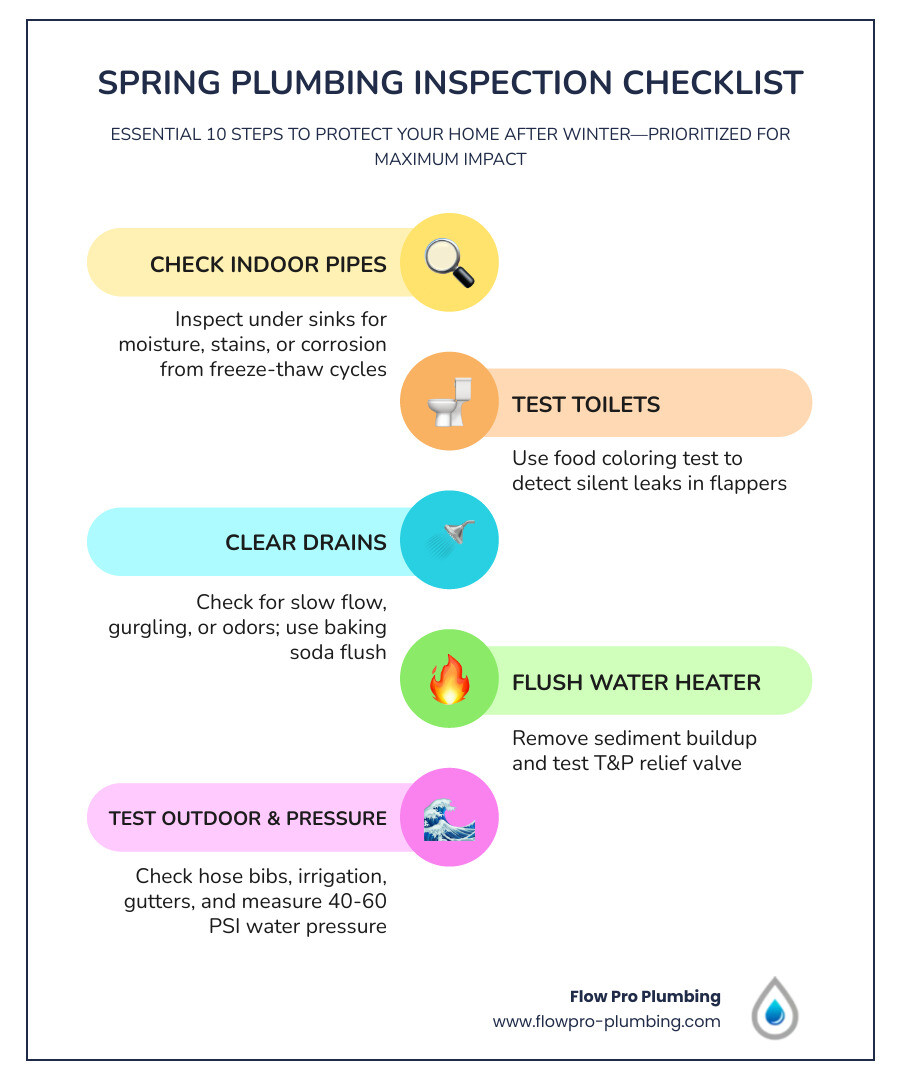
A spring plumbing inspection checklist is the best way to catch hidden damage before it turns into a costly repair. Here’s a quick overview of what to cover:
- Indoor pipes and fixtures – Check under sinks for moisture, stains, or corrosion
- Toilets – Use the food coloring test to detect silent leaks
- Drains – Look for slow flow, gurgling, or odors
- Water heater – Flush sediment and inspect the T&P valve
- Sump pump – Test activation by pouring water into the pit
- Outdoor faucets and hose bibs – Turn on and check for drips or weak flow
- Irrigation system – Test zones and inspect sprinkler heads
- Gutters and downspouts – Clear debris and confirm water directs away from your foundation
- Water pressure – Measure with a gauge (ideal range: 40-60 PSI)
- Main shut-off valve – Confirm it opens and closes fully
Even if your home made it through winter without any obvious problems, the season still puts real stress on your plumbing. Pipes expand and contract with temperature swings. Joints loosen. Small cracks form in places you can’t easily see. By the time spring rains arrive and water use picks up, those hidden issues can surface fast — and the damage they cause can be significant.
The good news? A focused spring inspection doesn’t take long, and catching a small drip now is far less stressful than dealing with a flooded basement or a burst pipe later.
I’m Jesse Delgado, owner of Flow Pro Plumbing in Brentwood, California, and I grew up in the trade working alongside my father on residential, new construction, and commercial jobs — experience that shapes how I approach every spring plumbing inspection checklist we walk homeowners through today. Whether you’re a longtime homeowner or just settling into your first place, this guide will help you know exactly what to check and when to call in a pro.
In Northern California, we may not deal with the sub-zero blizzards of the Midwest, but our “winter” still puts a unique strain on residential plumbing. Between the chilly nights in Oakley and the heavy rain cycles in Walnut Creek, your pipes undergo constant expansion and contraction. This movement can weaken joints and cause small, hairline fractures that stay hidden until the water pressure increases in the spring.
The transition from winter to spring is the most common time for homeowners to discover leaks. During the colder months, water in outdoor pipes can freeze and expand. Even if the pipe doesn’t burst immediately, the pressure can compromise the structural integrity of the metal or plastic. When things thaw out and you turn that garden hose on for the first time, a weakened pipe might finally give way.
Understanding 3 Common Winter Plumbing Problems in Northern California can help you identify where your system is most vulnerable. Often, the issues we see in March and April are actually “leftovers” from Plumbing Projects to Complete Before the Holidays that were perhaps overlooked during the winter rush. By utilizing a structured spring plumbing inspection checklist, you are essentially performing a “post-game analysis” of how your home handled the cold.
Indoor Fixtures and Leak Detection
The first stop on your indoor tour should be under every sink in the house. Grab a flashlight and look for the tell-tale signs of trouble: damp spots, water stains on the cabinet floor, or greenish-white crusty buildup (corrosion) on the shut-off valves and supply lines.
Even a tiny drip can lead to massive problems. A small leak under a kitchen sink in Pittsburg or Antioch can go unnoticed for weeks, leading to wood rot and mold growth. Beyond the structural damage, Importance of Plumbing Maintenance is about efficiency. A single dripping faucet can waste hundreds of gallons of water over a season, which is neither good for the environment nor your utility bill.
Check the flexible hoses leading to your dishwasher and washing machine. If you see any bulges, cracks, or fraying, replace them immediately. We recommend upgrading to braided stainless steel hoses, which are far more durable than standard rubber ones and can last up to 10 years.
Testing for Toilet Leaks and Bathroom Efficiency
Toilets are often the biggest water-wasters in the home because they can leak silently. A worn-out flapper—the rubber valve at the bottom of the tank—can allow water to seep into the bowl. This “phantom flushing” can waste over 200 gallons of water every single day!
Here is the easiest DIY test in the book:
- Remove the tank lid.
- Drop about 5–10 drops of food coloring into the tank water.
- Wait 30 minutes without flushing.
- If the water in the toilet bowl has changed color, you have a leak.
If you find yourself constantly repairing an old toilet, it might be time to consider Plumbing and Your Bathroom Remodel. Modern high-efficiency toilets use only 1.28 gallons per flush, compared to older models that might use 3.5 to 7 gallons. That’s a massive saving over the course of a year.
Maintaining Drains and Preventing Clogs
As we move into spring, our drains often get a workout from increased cleaning and household activity. To prevent a major backup, keep an eye out for slow drainage, gurgling sounds, or foul odors coming from the sink.
Common clog culprits include:
- Hair and soap scum in showers.
- Cooking grease and fibrous vegetables (like celery) in the kitchen disposal.
- “Flushable” wipes that aren’t actually flushable.
For a natural spring refresh, skip the harsh chemical cleaners that can corrode your pipes. Instead, pour half a cup of baking soda down the drain, followed by half a cup of white vinegar. Let it fizz for 10 minutes, then flush with hot water. For deeper issues, Regular Drain Cleaning by a professional is the only way to ensure your lines are truly clear of grease and mineral buildup.
Outdoor Maintenance and System Pressure
Outdoor plumbing often takes the brunt of winter damage. Your spring plumbing inspection checklist must include a thorough walk-around of the property. Start by checking your hose bibs (outdoor faucets). If you left a hose connected over the winter, water could have trapped inside the pipe and frozen, causing a split behind the wall.
Turn the faucet on and place your thumb over the opening to create some pressure. If the flow stops easily or you hear water spraying inside the wall, you likely have a cracked pipe that needs immediate attention.
Next, check your irrigation system. Turn on each zone and look for:
- Broken or clogged sprinkler heads.
- “Geysers” indicating a broken underground line.
- Heads that are spraying your house walls instead of the lawn (this can lead to foundation issues).
While you’re outside, don’t forget the gutters. If they are clogged with winter debris, water will overflow and pool around your foundation. Ensure your downspout extensions direct water at least five to six feet away from the home to prevent basement or crawl space dampness. This is a key part of The Time is Now for Spring Cleaning.
Essential Outdoor spring plumbing inspection checklist Tasks
In areas like Discovery Bay or Byron, where soil can shift, check your exterior drainage.
- Exposed Pipes: Inspect any pipes in unconditioned spaces (like a garage or crawl space) for signs of condensation or cracks.
- Window Wells: Clear out leaves and trash so they don’t hold water against your basement windows.
- Local Codes: If you are adding new outdoor fixtures, always consult Local Plumbing Codes & Regulations to ensure your backflow preventers are up to standard.
Checking Water Pressure and Main Shut-off Valves
Water pressure that is too high is a silent killer for appliances and pipe joints. You can buy a simple pressure gauge at a hardware store in Concord or Pleasant Hill and hook it up to an outdoor faucet.
| Pressure Level | Status | Risk |
|---|---|---|
| Below 40 PSI | Low | Poor shower performance, slow filling toilets |
| 40 – 60 PSI | Ideal | Optimal for fixture longevity and comfort |
| Above 80 PSI | High | Blown seals, leaking water heater, burst pipes |
Finally, locate your main water shut-off valve. If a pipe bursts while you’re gardening this spring, you need to know exactly where that valve is and ensure it isn’t rusted shut. Give it a quick turn to make sure it moves freely.
Water Heater and Sump Pump Performance
Your water heater works its hardest during the winter because the incoming water is much colder. This extra work often leads to increased sediment buildup at the bottom of the tank. If you hear “popping” or “rumbling” noises, that’s the sound of steam bubbles fighting through a layer of mineral crust.
For homeowners in Brentwood or Pittsburg, knowing How Often to Drain Your Water Heater is essential. Generally, a full flush once a year is the gold standard for maintaining efficiency and extending the unit’s 10–15 year lifespan.
If your home has a basement or a low-lying crawl space, your sump pump is your last line of defense against spring flooding. Test it by pouring a bucket of water into the pit. The float switch should rise, the pump should kick on, and the water should disappear quickly. If it doesn’t, check the backup battery. Most sump pump failures are caused by dead batteries during a power outage!
How to Flush a Water Heater for Efficiency
Flushing your water heater isn’t just about cleaning; it’s about saving money. Sediment acts as an insulator, meaning your burner or heating element has to run longer to heat the same amount of water.
To perform a basic flush:
- Turn off the power (electric) or set the gas to “Pilot.”
- Close the cold water supply valve.
- Connect a garden hose to the drain valve at the bottom.
- Open a hot water faucet elsewhere in the house to prevent a vacuum.
- Open the drain valve and let the water flow until it runs clear.
For a more detailed guide, see our breakdown on How to Flush a Water Heater. Keeping your temperature set to 120°F is also a great way to prevent scalding and save on energy bills.
Finalizing Your spring plumbing inspection checklist with Professional Help
While many of these tasks are DIY-friendly, some things require a professional eye. If you have multiple slow drains or a recurring sewage smell in your yard, it could indicate root intrusion. In the spring, tree roots grow aggressively toward water sources, and older sewer lines are a prime target.
A professional Water Heater Maintenance Brentwood visit or a sewer camera inspection can find these “invisible” problems before they cause a backup in your home. Our team at Flow Pro Plumbing uses high-tech diagnostics to check for hidden leaks and structural weaknesses that a simple visual check might miss.
Frequently Asked Questions about Spring Plumbing
How do I check for hidden leaks using my water meter?
This is a great “overnight” test. Ensure all water-using appliances (dishwasher, laundry) are off. Go to your water meter and write down the number. Do not use any water for two hours. If the number has changed when you check back, you have a hidden leak somewhere in your system.
What is the ideal water pressure for my home?
The sweet spot is between 40 and 60 PSI. If your pressure is consistently over 80 PSI, you should have a professional install or replace a Pressure Reducing Valve (PRV) to protect your plumbing system from premature wear.
How often should I test my sump pump?
You should test your sump pump at least twice a year—once in the spring before the heavy rains, and once in the fall. If your area is prone to heavy storms, checking the backup battery every three months is a smart move.
Conclusion
Spring is the season of renewal, and that should include your home’s most vital system. By following this spring plumbing inspection checklist, you can enjoy the warmer weather without the looming fear of a plumbing disaster. From checking for silent toilet leaks to flushing your water heater, these small steps pay off in long-term reliability and lower bills.
At Flow Pro Plumbing, we take pride in serving our neighbors in Brentwood, Oakley, Discovery Bay, and throughout the region. We are known for our experienced, friendly team and unsurpassed workmanship. If your DIY inspection reveals something that needs a professional touch, we are here to help.
Whether you need to Find Companies That Offer Professional Water Heater Maintenance in Brentwood CA or you’re ready to Schedule your comprehensive spring maintenance with Flow Pro Plumbing today!, don’t wait for an emergency. Give your pipes the spring cleaning they deserve and gain true peace of mind for the season ahead.