
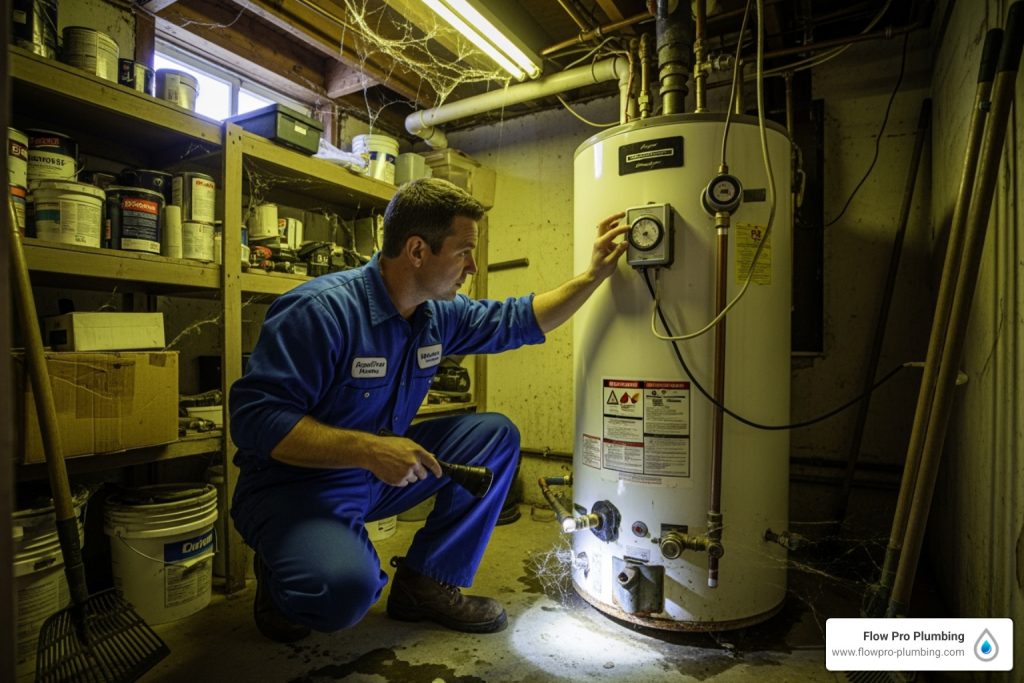
Why Water Heater Maintenance Matters for Brentwood Homeowners
Water heater maintenance Brentwood services help prevent the nightmare of an ice-cold shower. Your water heater works around the clock for showers, dishwashing, and laundry, making it a vital home appliance.
Top water heater maintenance services in Brentwood include:
- Annual professional inspections to catch problems early
- Tank flushing to remove sediment buildup
- Anode rod replacement to prevent tank corrosion
- Temperature and pressure valve testing for safety
- Thermostat calibration for optimal efficiency
- Emergency repair services for unexpected breakdowns
Water heaters account for about 15% of your utility bill, the second largest energy expense in most homes. Without proper maintenance, they can fail unexpectedly, leaving you without hot water and facing costly emergency repairs.
Regular maintenance can extend your water heater’s life by up to 5 years beyond the typical 10-15 year lifespan and ensures your family has safe, reliable hot water.
I’m Jesse Delgado, owner of Flow Pro Plumbing. For over a decade, I’ve helped Brentwood homeowners with water heater maintenance Brentwood services. My experience shows that proactive maintenance is more cost-effective than reactive repairs and protects your family’s comfort.
Basic water heater maintenance Brentwood vocab:
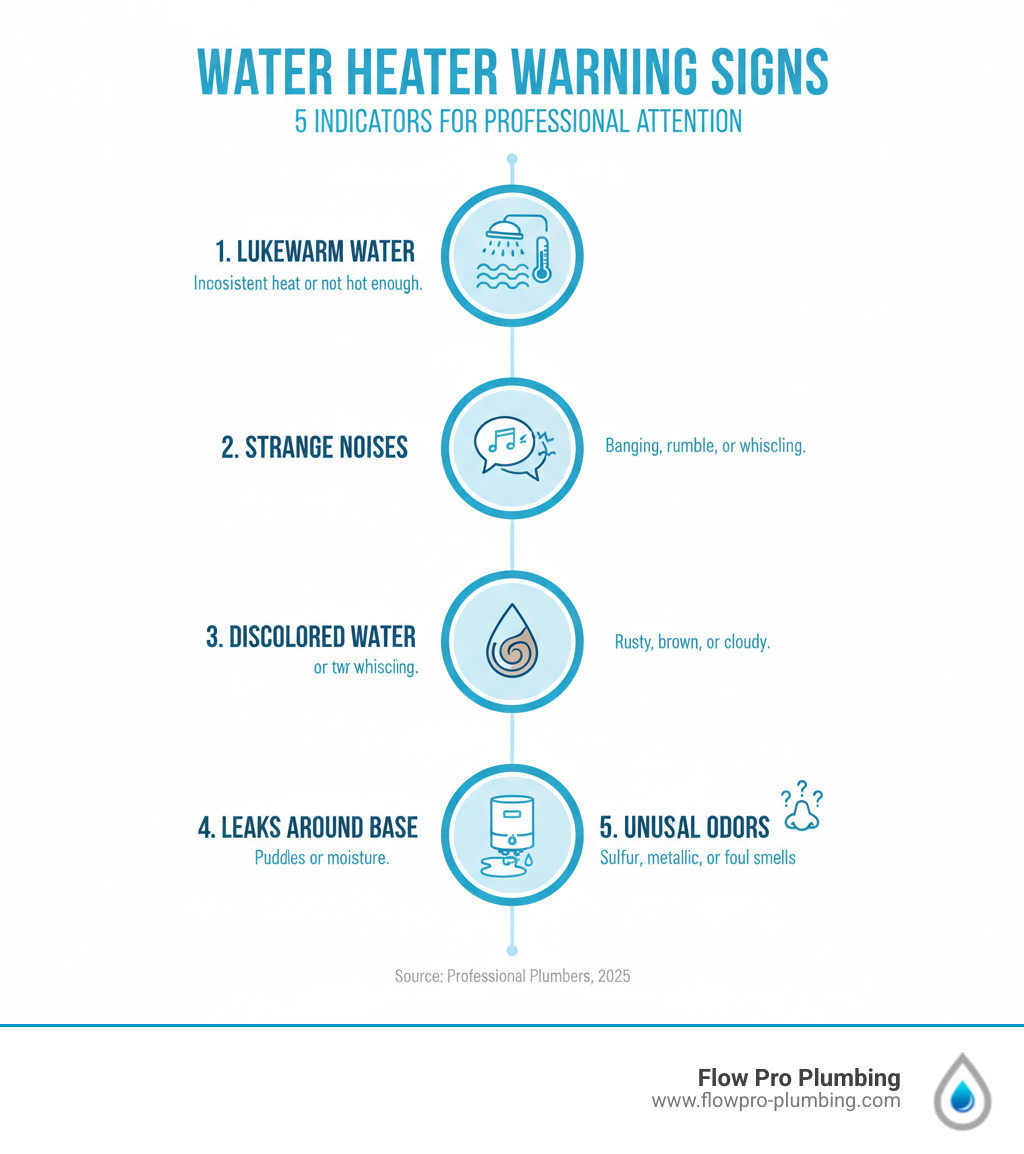
Is Your Water Heater Crying for Help? 7 Telltale Signs
Is your shower suddenly ice-cold? Are you hearing strange rumbling from the utility closet? Your water heater might be sending distress signals. For water heater maintenance Brentwood homeowners can’t afford to ignore, recognizing these signs early can save you from expensive repairs and cold surprises.
Lukewarm or no hot water is often the first sign of trouble. If your hot water runs out quickly or disappears, it could be a failed heating element in an electric unit or a pilot light issue in a gas heater.
Discolored or rusty water flowing from your hot taps indicates internal tank rust. This is a serious warning sign of bigger problems to come.
Strange noises like rumbling or popping usually mean mineral deposits have settled in your tank. As the sediment is heated, it shifts and creates these sounds.
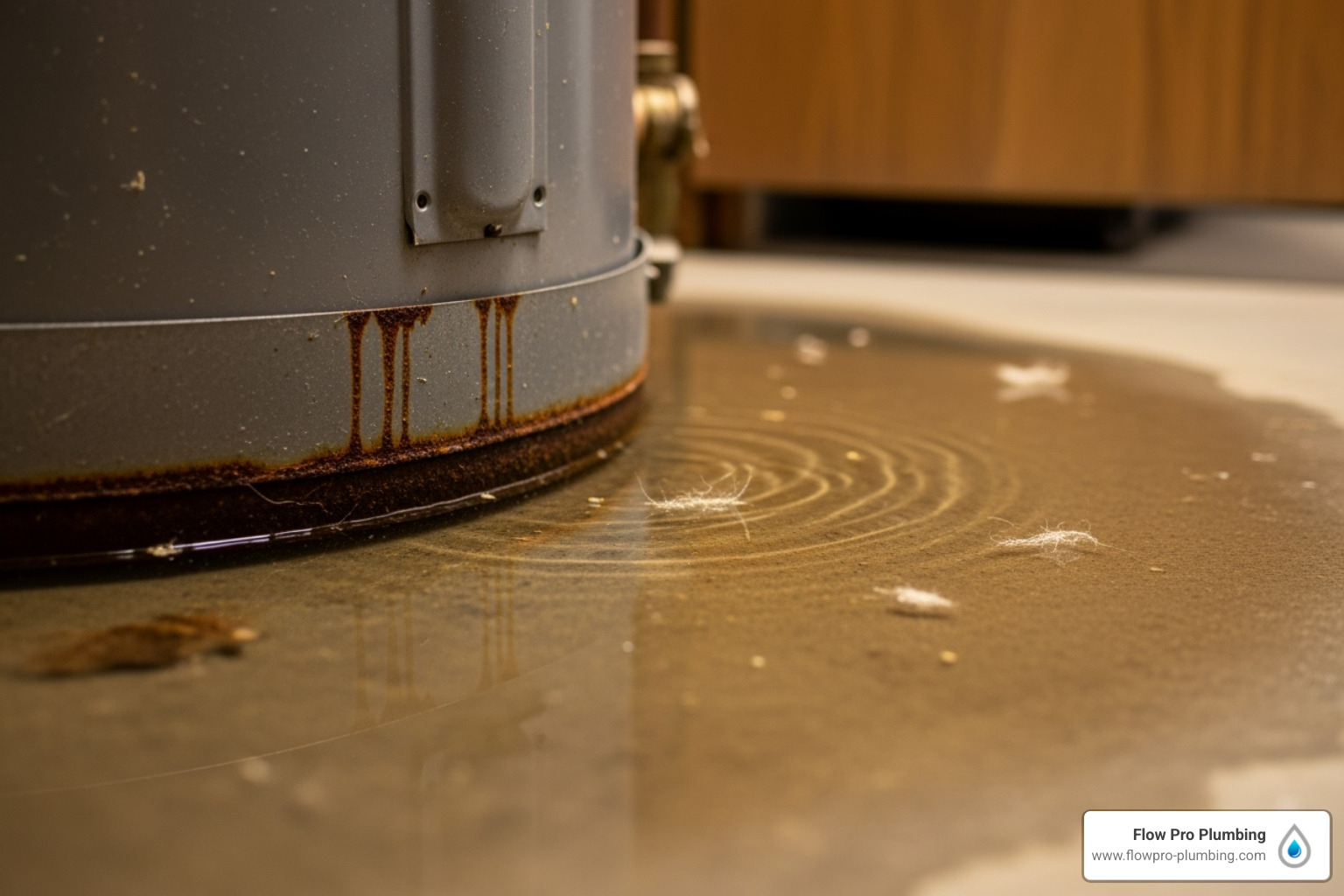
Leaks and moisture around your water heater’s base are never a good sign. Even small puddles are serious, as leaks can escalate from a minor issue to a major flood.
Foul odors, especially a rotten egg smell, indicate bacteria interacting with the anode rod. While not typically harmful, it certainly ruins your enjoyment of hot water.
For gas water heaters, pilot light problems are a concern. A pilot light that won’t stay lit can signal a problem with a safety component like the thermocouple, which requires professional attention.
Finally, consider age. If your unit is over 10-15 years old, even minor issues may signal it’s time to consider replacement.
When you notice any of these symptoms, quick action is key. A small repair can become a major headache if ignored. For more details, check our guide on when a Water Heater Needs Repair.
Common Water Heater Malfunctions in Brentwood
Understanding the specific problems behind these signs helps you communicate with your plumber and make smart decisions about water heater maintenance Brentwood services.
Thermostat failure causes erratic water temperatures and higher energy bills because it can’t properly regulate the heat.
Heating element burnout affects electric water heaters. When an element fails, your hot water supply will drop dramatically or disappear.
Sediment buildup is common in our area due to minerals in the water. This crusty layer forces the heater to work harder, causes noise, and can damage the tank.
Anode rod corrosion is by design; the rod is a sacrificial part that corrodes to protect your tank. Once it’s gone, the tank itself will rust. A worn-out rod can also cause a sulfur smell.
Tank leaks are the most serious problem. Leaks from the tank itself, unlike connection leaks, usually mean the unit must be replaced, as the stress of heating and cooling causes irreparable seam failures.
For gas heaters, a pilot light that won’t stay lit is often due to a faulty thermocouple. This safety device shuts off the gas if it can’t detect a flame. Learn more about this issue in our article on what to do when a Water Heater Pilot Light Won’t Stay Lit.
The Payoffs of Proactive Care: Why Regular Maintenance Matters
Thinking about your water heater isn’t a top priority, but a little attention now prevents major headaches later. Consider water heater maintenance Brentwood an investment that pays dividends, just like regular oil changes for your car.
Regular maintenance can extend your water heater’s lifespan significantly. Most units last 10-15 years, but proper care can add up to 5 more years to that timeline, delaying replacement costs.
A well-maintained water heater is an energy-efficient water heater. Sediment buildup forces your unit to work overtime, wasting energy. Since water heating is about 15% of your total utility bill, improved efficiency means lower monthly costs. Regular maintenance can reduce this energy consumption by 10-20%.
Perhaps most importantly, routine care helps prevent catastrophic failures. Regular inspections catch small problems, like potential leaks, before they become expensive disasters.
Safety is another crucial benefit. We check critical components like the temperature and pressure relief valve and ensure proper ventilation for gas units to protect your family.
Finally, regular maintenance ensures you have consistent hot water when you need it, preventing the shock of an unexpectedly cold shower.
For practical tips on keeping your system running smoothly, check out our Water Heater Repair Brentwood Tips.
Energy Efficiency and Your Thermostat
A simple way to improve your water heater’s efficiency is to check your thermostat. Many are set higher than necessary, wasting money.
The sweet spot for most homes is 120°F. The Department of Energy recommends this temperature for its balance of comfort, efficiency, and safety.
At 120°F, your heater uses less energy. Every 10-degree reduction can save 3-5% on water heating costs, adding up to real savings.
Safety is equally important. Water at 140°F can cause severe burns in seconds. The 120°F setting is much safer, especially for children and elderly relatives.
We don’t recommend going below 120°F, as lower temperatures can allow bacteria to grow in the tank, creating potential health concerns.
If you’ve recently adjusted your thermostat, our guide on How Long For Water Heater To Heat Up can help you understand what to expect.
Your Essential Checklist for Water Heater Maintenance in Brentwood
Like a car, your water heater needs regular checkups to run reliably. Water heater maintenance Brentwood should be consistent, and an annual check can prevent emergency calls.
Annual professional inspections are the gold standard. A trained eye can catch small issues before they become expensive problems.
Safety is paramount. Before any maintenance, turn off the power (for electric units) or gas supply. If you’re ever in doubt, call a professional to avoid risking your safety or your home.
The maintenance approach differs slightly between gas and electric heaters, but both need regular flushing, safety checks, and component inspections. Gas units require extra attention to venting and combustion components.
Key Maintenance Tasks for Tank Heaters
Your traditional tank water heater performs best with regular support.
Anode rod inspection is a top priority. This sacrificial part prevents tank corrosion. We recommend an annual check, especially with Brentwood’s water conditions. If it’s over 75% corroded, it needs replacement.
Flushing the tank is crucial. Over time, mineral sediment settles at the bottom, forcing the heater to work harder, causing noise, and potentially damaging components. Draining the tank flushes this gunk out. For a step-by-step walkthrough, see our guide on How to Flush a Water Heater.
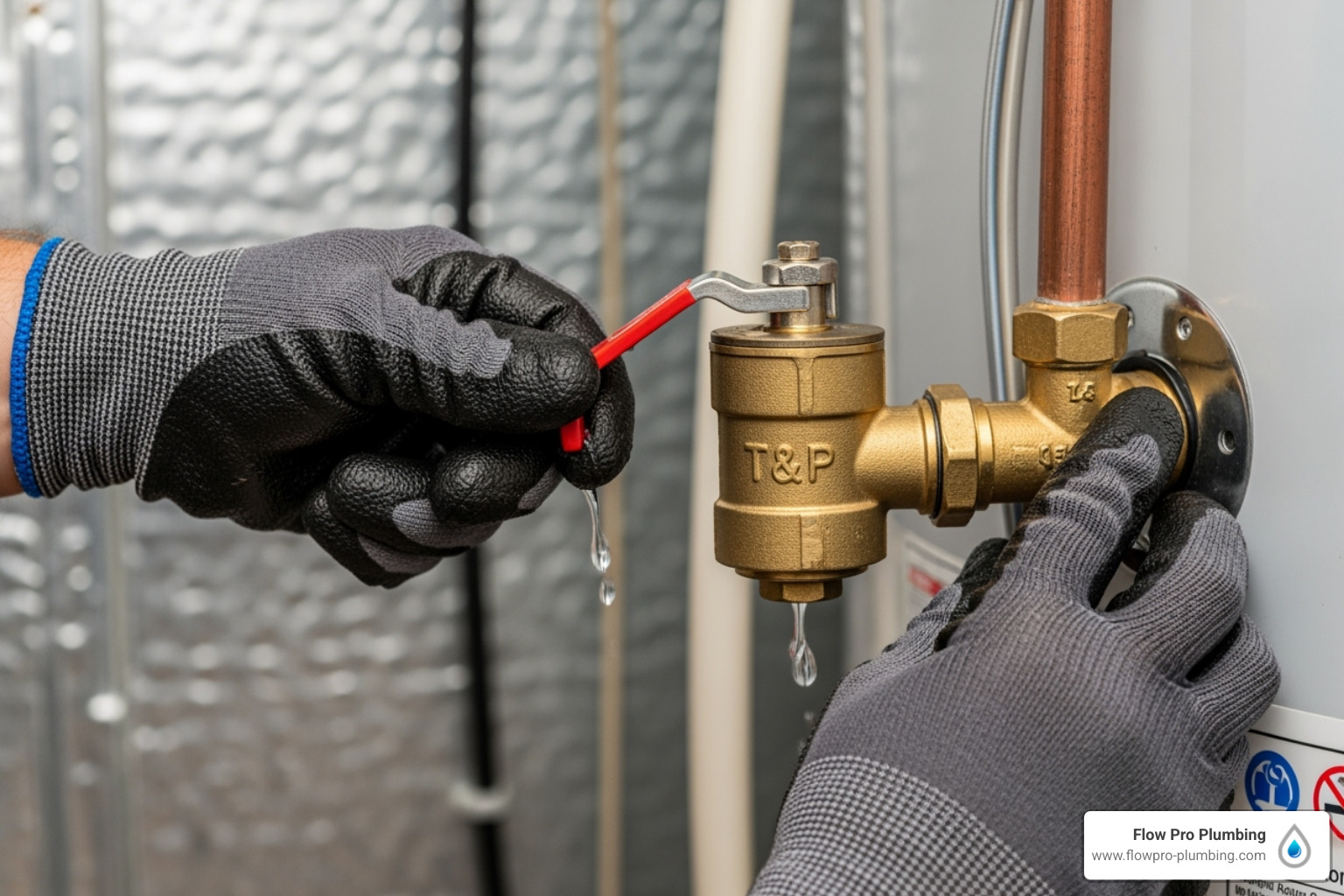
Testing the temperature and pressure (T&P) valve is a simple but vital safety check. This valve releases excess pressure. We test it to ensure it opens and closes properly. A faulty valve must be replaced.
Checking for leaks and corrosion with a visual check around connections, the tank exterior, and the drain pan is essential. Catching a small leak early prevents a potential flood. Sometimes drain valves can develop issues; you can learn more about drain valves and their replacement if needed.
Essential tank maintenance steps include:
- Annual anode rod inspection and replacement when needed
- Complete tank flushing to remove sediment buildup
- T&P valve testing for proper safety operation
- Comprehensive leak and corrosion inspection
- Thermostat calibration and temperature verification
Special Care for Tankless Models
Tankless water heaters are efficient but need specialized care.
Descaling is the most critical task for tankless units, especially with hard water. Mineral buildup in the heat exchanger reduces efficiency. The process involves circulating a solution to dissolve deposits and is often best left to professionals as part of your water heater maintenance Brentwood routine.
Cleaning intake filters is also important. Tankless units have filters that catch sediment. If clogged, water flow drops and the unit works harder. Regular cleaning keeps things flowing smoothly.
Professional inspection benefits are clear with tankless models, which have sophisticated electronics and sensors that require expert evaluation. A professional can calibrate components and spot subtle efficiency losses. To learn more, visit our page on the Benefits of a Tankless Water Heater.
Repair or Replace? Making the Smart Choice for Your Home
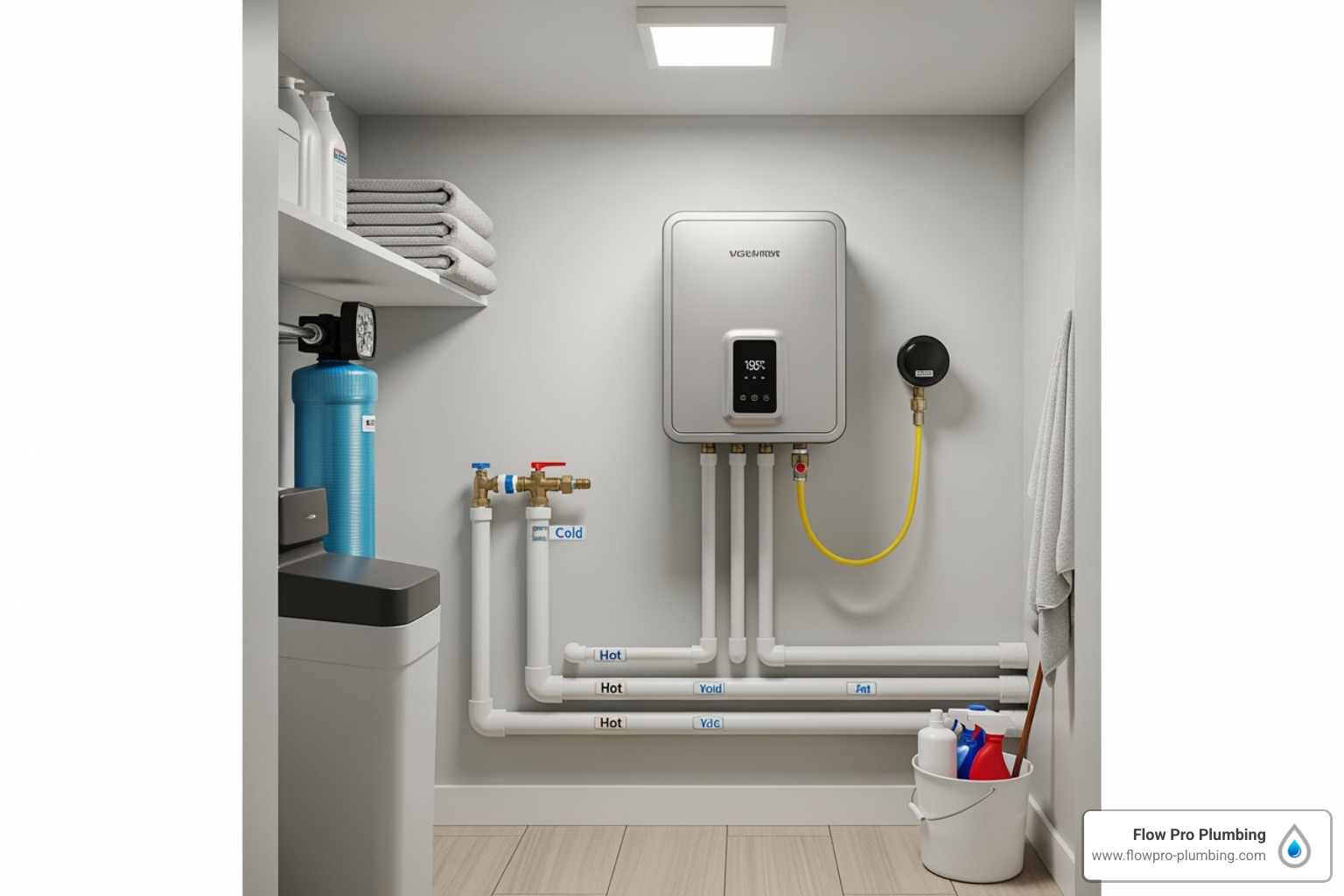
Brentwood homeowners often face the dilemma of repairing or replacing a failing water heater. The decision depends on cost, unit age, repair frequency, and energy requirements.
A crucial factor is the NAECA (National Appliance Energy Conservation Act), which sets minimum efficiency standards for new water heaters. This means new models are often more efficient but may be larger or have different connection requirements than your old unit. A new NAECA-compliant model can offer significant energy savings, potentially offsetting the replacement cost over time.
When to Choose Repair Over Replacement for Your Brentwood Water Heater
We generally advise leaning towards repair if:
- Age Under 10 Years: If your unit is under 10 years old, it likely has life left. Issues are often minor component failures (thermostat, heating element) that are cost-effective to repair.
- Minor Component Failure: If the problem is an isolated part and the tank is in good condition (no leaks), a repair is a good choice.
- Cost of Repair vs. Replacement: If the repair cost is much less than a replacement, it’s the smart choice. But if the repair is close to half the cost of a new unit, replacement is worth considering.
The critical exception is a leaking tank. If the tank itself is leaking, replacement is the only option, as it cannot be reliably repaired. For more information, visit our Water Heater Repair Brentwood CA page.
Deciding on a Replacement: Tank vs. Tankless Heaters
When it’s time for a replacement, the choice often comes down to traditional tank water heaters versus tankless models.
Here’s a quick comparison:
| Feature | Traditional Tank Water Heaters | Tankless Water Heaters |
|---|---|---|
| Lifespan | 10-15 years | 20+ years (can outlast tank heaters by 10 years) |
| Efficiency | Stores and reheats water, less efficient | Heats water on demand, up to 30% more efficient |
| Hot Water Supply | Limited by tank size, can run out | Endless hot water (heats as needed) |
| Space | Large, takes up significant floor space | Compact, wall-mounted, saves space |
| Initial Cost | Generally lower | Generally higher |
| Operating Cost | Higher due to standby heat loss | Lower due to on-demand heating |
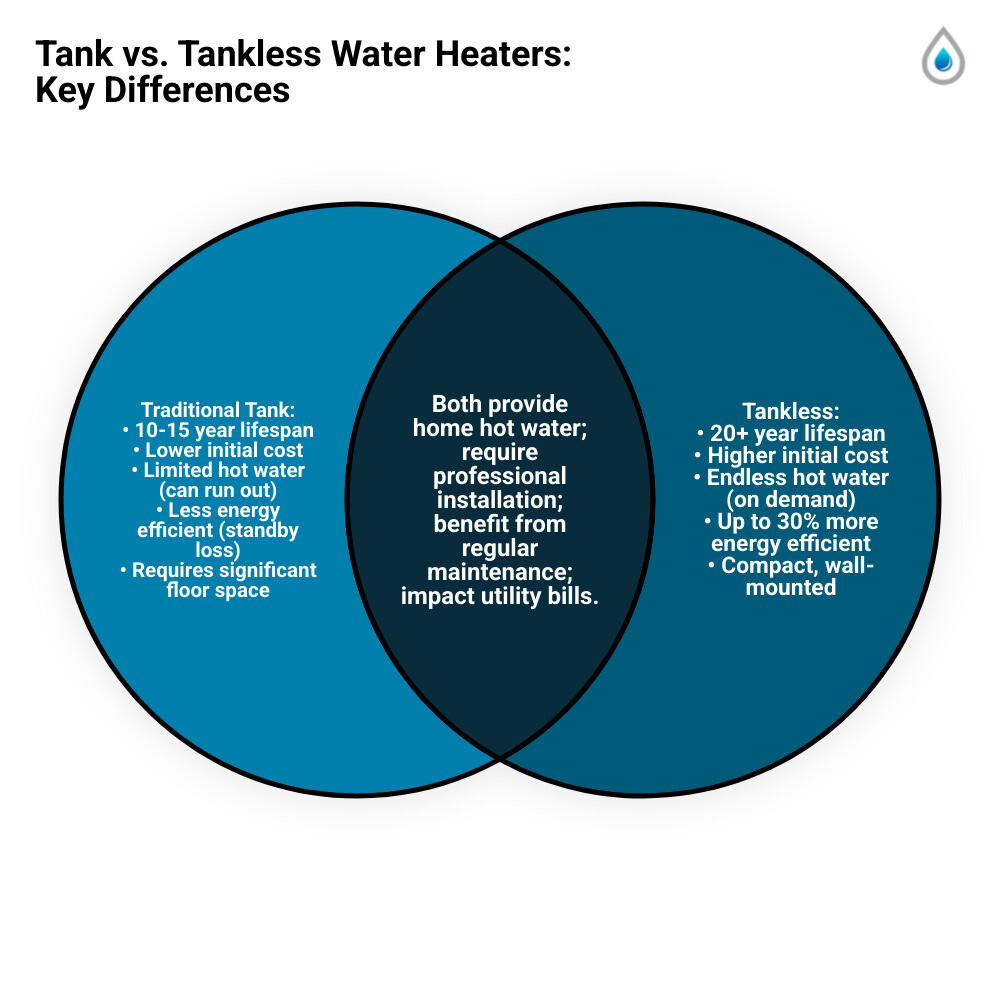
Tankless Advantages: Tankless water heaters are popular for their efficiency, long lifespan, and compact size. They provide endless hot water on demand and are up to 30% more efficient than tank models, saving you money on energy bills.
High-Efficiency Models: Beyond tankless, there are also high-efficiency traditional tank models and electric heat pump water heaters.
Household Water Usage: Your household’s water usage is a key factor. For homes using under 40 gallons of hot water daily, tankless is often ideal. For higher demand, a traditional tank or a larger tankless system may be better. We can help you assess your needs. For a seamless upgrade, consider our Tankless Water Heater Installation Brentwood CA services.
Frequently Asked Questions about Water Heater Care
Here are answers to the most common questions we hear from Brentwood homeowners about water heater maintenance Brentwood.
How often should I have my water heater maintained?
The golden rule is to schedule professional service once a year. This regular checkup prevents bigger problems. During an annual visit, we inspect the unit, flush sediment, test safety components, and ensure efficiency, often catching problems before they become disasters.
Between professional visits, do a visual check every six months for leaks, rust, or strange noises. It only takes a minute and can prevent major damage.
If you have hard water, more frequent maintenance may be needed, as it accelerates sediment buildup and wear on components.
What’s the ideal temperature setting for my water heater?
A common mistake is setting the temperature too high. 120°F is the ideal setting for both efficiency and safety. The Department of Energy recommends this temperature because it uses less energy, lowering utility bills without sacrificing comfort.
Crucially, 120°F reduces the risk of scalding. Water at 140°F can cause severe burns in seconds, making the lower temperature much safer for families.
Many newer water heaters have a vacation setting that maintains a lower temperature while you’re away, saving energy.
Why is my water heater making a popping or rumbling noise?
Popping or rumbling noises are a sign of sediment buildup at the bottom of the tank. Minerals from the water supply settle in the tank. When the heating element turns on, it heats this sediment, which expands and shifts, creating the noise.
This sediment layer insulates the water from the heating element, forcing the system to work harder and less efficiently.
The solution is to flushing the tank, which removes the buildup and restores quiet, efficient operation. This is a key part of regular maintenance.
Conclusion: Ensure Your Home’s Comfort with Expert Care
Your water heater is the unsung hero of your Brentwood home. We’ve covered the warning signs it needs attention, the benefits of proactive care, and the essential maintenance tasks to keep it running smoothly.
The impact of water heater maintenance Brentwood is significant. A proactive approach rather than waiting for disaster protects your comfort and is a smart financial decision. It extends your unit’s life, lowers utility bills, and prevents catastrophic failures like a leaking tank.
The choice is clear: a small investment in annual maintenance is far better than the stress and expense of an emergency replacement.
Local expertise makes all the difference. A team that understands Brentwood’s unique challenges, like hard water, provides service custom to your home’s specific needs.
At Flow Pro Plumbing, our reputation is built on unsurpassed workmanship and friendly service. When you call us for water heater maintenance Brentwood, you get peace of mind from a team that cares about your family’s comfort.
Don’t let your water heater become an afterthought. Take control of your home’s comfort and efficiency. Schedule your water heater service today! and see why a little prevention is worth a pound of cure.