

How Long Does a Garbage Disposal Last? Here’s What Most Homeowners Need to Know
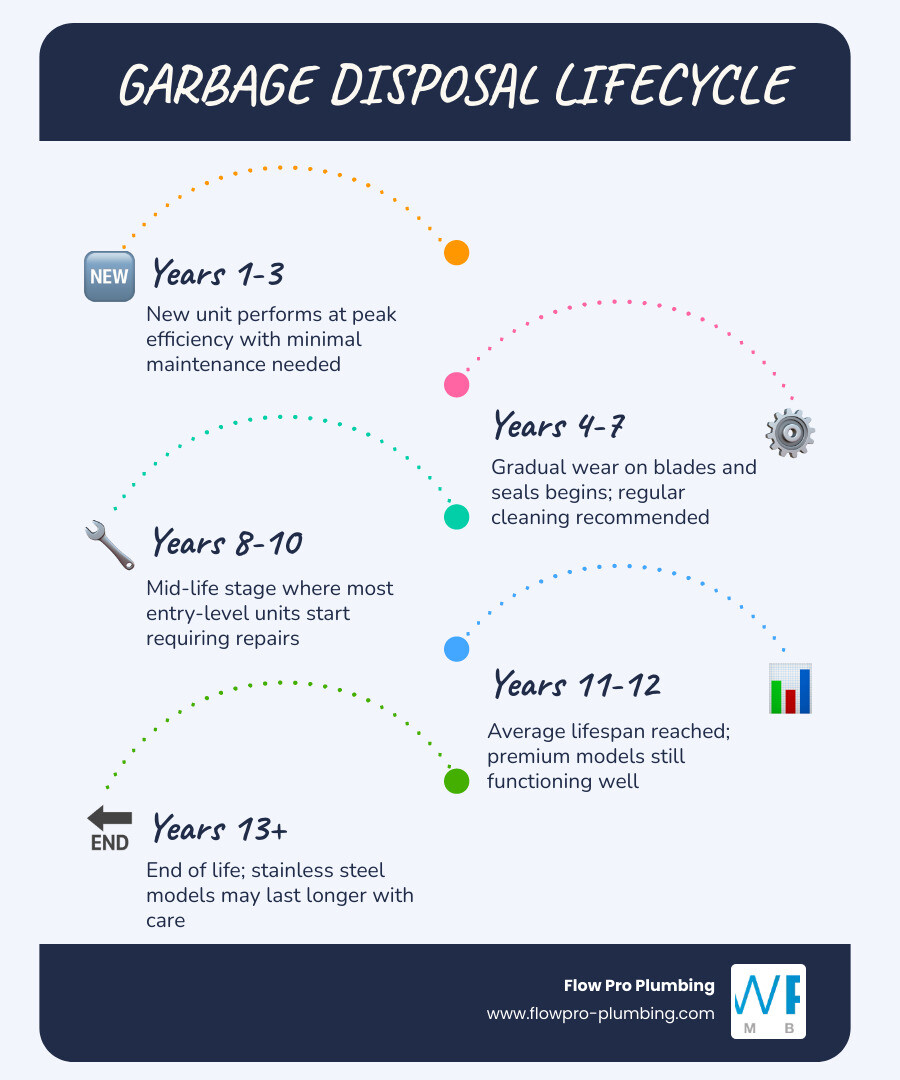
How long does a garbage disposal last depends on a few key factors — but for most homes, you can expect somewhere between 8 and 15 years, with the sweet spot landing around 10 to 12 years when the unit is properly maintained. The Association of Home Appliance Manufacturers puts the average at about 11 years, and the International Association of Certified Home Inspectors (InterNACHI) cites 12 years as a reasonable benchmark.
Here’s a quick breakdown by disposal type:
| Disposal Type | Expected Lifespan |
|---|---|
| Budget / entry-level (1/3–1/2 HP) | 6–8 years |
| Mid-range | 10–12 years |
| Premium / stainless steel components | 12–15+ years |
Whether your unit is humming along fine or giving you trouble, knowing where it falls on that timeline helps you decide whether a repair makes sense — or whether it’s time to move on.
Garbage disposals are easy to take for granted. They run quietly under the sink, handling food scraps day after day, and most homeowners don’t think twice about them until something goes wrong. But like any appliance, they have a finite lifespan — and the way you use and maintain yours has a direct impact on how long it holds up.
I’m Jesse Delgado, owner of Flow Pro Plumbing in Brentwood, California, and I’ve been helping East Bay homeowners navigate questions about how long does a garbage disposal last for over a decade as a licensed plumber. Understanding what affects disposal longevity is something I deal with regularly on service calls, and I’ll walk you through everything you need to know.
Similar topics to how long does a garbage disposal last:
- foods you should never put in a garbage disposal
- how to keep your garbage disposal clean
- plumber for garbage disposal repair
How Long Does a Garbage Disposal Last on Average?
When we look at the average lifespan of a garbage disposal, we generally expect a good decade of reliable service. However, “average” can mean very different things depending on the product quality and materials used during manufacturing.
One of the biggest differentiators in how long a garbage disposal lasts is the type of metal used in its grinding chamber. Budget-friendly, entry-level models typically feature galvanized steel components. While galvanized steel is sturdy initially, the protective zinc coating eventually wears away. Once that happens, the underlying steel is exposed to water, food acids, and oxygen, leading to rapid rusting and eventual failure. These budget models (usually sporting 1/3 to 1/2 horsepower) tend to last around 6 to 8 years before they succumb to corrosion or motor fatigue.
On the other hand, mid-range and high-end models utilize stainless steel grinding components. Stainless steel is highly resistant to corrosion, rust, and chemical wear. Because the material itself resists the harsh environment under your sink, stainless steel units regularly reach 12 to 15+ years of active duty.
| Feature | Entry-Level Units | Mid-Range Units | Premium Units |
|---|---|---|---|
| Average Lifespan | 6 to 8 years | 10 to 12 years | 12 to 15+ years |
| Grinding Material | Galvanized steel | Partial stainless steel | Full stainless steel |
| Typical Horsepower | 1/3 HP to 1/2 HP | 1/2 HP to 3/4 HP | 3/4 HP to 1+ HP |
| Warranty Range | 1 to 2 years | 3 to 6 years | 7 to 10+ years (or lifetime) |
Product quality dictates the baseline. When you buy a premium unit, you aren’t just paying for a quieter motor or a fancy brand name; you are paying for the high-grade materials that directly extend the unit’s operational life.
Key Factors That Impact How Long a Garbage Disposal Lasts
While the manufacturer sets the baseline, your daily habits and environment dictate whether your disposal reaches its maximum potential or dies an early death. Several critical factors influence this timeline:
- Frequency of Use: Running a disposal too frequently with massive loads can overheat the motor, while never running it at all allows water to sit, leading to premature rust and seized components.
- Water Hardness: Hard water is a major variable in East Bay communities like Brentwood, Concord, and Antioch. Mineral deposits can build up on the moving parts, causing friction and wearing down internal seals.
- Installation Quality: A disposal that isn’t mounted securely or is misaligned with the drain pipes will vibrate excessively. Over time, these vibrations can loosen plumbing connections, crack the mounting ring, or damage the motor bearings.
- Motor Horsepower: Smaller motors have to work twice as hard to grind down basic food scraps, causing them to wear out much faster than higher-horsepower alternatives.

How Long Does a Garbage Disposal Last Under Heavy Daily Use?
If you have a large family, your garbage disposal works overtime. Household size directly correlates to how much food waste goes down the drain. If five or six people are scraping their plates into the sink daily, a small 1/3 HP disposal will quickly experience motor overload.
Under heavy daily use, an undersized unit might only survive 4 to 5 years. The constant strain of grinding large volumes of food causes the motor to overheat and the blades to dull rapidly. To ensure your kitchen setup matches your household’s grinding capacity, we recommend reading through our Garbage Disposal Antioch Guide to learn how to properly match horsepower to your family’s needs.
How Long Does a Garbage Disposal Last with Continuous-Feed vs. Batch-Feed Designs?
The design of your garbage disposal also plays a role in its longevity.
- Continuous-Feed Models: These are the most common models. You flip a wall switch, the motor starts spinning, and you feed food scraps into the open drain. Because they are open, it is much easier for foreign objects like silverware, bottle caps, or jewelry to accidentally fall inside. If the unit is turned on with metal objects inside, it can instantly bend the blades, chip the grind ring, or burn out the motor.
- Batch-Feed Models: These units only turn on when a special stopper lid is placed over the drain opening and twisted into place. This built-in safety feature prevents foreign objects from slipping inside during operation. Because they are protected from accidental mechanical trauma, batch-feed models often experience fewer physical jams, helping them reach the upper limits of their expected lifespan.
Warning Signs Your Garbage Disposal Is Reaching the End of Its Life
As your disposal ages, it won’t always fail suddenly. Usually, it will send out clear warning signs that its internal components are wearing down. Recognizing these signs early can save you from a messy under-sink flood or a completely backed-up kitchen sink.
The first major indicator is slow grinding. If you find yourself running the disposal for twice as long just to clear a handful of soft vegetables, the blades or grinding ring have likely dulled. When the unit can’t grind efficiently, food leaves the chamber in large chunks, leading to frequent clogs in your drain line.
Persistent Leaks and Internal Seal Failures
Water pooling under your kitchen sink is a major red flag. While some leaks occur at the upper sink flange or the dishwasher bypass connection (which can usually be tightened or resealed), a leak coming directly from the bottom of the disposal housing is a different story.
Bottom leaks almost always point to failed internal seals. Over time, water penetrates the motor housing through these degraded seals, causing internal rust and hairline cracks in the outer shell. If you notice water dripping from the electrical cover plate at the bottom of the unit, the disposal is no longer safe to use and must be replaced. Furthermore, if you notice that your Garbage Disposal Won’t Drain or is constantly backing up water, it could be a sign of a structural blockage or internal failure.
Frequent Resets and Electrical Failures
Every modern garbage disposal has a red overload protector button on the bottom. If the motor gets too hot or encounters a minor jam, this button pops out to cut power and prevent the motor from burning up.
While resetting the unit once in a while is normal, having to constantly reach under the sink to push the Garbage Disposal Reset Button is a sign of a dying motor. As motors age, their electrical resistance increases, causing them to draw too much current and trip the built-in breaker or your home’s electrical panel. If your unit shuts off during normal, light use, the motor is likely near the end of its life.
Unusual Noises and Humming Without Grinding
If you flip the switch and hear a loud, metallic screeching or grinding sound, a physical component is likely broken. This could be a loose impellor blade rattling against the grind chamber or a failing motor bearing.
Conversely, if you flip the switch and only hear a low hum without any spinning, the flywheel is jammed, or the motor capacitor has failed. If you encounter this issue, turn off the switch immediately to avoid electrical damage and consult our guide on what to do when your Garbage Disposal Humming Not Working to troubleshoot safely.
Lingering Odors and Burning Smells
Over years of use, food waste can collect in the tiny crevices of a plastic or corroded galvanized steel grinding chamber. If you scrub the unit thoroughly and still notice a persistent, rotting smell, the housing material itself may have absorbed organic waste due to deep pitting and corrosion.
Even worse is a distinct, acrid burning smell. A Garbage Disposal Burning Smell points directly to an electrical short or an overheating motor. If you smell electrical smoke or hot plastic, cut the power immediately at the circuit breaker and call in a professional plumber.
Repair vs. Replace: Making the Right Decision for Your Kitchen
When your garbage disposal acts up, you have to ask yourself: is it worth fixing, or should you just start fresh?
To make the right choice, we recommend using the 10-year rule:
- If your unit is under 5 years old and experiencing a minor issue (like a simple jam or a loose connection), a professional repair is highly cost-effective.
- If your unit is between 5 and 9 years old, the decision depends on the severity of the issue. A simple plumbing seal replacement is worth it; a failing motor is not.
- If your unit is over 10 years old, it has reached the end of its reliable lifespan. Spending money on repairs is usually just delaying the inevitable, and a full replacement is the smartest long-term investment.
Before making a final call, it is always wise to get an expert opinion. You can reach out to our team for Expert Garbage Disposal Repair to diagnose the exact issue.
When to Consider Blade Replacement
Strictly speaking, garbage disposals do not have sharp, spinning knives like a blender. Instead, they use blunt metal impellers (often called “blades” or “cutters”) mounted on a spinning plate to fling food against a stationary grind ring.
Over time, these impellers can wear down, become loose, or get dull. If the rest of the unit is in excellent shape, you might wonder about a Garbage Disposal Blade Replacement. If you are wondering, “My garbage disposal blades are dull, who does garbage disposal blade replacement near me in Oakley?” you can learn more about local options by visiting My Garbage Disposal Blades Are Dull Who Does Garbage Disposal Blade Replacement Near Me in Oakley?.
When a Full Replacement Is the Best Option
There are several scenarios where repairing a disposal simply isn’t possible or practical. If the grinding chamber has cracked, if the motor has completely burned out, or if the internal seals have failed and water is leaking into the electrical compartment, a full replacement is your only safe option.
If you have a home warranty, check your policy details. Many comprehensive home warranties cover garbage disposal wear-and-tear replacements, allowing you to get a brand-new unit installed for just a basic service call fee. If you live in the East Bay area and need a high-quality replacement installed correctly, we invite you to learn about our services for a new Garbage Disposal in Pittsburg.
Best Maintenance Practices to Extend Your Disposal’s Lifespan
You don’t have to sit back and watch your garbage disposal slowly degrade. By adopting a few simple, proactive maintenance habits, you can easily add several years to your unit’s life.
- The Cold Water Flush: Always run cold water before you turn the disposal on, while it is grinding, and for about 15 to 20 seconds after you turn it off. Cold water is crucial because it keeps fats and grease solid, allowing the blades to chop them up and flush them down the pipe. Hot water melts fats, which then coat the inside of the disposal and your plumbing lines as they cool.
- The Ice and Salt Scrub: Once a month, dump two cups of ice cubes and a cup of coarse rock salt down the disposal, then turn it on with cold water. The hard ice and abrasive salt will scrub food residue off the spinning plate and impellers without dulling the metal.
- Baking Soda and Vinegar Freshener: To eliminate odors naturally, pour half a cup of baking soda down the drain, followed by a cup of white vinegar. Let the mixture fizz for 10 minutes, then flush it thoroughly with hot water (only do this when the disposal is turned off and you are just cleaning the chamber).
For a complete breakdown of how to keep your system running smoothly, check out our comprehensive Maintenance Tips for Garbage Disposals and our guide on Maintaining Your Garbage Disposal.
Food Items and Materials to Keep Out of Your Drain
The absolute best way to extend your disposal’s life is to watch what you put down it. Your disposal is not a trash can; it is designed only for light, organic food residue.
Never put the following items down your drain:
- Fibrous Vegetables: Celery, asparagus, corn husks, and onion skins have tough, stringy fibers that can wrap around the motor shaft, seizing the unit and burning out the motor.
- Grease, Fats, and Oils: These coat the grinding components and solidify in your drain pipes, leading to nasty clogs.
- Coffee Grounds: They collect in the trap and turn into a thick, sludge-like paste that completely blocks flow.
- Eggshells: The thin membrane on the inside of eggshells can wrap around the impellers, and the sandy shells settle in the pipes.
- Pasta and Rice: These starches expand in water, creating a sticky paste that clogs both the grinding chamber and the drain lines.
- Hard Bones and Shells: Beef bones, pork bones, and heavy seafood shells (like crab or clam shells) will chip, bend, or completely break the grinding components.
Frequently Asked Questions About Garbage Disposal Lifespans
Do home warranties cover garbage disposal replacement?
Yes, many standard home warranty policies cover garbage disposals under their appliance or plumbing plans. Because disposals are mechanical devices subject to normal wear and tear, a warranty will often pay for a professional plumber to install a replacement unit if yours fails due to age. Be sure to check your specific policy limits and deductible fees.
Can a garbage disposal last 20 years?
While it is rare, a high-quality, professional-grade disposal can occasionally reach the 20-year mark. To achieve this milestone, the unit must feature full stainless steel components, have a high-horsepower motor (such as 1 HP), be installed flawlessly, and receive meticulous weekly maintenance.
How does hard water affect how long a garbage disposal lasts?
Hard water contains high concentrations of minerals like calcium and magnesium. Over time, these minerals form scale deposits inside the grinding chamber and around the rubber seals. This buildup increases physical friction, causing the motor to run hotter and wearing down the watertight seals prematurely. If you live in an area with hard water, regular cleaning with vinegar is essential. If you are experiencing issues related to mineral buildup and need professional help, you can find answers here: Where Can I Find an Expert for Garbage Disposal Repair in Oakley?.
Conclusion
A reliable garbage disposal is a cornerstone of a clean, efficient kitchen. While most units last between 8 and 15 years, how you treat your appliance directly determines where it lands on that spectrum. By running plenty of cold water, avoiding tough or stringy foods, and performing basic monthly cleanings, you can keep your disposal running smoothly for a decade or more.
When your disposal finally reaches the end of its life, you don’t have to tackle the messy replacement process alone. At Flow Pro Plumbing, we provide fast, clean, and courteous service to homeowners across Contra Costa County. Whether you need a quick repair or a brand-new, high-efficiency unit installed, our team is here to help.
We proudly serve families in Brentwood, Oakley, Antioch, Discovery Bay, Pittsburg, Concord, and the surrounding areas.
If you are experiencing disposal issues, don’t wait for a leak to damage your kitchen cabinets. For professional service in Antioch, check out our Garbage Disposal Repair Antioch CA page, or visit our Garbage Disposal Repair in Brentwood page to schedule an appointment.
Schedule your service today for expert plumbing help!