

Your Kitchen’s Unsung Hero Needs Attention
Expert garbage disposal repair is a critical service when your kitchen’s hardest-working appliance stops grinding, starts leaking, or creates foul odors. If you’re dealing with a malfunctioning disposal, here’s what you need to know:
Quick Guide: When You Need Expert Garbage Disposal Repair
| Problem | What It Means | Action Needed |
|---|---|---|
| Humming but not grinding | Jammed flywheel or stuck impeller | Turn off power, check for obstructions, call a pro if jam persists |
| Complete silence | Electrical issue or burned-out motor | Check reset button and breaker, then contact a professional |
| Water pooling under sink | Leak at connections or cracked housing | Immediate professional repair to prevent water damage |
| Grinding/rattling noises | Foreign object in chamber | Stop use immediately, remove object safely or call for help |
| Persistent foul odors | Trapped food particles or failing seals | Deep cleaning needed or professional inspection |
| Frequent resets required | Overheating or electrical fault | Professional diagnosis required |
Your garbage disposal is your first line of defense against food waste clogging your pipes. When it grinds to a halt from a jam, motor failure, or a leak, you need solutions fast.
Most disposals last 8 to 15 years, but even well-cared-for units can fail. Catching problems early is key to avoiding bigger issues. Don’t ignore warning signs like strange noises, slow drainage, or frequent resets. While DIY fixes are tempting, garbage disposals combine blades, motors, and plumbing in ways that can be dangerous without proper training.
I’m Jesse Delgado, owner of Flow Pro Plumbing in Brentwood, California. For over a decade, my team and I have provided Expert garbage disposal repair to East Bay homeowners, restoring kitchen convenience safely and efficiently. I learned from my father that quality plumbing is about building trust through honest work, and that’s the principle we bring to every job.
Related content about Expert garbage disposal repair:
How Your Garbage Disposal Works (And Why It Fails)
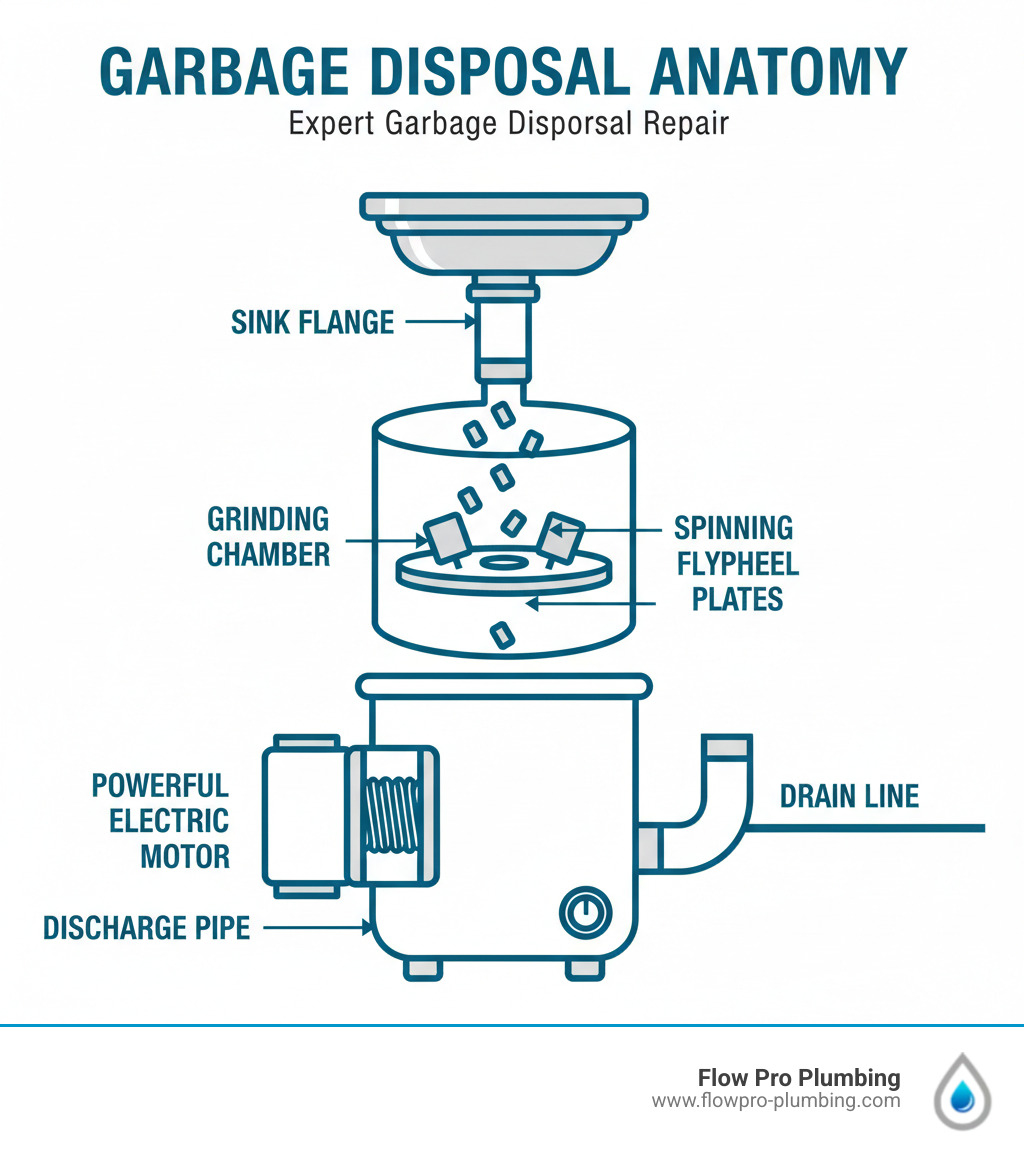
Your garbage disposal uses clever engineering to grind food waste into fine particles. When food enters the grinding chamber, it’s not met by sharp blades. Instead, blunt impeller plates on a spinning flywheel force the food against a stationary grinding ring, pulverizing it. A powerful motor drives this action, while the sink flange secures the unit and the discharge pipe carries waste away. A reset button protects the motor from overheating.
Want to see one taken apart? The Fleet Science Center has a fascinating video showing what’s inside garbage disposals that really drives home how they work.
Most homes have continuous-feed disposals, which run with the flip of a switch. Batch-feed disposals are an alternative that only activate when a special cover is in place, offering an added layer of safety.
So why do these workhorses fail?
- Overheating: Running the disposal too long or with tough materials can trip the reset button.
- Foreign Objects: A stray utensil, bone, or fruit pit can jam the impeller plates.
- Clogs: Fibrous vegetables, grease, or starchy foods can create blockages in the unit or drain line.
- Electrical Issues: A tripped breaker, faulty wiring, or a blown fuse can cut power to the unit.
- Worn Components: Over time, seals can leak, motors can burn out, and internal parts can wear down.
Understanding these common failures helps you know when a simple reset will suffice and when it’s time for expert garbage disposal repair.
Telltale Signs You Need Professional Repair
When your garbage disposal has a problem, it sends clear warning signs. Recognizing them early can prevent a minor issue from becoming a major one.
- Unusual Noises: Grinding, rattling, or screeching sounds often indicate a foreign object (like a spoon) or loose internal parts.
- Complete Silence: If you flip the switch and hear nothing, it typically points to an electrical problem or a dead motor.
- Slow Draining: Water pooling in the sink after use suggests a clog, either in the disposal or further down the drain line.
- Persistent Foul Odors: Stubborn smells that cleaning can’t fix mean food is trapped and decaying inside the unit.
- Frequent Resets: If you constantly have to press the reset button, the motor is likely overheating or straining due to an underlying issue.
Is Your Garbage Disposal Jammed or Humming?
That distinctive humming sound—motor on, but nothing grinding—is a common problem. It means the motor has power, but the flywheel is blocked. The culprit is usually a tough food scrap or a foreign object.
Safety first: always turn off the power at the wall switch before investigating. Never put your hand in the disposal.
Many units have an Allen wrench hole on the bottom. Inserting the correct wrench and turning it back and forth can manually move the flywheel and dislodge the jam. Afterward, press the reset button and try again.
For more detailed troubleshooting steps, our guide on Garbage Disposal Humming Not Working walks you through the process. And if you’re having trouble locating that reset button, check out our article on the Garbage Disposal Reset Button.
But if the jam is stubborn or you’re not comfortable with the process, it’s time to call a pro. It’s the smartest and safest move.
When to Call for Expert Garbage Disposal Repair
Some problems require professional help to avoid injury or further damage.
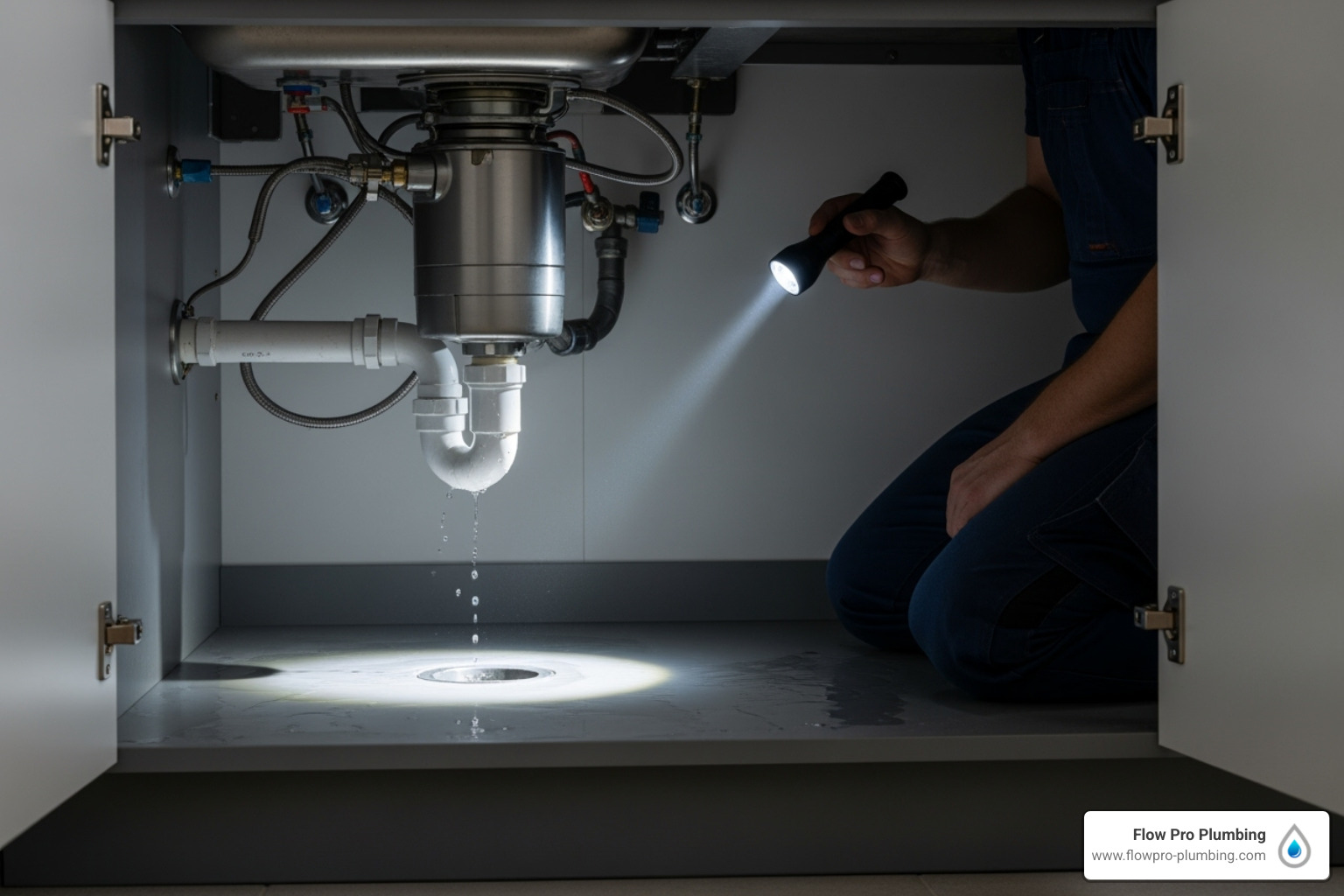
- Water Leaks: Puddles under your sink demand immediate attention. Leaks from connections, seals, or cracks in the housing can cause serious water damage and mold growth.
- Electrical Issues: If the disposal repeatedly trips the circuit breaker or has no power after a reset, there’s likely a wiring fault or burned-out motor. This is not a safe DIY project.
- Persistent Clogs: If your sink backs up frequently despite your best efforts, the blockage may be deep in your plumbing. A professional has the tools to diagnose and clear it correctly.
The Dangers of DIY vs. The Benefits of Expert Garbage Disposal Repair
While the DIY spirit is admirable, garbage disposals are not simple appliances. They combine powerful motors, high-speed grinding parts, electricity, and plumbing in a tight space. A seemingly simple fix can quickly turn into a more complex and serious problem if not handled correctly.
The risks of DIY repair are significant. There’s a real danger of personal injury from the grinding components or electrical shock. It’s also easy to cause more damage, such as cracking the housing, stripping connections, or creating a slow leak that leads to water damage and mold. A botched repair can even void your manufacturer’s warranty, leaving you responsible for the full replacement.
Hiring Flow Pro Plumbing for expert garbage disposal repair provides safety and peace of mind. Our trained technicians have the experience and proper tools to diagnose the problem accurately and fix it efficiently. We’ve served homeowners throughout Alameda and Contra Costa counties for over a decade, including Brentwood, Oakley, Antioch, and surrounding communities. We focus on providing reliable, long-term solutions that prevent secondary damage and comply with all plumbing codes.
Most importantly, we provide honest recommendations. If a repair is the best option, we’ll get it done right. If replacement makes more sense, we’ll explain why. Our reputation is built on trust and transparency, not on selling you services you don’t need. Professional repair is about protecting your home, your safety, and ensuring your kitchen works as it should.
Repair or Replace? Making the Right Decision
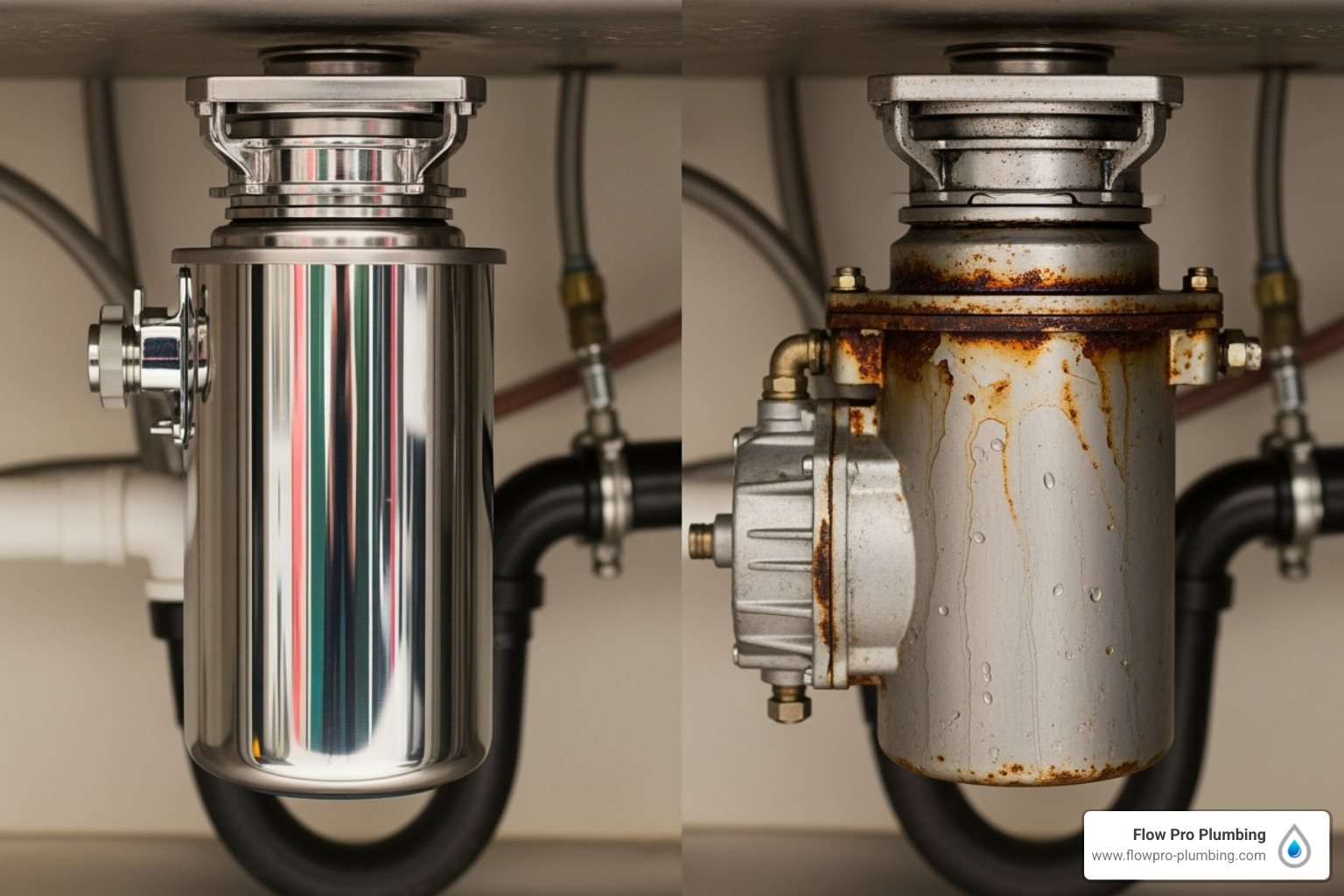
When your garbage disposal fails, you have to decide whether to repair or replace it. The best choice depends on the unit’s age, the nature of the problem, and the overall value. Most disposals last 8 to 15 years, so its age is a key factor. As a general guideline, consider if a repair is a sound investment compared to the cost of a new unit.
When to Choose Repair
Repair is often the right call, giving you several more years of service. Consider repair for:
- Minor Issues: Simple jams, clogs, or leaks at connection points are usually straightforward fixes.
- A Younger Unit: If your disposal is under 8 years old and has been reliable, expert garbage disposal repair is typically worthwhile.
- Infrequent Problems: A single issue after years of good service usually warrants a repair, not a replacement.
When Replacement is the Smarter Move
Sometimes, investing in a new unit is the more practical long-term solution. Replacement is often best for:
- Major Failures: A burned-out motor or a cracked housing are critical failures where replacement is more sensible.
- An Older Unit: If your disposal is over 10 years old, continually repairing it can become less economical than replacing it.
- Frequent Breakdowns: If you’re calling for service every few months, your unit is likely at the end of its life.
- Upgrading: Newer models offer significant advantages, including quieter operation, more powerful motors (from 1/2 HP to 1 HP), and better energy efficiency. An upgrade can improve your kitchen experience.
If you’re curious about what’s available, check out our residential garbage disposal selection or give us a call for personalized recommendations based on your household’s needs.
We’ll always provide an honest assessment to help you make the decision that’s best for you in the long run.
Proactive Care: Maintenance Tips to Extend Your Disposal’s Life
The best repair is the one you never need. Proactive maintenance can keep your unit running smoothly and extend its life, helping you avoid the need for expert garbage disposal repair.
- Always run cold water before, during, and for 15-20 seconds after use. Cold water helps flush waste through the pipes and prevents the motor from overheating. Avoid hot water, as it can liquefy grease that later solidifies and causes clogs.
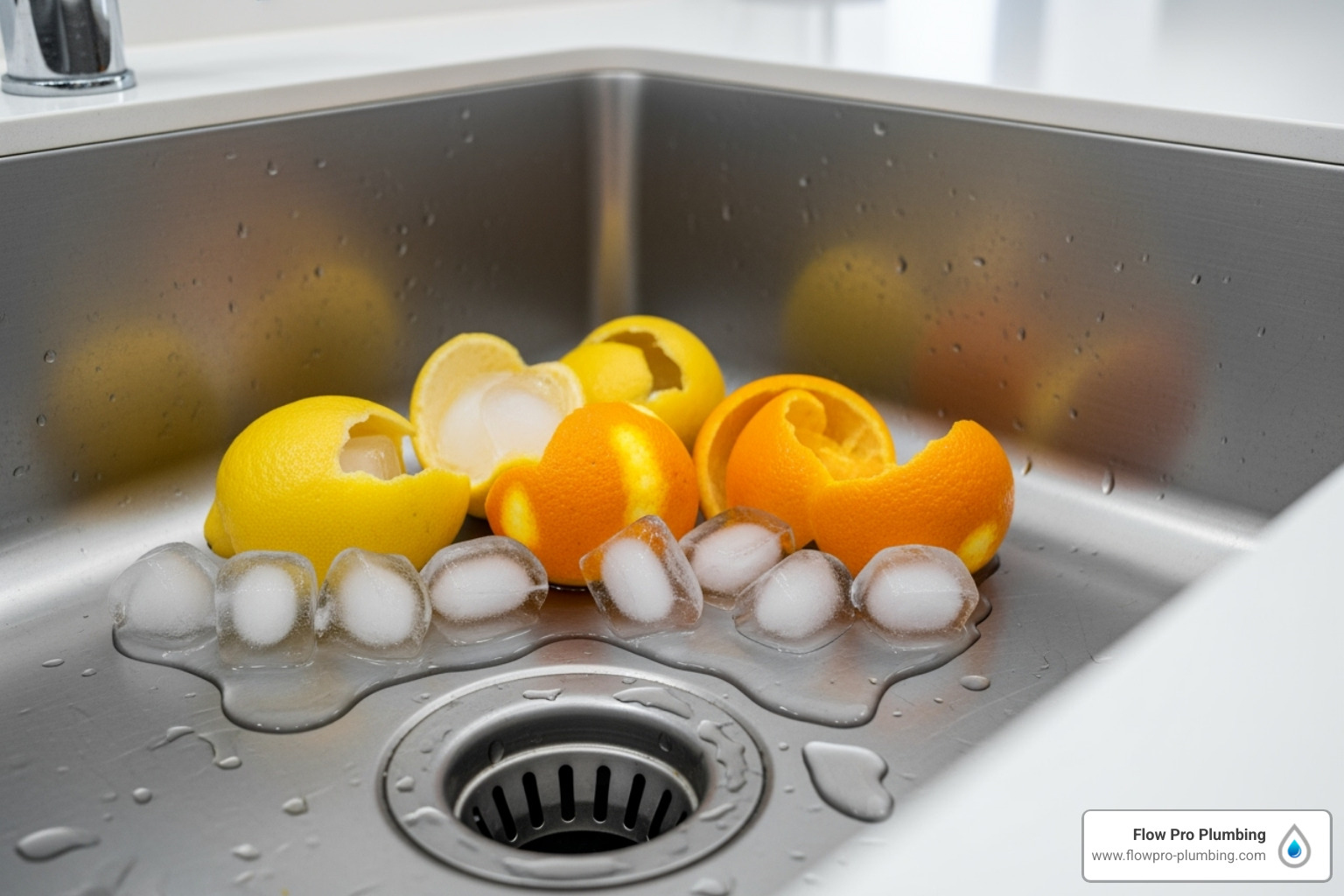
- Clean it regularly. For a quick clean, grind a tray of ice cubes to dislodge stuck-on food, then follow with citrus peels to freshen the drain.
- For a deeper clean, use baking soda and vinegar. Pour half a cup of baking soda into the disposal, add a cup of white vinegar, let it fizz for 15 minutes, then flush with hot water to break down buildup.
Want more detailed guidance on keeping your disposal in top shape? Check out our blog on Maintaining Your Garbage Disposal.
What to Avoid Putting in Your Garbage Disposal
Most disposal problems are preventable. Avoid treating your disposal like a trash can and never put these items down the drain:
- Fibrous Vegetables: Celery, corn husks, and onion skins can wrap around the impellers and jam the motor.
- Starchy Foods: Pasta, rice, and potato peels expand with water and create a thick paste that clogs pipes.
- Grease, Oil, and Fats: These solidify in your pipes, creating stubborn blockages.
- Coffee Grounds and Eggshells: They accumulate into a dense sludge that causes clogs.
- Bones and Fruit Pits: These hard items are too tough for most disposals and can damage the grinding components.
For a deeper dive into why certain foods cause problems, read our article: Why You Shouldn’t Put Food in Garbage Disposal.
Conclusion: Your Next Step for a Working Garbage Disposal
A broken garbage disposal is more than an inconvenience; it’s a risk for plumbing problems and water damage. We’ve covered the warning signs, from humming and leaks to the reasons disposals fail. While DIY fixes are tempting, the risks of injury and further damage are high, making expert garbage disposal repair the safer, more reliable choice.
Deciding between repair and replacement depends on age and the severity of the issue. A newer unit with a minor problem is a good candidate for repair, while an older disposal with a major failure is often better to replace, especially with the benefits of modern, quieter, and more powerful models. Proactive care—like running cold water and avoiding grease, fibrous vegetables, and starchy foods—is the best way to extend your disposal’s life.
At Flow Pro Plumbing, we provide honest recommendations and reliable service for homeowners throughout Alameda and Contra Costa counties, including Brentwood, Oakley, Antioch, Pittsburg, Bay Point, Concord, Clayton, Walnut Creek, and Pleasant Hill. For over a decade, our reputation has been built on quality workmanship and customer trust.
Whether you need a repair for a stubborn jam or want to upgrade to a new model, our friendly team is ready to help. Don’t let a faulty disposal disrupt your kitchen. For all your plumbing needs in Antioch and surrounding areas, trust the experts who put your satisfaction first.