

Why the Holidays Are the Hardest Time of Year for Your Home’s Plumbing
Holiday plumbing tips to avoid disasters are something every homeowner should have in their back pocket before the guests arrive and the cooking begins. The holiday season puts more stress on your pipes, drains, garbage disposal, and water heater than almost any other time of year. More people in the house means more showers, more toilet flushes, more food scraps, and more grease going places it shouldn’t.
Here are the essential holiday plumbing tips to know before the festivities start:
- Keep grease out of the drain – Let it cool, then toss it in the trash
- Watch what goes in the garbage disposal – No fibrous veggies, starchy foods, eggshells, or coffee grounds
- Stagger showers – Space them 15-20 minutes apart to give your water heater time to recover
- Stock bathrooms with wastebaskets – Guests need somewhere to put wipes, floss, and other non-flushable items
- Insulate exposed pipes – Especially in garages, crawl spaces, and along exterior walls
- Know where your main water shut-off valve is – Before you need it
- Schedule a plumbing inspection before guests arrive – Catch small problems before they become holiday emergencies
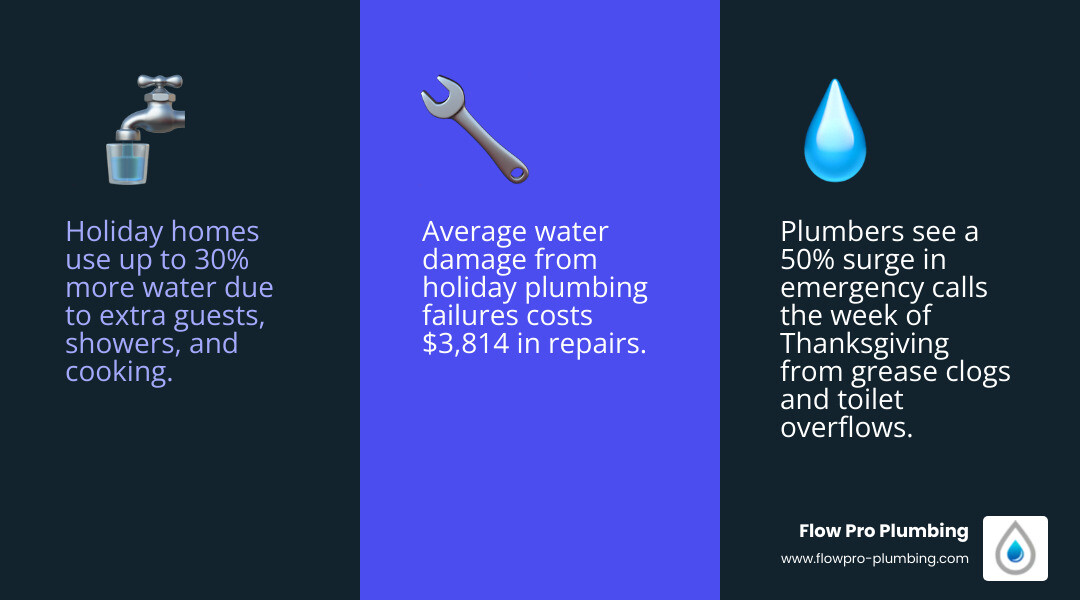
Plumbers across the country see a major spike in emergency calls right around Thanksgiving, with some data suggesting the Mondays before and after Thanksgiving are actually busier than the famous “Brown Friday” (the day after Thanksgiving).
Put simply: your home’s plumbing isn’t designed for the jump from a quiet household to a full house of holiday guests. But with a little preparation, you can keep things flowing smoothly.
I’m Jesse Delgado, owner of Flow Pro Plumbing in Brentwood, California, and with over a decade of licensed plumbing experience helping East Bay homeowners navigate everything from slow drains to burst pipes, I’ve seen how the right holiday plumbing tips to avoid disasters can save a celebration and a lot of stress. In this guide, I’ll walk you through exactly what to do before, during, and after the holidays to protect your home’s plumbing system.
Essential Holiday Plumbing Tips to Avoid Disasters in the Kitchen
The kitchen is the heart of the home during the holidays, but it’s also ground zero for some of the most frustrating plumbing failures. When you’re preparing a feast for family in Brentwood or Discovery Bay, your sink and dishwasher are working overtime. The most common culprit for a holiday backup? Grease.
Many homeowners make the mistake of thinking that because grease is liquid when it’s hot, it will simply wash away. In reality, as soon as that turkey fat or bacon grease hits your cold pipes, it begins to solidify. It coats the interior of your pipes like plaque in an artery, eventually trapping other food particles and causing a total blockage.
To keep your kitchen running, follow these rules for grease disposal:
- Never pour fats, oils, or grease (FOG) down the drain. This includes meat drippings, butter, and even oily salad dressings.
- Use a “grease can.” Pour warm grease into an old coffee can or glass jar. Let it sit until it hardens, then toss the whole container in the trash.
- Wipe your pans. Before putting greasy pots and pans in the sink or dishwasher, use a paper towel to wipe away as much residue as possible.
- Scrape every plate. Ensure all food scraps go into the trash or compost bin rather than the sink.
Learning how to keep your home clog-free starts with realizing that your drain is not a trash can. Even a small amount of oil can contribute to a massive headache later in the week.
Managing Your Garbage Disposal and Drains
Your garbage disposal is one of the hardest-working appliances during a Thanksgiving or Christmas meal, but it isn’t invincible. Many of the calls we receive at Flow Pro Plumbing during the holidays involve jammed or burnt-out disposal motors.
To keep it spinning, always run cold water before, during, and for about 15 seconds after you use the disposal. Cold water is better than hot because it keeps any trace amounts of grease in a solid state, allowing the blades to chop them up and send them through the pipes. If you use hot water, the grease melts and coats the pipes further down the line.
We also recommend feeding the disposal in small batches. Overloading it with a plate full of scraps is a guaranteed way to trip the reset button or jam the flywheel. If your disposal starts to smell, try grinding a few ice cubes and a bit of dish soap. The ice helps knock off debris from the blades while the soap cuts through lingering oils. Regular plumbing maintenance is the best way to ensure these appliances are ready for the holiday rush.
Holiday Plumbing Tips to Avoid Disasters with Fibrous and Starchy Foods
There are certain foods that should never meet your garbage disposal blades. Even the most powerful models struggle with these common holiday ingredients:
- Fibrous Vegetables: Celery, onion skins, corn husks, and asparagus have long, tough fibers that can wrap around the disposal blades like hair around a vacuum brush, causing a motor jam.
- Starchy Foods: Potato peels, rice, and pasta are major offenders. When mixed with water, these items turn into a thick, glue-like paste that can completely seal off your drain.
- Coffee Grounds: While they seem harmless, they are heavy and dense. They settle in the “P-trap” (the U-shaped pipe under your sink) and create a sediment layer that is very difficult to clear.
- Eggshells: There is a common myth that eggshells sharpen blades. In truth, the gritty membrane inside the shell can stick to the pipes and catch other debris.
By keeping these items out of your sink, you can avoid common sewer problems that often result in raw sewage backing up into your home—definitely not the kind of holiday surprise you want.
Preparing Your Bathrooms for a House Full of Guests
When you have guests staying over in Oakley or Antioch, your bathrooms see a massive increase in traffic. A toilet that usually flushes once or twice a morning might suddenly be used every twenty minutes. This “stress test” often reveals underlying issues that you might not have noticed before.
The most important thing you can do is provide a clear place for non-flushable items. Many guests—especially children or those used to different plumbing systems—might try to flush things they shouldn’t. Placing a small wastebasket in plain sight next to the toilet is the best way to prevent a backup.
To help you prepare, here is a quick guide on what belongs in the bowl:
| Item | Flushable? | Why? |
|---|---|---|
| Toilet Paper | YES | Designed to dissolve quickly in water. |
| “Flushable” Wipes | NO | They do not break down and are a leading cause of “fatbergs.” |
| Paper Towels | NO | Too thick and absorbent; will catch in the pipes. |
| Cotton Swabs/Balls | NO | They don’t dissolve and can snag other debris. |
| Feminine Products | NO | Designed to absorb liquid and expand, causing instant clogs. |
| Dental Floss | NO | Acts like a net, catching everything else that goes down. |
If you want to be proactive, learn how to prevent common toilet clogs by checking your fill valves and flappers before guests arrive. A weak flush is much more likely to result in a clog when guest usage increases.
Holiday Plumbing Tips to Avoid Disasters with Hot Water and Showers
Nothing ruins a holiday morning like a cold shower. If you have five or six people trying to get ready at the same time, your water heater is going to struggle. Most standard 40-to-50-gallon water heaters provide about 20 to 30 minutes of continuous hot water before they need to recover.
To avoid running out of hot water, we recommend staggering showers. Encourage guests to wait at least 15 to 20 minutes between showers. This gives the tank time to reheat the new cold water that entered the system.
In areas like Walnut Creek and Concord, hard water is a common issue. Over time, calcium and magnesium minerals settle at the bottom of your water heater, forming a layer of sediment. This sediment acts as an insulator, making it harder for the burner to heat the water and reducing the overall capacity of your tank. If your water heater is making “popping” or “rumbling” noises, it’s a sign of sediment buildup. Checking this is one of the many plumbing projects to complete before the holidays to ensure everyone stays warm and comfortable.
Septic System Precautions for Large Gatherings
If your home in Byron or Knightsen relies on a septic system, you need to be even more careful. A septic tank is a living ecosystem that can only process so much waste at once. A sudden influx of ten guests can overwhelm the bacteria in the tank and flood the drain field.
If it has been more than three years since your last septic pumping, the holidays are the perfect time to schedule a maintenance visit. We often tell our clients: “Pump before you party!” Additionally, be extra vigilant about “septic-safe” toilet paper and ensure that no heavy vehicles are parked over your drain field during holiday gatherings, as this can crush the pipes. Taking these steps is essential for preventing sewer blockages that could lead to an expensive and messy holiday disaster.
Protecting Your Pipes from Winter Freezing and Leaks
While we don’t get the sub-zero blizzards of the Midwest, Northern California winters can still bring freezing nights that put your plumbing at risk. When water freezes, it expands with incredible force—enough to split copper or plastic pipes wide open.
The most vulnerable pipes are those in unheated areas like garages, attics, and crawl spaces, or those running along outside walls. To protect your home, consider these winter plumbing problems in Northern California:
- Insulate Exposed Pipes: Use foam pipe sleeves or heat tape to wrap any visible pipes in unheated areas.
- Open Cabinet Doors: On particularly cold nights, leave the cabinet doors under your kitchen and bathroom sinks open. This allows the warm air from your home to circulate around the pipes.
- Let the Faucet Drip: A very slow drip of cold water can prevent a pipe from freezing because moving water is much harder to freeze than standing water.
Investing in pipe burst prevention now is far better than dealing with the aftermath of a flooded home on Christmas morning.
Outdoor Maintenance and Emergency Shut-off Valves
Before the first cold snap hits, disconnect all garden hoses from your outdoor faucets (hose bibs). If a hose is left attached, the water trapped inside can freeze and back up into the pipe inside your wall, causing it to burst. If you have an irrigation system, make sure it is properly winterized.
Every homeowner should know exactly where their main water shut-off valve is located. In our service area, it’s usually near the water meter at the front of the property or where the main line enters the house. If a pipe does burst, every second counts. Knowing how to turn off the water immediately can mean the difference between a small puddle and extensive water damage. If you find yourself in this situation, knowing what to do if a pipe is leaking is critical.
Proactive Holiday Plumbing Tips to Avoid Disasters
You don’t need to be a professional plumber to spot early warning signs. In fact, most major disasters start as minor annoyances. Here are a few things to look for:
- The Food Coloring Test: Unsure if your toilet is leaking? Put a few drops of food coloring in the tank. If the color appears in the bowl after 15 minutes without flushing, you have a leak that is wasting water and could lead to a surprise bill.
- Slow Drains: If your sink is taking longer than usual to empty, it’s a sign of a developing clog. Address it now with a plunger or a professional cleaning before it becomes a total blockage during dinner.
- Gurgling Noises: If your toilet gurgles when you run the sink, or vice versa, it usually means there is a blockage in your vent stack or a main sewer line issue.
- Dripping Faucets: A single drip can waste hundreds of gallons over a month. Learning how to stop a faucet from dripping is a simple DIY fix that saves money and stress.
Pre-Holiday Inspections and Emergency Preparedness
We always recommend a professional inspection about two to three weeks before the holiday season begins. A quick check of your water pressure, drain speeds, and water heater health can catch the common pipe leak causes that typically lead to holiday failures.
When you consider how serious a burst pipe is, it becomes clear that a little prevention goes a long way. A pipe can release hundreds of gallons of water in just one hour, ruining flooring, drywall, and cherished holiday decorations.
Essential Tools for Minor Fixes
Every home should have a basic “plumbing first aid kit” ready for the holidays. You don’t need a truck full of tools, but these three items are essential:
- Flange Plunger: This is the one with the extra rubber flap at the bottom. It’s designed specifically for toilets.
- Cup Plunger: This is the standard flat-bottomed plunger used for sinks and tubs.
- Hand Auger (Snake): A small 15-foot hand-cranked snake can clear most minor clogs that a plunger can’t reach.
Having these on hand, along with some pipe burst repair tips, can help you manage small issues until a professional can arrive.
When to Call a Professional
While we encourage homeowners to be proactive, some problems are too dangerous or complex for a DIY fix. You should call Flow Pro Plumbing immediately if you experience:
- Signs of a Gas Leak: If you smell “rotten eggs,” hear a hissing sound near your gas lines, or see dead patches of grass outside, evacuate the house immediately and call for help. Review the top signs of a gas leak so you can recognize the danger.
- Sewage Backups: If water is coming up through your floor drains or bathtub when you flush the toilet, you have a main sewer line blockage.
- Total Water Loss: If you suddenly have no water at all, it could be a major leak or a frozen main line.
Frequently Asked Questions about Holiday Plumbing
What are the most common plumbing problems during the holidays?
The most frequent issues include kitchen sink clogs from grease and food scraps, jammed garbage disposals, toilet overflows due to non-flushable items, and hot water shortages from back-to-back guest showers. In colder years, frozen or burst exterior pipes are also a major concern.
How should I dispose of holiday cooking grease?
Never pour it down the drain. Instead, pour liquid grease into a heat-safe container (like a tin can or jar). Once it solidifies, put the lid on and throw it in the trash. For small amounts of oil on pans, wipe them clean with a paper towel before washing.
Why is the day after Thanksgiving so busy for plumbers?
Known as “Brown Friday,” the day after Thanksgiving is historically the busiest day of the year for the plumbing industry. The combination of heavy holiday cooking, large amounts of grease and fibrous food waste entering drains, and the increased usage of bathrooms by houseguests creates a “perfect storm” for clogs and backups.
Conclusion
The holidays should be a time for making memories, not mopping up floorboards. By following these holiday plumbing tips to avoid disasters, you can ensure your home stays comfortable and functional for every guest. From managing your garbage disposal to protecting your pipes from the Northern California chill, a little bit of preparation goes a long way.
At Flow Pro Plumbing, we take pride in serving our neighbors in Brentwood, Oakley, Discovery Bay, and throughout the East Bay. We know that plumbing emergencies don’t always happen during business hours, and we are here to provide the peace of mind you deserve. Whether you need a pre-holiday inspection or an emergency drain clearing, our friendly and experienced team is ready to help.
Don’t wait for a “flush-tastrophe” to happen. Schedule your holiday plumbing preparation with our Brentwood experts today and enjoy a stress-free season!