

Why You’re Getting Low Water Pressure in One Faucet Only (And What to Do About It)
Low water pressure in one faucet only is almost always a localized problem — not a sign that something is wrong with your entire plumbing system. Here are the most common reasons it happens:
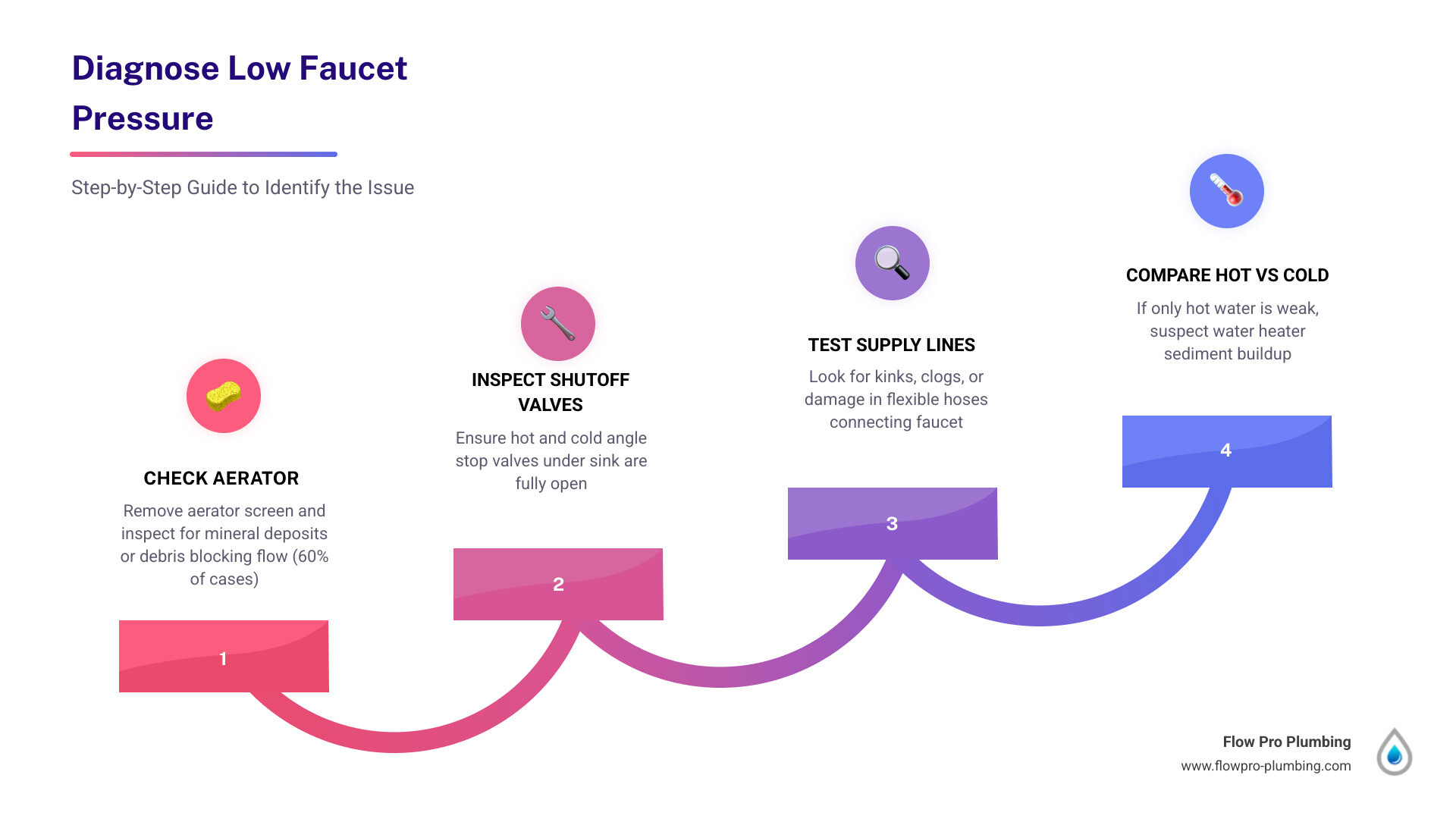
- Clogged aerator — mineral deposits and debris block the small screen at the tip of your faucet (accounts for roughly 60% of cases)
- Partially closed shutoff valve — the hot or cold valve under the sink may not be fully open
- Faulty faucet cartridge — internal wear restricts water flow through the faucet itself
- Kinked or blocked supply line — the flexible hose connecting your faucet to the water supply may be bent or clogged
- Water heater sediment — if only the hot water side is weak, sediment buildup in the heater may be to blame
- Pipe corrosion — older galvanized steel pipes can corrode from the inside, narrowing flow to a specific fixture
In most cases, a simple aerator cleaning or valve check is all it takes to restore normal flow.
Picture this: you turn on your kitchen faucet expecting a strong, steady stream and get a disappointing trickle instead — while every other faucet in the house works just fine. It’s a frustrating experience, and one that homeowners across Contra Costa County deal with more often than you might think. The good news is that when pressure drops at just one fixture, the cause is almost always right there at the faucet or its nearby supply connections — not buried deep in your home’s main plumbing.
Whether the issue came on gradually over months of mineral buildup or appeared suddenly after someone worked under the sink, understanding what’s behind it is the first step toward getting things flowing normally again. This guide walks you through the most likely causes, how to identify them, and when it makes sense to bring in a licensed plumber.
I’m Jesse Delgado, owner of Flow Pro Plumbing in Brentwood, California, and I’ve spent years diagnosing exactly this kind of low water pressure in one faucet only scenario for homeowners throughout the East Bay. From a simple aerator clog to a corroded branch line, I’ve seen it all — and I’ll help you figure out what you’re dealing with.
Common Causes of Low Water Pressure in One Faucet Only
When we receive calls from homeowners in Brentwood or Antioch about a single weak faucet, we usually start with the simplest explanations. In our experience, about 60% of these cases are caused by a simple clogged aerator. However, there are several other localized culprits that can turn your high-pressure stream into a sad drip.
Aerator Clogs and Mineral Buildup
The aerator is that small, mesh screen screwed onto the very tip of your faucet. Its job is to mix air with the water to create a smooth, non-splashing stream. Over time, this screen acts like a net, catching everything from calcium deposits to tiny bits of grit.
In areas like Discovery Bay or Oakley, where hard water is common, calcium and magnesium can solidify into “scale” inside these screens. This mineral buildup restricts the path of the water, leading to low water pressure in one faucet only.
Shutoff Valve Position
Every sink has two “angle stops” or shutoff valves located underneath. Sometimes, these valves are accidentally bumped while you’re shoving a new bottle of dish soap under the sink, or they weren’t fully reopened after a previous repair. If the valve is even partially closed, the volume of water reaching the faucet drops significantly. You can learn more about how these small components affect your home in our guide on common causes of low water flow.
Cartridge Failure
Inside the handle of your faucet is a cartridge or a valve stem that controls the mix of hot and cold water. These are mechanical parts that eventually wear out. If the internal seals degrade or if sediment gets trapped inside the cartridge itself, it can block the water flow. This is particularly common in single-handle faucets where one internal part does all the heavy lifting.
| Feature | Aerator Clog | Cartridge Issue |
|---|---|---|
| Primary Symptom | Uneven spray or weak flow | Reduced flow + stiff handle |
| Location | Tip of the spout | Inside the faucet body |
| Ease of Fix | Very Easy (5 mins) | Moderate (Tools required) |
| Common Debris | Calcium, sand, grit | Rubber bits, mineral scale |
Troubleshooting Low Water Pressure in One Faucet Only
If you are staring at a weak kitchen or bathroom sink, don’t panic. You can perform a few quick checks to narrow down the source of the “flow fiasco.”
Inspecting Supply Lines and Valves
Start by looking under the sink. We often find that flexible braided supply lines have become kinked or twisted. If you have a pull-out sprayer in your kitchen, the hose can sometimes get tangled with items stored under the sink, causing a temporary blockage.
Next, check your shutoff valves. Turn them fully clockwise (closed) and then fully counter-clockwise (open) to ensure they aren’t stuck in a middle position. If you’ve recently had work done on your pipes, there might be an “airlock” or displaced debris. Often, water pressure suddenly low right after a repair is simply a matter of flushing out the lines.
Identifying Issues with the Faucet Cartridge
If your aerator is clean and your valves are open, the problem is likely inside the faucet body. A faulty cartridge often gives itself away with a few specific signs:
- The handle feels “stiff” or harder to move than usual.
- The faucet is leaking from the handle area.
- The pressure is low even when the aerator is completely removed.
While some homeowners feel comfortable replacing a cartridge, it does require specific tools and the exact matching part for your faucet brand. If you’re also noticing issues in the shower, you might want to check out our advice on the best shower head for low water pressure to see if the problem is widespread or fixture-specific.
Inspecting Hot vs. Cold Water Flow
One of the most important diagnostic steps is to test the hot and cold water separately.
- If only the cold water is weak: The issue is likely the cold-side supply line, the cold-side shutoff valve, or a clog in the cold intake of the faucet.
- If only the hot water is weak: This often points toward your water heater.
In older homes in Pittsburg or Concord, sediment can settle at the bottom of the water heater tank. This sediment can travel into the hot water lines and clog the smaller branch pipes or the faucet itself. If you’re wondering, “Why is my water pressure so low?” and it’s only on the hot side, a water heater flush might be the solution.
When to Call a Professional Plumber in Brentwood, CA
While a clogged aerator is a DIY dream, some causes of low water pressure in one faucet only require a professional touch. At Flow Pro Plumbing, we use specialized diagnostic tools to find problems that aren’t visible to the naked eye.
Pipe Corrosion and Galvanized Steel
If your home was built before the 1970s in a place like Walnut Creek or Clayton, you might still have galvanized steel pipes. These pipes are notorious for corroding from the inside out. As rust builds up, the interior diameter of the pipe gets smaller and smaller—much like a clogged artery—until water can barely squeeze through. If the corrosion is localized to the “branch line” feeding one specific sink, that faucet will have low pressure while the rest of the house stays normal.
Hidden Leaks and Branch Line Blockages
Sometimes, low pressure is the first warning sign of a hidden leak. If a pipe in the wall has a significant crack, the water intended for your faucet is escaping before it reaches the spout. We provide professional leak detection and low water pressure services in Brentwood, CA to ensure your home’s foundation and walls stay dry.
Frequently Asked Questions about Low Water Pressure in One Faucet Only
Is a single low-pressure faucet a sign of a pipe leak?
It can be, but it’s not the most common cause. If you notice a sudden drop in pressure along with damp spots on your drywall, a musty smell, or an unexplained spike in your water bill, you should call us immediately. However, if the pressure has been fading slowly over months, it is much more likely to be mineral buildup or a failing cartridge.
How often should I clean my faucet aerators in hard water areas?
In communities like Brentwood and Discovery Bay, the mineral content in the water can be higher. We recommend unscrewing your aerators and soaking them in white vinegar every 3 to 6 months. This simple maintenance task prevents total blockages and keeps your fixtures performing like new.
Why did my faucet pressure drop suddenly after plumbing work?
When water is shut off and turned back on during a repair, the change in pressure can dislodge “scale” or rust from the inside of your pipes. This debris then travels downstream and gets stuck in the first narrow opening it finds—usually the faucet aerator or the cartridge. If you’ve just had work done, try removing the aerator and flushing the faucet on full blast for 30 seconds to clear any trapped air or grit.
Conclusion
Dealing with low water pressure in one faucet only doesn’t have to be a major headache. By checking the aerator, ensuring your shutoff valves are open, and inspecting your supply lines, you can solve most flow issues in under ten minutes. However, when the problem is buried in the walls or tucked inside a complex faucet cartridge, the team at Flow Pro Plumbing is here to help.
We take pride in serving our neighbors in Brentwood, Oakley, Antioch, and throughout Contra Costa County with fast, clean, and courteous service. Whether you need a simple fixture repair, a water heater flush, or a full home repipe, our licensed plumbers are dedicated to building long-term relationships through unsurpassed workmanship.
Don’t let a weak faucet slow you down. Schedule your expert water pressure diagnosis today for reliable plumbing solutions that last.