

What Causes Sewer Line Damage Over Time — And Why It Matters for Homeowners
What causes sewer line damage over time is one of the most important plumbing questions homeowners can ask — because the damage almost never announces itself until it’s already serious.
Here are the most common culprits:
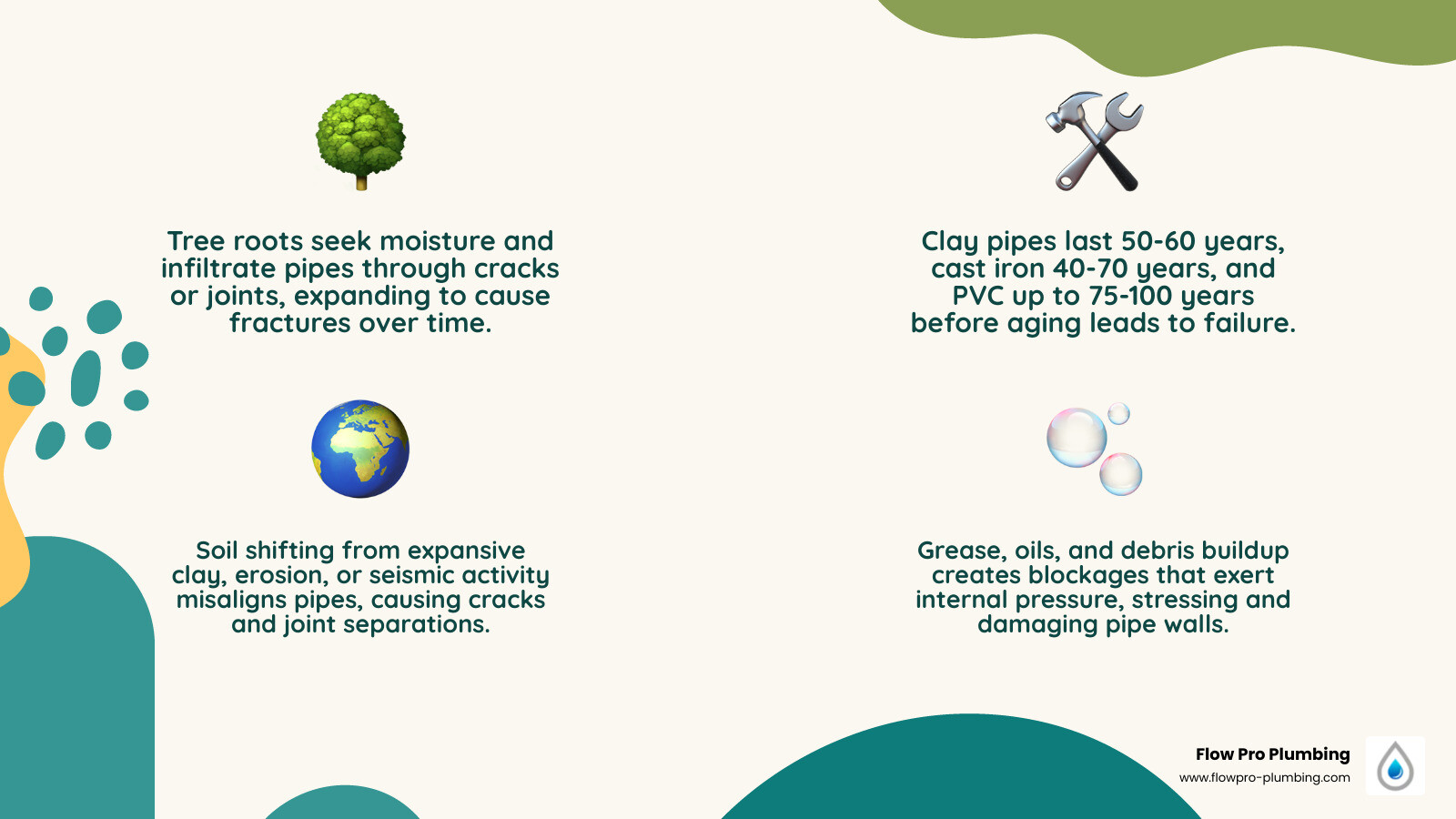
- Tree root intrusion — Roots seek moisture and enter pipes through small cracks or loose joints, expanding until they fracture the pipe
- Aging pipe materials — Clay pipes last 50–60 years, cast iron 40–70 years, and even PVC has limits at 75–100 years
- Soil shifting and ground movement — Expansive soils, seismic activity, and erosion cause pipes to crack, misalign, or separate at joints
- Grease and debris buildup — Fats, oils, and so-called “flushable” wipes accumulate into dense blockages that stress pipe walls
- Pipe bellies and sagging — Poor installation or soil erosion creates low spots where waste collects and clogs form
- External pressure — Driveways, heavy vehicles, and nearby construction compress shallow-buried pipes, especially those less than 18 inches deep
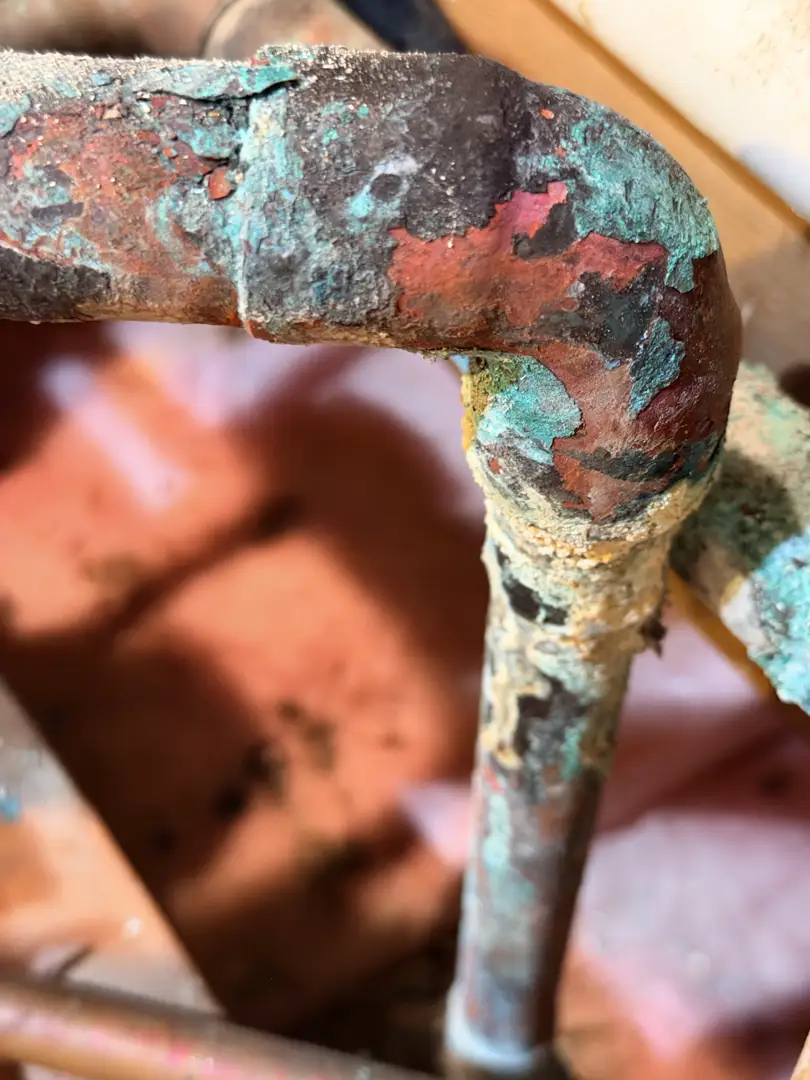
- Corrosion — Cast iron pipes corrode from the inside out due to hydrogen sulfide gas produced naturally by sewage
Most of these problems develop silently over years — sometimes decades — before a homeowner ever notices a slow drain or foul odor. By the time symptoms surface, the damage is often already significant.
I’m Jesse Delgado, owner of Flow Pro Plumbing in Brentwood, California, and I’ve spent years helping East Bay homeowners understand what causes sewer line damage over time before a hidden problem turns into a full-scale emergency. In the sections below, I’ll walk you through every major cause, what to watch for, and what your options are when something goes wrong.
Understanding What Causes Sewer Line Damage Over Time
When we talk about sewer line damage, we aren’t usually talking about a sudden, catastrophic event like a lightning strike. Instead, we are looking at a “slow decay.” Your sewer lateral—the pipe that connects your home to the municipal main—is buried several feet underground, subjected to constant environmental stress and structural pressure.
Over decades, the very ground your home sits on in areas like Pittsburg or Concord is working against your plumbing. From the chemical composition of the sewage itself to the weight of the soil above, the degradation is progressive. Identifying these issues early is the only way to avoid a yard full of wastewater. For a deeper look at how we handle these situations, check out our Sewer Line Repair Guide/.
Material Lifespan and Aging Pipes
Every material has an expiration date. In our service areas like Antioch and Oakley, many older homes still rely on the original pipes installed when the house was built. If your home was constructed before the 1970s or 80s, you likely have clay or cast iron.
| Pipe Material | Typical Lifespan | Common Vulnerabilities |
|---|---|---|
| Clay (VCP) | 50–60 Years | Brittle, prone to joint separation and root intrusion. |
| Cast Iron | 40–70 Years | Internal corrosion, scaling, and hydrogen sulfide damage. |
| PVC / Plastic | 75–100 Years | Joint leaks if poorly installed; susceptible to extreme soil shifting. |
Cast iron is particularly interesting because it corrodes from the inside out. As sewage flows, it releases hydrogen sulfide gas. This gas trapped in the top of the pipe creates a chemical reaction that eats away at the metal, eventually making the pipe wall paper-thin until it collapses. Clay, while rot-resistant, is incredibly brittle. A slight shift in the earth can snap a clay pipe like a dry twig.
Tree Root Intrusion in Older Systems
If there is one thing we see more than anything else in Brentwood and Walnut Creek, it’s tree roots. Trees are smart; they “hear” the moisture and “smell” the nutrients inside your sewer line. Even a microscopic crack or a slightly loose joint is enough for a tiny hair-like root to enter.
Once inside, the root finds a buffet of water and fertilizer. It grows rapidly, expanding in diameter and acting like a wedge that forces the pipe joints apart. This leads to massive fractures. If you suspect your trees are winning the battle against your plumbing, you may need Root Intrusion Removal/ to clear the path. Catching this early is vital, as Sewer Root Removal/ can often save a pipe that would otherwise need a full replacement.
Environmental and External Pressures on Underground Pipes
Sometimes, the cause of the damage isn’t what’s inside the pipe or the pipe itself—it’s the environment surrounding it. The soil in Contra Costa County isn’t always stable. We deal with expansive clay soils that swell when it rains and shrink during our dry summers. This constant “breathing” of the earth puts immense mechanical stress on buried lines. If the stress becomes too much, you’ll find yourself searching for Broken Sewer Pipe Repair/.
Soil Shifting and Ground Movement
Ground movement is a primary factor in what causes sewer line damage over time. Beyond the seasonal expansion and contraction of clay, we also live in a region with seismic activity. Even small, unnoticeable tremors can cause a pipe to “shear” or misalign at a joint.
When a joint separates, two things happen: wastewater leaks out (softening the soil further and causing more sinking), and dirt/roots leak in. This creates a vicious cycle of misalignment that eventually leads to a total blockage or a collapsed section of the line.
External Weight and Shallow Burial
We often see sewer damage caused by what’s happening on the surface. If a sewer line is buried “shallow”—typically less than 18 inches deep—it lacks the soil buffer needed to distribute weight.
Common scenarios include:
- Driveway Pressure: Parking a heavy SUV or truck over a shallow line every day.
- Construction Loads: Heavy machinery or even a full dumpster placed over a sewer path during a home remodel.
- Foundation Shifts: As a house settles, it can put downward pressure on the point where the sewer exits the foundation.
To keep your system healthy, it’s important to Avoid Common Sewer Problems/ by keeping heavy loads away from known pipe paths.
How Usage Habits Accelerate What Causes Sewer Line Damage Over Time
While nature and age play their parts, homeowners often unknowingly speed up the decay process. Your sewer line is designed to carry water, human waste, and toilet paper—that’s it. When other items enter the mix, they create a hostile environment for the pipe.
Chronic Clogs and Internal Pressure
Fats, Oils, and Grease (FOG) are the silent killers of kitchen drains. When grease is poured down the sink, it eventually cools and solidifies in the sewer lateral. This creates a sticky “biofilm” that catches everything else, including hair and those “flushable” wipes that aren’t actually flushable.
This buildup doesn’t just cause a backup; it increases the internal pressure on the pipe. Over time, this pressure can cause weak points in corroded cast iron to burst. We offer Clogged Sewer Line Solutions/ to clear these obstructions, but preventing them in the first place is always better. For heavy-duty cleaning, our Sewer Hydro Jetting Complete Guide/ explains how we use high-pressure water to scrub pipes clean. Hydro Jetting Sewer Line/ services can actually extend the life of your pipes by removing corrosive buildup.
Pipe Bellies and Sagging Lines
A “pipe belly” is a low spot in the line where the pipe has sagged. This usually happens because the soil underneath wasn’t compacted properly during installation or has eroded away. Because sewer lines rely on gravity, water and waste sit in these bellies instead of flowing to the city main. This standing water accelerates the corrosion of metal pipes and provides a perfect spot for sediment to collect, leading to chronic, recurring clogs.
Identifying and Addressing Progressive Sewer Failure
Because you can’t see your sewer line, you have to listen to what your house is telling you. Common “red flags” include gurgling sounds from your toilets, slow drains across multiple rooms, or a patch of grass in your yard that is suspiciously greener and lusher than the rest.
If you hear that tell-tale sound, Dont Ignore The Gurgle A Guide To Sewer Line Red Flags/ is a great resource to help you decide if it’s time to call us. The most effective way to diagnose the problem is a video camera inspection, which allows us to see the exact cause of the damage without digging up your lawn.
Modern Solutions for What Causes Sewer Line Damage Over Time
The good news is that we no longer live in an era where every sewer repair requires a massive trench through your rose bushes. Sewer Pipe Repair Methods/ have evolved significantly.
We often recommend trenchless technology. There are two main types:
- Pipe Relining: We pull an epoxy-saturated liner through the old pipe and inflate it. Once it cures, it creates a “pipe within a pipe” that is seamless and root-proof.
- Pipe Bursting: We pull a new HDPE pipe through the old one, breaking the old pipe apart as the new one is installed.
There are many Benefits Of Trenchless Sewer Repair/, including saving your landscaping and finishing the job much faster than traditional excavation.
Frequently Asked Questions about Sewer Damage
Can tree roots really break a sewer line?
Absolutely. Tree roots are incredibly strong. As they grow inside a pipe, they exert constant outward pressure. In older clay or cast iron systems, this pressure is more than enough to crack the pipe walls or cause entire sections to collapse.
What is the average lifespan of a sewer pipe?
It depends on the material. Clay usually lasts 50–60 years, cast iron 40–70 years, and PVC can last 75–100 years. However, these lifespans can be shortened by aggressive tree roots, shifting soil, or poor maintenance habits.
How do I know if my sewer line is collapsed?
A total collapse usually results in a complete backup where no water will drain at all. You might also notice a sinkhole or a very soggy, foul-smelling area in your yard. A professional camera inspection is the only way to confirm a collapse versus a simple clog.
Conclusion
Understanding what causes sewer line damage over time is the first step in protecting your home and your wallet. Whether it’s the natural aging of materials, the persistent search for water by tree roots, or the shifting soil of the East Bay, these issues are often inevitable but manageable if caught early.
At Flow Pro Plumbing, we pride ourselves on being the local experts for homeowners in Brentwood, Oakley, Antioch, and throughout Contra Costa County. We don’t just fix pipes; we provide peace of mind with fast, clean, and courteous service. If you’ve noticed gurgling drains or suspect you might have an issue, I Have A Broken Sewer Pipe Who Are The Experts In Broken Sewer Pipe Repair In Antioch Ca/ is a question we are always ready to answer with our expert team.
Don’t wait for a backup to ruin your day. Schedule your expert sewer repair in Brentwood today for a professional inspection. We’re here to keep your home running smoothly for years to come.