
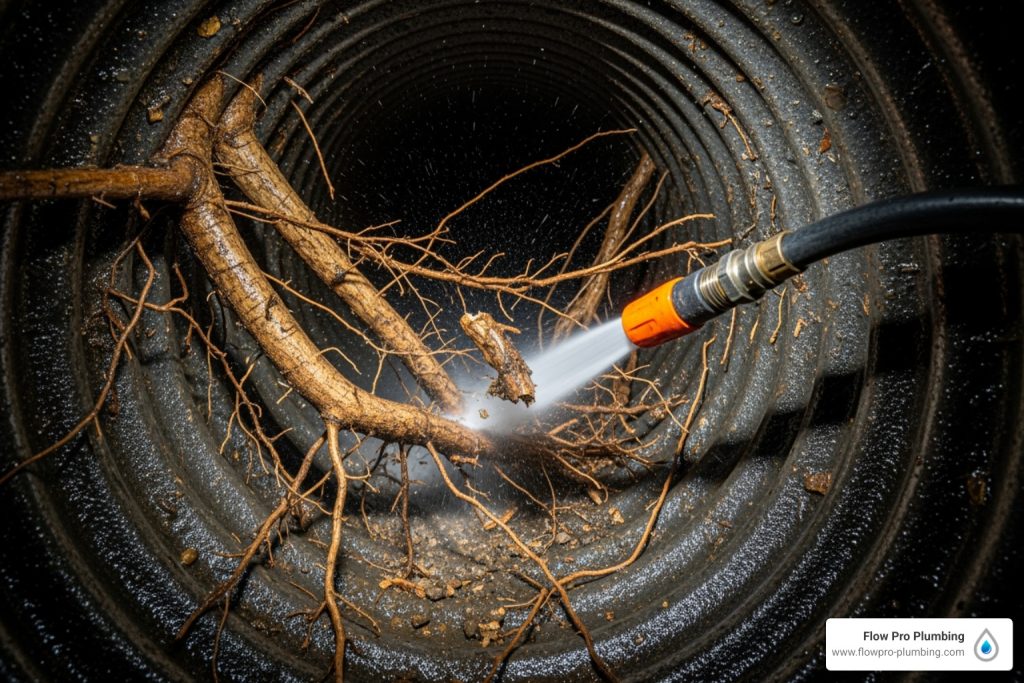
Why Tree Roots Are Your Sewer Line’s Worst Enemy
Root intrusion removal is the process of clearing invasive tree roots from sewer pipes and preventing their return. Effective methods include:
- Mechanical cutting: Augers and drain snakes cut through root masses.
- Hydro jetting: High-pressure water blasts away roots and debris.
- Chemical treatments: Foaming root killers slow regrowth after mechanical removal.
- Pipe lining (CIPP): Creates a permanent barrier inside existing pipes.
- Professional diagnosis: A sewer camera inspection identifies exact problem locations.
Tree roots are naturally drawn to the moisture and nutrients in sewer lines, penetrating openings as small as 0.06 inches. They account for 50% of all sewer line blockages in the U.S., expanding inside pipes to trap debris and cause stubborn clogs.
Older homes with clay, concrete, or cast iron pipes are at the highest risk, as their joints and cracks are easily exploited. In the East Bay Area, mature trees and aging infrastructure make root intrusion a common issue. Left untreated, it can lead to pipe collapse, sewage backups, and costly property damage. The key is early detection and choosing the right removal method for a permanent solution.
At Flow Pro Plumbing, our licensed plumbers have extensive experience helping East Bay homeowners solve root intrusion removal challenges, preventing repeated blockages and emergency repairs.
Identifying the Problem: The Telltale Signs of Root Intrusion
Root intrusion doesn’t happen overnight; it reveals itself through several warning signs. Prompt root intrusion removal is necessary when you notice these issues.
- Slow drains: If sinks, showers, or tubs drain slower than usual, roots may be starting to constrict your pipes.
- Frequent clogs: Roots act like a net, catching hair, grease, and other debris. If you experience recurring clogs, roots are a likely culprit.
- Gurgling sounds: Strange noises from toilets or drains are often caused by air trapped by a root blockage.
- Unpleasant sewer odors: Blockages can cause sewer gases to escape into your home or yard, which can be a health concern.
- Sewage backups: The most serious sign is sewage backing up into your drains, toilets, or tubs. This indicates a major blockage that requires immediate professional attention.
- Yard changes: Look for unusually lush grass patches over your sewer line, which can indicate a nutrient-rich leak. In severe cases, sinkholes or depressions may form as leaking water erodes the soil.
Catching these signs early makes the removal process simpler and less disruptive. If you’re experiencing these symptoms, it’s time to investigate the cause. For more information on what to watch for, check out our guide on avoiding common sewer problems.
Why Roots Invade Your Sewer Lines (And the Risks of Ignoring Them)
Tree roots invade sewer lines for a simple reason: survival. They are naturally programmed to seek out water and nutrients, and your sewer pipes offer a constant supply of both. This is why root intrusion removal is such a common plumbing issue.
What Makes Your Sewer Lines So Irresistible?
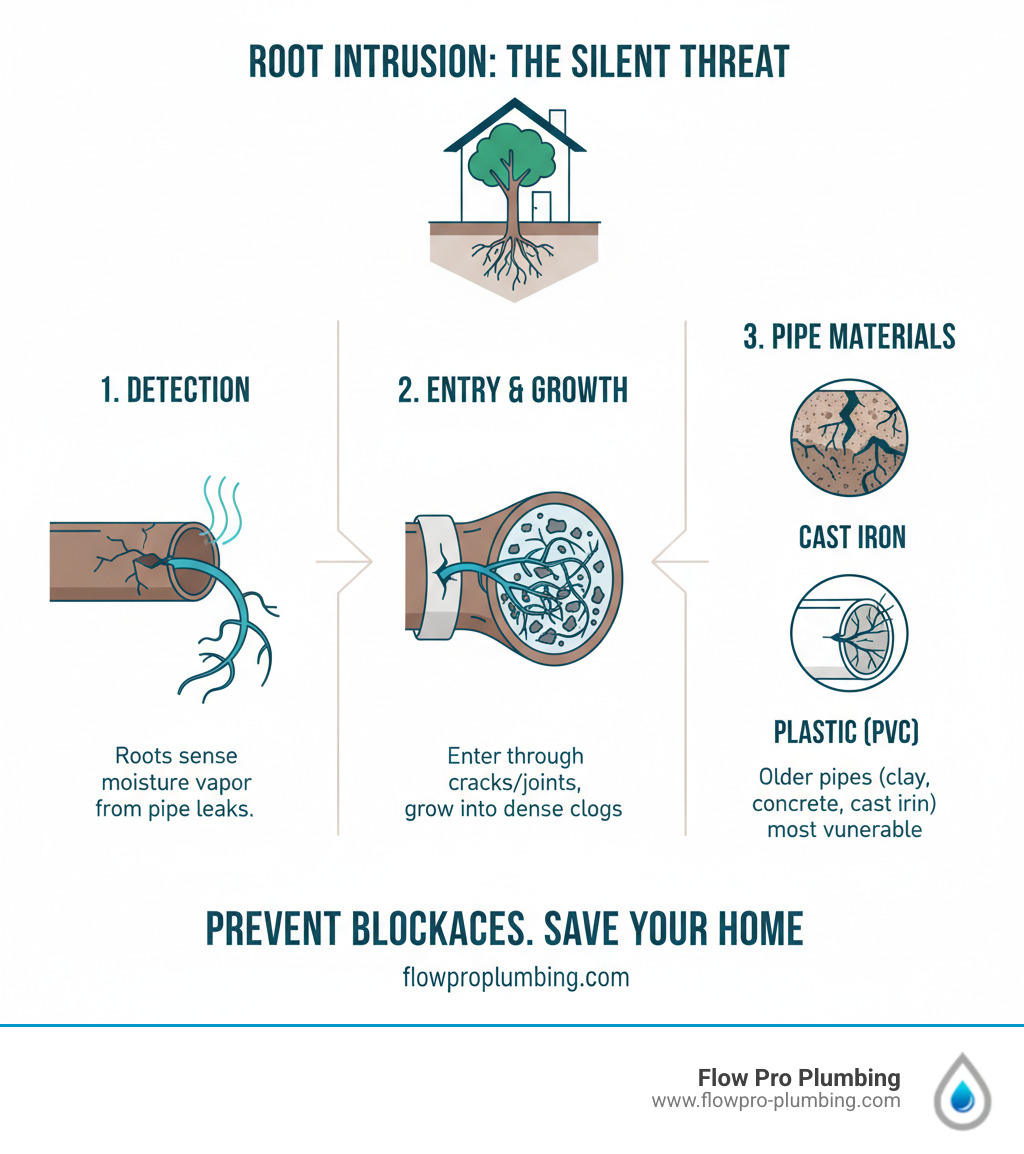
- Moisture Attraction: Roots can detect water vapor escaping from even the smallest crack or loose pipe joint.
- Nutrient Source: Wastewater is rich in organic matter, providing an abundant food source for trees.
Why Some Pipes Are Easy Targets
Older pipe materials like clay pipes, cast iron pipes, and concrete pipes are especially vulnerable. Over time, their pipe joints can degrade, shift, or crack, creating entry points for roots. Even modern PVC pipes can be compromised by ground movement or damage. Roots can penetrate openings as small as 0.06 inches in diameter, quickly expanding once inside.
The Risks of Ignoring the Problem
Delaying root removal can lead to severe consequences:
- Pipe Collapse: As roots grow, they exert immense pressure, which can fracture or completely collapse the pipe, requiring major excavation and replacement.
- Property Damage: Leaking sewage can saturate your yard, damage your home’s foundation, or back up into your house, causing extensive damage to floors and walls.
- Health Hazards: Sewage contains harmful bacteria and pathogens. Backups and leaks pose a significant health risk to your family.
Prompt and professional root intrusion removal is essential to prevent these issues. To understand more about root behavior, you can learn more about tree root systems.
Your Guide to Professional Root Intrusion Removal
Effective root intrusion removal requires a systematic approach. A professional plumber will diagnose the problem accurately before recommending a solution.
Step 1: Accurate Diagnosis with Sewer Camera Inspection
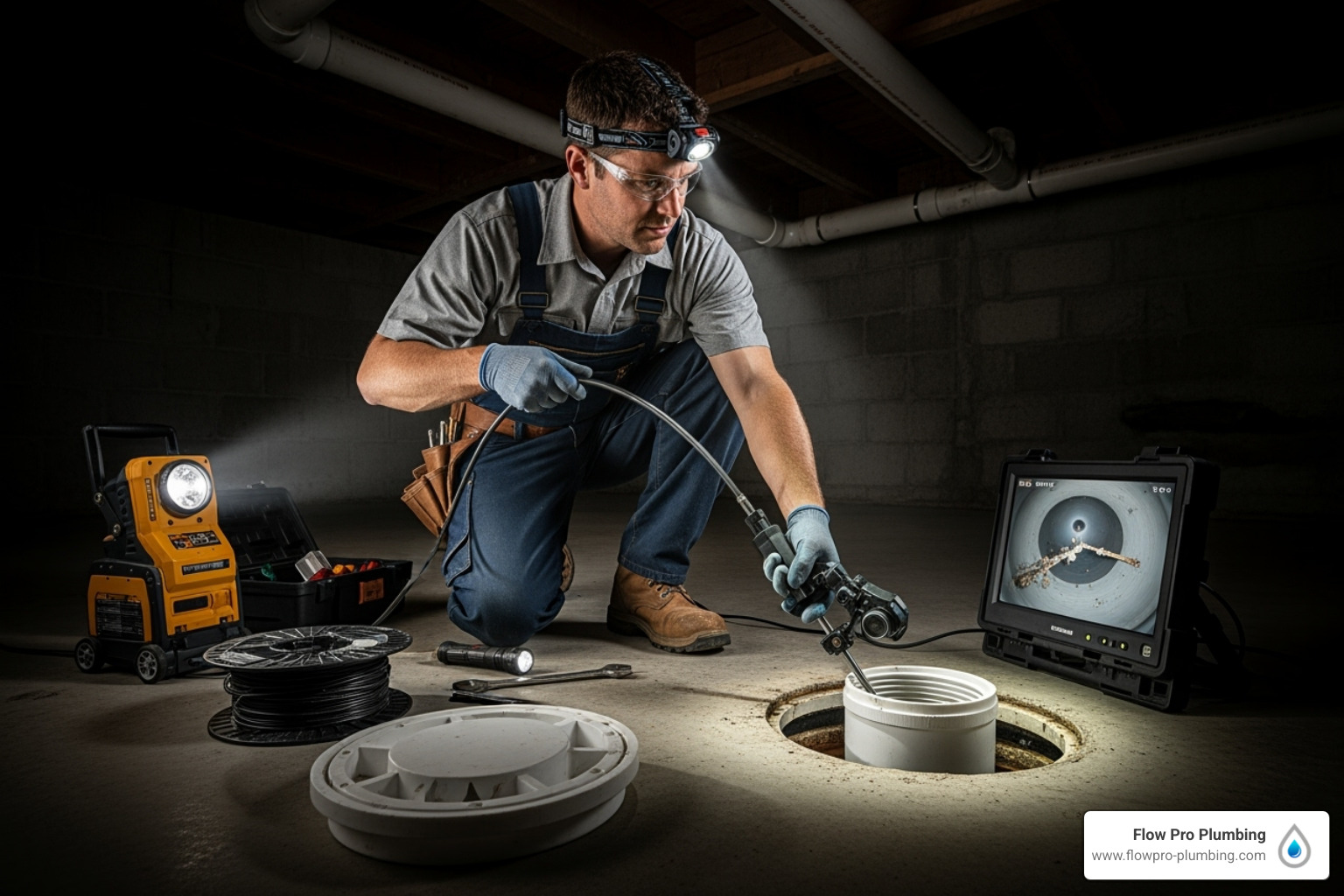
The first step is always a sewer camera inspection to eliminate guesswork. A high-resolution, waterproof camera is inserted into your sewer line to provide a clear view of the interior.
This video inspection allows a plumber to pinpoint the exact location and severity of the root blockage. More importantly, it involves assessing the overall pipe condition. The camera can identify cracks, misaligned joints, or collapses, which is crucial for determining the underlying cause of the intrusion. This damage evaluation ensures the recommended solution is appropriate for long-term results. Learn more about this essential diagnostic tool on our Sewer Video Inspection page.
Step 2: Mechanical Root Intrusion Removal Methods
Once diagnosed, the roots are physically removed. The two primary methods are mechanical augers and hydro jetting.
-
Mechanical Augers: Also known as drain snaking, this method uses a rotating cutting head to slice through root masses and clear the blockage. It provides fast relief but is often a temporary solution, as roots can regrow from the entry point.
-
Hydro Jetting: This powerful technique uses high-pressure water (up to 4,000 PSI) to blast away roots and scour the pipe walls clean. Hydro jetting not only removes roots but also clears debris like grease and sludge, leaving the pipe thoroughly cleaned.
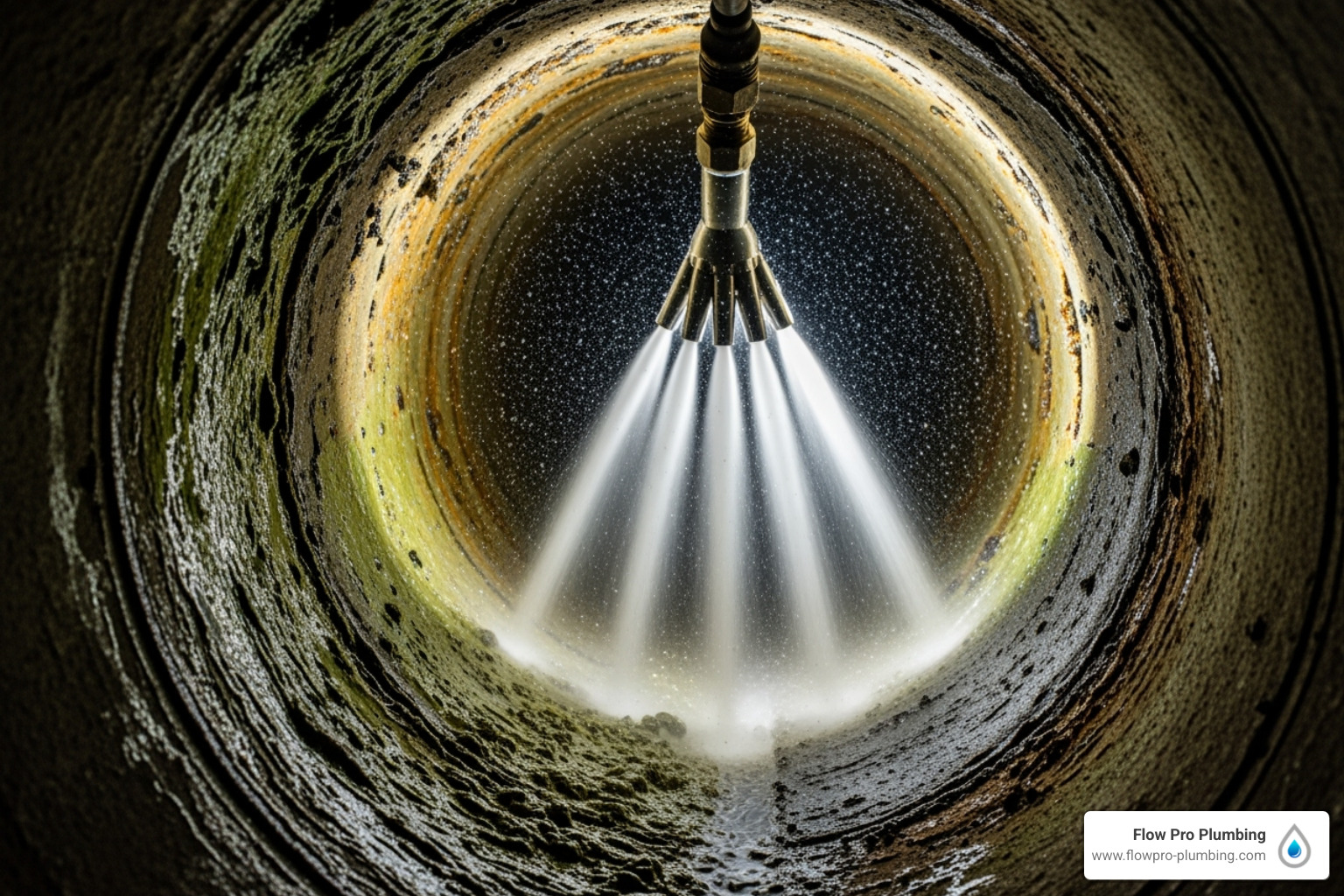
While effective, these methods don’t seal the cracks that allowed roots to enter. For more information, see our guide on Clogged Sewer Line Solutions.
Step 3: Chemical Treatments for Root Intrusion Removal
After mechanical cleaning, chemical treatments can be used to slow root regrowth. This post-cleaning treatment helps in preventing recurrence but does not repair the pipe itself.
- Foaming Root Killer: This product contains an herbicide that kills roots on contact. The foaming action fills the entire pipe, ensuring complete coverage.
- Copper Sulfate: A traditional option, copper sulfate is toxic to roots and can inhibit their growth.
These treatments are typically applied periodically (e.g., every 6-12 months) to manage the problem. However, they are not a permanent fix for damaged pipes. For more on sewer care, visit our page on Essential Sewer Repair Services.
Creating a Permanent Barrier: Long-Term Solutions and Prevention
While mechanical root intrusion removal clears the immediate blockage, it doesn’t fix the underlying problem. For a permanent fix, you need to create a barrier that prevents future invasions and protects your property.
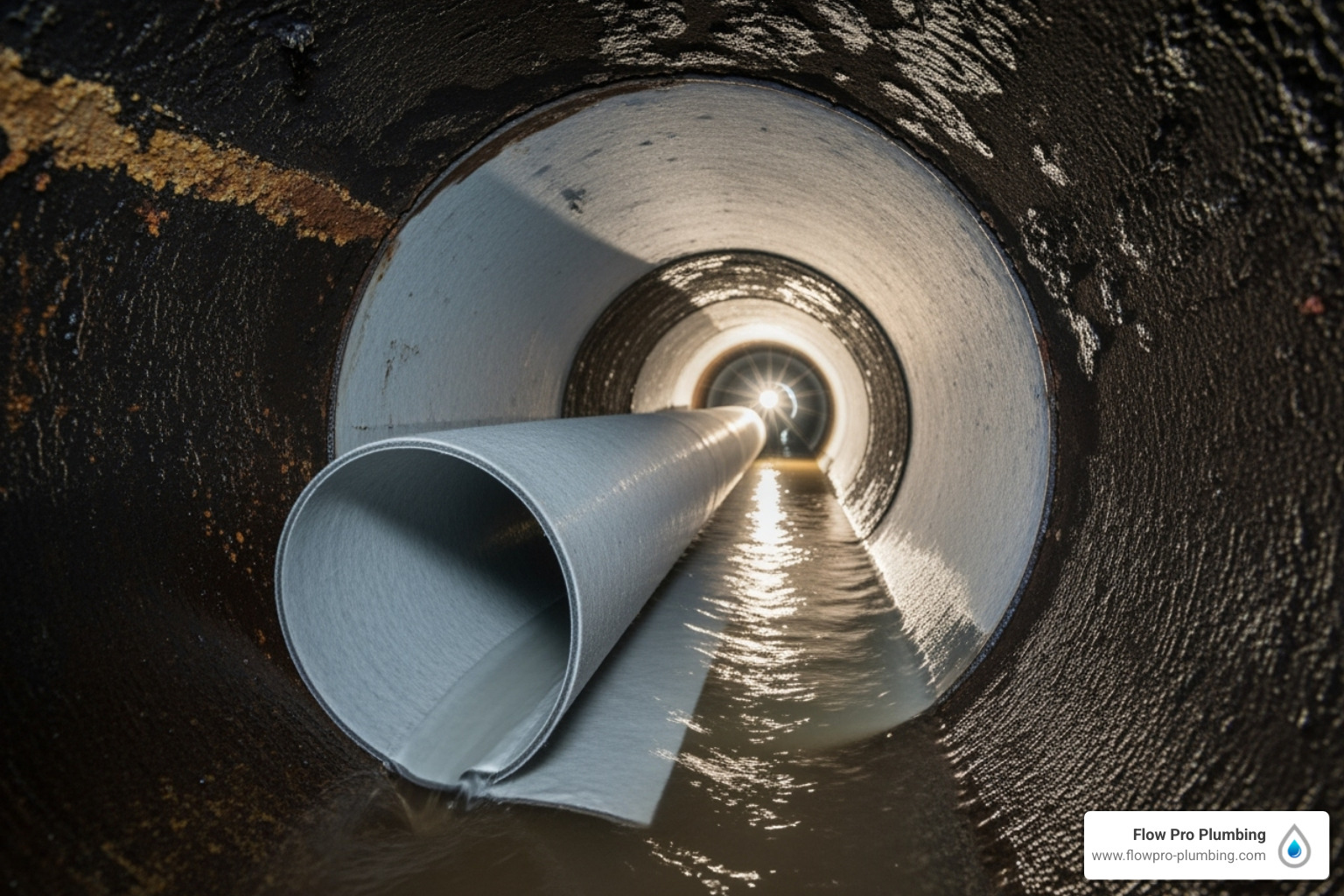
Cured-in-Place Pipe (CIPP) Lining: The Trenchless Solution
Cured-in-Place Pipe (CIPP) lining is a modern trenchless technology that repairs pipes from the inside out, eliminating the need for destructive digging. The process involves inserting a flexible liner saturated with epoxy resin into the damaged pipe. The liner is inflated, and the resin cures to form a new, seamless, and durable pipe within the old one.
This no-dig repair seals every crack and gap, creating a smooth, jointless barrier that is impenetrable to roots. CIPP lining restores the pipe’s structural integrity and often improves flow, offering a permanent solution that lasts for decades. Learn more about the Benefits of Trenchless Sewer Repair and our Trenchless Sewer Line Replacement services.
Pipe Lining vs. Traditional Replacement
For severe pipe damage, homeowners must choose between CIPP lining and traditional replacement. Traditional methods involve excavating the entire pipe, which is disruptive and time-consuming.
| Feature | Pipe Lining (CIPP) | Traditional Replacement |
|---|---|---|
| Yard Disruption | Minimal – no major digging | Extensive – full excavation required |
| Repair Time | 1-2 days | 3-7 days plus restoration |
| Durability | 50+ year lifespan | 50+ year lifespan |
| Root Prevention | Seamless barrier prevents entry | Joints may allow future entry |
For most root intrusion removal cases, CIPP lining provides a superior balance of effectiveness and convenience. Our Sewer Line Repair Guide can help you make an informed decision.
Proactive Prevention for Homeowners
Prevention is the best defense against root problems.
- Smart Landscaping: Plant large trees at least 50 feet away from sewer lines. Research a tree’s mature root spread before planting.
- Root Barriers: Install physical or chemical barriers underground to redirect root growth away from pipes.
- Regular Maintenance: Schedule sewer camera inspections every 1-2 years to catch root problems early, especially if you have large trees.
For more tips, see our guide on Preventing Sewer Blockages and this external Tree Root Removal Guide.
Why Tree Roots Are Your Sewer Line’s Worst Enemy
Root intrusion removal involves clearing invasive tree roots from sewer pipes and taking steps to prevent them from returning. Key methods include:
- Mechanical cutting: Using augers to cut through root masses.
- Hydro jetting: Blasting away roots with high-pressure water.
- Chemical treatments: Applying foaming root killers to slow regrowth.
- Pipe lining (CIPP): Creating a permanent, internal barrier.
- Professional diagnosis: Using a sewer camera to find the exact problem.
Tree roots are drawn to the moisture and nutrients in sewer lines, entering through tiny cracks. They are responsible for 50% of all sewer line blockages in the U.S. Once inside, they expand and trap debris, causing persistent clogs.
Older homes with clay, concrete, or cast iron pipes are at the highest risk due to vulnerable joints. In the East Bay Area, the combination of mature trees and aging pipes makes root intrusion a common problem. If not addressed, this can lead to pipe collapse, sewage backups, and significant property damage. Early detection and proper root intrusion removal are crucial for a lasting solution.
Identifying the Problem: The Telltale Signs of Root Intrusion
Root intrusion develops gradually, but it leaves behind clear warning signs. Being able to spot these symptoms is the first step toward effective root intrusion removal.
- Slow drains: This is often the first indication that roots are beginning to obstruct water flow in your pipes.
- Frequent clogs: Roots create a web that traps debris, leading to clogs that reappear even after being cleared.
- Gurgling sounds: Noises from your drains or toilet are often caused by trapped air trying to move past a root blockage.
- Unpleasant sewer odors: When pipes are blocked, sewer gases can escape into your home, indicating a drainage problem and potential health risk.
- Sewage backups: This is the most urgent sign, where wastewater backs up into your home through drains or toilets. It signals a severe blockage requiring immediate attention.
- Lush grass patches: An unusually green patch of lawn over your sewer line can be fed by a leak from a root-damaged pipe.
- Sinkholes or depressions: In advanced cases, a persistent leak can erode soil and cause the ground to sink above the sewer line.
Recognizing these signs early can prevent more extensive damage. If you notice these issues, learn more about how to avoid common sewer problems.
Why Roots Invade Your Sewer Lines (And the Risks of Ignoring Them)
Tree roots invade sewer lines as part of their natural instinct to find water and nutrients. Understanding this process highlights why professional root intrusion removal is so important.
Your Sewer Line: An Underground Oasis
Sewer pipes are highly attractive to roots for three main reasons:
- Moisture: Roots can sense water vapor from tiny cracks or loose joints in a pipe.
- Nutrients: Wastewater provides a constant, rich source of organic matter that promotes growth.
- Ventilation: The oxygen available in sewer lines creates an ideal environment for roots to thrive.
Why Some Pipes Are Sitting Ducks
Older pipe materials are particularly susceptible to root invasion. Clay pipes, cast iron pipes, and concrete pipes, common in homes built before the 1970s, have joints that weaken and separate over time. Roots can penetrate openings as small as 0.06 inches in diameter. Once inside, they expand and form dense masses that trap debris and cause blockages. Even modern PVC pipes are not immune if they sustain cracks or damage. To understand their growth patterns, you can learn more about tree root systems.
The High Price of Procrastination
Ignoring root intrusion leads to escalating problems:
- Pipe Collapse: Growing roots exert pressure that can fracture or collapse pipes, necessitating costly excavation and replacement.
- Property Damage: Leaking sewage can damage your home’s foundation, while backups can ruin floors, walls, and personal belongings.
- Health Hazards: Sewage contains harmful bacteria and pathogens. Exposure from backups or leaks poses a serious health risk to your family.
Prompt action is essential to avoid these severe consequences. The longer you wait, the more extensive and expensive the repairs will become.
Your Guide to Professional Root Intrusion Removal
At Flow Pro Plumbing, we use a proven, methodical process for root intrusion removal to ensure we solve the problem correctly and prevent its return.
Step 1: Accurate Diagnosis with Sewer Camera Inspection
Effective removal begins with an accurate diagnosis. We use a high-resolution, waterproof camera inserted into your sewer line to get a clear view of the problem. This video inspection allows us to pinpoint the exact location of the blockage and, just as importantly, assess your pipe’s overall condition.
This damage evaluation helps us identify cracks, misaligned joints, or other structural issues that allowed roots to enter in the first place. Knowing the full extent of the problem is crucial for recommending a lasting solution. Learn more about this technology in our guide on Sewer Video Inspection.
Step 2: Mechanical Root Intrusion Removal Methods
Once we’ve identified the problem, we use mechanical methods to physically clear the roots.
-
Mechanical Augers: Also called drain snaking, this method uses rotating cutting heads to break up root masses and restore flow. While effective for immediate relief, it is often a temporary solution as it doesn’t repair the pipe’s entry points.
-
Hydro Jetting: For a more thorough cleaning, we use hydro jetting. This technique uses water pressurized up to 4,000 PSI to blast away roots and scour the pipe walls clean of all grease and debris. It is a highly effective method for clearing tough blockages and is considered a best practice for preparing pipes for repair.
Mechanical methods clear existing roots but don’t prevent them from returning if the pipe is damaged. For more on this topic, see our guide to Clogged Sewer Line Solutions.
Step 3: Chemical Treatments for Root Intrusion Removal
After mechanical clearing, chemical treatments can be used as a preventative measure to slow regrowth. These are not designed to clear an active blockage but are effective for maintenance.
- Foaming Root Killer: This herbicide creates a foam that fills the pipe, ensuring the chemical coats all surfaces and kills roots on contact.
- Copper Sulfate: A traditional root control product that is toxic to roots and inhibits their growth.
These treatments are best applied periodically to manage regrowth, but they do not fix the underlying structural damage in the pipe. For more on comprehensive care, see our page on Essential Sewer Repair Services.
Creating a Permanent Barrier: Long-Term Solutions and Prevention
For lasting root intrusion removal, the goal is to fortify your sewer lines against future invasions. Long-term solutions create a permanent barrier that protects your property for decades.
Cured-in-Place Pipe (CIPP) Lining: The Trenchless Solution
Cured-in-Place Pipe (CIPP) lining is a trenchless technology for sewer repair. This no-dig approach avoids destroying your yard or driveway. The process involves inserting a flexible liner saturated with epoxy resin into the damaged pipe. The liner is inflated and cures in place, forming a brand-new, seamless pipe inside the old one.
This new pipe seals off all cracks, holes, and misaligned joints, creating an impenetrable barrier that roots cannot penetrate. The result is a pipe that is often stronger than the original, providing a permanent upgrade to your sewer system. Learn more about the Benefits of Trenchless Sewer Repair and our Trenchless Sewer Line Replacement services.
Pipe Lining vs. Traditional Replacement
When choosing a repair method, it’s important to compare CIPP lining with traditional replacement, which requires extensive digging.
| Feature | Pipe Lining (CIPP) | Traditional Replacement |
|---|---|---|
| Yard Disruption | Minimal (no digging) | Extensive (full excavation) |
| Repair Time | 1-2 days | Several days to weeks |
| Durability | 50+ year lifespan | 50+ year lifespan |
| Root Prevention | Excellent (seamless barrier) | Good (joints are a weak point) |
For many homeowners in Brentwood, CA and surrounding areas, CIPP lining is the preferred choice due to its minimal disruption and fast repair time. Both methods are durable, but CIPP offers superior root prevention with its seamless design. For more guidance, see our Sewer Line Repair Guide.
Proactive Prevention for Homeowners
The best strategy is to prevent root intrusion before it starts.
- Smart Landscaping: When planting, keep large trees at least 10 feet from sewer lines.
- Root Barriers: Install physical barriers underground to direct root growth away from pipes.
- Regular Maintenance: Schedule a sewer inspection every couple of years, especially if you have mature trees, to catch problems early.
Focus on maintaining your system and being vigilant for warning signs. For more tips, read our guide on Preventing Sewer Blockages.
Secure Your Sewer Lines for Good
Ignoring root intrusion is a costly mistake that will only lead to more severe and expensive problems over time. Tree roots in your sewer line threaten your home’s comfort, safety, and structural integrity.
While mechanical cutting and chemical treatments provide temporary relief, the path to permanent protection lies in advanced solutions like CIPP lining. This trenchless technology creates a new, seamless pipe within your old one, forming an impenetrable barrier that roots cannot breach. It’s a long-term investment in the health of your plumbing system and your peace of mind, all without digging up your yard.
At Flow Pro Plumbing, we specialize in delivering root intrusion removal solutions that last. Our experienced team uses the latest technology to do the job right the first time. Don’t wait for the damage to get worse.
Ready to reclaim your sewer lines from invasive roots? Contact us for expert sewer services in Brentwood to schedule a professional assessment. We’ll create a strategy to get roots out for good and keep them out.