
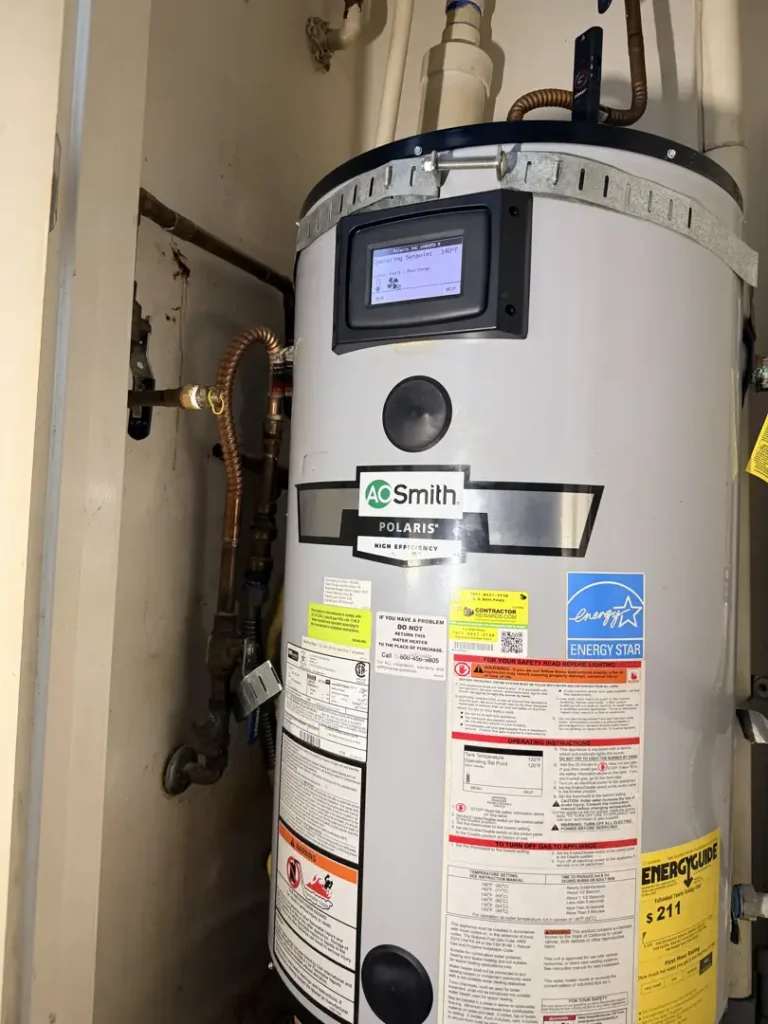
Understanding the Tankless Water Heater Pros and Cons
Tankless water heater pros and cons are worth understanding before you spend a dime on a new system. Here’s a quick breakdown so you can make a smart decision fast:
Pros:
- Heats water on demand — no standby energy waste
- 24%–34% more energy efficient for low-usage homes
- Lasts 20+ years (vs. 8–12 years for tank models)
- Compact, wall-mounted design saves significant space
- Eligible for a 30% federal tax credit (up to $600) on Energy Star models
- Endless hot water supply
Cons:
- Higher upfront purchase and installation cost
- May require electrical panel or gas line upgrades
- Limited flow rate — simultaneous use can strain the system
- “Cold water sandwich” effect with intermittent use
- Requires annual descaling maintenance, especially in hard water areas
- No hot water during a power outage (even gas models)
So, is a tankless water heater worth it? For most homeowners who want long-term energy savings, more space, and a reliable supply of hot water, yes — but it depends on your household size, budget, and how your home is set up. This guide walks you through everything you need to know to decide confidently.
I’m Jesse Delgado, owner of Flow Pro Plumbing in Brentwood, California, and a licensed plumber with over a decade of hands-on experience helping East Bay homeowners navigate exactly these kinds of decisions, including the full range of tankless water heater pros and cons. I’ve installed and evaluated these systems across hundreds of homes, so the insights in this guide come straight from the field, not just the spec sheet.
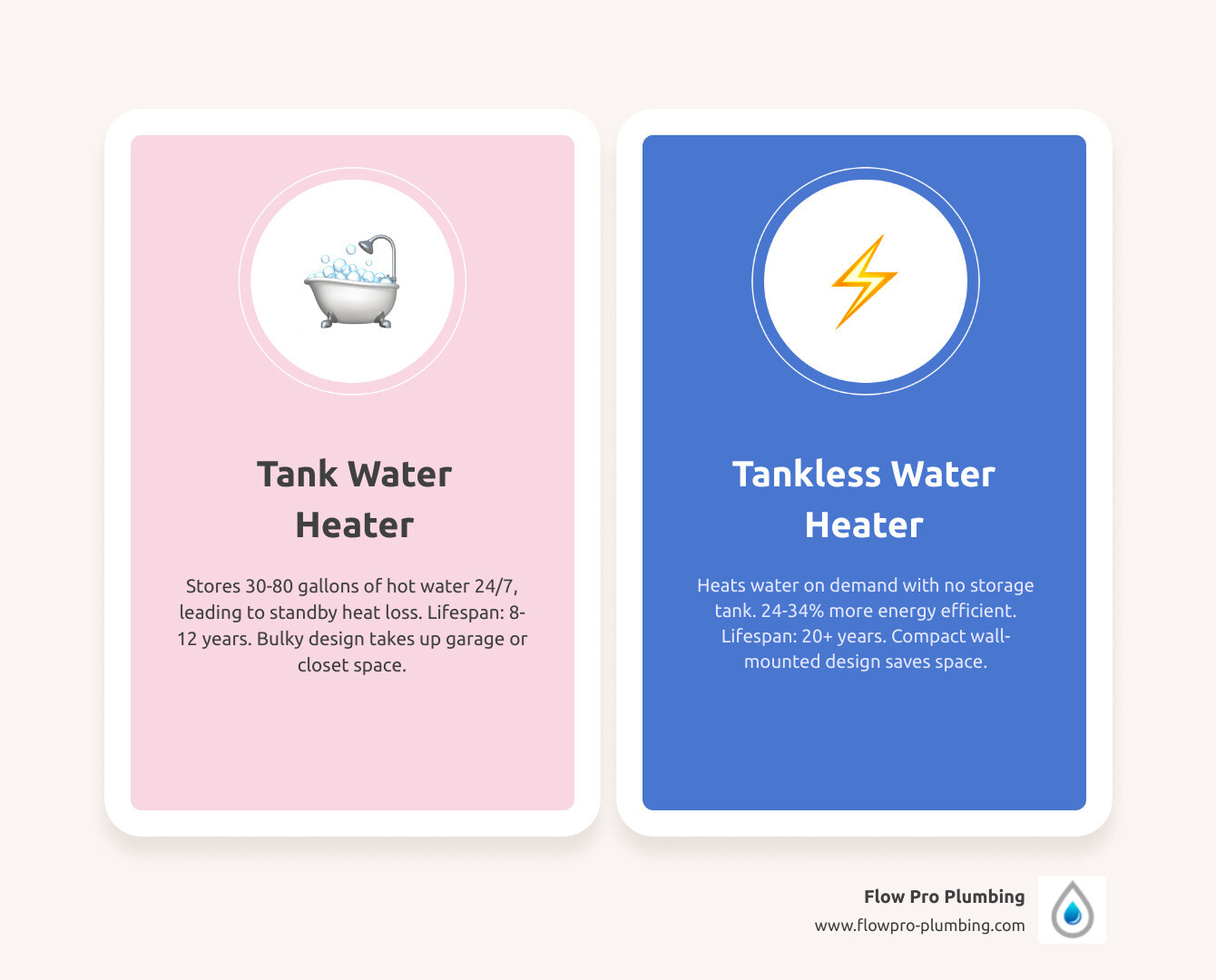
When we talk about water heaters, most of us picture that big, beige cylinder sitting in the garage or a cramped closet. That’s a traditional storage tank. It works by keeping 30 to 80 gallons of water hot 24/7, just in case you need it. The problem? That’s a lot of “standby heat loss.” You’re essentially paying to heat water while you’re sleeping or at work.
A tankless system, often called an “on-demand” or “instantaneous” heater, flips the script. It doesn’t store water at all. Instead, when you flip the hot water handle on your shower, a flow sensor detects the movement. This triggers a powerful heat exchanger—either gas burners or electric coils—that flash-heats the water as it travels through the unit.
| Feature | Traditional Tank | Tankless System |
|---|---|---|
| Lifespan | 8–12 Years | 20+ Years |
| Efficiency | Lower (Standby Loss) | High (On-Demand) |
| Space | Large Footprint | Compact/Wall-Mounted |
| Hot Water Supply | Limited to Tank Size | Endless (within GPM) |
| Maintenance | Minimal Flushing | Annual Descaling |
To get a deeper look at these mechanics, you can Explore Tankless Water Heaters or check out our Tankless Water Heater Benefits Guide.
Gas vs. Electric Models
Choosing between gas and electric is one of the biggest hurdles in the tankless water heater pros and cons debate.
Gas-powered units are the heavy hitters. They typically offer higher flow rates, meaning they can handle a shower and a dishwasher running at the same time more easily than electric models. However, they require complex venting. “Non-condensing” gas units get very hot and need expensive stainless steel flues. “Condensing” models are more advanced; they use a second heat exchanger to capture extra heat, allowing us to use cheaper PVC venting because the exhaust is much cooler.
Electric models are often simpler to install because they don’t need vents at all. However, they have a massive appetite for power. Most whole-home electric tankless units require a 200-amp electrical panel. If your home in Pittsburg or Bay Point still has an older 100-amp panel, you’ll be looking at a significant electrical upgrade. For a deeper dive into this choice, see The Great Water Heater Debate: Gas vs. Electric.
Sizing and Flow Rates
In the plumbing world, we don’t measure tankless heaters by gallons; we measure them by Gallons Per Minute (GPM). This is where “sizing” becomes critical. If you have a large family in Antioch and everyone tries to shower at 7:00 AM, a unit with a low GPM will struggle.
Groundwater temperature also plays a huge role. Here in Northern California, our water isn’t as icy as it is in Idaho, but it still gets chilly in the winter. The colder the incoming water, the harder the unit has to work to reach your desired temperature, which can lower the effective GPM. We always look at your “peak demand”—the most hot water you’d ever use at one single moment—to ensure you never get a lukewarm surprise. You can learn more about these requirements on our Water Heaters service page.
The Major Advantages of Going Tankless
The most famous “pro” is the endless hot water. If you’ve ever been the fourth person in line for the shower on a Monday morning, you know the pain of the water turning cold mid-lather. With a tankless system, as long as you have gas/electricity and water, that hot stream will never run out.
Beyond the luxury of long showers, the 20-year lifespan is a massive benefit. While a standard tank starts to corrode the moment it’s filled, tankless units are built with replaceable parts and scale-resistant materials. For more details, see the Benefits of a Tankless Water Heater and why many consider it a High-Efficiency Water Heater.
Key Tankless Water Heater Pros and Cons for Energy Savings
When looking at tankless water heater pros and cons, the energy savings are often the deciding factor. According to the Department of Energy, these units can be 24%–34% more energy efficient for homes using 41 gallons or less of hot water daily. Even in high-usage homes (around 86 gallons a day), you’re looking at 8%–14% better efficiency.
This efficiency translates directly to your utility bills. Plus, there’s a financial “cherry on top”: Energy Star-certified gas tankless heaters are currently eligible for a 30% federal tax credit, capped at $600. This helps offset the initial investment. Check out Here’s Why You Should Upgrade to a Tankless Water Heater for more on these incentives.
Durability and Home Value
A tankless unit isn’t just an appliance; it’s an upgrade to your real estate. Because they last twice as long as traditional tanks and are highly desired by modern homebuyers, they can actually bump up your property value by about 1%. Their corrosion resistance is superior because they don’t hold standing water, which is the primary cause of tank failure. If you’re in Brentwood and thinking about the future, read Don’t Get Cold Feet: Choosing the Best Water Heater in Brentwood.
Potential Drawbacks and Installation Challenges
We have to be honest: it’s not all sunshine and steam. There are real tankless water heater pros and cons to weigh. One common complaint is the “cold water sandwich.” This happens when you turn the water off and right back on (like when washing dishes). A small pocket of cold water that was in the unit while it was “off” can make its way through the pipes, giving you a brief 3-second chill.
There’s also power dependency. A traditional gas tank heater often works during a blackout because it doesn’t need electricity to keep the water hot. A tankless unit—even a gas one—requires an electronic control panel to function. No power means no hot water. For a deep dive into these issues, see our Tankless Water Heater Downsides Guide and the Tankless Water Heater Problems Guide.
Navigating Tankless Water Heater Pros and Cons During Installation
Installing a tankless unit in an older home in Concord or Pleasant Hill isn’t always a “plug and play” situation. This is where the “cons” of installation come in.
- Gas Lines: Tankless units need a massive burst of gas to heat water instantly. Your existing half-inch gas line might need to be upgraded to a three-quarter-inch line.
- Electrical: As mentioned, electric models often require a 200-amp service.
- Venting: Gas units need dedicated intake and exhaust pipes, which might mean cutting new holes in your exterior walls.
Our Tankless Water Heater Installation Guide covers these steps, and it’s vital to ensure you Don’t Get Into Hot Water With California Installation Codes.
Climate and Performance Limits
While we enjoy a relatively mild climate in the Discovery Bay and Oakley areas, winter groundwater temperatures still affect performance. If you have a large household with high demand (multiple showers, laundry, and dishwasher running at once), a single tankless unit might reach its limit. In these cases, we sometimes recommend “point-of-use” units—small heaters dedicated to a single bathroom—to supplement the main system. For residents in the area, you can find specific local info at Tankless Water Heater Installation Brentwood CA.
Maintenance and Longevity: Keeping Your System Running
If you ignore a tankless water heater, it will eventually ignore you. Because these units heat water so intensely, minerals like calcium and magnesium “drop out” of the water and stick to the heat exchanger. This is called scaling.
In hard water areas like Clayton or Knightsen, this buildup acts like insulation, making the heater work harder and eventually causing it to overheat or fail. Annual flushing with a food-grade descaling solution (usually a high-strength vinegar) is non-negotiable. Learn more in our Tankless Water Heater Maintenance Guide and find out if a Tankless Hot Water Heater Can Be Repaired if maintenance has been skipped.
Protecting Your Investment
To minimize maintenance, we often recommend installing a water softener or a scale-inhibiting filter. This keeps the minerals from ever reaching the heat exchanger, significantly extending the time between professional flushes. Regular filter cleaning (a simple screen you can rinse yourself) also ensures the unit gets the proper water flow it needs to stay efficient. For more on keeping your system healthy, visit Water Heater Repair and Installation.
Frequently Asked Questions about Tankless Systems
How long does a tankless water heater last compared to a tank?
A tankless water heater typically lasts 20 years or more, whereas a traditional tank usually fails between 8 and 12 years. This longevity is due to the fact that tankless units don’t store water, which prevents the rust and sediment buildup that eventually kills tank models. For a local perspective, see the Brentwood Tankless Heater Complete Guide.
Can a tankless water heater provide enough water for a large family?
Yes, but it requires proper sizing. A high-output gas unit can typically handle 2 to 3 showers simultaneously. If you have a very large home, we might install two units in parallel or use a dedicated unit for high-demand appliances. Residents can check the Tankless Water Heater Pittsburg CA Guide for sizing tips.
Does hard water affect tankless performance?
Absolutely. Hard water is the “number one enemy” of tankless systems. Scaling reduces efficiency and can void your warranty if not addressed. We highly recommend a softener for homes in Oakley; see our Tankless Heater Installation Oakley CA Guide for more info.
Conclusion
Deciding on a new water heater is a big move for any homeowner. While the tankless water heater pros and cons show a higher initial hurdle in terms of installation and cost, the long-term rewards of energy efficiency, space savings, and endless hot water are hard to beat.
At Flow Pro Plumbing, we take pride in serving our neighbors in Brentwood, Oakley, Antioch, and throughout the East Bay. We aren’t just here to sell you a unit; we’re here to provide unsurpassed workmanship and expert advice to ensure your home stays comfortable for the next 20 years. If you’re ready to make the switch or just have more questions, we’re your local experts for Tankless Water Heaters Brentwood CA. Give us a call—we’d love to help you get into hot water (the good kind!).