
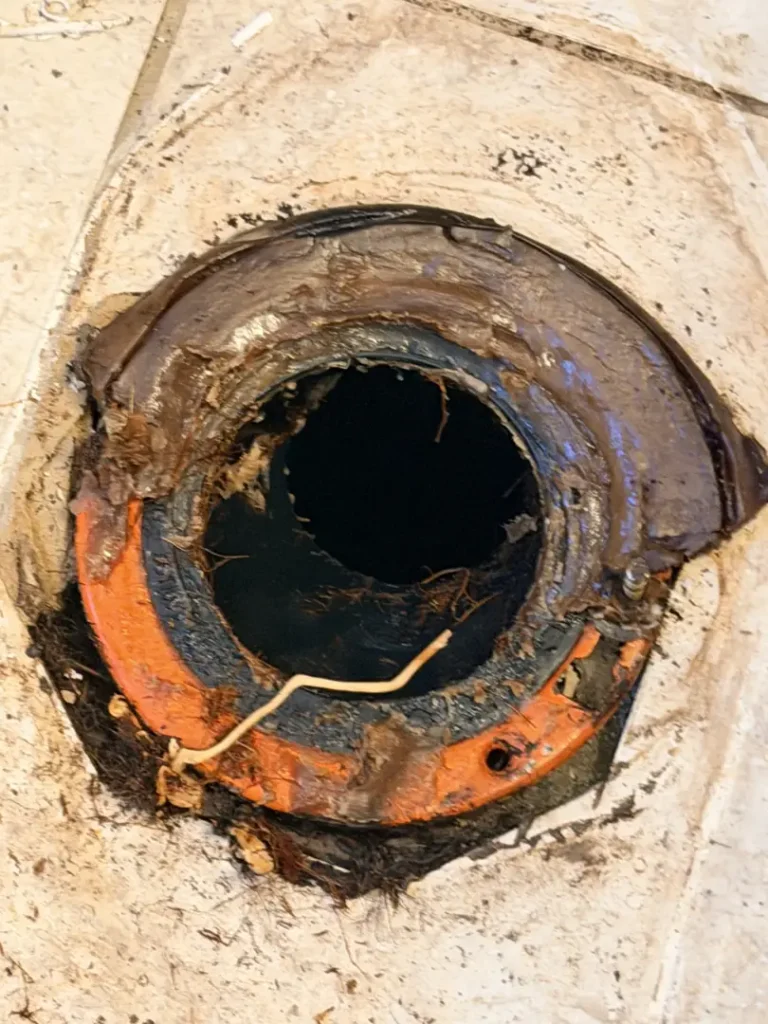
How to Know if Your Sewer Line is Broken Before It Becomes a Disaster
Knowing how to know if your sewer line is broken could save you from a very expensive, very unpleasant surprise. Here are the most common warning signs to watch for:
- Multiple slow drains throughout the house at the same time
- Gurgling sounds coming from toilets or drains
- Foul sewer odors inside the home or near the yard
- Sewage backing up into sinks, tubs, or floor drains
- Unusually lush or soggy patches of grass in your yard
- Mold growth in walls, floors, or ceilings without an obvious source
- Pest activity like rodents or cockroaches increasing suddenly
- Cracks forming in your foundation or settled flooring
If you’re noticing more than one of these at the same time, there’s a good chance your main sewer line — not just a single drain — is the problem.
Your home’s sewer line does a job most homeowners never think about. It quietly moves all the wastewater from your toilets, sinks, showers, and appliances out to the municipal sewer system underground. Because it’s buried out of sight, problems can develop slowly and go unnoticed for months — sometimes years — before the damage becomes obvious.
That’s what makes sewer line issues so tricky. By the time you see sewage on your floor or smell something unmistakable coming from your drains, the situation has often already progressed well beyond a simple fix. The good news is that your home gives off early warning signs if you know what to look for.
I’m Jesse Delgado, owner of Flow Pro Plumbing in Brentwood, California, with over a decade of licensed plumbing experience and a background working alongside my father in residential and commercial plumbing from an early age — and how to know if your sewer line is broken is one of the most important things I help East Bay homeowners understand before a small issue turns into a major repair. In the sections ahead, I’ll walk you through every red flag, what causes them, and what to do next.
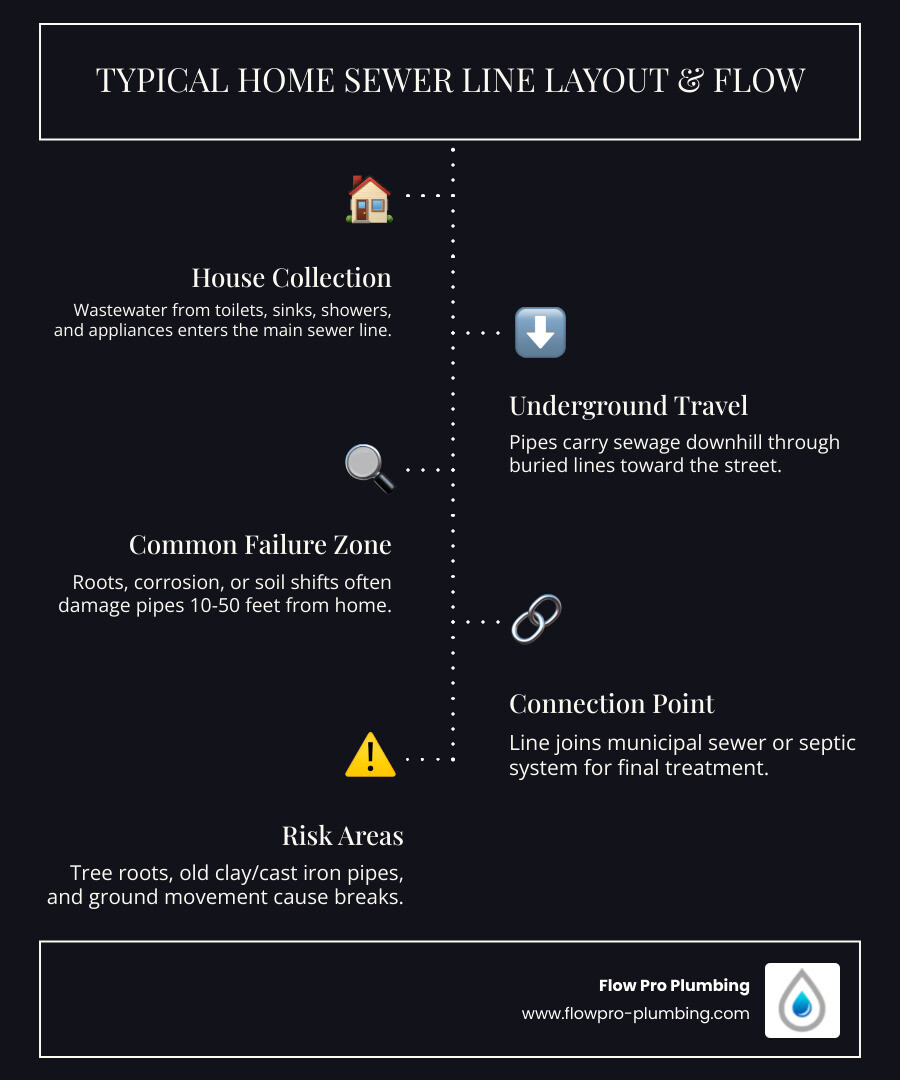
Common Signs and How to Know if Your Sewer Line is Broken
Identifying a sewer failure early is the difference between a quick spot repair and a full-scale excavation of your front yard. While a single clogged toilet is usually just a localized issue, a broken main line affects the entire ecosystem of your home’s plumbing.
One of the most telling signs is a sewage backup. If you flush a toilet on the second floor and see water rising in your first-floor shower, that’s a major red flag. This happens because the wastewater has nowhere to go due to a break or collapse in the main line, so it forces its way back up through the lowest drains in the house.
Foul odors are another giveaway. Your sewer system is designed to be airtight (except for the vent stacks on your roof). If you start smelling “rotten eggs” or raw sewage in your yard or basement, it means sewer gas is escaping through a crack or a separated joint. To help you navigate these issues, we’ve put together a comprehensive Sewer Line Repair Guide to help you understand the process. If you are already dealing with a mess, our team provides specialized Sewer Backup Repair Brentwood CA to get your home back to normal.
Simple Clog vs. Broken Sewer Line: What’s the Difference?
It is easy to mistake a major pipe failure for a simple blockage. However, the scope and frequency of the problem usually tell the real story.
| Symptom | Simple Clog | Broken Sewer Line |
|---|---|---|
| Affected Fixtures | Usually just one (e.g., one sink) | Multiple fixtures across the house |
| Frequency | Happens once and stays blocked | Recurring issues every 3–6 months |
| Odors | Localized to the drain | Present throughout the house or yard |
| Yard Changes | None | Soggy spots or extra green grass |
| Sounds | Occasional glug | Constant gurgling in toilets when using sinks |
Indoor Red Flags: How to Know if Your Sewer Line is Broken
Inside your home, the signs are often auditory or olfactory. If you hear a “bubbling” or gurgling sound coming from the bathtub while the washing machine is draining, that is air being trapped and pushed back through the system because the main line is obstructed.
When you have multiple clogs appearing at once, it is rarely a coincidence. We often see homeowners try to use liquid cleaners, but these rarely work on main line issues. Instead, you need Clogged Sewer Line Solutions that address the root cause. If the damage is structural, a Sewer Main Line Repair is often the only permanent fix.
Outdoor Symptoms: How to Know if Your Sewer Line is Broken
Sometimes the best way to diagnose a sewer issue is to take a walk outside. Because sewage is rich in nitrogen and phosphorus, it acts as a potent fertilizer. If you notice a patch of grass that is significantly greener or growing faster than the rest of your lawn—especially during a dry California summer—you likely have a leak underneath.
In more severe cases, you might see:
- Soggy Spots: Areas of the yard that stay wet even when it hasn’t rained.
- Sinkholes: As water leaks out of the pipe, it can wash away the surrounding soil, causing the ground to settle or collapse.
- Pest Surges: Rats and cockroaches live in sewer systems. A crack in your line is essentially a “welcome mat” for these pests to enter your property.
If you notice these signs in the East Bay, we offer dedicated Sewer Repair Antioch CA and Discovery Bay CA Sewer Service to pinpoint the leak. For those further south, our Byron CA Sewer Repair team is ready to help.
Why Sewer Lines Fail: Roots, Age, and Corrosion
Sewer lines aren’t invincible. While most modern pipes are made of durable PVC, many homes in Brentwood, Concord, and Walnut Creek still rely on older materials that have a finite lifespan.
- Tree Root Intrusion: This is the #1 cause of sewer damage. Roots naturally seek out moisture and nutrients. They can sense the “sweat” on the outside of a pipe and will enter through the tiniest cracks or loose joints. Once inside, they grow rapidly, causing blockages and eventually breaking the pipe apart. We specialize in Root Intrusion Removal and Sewer Root Removal to clear these stubborn invaders.
- Aging Materials:
- Vitrified Clay: Common in homes from the 1950s–1970s, these pipes last about 50–60 years before the joints separate.
- Cast Iron: These typically last 50–75 years but are prone to internal corrosion and “scaling,” which catches debris and leads to clogs.
- Orangeburg Pipe: Made of wood pulp and tar, this material was used mid-century and is notorious for flattening or collapsing after 30–50 years.
- Soil Shifting: The clay-heavy soil in parts of Contra Costa County can expand and contract with moisture levels. This movement puts immense pressure on buried pipes, leading to “bellies” (low spots) or full breaks.
Whether you need Knightsen CA Sewer Repair for an old clay line or Concord CA Sewer Service for a corroded cast iron pipe, understanding the material of your home is the first step.
Professional Diagnosis and the Power of Camera Inspections
In the old days, plumbers had to dig up the entire yard just to find a leak. Today, we use much more sophisticated methods. The most effective tool in our arsenal is the sewer video inspection.
A Sewer Video Inspection involves feeding a high-definition, waterproof camera through your sewer line. This allows us to see the interior of the pipe in real-time. We can identify exactly where roots are entering, locate cracks, and even see if the pipe has collapsed.
Regular Sewer Video Inspections Prevent Plumbing Issues by catching small cracks before they become total failures. If you are buying an older home in the area, we highly recommend a Pittsburg CA Sewer Service inspection to ensure you aren’t inheriting a broken line.
Modern Solutions: Repairing a Broken Sewer Pipe
If the news is bad and your line is broken, don’t panic. You don’t necessarily have to say goodbye to your beautiful landscaping or driveway. Modern technology has given us “trenchless” options that are faster and less invasive.
Trenchless Sewer Repair
The Benefits of Trenchless Sewer Repair are numerous. These methods allow us to fix the pipe from the inside out.
- Cured-in-Place Pipe (CIPP): We insert a resin-saturated liner into the old pipe, inflate it, and let it harden. This creates a brand-new, jointless pipe inside your old one. It typically lasts 50 years!
- Pipe Bursting: We pull a new HDPE pipe through the old one, literally “bursting” the old damaged pipe outward to make room for the new one.
We provide Oakley CA Trenchless Sewer Line Replacement for homeowners who want to save their yards. If you’re in Oakley and need a standard Sewer Line Repair Oakley CA, we have you covered there too.
For more traditional Sewer Pipe Repair Methods, we offer Broken Sewer Pipe Repair services across the region. If you’ve been asking, “I Have a Broken Sewer Pipe Who Are the Experts in Broken Sewer Pipe Repair in Antioch CA,” the answer is Flow Pro Plumbing.
Frequently Asked Questions about Broken Sewer Lines
What are the health risks of a broken sewer line?
A broken sewer line is more than just a plumbing nuisance; it’s a health hazard. Raw sewage contains harmful pathogens, bacteria (like E. coli), and viruses. Furthermore, a leaking line can lead to mold growth behind walls or under floors, which impacts air quality.
Sewer gas is another concern. It contains methane and hydrogen sulfide. In high concentrations, these gases can be toxic or even flammable. If you suspect a leak, our Discovery Bay CA Sewer Repair team can help ensure your home remains a safe environment for your family.
How long do sewer pipes typically last?
Lifespans vary wildly by material:
- PVC/Plastic: 100+ years.
- Cast Iron: 50–75 years.
- Vitrified Clay: 50–60 years.
- Orangeburg: 30–50 years.
If your home was built before 1980 and still has its original main line, it is likely nearing the end of its functional life.
Can I prevent my sewer line from breaking?
While you can’t stop the ground from shifting, you can take proactive steps to extend the life of your pipes:
- Regular Cleaning: Hydro Jetting Sewer Line uses high-pressure water to scour the inside of your pipes, removing grease and small roots. Read our Sewer Hydro Jetting Complete Guide for more details.
- Root Management: Avoid planting trees with aggressive root systems directly over your sewer line.
- Mind Your Drains: Never flush “flushable” wipes, feminine hygiene products, or cooking grease. These are the primary causes of clogs that put unnecessary pressure on your pipes.
Conclusion
Your sewer line is the unsung hero of your home’s infrastructure. While it stays out of sight, it should never stay out of mind. By paying attention to the “gurgles,” the strange smells, and the changes in your yard, you can catch a break before it becomes a total collapse.
At Flow Pro Plumbing, we take pride in helping our neighbors in Brentwood, Oakley, Antioch, and throughout the East Bay maintain healthy, functional plumbing systems. Whether you need a simple camera inspection or a complete trenchless replacement, our experienced team is here to provide unsurpassed workmanship.
Don’t wait for the backup to happen. If you’ve noticed any of the red flags mentioned in this guide, contact us today for expert Sewer Repair Brentwood CA and let us give you the peace of mind you deserve.