

Why Water Quality Is Quietly Destroying Your Plumbing Appliances
How water quality affects your plumbing appliances is something most homeowners in the East Bay Area don’t think about until something breaks. Here’s a quick look at what’s actually happening behind your walls and inside your appliances:
- Hard water minerals (calcium and magnesium) build up inside pipes, water heaters, dishwashers, and washing machines, reducing flow and efficiency
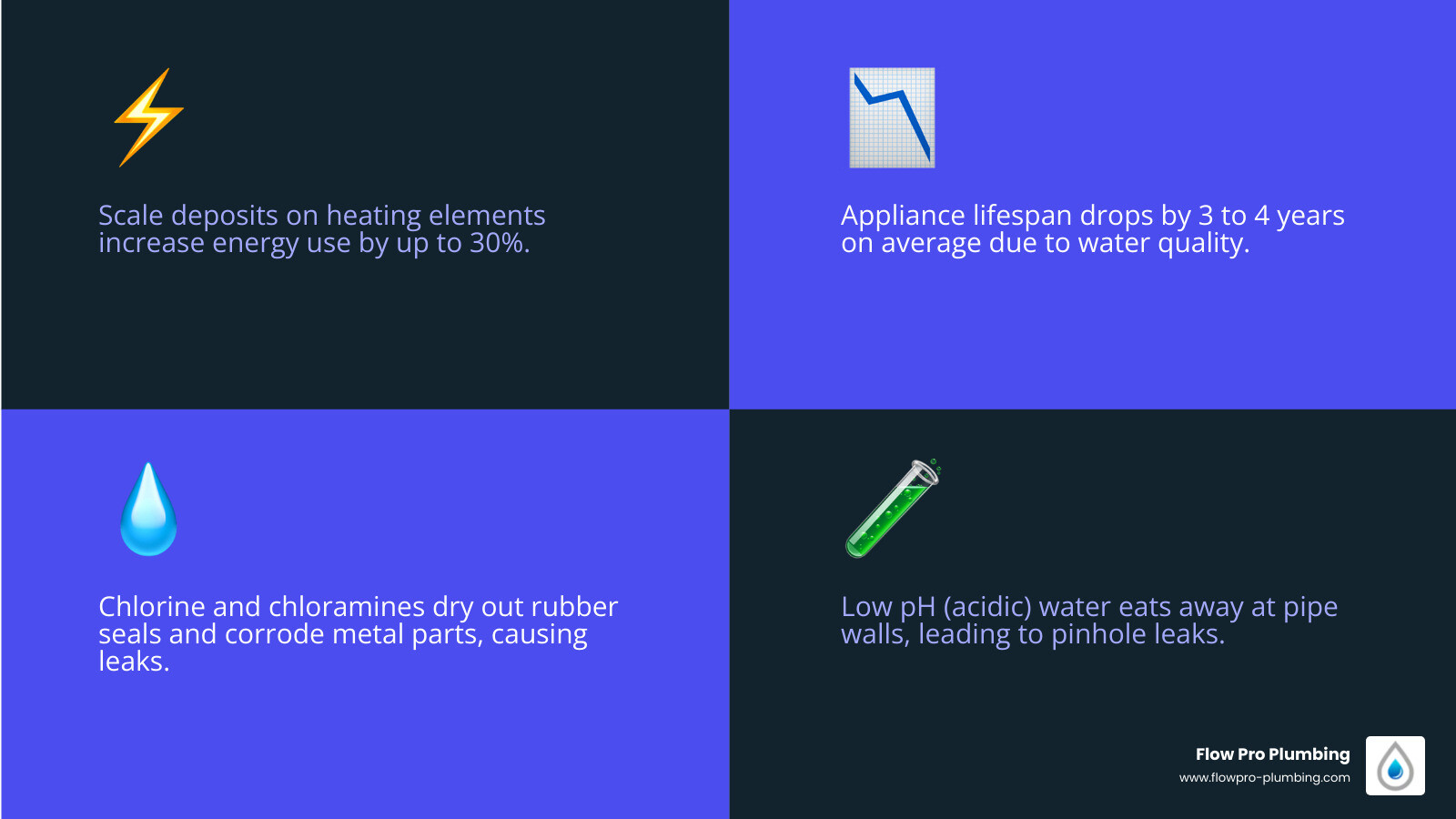
- Scale deposits on heating elements force appliances to work harder, increasing energy use by up to 30%
- Appliance lifespan drops by 3 to 4 years on average — water heaters that should last 15 years may fail at 10
- Chlorine and chloramines dry out rubber seals and corrode metal parts, leading to leaks
- Low pH (acidic) water eats away at pipe walls, causing pinhole leaks and discolored water
- High pH (alkaline) water accelerates scale formation and affects taste and appliance performance
The damage is slow, invisible, and cumulative — which is exactly what makes it so costly by the time you notice it.
I’m Jesse Delgado, owner of Flow Pro Plumbing in Brentwood, California, and after growing up in a family of plumbers and spending over a decade in residential service and repair, I’ve seen how water quality affects your plumbing appliances in ways that quietly drain homeowners’ budgets year after year. In the sections ahead, I’ll break down exactly what’s happening and what you can do about it.
Understanding Hard Water and Scale Buildup
When we talk about water quality in regions like Brentwood, Antioch, or Concord, the conversation almost always starts with “hardness.” But what does that actually mean? Pure water is actually a bit of a rarity in nature. As water travels through the ground, it acts as a solvent, picking up minerals from the soil and rocks it passes through.
The primary culprits are calcium and magnesium. When water has a high concentration of these minerals, we call it “hard water.” In the plumbing world, we measure this in grains per gallon (gpg). Anything over 7 gpg is considered hard, and in many parts of our service area, we see numbers much higher than that.
The real trouble begins with a process called mineral precipitation. When hard water is heated or even just sits in your pipes, these dissolved minerals turn back into solid form, creating a rock-hard crust known as limescale (calcium carbonate).
This limescale is relentless. It attaches to the inside of your copper or galvanized pipes, gradually narrowing the opening. Think of it like a clogged artery; as the passage gets smaller, the water flow is restricted, and the pressure on your plumbing joints increases. If you’ve noticed a chalky white buildup on your showerhead, it’s a sign of what’s happening inside your walls. You can remove calcium from your faucet using vinegar, but that only treats the symptom, not the underlying cause inside your plumbing system.
How Water Quality Affects Your Plumbing Appliances and Efficiency
You might think a little bit of “rock” in your pipes isn’t a big deal, but your appliances beg to differ. Every appliance in your home that uses water—from the ice maker in your fridge to the high-efficiency washing machine in the laundry room—is designed to work with clean, balanced water.
When minerals start to coat the internal components, the appliance experiences thermal resistance. This means it takes more energy to heat the water because the machine has to heat the layer of rock first. This leads to a noticeable spike in energy consumption and your monthly utility bills. In fact, research shows that appliances exposed to hard water can consume up to 30% more energy than those using soft water.
Furthermore, the mechanical parts—the pumps, valves, and seals—start to wear down prematurely. This is why having a water softener is often the best defense for your home’s “internal organs.”
Commonly affected appliances include:
- Water Heaters (Tank and Tankless)
- Dishwashers
- Washing Machines
- Coffee Makers and Espresso Machines
- Refrigerators with Ice/Water Dispensers
- Whole-home Humidifiers
How water quality affects your plumbing appliances like water heaters
Your water heater is the hardest hit by poor water quality. As water is heated, minerals settle at the bottom of the tank, creating a thick layer of sediment. This sediment acts as an insulator between the burner (or heating element) and the water.
The result? The heater has to run longer and hotter to reach the desired temperature. This extra heat doesn’t just waste energy; it physically stresses the tank’s steel, leading to cracks and eventually, a catastrophic leak. While a standard water heater should last about 15 years, hard water can force it into early retirement by year 10—a 5-year reduction in lifespan. One of the benefits of a water softener is that it keeps these heating elements clean, ensuring your unit lives out its full expected life.
How water quality affects your plumbing appliances in the kitchen and laundry
In the kitchen, how water quality affects your plumbing appliances is often visible on your dinnerware. Have you noticed cloudy glassware or spots on your “clean” dishes? That’s limescale. Inside the dishwasher, those same minerals clog the tiny holes in the spray arms, meaning your dishes don’t get the water pressure they need to get clean.
In the laundry room, hard water reacts with detergent to form “curd” instead of suds. This makes your clothes feel stiff and look dingy because the soap can’t rinse away properly. It also forces you to use more detergent, which further wears out the washing machine’s drain pump and internal valves. Understanding the many benefits of water softeners goes beyond just saving the machine; it’s about better cleaning performance and using fewer chemicals in your home.
The Invisible Enemies: Corrosion, Chlorine, and pH Imbalance
While minerals are the most common issue, they aren’t the only ones. Water chemistry is a delicate balance.
pH Imbalance and Acidity The pH scale runs from 0 to 14, with 7 being neutral. Ideally, your home’s water should sit between 6.5 and 8.5. If your water is acidic (low pH), it becomes “hungry” and starts to eat away at the metal in your pipes. This leads to pinhole leaks—tiny, needle-sized holes that can cause massive water damage inside your walls before you even know they exist. If you see blue-green stains in your tubs or sinks, you’re likely seeing the copper from your pipes being dissolved. Understanding how acidic water affects plumbing is vital for homeowners in areas with older infrastructure.
Chlorine and Chloramines City-treated water in places like Pittsburg and Walnut Creek often contains chlorine or chloramines to kill bacteria. While this makes the water safe to drink, these chemicals are harsh on plumbing components. Chlorine dries out the rubber seals and gaskets inside your faucets and toilets, making them brittle and prone to leaking. It can also accelerate the corrosion of copper pipes, especially when combined with high water temperatures.
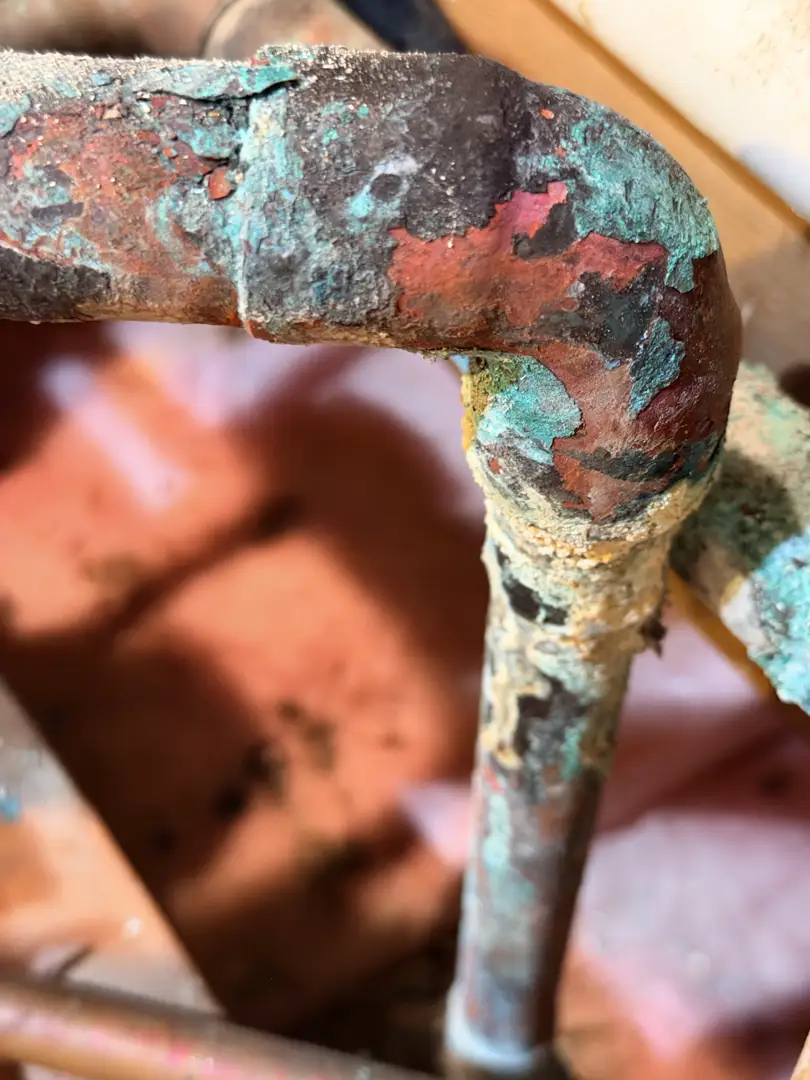
Galvanic Corrosion This occurs when two different types of metal (like copper and galvanized steel) come into contact in the presence of water. Poor water quality can act as an electrolyte, accelerating the electrical reaction that causes the metals to deteriorate. This usually happens at pipe joints, leading to “crusty” looking leaks.
Signs Your Home Needs a Water Quality Intervention
Because most plumbing is hidden, you have to look for the clues your system is leaving behind. Here are the red flags that indicate how water quality affects your plumbing appliances in your specific home:
- White Residue: A chalky, “rocky” buildup on faucets, showerheads, and around the base of fixtures.
- Low Water Pressure: If your shower feels more like a light drizzle than a waterfall, mineral scale might be clogging the pipes or the fixture itself.
- Metallic Taste or Odor: Water that tastes like pennies or smells like a swimming pool is a sign of high mineral content or excessive chlorine. You might find yourself wondering, is tap water safe to drink? While usually safe, it’s certainly not ideal for your pipes.
- Soap Scum: If you can’t get a good lather in the shower and your skin feels “squeaky” or dry after washing, you have hard water.
- Frequent Repairs: If you’re constantly replacing toilet flappers, fixing dripping faucets, or calling us for drain clearing, your water quality is likely the culprit.
- Discolored Water: Brown or reddish tints usually indicate rusted pipes, while blue-green tints indicate copper corrosion.
Long-Term Solutions for Protecting Your Home
The good news is that you don’t have to just accept that your appliances will die young. There are several effective ways to treat your water at the point it enters your home.
| Solution | Best For… | How It Works |
|---|---|---|
| Water Softener | Hard water and scale prevention | Uses ion exchange to swap calcium/magnesium for sodium ions. |
| Carbon Filtration | Chlorine, odors, and bad tastes | Uses activated carbon to “trap” chemicals and sediments. |
| Reverse Osmosis | Pure drinking water | Forces water through a semi-permeable membrane to remove 99% of contaminants. |
| Whole-Home System | Total plumbing protection | A combination of softening and filtration for every tap in the house. |
If you decide to go the softening route, it’s important to know how to size a water softener correctly for your household size and water usage. A system that is too small won’t keep up, while one that is too large wastes salt and water.
For those looking for the ultimate protection, a home water filtration system can be installed at the main line. These water filtration systems remove the chlorine and sediments that damage your pipes before they ever reach your appliances. Once a system is installed, maintenance is simple—just make sure you know how to add salt to water softener tanks regularly to keep the ion exchange process running smoothly.
Frequently Asked Questions
What is the most common cause of hard water?
The most common cause is the natural geography of the region. As groundwater percolates through layers of limestone and chalk, it dissolves mineral ions—specifically calcium and magnesium. In the East Bay area, our water sources often travel through mineral-rich soil before reaching our treatment plants, resulting in the “hard” characteristic we deal with daily.
How much does hard water reduce appliance lifespan?
On average, hard water reduces the service life of major appliances by 3 to 4 years. For a water heater, this can mean needing a replacement 5 years earlier than expected. When you factor in the cost of premature failure and the increased energy bills, many homeowners ask, is home water filtration worth it? The answer is almost always a resounding yes, as the system often pays for itself in avoided repairs and appliance longevity.
When should I test my home’s water quality?
We recommend an annual water test, especially if you live in older areas like Pittsburg or Bay Point. You should also test your water if you notice visible scale, changes in taste, or if you’ve recently moved into a new home. A professional test can highlight the water filtration systems contribution to your home’s health and help you choose the right treatment path.
Conclusion
At Flow Pro Plumbing, we’ve seen the damage that Brentwood’s water can do. From “retired” water heaters to pipes that look like they’ve been filled with concrete, the impact of poor water quality is undeniable. By addressing these issues now, you aren’t just getting better-tasting water; you’re making a long-term investment in your home’s infrastructure.
Whether you’re curious about how much is a water softener or you’re ready to move forward with installing water softeners to protect your investment, our team is here to help. We serve the entire region, from Discovery Bay to Walnut Creek, with the expert workmanship we’re known for.
Don’t let your appliances plan an early retirement. Protect your home with expert water softener solutions from the friendly team at Flow Pro Plumbing today!