
Does a Water Softener Affect Water Pressure? Here’s What Homeowners Need to Know
Does a water softener affect water pressure? Yes — but the full answer depends on a few key factors. Here’s a quick breakdown:
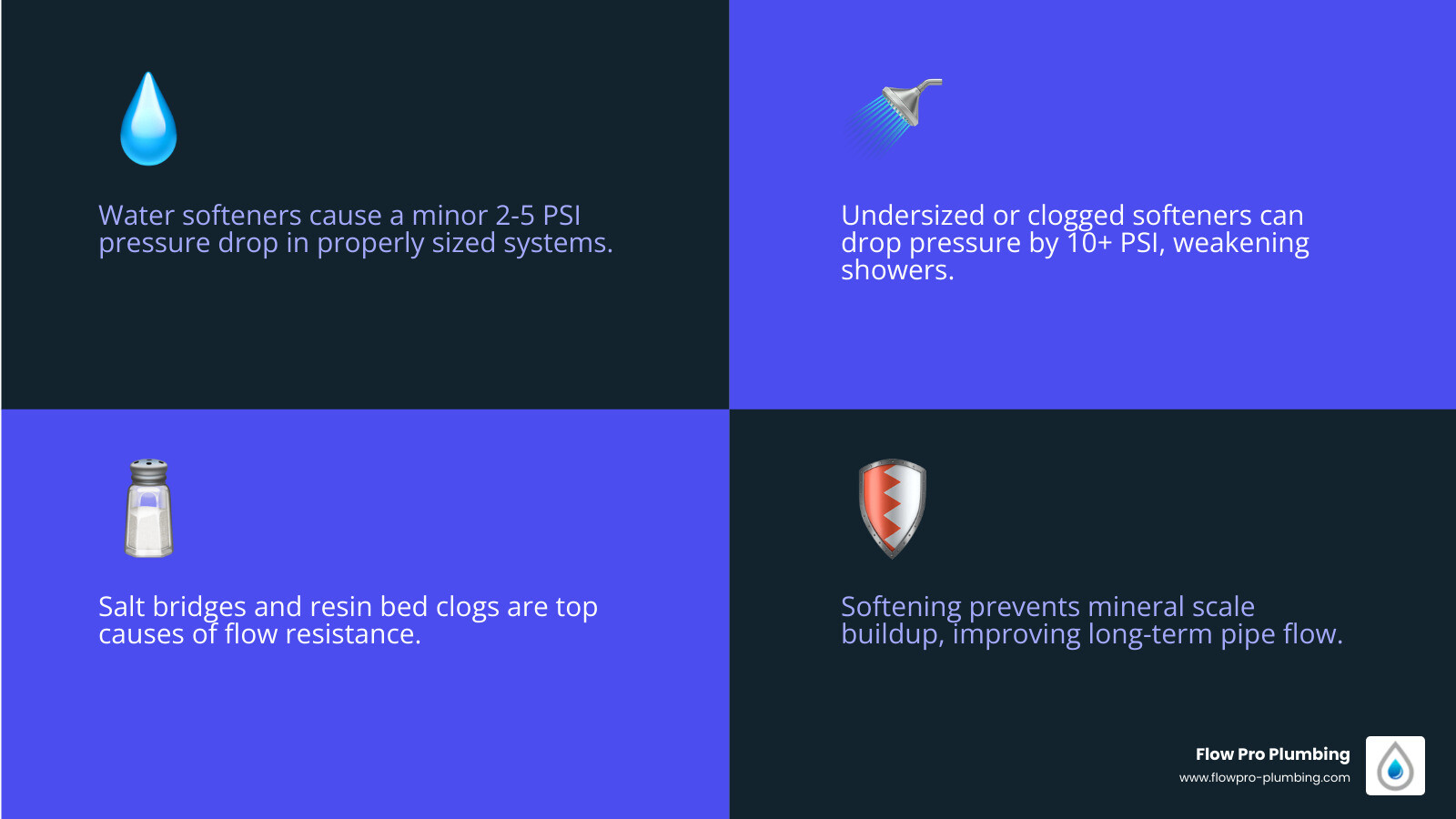
- A properly sized and maintained water softener causes only a minor pressure drop of 2–5 PSI, which most homeowners never notice.
- A poorly maintained or undersized softener can cause pressure drops of 10 PSI or more, leading to weak showers and slow-filling appliances.
- In hard water areas, a water softener can actually help water pressure over time by preventing mineral scale from narrowing your pipes.
- Common causes of softener-related pressure loss include clogged resin beds, salt bridges, sediment filter blockages, and incorrect sizing.
So while the softener itself isn’t the enemy, ignoring maintenance absolutely can be.
Nearly 30% of homeowners experience water pressure problems tied to their water softeners — and most of those issues are completely preventable. If you’ve noticed your shower feeling weaker lately, or your faucets aren’t delivering the flow they used to, your water softener could be a contributing factor. But before you point fingers, it’s worth understanding exactly how these systems work and what actually causes pressure to drop.
Hard water affects roughly 85% of U.S. households, and here in the East Bay Area, mineral-heavy water is a reality most homeowners deal with every day. A water softener is one of the best tools for protecting your plumbing — but like any mechanical system, it needs to be the right size, properly installed, and regularly maintained to keep working in your favor.
I’m Jesse Delgado, owner of Flow Pro Plumbing in Brentwood, California, and I’ve spent years diagnosing exactly these kinds of issues — including how does a water softener affect water pressure in real homes with real plumbing. In the sections below, I’ll walk you through the causes, the fixes, and when it’s time to call in a pro.
Does a Water Softener Affect Water Pressure?
When we talk about whether a water softener impacts your home’s flow, we have to look at the physics of the system. To soften your water, the system uses a process called ion exchange. Inside the mineral tank, your water must physically push through a bed of millions of tiny plastic resin beads. These beads are coated in sodium ions, which “trade places” with the calcium and magnesium minerals in your hard water.
Because the water is being forced through this dense bed of beads, there is some inherent flow resistance. In a healthy, correctly installed system, this usually results in a negligible 2–5 PSI drop. To put that in perspective, most homes operate between 40 and 70 PSI, so a 3 PSI change is virtually imperceptible at the tap.
However, the Benefits of a Water Softener far outweigh this minor friction. Since hard water affects approximately 85% of households, the alternative is much worse. Without a softener, those minerals settle inside your pipes, creating “scale” that narrows the pipe’s diameter—much like cholesterol in an artery. By Having a Water Softener, you are actually protecting your long-term water pressure by preventing this permanent mineral buildup.
Why Your Water Softener Might Cause Low Water Pressure
If your shower has turned into a “pathetic trickle,” as some of our customers describe it, the softener might be struggling with a specific mechanical or maintenance issue. Here are the most common culprits we see in the field:
1. Undersized Units
This is one of the biggest mistakes homeowners make. If a system is too small for the number of people in the house or the hardness level of the water, it becomes a bottleneck. If you have three people showering while the dishwasher is running, an undersized unit simply can’t process that volume fast enough. Learning How to Size a Water Softener is the first step in ensuring your “thirst” matches the machine’s capacity.
2. Resin Bed Compaction and Clogging
Over time, the resin beads can become “fouled” with iron or sediment. They can also break down and turn into a mushy substance that blocks water flow. If the beads escape the tank due to a broken screen, they can even travel through your pipes and clog your faucet aerators.
3. Sediment Filter Blockages
Many systems have a pre-filter designed to catch dirt and sand before they hit the resin tank. If you haven’t changed this filter in months, it will eventually act like a wall, stopping your water in its tracks.
4. Salt Bridges
A salt bridge is a hard crust that forms in the brine tank, creating an empty space between the salt and the water. This prevents the system from regenerating properly. If the resin isn’t cleaned during a cycle, it becomes packed with minerals, increasing resistance. Knowing How to Add Salt to Water Softener correctly—and checking for these bridges monthly—is vital.
5. Regeneration Cycles
If your Water Pressure Suddenly Low late at night, your system might be in its backwash or regeneration cycle. During this time, the control valve diverts water to clean the resin, which can temporarily drop the pressure in the rest of the house.
Troubleshooting: Is the Softener the Culprit?
Before you assume your plumbing is failing, we recommend a simple “isolation test.” Most water softeners are installed with a bypass valve. This allows you to divert water around the softener so it goes straight from the main line into your home.
How to determine if your water softener is the cause of low water pressure
- Locate the Bypass Valve: This is usually a lever or two valves located on the pipes leading into the back of the unit.
- Engage the Bypass: Turn the valve to the “Bypass” position.
- Test the Faucets: Go to a shower or sink and turn on the water.
- If the pressure returns to normal, the problem is definitely inside your water softener.
- If the pressure is still low, the issue lies elsewhere, such as a faulty pressure regulator, a leak, or municipal supply issues. This is a common question we answer when clients ask Why is My Water Pressure So Low?.
| Softener Issue | General Plumbing Issue |
|---|---|
| Pressure improves on “Bypass” | Pressure stays low on “Bypass” |
| Only hot water is slow (clogged heater) | Both hot and cold are slow |
| Resin beads found in faucet aerators | Rust or sand found in aerators |
| Pressure drops only during regeneration | Pressure is low 24/7 |
If you are in our neck of the woods, we offer specialized diagnostics for Low Water Pressure Brentwood CA to help pinpoint these exact problems.
Steps to fix low water pressure caused by a water softener
If the bypass test proved the softener is at fault, don’t panic. Many fixes are DIY-friendly:
- Clean the Resin Bed: Use a specialized resin bed cleaner to strip away iron and mineral buildup.
- Check the Salt: Break up any salt bridges with a broom handle and ensure you aren’t using low-quality rock salt.
- Replace the Sediment Filter: If your system has one, swap it out for a fresh one.
- Clean the Aerators: If resin beads have escaped, you’ll need to unscrew your faucet tips and showerheads to flush them out. You might even find that getting the Best Shower Head Low Water Pressure helps manage flow if your home’s base pressure is naturally on the lower side.
- Upgrade the Piping: If your softener was installed with 1/2-inch PEX over a long distance, it might be restricting flow. We often recommend 3/4-inch lines for Installing Water Softeners to minimize friction loss.
For residents in nearby areas, we provide expert assistance for your Concord CA Water Softener needs, ensuring your pipe sizing and flow rates are optimized for your specific home layout.
Maintenance and Professional Solutions
Water softeners aren’t “set it and forget it” appliances. To avoid the 10+ PSI drops that come with a failing system, we recommend a few professional touchpoints.
First, understand the timeline. By Decoding the Lifespan of Water Softeners, you’ll realize that most resin beds last about 10–15 years. If your system is older than April 2011, the resin beads may simply be worn out and compacted, requiring a full replacement to restore your pressure.
Regular maintenance ensures you keep enjoying the Many Benefits of Water Softeners, from softer skin to longer-lasting appliances. We provide dedicated service for:
- Oakley CA Water Softener maintenance and repairs.
- Pittsburg CA Water Softener system optimizations.
Frequently Asked Questions
Can a water softener actually improve water pressure?
Surprisingly, yes—in the long run! While the unit causes a tiny immediate drop, it prevents the massive, permanent pressure loss caused by scale buildup. Over time, softened water can even help “scrub” away existing mineral deposits in your pipes, slowly restoring the flow that hard water took away. This is a major reason why homeowners look for a Discovery Bay CA Water Softener solution when they notice their fixtures getting crusty and slow.
When should I call a professional plumber for pressure issues?
You should call us if:
- The bypass test doesn’t change the pressure.
- You see visible leaks or “mushing” in the salt tank.
- You hear strange knocking or grinding noises during the regeneration cycle.
- You find yellow or orange “sand” (resin beads) in your water. We regularly handle these complex repairs for Knightsen CA Water Softener and Byron CA Water Softener customers.
Does the regeneration cycle affect my shower pressure?
Yes, but only temporarily. Most systems are set to regenerate at 2:00 AM or 3:00 AM when everyone is asleep. If your system is regenerating during your morning shower, your pressure will be significantly lower because the water is being used to backwash the resin. Simply check your control valve’s clock and reset the cycle to a time when no one is using the water. If you’re considering a Brentwood CA Home Water Filtration System, we can help you set up “on-demand” regeneration that only runs when necessary, further protecting your pressure.
Conclusion
So, does a water softener affect water pressure? It can, but it shouldn’t be a dealbreaker. When a system is sized correctly for your family and maintained with a little TLC, the pressure drop is so small you won’t even notice it. What you will notice is the lack of soap scum, the softer laundry, and the fact that your pipes aren’t slowly choking on mineral deposits.
At Flow Pro Plumbing, we pride ourselves on being the local experts for Brentwood CA Water Softeners. Whether you are in Antioch, Discovery Bay, or right here in Brentwood, we’re ready to help you find the perfect balance between high-quality water and high-performance pressure. Don’t let a “hamster-rinsing” trickle ruin your morning—give us a call today, and let’s get your water flowing forcefully again!