
Why the Water Softener vs Water Filtration System Comparison Matters for Your Home
The water softener vs water filtration system comparison is one of the most common questions homeowners face when trying to improve their water quality — and choosing the wrong system can mean spending money on equipment that simply won’t solve your problem.
Here’s a quick breakdown to help you decide:
| Feature | Water Softener | Water Filtration System |
|---|---|---|
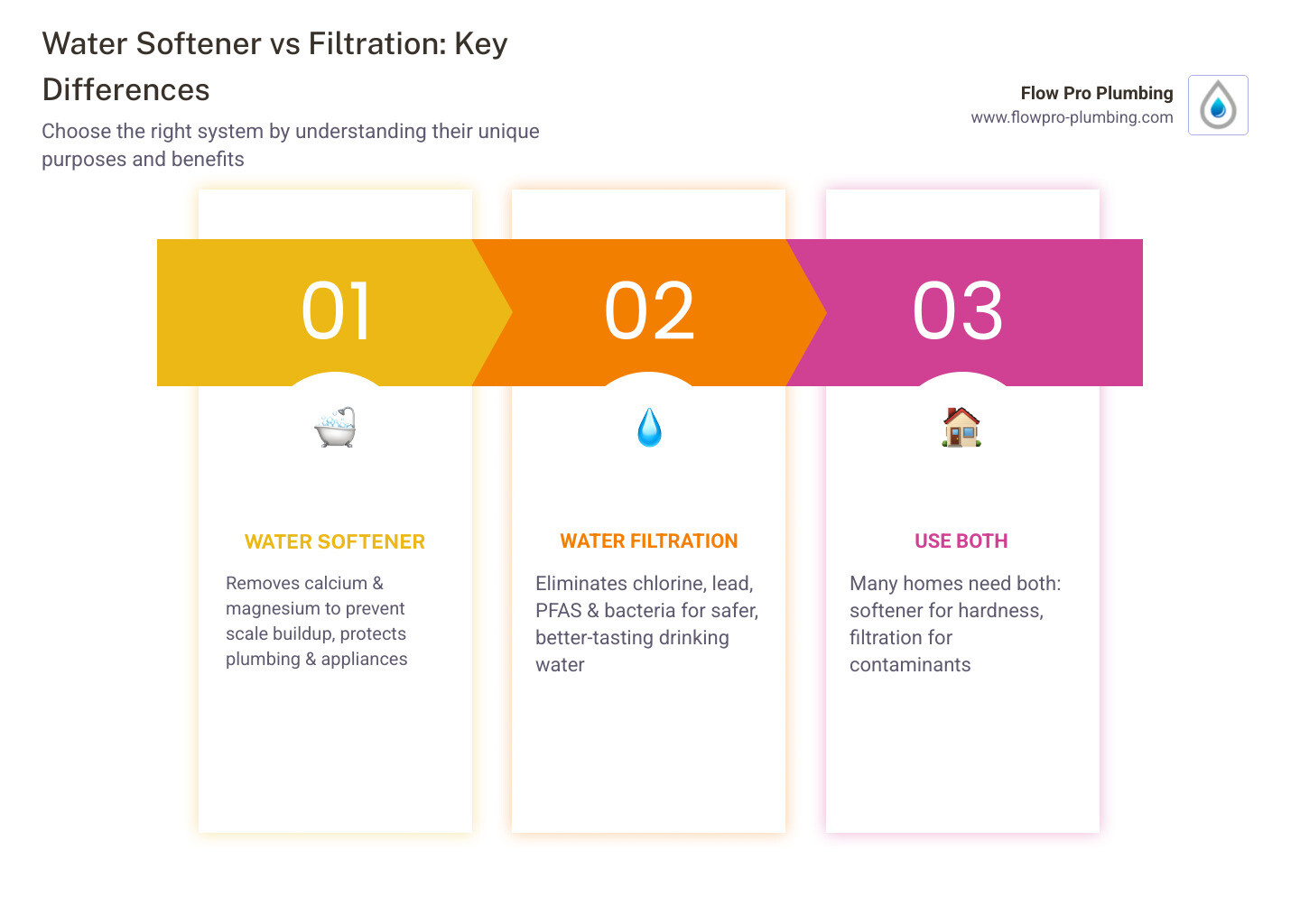
| Primary purpose | Removes hardness minerals (calcium, magnesium) | Removes contaminants (chlorine, lead, PFAS, bacteria) |
| Main benefit | Prevents scale buildup, protects appliances | Improves taste, smell, and drinking water safety |
| What it does NOT do | Does not remove chemicals, bacteria, or sediment | Does not address water hardness or scaling |
| Best for | Hard water symptoms: spots on dishes, soap scum, dry skin | Taste/odor issues, chemical or microbial contamination concerns |
| Can they work together? | Yes — many homes benefit from both systems |
Put simply: a water softener protects your plumbing and appliances, while a water filtration system protects your health. They solve different problems, and in many homes — especially in the East Bay Area where water hardness and municipal treatment chemicals are both common concerns — you may need both.
It’s a mistake many homeowners make: buying a softener expecting it to handle everything, or installing a filter and wondering why scale is still building up on the showerhead. Understanding the difference upfront saves you time, frustration, and money.
I’m Jesse Delgado, owner of Flow Pro Plumbing in Brentwood, California, and I’ve helped countless homeowners navigate this exact water softener vs water filtration system comparison during plumbing consultations and system installations. Growing up around the trade and spending over a decade in residential plumbing service has given me a clear view of what works — and what doesn’t — when it comes to treating water in real homes.
Understanding the Water Softener vs Water Filtration System Comparison
As we move into April 2026, the focus on home health and household efficiency has never been higher. When we talk about a water softener vs water filtration system comparison, we are essentially looking at two different technologies designed to solve two different sets of problems.
A water softener is a specialized tool. Its job is mineral removal—specifically, the removal of calcium and magnesium. These are the “hardness” minerals that cause white, chalky scale to build up on your faucets and inside your water heater. On the other hand, a water filtration system is designed for contaminant reduction. This includes things like chlorine, lead, pesticides, and “forever chemicals” (PFAS) that affect the safety and taste of your water.
Having A Water Softener means you are using a process called ion exchange. Inside the tank, resin beads act like a magnet, grabbing onto hardness ions and trading them for sodium or potassium ions. Physical filtration, used in most filter systems, works more like a microscopic sieve, trapping physical particles or using chemical adsorption (like carbon) to “soak up” impurities.
Key Differences in a Water Softener vs Water Filtration System Comparison
The biggest point of confusion we see in Brentwood and Concord is the belief that one can replace the other. If you have high levels of calcium and magnesium ions, a filter won’t help you; you’ll still have dry skin and spotted dishes. Conversely, a softener won’t remove the “swimming pool” smell of chlorine from your city water.
Water Filtration Systems are your best bet for taste improvement and odor elimination. They target chemical reduction, ensuring that what you drink is free from the additives used by municipal plants to treat water.
Determining Your Home’s Specific Needs
How do you know which one is right for you? It starts with water testing. In our service areas like Oakley and Discovery Bay, we often see water hardness levels that exceed 7 Grains Per Gallon (GPG), which is the threshold where a softener becomes necessary.
Is Home Water Filtration Worth It? If your Total Dissolved Solids (TDS) levels are high or if you are on a private well in Knightsen or Byron, the answer is a resounding yes. We recommend checking your local municipal water report annually, but a professional in-home test is the only way to see exactly what is happening at your specific tap.
Identifying Hard Water and the Role of Softeners
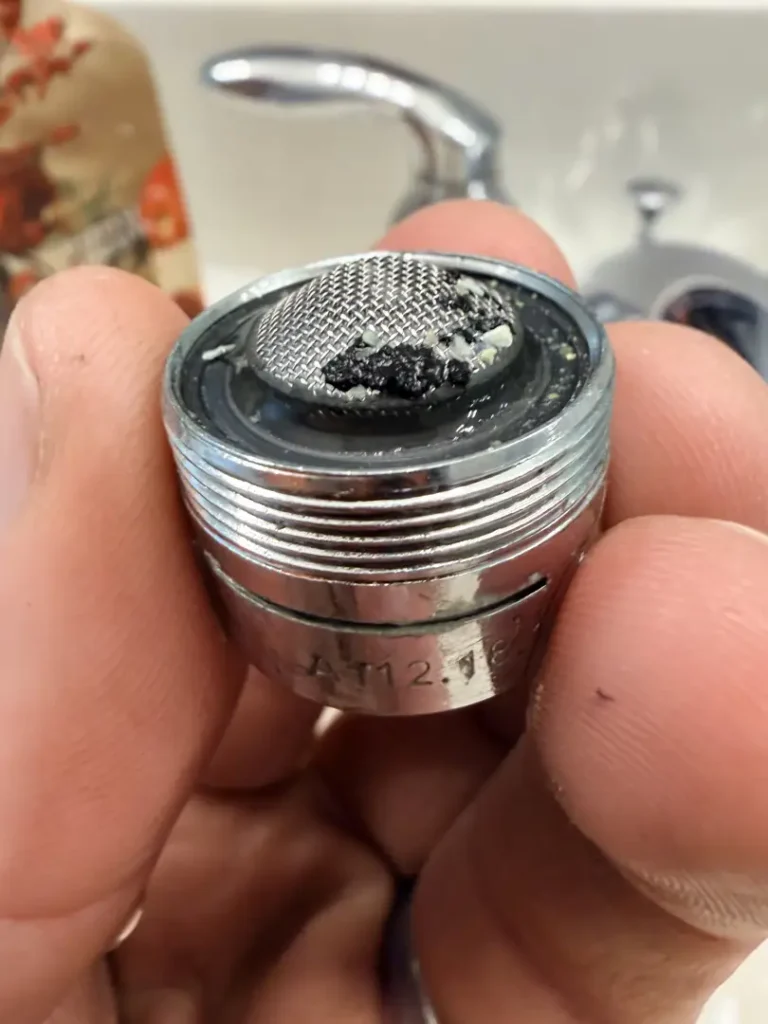
Hard water is a reality for about 85% of U.S. homes. In the East Bay, you’ll know you have it if you see limescale buildup on your showerheads or those annoying white spots on your glassware. Beyond the aesthetic issues, hard water is an enemy of appliance longevity.
The Benefits Of A Water Softener extend deep into your home’s infrastructure. Did you know that hard water can reduce water heater efficiency by up to 48%? By removing the minerals that cause scale, you ensure your water heater doesn’t have to work twice as hard to heat through a layer of rock.
When we help a customer with How To Size A Water Softener, we look at the hardness of the water and the daily usage of the family. A properly sized system prevents skin irritation and makes laundry feel softer. There are Many Benefits Of Water Softeners, including using up to 50% less soap and detergent because soft water lathers so much more effectively.
Maintenance and Operation in a Water Softener vs Water Filtration System Comparison
A standard salt-based softener uses a bed of resin beads. Over time, these beads get “full” of calcium and magnesium and need to be cleaned. This is called the regeneration cycle. To make this happen, you need to know How To Add Salt To Water Softener brine tanks regularly.
For those looking for lower maintenance, salt-free conditioners are an option. While they don’t actually remove the minerals (they just crystallize them so they don’t stick to pipes), they are popular in areas with salt restrictions. Decoding The Lifespan Of Water Softeners How Long Will Yours Last reveals that with proper care, these systems can protect your home for 10 to 20 years.
How Water Filtration Systems Protect Your Health
While softeners protect your pipes, filtration systems protect your body. Modern Water Filtration Systems are designed to tackle a wide array of modern threats. Chlorine removal is the most common request, as it improves the taste and smell of water instantly. However, lead reduction and the removal of PFAS (often called “forever chemicals”) are becoming top priorities for families in 2026.
Finding The Best Water Filtration System for your home depends on what you are trying to remove. Activated carbon is excellent for chemicals and taste, while UV purification is the gold standard for killing biological contaminants like bacteria and viruses. Many systems also include sediment pre-filters to catch sand and silt before they reach your faucet.
Technology Selection in a Water Softener vs Water Filtration System Comparison
There are two main ways to install filtration: point-of-use (like an under-sink Reverse Osmosis system) or whole-home filtration. Reverse osmosis (RO) is incredibly powerful, removing up to 99% of total dissolved solids.
When Installing Water Softeners or filters, we consider the “chemical adsorption” needs of the home. If you want every shower and sink to have clean, chemical-free water, a whole-house carbon system is the way to go. If you just want pristine drinking water, an RO system at the kitchen sink is a cost-effective choice.
Combining Systems for Comprehensive Home Protection
In many cases, the winner of the water softener vs water filtration system comparison is actually “both.” We often recommend sequential treatment. In this setup, the water first passes through a sediment filter, then a water softener to remove minerals, and finally a carbon filter or RO system.
This “system synergy” offers several advantages:
- Plumbing Protection: The softener stops scale from ruining your pipes and appliances.
- Drinking Water Safety: The filtration system removes the chemicals and metals the softener leaves behind.
- Sodium Reduction: If you are concerned about the tiny amount of sodium added by a softener, a Reverse Osmosis system can remove it at the drinking water tap.
- Flow Rate Optimization: By using professional-grade systems, we ensure your home never suffers from low water pressure, even with multiple stages of treatment.
Frequently Asked Questions about Water Treatment
Can a water filter replace a water softener?
No. This is a common myth. A water filter is great for contaminant focus, but it does not perform mineral removal. If you have hard water, a filter will not prevent scale buildup in your water heater or spots on your dishes. They have completely different functional differences.
Is softened water safe to drink?
Yes, for most people. Softened water contains a small amount of sodium (about 12.5 mg per glass in moderately hard areas). However, if you are on a strictly sodium-restricted diet, we recommend pairing your softener with a Reverse Osmosis system for your drinking water to maintain a perfect mineral balance.
How often do these systems require service?
It depends on the system. Filter cartridges usually need replacing every 6 to 12 months. Salt refills for softeners are typically needed every 6 to 8 weeks. We also recommend a professional inspection every few years to check the resin cleaning cycle and ensure everything is running at peak efficiency.
Conclusion
Choosing between a water softener and a filtration system doesn’t have to be a headache. At Flow Pro Plumbing, we pride ourselves on being the Brentwood plumbing experts you can trust for an honest water quality analysis. Whether you are in Pittsburg, Walnut Creek, or Pleasant Hill, our team is ready to provide professional installation and unsurpassed workmanship.
Ready to take the next step for your home’s health? Improve your home with Water Filtration Systems and softeners tailored to your specific needs. Give us a call at Flow Pro Plumbing today—we’re here to help our neighbors in the East Bay enjoy the best water possible!