

Why Gas Line Safety Basics Every Homeowner Needs to Know Can’t Wait
Gas line safety basics every homeowner needs come down to a handful of core practices that can prevent fires, explosions, and serious health risks in your home. Here’s a quick summary:
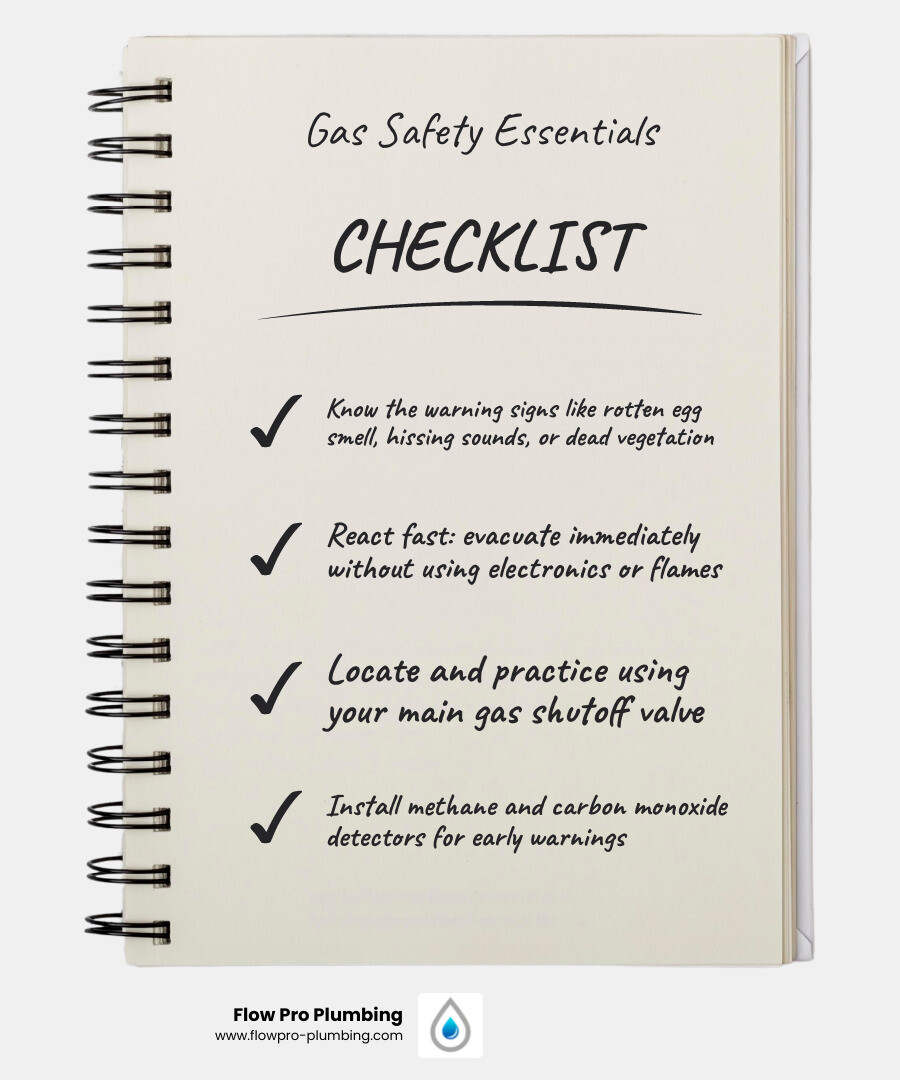
- Know the warning signs – Smell rotten eggs, hear hissing near a pipe, or notice dead patches of grass over buried lines? These are red flags.
- React fast and smart – If you suspect a leak, don’t flip switches or use your phone indoors. Leave immediately and call from outside.
- Learn your shutoff valve – Know where your main gas shutoff is and how to use it before an emergency happens.
- Call 811 before digging – Excavation damage is the leading cause of unplanned utility outages. One free call protects your home and your neighbors.
- Install detectors – Methane and carbon monoxide detectors give you an early warning that your nose might miss.
- Skip the DIY repairs – Gas line work requires a licensed professional. No exceptions.
- Schedule regular inspections – Annual checks catch small problems before they become dangerous ones.
Natural gas powers millions of homes across the country, fueling furnaces, water heaters, stoves, and fireplaces. It’s reliable, efficient, and when handled correctly, very safe. But it demands respect. Gas lines are under constant pressure, often hidden behind walls or buried underground, and can develop problems silently over time. By the time you notice something is wrong, the situation may already be serious.
A faint sulfur smell near a furnace, for example, might seem minor. But that odor, caused by a chemical called mercaptan that utility companies add to otherwise odorless natural gas, can signal a corroded connector or a loose fitting that’s actively leaking combustible gas into your home.
I’m Jesse Delgado, owner of Flow Pro Plumbing and a licensed plumber with over a decade of experience helping East Bay homeowners stay safe with their gas systems. Understanding gas line safety basics every homeowner needs is something I’ve seen matter in real emergency situations, and this guide covers everything you need to know to protect your home and family.
Recognizing the Signs of a Gas Leak
The first rule of gas safety is that your senses are your best defense. Natural gas is naturally colorless and odorless, which is why utility companies add “mercaptan.” This chemical creates that unmistakable sulfur or “rotten egg” smell. If you catch a whiff of this in your kitchen or laundry room, don’t ignore it. Even a faint, persistent smell is a sign that something is wrong.
However, smell isn’t the only indicator. You should also listen for hissing or whistling sounds near your gas appliances or along the walls where pipes are located. This often indicates a high-pressure leak. Outside, look for “dead zones” in your landscaping. If you have a patch of grass or a shrub that is suddenly brown and withered while the rest of the yard is thriving, it could be because a buried gas line is leaking, displacing the oxygen in the soil and “suffocating” the plants. You might even see bubbling in puddles or dirt being blown into the air above a buried line.
There are also physical symptoms to watch out for. Because gas displaces oxygen, people inside a leaking home may experience dizziness, nausea, fatigue, or unexplained headaches. If these symptoms disappear when you leave the house but return when you come home, you likely have a leak. Finally, keep an eye on your utility statements. An unexplained spike in your gas bill often points to a slow, hidden leak. For a deeper dive into these indicators, check out our guide on the Top Signs of Gas Leak.
Gas Line Safety Basics Every Homeowner Needs to Know
To keep your home safe, you need to understand the “skeleton” of your gas system. It starts at the street with the main supply line, which connects to your gas meter. The meter tracks your usage and usually houses a regulator that ensures the gas enters your home at a safe, consistent pressure.
From the meter, the gas travels through interior piping. In many older East Bay homes, you’ll find black iron or steel pipes. While durable, these can corrode over decades. Modern systems might use Corrugated Stainless Steel Tubing (CSST), which is flexible and easier to install but requires specific safety protocols. Each appliance—your water heater, furnace, or stove—is connected to these main lines via branch lines and flexible appliance connectors. Understanding these components is the foundation of the Gas Line Repair & Installation Guide.
Understanding Your Home’s Gas Line Safety Basics
There are several safety components every homeowner should be able to identify. First are the flexible connectors. These are the ribbed metal hoses that attach your stove or dryer to the wall. These shouldn’t be kinked or hidden inside walls, and they should be replaced if they show signs of corrosion.
In California, we also have to think about seismic activity. A seismic shutoff valve is a critical safety device that automatically cuts off the gas supply during a significant earthquake, preventing fires if a pipe snaps during the shaking. Additionally, modern codes require CSST tubing to be properly bonded and grounded to prevent lightning strikes from causing electrical arcs that could puncture the line. If you are in the Pittsburg area and unsure about your home’s compliance, our team specializing in Gas Line Repair Installation Pittsburg can verify your system’s safety features. Proper Gas Line Repair & Installation ensures all these components work in harmony.
Daily Habits for Gas Line Safety Basics Every Homeowner Needs
Safety isn’t just about the hardware; it’s about your daily routine. One of the simplest things you can do is ensure proper ventilation. Never block the vents on your water heater or furnace, and never use your gas oven to heat your home. This can lead to a dangerous buildup of carbon monoxide.
You should also periodically check your burner flames. A healthy gas flame should be crisp, steady, and blue. If you see a yellow or orange flame, it means the gas isn’t burning completely, which is a major safety hazard and a sign that the appliance needs immediate professional service. Keep the area around your gas meter clear of debris, mulch, or heavy snow (if you’re in the higher elevations), and never hang clothes or wet towels on gas piping in the garage or basement. These simple habits are core to maintaining Safety with Gas Line Installation throughout the year.
Immediate Emergency Response and Prevention
If you smell gas or hear that dreaded hissing sound, “stop, drop, and roll” doesn’t apply—instead, it’s “get out and stay out.” Do not stop to open windows, and absolutely do not flip any light switches, use a flashlight, or pick up your home phone. Even the tiny spark created by an electronic device can ignite a gas-filled room.
Once you are at least 350 feet away from the house, call 911 or your local utility company. Do not re-enter the home until a professional has cleared it. For residents in our service area, we provide rapid Gas Line Repair Installation Brentwood to address these emergencies once the immediate danger has been mitigated by first responders.
Prevention also extends to your yard work. Before you plant a tree, install a fence, or dig a trench for a new mailbox, you must call 811. This free service ensures that utility companies mark the location of underground lines. Excavation damage is the leading cause of gas emergencies, and hitting a line with a shovel can be catastrophic.
Testing and Detection Tools
While your nose is good, technology is better. We recommend installing gas leak detectors (methane sensors) in addition to your standard smoke and carbon monoxide alarms. Place these detectors near gas-burning appliances and in the basement. If you suspect a minor leak at a connection point, you can perform a “soapy water test.” Mix a bit of dish soap with water and brush it onto the fitting. If bubbles start to grow, you’ve found a leak. However, this is only for identifying the source of a suspected minor issue—it is not a substitute for a professional inspection or an emergency response. If you’re dealing with an older home or have concerns about aging pipes, getting professional Gas Line Repair Brentwood is the safest way to ensure your detection tools never have to go off.
Why Professional Maintenance Outperforms DIY
We live in an age of DIY tutorials, but gas lines are the one area where you should never, ever “wing it.” Gas line work is dangerous and requires specialized tools, pressure testing equipment, and a deep understanding of local building codes. A mistake as simple as using the wrong pipe sealant or over-tightening a fitting can lead to a slow leak that goes unnoticed until it’s too late.
Professional plumbers look for things the average homeowner might miss, such as subtle corrosion, soil shifts that are putting stress on buried lines, or tree root intrusion that could puncture a pipe. We perform rigorous pressure tests to ensure the entire system is airtight. Many homeowners ask, Can I Run a Gas Line Myself? and the answer from a safety and legal standpoint is almost always a resounding “no.” Most municipalities require permits and inspections for gas work to ensure the safety of the entire community. Annual professional inspections are the best way to catch wear and tear before it turns into an emergency.
Frequently Asked Questions about Gas Safety
What is the difference between a natural gas leak and carbon monoxide?
This is a common point of confusion. A natural gas leak is the escape of unburned fuel. It smells like rotten eggs (thanks to mercaptan) and poses an immediate explosion risk. Carbon monoxide (CO), on the other hand, is a byproduct of incomplete combustion. It is completely odorless, colorless, and tasteless. CO doesn’t explode, but it is a “silent killer” that prevents your blood from carrying oxygen. You need separate detectors for both: a methane detector for gas leaks and a CO detector for combustion issues.
How do I locate and use my home’s main gas shutoff valve?
Your main shutoff valve is typically located just before the gas meter on the pipe coming out of the ground. It usually looks like a rectangular tab. To shut off the gas, use an adjustable wrench to turn the tab one-quarter turn until it is perpendicular (crosswise) to the pipe. Once you turn it off, never try to turn it back on yourself. Only a qualified professional or utility worker should restore gas service to ensure it is safe to do so.
How often should residential gas lines be inspected?
We recommend a professional inspection at least every one to two years. However, you should have your system checked immediately if you install a new gas appliance, complete a major landscaping project, or experience a significant earthquake. Regular Gas Line Repair & Installation maintenance keeps your system efficient and provides peace of mind.
Conclusion
Educating your family is just as important as maintaining your pipes. Make sure everyone in your household knows the smell of gas and understands the evacuation plan. Treat gas safety like a fire drill—practice getting out of the house quickly and meeting at a designated spot.
At Flow Pro Plumbing, we are dedicated to keeping our neighbors in Brentwood, Discovery Bay, and the surrounding East Bay communities safe. Whether you need a routine inspection or help with Gas Lines Brentwood, our experienced team is here to provide the expert service you deserve. Don’t leave your home’s safety to chance—stay proactive and respect the power of your gas system.