

Why a Running Toilet Fix Should Be Your Priority Today
A running toilet fix is one of the simplest yet most impactful home repairs you can tackle. That constant trickle of water isn’t just an annoying sound; it’s a sign of significant water waste. A moderate toilet leak can waste more than 6,000 gallons of water every month, putting a strain on both the environment and your utility usage.
Quick Answer: How to Fix a Running Toilet
- Turn off the water supply at the shutoff valve behind the toilet.
- Test the flapper by pushing it down—if the water stops, it needs replacing.
- Check the float height and adjust it so water stops 1 inch below the overflow tube.
- Inspect the fill valve for hissing sounds and replace it if it’s leaking.
- Ensure the refill tube sits just above the overflow tube, not below the water line.
Most running toilets are caused by a worn-out flapper, a misadjusted float, or a faulty fill valve. The good news is that these are straightforward fixes that typically take less than an hour with affordable parts.
A running toilet occurs when water continuously escapes from the tank into the bowl. This happens when a component inside the tank fails to seal properly. Key parts include the fill valve (refills the tank), the flapper (releases water for the flush), the overflow tube (prevents overflows), the float (tells the fill valve when to stop), and the chain (connects the flush lever to the flapper). When any of these malfunction, your toilet keeps running.
As the owner of Flow Pro Plumbing in Brentwood, California, and a plumber with over a decade of experience, I’ve seen countless running toilet fix situations. Most homeowners can handle this repair themselves with the right guidance. Let me walk you through how to diagnose and fix your running toilet, step by step.

Common running toilet fix vocab:
Why Your Toilet Keeps Running: Diagnosing the Problem
That constant trickling sound is your toilet telling you something’s wrong. When a toilet runs continuously, water is leaking from the tank into the bowl, or an internal component isn’t working correctly. The good news is that figuring out the cause of your running toilet fix is straightforward once you know what to look for.
Most running toilet issues stem from three main suspects: the flapper, the fill valve, or the overflow pipe. In my experience, the flapper is the culprit about 80% of the time. This rubber seal can wear out, accumulate mineral buildup, or stop seating properly. However, a faulty fill valve or an improperly set water level can also cause constant water flow.
Sometimes homeowners don’t realize they have a leak until they notice a significant increase in water usage. Other times, the chain connecting the flush lever to the flapper is too tight, preventing a proper seal. The key to a successful running toilet fix is a systematic approach. Start by checking the tank’s water level—it should be about an inch below the top of the overflow tube. Then, use the diagnostic tests below to pinpoint the problem. For a deeper dive, check out our post on Why Does My Toilet Keep Running?.
The Food Coloring Test
This simple trick is incredibly revealing for detecting silent leaks—those sneaky drips from the tank to the bowl that you can’t hear but are definitely wasting water.
Here’s how to do it: Remove the tank lid and add a few drops of dark food coloring to the tank water. Do not flush the toilet for at least 15 to 30 minutes. When you return, check the water in the bowl. If you see any color, you have a leaky flapper seal. The dye has traveled from the tank into the bowl, proving water is escaping. If the bowl water is still clear, your flapper is likely fine, and the issue is probably with the fill valve or float.
For very slow leaks, you may need to wait an hour or more. This test saves you from replacing parts that don’t need it.
Listening for Clues
Your ears are excellent diagnostic tools for toilet problems. Different sounds can indicate different issues inside the tank.
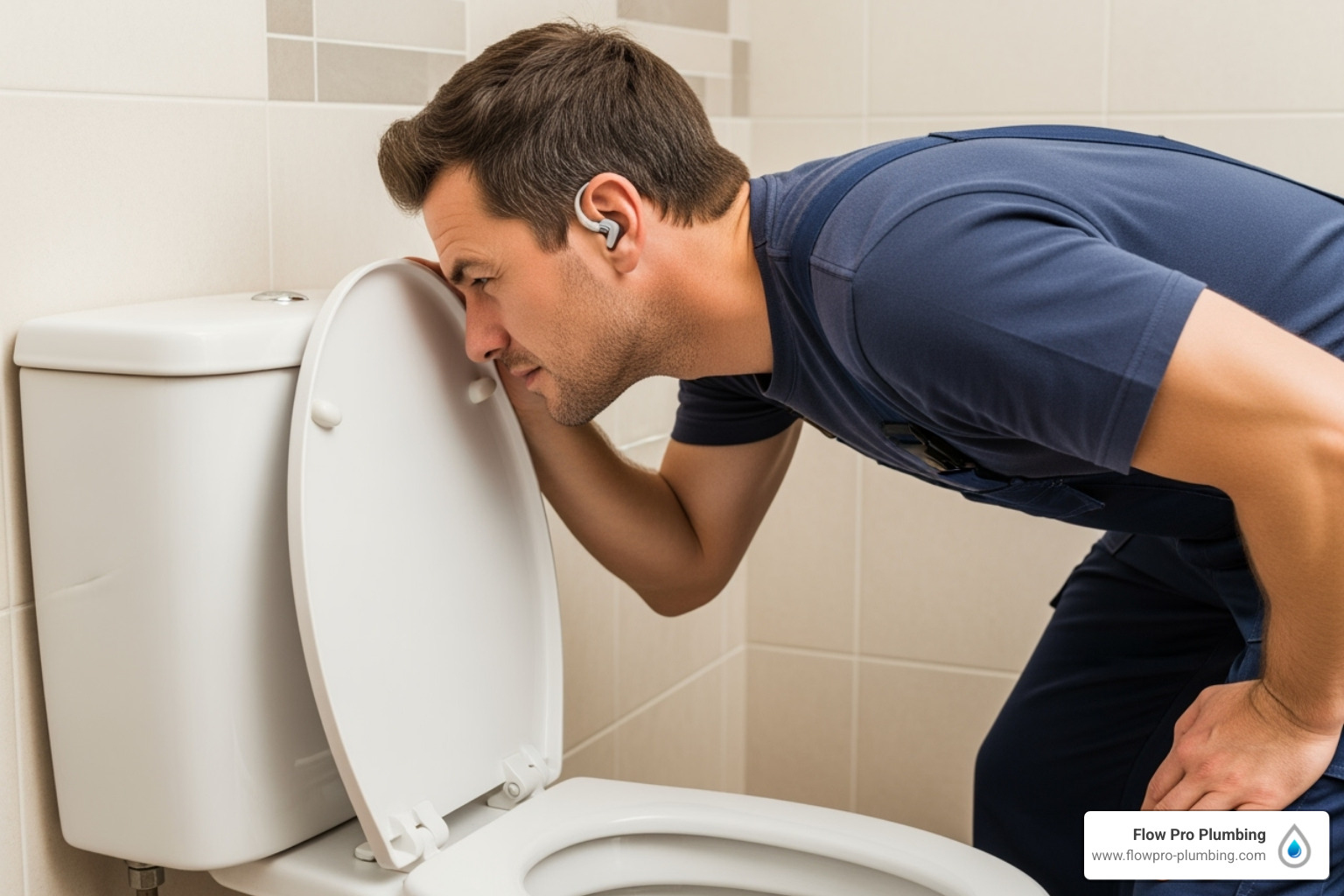
A constant hissing sound usually points to the fill valve. If you hear a steady hiss long after the toilet has been flushed, the fill valve is continuously letting water into the tank. This might be because the water level is set too high, causing water to spill into the overflow tube, or because the fill valve itself has worn-out seals.
Intermittent running or “ghost flushing” occurs when the toilet runs for a few seconds on its own. This is caused by a very slow leak from the tank into the bowl. As water gradually escapes, the float drops and triggers the fill valve to briefly refill the tank. This cycle can repeat every few minutes or hours. Water pressure fluctuations in your home can also cause this.
No sound at all doesn’t mean you’re in the clear. Silent leaks can waste thousands of gallons before you notice. If your water usage has jumped but you don’t hear anything, perform the food coloring test immediately.
By combining these listening techniques with the food coloring test, you’ll have a clear idea of what’s wrong and can proceed with the correct running toilet fix. For more on common toilet issues, see our guide on Common Toilet Problems.
Your DIY Running Toilet Fix Toolkit
Before you begin your running toilet fix, gather a few essential items. The beauty of this repair is that you likely have most of these tools already.
Assemble a small plumbing first-aid kit. You’ll want a sponge and a bucket to manage the water left in the tank after draining. An adjustable wrench or pliers will help with any stubborn connections on the water supply line or fill valve. It’s also wise to lay down towels or rags around the toilet’s base to catch any drips.
For parts, a replacement flapper is the most common item you’ll need. If your diagnosis points to the fill valve, a universal fill valve kit is a good purchase. These kits work with most standard toilets and include instructions.
You might also need scissors to trim the flapper chain or refill tube. While the water in the tank is clean, some people prefer to wear rubber gloves. A small mirror can also be helpful for seeing behind or under tank components.
Many running toilet fixes, like a simple flapper replacement, require no tools at all. However, having this toolkit ready ensures you’re prepared for whatever you find inside the tank.
A Step-by-Step Guide to Your Running Toilet Fix
Let’s get to work on your running toilet fix. First, some essential preparation.
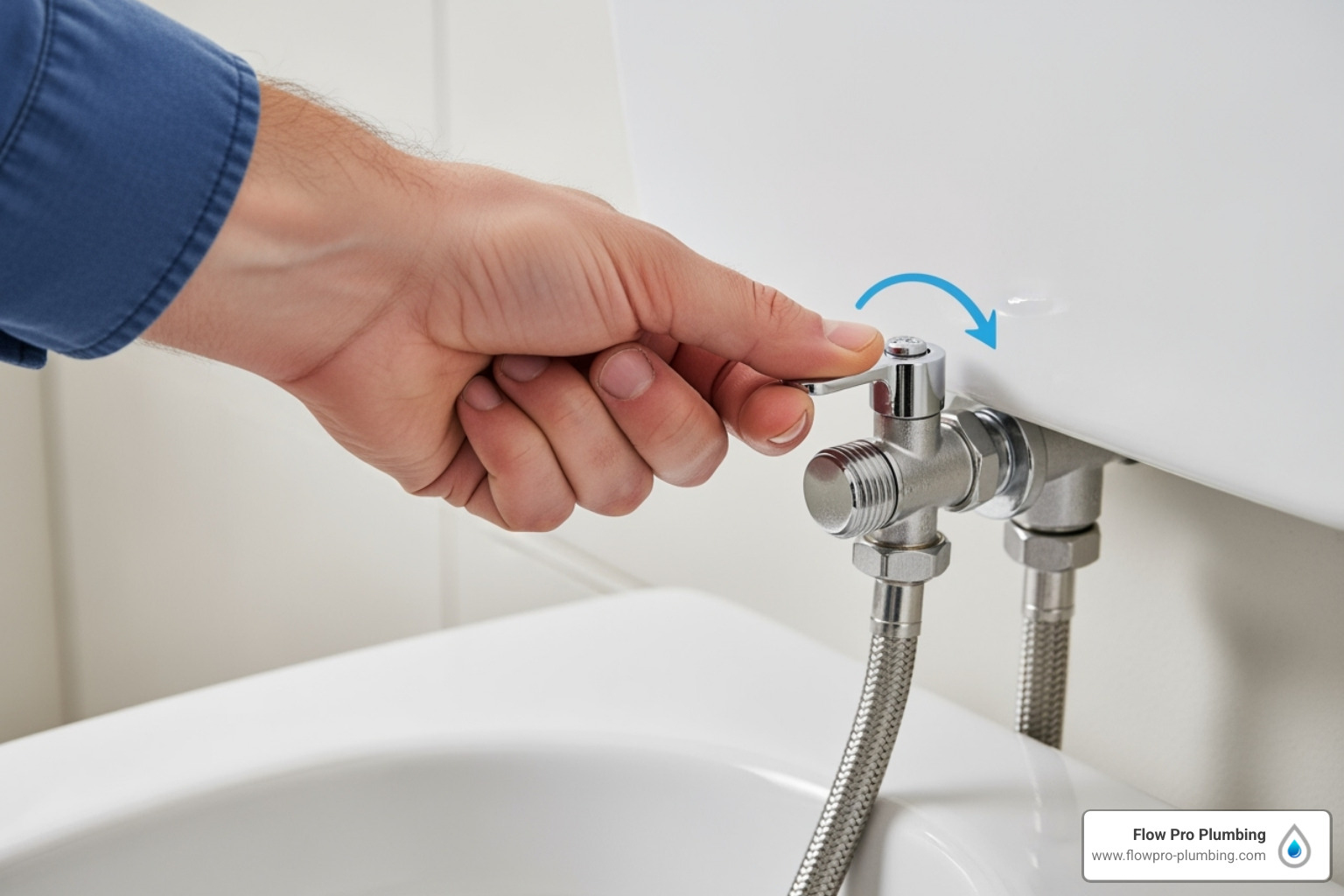
The absolute first step is to shut off the water supply. Skipping this can turn a simple repair into a major mess. Locate the shutoff valve, a small handle on the wall or floor behind your toilet, and turn it clockwise until it stops.
Next, drain the tank. Flush the toilet and hold the handle down until the tank is as empty as possible. Use a sponge and bucket to remove any remaining water. A dry tank is a safe and easy workspace. If you see sediment at the bottom, it’s best to dispose of it outside rather than down another drain.
The Leaky Flapper: Your First Running Toilet Fix
If your toilet is running, check the flapper first. It’s the most common cause and the easiest fix. This rubber seal at the bottom of the tank can become brittle, warped, or covered in mineral deposits, preventing a proper seal. Sometimes, the issue is simply the chain connected to it.
Inspect the flapper and chain. If the flapper has visible cracks or buildup, it’s likely the problem. Check if the chain is tangled, too short (holding the flapper open), or too long (getting caught underneath). Adjust the chain so there’s about half an inch of slack when the flapper is closed. You can trim excess chain with scissors.
If adjusting the chain doesn’t work, try cleaning the flush valve seat where the flapper rests. Grime can prevent a good seal. If the problem persists, it’s time for a new flapper. Unhook the old one, detach the chain, and take it to a hardware store to find a matching or universal replacement. Install the new flapper, reattach the chain with the correct slack, and turn the water back on. Let the tank fill and flush a few times to confirm the leak is gone. For additional guidance, This Old House has an excellent resource on How To Fix a Running Toilet.
The Fill Valve and Float: Adjusting and Replacing
If a new flapper didn’t solve the problem, the fill valve and float are the next suspects. These parts refill the tank and tell the water when to stop. A faulty fill valve often creates a hissing sound or causes the tank to overfill.
First, check the water level. It should be about an inch below the top of the overflow pipe. If it’s higher, your float needs adjusting.
To adjust the float, look at the type you have. Older ball floats on a metal arm can be adjusted by gently bending the arm down. Modern cup-style floats have a screw or clip to change the height. Adjust it until the water stops at the correct level.
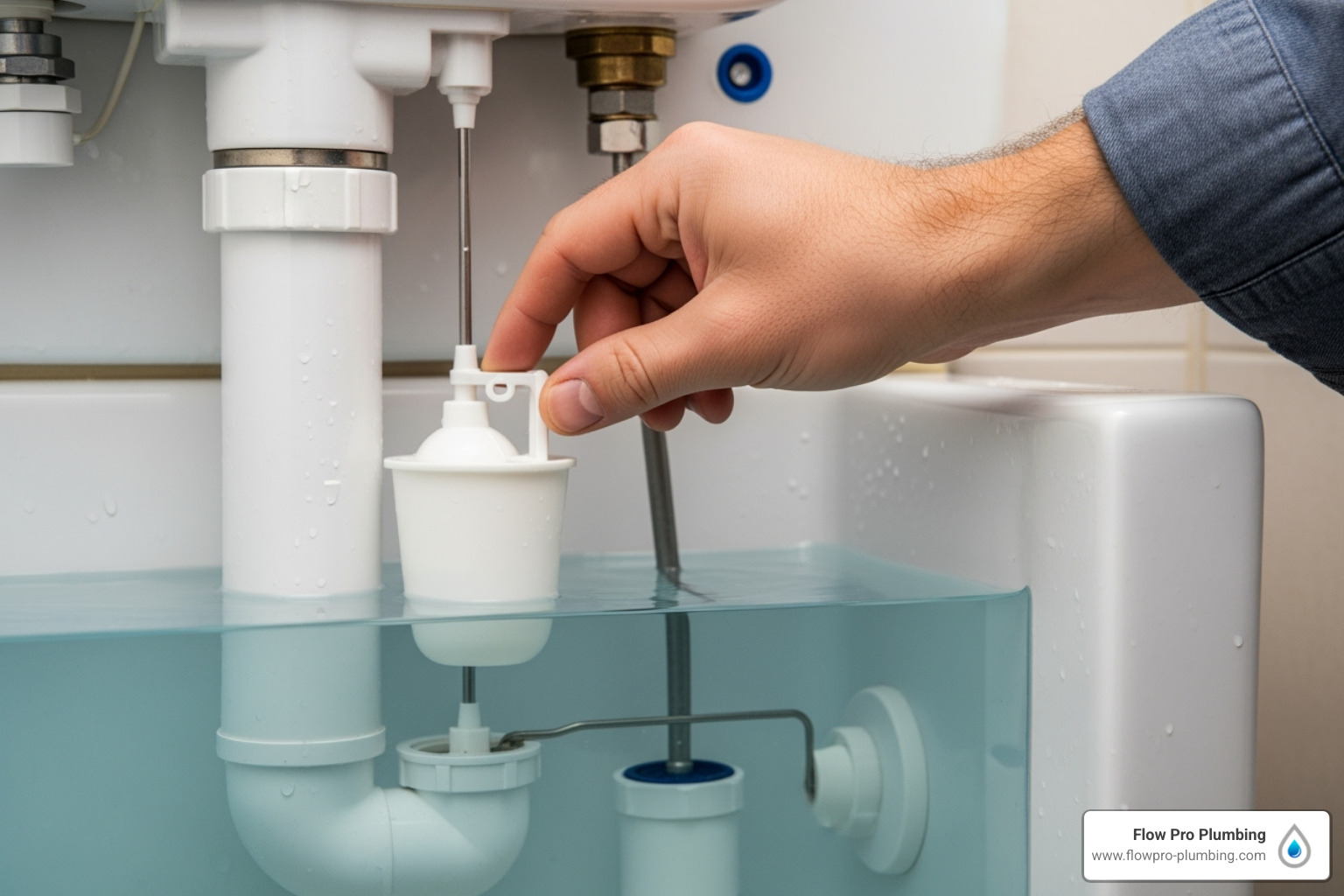
If adjusting the float doesn’t help or you still hear hissing, the fill valve itself is likely faulty. To test this, flush the toilet and lift the float arm manually as the tank refills. If water keeps running, the fill valve needs to be replaced.
Replacing the fill valve is straightforward. With the water off and tank dry, disconnect the supply line from the bottom of the valve. Unscrew the locknut holding the valve to the tank and lift the old one out. Install the new valve, tighten the locknut (hand-tight plus a half turn is enough), reconnect the supply line, and attach the refill tube. Turn the water on slowly, check for leaks, and adjust the new float to the proper level.
The Overflow Pipe and Refill Tube: A Key Running Toilet Fix
The overflow pipe and refill tube are crucial for a proper running toilet fix. The overflow pipe is a safety feature that directs excess water into the bowl to prevent a flood. If your water level is too high, water will constantly run down this pipe.
The refill tube is a small hose running from the fill valve to the overflow pipe. It squirts water down the pipe to refill the bowl after a flush, maintaining the water seal that blocks sewer gases.
An incorrect water level is usually solved by adjusting the float. The refill tube’s position is also critical. If the end of the tube is submerged in the water inside the overflow pipe, it can create a siphon that slowly drains the tank, causing “ghost flushing.”
Make sure your refill tube is securely clipped to the top of the overflow pipe, with its end positioned just above the opening—not in the water. Trim the tube with scissors if it’s too long and falls into the pipe. Correcting these two components often solves persistent running issues. For more information, see our guide on Common Toilet Problems.
When to Call a Professional Plumber
While many running toilet fix scenarios are great DIY projects, some situations are best left to a professional plumber. Attempting to fix a complex issue without the right knowledge can sometimes make matters worse. Knowing when to call for help can save you time and stress.
You should consider calling Flow Pro Plumbing if:
- The problem persists after you’ve tried all the standard fixes (flapper, float, fill valve). This may indicate a less common issue, like a hidden crack or a problem with your home’s water pressure.
- You see external leaks. Water pooling around the toilet’s base or dripping from connections points to a problem beyond the tank’s internal parts. This could be a failing wax ring, a compromised gasket, or a faulty supply line, all of which can cause significant water damage.
- You find cracked porcelain. A crack in the tank or bowl cannot be reliably repaired and requires a full toilet replacement to prevent a catastrophic failure.
- The tank-to-bowl gasket is leaking. This repair requires removing the tank from the bowl. While doable, improper reassembly can lead to new leaks or a cracked tank.
If you feel uncertain at any point or simply don’t have the time, we’re here to help. Our team at Flow Pro Plumbing in Brentwood has seen every toilet issue imaginable and can quickly diagnose the true cause.
Specialized toilets, such as dual-flush or pressure-assisted models, can also be tricky and may not respond to standard repair advice. If you’re considering a replacement, we can guide you through modern, water-efficient options and provide a professional installation.
Our experienced team serves all of Contra Costa County, including Brentwood, Oakley, and Concord. For a quick repair or a complete Toilet Installation and Repair, we’ve got you covered.
Frequently Asked Questions about Fixing a Running Toilet
Here are answers to the most common questions we get about running toilet fix projects in the Brentwood area.
How do I properly shut off the water supply to the toilet before starting repairs?
Before working inside the tank, you must shut off the water. Locate the small shutoff valve on the wall or floor behind your toilet, connected to the water supply line. Turn the handle clockwise until it stops. To confirm the water is off, flush the toilet; the tank should drain but not refill. Hold the handle down to empty as much water as possible, then use a sponge to remove what’s left. A dry tank makes any running toilet fix much easier.
What are some preventative measures to avoid a running toilet in the future?
A little preventative care goes a long way. Follow these tips to avoid future leaks:
- Regular Inspections: Every few months, lift the tank lid and check for worn parts, ensure the float is at the right height, and confirm the refill tube is positioned correctly.
- Annual Cleaning: Once a year, turn off the water, drain the tank, and gently clean the inside. Use a soft brush and white vinegar to remove mineral buildup from the flush valve seat and fill valve.
- Avoid In-Tank Cleaners: Those drop-in chemical tablets can corrode the rubber and plastic parts in your tank, leading to premature failure. Use a standard toilet brush and bowl cleaner instead.
- Replace Worn Parts Promptly: If you see a part that looks brittle or cracked, replace it. A new flapper is an inexpensive part that can prevent significant water waste. The EPA’s Learn how to save water program offers more conservation tips.
My toilet runs randomly for a few seconds. What’s the most likely cause?
This issue, known as “ghost flushing,” is puzzling but has logical causes.
- A Faulty Flapper Seal: This is the most common culprit. A tiny, slow leak from the tank to the bowl will eventually cause the water level to drop enough to trigger the fill valve for a few seconds. The food coloring test is the best way to diagnose this.
- Water Pressure Fluctuations: A sudden change in your home’s water pressure can briefly lift the fill valve’s internal seal, causing it to cycle on for a moment.
- A Worn Fill Valve Seal: A deteriorating seal inside the fill valve can allow small amounts of water to bypass, leading to intermittent refills.
- Improper Refill Tube Position: If the refill tube is submerged in the overflow pipe’s water, it can create a siphoning effect that slowly drains the tank.
Start by performing the food coloring test, as a leaky flapper is the most frequent cause of ghost flushing.
Stop the Leak, Save Water
By now, your toilet should be running smoothly and quietly again. Tackling a running toilet fix is one of the most manageable and rewarding home repairs. You’ve silenced that persistent trickling sound and stopped a significant source of water waste.
A moderate toilet leak can waste more than 6,000 gallons of water every month. By taking an hour to replace a worn part or adjust a float, you’ve made a smart choice for your home and the environment. The satisfaction of solving the problem yourself is a great bonus, and you now have the knowledge to catch future issues early.
Of course, some plumbing challenges go beyond a simple DIY fix. If you’ve tried our troubleshooting steps and the toilet still runs, or if you’ve encountered complex issues like external leaks or cracked porcelain, it’s time to call the professionals.
Our team at Flow Pro Plumbing serves Brentwood, Oakley, Antioch, and the entire Contra Costa County with friendly, expert service. We’re here to give you peace of mind. Whether you need a quick Toilet Repair, a full replacement, or help with any other plumbing concern, we bring unsurpassed workmanship to every job. Don’t let a persistent leak cause you stress—give us a call, and we’ll have your plumbing running perfectly.