

Why the Right Drain Cleaners for Drain Flies Make All the Difference
Drain cleaners for drain flies are one of the fastest and most practical ways to eliminate these stubborn little pests from your home. If you’re seeing small, fuzzy, moth-like insects hovering near your bathroom sink, shower, or kitchen drain, you are almost certainly dealing with drain flies — and the source of the problem is inside your pipes.
Here’s a quick overview of the most effective drain cleaner types for drain flies:
| Drain Cleaner Type | How It Works | Best For |
|---|---|---|
| Gel-based (e.g., Green Gobbler) | Thick gel clings to pipe walls, uses natural oils to kill and repel flies | Fast-acting treatment, daily use |
| Bio-enzymatic (e.g., EcoStrong) | Bacteria and enzymes digest the biofilm flies breed in | Thorough elimination and prevention |
| Dry foam (e.g., TERRO) | Expands to coat drain walls, uses insect growth regulators | Breaking the fly life cycle at larvae stage |
| DIY methods (baking soda + vinegar) | Mild fizzing action loosens light buildup | Light maintenance only |
Drain flies don’t just appear out of nowhere. They breed in the thick, sticky organic sludge — called biofilm — that coats the inside of your drainpipes. As long as that biofilm is there, the flies will keep coming back, no matter how many times you swat them away. The real fix is targeting that buildup at its source.
This is especially common in homes across the East Bay Area, where bathrooms, kitchens, and laundry rooms see heavy daily use. Whether the drain hasn’t been cleaned in months or a slow leak has created a damp environment nearby, the conditions for a drain fly infestation can develop quickly and quietly.
I’m Jesse Delgado, owner of Flow Pro Plumbing in Brentwood, California, and over my years of hands-on residential plumbing work I’ve seen how often drain fly problems are a direct sign of underlying drain maintenance issues that the right drain cleaners for drain flies — combined with proper plumbing care — can resolve for good. In the sections below, I’ll walk you through everything you need to know to identify, treat, and prevent drain fly infestations in your home.
Understanding the Source of Drain Fly Infestations
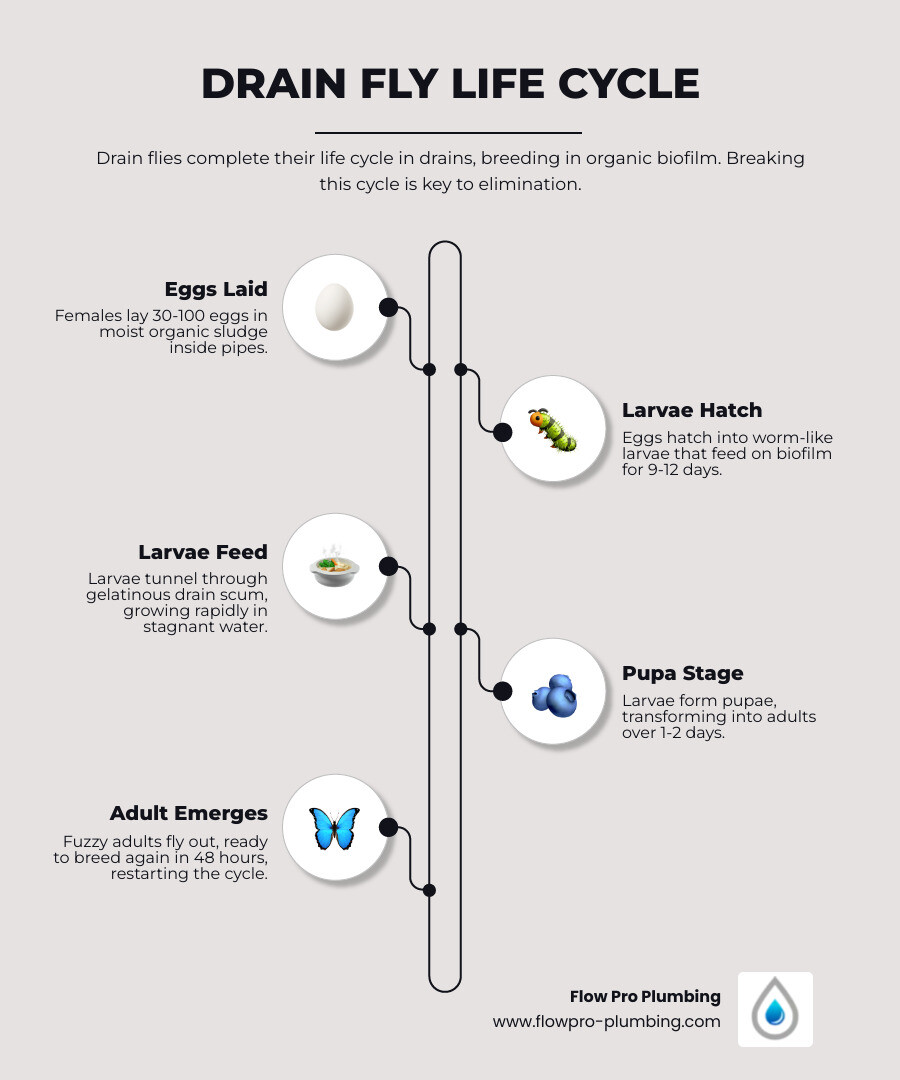
To win the war against these pests, we first have to understand why they chose your home in the first place. Drain flies, also known as moth flies or filter flies, are attracted to decomposing organic matter. In a typical home in Brentwood or Oakley, this matter accumulates inside pipes as a gelatinous film known as biofilm or “drain scum.”
This biofilm is composed of hair, soap scum, food particles, and fats that stick to the walls of your pipes. For a drain fly, this isn’t just a clog — it’s a nursery and a buffet. They lay their eggs directly in this sludge. Once the larvae hatch, they feed on the organic waste until they emerge as winged adults.
If you want to know How to Get Rid of Drain Flies, you must realize that killing the adults you see flying around is only half the battle. You have to destroy the breeding ground. Stagnant water in unused guest bathrooms or floor drains in laundry rooms are prime real estate for these infestations. Moisture control is the foundation of any successful treatment plan. If a pipe has a slow leak or a drain is constantly damp without being flushed, the flies will thrive.
Identifying Drain Flies vs. Fruit Flies
Before you reach for drain cleaners for drain flies, you need to make sure you’re actually dealing with drain flies. We often see homeowners in Antioch and Discovery Bay confuse them with fruit flies or gnats, but the treatments are different.
- Appearance: Drain flies have distinct moth-like wings that are broad and “fuzzy” or hairy. They are usually grey or tan. Fruit flies are typically smaller, with tan bodies and prominent red eyes.
- Behavior: Drain flies are weak fliers. You’ll often find them resting on the walls near a sink or crawling out of the drain itself. They are most active at night (nocturnal). Fruit flies, on the other hand, zip around quickly and are usually found near overripe fruit or garbage cans.
- Testing: A simple way to confirm the source is the “tape test.” Place a piece of clear packing tape over the drain opening overnight, sticky side down (but don’t seal it completely so air can still move). If you wake up and find fuzzy flies stuck to the tape, you know they are coming from that specific pipe.
Often, these flies appear because of a slow-draining sink that allows more organic matter to collect. Checking out our Tips to Fix a Slow Draining Sink can help you address the mechanical issues that lead to these pest problems.
Selecting the Most Effective drain cleaners for drain flies
When it comes to choosing a product, not all “drain cleaners” are created equal. In fact, many standard caustic cleaners that you buy to melt a hair clog might not be the best choice for flies. To truly eliminate the infestation, you need a product that can cling to the vertical walls of the pipe and eat away at the biofilm.
The most popular commercial options fall into three categories: gel formulas, bio-enzymatic cleaners, and dry foams.
| Feature | Gel-Based Treatments | Bio-Enzymatic Cleaners | Foam Treatments |
|---|---|---|---|
| Action | Clings to pipes & kills on contact | Uses bacteria to eat the “food source” | Expands to fill the entire pipe diameter |
| Ingredients | Often Citronella or Cinnamon oils | Live microbial cultures | Insect Growth Regulators (IGRs) |
| Safety | Generally non-caustic | 100% Septic safe and eco-friendly | Safe when used as directed |
| Results | Immediate reduction in adults | 5-7 days for total colony collapse | Breaks the life cycle long-term |
If you are dealing with a physical blockage alongside the flies, you might need The Best Drain Clog Remover to clear the path before the fly treatment can do its job.
Benefits of Bio-Enzymatic drain cleaners for drain flies
As professional plumbers, we often recommend bio-enzymatic cleaners over harsh chemicals. Products like EcoStrong or similar microbial treatments don’t just “poison” the flies; they use an army of natural bacteria to digest the biofilm.
Think of it as a deep clean for the inside of your plumbing. These bacteria consume the fats, oils, and proteins that make up the drain scum. Once the food source is gone, the larvae have nothing to eat and the adults have nowhere to lay eggs.
The benefits are numerous:
- Odor Elimination: By removing the rotting organic matter, you also Clean Your Drains Often to Avoid Awful Odors.
- Septic Safety: These are 100% safe for homes in Byron or Knightsen that rely on septic systems, as they actually help the “good” bacteria in your tank.
- Long-Term Maintenance: Regular use prevents the scum from ever building back up to a level that attracts pests.
Applying Gel-Based drain cleaners for drain flies
Gel-based products are a favorite for DIY homeowners because they are incredibly easy to use. Popular brands like Green Gobbler use a thick consistency that allows the cleaner to coat the sides of the pipe rather than just rushing straight down the middle.
For the best results with drain cleaners for drain flies, follow these steps:
- Time it right: Apply the treatment at the end of the day when the drains will not be used for several hours. This gives the gel maximum “cling time.”
- Coat the walls: Pour the recommended amount (usually 8 ounces) around the edge of the drain, not just down the center.
- Repeat: Most infestations require daily applications for about 5 to 7 days to ensure you’ve caught all the larvae as they hatch.
A common mistake is trying to use a quick fix that doesn’t work. For example, we often tell our customers in Pittsburg and Bay Point to Never Use Baking Soda & Vinegar to Unclog Drain if they have a serious fly or clog problem. While the fizzing looks cool, it rarely has the strength to strip away the stubborn biofilm that drain flies call home.
Long-Term Prevention and Maintenance Strategies
Once you’ve cleared the flies, the goal is to make sure they never come back. In the humid microclimates we sometimes see around the Delta in Discovery Bay or Bethel Island, moisture can linger in pipes, making prevention even more vital.
The most effective strategy is Regular Drain Cleaning. This doesn’t mean you need to use chemicals every week, but it does mean being mindful of what goes down your sink.
We recommend a “maintenance dose” of an enzyme-based cleaner once every two weeks. This keeps the pipe walls slick and free of the organic “glue” that starts the cycle over again. It’s also important to understand How Often to Clean Kitchen and Bathroom Drains based on your household size. A family of five in Concord will need more frequent maintenance than a single resident in Clayton.
Reducing Humidity and Organic Waste
Drain flies love dampness. If you have a bathroom that isn’t used often, the P-trap (the U-shaped pipe under the sink) can dry out, or the water can become stagnant.
- Flush Unused Drains: Once a week, run the water in guest showers or sinks for a minute to keep the trap full and the water moving.
- Dehumidifiers: If your laundry room or basement feels damp, using a dehumidifier can make the area less attractive to adult flies.
- Garbage Disposal Care: Kitchen flies often breed in the underside of the rubber splash guard in your disposal. Scrub this area with an old toothbrush and a bit of dish soap to remove hidden food scraps.
- Mechanical Cleaning: Sometimes, you need to physically break up the gunk. Using a small pipe brush or a hand-cranked pipe snake can loosen the heavy buildup that liquid cleaners might struggle to penetrate. Knowing How to Keep Your Home Clog-Free through these simple habits will save you a lot of headache (and pests) down the road.
When Professional Drain Cleaning is Necessary
While drain cleaners for drain flies are excellent for surface-level infestations, some problems go deeper. If you have treated every drain in your house and the flies persist after two weeks, the issue might be further down the line.
Sometimes, a crack in a sewer pipe under your home’s slab or in a crawlspace can leak sewage into the soil. Drain flies will breed in that contaminated soil and find their way into your home through tiny gaps. In these cases, no amount of over-the-counter gel will solve the problem.
You should call us at Flow Pro Plumbing if:
- The infestation returns every few weeks despite regular cleaning.
- You smell a “sewer gas” odor along with the flies.
- Multiple drains in your home are slow or backing up simultaneously.
We use advanced methods to find the root cause. What is the Best Method for Cleaning Drains? For severe buildup, we often recommend hydro jetting. This uses high-pressure water to literally scrub the inside of your pipes clean, removing 100% of the biofilm and larvae. It’s much more effective than any chemical for heavy-duty jobs, such as How to Unclog a Bathtub Full of Hair that has become a breeding ground.
Frequently Asked Questions about Drain Flies
How long does it take for drain treatments to work?
Most homeowners will see a significant reduction in the number of adult flies within 2 to 3 days of the first application. However, because you are dealing with a life cycle that includes eggs and larvae hidden in the scum, it typically takes 5 to 7 days of daily treatment to achieve total elimination. For severe cases, it can take up to two weeks of consistent application.
Are chemical drain cleaners safe for septic systems?
Not all of them are. Caustic cleaners containing bleach or lye can kill the beneficial bacteria in your septic tank, leading to much bigger (and more expensive) problems. Always look for “septic safe” labels. Bio-enzymatic cleaners and products that use natural oils like citronella are generally the safest and most effective choices for homes on septic systems in areas like Byron or Knightsen.
Why do drain flies keep coming back after cleaning?
If they return, it usually means the biofilm wasn’t fully removed or there is a secondary breeding site you missed. Common “hidden” spots include:
- The overflow hole in your bathroom sink.
- The tray underneath your refrigerator.
- Floor drains in the garage or laundry room.
- Damp mops or cleaning rags left in a dark closet.
- A slow leak behind a wall or under a cabinet.
Conclusion
Dealing with a drain fly infestation can be frustrating, but with the right drain cleaners for drain flies and a little bit of persistence, you can reclaim your home. By targeting the biofilm where these pests breed and maintaining your plumbing system, you’ll keep your drains flowing freely and fly-free.
At Flow Pro Plumbing, we are proud to serve our neighbors in Brentwood, Oakley, Antioch, and throughout Contra Costa County. We believe in providing fast, clean, and courteous service that doesn’t just patch a problem but solves it for the long term. Whether you need a professional drain cleaning, a leak fixed, or a sewer line inspected, our experienced team is here to help.
Don’t let a small pest problem turn into a major plumbing headache. Schedule your expert drain cleaning service today for reliable results and peace of mind. We’re locally owned, licensed, and ready to ensure your home stays comfortable and clog-free.