

Why Your Hot Water Heater Matters More Than You Think
Hot water heater repair is a service you rarely think about—until you’re standing under a freezing shower. When your water heater fails, it disrupts everything from basic hygiene to cooking and cleaning, affecting your family’s comfort and safety.
If you need hot water heater repair right now, here’s what to do:
- Check your circuit breaker (electric units) or pilot light (gas units)
- Look for visible leaks around the tank, valves, or connections
- Listen for unusual noises like popping, rumbling, or hissing
- Test your water temperature at multiple faucets
- Call a professional immediately if you see pooling water, smell gas, or have no hot water after basic checks
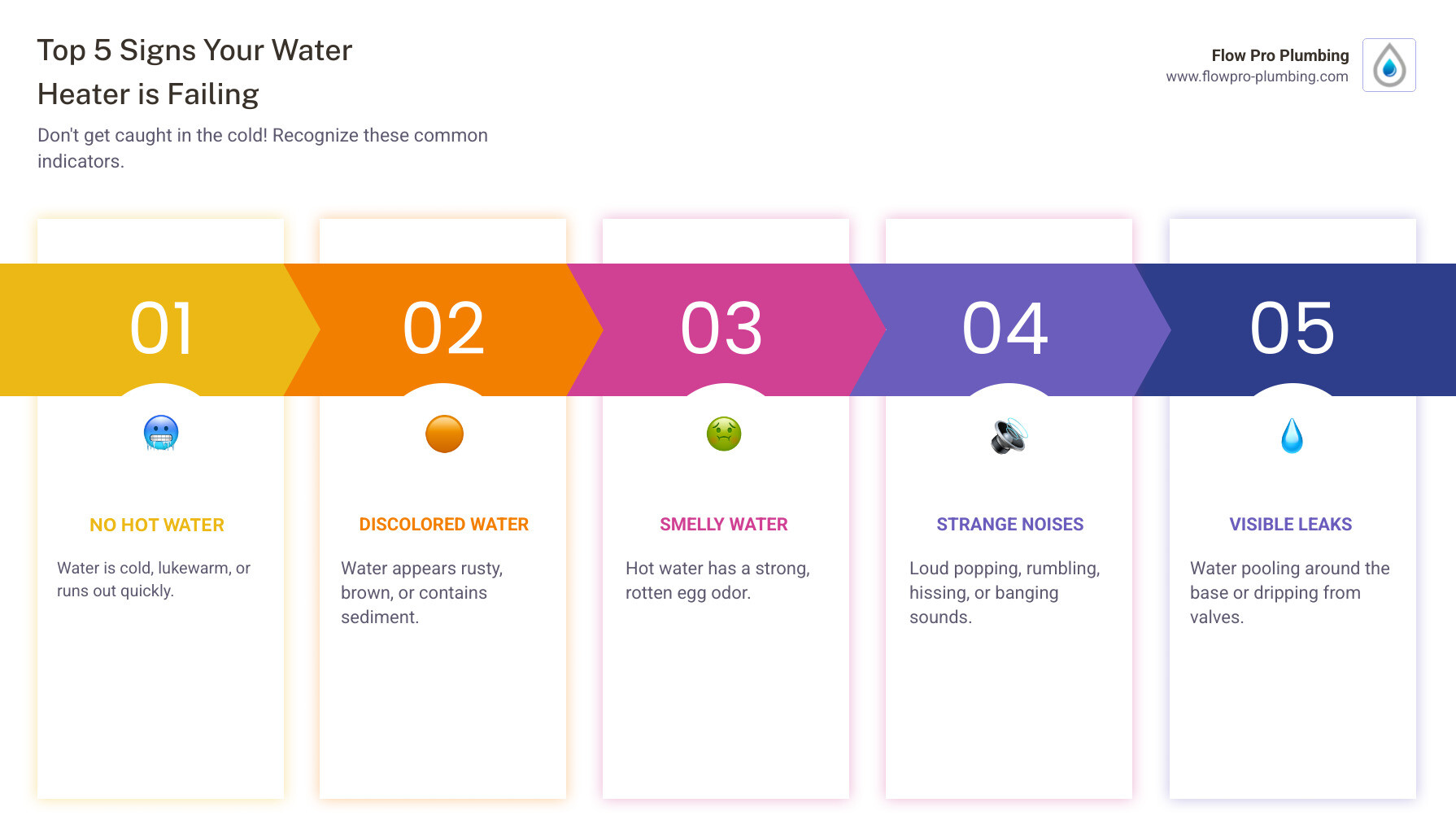
Common signs you need repair include:
- No hot water or only lukewarm water
- Rusty or discolored water
- Strange noises from the tank
- Visible leaks or moisture around the unit
- Rotten egg smell from hot water
The good news is that many water heater problems can be fixed quickly when caught early. While some issues are simple enough for home troubleshooting, others require professional expertise to diagnose and repair safely. Water heaters typically last 8-12 years, but proper maintenance can extend that lifespan. Knowing the warning signs helps you act fast—whether that means a simple repair or planning for a replacement.
I’m Jesse Delgado, owner of Flow Pro Plumbing in Brentwood, California. I’ve been working on water heaters since childhood and have spent the last decade as a licensed plumber in the East Bay. I’ve seen how urgent hot water heater repair becomes for families, and this guide will walk you through everything you need to know.
Common Signs Your Water Heater Needs Repair
Your water heater usually works quietly, but it gives clear warning signs when trouble is brewing. Catching these signs early can help you schedule a hot water heater repair before it becomes an emergency.
- Inconsistent or No Hot Water: If you get lukewarm water or it runs out quickly, you may have a faulty heating element, a bad thermostat, or sediment buildup. No hot water at all points to a failed component like a heating element or a pilot light that’s gone out.
- Discolored or Rusty Water: Reddish-brown water from your hot taps means the inside of your tank is corroding. This internal rust will eventually lead to leaks and tank failure.
- Strange Noises: Popping, rumbling, or crackling sounds usually signal sediment buildup at the bottom of the tank. As the unit heats water trapped under the sediment, steam bubbles form and pop. Hissing might indicate a leak or pressure issue. How to flush sediment from your water heater.
- Rotten Egg Smell: This unpleasant odor is caused by bacteria growing inside your tank, often from a reaction with the anode rod. The fix usually involves flushing the tank and replacing the anode rod. For more detail, see this resource on water odors.
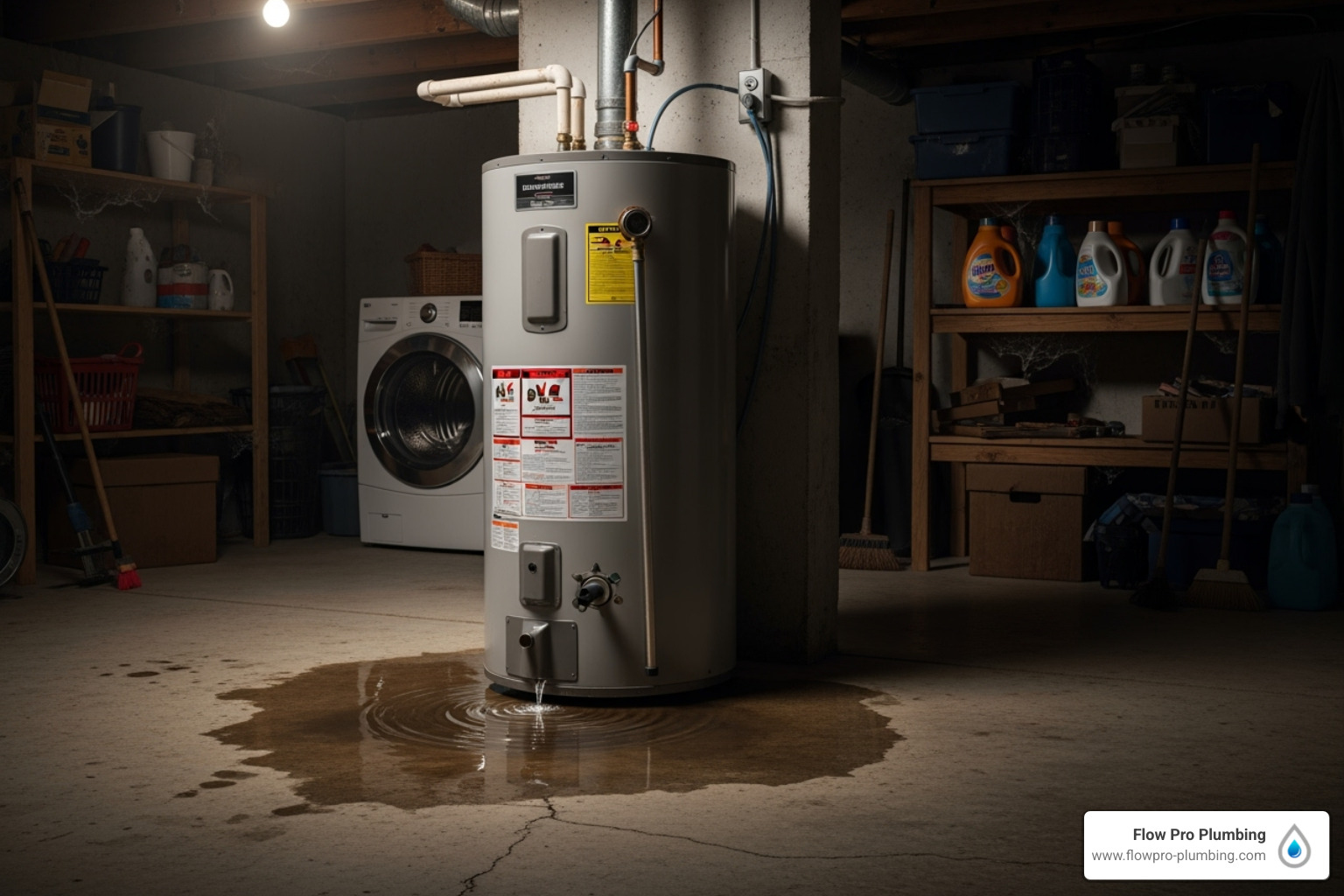
- Visible Leaks or Pooling Water: Any moisture around your water heater is serious and requires immediate action. Leaks can come from the tank, valves, or connections and cause significant water damage. If you see a leak, learn what to do if your water heater needs repair.
What to Do When You Spot a Leak
Finding water around your heater requires quick action to prevent damage.
- Shut off the water supply: Turn the cold water shut-off valve (on the pipe leading into the tank) clockwise.
- Shut off the power or gas: For electric units, flip the water heater’s circuit breaker. For gas units, turn the gas supply valve to the “OFF” position.
- Contain the water: Use towels or a wet/dry vacuum to clean up the water.
- Call a professional: Leaks rarely fix themselves and require an expert diagnosis. This video shows how to shut off your water heater’s supply lines if you need a visual guide.
DIY Troubleshooting Before You Call for Service
When you lose hot water, a few simple checks might solve the problem before you need to call for service. However, safety comes first. Always turn off the power (for electric units) or gas supply (for gas units) before touching your water heater. These steps will help you determine if you need a simple fix or a professional hot water heater repair.
Troubleshooting an Electric Water Heater
Electric water heaters often have simple solutions for common problems.
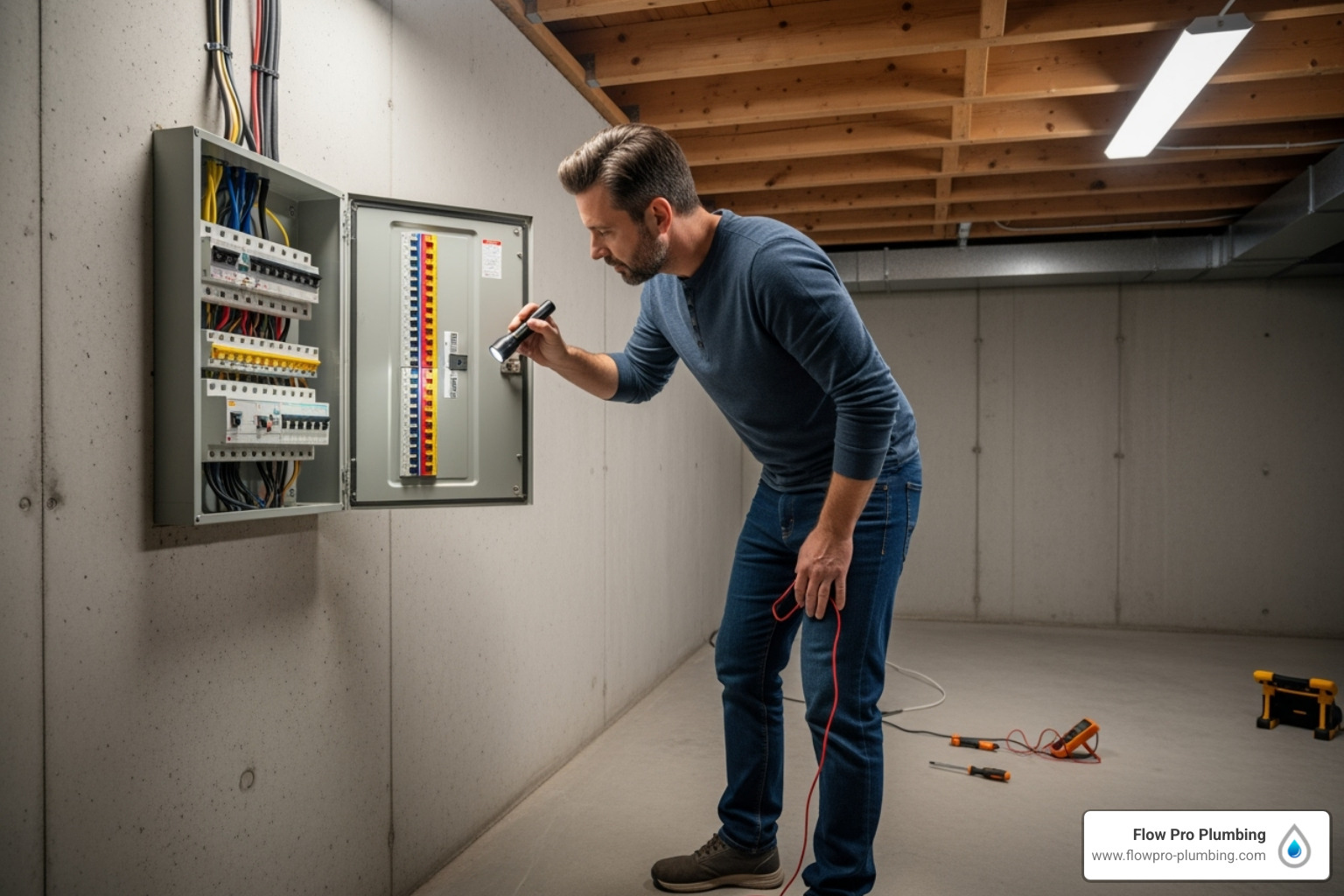
- Check the Circuit Breaker: This is the most common culprit. Go to your electrical panel and find the breaker for the water heater. Push it firmly to “OFF,” then back to “ON.” If it trips again, you have a more serious electrical issue that needs a professional.
- Press the Reset Button: Your water heater has a high-temperature cutoff switch (a small red button) behind an access panel. After turning off the power, remove the panel and press the button firmly. If it keeps tripping, a faulty thermostat or heating element is likely causing the unit to overheat.
- Check the Thermostat: Sometimes the temperature dial gets bumped. The recommended setting is 120°F for a balance of comfort and energy efficiency. You can find the thermostat behind the same access panel as the reset button.
- Consider the Heating Elements: If water is only lukewarm, one of the two heating elements may have failed. Testing these requires a multimeter and electrical knowledge, so this is typically a job for a professional. For more on heating times, see: How long does it take for a water heater to heat up?
Troubleshooting a Gas Water Heater
Gas water heaters rely on a flame, so troubleshooting focuses on the ignition system.
- Check the Pilot Light: If you have no hot water, the pilot light may be out. Instructions for relighting it are usually printed on a label on the tank. The process typically involves turning the gas knob to “PILOT,” holding a button, and using the igniter.
- Inspect the Thermocouple: If the pilot light won’t stay lit, you may have a faulty thermocouple. This safety device shuts off the gas if it doesn’t sense a flame. A bad thermocouple needs to be replaced by a professional. For a detailed guide, read: What to do if your pilot light won’t stay lit.
- Verify the Gas Supply Valve: Ensure the gas valve is open. The handle should be parallel to the gas pipe.
Important: If you ever smell gas (a rotten egg odor), leave your home immediately and call your gas company or 911 from a safe location. Then, call us. Gas leaks are extremely dangerous.
Repair vs. Replacement: A Homeowner’s Guide
Homeowners often ask: should I repair my water heater or replace it? The decision balances short-term costs against long-term savings and reliability. While there’s no single answer, these guidelines can help. A straightforward hot water heater repair can often solve problems affordably, but sometimes it’s just delaying the inevitable.
| Factor | Consider Repair If… | Consider Replacement If… |
|---|---|---|
| Age | Your unit is less than 8-10 years old. | Your tank model is 10+ years old or your tankless is 20+ years old. |
| Cost of Repair | The cost is less than 50% of a new unit. | The cost is over 50% of a new unit. |
| Frequency of Repairs | This is the first or second minor issue. | You’re calling for repairs frequently. |
| Tank Condition | The issue is with a component (element, thermostat). | The tank is leaking, corroded, or rusty. |
For a deeper look at this decision, Read our water heater replacement guide.
How Long Do Water Heaters Last?
Knowing your water heater’s expected lifespan helps you plan.
- Traditional tank water heaters typically last 8 to 12 years. Once you pass the 10-year mark, the risk of failure increases.
- Tankless water heaters are more durable, often lasting 20 years or more because they don’t store water and are less prone to corrosion.
Lifespan is affected by water quality (hard water shortens it), maintenance frequency (annual flushing helps), and usage. Neglected units in homes with hard water can fail in as little as 6 years. Learn about water softeners and their benefits.
When is Replacement the Better Option?
Sometimes, replacement is the smartest financial move. Consider it when:
- The unit is old: A tank heater over 10 years old is living on borrowed time.
- The tank is leaking: A leak from the tank itself cannot be repaired. Replacement is the only option and prevents major water damage.
- There is extensive rust: Significant rust on the tank or in the water indicates severe internal corrosion, and a leak is likely imminent.
- Energy bills are rising: Older, inefficient units work harder and cost more to run. A new model can offer significant energy savings.
- Repairs are frequent: If you’re constantly paying for repairs, those costs add up. It’s better to invest that money in a new, reliable unit.
- It’s improperly sized: If your family has grown, an undersized unit will always struggle to keep up. Replacement allows you to get a unit that meets your needs.
If you’re curious about modern, efficient models, Explore tankless water heater options on our site.
Why Professional Hot Water Heater Repair is a Smart Choice
While the DIY spirit is admirable, hot water heater repair involves a risky combination of water, high-voltage electricity, and sometimes combustible gas. This is a job best left to professionals for several key reasons.
The top priority is safety. Our licensed plumbers are trained to handle gas lines and high-voltage systems without endangering your family or home. A mistake with a gas line can lead to leaks or carbon monoxide poisoning, while improper electrical work can cause severe shocks.
Beyond safety, professionals offer:
- Diagnostic Expertise: We can quickly find the root cause of a problem, not just treat a symptom. This prevents repeat issues and saves you money in the long run.
- Proper Tools and Parts: We arrive with the necessary equipment and common replacement parts to complete most repairs in a single visit, minimizing your downtime.
- Code Compliance: We ensure all repairs meet local Brentwood and East Bay codes, protecting you from future issues during home inspections or sales.
- Long-Term Solutions: Our goal is to extend your water heater’s lifespan and prevent future breakdowns, providing a reliable fix, not a temporary patch.
For reliable service, see our Water heater repair services in Brentwood.
The Dangers of DIY Hot Water Heater Repair
Attempting to fix your own water heater can lead to serious consequences:
- Gas Leaks & Carbon Monoxide: Mistakes with gas lines can cause fires, explosions, or silent, deadly CO leaks.
- Electrical Shock: Electric units use 240-volt power, posing a serious risk of electrocution.
- Water Damage: A poorly repaired connection can fail later, flooding your home and causing thousands in damages.
- Voided Warranty: Most manufacturers require repairs to be done by a licensed professional to keep the warranty valid.
If you need help in Antioch, we’re here: Find professional water heater repair in Antioch, CA.
Benefits of Professional Installation
Proper installation is critical for performance and longevity. A professional ensures:
- Correct Sizing: We match the unit to your household’s hot water demands for optimal efficiency.
- Proper Venting: For gas units, we ensure safe removal of combustion byproducts like carbon monoxide.
- Secure Connections: We test all water, gas, and electrical connections to prevent leaks and failures.
- Code Adherence & Peace of Mind: You can trust the job is done safely and correctly, backed by our professional guarantee. Learn about our water heater installation process.
Extending Your Water Heater’s Life: Maintenance & Upgrades
Regular maintenance is the key to a long, trouble-free life for your water heater. The best hot water heater repair is the one you avoid through preventative care. Simple upkeep can catch common issues like sediment buildup, corroded anode rods, and faulty valves before they cause a breakdown.
Here are the essential maintenance tasks for every homeowner:
- Drain and flush the tank annually to remove sediment.
- Test the temperature pressure relief (TPR) valve yearly.
- Inspect the anode rod every 3-5 years and replace if needed.
- Check for leaks around connections and valves regularly.
- Set your thermostat to 120°F to save energy and prevent scalding.
For a step-by-step guide, see: How to flush sediment from your water heater. When it’s time to replace your unit, consider upgrading to a modern, energy-efficient model to save on utility bills.
The Rise of Tankless Water Heaters
Tankless water heaters are a popular upgrade for good reason. They offer significant benefits over traditional tanks:
- Endless Hot Water: They heat water on demand, so you never run out.
- Energy Savings: By eliminating standby heat loss, they can use about 30% less energy than tank models.
- Longer Lifespan: With proper maintenance, they can last 20 years or more.
- Space-Saving Design: Their compact, wall-mounted design frees up valuable floor space.
While durable, tankless units require annual descaling, especially in areas with hard water. Wondering Can a tankless water heater be repaired? Yes, and we handle those repairs regularly. Explore our Tankless water heater installation services.
The Importance of Water Quality
Hard water, rich in minerals like calcium, is a primary cause of water heater failure. These minerals create sediment buildup (scale) that insulates heating elements, reduces efficiency, and accelerates corrosion. This forces your unit to work harder, consume more energy, and shortens its lifespan.
Investing in Home water filtration systems or water softeners is the best way to protect your water heater and all other plumbing appliances from the damaging effects of hard water. Learn more about the benefits of a water softener. Better water quality leads to fewer repairs, longer appliance life, and lower energy bills. Curious about your tap water? See our thoughts on Is tap water safe to drink?
Your Partner for Reliable Hot Water
Losing hot water is more than an inconvenience; it disrupts your entire home. Throughout this guide, we’ve covered the warning signs of a failing water heater, from strange noises to rusty water, and provided troubleshooting steps for common issues. We’ve also outlined when a simple repair is sufficient versus when a replacement is the smarter long-term investment.
The key takeaway is that hot water heater repair doesn’t have to be a crisis. Proactive maintenance like annual flushing can add years to your unit’s life, while understanding the signs of failure allows you to act before you’re left in the cold. If you’re considering an upgrade, modern tankless models offer endless hot water and significant energy savings.
At Flow Pro Plumbing, we’ve served Brentwood, Oakley, Antioch, and communities throughout Contra Costa County for over a decade. I built this company on a foundation of honest, expert service, and our team is committed to providing solutions that last. We’re not here to sell you something you don’t need; we’re here to ensure your home has safe, reliable hot water.
Whether you have a leak, are weighing repair vs. replacement, or want to explore energy-efficient options, our experienced team is ready to help.
Don’t wait for a minor issue to become a major problem. Schedule your Brentwood water heater installation or service today and let us bring comfort and reliability back to your home.