

Facing Drain Pipe Problems?
A drain pipe repair can feel like a sudden, unwelcome surprise for homeowners in Brentwood, CA. You rely on your plumbing system daily, so when issues like slow drains, gurgling sounds, or foul odors appear, it’s stressful. These problems can interrupt your routine and signal deeper damage that needs quick attention. Understanding the signs of a failing drain pipe and knowing your repair options is key to protecting your home and avoiding bigger headaches.
For comprehensive solutions and trusted service, visit our Pipe Repair page or contact us directly at Flow Pro Plumbing.
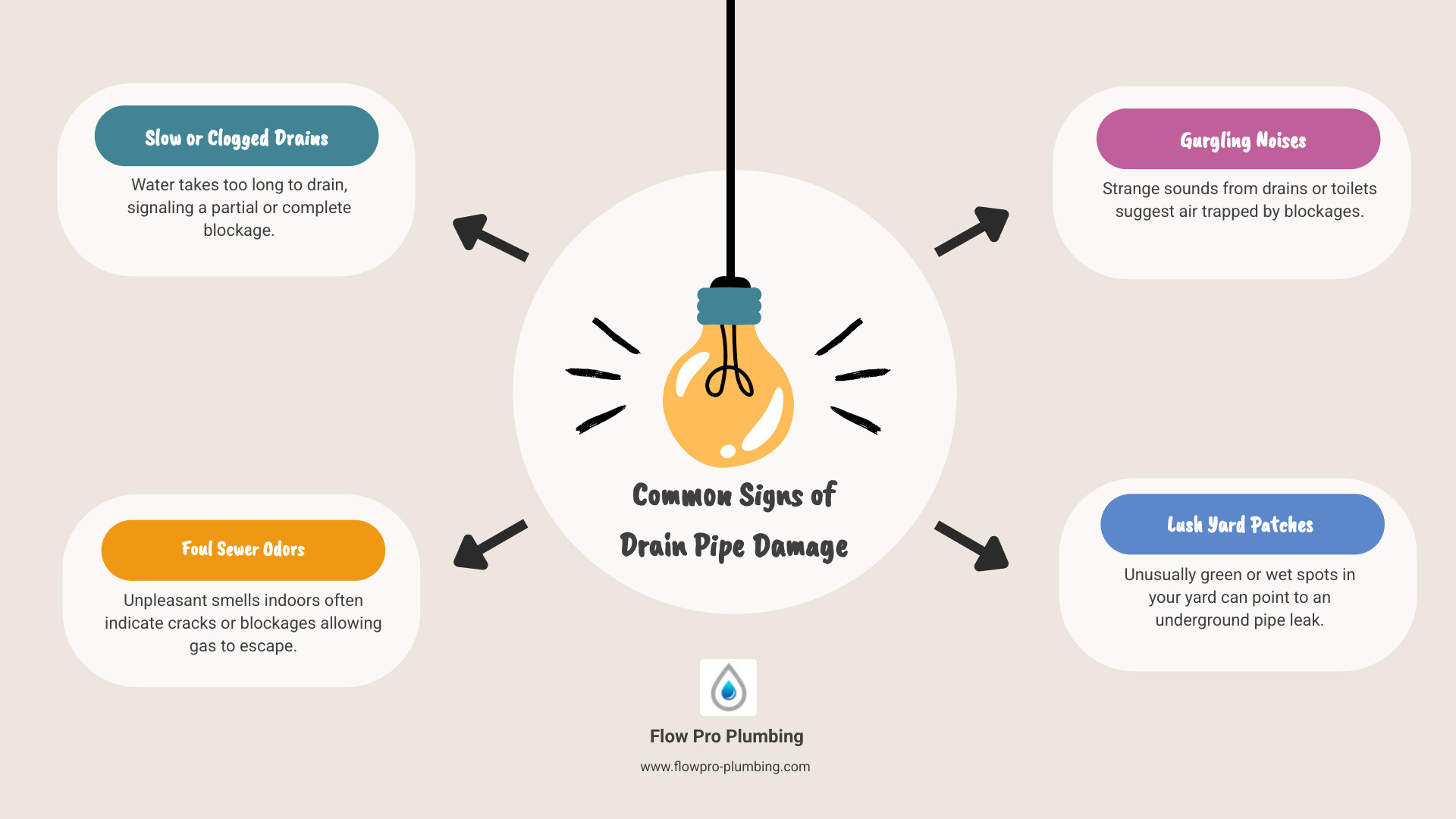
Common Signs Your Drain Pipe Needs Repair:
- Slow or sluggish drains
- Foul or sewer gas odors indoors
- Gurgling sounds from drains or toilets
- Water backing up in sinks, tubs, or toilets
- Lush, green patches of grass in your yard
- Cracks in your home’s foundation or walls
- Unexpected increases in your water bill
- Mold or mildew growth near drain lines
At Flow Pro Plumbing, our team, led by experienced professionals like Jesse Delgado, is dedicated to solving household plumbing issues. We provide honest assessments and effective drain pipe repair solutions for every homeowner.
Drain pipe repair further reading:
Spotting the Trouble: Telltale Signs of a Damaged Drain Pipe
Your drain pipes work quietly in the background, but when something goes wrong, they send out clear warning signs. Recognizing these signs early can help you avoid a major disaster.
The most common red flags include:
- Persistent Clogs and Slow Drains: A single slow drain might be a local blockage, but if multiple fixtures are sluggish, it often points to a problem in your main drain line requiring professional drain pipe repair.
- Unpleasant Sewer Gas Odors: A rotten-egg smell near your drains is a health hazard, indicating that sewer gas is escaping through cracks or damaged sections of pipe.
- Gurgling Noises: Strange gurgling from a sink or shower when a toilet is flushed means air is trapped in the system, usually due to a blockage or partial pipe collapse.
- Water Backups: If wastewater comes up through a shower drain after you flush a toilet, you have a serious blockage or break that needs immediate attention.
- Lush, Green Patches in the Yard: A suspiciously green spot in your lawn, especially during dry weather, can be caused by a leaking underground sewer line fertilizing the grass.
- Foundation Cracks or Settling: A leaking drain pipe under your home can erode the soil, leading to serious structural damage like cracks in the foundation or walls.
- Mold or Mildew Growth: A hidden pipe leak creates the damp environment mold needs to thrive, which can become a health concern.
When you spot these signs, we use advanced tools to diagnose the problem accurately. Our Sewer Video Inspection service lets us see inside your pipes, while our Leak Detection technology pinpoints the exact location of the damage. This allows for faster, more precise repairs, so it’s important to listen when your pipes are trying to tell you something is wrong.
What Causes Drain Pipes to Fail?
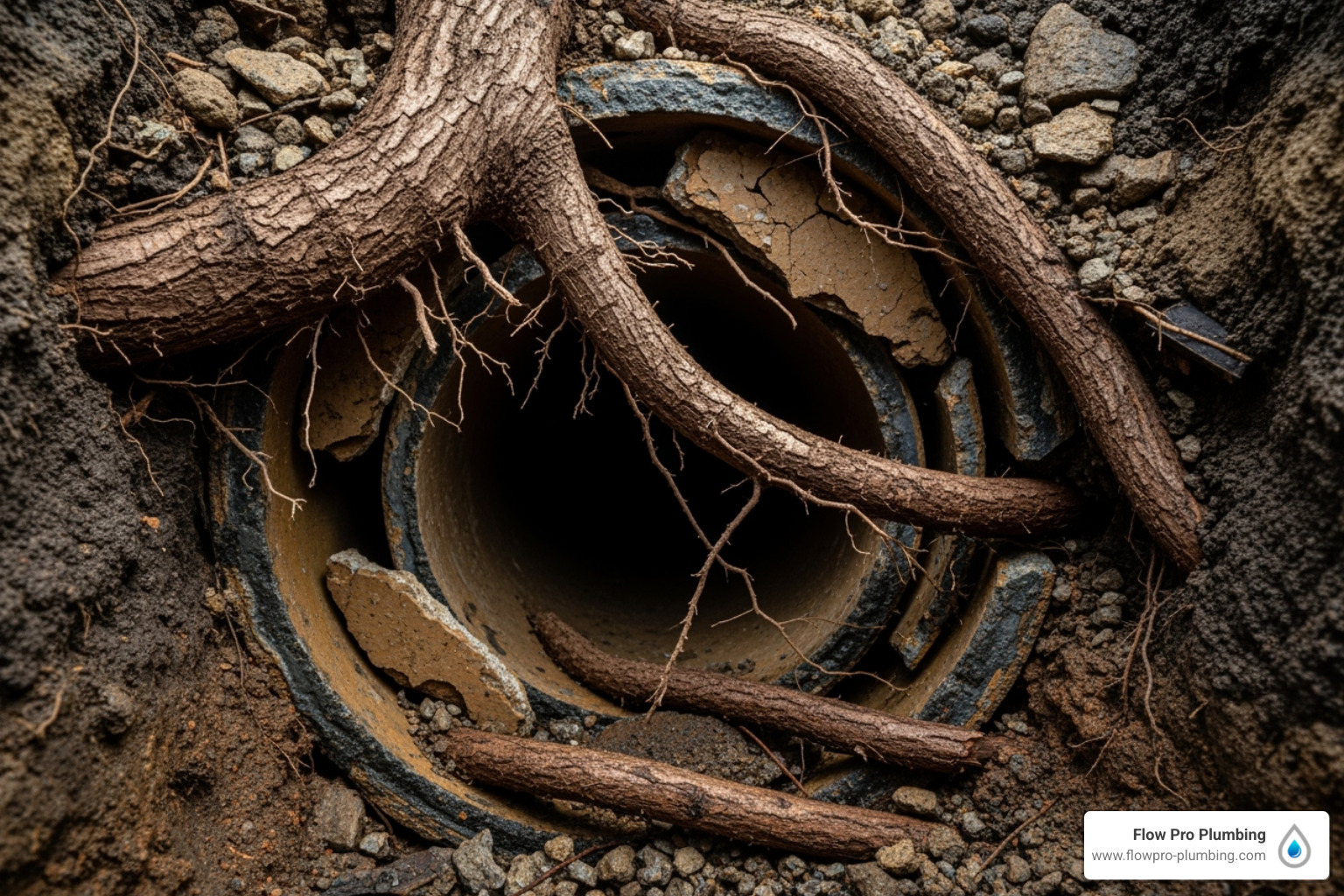
Understanding why drain pipes fail can help you prevent future issues and choose the right drain pipe repair method. Over time, several factors can weaken your home’s plumbing.
- Age-Related Deterioration: Pipes don’t last forever. Materials like cast iron, common in homes built before the 1970s, can last 80-100 years but eventually become brittle, thin, and prone to cracks or collapse.
- Corrosion and Rust: Metal pipes, particularly cast iron and galvanized steel, are susceptible to corrosion from water and minerals. This process thins the pipe walls, leading to leaks and creating rust flakes that can cause blockages.
- Invasive Tree Roots: Tree roots are naturally drawn to the moisture from a tiny crack or loose joint in an underground pipe. Once inside, they expand, creating blockages and potentially crushing the pipe. This often requires specialized Root Intrusion Removal services.
- Shifting Soil: Ground movement from erosion, heavy rainfall, or nearby construction can put immense pressure on buried pipes, causing them to misalign, separate at the joints, or develop “bellies” where waste collects.
- Physical Damage: Excavation for landscaping or a new fence can easily lead to an accidental puncture or crushed drain line if the pipe’s location isn’t known.
- Improper Installation: Pipes installed with the wrong slope, poor connections, or unsuitable materials can lead to premature failure and chronic plumbing problems.
Taking proactive steps like Preventing Sewer Blockages is your best defense. At Flow Pro Plumbing, we see these issues daily in Brentwood homes and can help you address them before they escalate.
Know Your Pipes: Common Materials and What They Mean for Repairs
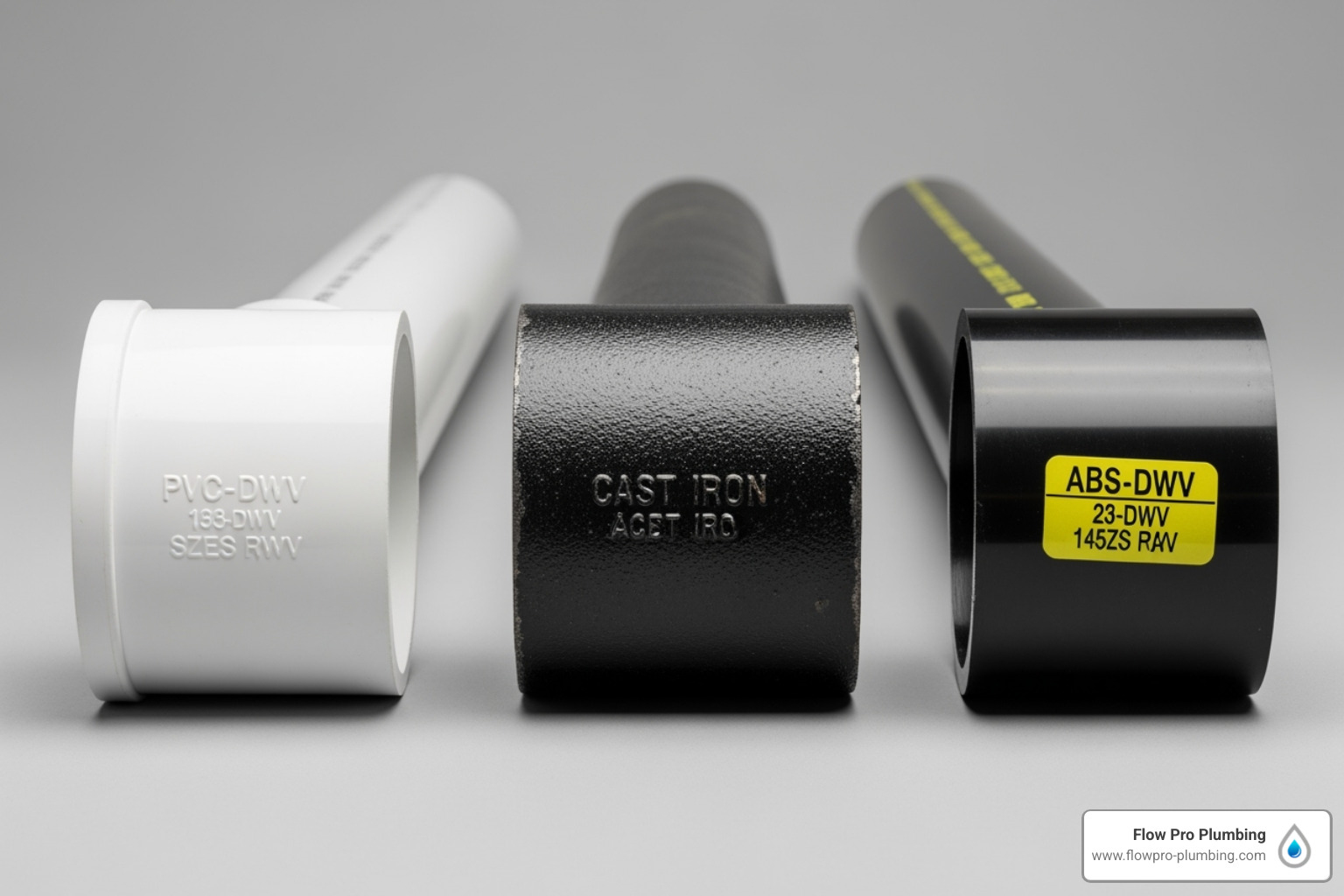
When it comes to drain pipe repair, the material of your pipes—whether cast iron, PVC, or ABS—plays a huge role in determining their lifespan and the best repair strategy. Homes in Brentwood often have a mix of materials, each with its own characteristics.
Identifying and Dealing with Cast Iron Pipes
If your home was built before the 1970s, it likely has cast iron pipes. Known for being strong, heavy, and quiet, these pipes can last 80 to 100 years. However, their main weakness is internal corrosion. Over decades, rust builds up, creating a rough surface that snags debris and slows drainage. Eventually, this corrosion eats through the pipe, causing cracks and leaks.
Visible signs of failing cast iron include flaking, rust spots, or dampness on exposed pipes in a basement or crawlspace. Because these pipes are nearing the end of their lifespan in many older homes, specialized Sewer Repair techniques are often needed to address failures without major disruption.
Understanding PVC and ABS Pipes
Since the 1970s, plastic pipes like white Polyvinyl chloride (PVC) and black ABS have become the standard for residential drains. These materials are lightweight, affordable, and highly resistant to corrosion and rust, making them a durable, low-maintenance choice.
While plastic pipes are strong, they are not invincible. They can be damaged by shifting soil, accidental impacts during construction, or improper installation. Repairing a broken PVC or ABS pipe requires professional precision. The process involves cutting out the damaged section and chemically fusing a new piece into place using a special primer and solvent cement. This creates a permanent, watertight bond. For any Pipe Repair, especially on main drain lines, relying on experienced professionals ensures the job is done correctly and the repair will last.
A Homeowner’s Guide to Drain Pipe Repair Methods
When you have a damaged drain pipe, there are several excellent options for drain pipe repair. At Flow Pro Plumbing, we assess the pipe material, location, and severity of the damage to recommend the most effective and least disruptive solution for your home.
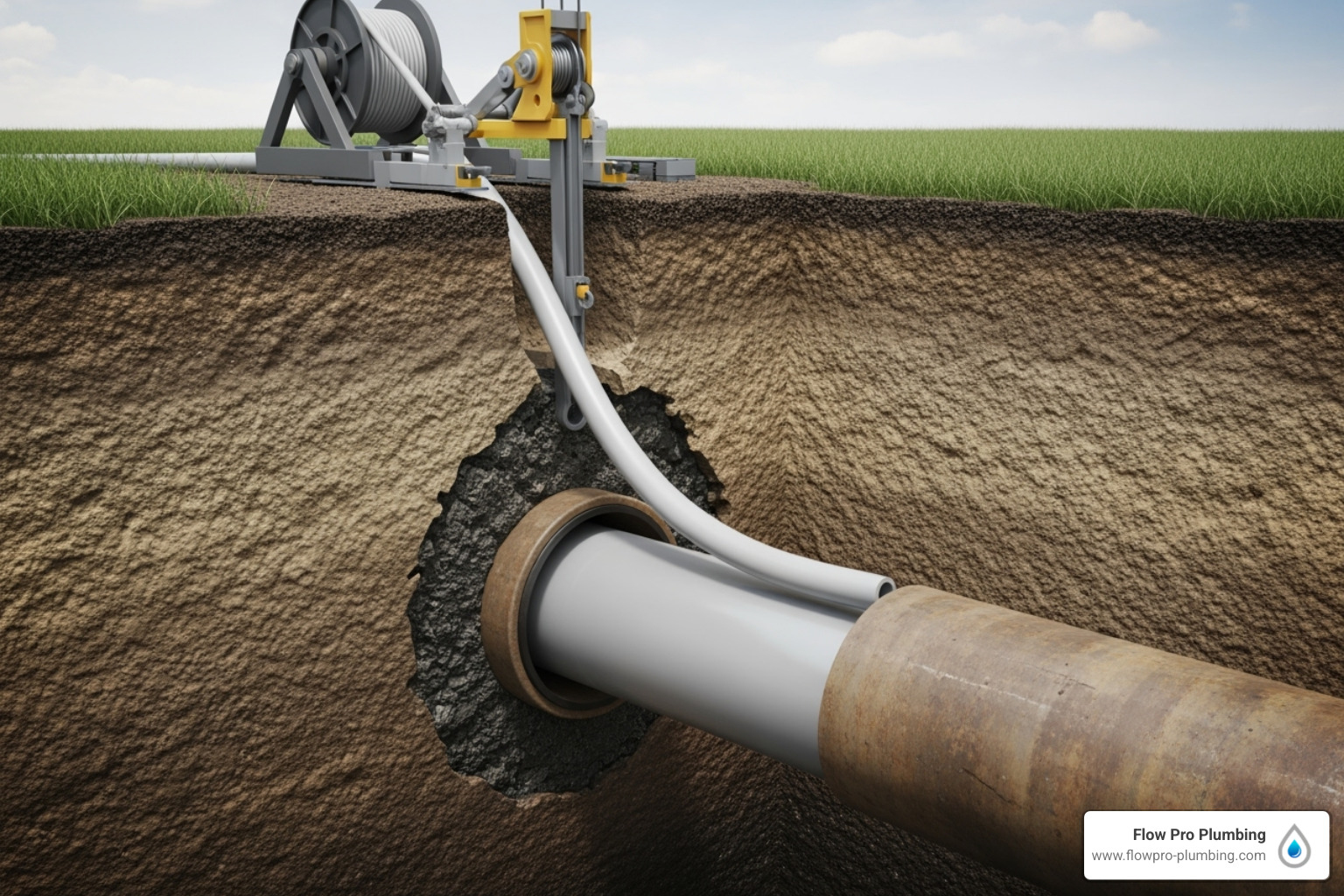
The main approaches for drain pipe repair include:
- Localized Patching: Best for small, accessible cracks or leaks, using professional-grade clamps or repair sleeves for a durable fix.
- Full Pipe Replacement: The traditional method of excavating to remove the damaged pipe and install a new one. It’s highly effective but can be disruptive.
- Trenchless Technology (CIPP): A modern, game-changing method that repairs pipes from the inside out, avoiding major digging.
Our Sewer Line Repair Guide offers more detail on these solutions.
Traditional vs. Trenchless Drain Pipe Repair
A key decision is choosing between traditional excavation and modern trenchless methods. While both are effective, trenchless technology offers significant advantages in many situations.
| Feature | Traditional Excavation (Dig & Replace) | Trenchless Methods (e.g., CIPP) |
|---|---|---|
| Digging Required | Extensive digging of trenches along the entire pipe length. | Minimal digging, usually small access points at each end of the repair. |
| Property Disruption | Significant damage to landscaping, driveways, foundations, and walls. | Minor impact on yard, landscaping, and existing structures. |
| Process Time | Can take days or even weeks, including excavation and restoration. | Often completed within a day or two, depending on complexity. |
| Cost | Higher overall costs due to labor for digging, pipe replacement, and extensive property restoration. | Generally more affordable due to reduced labor and restoration needs. |
| Durability | New pipe section, can last for decades. | Creates a new, seamless pipe within the old one, lasting for decades (50+ years). |
| Environmental Impact | More disruptive to the environment, soil, and potential ecosystems. | Less environmental impact due to minimal excavation. |
| Application | Necessary for fully collapsed pipes, severe offsets, or when trenchless isn’t feasible. | Ideal for cracks, leaks, root intrusion, joint separations, and minor collapses. |
As the table shows, trenchless methods save time, cause less damage, and are often more cost-effective. Explore these advantages in our article on the Benefits of Trenchless Sewer Repair.
The Process of Trenchless Pipe Relining
Trenchless pipe relining with Cured-In-Place Pipe (CIPP) is an efficient way to handle drain pipe repair. It essentially creates a brand-new pipe inside the old one without extensive digging.
The process begins with a camera inspection to assess the damage. Next, the host pipe is thoroughly cleaned with high-pressure water jetting to remove roots and debris. A flexible, resin-saturated liner is then inserted into the pipe and inflated, pressing it against the interior walls. The resin is cured using heat or UV light, hardening it into a seamless, durable new pipe that is often stronger than the original. A final camera inspection ensures the installation is flawless. This method is highly effective for Trenchless Sewer Line Replacement and restores your plumbing with minimal disruption.
When is a Full Drain Pipe Replacement Necessary?
While trenchless repair is often preferred, a full replacement is sometimes the only viable solution for a long-term fix. This may be necessary for:
- Completely Collapsed Pipes: A collapsed pipe has no structural integrity left to support a new liner.
- Extensive Damage: If a pipe has crumbled or has multiple, widespread breaks, relining may not be effective.
- Severe Offsets or Bellies: Major pipe misalignments (offsets) or sags (bellies) that trap waste may require excavation to correct the pipe’s grade.
- End-of-Life Pipes: For very old systems with widespread corrosion, a full Waste Replumb is a better long-term investment than patching individual sections.
- Infeasible Relining: Some pipe configurations with sharp bends or limited access points may make trenchless methods impractical.
In these cases, a full replacement guarantees a new, structurally sound pipe system that will provide reliable drainage for decades.
Frequently Asked Questions about Drain Pipe Repair
We know that dealing with drain pipe issues can feel overwhelming, and it’s perfectly natural to have lots of questions! Here at Flow Pro Plumbing, we hear many of the same concerns from homeowners in Brentwood, CA. Let’s tackle some of the most common ones to help you feel more informed and at ease.
Can a small crack in a drain pipe be patched?
Yes, for smaller, accessible cracks or pinhole leaks, a professional patch can be an effective drain pipe repair solution. Options include specialized repair sleeves, pipe clamps, or epoxy compounds that create a durable, long-lasting seal. While some DIY kits exist for temporary fixes, a patch only addresses the immediate leak, not the underlying cause or the pipe’s overall condition. We always recommend a professional assessment to ensure the repair is safe, up to code, and will last.
How long does a trenchless pipe repair last?
Trenchless pipe repairs, particularly Cured-In-Place Pipe (CIPP) lining, are designed for longevity. This method creates a brand-new, seamless pipe inside the old one that is highly resistant to corrosion and tree roots. These modern repairs are not a temporary fix; they are engineered to last for decades, with a typical life expectancy of 50 years or more.
Is drain pipe repair covered by homeowner’s insurance?
This depends on your specific policy and the cause of the damage. Generally, insurance covers drain pipe repair for damage that is sudden and accidental, such as a pipe being severed during excavation. However, damage that occurs gradually from wear and tear, corrosion, rust, or lack of maintenance is typically not covered. Tree root intrusion may or may not be covered. Some policies offer an optional “service line coverage” add-on for the main sewer line. The best course of action is to review your policy and speak directly with your insurance provider to understand what is covered.
Conclusion
Dealing with drain pipe repair is a challenge no homeowner wants to face. The good news is that by recognizing the warning signs and understanding your repair options, you can take control of the situation. Prompt action is about more than just fixing a clog; it’s about protecting your home and your peace of mind.
The long-term benefits of addressing drain issues quickly are significant. You can prevent extensive water damage, safeguard your family from health hazards like mold and sewer gas, protect your home’s structural integrity, and avoid the escalating costs and disruption of a major plumbing emergency.
Here at Flow Pro Plumbing, we’re proud to be a reliable plumbing company in Brentwood, CA. Our experienced team is committed to providing expert diagnosis and effective drain pipe repair solutions to keep your plumbing system healthy.
If you’re experiencing any plumbing woes in Brentwood, CA, or our neighboring Contra Costa County communities like Oakley, Antioch, Findy Bay, Pittsburg, Bay Point, Concord, Byron, Bethel Island, Clayton, Walnut Creek, Pleasant Hill, and Knightsen, don’t hesitate to reach out.
Contact Flow Pro Plumbing for all your plumbing needs today. We’re here to help mend your pipes and bring back harmony to your home!