
How Long Does a Water Heater Last? Here’s What Every Homeowner Should Know

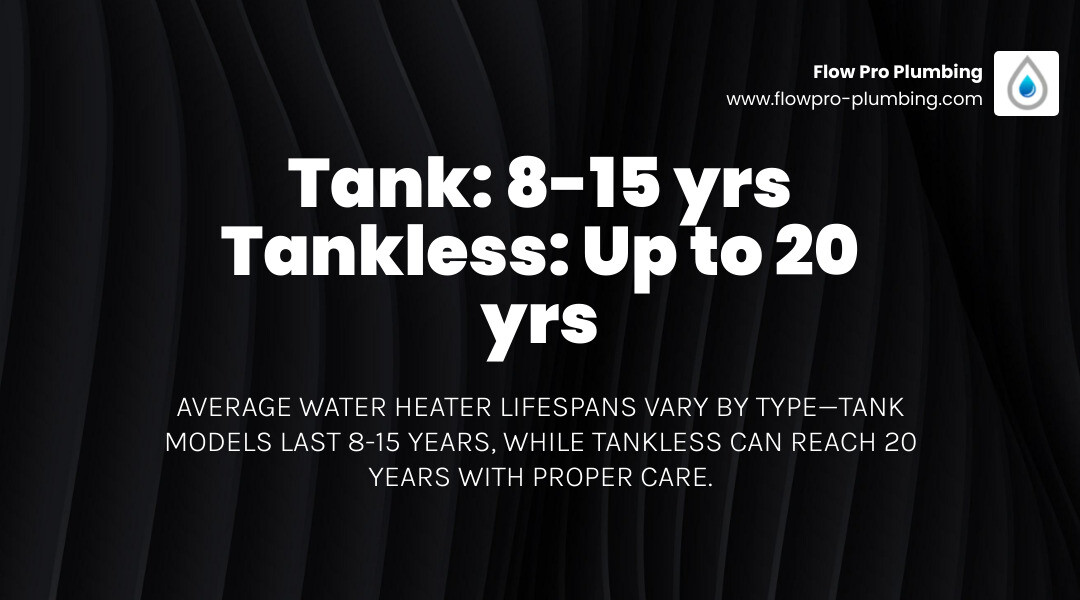
How long does a water heater last depends on the type you have, but here’s a quick breakdown so you can plan ahead:
| Water Heater Type | Average Lifespan |
|---|---|
| Conventional tank (gas) | 8-12 years |
| Conventional tank (electric) | 10-15 years |
| Tankless (gas) | Up to 20 years |
| Tankless (electric) | 7-10 years |
| Heat pump (hybrid) | 10-15 years |
| Solar | 20+ years |
Most homeowners don’t think about their water heater until something goes wrong — a cold shower, a puddle on the utility room floor, or a water bill that suddenly jumps. By then, the damage is often already done. The good news is that knowing your water heater’s expected lifespan puts you in control. You can spot early warning signs, stay ahead of costly failures, and avoid the stress of an emergency replacement.
I’m Jesse Delgado, owner of Flow Pro Plumbing in Brentwood, California, and I’ve spent years helping East Bay homeowners understand exactly how long a water heater lasts and what they can do to get the most out of theirs. In the sections below, I’ll walk you through everything you need to know — from lifespan by type to maintenance tips that can add years to your unit.
How Long Does a Water Heater Last? Lifespan by Type
When we talk about the longevity of your hot water system, the first question we usually ask is: “What’s under the hood?” Not all heaters are built the same, and the technology used to heat your water plays a massive role in how many birthdays the unit will celebrate.
Conventional Tank Water Heaters
These are the most common units we see in Brentwood and Oakley homes. They work by keeping a large volume of water (usually 40 to 50 gallons) hot and ready to use at all times.
- Gas Tank Heaters: These typically last about 8 to 12 years. Because they use a burner at the bottom of the tank, the metal is subjected to intense heat cycles, which can eventually lead to tank fatigue and rust.
- Electric Tank Heaters: You might get a little more life out of these, often averaging 10 to 15 years. Since they use internal heating elements rather than an external flame, the tank itself isn’t stressed in quite the same way as a gas unit.
Tankless Technology
If you are looking for the marathon runner of the plumbing world, look no further than tankless models. Because they don’t store water, they avoid the constant corrosive environment of a standing tank.
- Gas Tankless: These are the gold standard for longevity, often lasting 20 years or more with proper care. There are many benefits of a tankless water heater, including the fact that they don’t suffer from the “tank burst” scenarios that plague older styles.
- Electric Tankless: These have a slightly shorter lifespan, usually 7 to 10 years, primarily due to the high-intensity electrical components required to flash-heat water.
If you’re curious about making the switch, you can explore tankless water heaters to see if they fit your household’s hot water demands.
Heat Pump Hybrids and Solar
For the eco-conscious homeowner in the East Bay, hybrid heat pump heaters are a popular choice. They pull heat from the surrounding air to warm the water, typically lasting 10 to 15 years. Solar water heaters are also incredibly durable, often lasting 20+ years, though they do require periodic inspections of the rooftop panels and circulating pumps to stay efficient.
Factors That Determine How Long Your Water Heater Lasts
While the averages give us a baseline, your specific mileage may vary. Several “hidden” factors can either shave years off your heater’s life or help it reach its full potential.
Installation Quality
We cannot stress this enough: how a unit is installed matters. If a water heater isn’t perfectly level, or if the ventilation isn’t clear, the system has to work harder. We’ve seen units in Antioch and Pittsburg fail prematurely simply because they were installed in cramped, unventilated spaces or weren’t properly secured.
Usage Volume
Think of your water heater like a car. A car that drives 50,000 miles a year wears out faster than one that drives 5,000. Large families that run multiple showers, loads of laundry, and the dishwasher simultaneously put more “miles” on the heater. High demand means more heating cycles, which leads to more expansion and contraction of the tank metal.
Thermal Expansion
When water heats up, it expands. In a closed plumbing system, this expansion creates pressure. If your home doesn’t have an expansion tank (a small tank that sits above your water heater), that pressure has nowhere to go but against the walls of your main tank. Over time, this constant “breathing” can cause the glass lining of a tank heater to crack, leading to internal rust.
Maintenance Frequency
The biggest differentiator between a heater that lasts 8 years and one that lasts 15 is maintenance. Knowing how often to drain your water heater is essential. Without regular flushing, sediment builds up at the bottom, acting as an insulator that forces the burner to run longer and hotter to reach the water. For more information on keeping your system in top shape, check out our general page on water heaters.
The Impact of Hard Water on How Long a Water Heater Lasts
In our service areas—from Brentwood to Walnut Creek—water hardness is a serious topic. Hard water contains high levels of minerals like calcium and magnesium. When this water is heated, these minerals crystallize and settle at the bottom of the tank as calcium carbonate.
This sediment buildup is a silent killer. It creates a layer of “scale” that insulates the heating elements or the bottom of the tank. Not only does this make your heater less efficient (increasing your energy bills), but it also causes “hot spots” that can eventually cause the tank’s protective lining to fail. In extreme cases, hard water can reduce a water heater’s lifespan by two or more years.
Warning Signs Your Water Heater is Reaching the End
Your water heater will usually try to tell you it’s struggling before it finally gives up the ghost. Here are the red flags we tell our clients to watch out for:
- Rusty Water: If you notice a reddish or brown tint only when you turn on the hot water, it’s a sign that the inside of your tank is corroding.
- Strange Noises: Do you hear popping, banging, or rumbling? That’s the sound of sediment hitting the bottom of the tank or air bubbles escaping from underneath a layer of scale.
- Metallic Taste or Smell: If your hot water starts to taste like pennies or smells like “rotten eggs,” your internal components (like the anode rod) are likely failing.
- Inconsistent Temperatures: If you’re getting lukewarm water or the hot water runs out halfway through a shower, your heating elements are likely on their last legs.
Sometimes, the issue is simpler. If your water heater pilot light won’t stay lit, it might be a thermocouple issue rather than a dead tank. However, if you’re wondering how long for water heater to heat up and it’s taking significantly longer than it used to, age is the likely culprit.
Using Serial Numbers to Check How Long a Water Heater Lasts
Not sure how old your unit is? You don’t need to be a detective; you just need to find the data plate. This is the sticker on the side of the tank containing the model and serial number.
Most manufacturers encode the date into the serial number. For example, a serial number starting with “A18” might mean it was manufactured in January (A) of 2018 (18). Other brands use the first four digits to represent the month and year (e.g., 0515 for May 2015). If you can’t decode it yourself, you can always call us for a professional water heater repair and installation assessment, and we can tell you exactly how much life your unit has left.
Maintenance Tips to Extend How Long a Water Heater Lasts
You wouldn’t expect your car to last 200,000 miles without an oil change, right? Your water heater is the same. Here is our “Cheat Sheet” for maximizing longevity:
- Replace the Anode Rod: This is perhaps the most important tip. The anode rod is a “sacrificial” piece of metal that attracts corrosive elements so they eat the rod instead of your tank. Check it every 2-3 years and replace it if it’s heavily corroded.
- Test the Pressure Relief Valve: This valve prevents your tank from becoming a literal rocket if the pressure gets too high. Pull the lever once a year to ensure water flows through and the valve closes tightly afterward.
- Adjust Temperature Settings: Keep your thermostat at 120°F. This is hot enough for comfort but low enough to slow down mineral buildup and prevent scalding.
- Flush the Tank: Aim to drain and flush your tank at least once a year (twice if you have very hard water).
If you’re a DIY enthusiast, you can follow our guide on how to flush a water heater. If you’ve upgraded to a modern system, don’t forget to check out our tankless water heater maintenance guide to keep those energy savings coming.
Repair vs. Replace: Making the Right Choice
When your heater starts acting up, you have a big decision: fix it or toss it? We generally recommend the 50% Rule: If the repair cost is more than 50% of the price of a new unit, it’s time to replace it—especially if the unit is over 10 years old.
Other reasons to opt for a replacement include:
- Warranty Status: If your tank is leaking and the warranty has expired, a replacement is almost always the safer bet.
- Efficiency Gains: Modern heaters are significantly more efficient. Replacing a 12-year-old unit can often pay for itself in lower utility bills over a few years.
- Safety Concerns: A rusted-through tank cannot be “patched.” If the tank itself is leaking from the bottom, it’s a ticking time bomb for water damage.
For those ready to move on from old tank technology, a tankless water heater installation can offer peace of mind for the next two decades.
Frequently Asked Questions about Water Heater Longevity
Can a water heater last 20 years?
While it is rare for a standard tank heater to reach 20 years, it’s not impossible with meticulous maintenance and soft water. However, tankless gas units are designed specifically to last 20 years or more. If your tank heater is 20 years old, you are living on borrowed time!
Does a warranty cover labor for replacement?
Most manufacturer warranties cover the parts (like the tank or the heating element) for a set period (usually 6 to 12 years), but they rarely cover the labor costs to install those parts. It’s always best to check your specific paperwork.
What common factors void a water heater warranty?
Improper installation is the number one reason warranties are denied. Other factors include using non-approved parts, failing to perform required maintenance (like flushing), or moving the unit from its original installation location.
Conclusion
At Flow Pro Plumbing, we’ve seen it all—from heaters that lasted 25 years to brand-new units ruined by hard water in just three. The answer to how long does a water heater last is ultimately in your hands. By staying on top of maintenance and watching for the early warning signs of failure, you can ensure your home stays comfortable and your floors stay dry.
Whether you’re in Brentwood, Antioch, or Walnut Creek, our team is here to help. From professional inspections that catch small leaks before they become floods to reliable new installations that maximize your energy efficiency, we provide the peace of mind you deserve.
Don’t wait for a cold morning to find out your heater has retired. Schedule your water heater service today and let us help you keep the hot water flowing!