

Why Hot Water Is Critical to Your Business Operations
A commercial water heater is a high-capacity system designed for business applications. Unlike residential units, they handle higher demand with faster recovery rates and heavy-duty construction. When your business runs out of hot water, operations stop. Whether it’s a restaurant kitchen, a hotel, or a gym, the impact is immediate and costly. Commercial water heaters are engineered to prevent these disruptions with higher BTU inputs and larger storage capacities.
Key Points About Commercial Water Heaters:
- Types Available: Gas, propane, electric, tankless, and heat pump models
- Capacity Range: From 30 gallons to 120+ gallons for tank models; tankless systems scale by linking multiple units
- Fuel Options: Natural gas, propane, or electricity based on infrastructure and utility costs
- Efficiency Standards: Look for ENERGY STAR certified models with high Thermal Efficiency (TE) or Uniform Energy Factor (UEF)
- Common Applications: Restaurants, hotels, laundromats, apartment buildings, healthcare facilities, and office buildings
- Key Features: Ultra-Low NOx emissions, self-cleaning systems, digital diagnostics, and corrosion-resistant tanks
Commercial units range from 30-gallon electric models to 120-gallon gas systems, with leading brands offering durable materials like glass-lined or stainless steel. Advanced condensing systems can achieve up to 96% efficiency, while tankless rack systems provide virtually unlimited hot water. Choosing the right system requires understanding your peak demand, fuel sources, efficiency ratings, and maintenance needs.
I’m Jesse Delgado, and with over a decade in the plumbing industry and a C-36 license, I’ve grown up on jobsites. At Flow Pro Plumbing, we help businesses select and maintain reliable commercial water heater systems to keep their operations running smoothly.
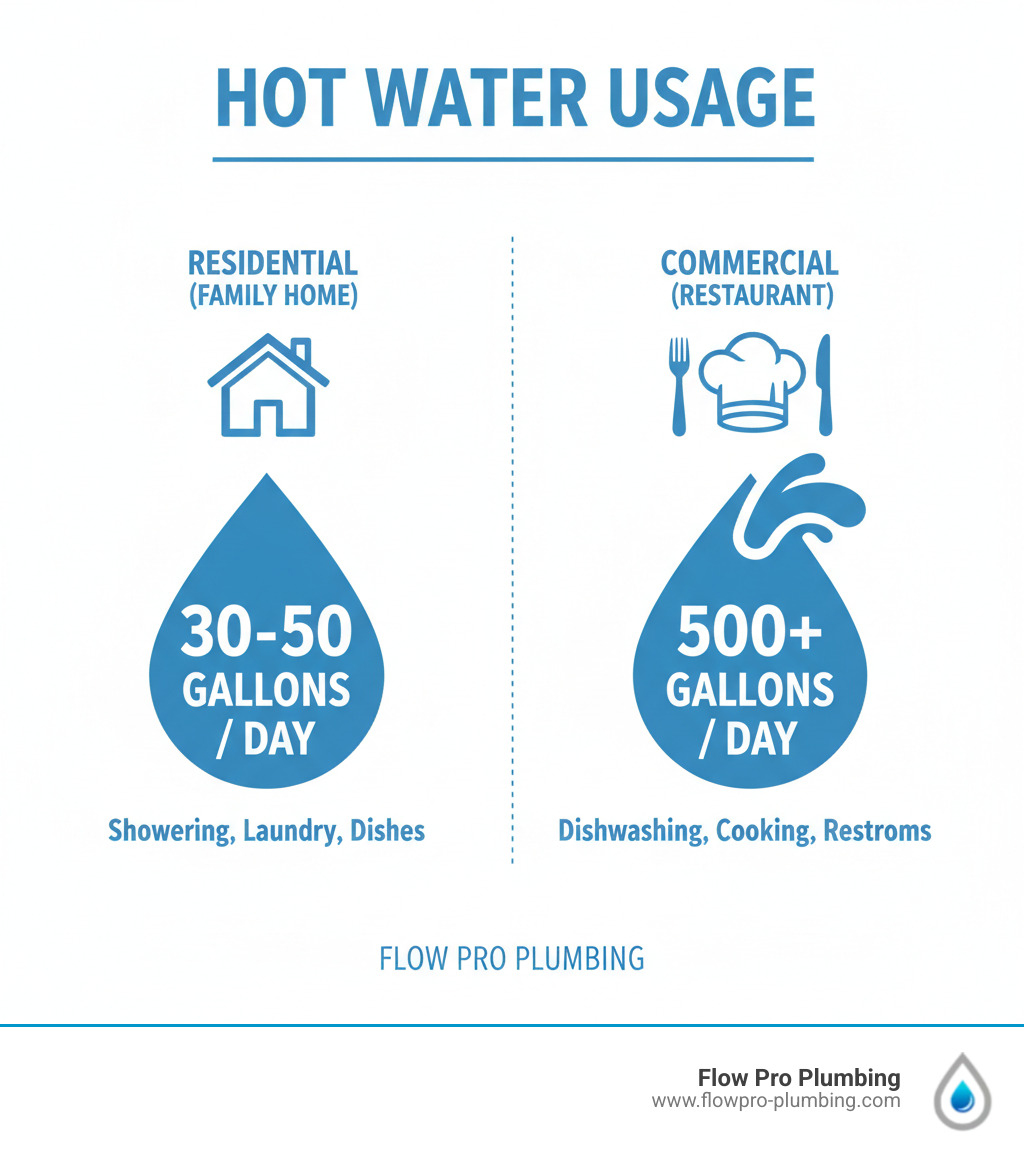
Quick Commercial water heater definitions:
Why Your Business Needs More Than a Residential Unit
We often see businesses try to save money by installing a residential water heater, only to call us a few months later when it fails. The truth is, residential and commercial water heater systems are fundamentally different. A home unit is designed for intermittent use with plenty of recovery time.
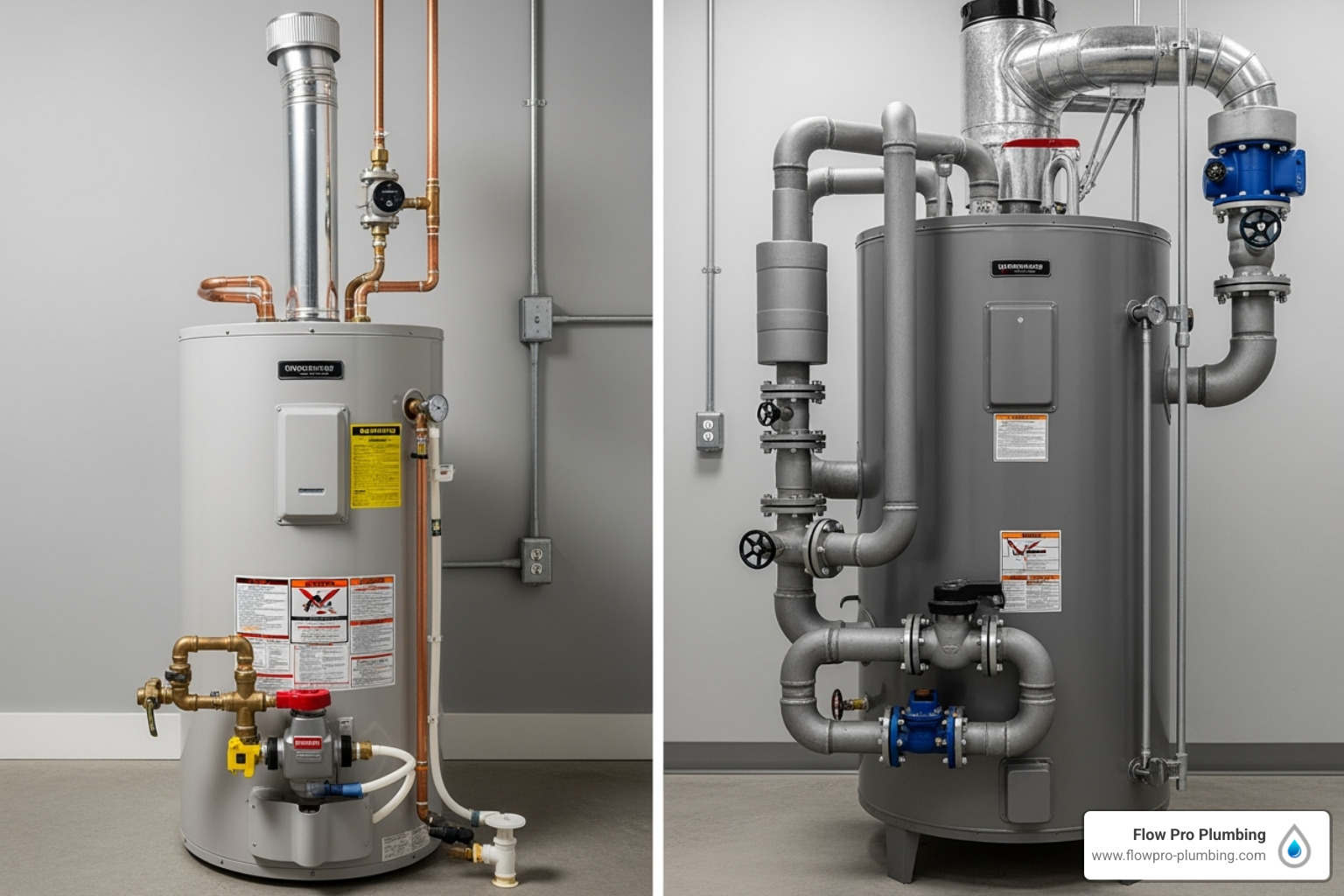
Your business doesn’t have that luxury. A restaurant, hotel, or gym has continuous, high-volume demand. That’s where a commercial water heater steps in. These systems are built with much higher BTU input ratings—some up to 1 million BTUs—to heat large volumes of water quickly. They also feature larger storage tanks (over 120 gallons) and superior recovery rates.
It’s not just about size. Commercial units have heavy-duty components designed for constant operation. Tank materials include advanced options like glass-on-steel with corrosion-resistant coatings (like Blue Diamond™ glass) and stainless steel for demanding applications. This durability is reflected in the warranty; commercial warranties are typically 1-5 years on parts, acknowledging their harder workload. They also meet stricter safety codes for venting, clearances, and safety shut-offs.
Key Differences at a Glance
When comparing residential to commercial water heater units, the differences are clear:
- Input Rating: Commercial units have significantly higher BTU (gas) or wattage (electric) ratings for faster heating.
- Recovery Rate: This measures how quickly hot water is replenished. Commercial systems excel here by design. This is also reflected in gallons per hour (GPH), the volume of hot water delivered during peak periods.
- Tank Construction: Commercial tanks use specialized materials like reinforced glass linings and commercial-grade stainless steel to resist corrosion and higher pressures.
- Warranty Terms: Warranties typically offer 1, 3, or 5-year coverage on parts, reflecting their durable engineering.
If you’re evaluating systems, we can help you understand which specifications matter most. Learn more about our water heater services and how we help businesses in Brentwood.
Typical Commercial Applications
A hardworking commercial water heater is essential for many businesses. Restaurants need constant hot water for sanitation and food prep to meet health codes. Hotels must supply showers, laundry, and kitchens simultaneously. Laundromats are non-stop hot water operations. Apartment buildings need centralized systems to handle peak demand from multiple units. Healthcare facilities have critical needs for sterilization and hygiene. Even office buildings and gyms require robust systems to support restrooms, kitchens, and showers, keeping customers and employees happy.
Exploring the Types of Commercial Water Heaters
Choosing the right commercial water heater involves matching the system to your business’s needs. The best choice depends on available fuel sources, space, budget, and your specific hot water demand.
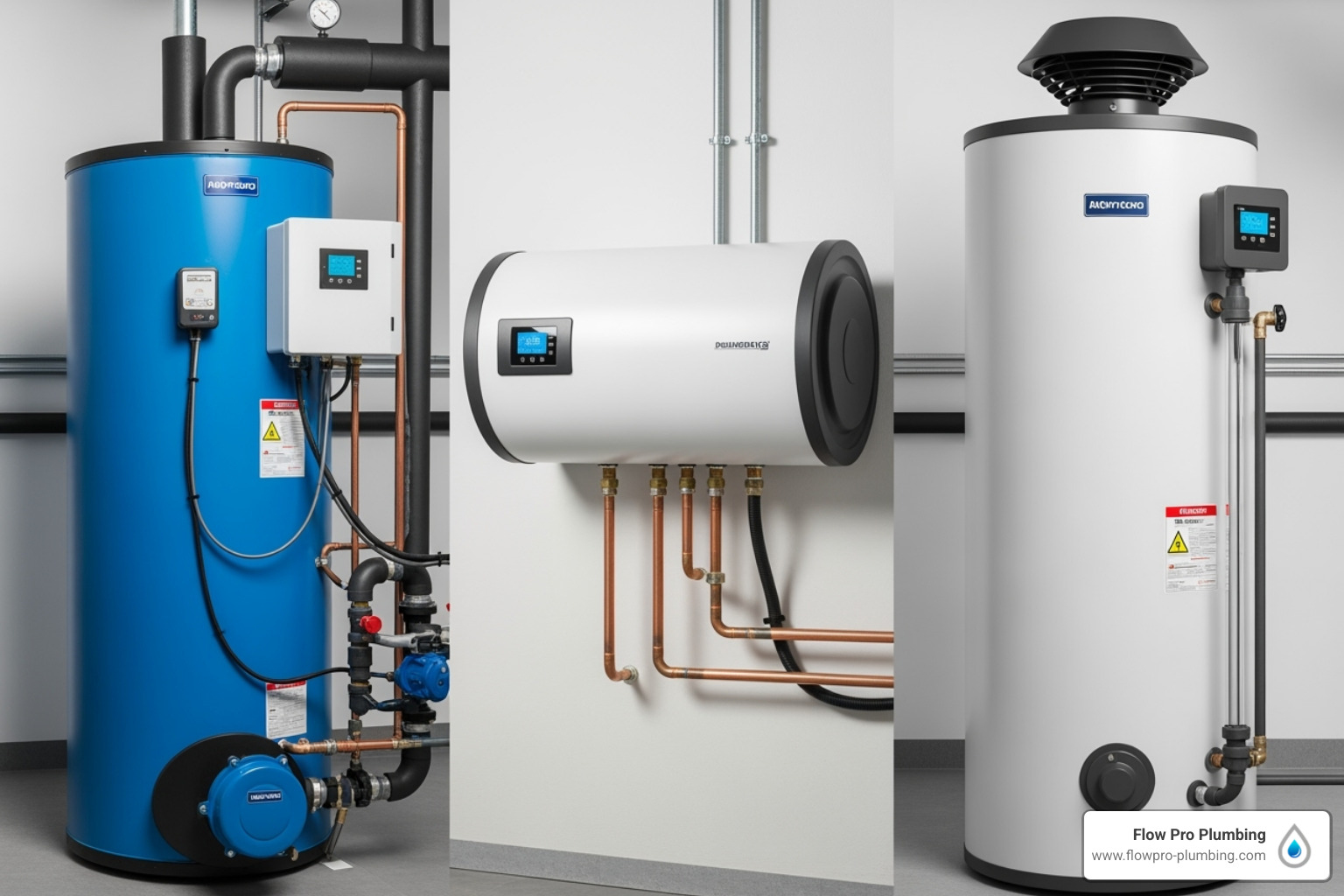
From traditional tanks to modern tankless technology, each type offers distinct advantages. Let’s review the main categories to find what works for your business.
Gas & Propane Heaters
For raw heating power and quick recovery, gas and propane systems are hard to beat.
- Storage tank models keep a large volume of hot water in reserve, ready for peak demand. They feature high recovery rates to quickly reheat the tank.
- Tankless models heat water instantly as it’s needed, making them powerful and space-efficient, especially in commercial kitchens.
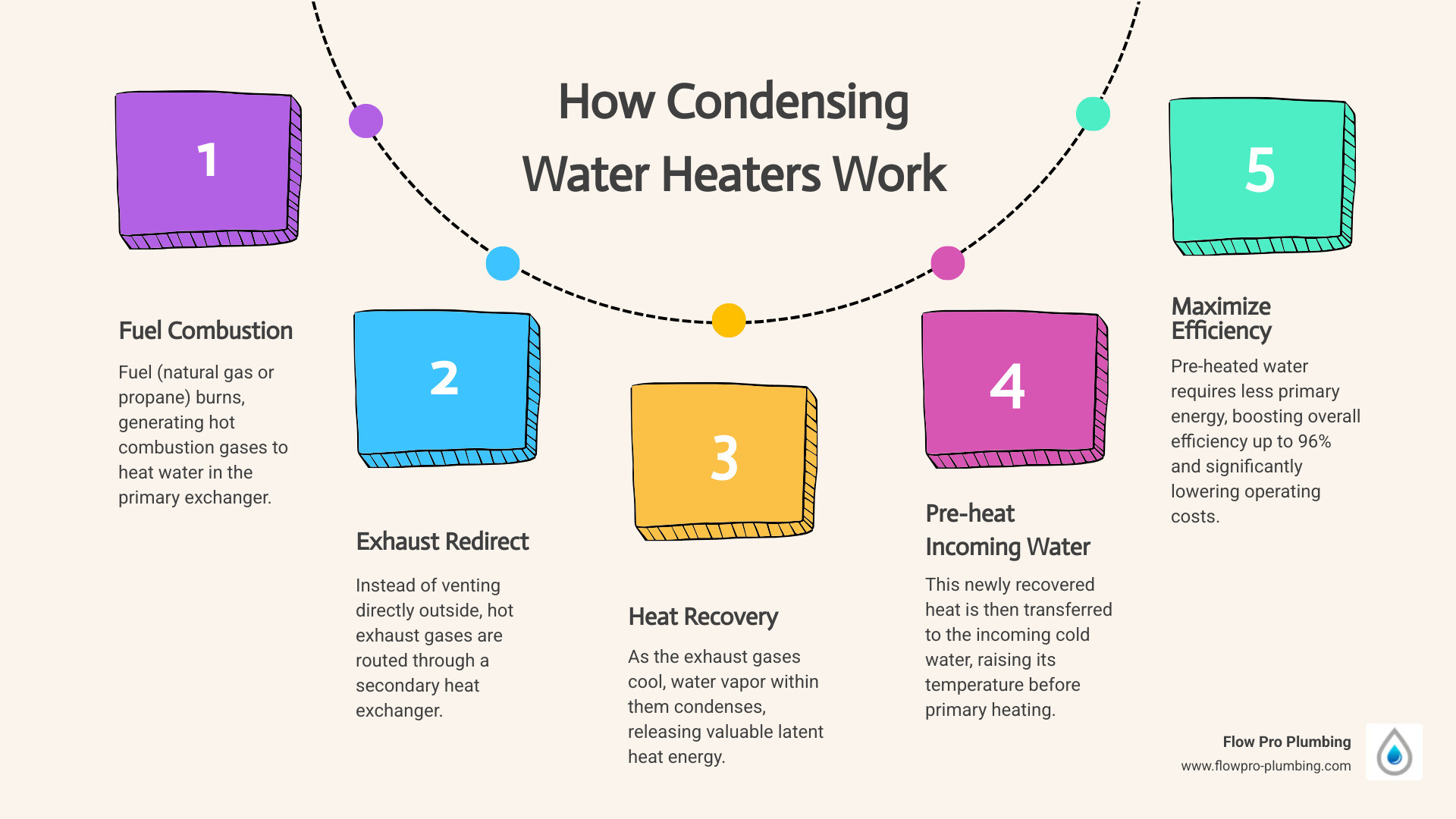
- Condensing units are highly efficient (up to 95% or more) because they capture extra heat from exhaust gases. While they cost more upfront, they offer significant energy savings.
- Venting requirements are critical for safety. Modern systems offer flexible options, often using PVC, CPVC, or ABS pipe, which allows for more versatile installation layouts.
Electric Heaters
When gas isn’t available, electric commercial water heater systems are a practical and reliable choice.
- Tank-style electric units store hot water and are simpler to install since they don’t require complex venting. Heavy-duty models offer large capacities and multi-phase power options.
- Heat pump hybrid models are a major leap in efficiency. They pull heat from the surrounding air to warm the water, using far less electricity than traditional resistance heaters.
- Point-of-use electric heaters are small, handy units for remote sinks, eliminating heat loss from long pipe runs.
- Voltage requirements vary widely (from 120V to 480V), so your electrician and plumber must ensure your building’s service can handle the chosen system.
Tankless (On-Demand) Heaters
Tankless technology is a rising star in the commercial water heater world, offering several key benefits:
- Continuous hot water: Since they heat on demand, you never run out of hot water, no matter how high the demand.
- Space-saving design: These compact, wall-mounted units free up valuable floor space.
- High energy efficiency: By eliminating standby heat loss (the energy wasted keeping stored water hot), ENERGY STAR certified tankless models significantly lower utility bills.
- Scalability with multiple units: For massive hot water needs, multiple tankless units can be linked in a rack system. This provides powerful, redundant, and virtually limitless hot water.
To learn more about this technology, see our guide on the Benefits of a Tankless Water Heater.
Key Factors for Selecting the Perfect Commercial Water Heater
Choosing the right commercial water heater is a critical decision that impacts your daily operations, energy bills, and customer satisfaction. Focusing on long-term value over upfront price is key to avoiding a system that’s wrong for your needs.

When you focus on the right factors, the selection process becomes much clearer.
Sizing and Capacity for Your Commercial Water Heater
Proper sizing is the most critical factor. An undersized unit will constantly run out of hot water, while an oversized one wastes energy. The key is to calculate your peak demand—the busiest period for hot water use. For tank systems, we analyze the First-Hour Rating (FHR) and storage volume (gallons). For tankless systems, we focus on the required Gallons Per Minute (GPM) flow rate. We also perform a fixture count (sinks, showers, dishwashers) to accurately calculate total demand and ensure you always have the hot water you need.
Choosing a Fuel Type
The fuel source for your commercial water heater affects performance and operating costs.
- Natural gas is often the most economical choice, offering powerful heating and fast recovery.
- Propane delivers similar performance where natural gas isn’t available, though it requires an on-site storage tank.
- Electricity is a great option when gas lines aren’t feasible. Electric heaters are simpler to install, but local utility rates should be considered.
We help you weigh local utility costs and existing infrastructure to find the most practical fuel type.
Understanding Efficiency Ratings for a Commercial Water Heater
An energy-efficient commercial water heater lowers your utility bills significantly over its lifespan.
- Thermal Efficiency (TE) measures how well a gas storage heater converts fuel to heat. Higher is better.
- Uniform Energy Factor (UEF) provides a more complete efficiency picture, accounting for standby and cycling losses.
- Coefficient of Performance (COPh) applies to heat pumps, measuring how much heat is produced per unit of electricity.
- Standby heat loss is the heat that escapes from a tank when not in use. Modern insulation and flue dampers minimize this.
We always recommend ENERGY STAR certified models, which meet strict EPA efficiency guidelines. You can Find ENERGY STAR Certified Commercial Water Heaters in their comprehensive database.
Maximizing Efficiency: Modern Technologies and Their Benefits
When running a business, every penny counts. The latest commercial water heater technologies are designed to operate smarter and more affordably, reducing both operating expenses and your environmental footprint.
High-Efficiency Technologies
Recent innovations are making a real difference for businesses.
- Condensing technology for gas units captures extra heat from exhaust gases, boosting efficiency ratings to 96% and lowering gas bills.
- Heat pump systems are an impressive electric option. They pull heat from the surrounding air and transfer it to the water, offering considerable energy savings.
- Modulating burners intelligently adjust their output based on real-time demand, providing consistent temperatures while saving energy.
- Improved insulation, such as 2-inch non-CFC polyurethane foam, significantly reduces standby heat loss, meaning the heater runs less often.
Key Features to Look For
Today’s commercial water heater systems include features that make them safer, smarter, and more durable.
- Ultra-Low NOx emissions are essential for meeting strict air quality regulations in areas like Contra Costa County and being an environmentally responsible business.
- Digital displays provide real-time status, temperature readings, and diagnostic codes for easier monitoring and troubleshooting.
- Leak detection and automatic shut-off systems can prevent catastrophic water damage by catching problems early.
- Glass-lined tanks with advanced coatings protect against corrosion and extend the unit’s life. Some systems also have self-cleaning features to reduce sediment buildup.
- Advanced safety features are standard, including flammable vapor sensors, dual air/fuel shut-off systems, and diagnostic LEDs to ensure safe, reliable operation and simplify maintenance.
These features protect your investment and keep your business running smoothly, meaning fewer emergencies and lower energy bills.
Professional Installation and Long-Term Maintenance
Even the best commercial water heater on the market will underperform if it’s installed incorrectly or neglected. Proper installation and consistent maintenance are essential for a reliable, long-lasting system. At Flow Pro Plumbing, our Water Heater Repair and Installation services ensure businesses in Contra Costa County get systems that work right from the start.
Installation Considerations
Installing a commercial water heater requires professional expertise to address several critical factors:
- Venting Requirements: Proper venting for gas units is crucial for safety to prevent carbon monoxide buildup. A professional ensures it’s configured correctly for your building.
- Gas Line Sizing: The gas line must be properly sized to provide adequate fuel flow for the unit’s BTU rating.
- Electrical Connections: Electrical systems must be wired to match the unit’s voltage and power requirements to prevent damage and fire hazards.
- Clearances: Specific clearances around the unit are required to prevent fires and allow for proper airflow and service.
- Expansion Tanks: These are essential to absorb pressure from heated water, protecting your water heater and entire plumbing system from damage.
Professional setup ensures compliance with all local codes and manufacturer specifications. Our Water Heater Installation Brentwood Guide provides more detail on our process.
Essential Maintenance for Longevity
Once your commercial water heater is installed, regular maintenance is key to its performance and lifespan.
- Regular Flushing: Removes sediment buildup that reduces efficiency and can corrode the tank. Our guide explains how often to drain your water heater.
- Anode Rod Inspection: This “sacrificial” rod corrodes to protect your tank. It should be inspected every 1-2 years and replaced when depleted.
- T&P Valve Testing: The temperature and pressure relief valve is a critical safety feature that should be tested annually.
- Burner Cleaning: For gas units, cleaning the burner ensures efficient combustion and prevents soot buildup.
- Professional Tune-ups: Annual inspections by a technician catch small issues before they become big problems, ensuring your system runs at peak efficiency.
Regular maintenance is an investment in reliability that saves you money on repairs and energy costs in the long run.
Conclusion: Ensuring Uninterrupted Hot Water for Your Operations
Your business depends on reliable hot water, and the right commercial water heater is essential to keep operations flowing smoothly. Choosing the best system means carefully considering sizing, fuel type, and efficiency ratings to meet your peak demand without wasting energy. Modern technologies like condensing units and heat pump systems, along with advanced safety and diagnostic features, offer significant improvements in performance, cost savings, and reliability.
However, even the best equipment requires professional installation and proactive maintenance—including regular flushing, inspections, and tune-ups—to ensure safety, longevity, and peak performance. A properly installed and maintained system prevents the costly breakdowns that can shut down your business.
At Flow Pro Plumbing, we’ve helped countless businesses throughout Contra Costa County find dependable commercial water heater solutions. From Brentwood to Oakley, Antioch to Findy Bay, we understand the unique demands of commercial operations. Our experienced team provides expert guidance, flawless installation, and proactive maintenance to keep your hot water flowing.
We’re your partners in keeping your business running smoothly. When you need professional guidance on your commercial water heater, we’re here with the expertise you can count on.
For expert advice and professional plumbing services for your business in Brentwood, CA, reach out to our team today.
Contact us for your commercial plumbing needs in Brentwood, CA