
Why Clogged Toilet Repair Matters for Every Homeowner
A clogged toilet repair is one of the most common plumbing emergencies, but knowing how to handle it can save you stress and time. While many clogs can be fixed with simple DIY methods, it’s crucial to understand when to call a professional.
Quick Steps for Clogged Toilet Repair:
- Stop the overflow – Turn off the water supply valve at the toilet base or lift the flapper inside the tank.
- Try plunging first – Use a flange plunger with 10-15 firm plunges to clear most clogs.
- Use a toilet auger – For stubborn clogs, feed a toilet snake into the drain and crank it to break up the blockage.
- Call a professional – If the clog persists, affects multiple drains, or causes gurgling sounds, you likely have a bigger issue.
The most common causes of clogs include flushing non-flushable items (wipes, paper towels), using too much toilet paper, foreign objects in the S-shaped trap, or blockages in the main sewer line.
At Flow Pro Plumbing, we combine honest education with practical solutions to solve clogged toilet repair challenges for homeowners in Brentwood, California, and the surrounding East Bay communities.

Handy clogged toilet repair terms:
Understanding the Cause: Why Your Toilet Keeps Clogging
When you flush, water from the tank rushes into the bowl, pushing waste through an S-shaped trap and into the drainpipe. A clogged toilet repair becomes necessary when something obstructs this flow. The system works well with just human waste and toilet paper, but it’s easy to disrupt.
Common reasons for clogs include:
- Non-flushable items: So-called “flushable” wipes are a primary offender. Unlike toilet paper, they don’t dissolve in water and accumulate in pipes.
- Excessive toilet paper: Using too much thick, quilted toilet paper at once can create a blockage in the trap.
- Low-flow toilets: Early water-saving models, particularly from the 1990s, may not generate enough pressure to clear the trap effectively, making them prone to clogs.
- Foreign objects: Small items like children’s toys, hair clips, or toothbrushes can easily get lodged in the S-shaped trap and cause an immediate blockage.
Understanding these causes is the first step toward prevention. For more insights, see our guide on common toilet problems.
Common Culprits Behind a Blocked Toilet
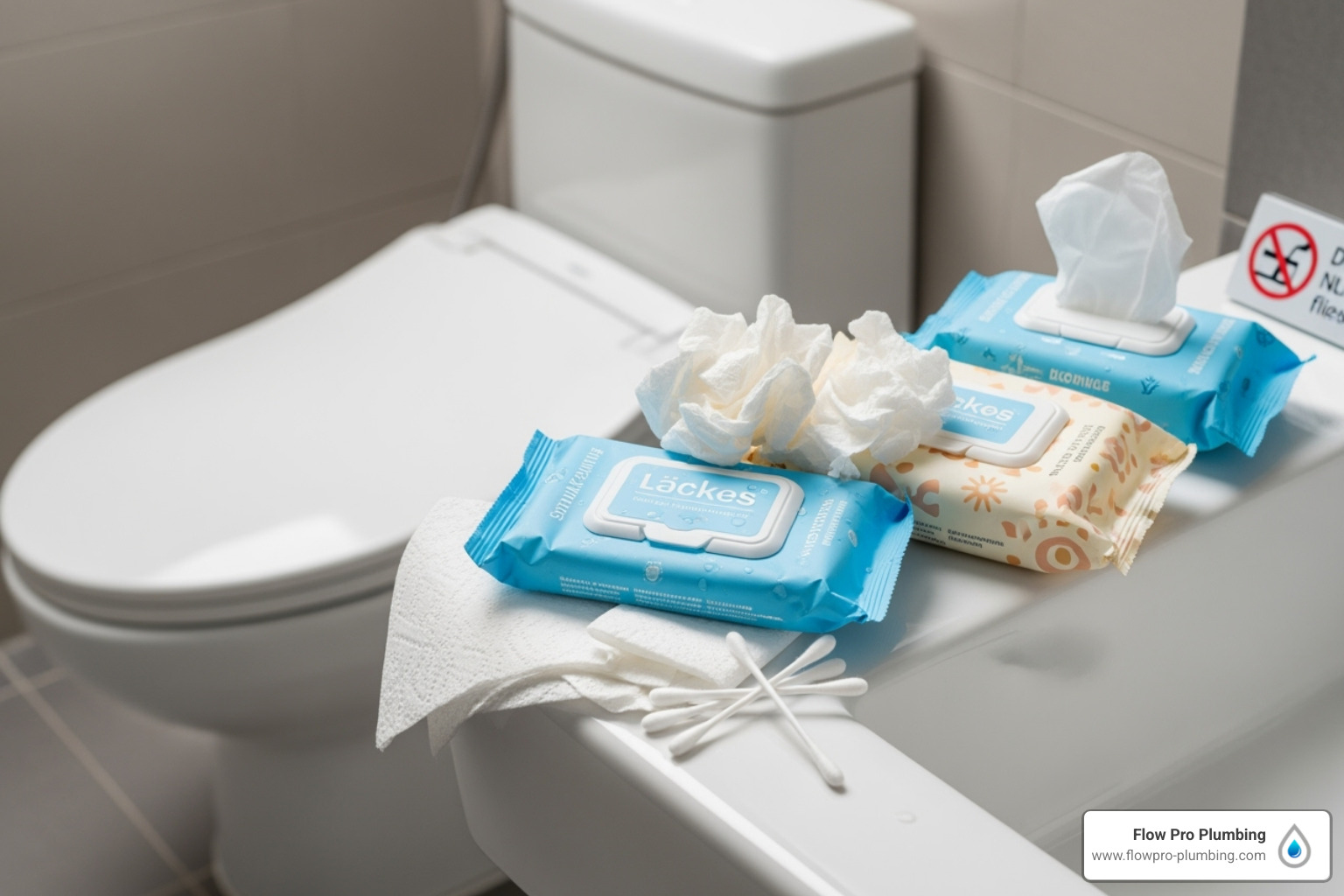
After years of clogged toilet repair work, we’ve seen it all. The golden rule is to only flush human waste and toilet paper. The following items are the usual suspects when a toilet backs up:
- Flushable wipes: They do not break down like toilet paper and are the number one cause of clogs we see.
- Paper towels: They are designed to be absorbent and strong when wet, which means they will not dissolve in your pipes.
- Feminine hygiene products: Tampons and pads are designed to absorb liquid and expand, making them a guaranteed clog risk.
- Cotton swabs and cotton balls: These items don’t dissolve and can snag in pipes, catching other debris and forming a larger blockage.
- Dental floss and hair: Both are non-biodegradable and can create dense, net-like tangles that trap other waste.
- Children’s toys: A small toy can create an immediate and complete blockage.
- Grease and oil: While not flushed directly, grease from sinks can solidify in your main drain lines and contribute to blockages.
The bottom line: If it’s not human waste or toilet paper, put it in the trash can.
Is it Just the Toilet or a Bigger Issue?
Sometimes a simple clog is a sign of a larger plumbing problem. Recognizing these warning signs can help you avoid serious water damage.
- Gurgling sounds: If your toilet gurgles when you use a nearby sink or shower, it indicates negative air pressure in your drain lines, often pointing to a blocked plumbing vent or a clog forming in the main sewer line.
- Multiple drains are clogged: If your sink, shower, and toilet are all backing up, the blockage is likely in your main drainpipe, affecting all connected fixtures.
- Slow draining sinks or showers: Along with a struggling toilet, this suggests a partial obstruction in your main sewer line.
- Foul sewer gas odor: This smell indicates a breach in your drainage system or a clog that’s allowing gases to escape back into your home.
- Blocked plumbing vent: A vent pipe on your roof allows air into the drain system. If blocked by leaves or debris, it can cause slow draining and gurgling. This repair is best left to professionals.
- Main sewer line problem: This is the most serious issue. If water backs up into your shower or tub when you flush the toilet, it’s almost always a main sewer line clog caused by tree roots, collapsed pipes, or major buildup.
If you notice any of these signs, it’s time to call a professional. We have specialized camera inspection tools to accurately diagnose the problem.
Your Guide to DIY Clogged Toilet Repair
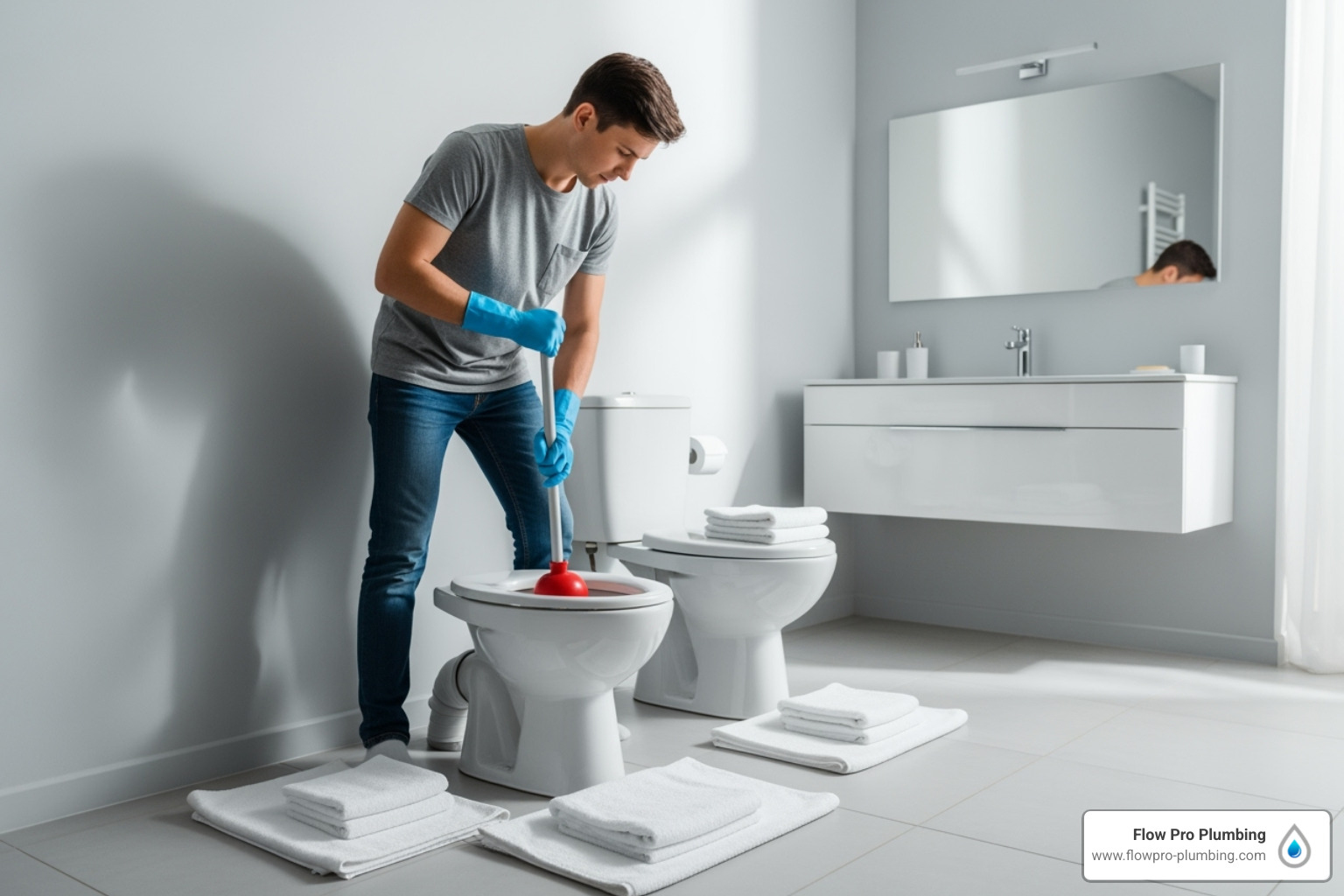
When you flush and the water rises, don’t panic. Most clogged toilet repair situations are manageable with the right tools and techniques.
First, prepare your workspace. Put on rubber gloves and place old towels around the base of the toilet to catch any splashes. If the water is close to overflowing, immediately turn off the water supply valve on the wall behind the toilet (turn it clockwise). Alternatively, open the tank lid and press down the flapper valve to stop more water from entering the bowl.
While many clogs can be cleared at home, be aware of the risks. Plunging too aggressively can damage the toilet’s seal, and chemical drain cleaners can corrode pipes. If you’re uncertain, calling a professional is the safest option.
The Plunger: Your Go-To Tool for Clogged Toilet Repair
A plunger is your best tool, but you need the right kind: a flange plunger. It has an extended rubber lip that creates a tight seal in the toilet drain, unlike a flat-bottomed sink plunger.
To use it effectively:
- Ensure there’s enough water in the bowl to cover the plunger’s bell.
- Place the plunger over the drain hole, with the flange inside, to create a complete seal.
- Push down slowly, then pull back sharply to create pressure and suction. Repeat this motion 10 to 15 times.
- Lift the plunger. If the water drains, you’ve succeeded. Give it a test flush. If not, try another round of plunging.
For more tips, check out our guide on plunger tips and tricks.
How to Unclog a Toilet Without a Plunger
If you don’t have a plunger, you can try a few household remedies.
- Dish Soap and Hot Water: Pour about half a cup of liquid dish soap into the bowl to act as a lubricant. After 20-30 minutes, carefully pour a gallon of hot (not boiling) water into the bowl from waist height. The force and heat can often dislodge the clog.
- Baking Soda and Vinegar: Pour one cup of baking soda into the toilet, followed by two cups of white vinegar. The fizzing reaction helps break down organic matter. Let it sit for at least 30 minutes before flushing with hot water.
- Chemical Drain Cleaners: Use these as a last resort. They contain harsh chemicals that can damage pipes and are harmful to septic systems. If you must use one, choose a product specifically for toilets, ensure proper ventilation, and follow the instructions exactly. Never mix different chemical products.
This article on 5 ways to unclog a toilet offers other helpful methods.
Using a Toilet Auger for Stubborn Clogs

For deep or stubborn clogs, a toilet auger (or plumbing snake) is the next step. It’s a flexible cable designed to steer the toilet’s trap without scratching the porcelain, thanks to a protective rubber sleeve.
- Insert the auger’s tip into the drain opening.
- Gently feed the cable in until you feel resistance from the clog.
- Crank the handle clockwise while pushing forward. This motion will either break up the clog or hook onto it.
- If you’ve snagged the obstruction, carefully pull the cable back to retrieve it. If you’ve broken it up, the toilet should now flush.
- Flush the toilet to ensure the drain is clear.
Using an auger can be messy, so keep gloves on and towels handy. For more detailed steps, see our guide on how to unclog a toilet.
When DIY Isn’t Enough: Calling a Professional Plumber
There’s a fine line between a simple DIY fix and a problem that requires professional help. Knowing when to call a plumber for clogged toilet repair can prevent a minor issue from becoming a major one.
It’s time to call for help if:
- Your toilet repeatedly clogs despite your efforts.
- Water backs up in your shower or tub when you flush the toilet.
- Multiple drains in your home are clogged or slow.
- You’ve tried plunging and augering without success.
Attempting to force a fix can lead to bigger problems, like a cracked toilet, damaged pipes, or significant water damage. There’s also a safety risk when dealing with wastewater backups. When you call a professional from Flow Pro Plumbing, you get an expert diagnosis, specialized equipment, and a long-term solution.
We identify the root cause of the clog and provide honest advice to prevent it from happening again. Our experienced plumbers in Brentwood, CA, are ready to solve the problem efficiently and leave your plumbing working better than before.
The Professional Clogged Toilet Repair Process
When you call us for a tough clogged toilet repair, we follow a methodical process to fix the problem correctly.
- Expert Diagnosis: We start by discussing the issue with you and inspecting the toilet and nearby fixtures to understand the scope of the problem.
- Camera Inspection: For persistent clogs, we use a specialized drain camera to see inside your pipes. This lets us identify the exact cause, whether it’s tree roots, a collapsed pipe, or severe buildup, eliminating guesswork.
- Professional Augering: Our commercial-grade augers are more powerful than DIY versions and can clear deep blockages without damaging your pipes.
- Hydro Jetting: For the most stubborn clogs, like grease or root intrusion, we use hydro jetting. This process blasts high-pressure water through your pipes, scouring them clean and restoring full flow.
After clearing the blockage, we test everything thoroughly to ensure the problem is resolved and provide advice on preventing future clogs. Learn more about our solutions for severely clogged toilets.
Signs You Have a Blocked Plumbing Vent or Main Line
Sometimes a clogged toilet points to a larger system-wide issue. A blocked plumbing vent or a main sewer line clog can cause widespread problems. Here are the key warning signs:
- Multiple Fixtures Affected: If your toilet, sinks, and shower are all draining slowly or backing up, the problem is likely in the main sewer line they all share.
- Gurgling Noises: Hearing gurgling from a drain when you use another fixture is a classic sign of a blocked vent or main line, as air struggles to move through the system.
- Water Backing Up: If flushing the toilet causes water to appear in your shower or tub (the lowest drain in the house), you almost certainly have a main sewer line blockage. Stop using all water and call a plumber immediately.
- Unpleasant Odors: A persistent sewer gas smell from multiple drains means the blockage is preventing gases from venting properly.
These symptoms require immediate professional attention to prevent a full-blown sewage backup. For more information, see this resource on 10 Reasons Your Toilet Keeps Clogging and How to Fix It.
How to Prevent Toilet Clogs in the Future
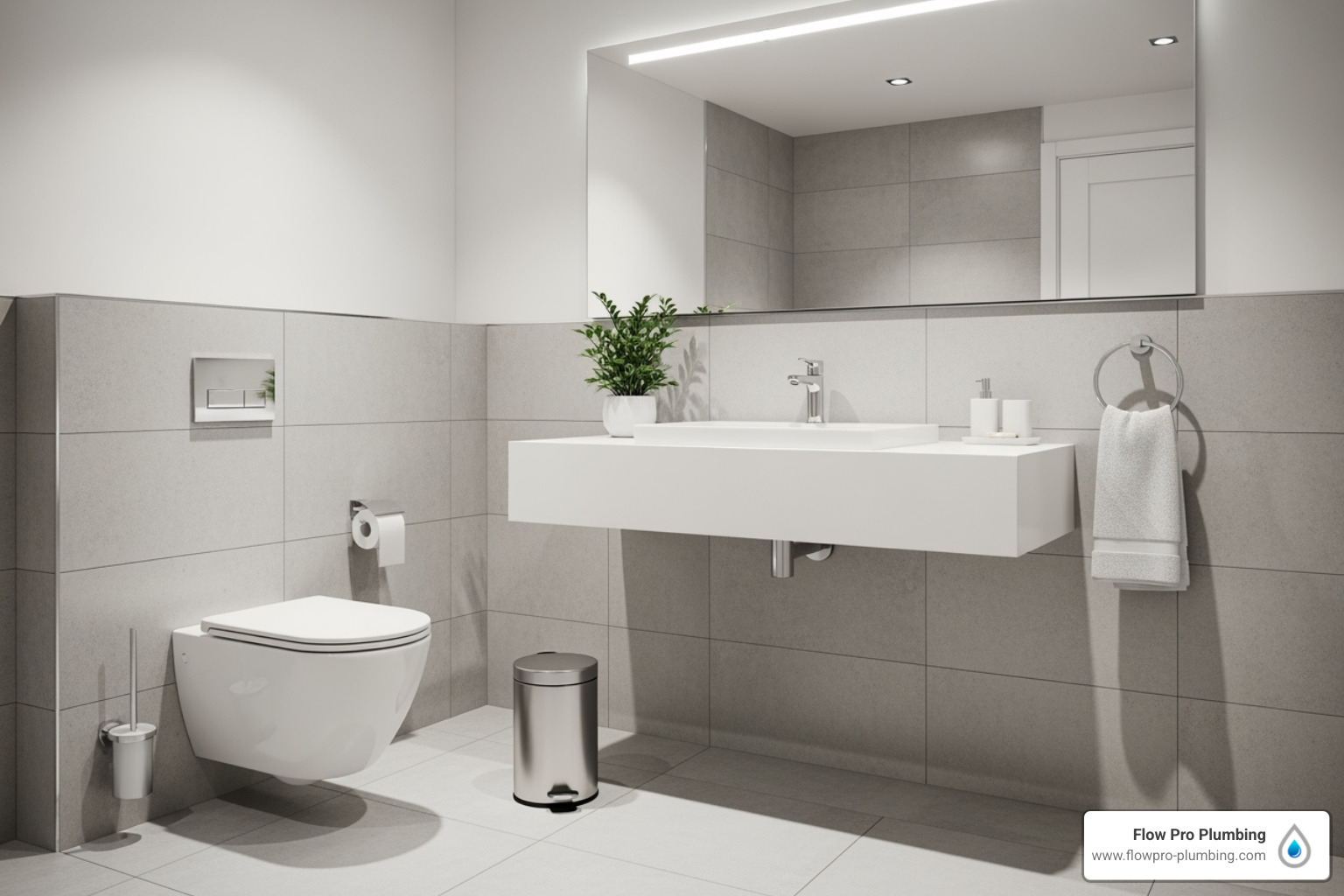
The best way to handle a clogged toilet repair is to prevent the clog in the first place. Most clogs we see at Flow Pro Plumbing are avoidable with a few simple habits.
Start by educating everyone in your household that only human waste and toilet paper should be flushed. Placing a trash can next to every toilet provides a convenient alternative for non-flushable items. Also, consider a “courtesy flush”—flushing once for waste and again for paper—to avoid overwhelming the drain, especially with older toilets.
For more strategies, see our guide on how to prevent common toilet clogs.
What NOT to Flush Down the Toilet
The vast majority of clogs are caused by flushing the wrong things. To avoid an emergency call, never flush these items:
- Wipes: Even if labeled “flushable,” they don’t break down and are a primary cause of clogs.
- Paper Towels & Diapers: These are designed to be absorbent and strong, meaning they will block your pipes.
- Feminine Hygiene Products: Tampons and pads expand in water and will cause stubborn blockages.
- Cotton Balls & Swabs: They don’t dissolve and can snag in pipes, collecting debris.
- Dental Floss & Hair: These create net-like tangles that trap other waste.
- Grease & Oil: They solidify in pipes, creating a sticky surface that builds into a major clog.
- Medications, Food Scraps, & Kitty Litter: These contaminate water, attract pests, or harden in pipes.
The rule is simple: if it’s not human waste or toilet paper, it belongs in the trash.
Toilet Maintenance and Best Practices
Regular maintenance can keep your toilet flushing powerfully and prevent clogs.
- Use Toilet Paper Wisely: Use only as much as you need. For larger amounts, use the double-flush method.
- Clean the Rim Jets: The small holes under the toilet rim can get clogged with mineral deposits, reducing flushing power. Clean them every few months with a small brush and vinegar to dissolve buildup.
- Consider an Upgrade: If you have an older, frequently clogging toilet, consider upgrading to a modern high-efficiency model. Look for toilets with a high MaP (Maximum Performance) score, which indicates superior waste removal.
- Improve Your Diet: A diet high in fiber and water can produce waste that is easier for your plumbing system to handle, indirectly helping to prevent clogs.
These simple habits can ensure your toilet works reliably. For more tips, see our toilet installation and repair advice.
Frequently Asked Questions about Clogged Toilets
As plumbers serving Contra Costa County, we hear a lot of the same questions about toilet troubles. Here are answers to some of the most common concerns.
Why does my toilet gurgle when I flush it or use other drains?
A gurgling sound indicates negative air pressure in your drain lines. It’s often caused by a blocked plumbing vent on your roof or a partial clog forming in your main sewer line. This is an early warning sign of a larger issue that needs professional attention before it worsens.
Can “flushable” wipes really cause a clog?
Yes, absolutely. Despite marketing claims, “flushable” wipes do not disintegrate in water like toilet paper. They are a leading cause of stubborn clogs in both home plumbing and municipal sewer systems. We constantly remove masses of these wipes from drains. Always dispose of them in the trash.
My toilet is constantly running. How do I fix it?
A running toilet wastes a significant amount of water and can weaken your flush over time, making clogs more likely. The most common causes are:
- A faulty flapper: The rubber seal at the bottom of the tank may be worn or warped, allowing water to leak into the bowl.
- Incorrect water level: If the water in the tank is too high and overflows into the overflow tube, the fill valve will run constantly.
- A malfunctioning fill valve: The mechanism that refills the tank may not be shutting off properly.
Replacing a flapper or adjusting the float on the fill valve are often simple DIY fixes. If the problem persists, the fill valve may need to be replaced. For a detailed walkthrough, read our article Why Does My Toilet Keep Running?. If you’re not comfortable with the repair, we are happy to help.
Keep Your Plumbing Flowing Smoothly
We hope this guide has made you feel more confident about handling clogged toilet repair. For many simple blockages, a plunger or toilet auger is all you need. However, the best strategy is always prevention. By educating your household on what not to flush and performing simple maintenance, you can avoid most clogs.
It’s just as important to recognize when a problem is too big for a DIY fix. Recurring clogs, gurgling sounds from multiple drains, or water backing up in your tub are all warning signs of a more serious issue, such as a blocked plumbing vent or a main sewer line problem. Attempting to fix these complex issues yourself can lead to costly damage.
At Flow Pro Plumbing, we have served homeowners in Brentwood, CA, and throughout Contra Costa County, including Oakley, Antioch, and Concord, for years. Our experienced team uses advanced tools like drain cameras and hydro jetting to resolve even the toughest clogs safely and effectively. We diagnose the root cause and provide honest advice to prevent future problems.
For persistent clogs or signs of a main line issue, professional drain cleaning is the best way to protect your home and restore your peace of mind. Don’t let a stubborn toilet disrupt your life.
If you’re facing a plumbing problem that’s beyond your DIY skills, we’re here to help. Contact us for expert drain cleaning services in Oakley, CA, or any of our service areas, and we’ll get your plumbing flowing smoothly again.