
What California Water Conservation Requirements for Homeowners Actually Mean for You
California water conservation requirements for homeowners cover a set of statewide rules, local ordinances, and efficiency standards that govern how you use water inside and outside your home. Here is a quick breakdown of what you need to know:
- Wasteful outdoor use is prohibited – This includes irrigation that causes runoff onto sidewalks or streets, hosing down driveways, and watering within 48 hours of a quarter-inch of rainfall
- Decorative fountains must use recirculating pumps – no letting potable water flow and drain
- Fines can reach $500 per day for violations under 23 CCR § 995
- HOAs cannot fine you for reducing lawn watering during a declared drought emergency under the Davis-Stirling Act (Civil Code 4735)
- Indoor efficiency targets set by SB 1157 are tightening – dropping to 47 gallons per person per day by 2025, then 42 by 2030
- Local rules may be stricter than state minimums – always check with your water supplier
These rules apply whether you are dealing with a full “drought emergency” or simply trying to stay compliant year-round. And with California experiencing only one wet year out of every three on average, these are not temporary inconveniences—they are the new normal.
Have you ever walked past a sprinkler soaking the sidewalk more than the grass, or left the tap running while brushing your teeth? Those everyday habits are exactly the kind of water waste California’s regulations are designed to eliminate—and the kind that can quietly add up to hundreds of wasted gallons each week.
I’m Jesse Delgado, owner of Flow Pro Plumbing in Brentwood, California, and I’ve spent years helping East Bay homeowners navigate california water conservation requirements for homeowners through smarter plumbing choices—from fixing silent leaks to upgrading fixtures that cut water use without cutting comfort. In this guide, I’ll walk you through what the law actually requires, what the penalties look like, and what practical steps you can take starting today.

Current California Water Conservation Requirements for Homeowners
In California, water isn’t just a utility; it’s a shared, precious resource. Because our climate often swings between extreme dry spells and heavy rains—a phenomenon known as “weather whiplash”—the state has moved toward making conservation a permanent way of life.
The foundation of these rules is found in 23 CCR § 995, which outlines “Wasteful and Unreasonable Water Uses.” These aren’t just suggestions; they are legally enforceable prohibitions. For instance, you cannot use a hose to wash a vehicle unless that hose is fitted with a shut-off nozzle. You are also prohibited from using potable (drinking) water to wash down driveways, sidewalks, or other hard surfaces unless it is strictly necessary for health or safety reasons.
When it comes to your home’s exterior, decorative water features like fountains must use a recirculating pump. If you have a fountain that simply sprays water into a drain, you are technically in violation of state law. Furthermore, homeowners must be mindful of Local Plumbing Codes & Regulations that may dictate how new fixtures are installed to ensure maximum efficiency.
One of the most common violations we see in areas like Antioch and Oakley is “incidental runoff.” This is water that leaves your property and flows onto the sidewalk or street because of a broken sprinkler head or an improperly timed irrigation system. While the law allows for tiny, unintended drips, excessive runoff caused by negligence or poor design is a major no-no. We often get asked, Is Tap Water Safe to Drink? in relation to these rules. Yes, it is, but because it is treated to such high standards, the state views wasting it on a sidewalk as a serious misuse of public resources.
Understanding Wasteful Water Use and Penalties
To help you stay on the right side of the law, it helps to see exactly what is allowed versus what is prohibited.
| Prohibited Use | Allowed Use |
|---|---|
| Watering lawns during or within 48 hours of 0.25″ of rain. | Watering established trees even during drought. |
| Washing driveways/sidewalks with a hose. | Using a broom to clean hard surfaces. |
| Hosing a car without a shut-off nozzle. | Using a bucket or a self-closing nozzle. |
| Allowing irrigation to run off onto the street. | Drip irrigation that stays within the soil zone. |
| Using non-recirculating decorative fountains. | Fountains that recycle their own water. |
One specific rule that catches many homeowners off guard is the 48-hour rain rule. If the National Weather Service or a local station records at least 0.25 inches of rainfall, you must turn off your sprinklers for the duration of the rain and for 48 hours afterward.
The Cost of Non-Compliance
Violating these california water conservation requirements for homeowners isn’t just bad for the environment; it can be bad for your wallet. Under Water Code Section 1058.5, violations are considered infractions. Local authorities or the State Water Board can issue fines of up to $500 for each day the violation occurs.
In cities like Norco or Santa Barbara, enforcement can be even stricter during declared emergencies, with leak repair timelines often set at 72 hours once you’ve been notified. If you have a pipe leak, it’s not just the water bill you have to worry about; How Acidic Water Affects Plumbing can lead to pinhole leaks that, if left unaddressed, could eventually result in a municipal fine for water waste.
HOA Protections and California Water Conservation Requirements for Homeowners
For a long time, homeowners in managed communities felt stuck between a rock and a hard place: the state told them to save water, but their Homeowners Association (HOA) threatened to fine them if their lawn turned brown. Thankfully, California law has stepped in to protect you.
The Davis-Stirling Act and Your Rights
The Davis-Stirling Act (specifically Civil Code 4735) is your primary shield. Under this law, and further bolstered by AB 2100 and SB 992, an HOA cannot fine a homeowner for reducing or eliminating the watering of vegetation or lawns during a declared drought emergency.
Even after the emergency ends, HOAs are prohibited from requiring you to remove water-efficient landscaping that you installed during the drought. They also cannot prevent you from using low-water plants or synthetic turf. If you are considering these upgrades, you might also look into the Benefits of a Water Softener to protect your new high-efficiency irrigation valves from mineral buildup.
Sustainable Landscaping Under California Water Conservation Requirements for Homeowners
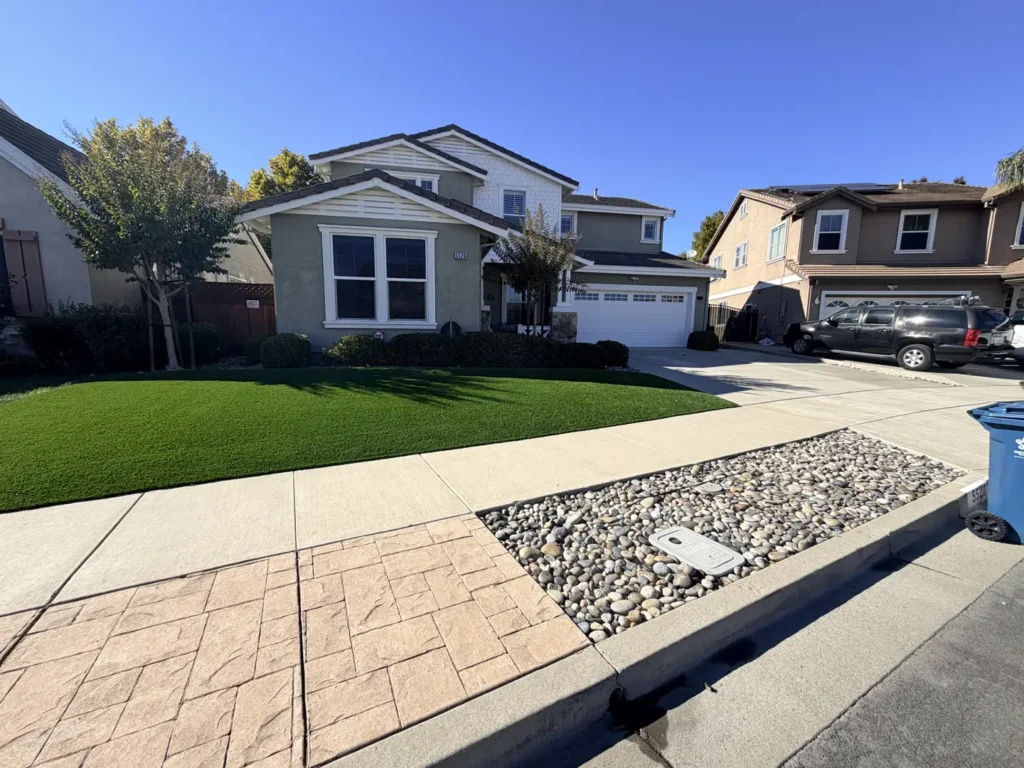
The state is heavily pushing for the removal of “non-functional turf”—that’s the grass you never walk on but still have to mow and water. Replacing this with native species is one of the best ways to comply with california water conservation requirements for homeowners.
A key strategy we recommend is the use of mulch. Statistics show that mulch retains roughly twice as much moisture as average garden dirt. By applying three inches of mulch to your shrub beds, you can cut your outdoor water needs significantly. For more inspiration, check out our World Environment Day: Tips to Save Water and Money post, which dives deeper into sustainable yard practices.
Indoor Efficiency and Long-Term Infrastructure Standards
While outdoor use accounts for about 50% of a home’s water footprint, indoor efficiency is where the state is setting its sights for the next decade. SB 1157 has established new targets for “Gallons Per Capita Daily” (GPCD).
The standard is currently 55 gallons per person per day, but it is scheduled to drop to 47 GPCD by 2025 and down to 42 GPCD by 2030. While these targets are generally measured at the “supplier” level (meaning your city has to meet them), they will eventually trickle down to homeowners through stricter building codes and fixture requirements.
Modern Fixtures and California Water Conservation Requirements for Homeowners
To meet these tightening standards, many Brentwood and Pittsburg residents are upgrading to high-efficiency fixtures.
- Low-flow toilets: Older models can use 3.5 to 7 gallons per flush, while modern high-efficiency versions use 1.28 gallons or less.
- Showerheads: Cutting your shower time by just two minutes can save 1,750 gallons of water per year.
- Dishwashers: It’s a common myth that hand-washing is better. An Energy Star dishwasher uses about 4 gallons per load, whereas hand-washing can use up to 24 gallons!
Installing simple faucet aerators is another “quick win.” These small mesh screens mix air with the water stream, giving you the same pressure while using significantly less water. If you’re upgrading your fixtures, it’s also a great time to ask, Is Home Water Filtration Worth It? to ensure your new high-efficiency appliances stay free of sediment.
Leak Detection and Plumbing Maintenance
A single drip every second adds up to five gallons of water lost every day. Over a year, that’s nearly 2,000 gallons wasted.
- The Toilet Dye Test: Put a few drops of food coloring in your toilet tank. If the color appears in the bowl after 15 minutes without flushing, you have a “silent leak” that is wasting money.
- Septic Health: For our neighbors in more rural areas like Byron or Bethel Island, maintaining your septic system is a form of conservation. A well-maintained system recycles water back into the groundwater efficiently.
Outdoor Irrigation Strategies and Local Variations
The State Water Board’s Resolution 2024-0019, also known as “Making Conservation a California Way of Life,” is the newest framework for long-term water security. It encourages “climate-ready” landscapes that use compost, mulch, and deeply rooted plants.
In our service area—from Concord to Discovery Bay—local water districts may implement their own “levels” of conservation. For example, some cities use a 5-level system:
- Level 1: Voluntary reductions.
- Level 2: Mandatory limits (e.g., watering only 2-4 days a week, before 8 a.m. or after 8 p.m.).
- Levels 3-5: Increasing restrictions, potentially banning all outdoor potable water use for lawns.
Smart, weather-based irrigation controllers are a game-changer here. These systems use local weather data to skip watering cycles when rain is in the forecast or when the soil is already moist. Because as much as 50% of outdoor water is lost to wind or evaporation, timing your irrigation for the early morning hours is one of the simplest ways to comply with california water conservation requirements for homeowners.
Frequently Asked Questions about California Water Laws
Can my HOA fine me for a brown lawn during a drought?
No. Under the Davis-Stirling Act (Civil Code 4735), HOAs are prohibited from fining residents who reduce or eliminate lawn watering during a state-declared drought emergency. They also cannot force you to “reverse” water-efficient landscaping once the drought ends.
How much rain triggers the 48-hour irrigation ban?
The statewide standard is 0.25 inches (a quarter-inch) of rain. If it rains this much, you must wait at least 48 hours after the rain stops before turning your sprinklers back on. This prevents “runoff” waste when the ground is already saturated.
What are the new indoor water use standards for 2025?
Starting in 2025, the state target for indoor residential use drops to 47 gallons per capita daily (GPCD). By 2030, this will drop further to 42 GPCD. While homeowners aren’t usually fined individually for exceeding this, your local water provider may offer incentives or rebates to help you install the low-flow fixtures needed to meet these goals.
Conclusion
Navigating california water conservation requirements for homeowners can feel like a full-time job, but it’s really about making small, sustainable changes that protect our local environment. Whether it’s upgrading to a high-efficiency toilet, fixing a leaky faucet, or finally swapping that thirsty front lawn for beautiful native shrubs, every drop counts.
At Flow Pro Plumbing, we take pride in being the Brentwood plumbing experts our community trusts. From Discovery Bay to Walnut Creek, our team is here to help you future-proof your home. We don’t just fix pipes; we help you build a more water-secure future for your family. By staying on top of Local Plumbing Codes & Regulations and investing in smart upgrades, you can ensure your home remains compliant, efficient, and comfortable for years to come.
If you’re ready to upgrade your home’s efficiency or need a professional eye to spot those hidden leaks, give us a call. We’re your neighbors, and we’re here to help make conservation a way of life in the East Bay!