
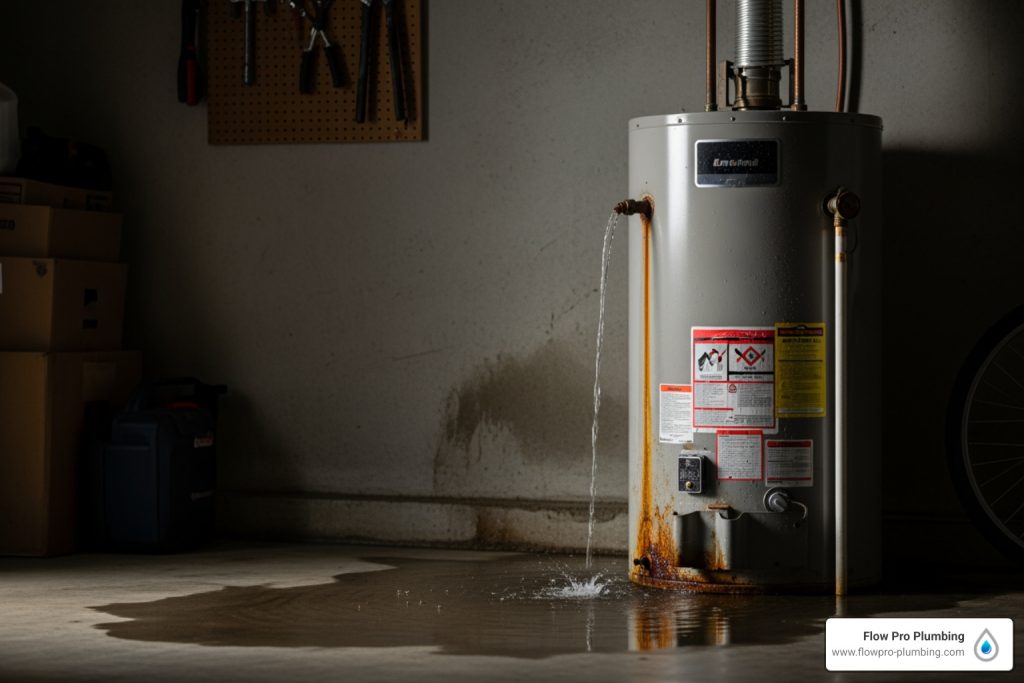
When a Hot Water Heater Leaking in Brentwood, CA Needs Your Immediate Attention
A hot water heater leaking in Brentwood, CA can turn your morning routine upside down and threaten your home with water damage, mold growth, and costly repairs. Whether you’re dealing with a slow drip or a growing puddle around your tank, acting fast is essential to protect your property and restore your hot water supply.
Quick Action Steps for a Leaking Water Heater:
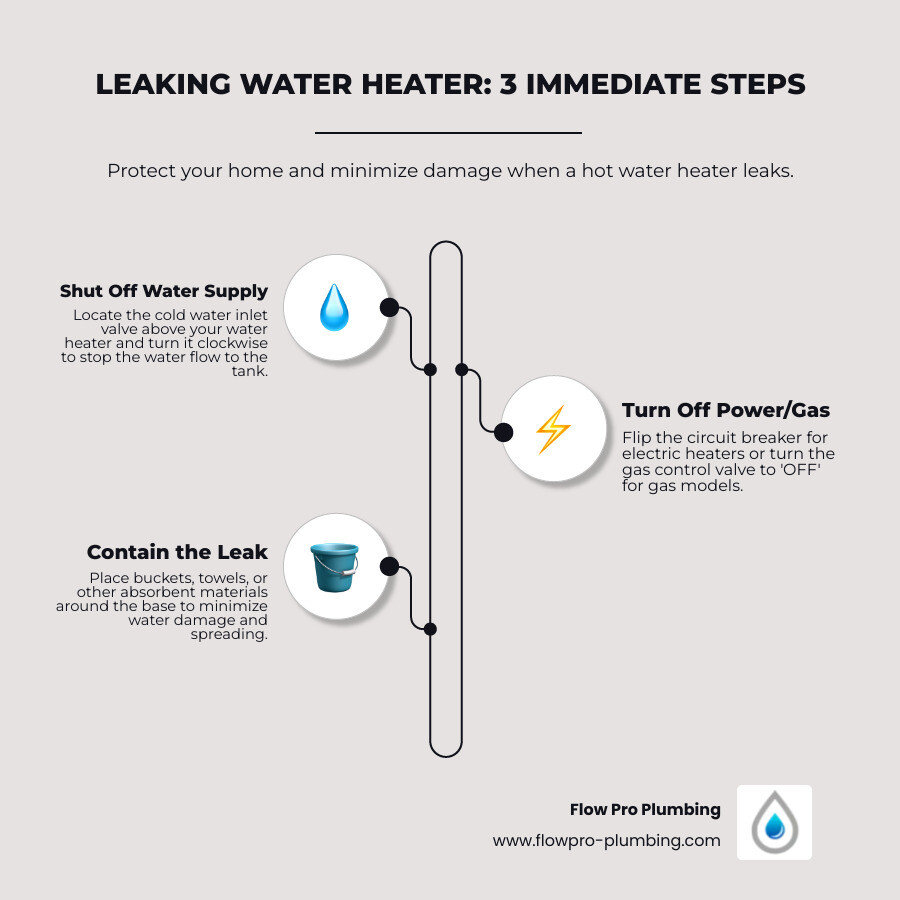
- Shut off the water supply – Turn the cold water inlet valve clockwise to stop water flow to the tank
- Cut the power – Flip the circuit breaker for electric heaters or turn the gas control valve to “off” for gas models
- Contain the leak – Place towels or a bucket under the leak to minimize water damage
- Call a professional – Contact a licensed plumber for proper diagnosis and repair
If you’re experiencing residential plumbing issues beyond your water heater, or need immediate help, schedule a water heater repair service with Flow Pro Plumbing today.
A leaking water heater isn’t just an inconvenience—it’s a warning sign that demands attention. Brentwood’s hard water can accelerate sediment buildup and corrosion inside your tank, making local homes especially vulnerable to leaks. Ignoring even a small drip can lead to a catastrophic tank failure, releasing 40 to 80 gallons of water into your garage or utility room. Understanding where leaks come from and knowing what to do when you spot one can save you thousands in water damage and replacement costs.
I’m Jesse Delgado, owner of Flow Pro Plumbing in Brentwood, and I’ve seen how quickly a minor hot water heater leaking in Brentwood, CA can escalate into a major home emergency. Over the years, I’ve helped countless homeowners diagnose leak sources, make informed repair-or-replace decisions, and restore their hot water supply with minimal disruption.
Diagnosing a Hot Water Heater Leaking in Brentwood, CA
Finding a puddle of water around your water heater is rarely a good sign, but it’s the first clue that something is amiss. Before panic sets in, it’s important to know what to look for and what these signs might tell us about the problem. Beyond visible puddles, there are other indicators that your water heater might be struggling with a leak or on the verge of one.
You might notice a persistent dampness on the floor, even if there isn’t a large puddle. This could indicate a very slow leak that’s evaporating, or seeping into the surrounding material. Keep an eye out for strange noises coming from the unit, such as popping, banging, or hissing. These sounds often point to sediment buildup at the bottom of the tank, which can lead to corrosion and, eventually, leaks. Rusty or discolored water from your hot water taps is another red flag, suggesting internal corrosion within the tank itself. Finally, a noticeable drop in hot water pressure could signal a blockage or an internal issue that’s compromising the integrity of the system.
In areas like Brentwood, CA, our water quality can be a significant factor in the lifespan and health of your water heater. Hard water, prevalent in many parts of California, contains minerals that can lead to increased sediment buildup inside your water heater tank. This sediment not only reduces efficiency but also creates hot spots that can corrode the tank from the inside out, paving the way for leaks. Regular maintenance is key to mitigating these effects.
Common Leak Sources to Check
When you find a hot water heater leaking in Brentwood, CA, identifying the source of the leak is crucial for determining whether a repair is possible or if a full replacement is necessary. Here are some of the most common places we find leaks originating:
- Temperature & Pressure (T&P) Relief Valve: This valve is a critical safety device designed to release water if the temperature or pressure inside the tank becomes too high, preventing explosions. If you see water dripping or flowing from this valve, it could indicate excessive pressure in the tank or a faulty valve that needs replacement. A T&P relief valve leak is often a symptom of another underlying issue, such as a failing thermostat or an expansion tank problem.
- Drain Valve: Located at the bottom of the water heater, the drain valve is used to flush sediment from the tank. Over time, this valve can become loose, corroded, or simply fail, leading to drips or a steady stream of water. If the leak is coming from here, it’s usually a straightforward fix to tighten or replace the valve.
- Inlet and Outlet Connections: The pipes that bring cold water into the tank and carry hot water out are sealed with various fittings and connections. These connections can loosen over time due to temperature fluctuations, or they may corrode, especially if dissimilar metals are used without proper dielectric unions. Leaks here are often identifiable by water dripping directly from the pipe connections.
- Anode Rod Port: The anode rod is a sacrificial metal rod that attracts corrosive elements in the water, protecting the steel lining of your tank. It’s screwed into the top of the tank, and over time, the seal around its port can degrade, leading to leaks. Since the anode rod is designed to corrode before the tank, inspecting and replacing it regularly is a vital part of water heater maintenance.
- Internal Tank Failure: This is often the most serious and common issue, especially with older units. Leaks around the tank bottom, or from the body of the tank itself, usually signal that the internal storage tank has corroded and developed a crack or hole. When a water heater has a leaking tank, replacement is typically the only viable option, regardless of how old the system is. This is because the internal tank cannot be repaired once compromised.
Why a Leaky Water Heater is More Than Just a Puddle
A seemingly small leak from your water heater can lead to a cascade of problems that extend far beyond a mere puddle on the floor. It’s not just an aesthetic issue; it’s a threat to your home’s integrity, your family’s health, and your wallet.
First and foremost, there’s the risk of water damage. Water can quickly seep into flooring, drywall, baseboards, and even structural elements of your home, causing warping, staining, and weakening. This damage can be extensive and incredibly costly to repair, often requiring professional restoration services.
Closely linked to water damage is the potential for mold growth. Mold thrives in damp, dark environments, and a persistent leak provides the perfect breeding ground. Mold can spread rapidly, compromising indoor air quality and posing health risks, especially for individuals with allergies or respiratory conditions. Remediation can be a complex and expensive process.
If left unaddressed, significant water saturation can lead to structural damage to your home. Floor joists, subflooring, and wall studs can weaken, potentially compromising the stability of your house. This is a severe risk that no homeowner wants to face.
Then there are the electrical hazards. Water and electricity do not mix. If a leak reaches electrical components or outlets near the water heater, it can create a dangerous situation, risking electrical shock or even fire. This is why immediately cutting off power (or gas) is a critical first step.
Finally, a leaking water heater is often an energy inefficiency nightmare. Even a small leak means your water heater is constantly working to replace lost hot water, leading to wasted energy and higher utility bills. According to the U.S. Department of Energy (DOE), water heating accounts for 20 percent of your home’s energy use. Purchasing the right water heater—and keeping it maintained—can make a significant difference in your energy bills. A leak directly undermines this efficiency, costing you money every day.
What to Do Immediately When You Find a Leak
Finding a hot water heater leaking in Brentwood, CA can be startling, but knowing the immediate steps to take can prevent further damage and ensure your safety. Our priority is always to minimize the impact on your home and prepare the unit for professional assessment.
This isn’t the time for a leisurely stroll; it’s about swift, decisive action. Think of it as a plumbing emergency, because it very well could be. The faster you act, the less damage your home will sustain.
Step 1: Shut Off the Water Supply
The very first thing you need to do is stop the flow of water into the leaking tank. This prevents more water from entering the unit and, subsequently, leaking out.
- Locating the Shut-Off Valve: Most water heaters have a cold water shut-off valve located on the cold water inlet pipe, usually at the top of the unit. This valve often has a red or blue handle.
- Turning the Valve Clockwise: Firmly turn the handle clockwise until it stops. This will shut off the water supply to the water heater. If your water heater doesn’t have a dedicated shut-off valve, you’ll need to turn off the main water supply to your entire home. Knowing where your home’s main water shut-off valve is located is crucial for any plumbing emergency.
- Stopping Water Flow: Even after shutting off the cold water supply, some water may still be in the tank and continue to leak. This is normal. The goal is to stop the continuous refill.
Step 2: Turn Off the Power or Gas
Once the water supply is cut, the next critical step is to turn off the energy source to prevent hazards.
- Electric Heater: For electric water heaters, go to your home’s main circuit breaker panel. Locate the breaker labeled for your water heater (it’s usually a double-pole breaker) and flip it to the “off” position. This will cut off electrical power to the unit, eliminating the risk of electrical shock or short circuits.
- Gas Heater: For gas water heaters, locate the gas control valve on the unit itself. It’s usually a dial or knob with settings like “on,” “off,” and “pilot.” Turn this valve to the “off” position. If you smell gas, turn off the main gas supply to your home and evacuate immediately, then call your gas provider. Never take chances with gas leaks.
- Preventing Hazards: Shutting off the energy source prevents the water heater from attempting to heat water that isn’t there (which can damage heating elements) and eliminates the risk of dangerous electrical or gas-related incidents.
Step 3: Assess the Situation and Call for Help
With the immediate safety measures in place, you can now take a moment to assess the situation and prepare for professional assistance.
- Minor vs. Major Leak: Try to determine the exact source of the leak. Is it a slow drip from a connection, or is water gushing from the tank itself? While a minor drip might seem less urgent, it still requires attention. A major leak, especially from the tank, means you’re likely looking at a replacement.
- Containing the Water: Place buckets, towels, or a wet/dry vacuum around the base of the water heater to contain any remaining leaking water and prevent it from spreading. The more water you can remove, the less damage will occur to your flooring and surrounding structures.
- Professional Diagnosis: Even if you’ve identified the source, most water heater leaks require professional expertise to repair correctly or to advise on replacement. Our team at Flow Pro Plumbing specializes in diagnosing and resolving issues such as inconsistent water temperature, sediment buildup, pilot light problems, faulty thermostats, corrosion and rust, and pressure relief valve issues. We have the experience and tools to pinpoint the exact problem and offer the best solution. Don’t hesitate to contact us for a professional diagnosis. For all your residential plumbing services needs, our expert team is ready to help.
Repair or Replace? Making the Right Call for Your Brentwood Home
Once the immediate crisis of a hot water heater leaking in Brentwood, CA has been managed, the big question looms: should we repair it or replace it? This decision isn’t always straightforward and depends on several factors, including the age of your unit, the frequency and nature of past repairs, and your desire for improved energy efficiency and long-term savings. Sometimes, a simple fix is all that’s needed to get your hot water flowing again. Other times, trying to repair an aging, failing unit is like putting a band-aid on a gaping wound—it’s just delaying the inevitable, and often at a higher cost.
We understand that making this decision can feel overwhelming, but our goal at Flow Pro Plumbing is to provide you with clear, honest advice so you can make the best choice for your Brentwood home and budget. When considering an upgrade, opportunities for PG&E Rebates might be available, especially for energy-efficient models.
When to Repair vs. When to Replace
| Factor | Repair is a Good Option | Replacement is a Better Option |
|---|---|---|
| Age | Less than 10 years old | Over 10-12 years old |
| Leak Source | Loose fitting, T&P valve | Crack in the tank |
| Repair History | First or second minor repair | Frequent, costly repairs |
| Efficiency | Unit is still efficient | Rising energy bills |
Let’s dig a little deeper into these factors.
- Age: Traditional storage tank water heaters typically last between 10 to 15 years. If your unit is less than 10 years old and experiencing its first minor issue, a repair is often the more economical choice. However, if your water heater is over 10-12 years old, it’s generally nearing the end of its lifespan. Older water heaters are less efficient and prone to more frequent breakdowns, making replacement a more sensible long-term investment. When a unit is older than 10 years, it’s usually not worth repairing as it’s nearing the end of its lifespan and will cost more to operate.
- Leak Source: The location and nature of the leak are critical. If the leak is from an easily replaceable part like a loose fitting, a faulty T&P relief valve, or a corroded drain valve, a repair is usually feasible. However, if the leak originates from a crack in the tank itself, then replacement is the only option. A leaking tank is a definitive reason for water heater replacement, regardless of the unit’s age, because internal tank corrosion cannot be effectively repaired. Leaks around the tank bottom can signify a serious issue, possibly indicating a hole in the tank itself.
- Repair History: Has your water heater been a consistent headache? If you’ve had multiple repairs in a short period, or if the current repair is significant, it might be a sign of a failing system. Frequent, costly repairs often add up to more than the cost of a new, more reliable unit.
- Efficiency: Older water heaters are inherently less energy-efficient than newer models. If your energy bills have been steadily climbing, or if your unit struggles to keep up with demand, it might be wasting a significant amount of energy. A new, energy-efficient water heater can offer substantial long-term savings on your utility bills. Purchasing the right water heater—and keeping it maintained—can make a significant difference in your energy bills.
Local Brentwood & California Code Considerations
When dealing with a hot water heater leaking in Brentwood, CA, it’s important to be aware of local regulations and state codes that might impact your repair or replacement decisions. We ensure all our work complies with these standards to keep your home safe and up to code.
- Permit Requirements: For significant repairs or, more commonly, water heater replacements, a permit is typically required in Brentwood and throughout Contra Costa County. This ensures that the installation meets safety and efficiency standards. Our team handles all necessary permits, so you don’t have to worry about the paperwork. For more information on this, or any water heater installation need, reach out to us.
- Seismic Straps: Given California’s seismic activity, all water heaters must be properly secured with seismic straps. These straps prevent the unit from toppling over during an earthquake, which could cause gas leaks, water damage, or electrical hazards.
- Pipe Insulation: The city inspector requires insulation for the first 5 feet of exposed hot and cold water lines connected to the water heater. This helps to conserve energy by preventing heat loss from hot water pipes and heat gain in cold water pipes, improving overall system efficiency.
- Expansion Tanks: Expansion tanks are often required for warranty coverage on water heaters and are typically mandated by building codes, with the exception of tankless models. An expansion tank provides a space for water to expand into when heated, preventing excessive pressure buildup in your plumbing system. When water expands due to heating, it increases pressure on pipes and the tank. If a backflow preventer is present, the tank cannot release pressure back to the water line. An expansion tank provides a space for this hot water to relieve pressure, preventing bursts and leaks. This helps protect your water heater and other plumbing fixtures from damage.
- California’s 2027 Gas Water Heater Ban: It’s also important for Brentwood homeowners to be aware of upcoming state regulations. As of January 1, 2027, new residential construction in California cannot install natural gas water heaters. If your existing gas unit fails beyond repair after this date, state regulations will likely require its replacement with an electric or heat pump model. This is a significant consideration for homeowners with gas water heaters, impacting future replacement choices.
Considering an Upgrade to a Tankless Water Heater
If you’re facing a replacement, this might be the perfect opportunity to consider upgrading to a tankless water heater. These modern marvels offer several compelling advantages for homeowners in Brentwood and the surrounding areas we serve, including Oakley, Antioch, Findy Bay, and Pittsburg.
- On-Demand Hot Water: Tankless water heaters heat water only when you need it, providing a continuous supply of hot water. No more cold showers after the kids have used it all!
- Space Saving: Without a large storage tank, tankless units are much smaller and can be mounted on a wall, freeing up valuable floor space in your garage or utility closet. Tankless systems have a smaller footprint and can be mounted in various locations, unlike bulky storage tanks.
- Longer Lifespan: With proper maintenance, a tankless water heater can last 20 years or longer, significantly outliving traditional tank models.
- Energy Savings: Because they don’t constantly heat and reheat a large tank of water, tankless systems are far more energy-efficient. Tankless systems can save hundreds of dollars each year in heating bills, leading to lower utility costs. While the initial investment might be higher, tankless water heaters are often the more cost-effective option in the long run due to energy savings and increased lifespan.
To learn more about these innovative systems and how they can benefit your home, explore our dedicated page on tankless water heaters.
Frequently Asked Questions about Water Heater Leaks
We often hear similar questions from Brentwood homeowners dealing with a hot water heater leaking in Brentwood, CA. Here are some common inquiries and our expert answers:
How long does a typical water heater last?
The lifespan of a water heater depends largely on its type and how well it’s maintained. A traditional tank water heater generally lasts between 8 to 12 years. Factors like water quality (such as Brentwood’s hard water), usage patterns, and the consistency of maintenance can influence this. Regular maintenance, including annual flushing to remove sediment and checking the anode rod, can significantly extend its life. On the other hand, tankless models, with their advanced technology and on-demand heating, can last 20 years or more with proper care. This longer lifespan, combined with increased efficiency, makes them an attractive long-term investment.
Can a small water heater leak fix itself?
Unfortunately, no. A leak, no matter how small, will not fix itself. It is always a sign of a problem that will likely worsen over time. Even a slow drip indicates a compromised component or tank integrity. Ignoring it can lead to significant water damage, mold growth, and potentially a catastrophic failure of the unit, resulting in much more expensive repairs or replacement down the line. It’s always best to address any leak immediately rather than hoping it will disappear.
Is a leaking water heater an emergency?
It certainly can be! The level of emergency depends on the severity and location of the leak. A slow drip from a fitting might allow you a little time to schedule a repair, but it still warrants prompt attention. However, a leak from the tank itself, especially if it’s a steady stream or a rupture, is absolutely an emergency. A traditional water heater tank can hold between 40 to 80 gallons of water. If that water is released quickly, it can cause immediate flooding, extensive water damage to your home, and even create electrical hazards if it comes into contact with wiring or outlets. It’s always best to treat any leak from your water heater as a serious issue and address it immediately to prevent potential flooding and safety hazards. When in doubt, it’s always safer to call a professional.
Conclusion: Your Next Steps for a Leak-Free Home
Dealing with a hot water heater leaking in Brentwood, CA is never a pleasant experience, but with the right knowledge and a trusted plumbing partner, you can steer the situation safely and efficiently. Our goal at Flow Pro Plumbing is to restore your peace of mind and ensure your home has a reliable supply of hot water, day in and day out.
Protecting your home from the damages of a leaky water heater is crucial, and it starts with understanding the signs, knowing the immediate steps to take, and making informed decisions about repair versus replacement. Even a small leak can escalate into a major issue, leading to extensive water damage, mold growth, and safety hazards.
We believe in providing superior service with experienced, friendly teams and unsurpassed workmanship. Our dedication to our community in Brentwood, Oakley, Antioch, Findy Bay, Pittsburg, Bay Point, Concord, Byron, Bethel Island, Clayton, Walnut Creek, Pleasant Hill, and Knightsen means we’re always ready to respond to your plumbing needs.
When you need an expert diagnosis and reliable solutions for your water heater, trust the licensed and insured plumbers at Flow Pro Plumbing. We’re here to help you get your hot water system back in top shape. Don’t let a leaky water heater disrupt your life. For all your water heater repair needs, contact us today!