
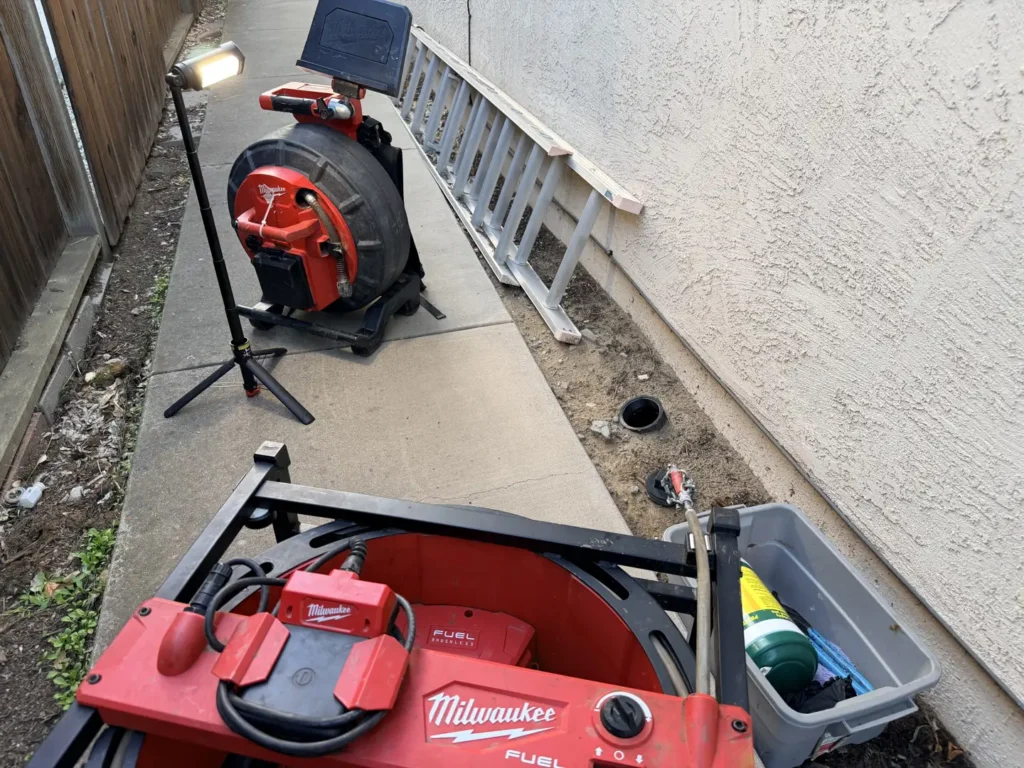
What Is Hydrojetting? A Quick Answer for Homeowners
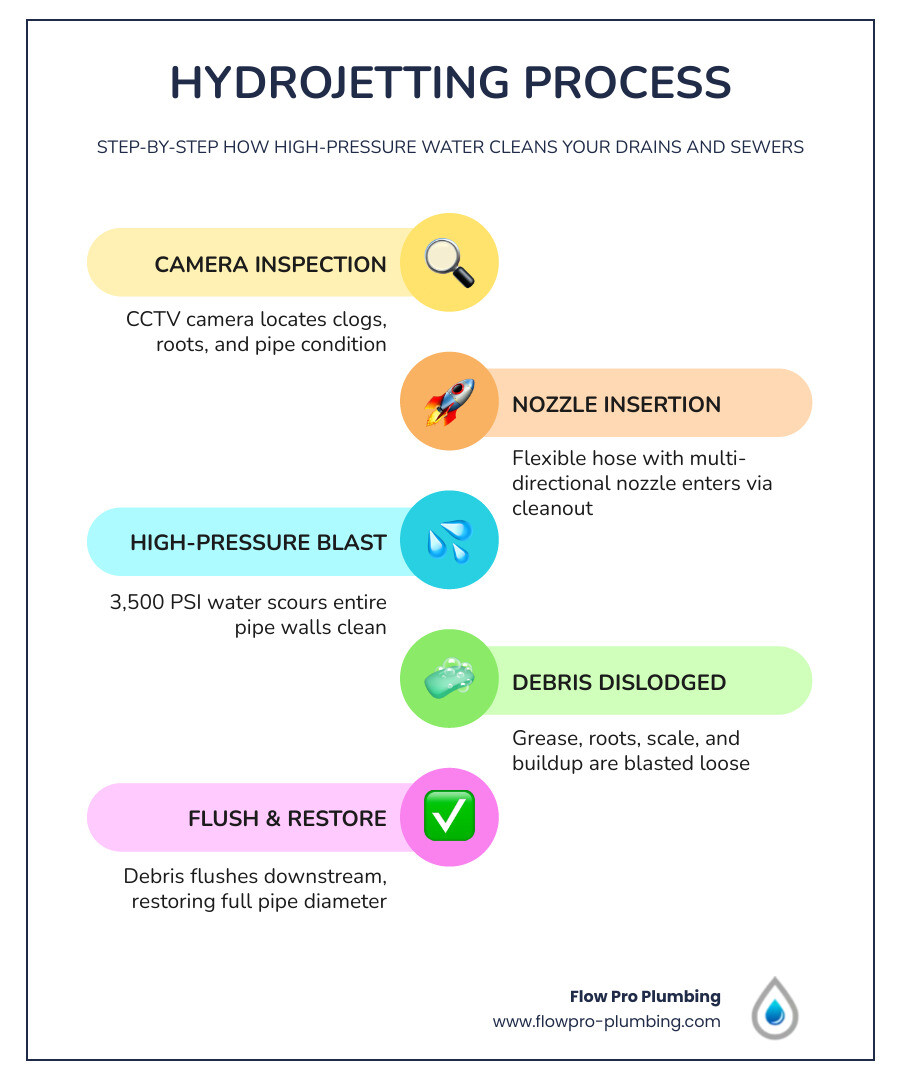
Hydrojetting is a professional drain and sewer cleaning method that uses highly pressurized water — typically up to 3,500 PSI — to scour the interior walls of pipes, blasting away grease, mineral scale, tree roots, and other stubborn buildup that ordinary methods leave behind.
Here is a quick overview of what you need to know:
- What it is: A high-pressure water cleaning process for drains and sewer lines
- How it works: A specialized nozzle is fed into your pipe through a cleanout opening, shooting water in multiple directions to scrub the pipe walls clean
- What it removes: Grease, FOG (fats, oils, and grease), hair, mineral deposits, soap scum, silt, and tree root intrusions
- Who it’s for: Homeowners and businesses dealing with recurring clogs, slow drains, sewage odors, or gurgling pipes
- Why it matters: Unlike snaking, which only punches a hole through a clog, hydrojetting restores the full interior diameter of your pipe
- Is it safe? Yes — for pipes in good structural condition, after a professional camera inspection confirms suitability
The numbers tell a sobering story. Between 23,000 and 75,000 sanitary sewer overflows happen in the United States every year, and nearly half of them are caused by FOG buildup alone. Sewer line blockages also trigger close to 250,000 residential sewer backups annually across the country. If you have ever dealt with a backed-up drain or a slow sink that just will not quit, you already know how disruptive these problems can be — and how quickly a minor annoyance can turn into a serious emergency.
That is exactly where hydrojetting comes in. It is not a temporary patch. It is a thorough, lasting reset for your plumbing system.
I’m Jesse Delgado, owner of Flow Pro Plumbing in Brentwood, California, and I grew up working alongside my father in the plumbing trade — which means hydrojetting has been part of my professional toolkit for as long as I can remember. In this guide, I’ll walk you through everything you need to know about this powerful pipe-cleaning method, from how it works to when your home actually needs it.
How High-Pressure Water Restores Your Plumbing
When we talk about What Does Hydro Jetting Do?, we often compare it to a high-powered pressure washer for the inside of your pipes. While a standard garden hose might trickle water through a line, a professional hydrojetter blasts water at pressures often reaching 3,500 PSI (pounds per square inch).
This isn’t just about moving a clog; it’s about hydrojetting the entire surface area of the pipe. Over years of use, kitchen drains collect layers of fats, oils, and grease (FOG). In bathroom lines, soap scum and hair bind together to form a sticky sludge. This debris clings to the pipe walls, narrowing the passage where wastewater flows.
By scouring the walls with multi-directional water jets, we can remove up to 99% of the debris. This process restores the pipe to its original flow capacity, which is something a simple plunger or chemical cleaner simply cannot achieve. In fact, FOG is responsible for nearly half of all sewer overflows in the U.S., making this thorough scouring essential for long-term plumbing health.

The Mechanics of Hydrojetting
To understand The Ultimate Guide to How Hydro Jetting Works for Your Drains, you have to look at the physics of the nozzle. A professional hydrojetting system consists of a large water tank, a high-pressure hose, and a specialized nozzle with various “orifices” or small holes.
These nozzles are designed with both forward-facing and rear-facing jets:
- Forward-facing jets: These act like a drill, breaking apart solid blockages like tree roots or hardened mineral scale.
- Rear-facing jets: These provide the “propulsion” that pulls the hose deep into the sewer line. More importantly, they spray backward at an angle, scrubbing the pipe walls as the nozzle moves forward.
We typically perform the cleaning by working “upstream.” We enter the system through a cleanout—an access point in your yard or basement—and push the nozzle toward the house. As the nozzle breaks up debris, gravity allows the loosened gunk to flow “downstream” toward the main municipal sewer line, which is already clear. This prevents the debris from backing up into your home during the process.
Hydrojetting vs. Snaking: Which is Right for Your Clog?
Many homeowners in Brentwood and Oakley are familiar with “snaking” a drain. While snaking is a classic tool, it serves a very different purpose than hydrojetting. To help you decide which is best for your situation, we’ve put together a comparison of the two methods.
| Feature | Drain Snaking (Auger) | Hydrojetting |
|---|---|---|
| Primary Action | Punctures a hole through the clog | Scours the entire pipe wall clean |
| Best For | Simple clogs (hair, paper, small objects) | Heavy grease, scale, and tree roots |
| Long-term Result | Temporary; residue remains on walls | Lasting; restores full pipe diameter |
| Eco-Friendliness | Mechanical (No chemicals) | Water-based (No chemicals) |
| Pipe Protection | Can scratch or damage old pipes | Safe for sound pipes; requires inspection |
According to The Ultimate Drain Showdown: Hydro Jetting vs Snaking Comparison, pipes cleaned with high-pressure water see a 70% reduction in emergency repairs compared to those cleared with traditional snaking. Why? Because snaking often leaves behind a “ring” of grease or sludge. New debris quickly catches on that residue, leading to another clog just a few months later. Hydrojetting eliminates that sticky foundation, giving you a clean slate.
When to Schedule a Professional Sewer Cleaning
How do you know if your home in Antioch or Discovery Bay needs more than just a plunger? Our Hydro Jetting Oakley Ultimate Guide highlights several “red flags” that indicate a deep clean is necessary.
- Recurring Clogs: If you find yourself snaking the same kitchen sink or bathroom drain every few months, you don’t have a “new” clog–you have a buildup problem that hasn’t been fully cleared.
- Slow Drains Throughout the House: When multiple fixtures (like the shower, toilet, and sink) all drain slowly at once, the issue is likely in the main sewer line.
- Persistent Sewage Odors: Foul smells coming from your drains often mean organic matter–like food scraps or waste–is trapped and rotting against the pipe walls.
- Gurgling Noises: If your toilet bubbles when you run the sink, or you hear “glug-glug” sounds from the pipes, air is being trapped by a significant blockage.
In commercial settings, like restaurants in Pittsburg or Concord, we recommend hydrojetting as preventative maintenance. Clearing out grease traps and lines every 6 to 12 months can prevent an embarrassing (and major) backup during peak business hours.
The Importance of Pre-Service Camera Inspections
We never start a hydrojetting job without first performing a CCTV camera inspection. As noted in our Sewer Hydro Jetting Complete Guide, skipping this step is like a surgeon operating without an X-ray.
A camera inspection allows us to:
- Identify the Blockage: Is it a “fatberg” of grease, a mass of wet wipes, or a thick tree root? Each requires a different nozzle and pressure setting.
- Locate the Problem: We can pinpoint exactly where the clog is, saving time and water.
- Assess Pipe Integrity: This is the most critical step. We need to ensure the pipe isn’t collapsed, cracked, or severely corroded before applying high pressure.
Is Hydrojetting Safe for Older Pipes?
This is a common concern for homeowners in older parts of Walnut Creek or Clayton. The answer depends on the condition of the pipe, not necessarily its age.
When discussing How Long Does Hydro Jetting Last?, we emphasize that properly maintained pipes can handle the pressure. Modern PVC is extremely durable, and even older cast iron can often be jetted if it hasn’t been thinned out by excessive corrosion. However, if the camera shows that a pipe is “paper-thin,” cracked, or already failing, we will recommend alternative repairs like repiping or epoxy lining instead. Our goal is always to solve the problem, not create a new one.
The Long-Term Benefits of Professional Hydrojetting
Choosing Hydro Jetting Sewer Line services offers benefits that go far beyond just fixing a sink.
First, it is environmentally friendly. Many homeowners reach for harsh chemical drain cleaners when they see a clog. These chemicals are not only toxic to the environment but can also generate heat that warps PVC pipes or accelerates the corrosion of metal ones. Hydrojetting uses nothing but pure, pressurized water.
Second, it is highly beneficial in the long run. While the initial service is more involved than a simple snaking, the results last significantly longer. By restoring the full diameter of the pipe, you prevent the 250,000 annual backups that plague U.S. homeowners. It is an investment in your home’s infrastructure that provides peace of mind for years to come.
Frequently Asked Questions about Sewer Maintenance
Can high-pressure water remove tree roots?
Yes! Specialized “chisel” or “root-cutter” nozzles use high-pressure water to shred invasive tree roots that have entered the sewer line through small cracks. While it won’t fix the hole the root came through, it will clear the blockage and restore flow. We often follow this up with a discussion about permanent sewer repair options.
How often should I have my main line jetted?
For most residential homes in the Brentwood area, we recommend a “reset” hydrojetting every 18 to 24 months if you have older pipes or a history of slow drains. If your plumbing is modern and you are careful about what goes down the drain, you may only need it when a major blockage occurs.
Is this process safe for my septic system?
Absolutely. Since hydrojetting uses only water, it won’t kill the “good” bacteria that your septic tank needs to break down waste. It is actually a great way to clear the lines leading to the tank without introducing harmful chemicals.
Conclusion
At Flow Pro Plumbing, we believe that every homeowner deserves a plumbing system that works reliably and cleanly. Whether you are in Brentwood, Oakley, Antioch, Discovery Bay, Pittsburg, or Concord, our team is ready to help you hit the “reset button” on your drains. We pride ourselves on fast, clean, and courteous service, ensuring that your home stays comfortable and your pipes stay clear.
Don’t wait for a minor clog to turn into a backyard flood or a kitchen disaster. If you’re tired of dealing with recurring backups, it’s time for a professional solution.
Schedule your professional drain service today and experience the difference that expert hydrojetting can make for your home.