
Is Your Plumbing Problem an Emergency? Here’s How to Tell
What counts as a plumbing emergency is any plumbing issue that poses an immediate risk of serious property damage, a health hazard, or a complete loss of essential water or gas service — and needs professional attention right away, not tomorrow morning.
Here are the most common situations that qualify:
- Burst or ruptured pipes — water flooding walls, floors, or ceilings
- Sewage backup — raw sewage entering drains, sinks, or tubs
- Gas leak — sulfur or rotten egg smell, hissing sounds near gas lines
- Overflowing toilet that won’t stop — contaminated water spreading beyond the bowl
- Major water leak you cannot shut off — water actively damaging structure or nearing electrical systems
- Complete loss of water supply — no water flowing anywhere in the home
- Sump pump failure during heavy rain — basement flooding risk
- Water heater leaking or making loud noises — risk of tank rupture or flooding
Issues like a dripping faucet, slow drain, or running toilet are inconvenient — but they can typically wait for a scheduled appointment.
Not every plumbing problem that feels urgent actually is one. But some issues can go from bad to catastrophic in minutes, and knowing the difference can save you thousands of dollars in damage — and protect your family’s health.
I’m Jesse Delgado, owner of Flow Pro Plumbing in Brentwood, California, with over a decade of licensed plumbing experience helping East Bay homeowners understand exactly what counts as a plumbing emergency versus what can safely wait. In this guide, I’ll walk you through the clear signs, the smart steps to take right now, and how to avoid paying emergency rates when you don’t need to.
Defining What Counts as a Plumbing Emergency

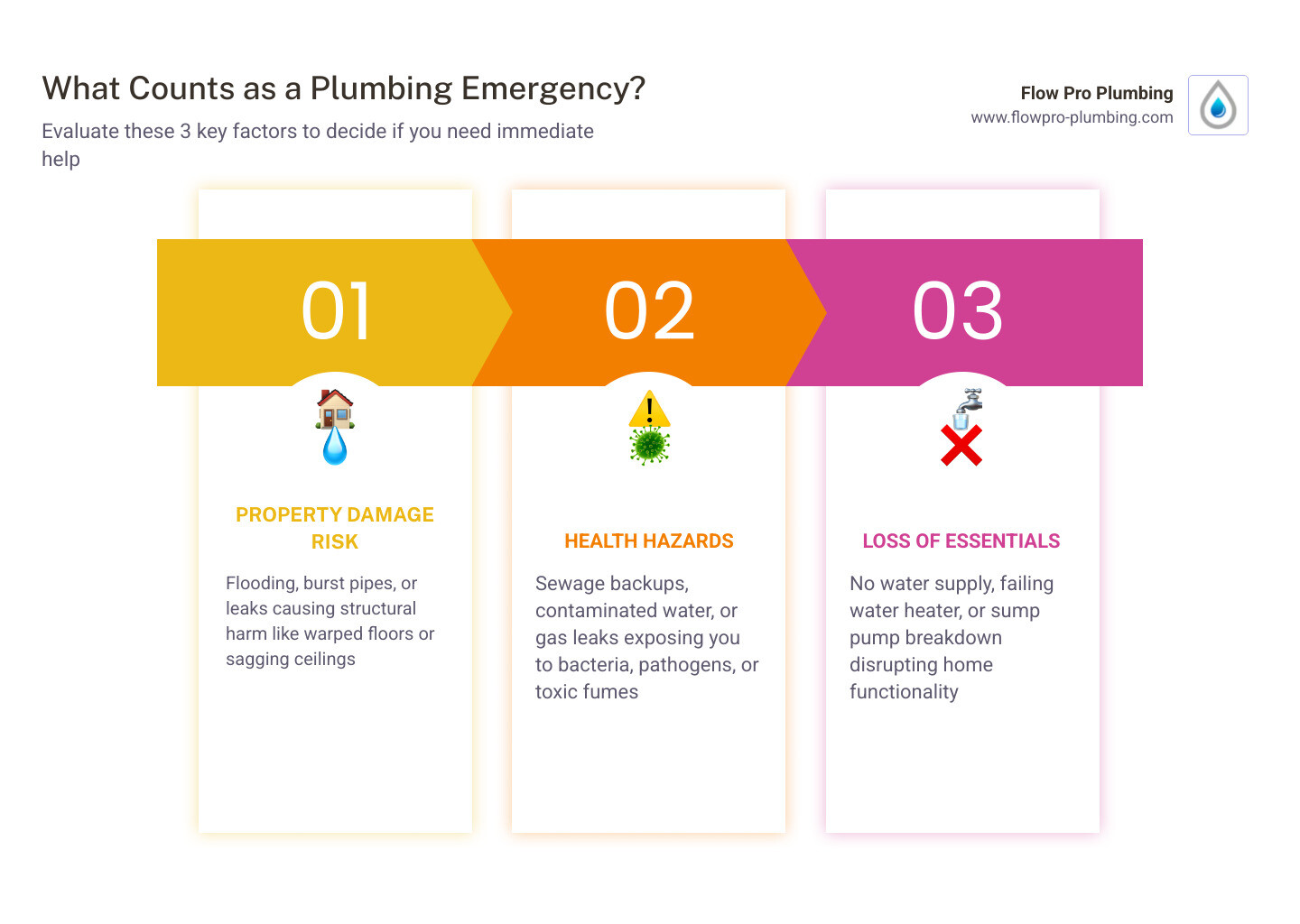
When we talk about a plumbing emergency in April 2026, we aren’t just talking about a nuisance. We are talking about a situation where time is your greatest enemy. A true emergency is defined by three main factors: the risk of significant property damage, immediate health hazards, and the loss of essential services that make a home habitable.
The most dramatic example is a burst pipe. How Serious Is a Burst Pipe? It is incredibly serious because a standard 1/2-inch pipe can release over 50 gallons of water per minute. In the time it takes to watch a short news segment, your entire ground floor could be underwater. This rapid escalation doesn’t just ruin carpets; it compromises the structural integrity of your home. Water soaks into drywall, warps subfloors, and can even weaken the wooden framing of your house.
Beyond the physical structure, we have to consider routine disruption. If you have only one bathroom and the toilet is overflowing with contaminated water, your home is no longer functional. When essential services like water or gas are cut off or leaking, the safety risks to your family become the top priority. If a situation requires you to stop your daily life to prevent a catastrophe, it’s an emergency.
Common Scenarios and Health Risks
Understanding the specific scenarios that require a 24/7 response helps you stay calm when things go wrong. In our service areas like Pittsburg, Brentwood, and Antioch, we see several recurring “red alert” situations.
Burst Pipes and Flooding
As mentioned, the sheer volume of water from a burst pipe is staggering. If you’re dealing with this, you need to act fast. Don’t Drown: Quick Fixes for a Burst Pipe in Pittsburg can provide temporary relief, but a professional must replace the section to prevent future failures.
Sewage Backups: A Biohazard Threat
A Sewer Backup Repair Brentwood CA is perhaps the most unpleasant emergency. This involves “black water,” which is classified as a Category 3 biohazard. It is teeming with bacteria, viruses, and parasites. When sewage backs up into your tubs or sinks, it isn’t just a mess; it’s a toxic environment that requires professional remediation.
Gas Leaks and Carbon Monoxide
Plumbing isn’t just about water; it’s about gas lines too. Knowing the Top Signs of Gas Leak is life-saving information. If you smell rotten eggs or hear a hissing sound near your appliances, you are facing an explosion risk and potential carbon monoxide poisoning. This is an “evacuate first, call later” situation.
Water Heater Disasters
A failing water heater can be more than just a cold shower. Emergency Water Heaters Oakley CA Tips highlight that in the colder months, a lack of hot water can lead to hypothermia risks for vulnerable residents, such as the elderly or infants. Furthermore, a leaking tank can release dozens of gallons of hot water into your home, causing massive damage.
Identifying what counts as a plumbing emergency versus a minor leak
Not every wet spot is a crisis. A minor leak under a kitchen sink that can be contained with a bucket is an “urgent” repair for Monday morning, but it usually doesn’t require a 2 a.m. dispatch. However, if you see water stains on the ceiling or a sagging ceiling, you have a hidden leak that has already compromised the structure.
How Serious Is a Slab Leak? It is very serious because it happens beneath your home’s foundation. If you notice warm spots on your floor or a sudden spike in your water bill, you have a hidden emergency. Mold growth can begin within a 24-hour window of water saturation, so what looks like a small damp spot today could be a health crisis by tomorrow night.
Why knowing what counts as a plumbing emergency protects your health
The health implications of plumbing failures are often underestimated. Sewage contains pathogens like E. coli and Salmonella. Beyond the water, sewage backups release methane gas, which can cause respiratory issues and, in high concentrations, create an explosion hazard.
We provide Antioch’s Lifeline: Your Guide to 24-Hour Emergency Sewer Service because we know that contaminated water sitting in a home is a ticking time bomb for the residents’ health. Protecting your family means recognizing these hazards the moment they appear.
Signs, Symptoms, and Immediate Action
Your senses are your best diagnostic tools. You should be on the lookout for:
- Olfactory (Smell): A sulfur or rotten egg smell (gas) or a persistent “sewer gas” odor.
- Auditory (Sound): Hissing near pipes, gurgling drains when you flush the toilet, or “water hammer” (loud banging or clanking when valves close).
- Visual: Puddles, sagging drywall, or discolored water.
If you find yourself in a crisis, follow these steps immediately:
- Shut off the water: Locate your main shut-off valve and turn it clockwise until it stops. If the leak is isolated to one fixture, use the local shut-off valve behind the toilet or under the sink.
- Turn off the heat: If you shut off the main water, turn off your water heater to prevent the tank from burning out or overheating.
- Address electrical safety: If water is near outlets or your electrical panel, do not enter the area. Turn off the power at the breaker if it is safe to reach.
- Document everything: Take photos and videos of the damage. This is vital for insurance claims. What to Do If a Pipe Is Leaking includes a checklist for keeping your home safe while you wait for us to arrive.
- Call for help: Once the situation is stabilized, call a professional. Got a Leaking Pipe in Concord? Here’s What to Do Next is a great resource for residents in that area to find immediate guidance.
When to Wait and Prevention Strategies
While we are always ready to help, we want to save you money whenever possible. Some issues simply don’t require the higher rates associated with after-hours service.
| Issue | Status | Action |
|---|---|---|
| Dripping Faucet | Non-Emergency | Close the local valve; call during business hours. |
| Single Clogged Sink | Non-Emergency | Avoid using the sink; schedule a standard visit. |
| Running Toilet | Non-Emergency | Jiggle the handle or shut the local valve at night. |
| Burst Pipe | EMERGENCY | Shut off main water and call immediately. |
| Sewage Backup | EMERGENCY | Stop using all water and call immediately. |
| Gas Smell | EMERGENCY | Evacuate and call 911/Plumber immediately. |
Did you know that the average household water leaks waste 10,000 gallons of water each year? That is enough to fill a small backyard pool! While a running toilet isn’t usually an emergency, it can be a financial one if left for months. Don’t Get Flushed: Expert Sewer Main Line Repair in Antioch explains how even non-emergency repairs keep your system running smoothly.
Prevention is the Best Medicine
To avoid the stress of a midnight crisis, follow these maintenance tips:
- Annual Inspections: Have a professional check your water heater and main lines once a year.
- Pipe Insulation: Before the winter months, insulate exposed pipes in garages or crawlspaces to prevent freezing.
- Drain Screens: Use mesh screens to catch hair and food scraps.
- Sump Pump Testing: Pour a bucket of water into your sump pit annually to ensure the pump triggers.
- Repiping: if your home is older and you experience frequent leaks, consider Emergency Repiping in Concord CA: Fast, Reliable 24/7 Service to replace failing infrastructure before it bursts.
Frequently Asked Questions about Plumbing Emergencies
Is a running toilet considered an emergency?
Generally, no. A running toilet is usually caused by a faulty flapper or fill valve. While it won’t flood your home, it can increase your water bill by $20 to $200 per month. If you can’t stop the noise, just turn the silver valve behind the toilet clockwise to shut off the water until morning. It’s an “urgent” task for a regular workday, but not worth an emergency dispatch fee unless it is actually overflowing.
What should I ask when hiring an emergency plumber?
When you’re in a panic, it’s easy to hire the first person who answers. Always ask:
- Are you licensed and insured in California?
- Do you offer a warranty on the repair?
- What is your estimated arrival time? For those in the East Bay, our 24-Hour Plumbing Antioch CA team is happy to answer these questions transparently before we head your way.
Is no hot water always an emergency?
It depends on the weather and who lives in the home. In the middle of a cold winter, a lack of hot water is an emergency for households with seniors or young children due to health risks. Also, if the lack of hot water is accompanied by a leaking tank, it is an emergency because of the flood risk. Check out our Emergency Water Heaters Bay Point Tips for more specific advice on heater failures.
Conclusion
At Flow Pro Plumbing, we take pride in being the reliable choice for Brentwood, Oakley, Antioch, and the surrounding communities. We know that when you call us in the middle of the night, you are trusting us with your home’s safety. Our team is known for unsurpassed workmanship and a friendly, professional approach that turns a crisis into a manageable repair.
Whether you are dealing with a burst pipe, a sewage backup, or a mysterious gas smell, don’t wait for the damage to double. We are your local Emergency Plumber Brentwood CA, ready to respond 24/7 to keep your home dry and your family safe. If you’re unsure if your situation qualifies, give us a call—we’d rather help you identify a minor issue over the phone than have you face a major flood alone.