

Your Quick Guide to What Is Repiping and When Do You Need It
What is repiping and when do you need it is one of the most common questions homeowners ask when their plumbing starts acting up — and the answer matters more than most people realize.
Repiping is the process of replacing all or most of the water supply pipes in your home with new ones, typically using modern materials like copper or PEX. It is not a patch job or a spot repair — it is a full-system upgrade.
You likely need repiping if you notice any of the following:
- Rusty, brown, or discolored water coming from your taps
- Consistently low water pressure throughout the home
- Frequent or recurring pipe leaks
- Metallic taste or foul odor in your tap water
- Visible corrosion or flaking on exposed pipes
- Your home was built before 1970 and still has original plumbing
- You have galvanized steel, lead, or polybutylene pipes
For most homeowners in the East Bay Area, aging pipes do not fail all at once. They degrade slowly — losing pressure here, springing a small leak there — until one day the problems are too widespread to ignore. Water damage from leaks already accounts for nearly 20% of all homeowners insurance claims, and outdated plumbing is one of the leading causes.
I’m Jesse Delgado, owner of Flow Pro Plumbing in Brentwood, California, and having grown up in a family of plumbers, I’ve seen how understanding what is repiping and when do you need it can save homeowners from costly, avoidable damage. In the sections ahead, I’ll walk you through everything you need to know — from warning signs to materials to what the process actually looks like in your home.
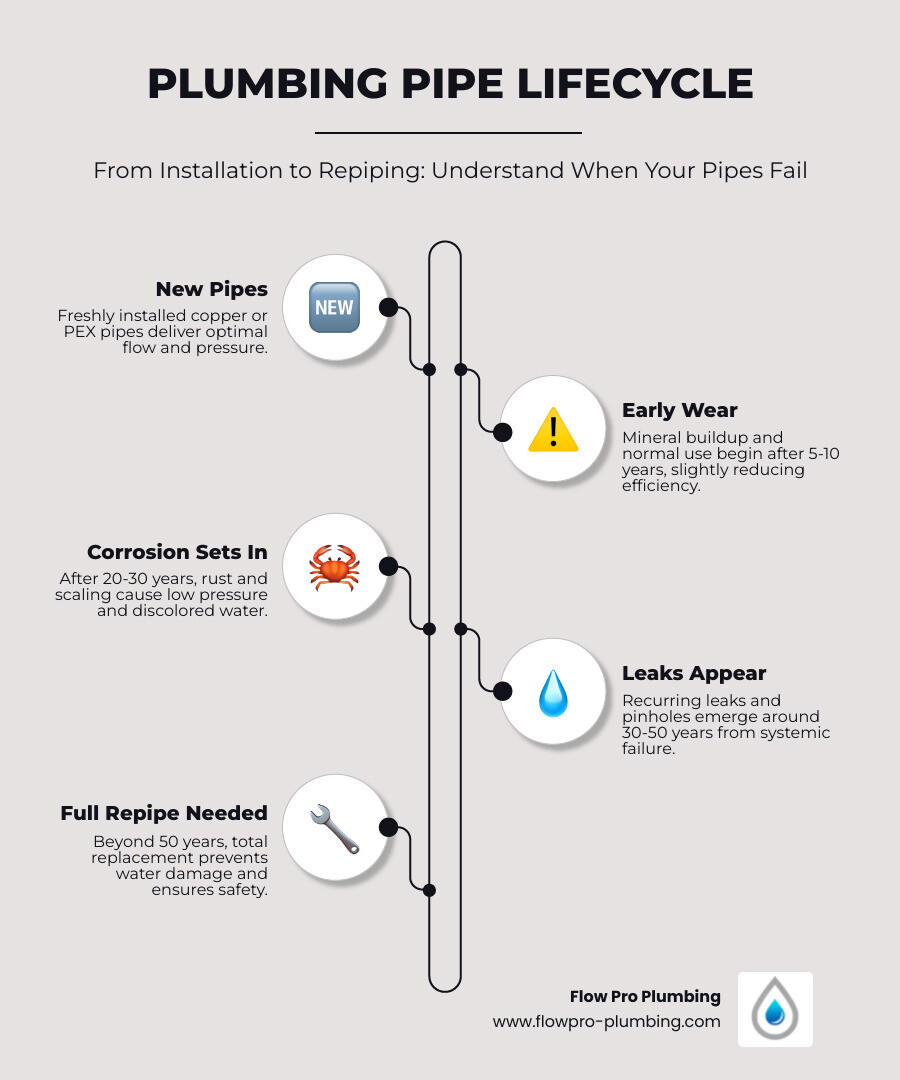
What is Repiping and When Do You Need It?
When we talk about the health of your home, the plumbing system is essentially the “circulatory system” of the structure. Over time, the materials used to build these systems can wear out, corrode, or become obsolete. Repiping is the comprehensive solution where we go in and replace the hot and cold water supply lines throughout the entire house.
It is important to distinguish between a simple repair and a full repipe. Many homeowners find themselves in a cycle of “patchwork” plumbing—fixing one leak this month, only for another to appear in a different room six months later. This is often a sign of systemic failure.
| Feature | Pipe Repair | Full Repiping |
|---|---|---|
| Scope | Fixes a specific, isolated leak or clog. | Replaces the entire water supply network. |
| Materials | Uses a small section of new pipe to bridge a gap. | Replaces all old lines with modern PEX or Copper. |
| Longevity | Temporary fix; other old pipes remain at risk. | Long-term solution (40–70+ years). |
| Water Quality | No change to overall water quality. | Eliminates rust, lead, and metallic tastes. |
| Best For | Accidental damage to a single modern pipe. | Aging homes, systemic corrosion, or frequent leaks. |
If you are constantly calling a plumber for the same areas, it’s time to look at Licensed Loved Finding The Best Repiping Company In Brentwood Ca to ensure you are getting a permanent fix rather than a temporary bandage.
Determining Your Home’s Needs: What is Repiping and When Do You Need It?
Deciding to repipe is a big step, but it’s often the most financially sound decision you can make for your property. When you have a systemic failure, the integrity of every pipe in the house is compromised. This isn’t just about the pipes you can see under the sink; it’s about the miles of plumbing hidden behind your drywall and under your floors.
If you are experiencing recurring leaks, it is a “red flag” that the pipe walls have thinned to the point of failure. Similarly, if your water pressure has dropped significantly over the years, it’s likely due to internal scale buildup or corrosion that is physically choking the flow of water. We provide Pipe Dreams Come True Expert Repiping Services In Bethel Island for homeowners who are tired of dealing with these persistent, frustrating issues.
Red Flags: Signs Your Plumbing System is Failing
How do you know if your pipes are screaming for help? Your plumbing usually gives you plenty of warnings before a catastrophic burst occurs. You just need to know what to look for.
- Discolored Water: If your water looks brown, yellow, or reddish when you first turn on the tap, that is a clear sign of internal rust. This is common in galvanized steel pipes where the zinc coating has worn away.
- Low Water Pressure: Are your showers feeling more like a light drizzle? If cleaning out the showerhead doesn’t fix it, the problem is likely inside the pipes.
- Metallic Taste or Odor: Your water should be tasteless and odorless. A “penny-like” taste suggests metal is leaching into your drinking water.
- Frequent Leaks: One leak in ten years is an accident. Three leaks in two years is a pattern of failure.
- Visible Corrosion: Check your basement or utility closet. If you see green stains (on copper) or white, flaking “pimples” (on galvanized steel), the pipes are corroded.
For residents in our service area, we offer specialized Pittsburg Ca/Home Repiping assessments to help you identify these red flags before they turn into a flooded living room.
Identifying Outdated and Dangerous Pipe Materials
As of April 2026, many homes in the East Bay—from Antioch to Concord—are reaching an age where their original plumbing materials are simply past their prime. Here are the most common culprits:
- Galvanized Steel: Common in homes built before the 1960s and 1970s. These pipes rust from the inside out, leading to clogs and discolored water. They typically last 20 to 50 years.
- Lead Pipes: Found in very old homes. Lead is a significant health hazard, especially for children, and should be replaced immediately.
- Polybutylene (PB): This “plastic” piping was popular from the late 1970s through the mid-1990s. It is notorious for suddenly splitting or becoming brittle due to chemical reactions with water treatment additives.
- CPVC: While still used, older CPVC can become extremely brittle over time, leading to cracks if the house settles or if the pipes are bumped.
If you suspect your home has any of these, especially in older neighborhoods, checking out Kitchen Plumbing/Repiping Antioch Ca can help you understand the specific risks associated with these materials.
Why Older Homes Require Modern Plumbing Upgrades
If your home was built before 1970, it is likely living on borrowed time regarding its plumbing. In that era, galvanized steel was the standard. While it was durable for its time, it wasn’t meant to last forever. By April 2026, even the “newest” galvanized pipes are over 50 years old, which is the upper limit of their expected lifespan.
Over decades, minerals in the water react with the metal, creating a “calcification” effect. This narrows the internal diameter of the pipe, much like a clogged artery. This doesn’t just affect your shower pressure; it puts immense strain on your appliances, like dishwashers and washing machines, which have to work harder to pull in water.
Modern upgrades aren’t just about fixing leaks; they are about restoring the structural integrity of your home. A single major pipe burst can cause tens of thousands of dollars in damage to flooring, drywall, and personal belongings. That’s why we provide Emergency Repiping In Concord Ca Fast Reliable 247 Service for those who waited just a bit too long.
The Risks of Delaying a Whole-Home Repipe
We understand that repiping sounds like a massive undertaking, but the risks of waiting are far greater.
- Mold Growth: Slow, hidden leaks behind walls create the perfect environment for mold. This can lead to respiratory issues and expensive remediation.
- Insurance Complications: Some insurance companies may deny claims if they determine the water damage was caused by “neglected maintenance” of clearly aging pipes.
- Slab Leaks: If your pipes run under your concrete foundation, a leak there can actually undermine the soil and cause your foundation to shift or crack.
- Higher Utility Bills: Leaks, even small ones, waste thousands of gallons of water a year.
Don’t wait for a midnight disaster. Check out Brentwoods Urgent Call When You Need Same Day Repiping to see how we handle urgent situations.
Comparing Modern Materials: Copper vs. PEX
When it comes to what is repiping and when do you need it, choosing the right material is the most important decision you’ll make. Today, we primarily use two high-quality materials: Copper and PEX.
Copper (Type L): Copper has been the gold standard for decades. It is incredibly durable, naturally antimicrobial (it inhibits bacterial growth), and highly resistant to heat. It’s also a “traditional” material that many buyers look for when purchasing a home. However, it is rigid, which means it requires more labor to install as it cannot be “snaked” through walls easily.
PEX (Uponor PEX-A): PEX (cross-linked polyethylene) is the modern favorite. It is flexible, meaning it can be run through walls with fewer cuts to your drywall. It is also resistant to scale buildup and corrosion, and it can expand slightly if the water inside freezes, making it less likely to burst in cold snaps. PEX is often more affordable and faster to install than copper.
For a deeper dive into which material fits your specific home in the East Bay, our Smooth Flows The Ultimate Guide To Repiping In Concord Ca offers a comprehensive breakdown.
The Step-by-Step Whole-Home Repiping Process
Many homeowners worry that their house will be a “construction zone” for weeks. In reality, a professional team can often complete the plumbing portion of a repipe in just 1 to 2 days for an average-sized home.
- Inspection & Planning: We map out your current system and determine the best “runs” for the new pipes to minimize drywall cuts.
- Protection: We cover your floors and furniture with plastic sheeting to protect them from dust.
- Water Shut-Off & Access: We turn off the main water and make small, strategic cuts in the drywall to access the old pipes.
- Installation: We run the new PEX or Copper lines, installing new shut-off valves at every fixture (toilets, sinks, etc.).
- Pressure Testing: Before we close anything up, we pressure-test the entire system to ensure every connection is 100% watertight.
- Flushing: We flush the system to remove any debris.
- Restoration: We patch the drywall and return your home to its original state.
You can learn more about this detailed journey in our Repiping In Brentwood Ca The Ultimate Guide To Modern Plumbing.
What to Expect During and After Installation
During the process, you can expect the water to be off during the workday, but a reputable team will always aim to have your water back on by the evening so you can shower and use your kitchen. There will be some noise and dust, but modern techniques have made this much cleaner than it used to be.
After the installation, you’ll notice an immediate difference. Your water will be clearer, your showers will be stronger, and you’ll have the peace of mind that comes with a “lifetime” plumbing system. We also handle the building permits and inspections required by cities like Oakley or Pleasant Hill to ensure everything is up to code. For tips on making this process even easier on your wallet, see Smart Savings How To Get Affordable Repiping In Concord Ca.
Frequently Asked Questions about What is Repiping and When Do You Need It
Do I need to move out of my home during the repiping process?
No, you typically do not need to move out. While the water will be shut off during active work hours (usually 8 AM to 5 PM), most projects are structured so that you have functional water and toilets every evening. We work in sections to minimize the impact on your daily life.
How long does a typical whole-home repiping project take?
For most 2-to-3 bedroom homes, the actual pipe installation takes 1 to 2 days. If you include the drywall patching and finishing work, the entire process from start to finish is usually completed within 3 to 5 days.
Will repiping my house increase its overall resale value?
Absolutely. While it might not be as “flashy” as a new kitchen, savvy home buyers and inspectors always check the plumbing. Having a brand-new, permitted PEX or Copper system removes a major “buyer objection” and can help you secure a higher asking price because the new owner won’t have to worry about plumbing for another 50 years.
Conclusion
Understanding what is repiping and when do you need it is the first step toward protecting your most valuable investment—your home. Whether you are in Brentwood, Oakley, or Walnut Creek, aging pipes are a reality that eventually needs to be addressed. By being proactive, you can avoid the stress of emergency leaks and the health risks of poor water quality.
At Flow Pro Plumbing, we take pride in our workmanship and our reputation as a friendly, experienced team. We serve the entire region, from Bethel Island to Clayton and beyond, ensuring our neighbors have access to the best plumbing technology available. If you’re tired of low pressure and constant repairs, it’s time for a permanent solution.
Ready to secure your home’s future? Contact us at Flow Pro Plumbing today to discuss your repiping needs and let us help you get the clean, high-pressure water you deserve.