
Why Kitchen Drain Clog Prevention Tips Could Save You From a Costly Plumbing Call
Following the right kitchen drain clog prevention tips can mean the difference between a free-flowing sink and a backed-up drain that disrupts your entire day. Most kitchen clogs don’t happen overnight — they build slowly as grease coats pipe walls, food scraps accumulate, and everyday habits quietly work against your plumbing. The good news? The majority of these clogs are completely preventable.
Here are the most effective kitchen drain clog prevention tips at a glance:
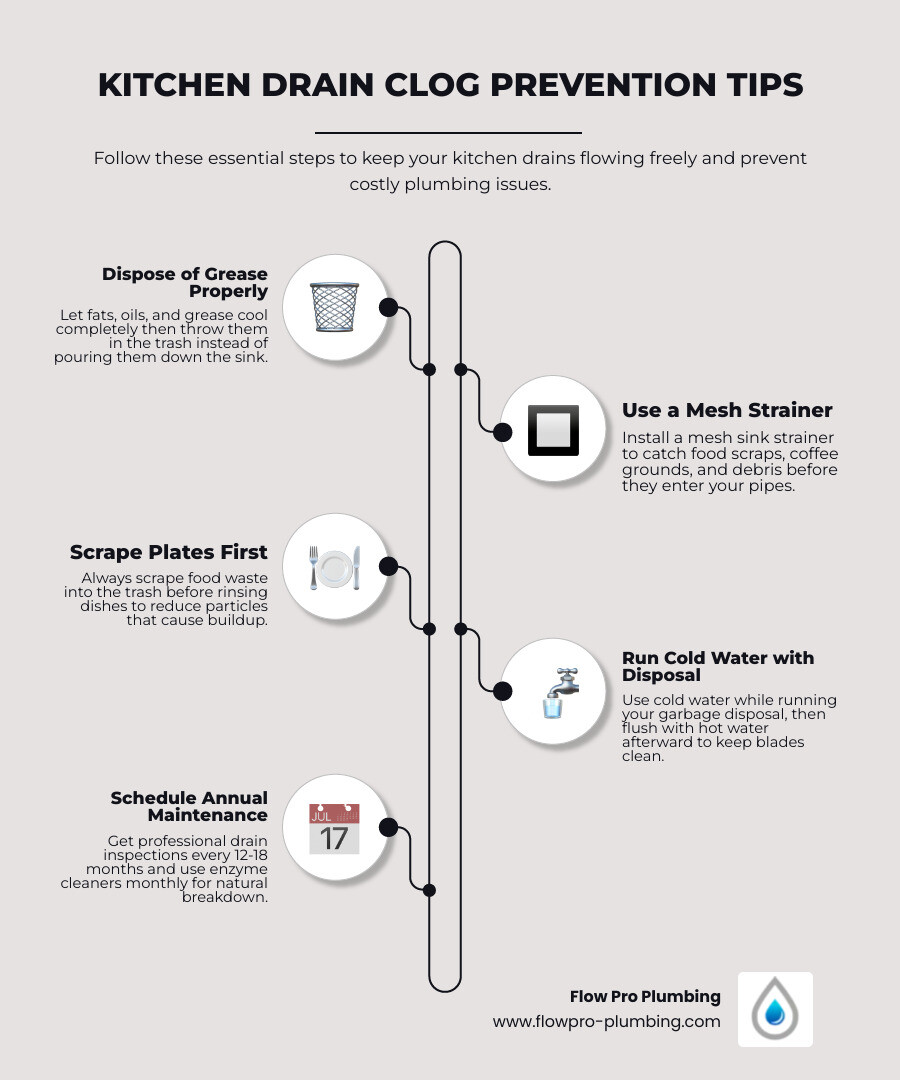
- Never pour grease, fats, or oils down the drain — let them cool and dispose of them in the trash
- Use a mesh sink strainer to catch food scraps before they enter the pipe
- Scrape plates into the trash before rinsing dishes
- Run cold water while using your garbage disposal, then hot water afterward
- Avoid putting these items down the drain: coffee grounds, eggshells, pasta, rice, potato skins, and fibrous vegetables
- Flush the drain weekly with hot water to break down minor grease buildup
- Use an enzyme-based cleaner monthly to break down organic matter naturally
- Schedule a professional drain inspection every 12 to 18 months
Even small amounts of fats, oils, and grease poured down the sink can build into a pipe-narrowing layer within just three to six months — and in the East Bay Area, where roughly 85% of households deal with hard water, mineral buildup only makes that problem worse.
I’m Jesse Delgado, owner of Flow Pro Plumbing in Brentwood, California, and I’ve spent years helping East Bay homeowners tackle the exact drain problems that proper kitchen drain clog prevention tips are designed to avoid. Growing up alongside my father in the plumbing trade gave me a hands-on understanding of how quickly small habits — like rinsing a greasy pan — can snowball into serious pipe blockages.
Key terms for kitchen drain clog prevention tips:
- how to prevent clogged drains at home
- how to prevent hair clogs in shower drains
- unclogging pipes with baking soda and vinegar
Common Culprits: What Causes Kitchen Drain Clogs?
Understanding why your sink stops up is the first step toward true prevention. In our experience serving neighbors from Antioch to Walnut Creek, most blockages are caused by a combination of “FOG” (fats, oils, and grease) and solid debris. When liquid grease is poured down the sink, it may look harmless, but as it travels through your pipes, it cools and solidifies. This creates a sticky, waxy lining inside the plumbing that acts like a magnet for every food crumb or coffee ground that follows.
This adhesion and layering process can turn a wide-open 2-inch pipe into a narrow straw in just a few months. Learning How to Keep Your Home Clog-Free involves recognizing that your drain is not a trash can; it’s a delicate system designed primarily for water and organic liquids.
The Impact of Hard Water in 2026
As we move through May 2026, one factor remains a constant challenge for East Bay residents: hard water. Approximately 85% of U.S. households deal with hard water, and our local areas like Brentwood and Discovery Bay are no exception. Hard water contains high levels of dissolved minerals like calcium and magnesium.
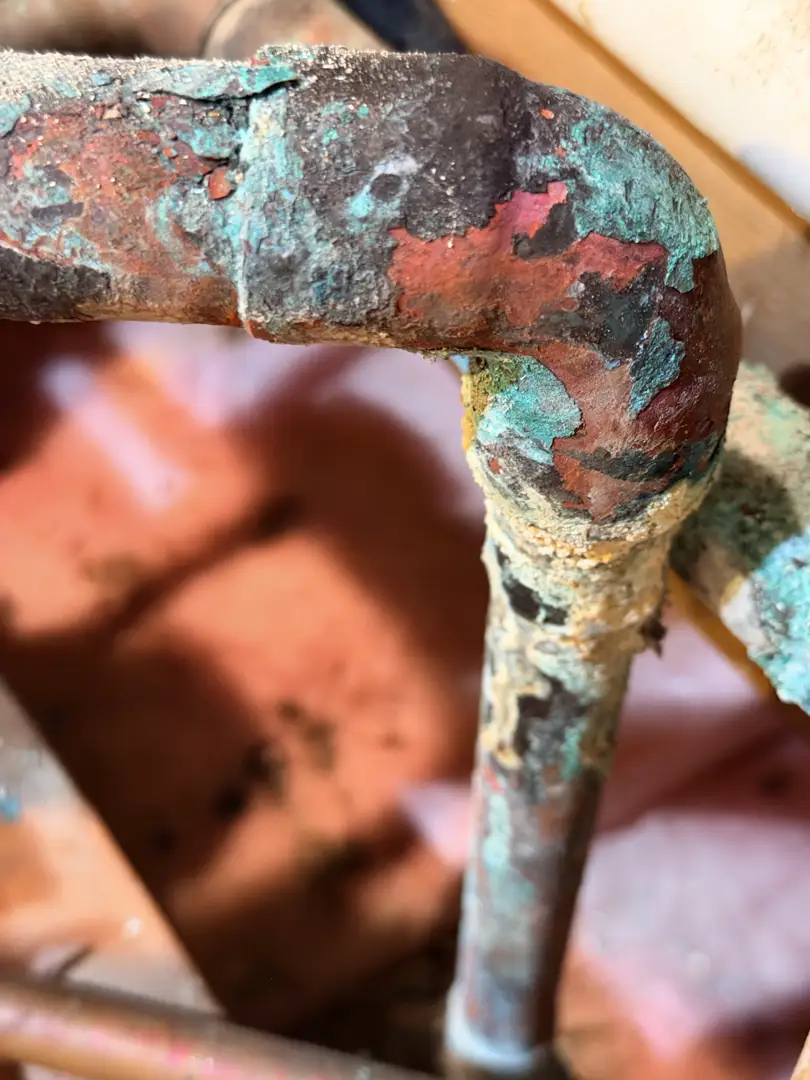
Over time, these minerals create “scaling”—a rough, crusty deposit on the inside of your pipes. This scaling does two things: it narrows the pipe diameter and creates a sandpaper-like surface that catches hair, soap scum, and food particles. When you combine mineral scale with kitchen grease, you get a “super-clog” that is much harder to remove than a simple food blockage.
Items That Should Never Go Down the Sink
To keep your plumbing healthy, there is a “blacklist” of items that should stay far away from your kitchen sink:
- Coffee Grounds: These don’t dissolve. Instead, they bunch together with grease to create a sludge that is nearly as hard as concrete.
- Eggshells: The membrane inside the shell can wrap around disposal blades, and the shells themselves ground into a sandy grit that settles in pipe traps.
- Pasta and Rice: These expand when exposed to water, even after they’ve been cooked. They create a sticky paste that can easily swell to block the entire pipe.
- Fibrous Vegetables: Celery, corn husks, and artichokes have “strings” that can tangle in garbage disposal motors.
- Potato Skins: These are high in starch and can create a thick mash that glues the drain shut.
Essential Kitchen Drain Clog Prevention Tips for Every Homeowner
The secret to a clog-free kitchen isn’t a special tool or a magic chemical; it’s a series of small, consistent actions. We always tell our clients in Oakley and Knightsen that five seconds of prevention is worth five hours of frustration later.
Daily Habits and Kitchen Drain Clog Prevention Tips
One of the most effective kitchen drain clog prevention tips is the “Paper Towel Method.” Before you put a pan in the sink, use a paper towel to wipe out any excess oil or bacon grease. That one simple move keeps the primary cause of clogs out of your pipes entirely.
Another great habit is the weekly hot water flush. Once a week, boil a kettle of water and pour it slowly down the drain. This helps melt any small amounts of grease that may have started to cling to the pipe walls before they have a chance to harden. If you’re already noticing a slight delay in drainage, check out these Tips to Fix a Slow Draining Sink to nip the problem in the bud.
Regular Drain Cleaning doesn’t always require a plumber. By being mindful of what enters the system, you are performing maintenance every single day.
Using Accessories for Kitchen Drain Clog Prevention Tips
If you don’t have a mesh strainer in your sink, get one today. Even if you have a garbage disposal, a fine-mesh strainer is your best line of defense. It catches the small bits of onion skin, rice, and scraps that are too small for you to pick up by hand but large enough to cause trouble downstream.
Think of a sink strainer as a security guard for your plumbing. It’s a low-cost accessory that can save you from needing a Clogged Sink Repair Ultimate Guide later. For those in busy households, emptying this strainer once a day is a mandatory habit for long-term pipe health.
Proper Garbage Disposal Habits to Avoid Blockages
Many homeowners believe their garbage disposal is a “black hole” that can handle anything. In reality, it’s a finely tuned machine designed only for small amounts of soft food scraps. Misusing it is one of the fastest ways to end up needing a Kitchen Sink Clog Removal service.
| Disposal-Safe Items | Prohibited Items |
|---|---|
| Soft fruit scraps | Grease, fats, and oils |
| Most cooked meat scraps | Bones and pits |
| Small vegetable bits | Fibrous veggies (celery, husks) |
| Citrus peels (for odor) | Starchy items (pasta, potato peels) |
| Ice cubes (to clean blades) | Coffee grounds and eggshells |
Managing Fibrous and Starchy Foods
Fibrous foods like celery or asparagus are the natural enemies of your disposal. The long, tough fibers can act like hair in a shower drain, wrapping around the impellers and causing the motor to overheat or seize. Starchy foods like potato peels are equally dangerous; they turn into a thick, glue-like paste when ground up, which can instantly Fix Clogged Sink efforts into a much larger project.
Safe Disposal Operation Techniques
To keep your disposal running smoothly, follow these three rules:
- Use Cold Water: Always run cold water before, during, and for 30 seconds after using the disposal. Cold water keeps any trace amounts of grease in a solid state so they can be ground up and flushed away, rather than melting and coating the pipes.
- Feed Gradually: Don’t dump a whole plate of scraps in at once. Feed them in slowly to avoid overwhelming the motor.
- The Ice Trick: Once a month, grind a handful of ice cubes. The hard ice helps scour the blades and the internal chamber, knocking loose any “caked-on” food debris.
The Dangers of Chemical Cleaners and Natural Alternatives
When a sink slows down, many people reach for a bottle of liquid drain cleaner. At Flow Pro Plumbing, we strongly advise against this. We want our customers to Stop Pouring Money and Acid Down the Drain for several reasons.
First, these cleaners are often highly alkaline or acidic. They generate intense heat to dissolve the clog, which can warp or melt PVC pipes and corrode older metal ones. Second, if the chemical doesn’t clear the clog, you’re left with a sink full of toxic water that makes it much more dangerous for a plumber to fix.
Why Chemical Cleaners Fail
Chemical cleaners are a “band-aid” fix. They might burn a small hole through a clog to let water pass, but they rarely remove the grease and scale lining the pipe walls. This means the clog will return—usually within a few weeks. Furthermore, the corrosive nature of these chemicals can lead to pinhole leaks. If you find yourself wondering What to Do If a Pipe Is Leaking, the answer often starts with avoiding these harsh store-bought solutions.
We also suggest you Never Use Baking Soda Vinegar to Unclog Drain if you have a total blockage. While the fizzing looks impressive, it doesn’t have the pressure required to move a heavy grease clog. It’s better as a deodorizer than a heavy-duty cleaner.
Safe Maintenance with Enzyme Cleaners
A much safer and more effective alternative is an enzyme-based drain cleaner. Unlike harsh chemicals, enzyme cleaners contain “good” bacteria that literally eat organic waste like grease, soap scum, and food particles. They are non-toxic, safe for all pipe materials, and excellent for septic systems. Using an enzyme treatment once a month is one of the best kitchen drain clog prevention tips for maintaining long-term flow.
By understanding Common Pipe Leak Causes and How to Avoid Them, you’ll see that gentle, biological maintenance is always superior to aggressive chemical intervention.
When to Call a Professional for Drain Maintenance
Sometimes, despite your best efforts, the plumbing needs professional attention. If you are experiencing recurring clogs (the same sink backing up every few weeks), it’s a sign that the blockage is deep in the system or that there is a structural issue with the pipe.
Gurgling sounds from your sink when the dishwasher runs or foul odors that won’t go away are also major red flags. These symptoms often indicate that the vent stack is blocked or that grease has accumulated to the point where it’s trapping rotting food deep underground.
Signs of Deeper Plumbing Issues
If multiple drains in your home are slow at the same time—for instance, the kitchen sink and the laundry line—you likely have a main sewer line issue. In our service areas like Concord and Pittsburg, we often see tree root intrusion in older clay pipes. Tree roots are “sneaky garden guests” that can find a tiny crack in a pipe and grow until they’ve completely blocked the flow.
Recommended Maintenance Schedule
To keep your home running smoothly in 2026, we recommend the following professional maintenance:
- Annual Camera Inspection: A “video tour” of your pipes can identify cracks, root growth, or heavy grease buildup before they cause a flood.
- Professional Cleaning (Every 18-22 Months): For main lines, a professional cleaning removes the stubborn scale and grease that DIY methods can’t reach.
- Hydro Jetting: For severe grease buildup, we use high-pressure water (hydro jetting) to scour the pipe walls back to “like-new” condition.
Frequently Asked Questions about Kitchen Drains
How should I safely dispose of cooking grease?
Never pour it down the drain, even with hot water. Instead, let the grease cool slightly and pour it into a sealable container (like an old coffee can or glass jar). Once it solidifies, toss the container in the trash. For oily pans, wipe them with a paper towel before washing them in the sink.
How often should I perform preventative maintenance?
We recommend a hot water flush every week. Use a natural enzyme cleaner once a month. For households in hard-water areas like Antioch, a professional plumbing check-up every 12 months is the best way to prevent unexpected emergencies.
Are “flushable” wipes safe for kitchen-adjacent drains?
No. Despite the labeling, “flushable” wipes do not break down like toilet paper. They often get snagged on pipe joints or rough mineral scale, creating a “net” that catches food scraps and grease. Keep all wipes out of your plumbing system entirely.
Conclusion
Maintaining a clear kitchen drain doesn’t have to be a chore. By following these kitchen drain clog prevention tips—like using mesh strainers, disposing of grease properly, and avoiding the “blacklist” of food items—you can protect your home from the stress of a plumbing emergency.
At Flow Pro Plumbing, we take pride in serving our community across Brentwood, Oakley, Antioch, Discovery Bay, and the surrounding East Bay areas. We are a locally owned, licensed team dedicated to providing fast, clean, and courteous service. Whether you need a routine inspection or a deep drain cleaning to restore your pipes, we’re here to help with the workmanship and reliability you deserve.
Don’t wait for a total blockage to take action. Schedule your professional drain maintenance today for expert plumbing help you can trust!