
A Clogged Sink Is More Than Just an Inconvenience
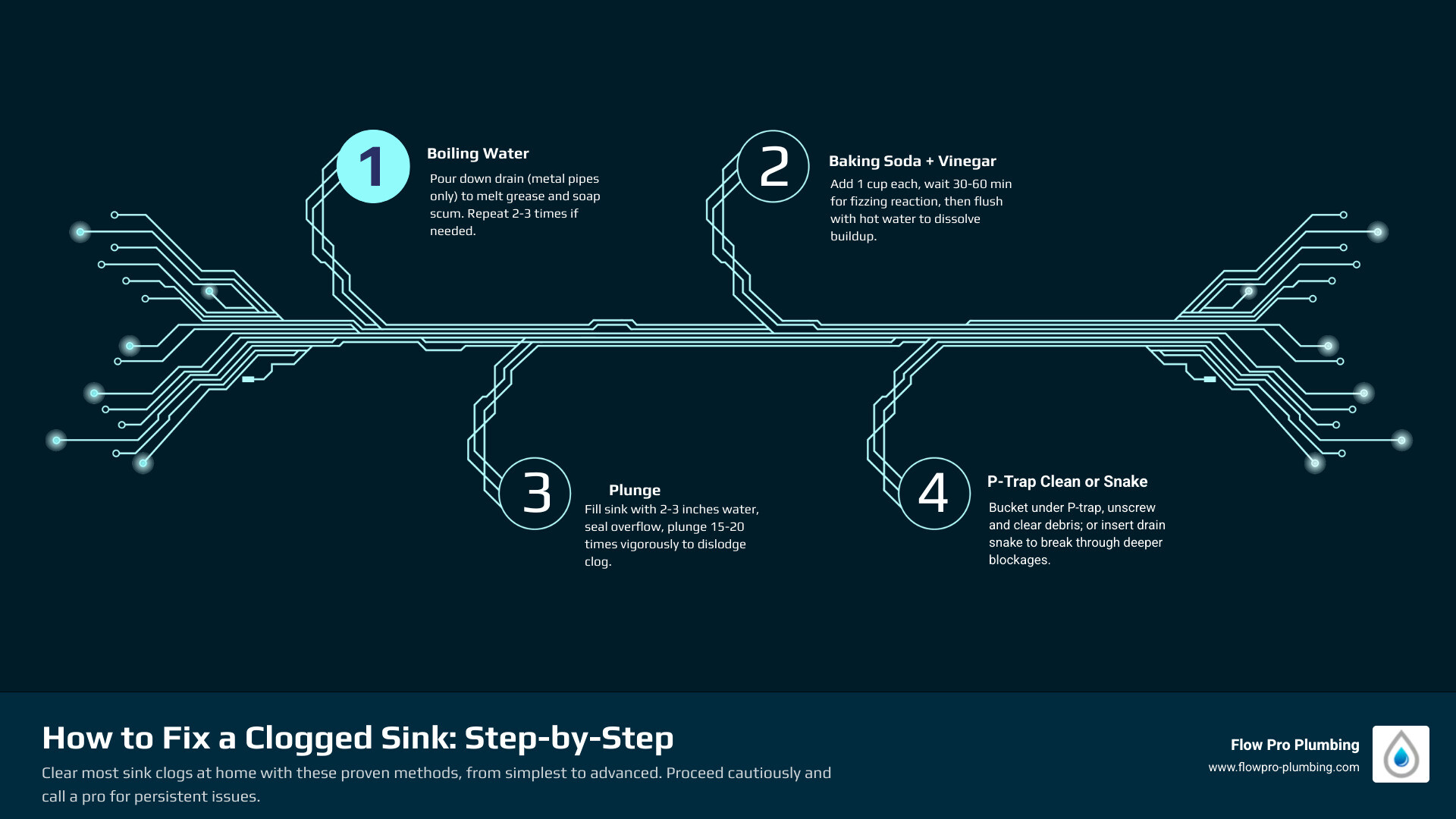
Knowing how to fix a clogged sink can save you time, money, and a whole lot of frustration. Here is a quick overview of the most effective methods, from easiest to most involved:
- Pour boiling water down the drain (metal pipes only) to dissolve grease and soap buildup
- Use baking soda and vinegar — pour 1 cup of each, wait 30–60 minutes, then flush with hot water
- Plunge the drain — fill the sink with 2–3 inches of water, cover the overflow hole, and plunge firmly 15–20 times
- Clean the P-trap — place a bucket underneath, unscrew the curved pipe, remove debris, and reassemble
- Use a drain snake — feed the cable into the drain, rotate to break through the clog, then flush
- Call a professional if multiple drains are slow, sewage odors are present, or the clog keeps coming back
A clogged sink has a way of stopping your day in its tracks — dishes pile up, routines get disrupted, and what looks like a small problem can quietly turn into a bigger one if ignored. Whether it is a slow drain creeping up over weeks or a sudden backup after doing dishes, sink clogs are one of the most common plumbing headaches homeowners in Contra Costa County face. The good news is that most clogs can be cleared without calling a plumber — but knowing which method to use, and when to stop and call one, makes all the difference.
I’m Jesse Delgado, owner of Flow Pro Plumbing in Brentwood, California, and I grew up working alongside my father in the plumbing trade — so I’ve seen how to fix a clogged sink in just about every situation imaginable. In this guide, I’ll walk you through every effective method, from simple household fixes to the signs that it’s time to bring in a licensed plumber.
Common Causes of Sink Blockages in Contra Costa County

In our experience serving areas from Brentwood to Concord, we’ve found that most sink clogs aren’t a mystery; they are the result of daily habits and the unique characteristics of our local water. Understanding what’s going on inside your pipes is the first step in learning how to fix a clogged sink.
- Solidified Grease and Fats: This is the number one enemy of kitchen drains. When warm grease or oil is poured down the sink, it eventually cools and hardens, acting like glue for every other food particle that passes by.
- Hair and Soap Scum: In bathroom sinks, hair is the primary culprit. It gets tangled in the pop-up stopper and combines with soap scum—a film created when minerals in our local water react with soap—to create a thick, waterproof mat.
- Food Particles: Even with a garbage disposal, certain items should never go down the drain. Coffee grounds, eggshells, and fibrous vegetables like celery or onion skins are notorious for creating thick pastes or nests that stop water flow. For more details on managing these issues, check out our guide on Kitchen Sink Clog Removal.
- Mineral Buildup: In Contra Costa County, particularly in Brentwood and Oakley, we often deal with hard water. Over time, calcium and magnesium deposits can narrow the diameter of your pipes, making it much easier for a small bit of debris to trigger a full blockage.
- Foreign Objects: From small toys to wedding rings, we’ve pulled it all out of P-traps. If a clog happens suddenly after something was dropped near the sink, a physical obstruction is likely the cause.
- Pipe Corrosion: In older homes in Pittsburg or Antioch, galvanized steel pipes can corrode from the inside out. This creates a rough surface that catches hair and debris, leading to recurring clogs that DIY methods struggle to solve.
Professional Techniques on how to fix a clogged sink
Before you dive under the sink, safety is paramount. Always wear gloves and eye protection—especially if you’ve already tried a store-bought chemical cleaner, as these can splash back and cause serious burns. If the sink is full of dirty water, use a small cup to bail it out into a bucket before starting your repairs.
When you’re ready to Fix Clogged Sink issues, we recommend a progressive approach. Start with the least invasive method and move toward more mechanical solutions.
Using Specialized Tools to Fix a Clogged Sink
If boiling water doesn’t do the trick, it’s time to reach for the tools. Having the right equipment can make a ten-minute job out of a two-hour struggle.
| Plunger Type | Best Use | Pro Tip |
|---|---|---|
| Cup Plunger | Sinks and Tubs | Apply petroleum jelly to the rim for a better seal. |
| Flange Plunger | Toilets | The “fold-out” sleeve fits the toilet drain perfectly. |
| Accordion Plunger | Tough Toilet Clogs | Provides high pressure but requires more strength. |
The Proper Plunging Technique: For a single sink, fill it with enough water to cover the head of the plunger. If you have a double sink, you must seal the other drain with a stopper or a wet rag; otherwise, the pressure will just escape out the other side. Block the overflow hole (that small hole near the rim of bathroom sinks) with a wet cloth as well. Use firm, vertical strokes for 15–20 seconds, then pull the plunger away quickly to dislodge the debris.
Cleaning the P-Trap: The P-trap is the U-shaped pipe under your sink designed to hold water and block sewer gases. It is also the most common place for clogs to hide.
- Place a bucket under the trap.
- Loosen the slip nuts by hand or with pliers.
- Remove the trap and dump the contents into the bucket.
- Clean the inside of the pipe with an old toothbrush or rag.
- Reassemble, ensuring the seals are seated correctly to avoid the need to Repair Leaky Sink later.
Using a Drain Snake: For clogs deeper in the branch line, a hand auger (drain snake) is essential. Remove the P-trap and feed the snake cable directly into the pipe leading into the wall. Turn the handle clockwise while applying light pressure. When you feel resistance, you’ve hit the clog. Continue cranking to hook the debris, then slowly pull it back out. If you’re dealing with a new installation that keeps backing up, you might actually need to Install New Sink components or check the venting.
Natural Solutions to Fix a Clogged Sink
We always advise against harsh chemical cleaners. They are often ineffective against total blockages and can actually generate enough heat to soften PVC pipes or corrode older metal lines. Instead, try the “Volcano Method.”
- Remove Standing Water: The mixture needs to reach the clog, not sit in the basin.
- The Mix: Pour 1 cup of baking soda down the drain, followed by 1 cup of white vinegar.
- The Reaction: The fizzing action helps break down organic matter and soap scum. Cover the drain with a stopper to force the reaction downward.
- The Wait: Let it sit for at least 30 minutes, or even overnight for slow drains.
- The Flush: Flush with a kettle of hot water.
A Note on Boiling Water: While effective for melting grease, never use boiling water if you have PVC (plastic) pipes. Water over 140°F can damage the joints. For PVC, stick to hot tap water and the baking soda method.
Troubleshooting Complex Clogs: Double Sinks and Disposals
Double sinks present a unique challenge because they share a common tee-connection. If water is backing up from one side to the other, the clog is likely located after the two pipes join.
The Garbage Disposal Check: Often, a “clogged sink” is actually just a jammed disposal.
- Safety First: Unplug the unit or turn off the breaker. Never put your hand inside.
- Manual Rotation: Use an Allen wrench in the hole at the bottom of the unit to manually turn the flywheel and break the jam.
- The Reset: If the motor hums but doesn’t turn, or doesn’t make any sound at all, press the red reset button on the bottom.
- Clear the Line: If the disposal is clear but the sink is still backed up, the clog is likely in the discharge pipe or the P-trap. For a comprehensive look at these systems, see our Clogged Sink Repair Ultimate Guide.
Dishwasher Connections: If your sink backs up only when the dishwasher runs, check the air gap (the small chrome cylinder on your sink rim). A blockage in the small hose connecting the air gap to the disposal can cause water to flood your counter or backup into the sink.
When to Call a Professional for Deep Line Blockages
While DIY methods solve about 80% of single-fixture issues, some problems are buried too deep for a hand snake. In our years serving the East Bay, we’ve found that recurring clogs are rarely just “bad luck”—they are usually a symptom of a structural issue.
Signs you need a professional:
- Multiple Backups: If your kitchen sink, laundry drain, and bathroom are all slow, the clog is in the main sewer line, not the sink.
- Gurgling Toilets: If using the sink causes the toilet to bubble, air is being trapped by a deep blockage.
- Sewage Odors: This can indicate a broken vent pipe or a dried-out trap deep in the system.
- The “Snake Hit”: If you use a drain snake and it hits something solid that won’t budge, you might be dealing with tree root intrusion or a collapsed pipe.
At Flow Pro Plumbing, we use high-definition sewer cameras to see exactly what is happening inside your walls or under your foundation. For the toughest grease blockages or root intrusions, we utilize hydro jetting—a high-pressure water system that scours the pipe walls clean, restoring them to like-new condition. This is far more effective than a standard snake, which might only poke a small hole through a large mass of grease.
Frequently Asked Questions about Sink Maintenance
Is it safe to use boiling water in all sinks?
No. You should only use boiling water if you have metal (copper or galvanized) pipes. PVC and CPVC pipes are rated for specific temperatures, and boiling water can cause the joints to fail or the pipes to deform. Additionally, never pour boiling water directly onto a cold porcelain sink, as the thermal shock can cause the porcelain to crack.
How do I know if a clog is in the main sewer line?
The clearest sign of a main line clog is “cross-talk” between fixtures. If running your washing machine causes water to back up into your kitchen sink, or if flushing the toilet causes water to rise in the shower, the blockage is in the main line. These situations require professional equipment and should be handled by a licensed plumber immediately to prevent water damage.
Can I mix different drain cleaning methods?
Never mix chemical drain cleaners with other methods. If you have already poured a store-bought cleaner down the drain, do not add vinegar, bleach, or any other household chemical. This can create toxic chlorine gas. Furthermore, do not attempt to plunge or snake a drain that contains caustic chemicals, as the splashback can cause severe injuries to your skin and eyes.
Conclusion
Mastering how to fix a clogged sink is an essential skill for any homeowner, but knowing your limits is just as important. Most minor obstructions can be handled with a bit of patience, a plunger, or a baking soda flush. However, when the water stays standing or the clogs keep returning, it’s a sign that your plumbing system needs professional attention.
At Flow Pro Plumbing, we pride ourselves on being the reliable choice for residents in Brentwood, Oakley, Antioch, and the surrounding Contra Costa County areas. We believe in building long-term relationships through fast, clean, and courteous service. Whether you need a simple drain clearing or a complex sewer repair, our licensed team is ready to help.
Don’t let a stubborn clog disrupt your home any longer. Schedule your expert drain clearing service today. We’ll get your pipes flowing freely so you can get back to what matters most.