
Why Does My Drain Smell Bad? The Most Common Causes Explained
Why does my drain smell bad is one of the most common plumbing questions homeowners ask — and the answer is usually one of these culprits:
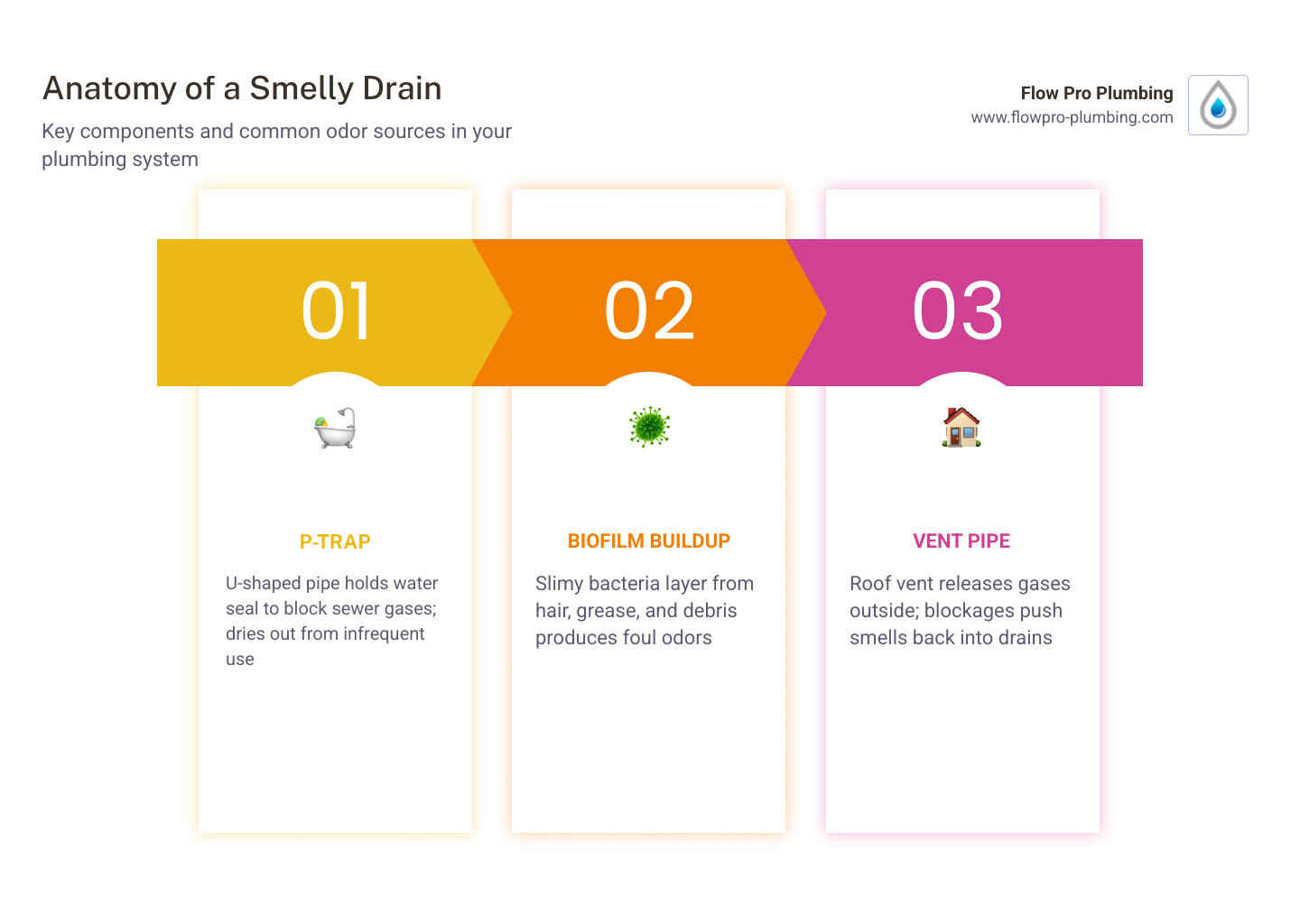
- Dried-out P-trap — the water seal in the U-shaped pipe under your drain has evaporated, letting sewer gases in
- Biofilm buildup — a slimy layer of bacteria feeding on hair, grease, soap scum, and food debris inside your pipes
- Blocked plumbing vent — a clogged roof vent forces sewer gases back down through your drains instead of out of the house
- Partial clog or debris buildup — decomposing organic matter trapped in your pipes produces hydrogen sulfide gas (that rotten egg smell)
- Sewer line issue — a cracked or blocked main sewer line can cause odors throughout the entire home
- Garbage disposal buildup — food particles stuck to disposal blades and walls break down and smell over time
Most smelly drains are a minor fix. But some odors are an early warning sign of a bigger plumbing problem — so it’s worth knowing the difference.
I’m Jesse Delgado, owner of Flow Pro Plumbing in Brentwood, CA, and I’ve spent years diagnosing exactly why does my drain smell bad in homes across the East Bay Area. Whether it’s a dried P-trap in a guest bathroom or a blocked sewer vent, I’ve seen — and solved — it all. Let’s walk through what’s likely going on in your home and what you can do about it.
Identifying the Source: Why Does My Drain Smell Bad?
When you walk into a room and notice that distinctive, unpleasant whiff, your first instinct is likely to cover your nose and find a candle. But to truly stop the stink, we need to understand the mechanics of your plumbing. Most modern homes in Brentwood and the surrounding East Bay areas rely on a simple yet brilliant component: the P-trap.

The P-trap is that U-shaped pipe located directly underneath your sink, tub, or shower. Its primary job is to hold a small amount of water at all times. This water acts as a physical seal, preventing sewer gases from drifting out of the sewer lines and into your living space.
If you are asking, “why does my drain smell bad?” the most frequent answer is that this water seal has failed. This usually happens because of:
- Evaporation: If you have a guest bathroom or a basement floor drain that rarely gets used, the water in the P-trap can simply evaporate over time. Without that water barrier, there is nothing to stop the “sewer smell” from rising.
- Biofilm Buildup: Even if the trap is full, the walls of your pipes can become coated in a slimy substance called biofilm. This is a colony of bacteria that feeds on the organic “sludge” we send down our drains—think skin cells, toothpaste, and soap residue. As they feast, they release foul-smelling gases.
- Stagnant Water: In some cases, water can become trapped in overflow drains or “dead legs” of piping, becoming stagnant and breeding bacteria.
If you are dealing with a slow-moving drain alongside the odor, you might need more than just a quick rinse. Check out our Clogged Sink Repair Ultimate Guide or our Bathroom Drain Cleaning Ultimate Guide for deeper insights into clearing these obstructions.
Decoding the Scent: Why Does My Drain Smell Bad Like Rotten Eggs?
If the odor is specifically reminiscent of rotten eggs, you are likely smelling hydrogen sulfide. This gas is a byproduct of anaerobic bacteria (bacteria that live without oxygen) breaking down organic matter.
While this often happens inside the drain pipes due to hair and soap scum buildup, there is another “hidden” culprit: your water heater. Every water heater has an anode rod designed to attract corrosive elements and protect the tank. In some cases, particularly in areas with specific mineral content in the water, the rod can react with sulfates to produce hydrogen sulfide gas. If you notice the egg smell only when the hot water is running, the issue is likely the water heater, not the drain itself.
However, for most homeowners, the egg smell is a sign that it’s time for a deep clean. To keep your home smelling fresh, we recommend you Clean Your Drains Often to Avoid Awful Odors.
Kitchen vs. Bathroom: Why Does My Drain Smell Bad in Specific Rooms?
The “flavor” of the smell often depends on which room you’re in because the “diet” of the drain is different.
- In the Kitchen: The smells are usually driven by food scraps, fats, oils, and grease (FOG). If you have a garbage disposal, food particles can get trapped on the underside of the splash guard or on the grinding blades. As these particles rot, they create a pungent, sour odor.
- In the Bathroom: Here, the culprits are hair, skin cells, and soap scum. These materials bind together to create a thick “mat” inside the pipes. This mat is the perfect breeding ground for biofilm, leading to a musty or mildew-like scent.
Understanding these differences helps in choosing the right cleaning approach. For a breakdown of maintenance schedules, see our guide on Stop the Stink: How Often to Clean Kitchen and Bathroom Drains.
The Role of P-Traps and Plumbing Vents in Odor Control
While the P-trap stops the smell at the “exit,” the plumbing vent system manages the “exhaust.”

Your home has a network of vent pipes that extend up through the roof. These pipes serve two vital purposes:
- Pressure Regulation: They allow air into the system so that water flows smoothly (like poking a hole in the top of a juice carton). Without air, the rushing water could create a vacuum that “siphons” the water right out of your P-traps, leaving them dry.
- Gas Exhaust: They provide a safe path for sewer gases to escape into the atmosphere high above your home.
If a vent pipe becomes blocked—often by bird nests, leaves, or even debris from a storm—those gases have nowhere to go. The pressure builds up, and the gases are eventually forced back through the P-trap water and into your home. If you hear gurgling sounds coming from your drains when you flush the toilet or run the washer, a blocked vent is a very likely suspect. In these cases, professional Drain Cleaning Brentwood CA is the safest way to clear the obstruction.
Effective DIY Solutions and Prevention Strategies
Before you call in the pros, there are several highly effective DIY methods to tackle a smelly drain. We generally advise against harsh chemical cleaners (like Drano), as they can damage older pipes and are often ineffective against the biofilm that causes odors.
| Method | Best For | How to Do It |
|---|---|---|
| Boiling Water Flush | Grease and Soap Scum | Pour a kettle of boiling water down the drain in 2-3 stages. (Avoid this if you have PVC pipes; use hot tap water instead). |
| Baking Soda & Vinegar | General Biofilm | Pour 1/2 cup baking soda followed by 1/2 cup vinegar. Let it fizz for 15 mins, then flush with hot water. |
| Enzyme Cleaners | Stubborn Organic Matter | Use a natural enzyme-based cleaner overnight. These “eat” the organic material without damaging pipes. |
| Citrus Peels | Garbage Disposals | Grind up small pieces of lemon or orange peel with ice cubes to scrub and deodorize the disposal. |
| The Mineral Oil Trick | Unused Drains | Pour a tablespoon of mineral oil into a rarely used drain. It floats on the water and slows evaporation. |
To prevent these smells from returning, consider installing drain screens to catch hair and food particles before they enter the system. Also, keeping your drains clear of pests is a big part of odor control; learn How to Get Rid of Drain Flies if you notice tiny gnats hovering around your sinks.
When to Call a Professional for Persistent Odors
Sometimes, a “smelly drain” is just the tip of the iceberg. If you’ve tried the DIY fixes and the odor persists, or if you notice smells coming from multiple drains at once, it’s time to call us at Flow Pro Plumbing.
We use advanced diagnostic tools to find the root cause, including:
- Video Camera Inspections: We can see exactly what’s happening deep inside your pipes, identifying cracks, tree root intrusions, or massive clogs.
- Hydro Jetting: For heavy-duty buildup, we use high-pressure water to “pressure wash” the inside of your pipes. This removes biofilm and debris that a standard snake might miss. Learn more about this process in our Sewer Hydro Jetting Complete Guide.
If you’re wondering which method is right for you, check out The Ultimate Drain Showdown: Hydro Jetting vs Snaking Comparison. For residents in our service area, we offer specialized Hydro Jetting Brentwood CA services to restore your pipes to like-new condition. Want to know the technical side? Read up on What Does Hydro Jetting Do? to see how it clears even the toughest odors.
Frequently Asked Questions About Smelly Drains
Is a sewage smell from a drain dangerous?
In small amounts, it’s mostly just an annoyance. However, sewer gas is a mixture of methane, hydrogen sulfide, ammonia, and carbon dioxide. In high concentrations, methane is flammable, and hydrogen sulfide is toxic. Prolonged exposure can cause headaches, dizziness, nausea, and respiratory irritation. If the smell is overpowering or accompanied by physical symptoms, evacuate the area and call a professional immediately.
Why does the drain smell come and go?
This is often tied to atmospheric pressure or usage patterns. A change in outside air pressure can “push” gases through a weak P-trap seal. Alternatively, if a trap is slowly siphoning or evaporating, the smell may only appear once the water level drops below a certain point, then disappear temporarily after you run the faucet and refill the trap.
Can a fishy smell indicate an electrical problem?
Believe it or not, yes! If you smell “fish” but can’t find a plumbing source, check your electrical outlets and appliances. Many plastic components in electrical fixtures release a fishy odor when they overheat or melt. This is a serious fire hazard and should be inspected by an electrician immediately.
Conclusion
A smelly drain is your home’s way of telling you that the plumbing system is out of balance. Whether it’s a simple case of a dry P-trap or a more complex issue with your sewer line, ignoring the scent won’t make it go away.
At Flow Pro Plumbing, we are proud to serve the communities of Brentwood, Oakley, Antioch, and throughout the East Bay. Our team is dedicated to providing friendly service and expert workmanship to keep your home comfortable and odor-free. Don’t live with the stink any longer—reach out to us today to Schedule Professional Drain Cleaning Services and get back to enjoying a fresh-smelling home!