
Why Knowing How to Spot Plumbing Problems Early Can Save Your Home and Your Wallet
How to spot plumbing problems early comes down to knowing what to look and listen for before small issues turn into expensive damage. Here are the most common early warning signs:
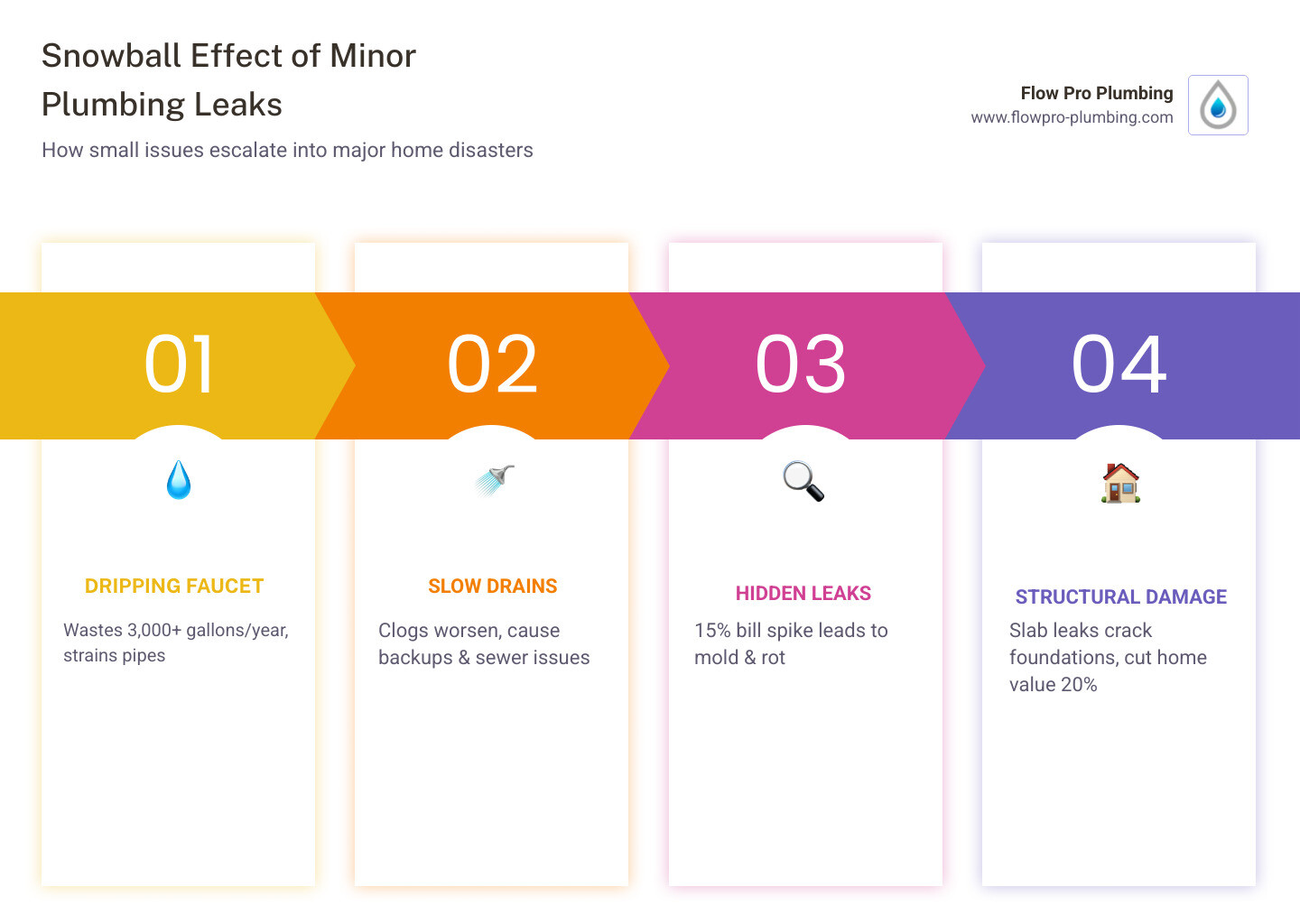
- Dripping faucets or running toilets – A faucet dripping once per second wastes over 3,000 gallons per year
- Slow-draining sinks or gurgling sounds – Often the first sign of a developing clog or sewer line issue
- Unexplained water bill increases – A 15% spike without any change in usage can indicate a hidden leak
- Water stains, peeling paint, or bubbling wallpaper – Signs of moisture behind walls or ceilings
- Musty odors or visible mold – Points to ongoing moisture from a hidden leak
- Low water pressure – Can signal pipe corrosion, mineral buildup, or a leak diverting flow
- Unusual pipe noises – Banging, gurgling, or whistling often mean pressure or blockage problems
- Warm spots on floors – A classic early sign of a slab leak beneath your foundation
Most plumbing problems don’t announce themselves with a flood. They start quietly — a slightly higher water bill here, a faint musty smell there, a drain that takes just a little longer to clear. By the time the damage becomes obvious, the repair bill has already grown. Proactive maintenance alone can reduce repair costs by up to 30%, and catching a leak early is almost always far cheaper than dealing with the structural damage, mold, and water waste that follows when it’s ignored.
I’m Jesse Delgado, owner of Flow Pro Plumbing in Brentwood, California, and I grew up working alongside my father on residential plumbing jobs — which means I’ve seen how knowing how to spot plumbing problems early can be the difference between a quick fix and a major disaster. In this guide, I’ll walk you through every key warning sign, simple at-home tests, and the moments when it’s time to call in a professional.
Common Warning Signs of Plumbing Issues
Plumbing systems are the silent backbone of our homes in Brentwood and Antioch. We often don’t think about them until we’re standing in a puddle, but your pipes are almost always trying to tell you something before a catastrophe occurs.
One of the most frequent culprits is the dripping faucet. It seems like a minor annoyance, but the math is staggering: a single faucet dripping once per second can waste more than 3,000 gallons of water per year. That is enough water for over 180 showers! If you are tired of the rhythmic “tap-tap-tap” in your sink, learning How to Stop a Faucet from Dripping is a great first step in household conservation.
Then there is the “phantom flusher”—the running toilet. A running toilet can waste up to 200 gallons of water every single day. Usually, this is caused by a degraded flapper or a faulty fill valve. If you’ve ever wondered Why Does My Toilet Keep Running, it’s often because the seal in the tank has worn out, allowing water to leak silently into the bowl.
Slow-draining sinks are another early warning. If your morning shave or evening dishwashing ends with a pool of water that takes minutes to disappear, you have a developing clog. These are often caused by a buildup of hair, soap scum, and grease. Addressing these early prevents a total backup that could ruin your afternoon. For more on these pesky bathroom issues, check out our guide on Common Toilet Problems.
Identifying Low Water Pressure
Have you noticed your shower feels more like a light mist than a refreshing spray? Low water pressure is a classic sign that something is wrong deep within your system. In many East Contra Costa County homes, this is caused by mineral buildup from hard water or internal pipe corrosion.
If the pressure drop is sudden, it might mean a pipe has burst or a major leak is diverting water away from your fixtures. If you are asking yourself, Why Is My Water Pressure So Low, it’s important to determine if it’s happening at one faucet or throughout the whole house. For our neighbors dealing with Low Water Pressure Brentwood CA, local water conditions can often play a role in how quickly your fixtures scale up with minerals.
Foul Odors and Drain Health
Your nose is one of your best tools for early detection. If you smell “rotten eggs” or a general sewage scent near your drains, you likely have a dry P-trap or a venting issue. The P-trap is the U-shaped pipe under your sink designed to hold a small amount of water, which acts as a seal against sewer gases. If a guest bathroom isn’t used for weeks, that water can evaporate, letting smells into your home.
However, if the smell persists after running water, it could indicate biofilm buildup or a more serious sewer line breach. Knowing What to Do If a Pipe Is Leaking is vital if those odors are accompanied by dampness under your cabinets.
How to Spot Plumbing Problems Early Behind Walls and Floors
Some of the most destructive plumbing issues are the ones you can’t see directly. Hidden leaks behind drywall or under floorboards can fester for months, causing structural rot and health hazards.
Keep a sharp eye out for:
- Water Stains: Discolored patches on ceilings or walls are never “just a fluke.” A circular stain often indicates an active leak, while streaks might suggest water traveling from a higher point.
- Textural Changes: Peeling paint or bubbling wallpaper are signs that moisture is pushing through the wall from the inside out.
- Mold and Mildew: Mold thrives in damp, dark spaces. If you see black or green spots in the corner of a room or smell a persistent musty odor, there is a leak nearby.
Beyond the health risks, mold is a financial nightmare; it can reduce a home’s value by up to 20%. If you suspect a hidden moisture issue, professional Leak Detection Antioch CA can pinpoint the exact location of the break without tearing down every wall in your house.
Detecting Slab Leaks and Foundation Issues
For homes built on concrete slabs, a leak in the pipes beneath the house is a serious concern. These are known as slab leaks. Early signs include unexplained warm spots on your floor (if a hot water line is leaking) or cracks appearing in your foundation or flooring. If left unaddressed, the water can erode the soil beneath your home, leading to foundation shifting. Understanding How Serious Is a Slab Leak helps homeowners realize that a “little damp spot” on the garage floor could be a sign of a much larger structural threat.
Why You Should Spot Plumbing Problems Early in Older Homes
If you live in one of the more established neighborhoods in Pittsburg or Walnut Creek, your home might have older pipe materials. Galvanized steel pipes, common in older builds, are notorious for corroding from the inside out, which restricts water flow and eventually leads to pinhole leaks. Polybutylene pipes, used in the 80s and 90s, are also prone to sudden failure. Staying vigilant about Plumbing Problems in Old Homes is essential for avoiding a massive flood when aging materials finally give way.
Identifying Hidden Leaks Using Your Water Meter and Bills
One of the most effective ways to how to spot plumbing problems early is to watch your mailbox. An unexpected spike in your water bill—say, a 15% increase—without any change in your household habits is a major red flag.
To confirm a “silent” leak, you can perform a simple water meter test:
- Turn off every faucet and water-using appliance in your home (including the dishwasher and ice maker).
- Locate your water meter (usually in a box near the street).
- Check the “leak indicator” (often a small triangular dial or a digital read). If it’s moving while all water is off, you have a leak.
- If there is no indicator, record the current reading and wait two hours without using any water. If the number has changed, water is escaping somewhere.
This is a great way to identify Common Pipe Leak Causes and How to Avoid Them before they cause visible damage. It can even help you figure out Why Is My Toilet Leaking at the Base, which is often caused by a failed wax ring.
Monitoring for Silent Toilet Leaks
Toilets are the most common source of silent leaks. A minor toilet leak can grow to pour more than 30,000 gallons of water into a home over just three weeks if you happen to be away on vacation.
Try the Food Coloring Test: Drop a few drops of blue or red food coloring into the toilet tank (not the bowl). Wait 15 to 20 minutes without flushing. If the color appears in the bowl, your flapper is leaking. This is the primary reason Why Does My Toilet Keep Running and is one of the easiest DIY fixes you can perform.
Listening for Trouble: Unusual Pipe Noises
Your plumbing shouldn’t be noisy. If your pipes are clanging, whistling, or gurgling, they are protesting a problem in the system.
- Water Hammer: This is a loud banging sound that happens when you turn off a faucet. It occurs when water abruptly stops and creates a pressure surge. This can loosen fittings and lead to leaks over time.
- Gurgling Drains: If your sink or toilet gurgles when you use a different fixture, it means air is trapped in the lines. This often points to a venting issue or a partial blockage in the main sewer line.
- Whistling or Squealing: This often indicates a faulty pressure-reducing valve or a fixture that is struggling with high pressure.
If you notice your Water Pressure Suddenly Low and hear strange noises, you might be dealing with a pipe that has shifted or even a break. Knowing How Serious Is a Burst Pipe is important because a major rupture can cause catastrophic damage within just 24 hours.
Proactive Maintenance and Professional Inspections
We always say that an ounce of prevention is worth a gallon of cure. Conducting bi-annual plumbing inspections can reduce your long-term repair costs by up to 30%. Simple habits like using drain screens to catch hair and debris can prevent the majority of household clogs.
We also recommend avoiding harsh chemical drain cleaners. These products are often acidic and can eat away at your pipes, especially if you have older plumbing. Instead, opt for enzymatic cleaners that use natural bacteria to break down organic matter. Understanding the Importance of Plumbing Maintenance and How Acidic Water Affects Plumbing can help you make better choices for your home’s longevity.
Using Technology to Spot Plumbing Problems Early
Modern plumbing has gone high-tech. Today, we use plumbing scopes and high-resolution inspection cameras to see exactly what is happening inside your walls and underground pipes. These cameras feature LED lighting and can navigate deep into your sewer lines to spot tree root intrusion, cracks, or “bellied” pipes before they cause a backup. This non-destructive testing means we don’t have to guess where the problem is—we can see it in real-time.
When to Call a Professional Plumber
While we love a proactive homeowner, some jobs require professional expertise and specialized tools. You should call a licensed plumber immediately if you experience:
- Multiple Backups: If the sink, tub, and toilet are all clogging at once, the problem is in your main sewer line.
- Structural Dampness: If you find wet spots on your drywall or floors that you can’t explain.
- Gas Odors: This is a safety emergency. If you smell gas, leave the house and call for help. Familiarize yourself with the Top Signs of Gas Leak to keep your family safe.
Frequently Asked Questions about Early Plumbing Detection
How can I test for a hidden leak myself?
The most reliable DIY method is the water meter test. Turn off all water usage and check the meter’s leak indicator. If the dial moves, you have a leak. You should also perform a visual “walk-through” of your home, checking under every sink, around the base of the toilet, and near your water heater for any signs of moisture or corrosion.
What does a gurgling sound in my pipes mean?
Gurgling usually indicates that air is trapped in your plumbing system. This happens when a vent stack is blocked (often by bird nests or debris) or when a partial clog is preventing water from flowing smoothly. It can also be an early sign of a main sewer line clog caused by tree roots.
Why did my water bill suddenly increase?
If your usage hasn’t changed, a sudden spike is almost always due to a leak. The most common “silent” culprits are running toilets, leaking irrigation systems, or a pinhole leak in a pipe behind a wall. Even a small drip can waste hundreds of gallons a month, so it pays to investigate immediately.
Conclusion
Mastering how to spot plumbing problems early is one of the best ways to protect your home and your peace of mind. By staying vigilant for small changes—like a new sound, a faint smell, or a slightly higher bill—you can catch issues before they turn into expensive emergencies.
At Flow Pro Plumbing, we are proud to serve our community in Brentwood, Oakley, Antioch, and throughout the surrounding areas. Whether you need a high-tech camera inspection or a simple fix for a stubborn leak, our experienced team is here to provide the unsurpassed workmanship we’re known for.
Don’t wait for a small drip to become a big disaster. Schedule your professional plumbing inspection today and keep your home running smoothly!