
What is Hydro Jetting for Drains?
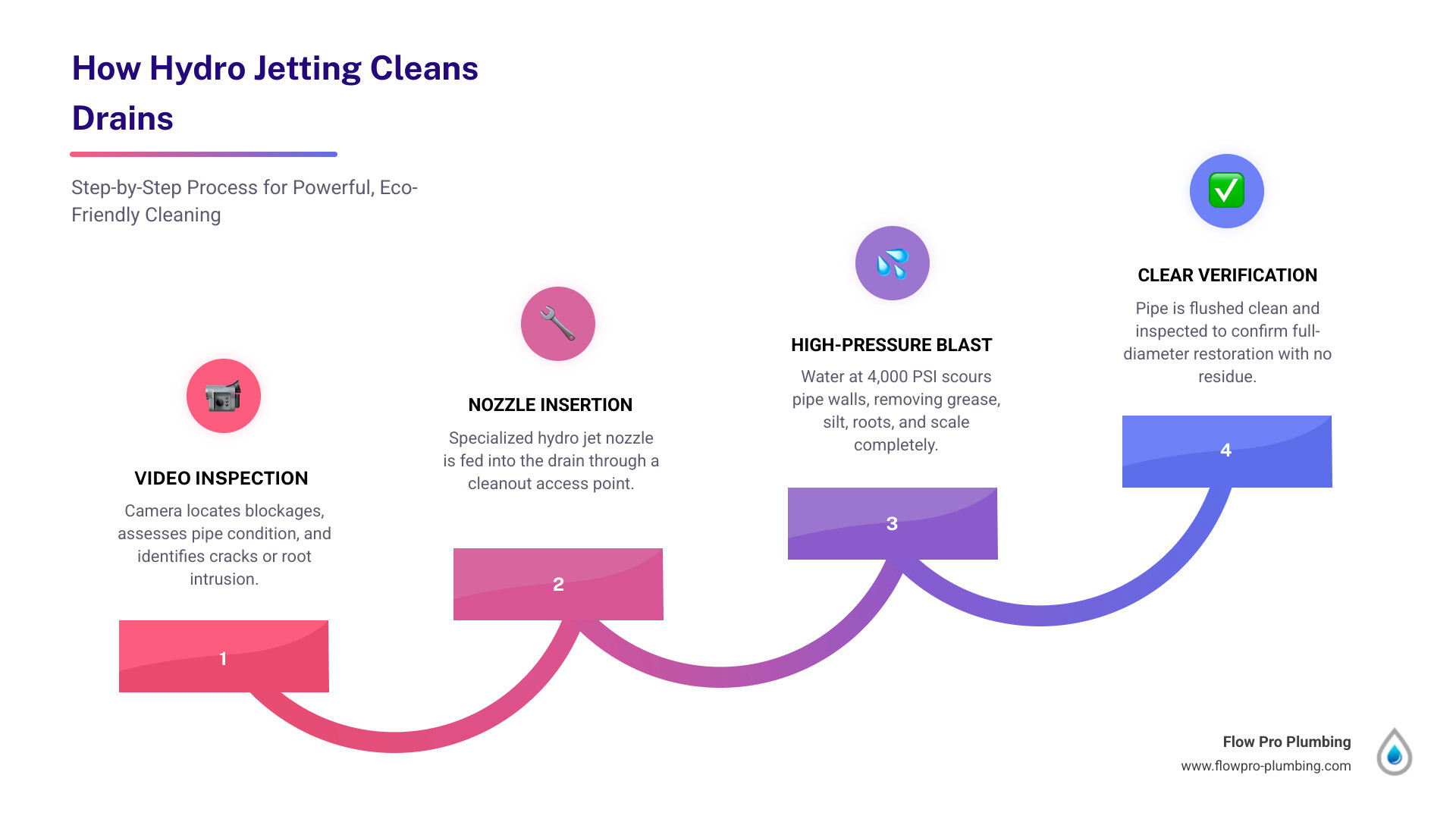
What is hydro jetting for drains is a professional drain cleaning method that uses highly pressurized water — typically up to 4,000 PSI — to blast away buildup, blockages, and debris from the inside of your pipes.
Quick Answer: What is Hydro Jetting for Drains?
- A high-pressure water cleaning technique used by licensed plumbers
- Removes grease, silt, hair, mineral scale, tree roots, and food particles
- Cleans the full interior diameter of the pipe, not just the clog
- Uses no harsh chemicals — water only
- Suitable for residential and commercial drain lines
- Always performed after a video camera inspection to check pipe condition
If you’ve ever poured drain cleaner down your sink more times than you can count and still end up with a slow drain or a backup, you’re not alone. It’s one of the most common frustrations homeowners face — and it usually means the real problem is deeper in the pipe than any bottle of cleaner can reach. Between 23,000 and 75,000 sanitary sewer overflows occur every year in the United States, and nearly half of them are caused by fats, oils, and grease building up inside sewer lines. That’s not a small problem. And for most homeowners, a standard drain snake only scratches the surface.
Hydro jetting is the solution most professional plumbers reach for when the usual fixes stop working. It’s powerful, thorough, and — when done correctly — completely safe for your pipes. This guide walks you through everything you need to know.
I’m Jesse Delgado, owner of Flow Pro Plumbing and a licensed plumber with over a decade of hands-on experience helping East Bay Area homeowners understand what is hydro jetting for drains and when it’s the right call for their plumbing system. Growing up in a family of plumbers and working across residential, new construction, and commercial jobsites gave me a deep foundation in drain cleaning that I bring to every service we perform.
To put it simply, hydro jetting is like a high-intensity power wash for the inside of your plumbing system. While a garden hose might provide enough pressure to wash away loose dirt, a hydro jetter is a heavy-duty machine that pressurizes water to incredible levels—typically between 3,500 and 4,000 PSI for residential sewer lines. In some industrial applications, these machines can even reach up to 35,000 PSI, though we’d never use that kind of force on a home’s pipes!
The magic of this process lies in its scouring action. Instead of just poking a hole through a clog, the high-pressure water hits the interior walls of the pipe, scrubbing away years of accumulated “gunk.” This is an eco-friendly cleaning method because it relies entirely on the kinetic energy of water. There are no harsh acids or corrosive chemicals involved, which is better for your pipes and much better for the environment here in Brentwood and the surrounding Delta areas.
So, what does hydro jetting do? It effectively removes a massive variety of stubborn materials that other methods leave behind. This includes:
- FOG (Fats, Oils, and Grease): These are responsible for nearly half of all sewer overflows in the U.S. They solidify as they cool, creating a thick, waxy lining inside your pipes.
- Silt and Sand: Common in area drains and outdoor lines, especially after heavy California rains.
- Hair Clumps: A primary culprit in bathroom drains that acts like a net, catching other debris.
- Mineral Scale: Hard water deposits that narrow the pipe’s diameter over time.
- Food Particles: Accumulated waste from kitchen disposals that hasn’t quite made it to the main line.
How the Hydro Jetting Process Works
The process begins with a specialized hose equipped with a heavy-duty nozzle. These nozzles are the “business end” of the machine. They aren’t just simple showerheads; they feature multiple jets. Usually, there is one forward-facing jet designed to cut through the initial blockage and several rear-facing jets.
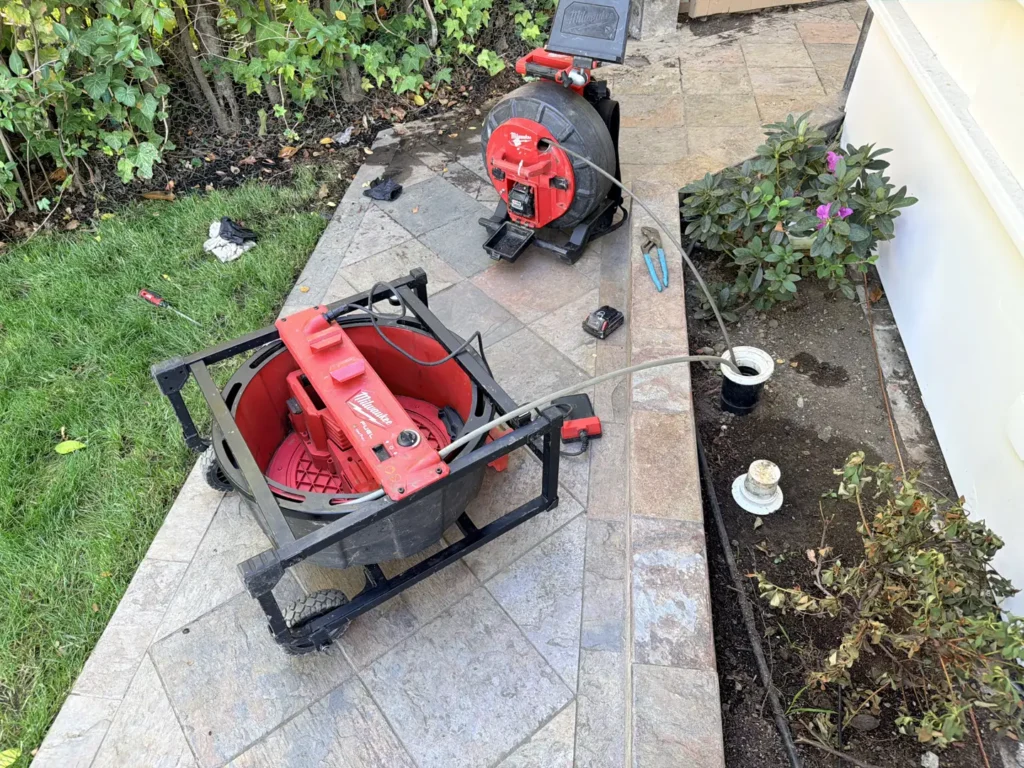
These rear jets serve two purposes: they provide the propulsion needed to pull the hose deep into the plumbing system, and they scour the pipe walls as the nozzle moves forward. We typically access the system through a “cleanout,” which is a dedicated opening in your plumbing designed for maintenance.
For a deeper dive into the mechanics, check out our Sewer Hydro Jetting Complete Guide.
Why a Video Camera Inspection is Essential
Before we ever turn on the water, we perform a video camera inspection. This is a non-negotiable step in our process. Why? Because high-pressure water is incredibly powerful. If your pipes are old, cracked, or have “bellied” (sagged), the pressure from a hydro jetter could potentially cause more harm than good.
The camera allows us to:
- Verify Pipe Integrity: We ensure the pipe material can handle the PSI.
- Locate the Blockage: We see exactly what we are dealing with—whether it’s a “fatberg” of grease or a thicket of tree roots.
- Identify Structural Issues: We look for cracks or collapses that might require repair rather than just cleaning.
Performing hydro jetting sewer line services without a camera is like driving a car blindfolded—it’s a risk we simply don’t take with your home’s infrastructure.
Understanding What is Hydro Jetting for Drains vs. Snaking
Many homeowners ask us why they should choose hydro jetting over traditional snaking (also known as cabling or rodding). While both have their place, they are very different tools. A drain snake is a mechanical auger—a long cable with a blade at the end. It’s great for “punching a hole” through a solid clog like a clump of paper or a small root, but it doesn’t actually clean the pipe.
| Feature | Drain Snaking | Hydro Jetting |
|---|---|---|
| Method | Mechanical Auger/Cable | High-Pressure Water |
| Cleaning Area | Pokes a hole through the clog | Cleans the full pipe diameter |
| Residue Removal | Leaves grease and scale behind | Scours walls completely clean |
| Effectiveness | Best for simple, solid clogs | Best for grease, roots, and scale |
| Longevity | Clogs may return quickly | Provides long-lasting results |
If you live in our service area, our Hydro Jetting Brentwood CA page explains why we often recommend jetting for long-term relief from recurring issues.
When Should You Schedule Hydro Jetting?
How do you know when your drains have moved past the “plunger phase” and into the “hydro jetting phase”? There are several warning signs that indicate a deep-seated blockage in your main sewer lateral.
One of the biggest red flags is frequent backups. If you find yourself calling a plumber every few months to snake the same drain, the line isn’t actually clean—there’s likely grease or scale buildup that is catching new debris as soon as the snake is pulled out. Other signs include:
- Sewage Odors: If you smell “rotten eggs” near your drains, waste may be trapped and decomposing in the line.
- Gurgling Noises: When air is trapped by a clog, it bubbles back up through the water in your toilets or sinks, creating a distinct glugging sound.
- Multiple Clogged Fixtures: If your kitchen sink backs up when you flush the toilet, the problem is definitely in the main line.
For residents in nearby Oakley, our Hydro Jetting Oakley Ultimate Guide offers specific local insights into these common plumbing headaches.
Using What is Hydro Jetting for Drains to Clear Tree Roots
One of the most impressive feats of hydro jetting is its ability to handle tree root intrusion. In older neighborhoods across Contra Costa County, tree roots often find their way into tiny cracks in pipe joints, seeking the moisture inside. Once they get in, they grow into a thick “root ball” that can completely stop your plumbing.
Specialized “chisel-type” or rotating nozzles can actually slice through these roots and flush them out of the system. While it won’t stop the roots from ever coming back (roots are persistent!), it clears the line more effectively than a snake, which often just gets tangled in the mess. To understand the timeline of these results, read How Long Does Hydro Jetting Last? to see how preventative maintenance keeps the roots at bay.
Benefits and Safety Considerations for Your Plumbing
The primary benefit of hydro jetting is the thoroughness of the clean. Because it restores the pipe to its original interior diameter, it significantly reduces the chance of another clog forming anytime soon.
Other benefits include:
- Chemical-Free: You don’t have to worry about toxic fumes or corrosive liquids eating away at your pipes or harming the local water table.
- Versatility: It works on various pipe materials including PVC, ABS, cast iron, and even older clay or cement pipes (provided they are in good structural condition).
- Commercial Power: It is the gold standard for restaurants that deal with heavy FOG discharge in their grease traps.
However, safety is paramount. Hydro jetting should only be performed by a professional. The high pressure can be dangerous if a hose is mishandled, and applying too much pressure to a compromised pipe can lead to a costly collapse.
Frequently Asked Questions About Hydro Jetting
Is hydro jetting safe for older pipes?
Yes, but only after a thorough professional evaluation. If a pipe is extremely thin from decades of corrosion (common in older cast iron), we may opt for a lower pressure or a different cleaning method entirely. The video camera inspection is our primary tool for making this safety call.
How often should maintenance hydro jetting be performed?
For most residential homes, we recommend a “preventative” jetting every 18 to 24 months, especially if you have large trees on your property or a large household. For commercial businesses, particularly restaurants, we often perform this service quarterly or bi-annually to prevent grease-related shutdowns.
Can I perform hydro jetting as a DIY project?
We strongly advise against it. While you can rent pressure washers with “sewer kits,” these are not the same as professional-grade hydro jetters. Without the training to manage the PSI and the camera to see what’s happening inside the pipe, it is very easy to burst a pipe or cause a serious injury. Professional plumbers carry liability insurance and have the specialized training to handle the equipment safely.
Conclusion
Understanding what is hydro jetting for drains is the first step toward reclaiming your home’s plumbing health. It is more than just a “unclogging” service; it is a restorative process that clears decades of buildup and keeps your system running smoothly for years to come.
At Flow Pro Plumbing, we take pride in being the Brentwood drain experts that homeowners trust. Whether you’re in Antioch, Oakley, Discovery Bay, or Walnut Creek, our experienced and friendly team is ready to provide the superior service and unsurpassed workmanship we’re known for. Don’t let a slow drain turn into a major sewer overflow. Contact our team for expert drain cleaning services today and let us get your pipes flowing like new again.