
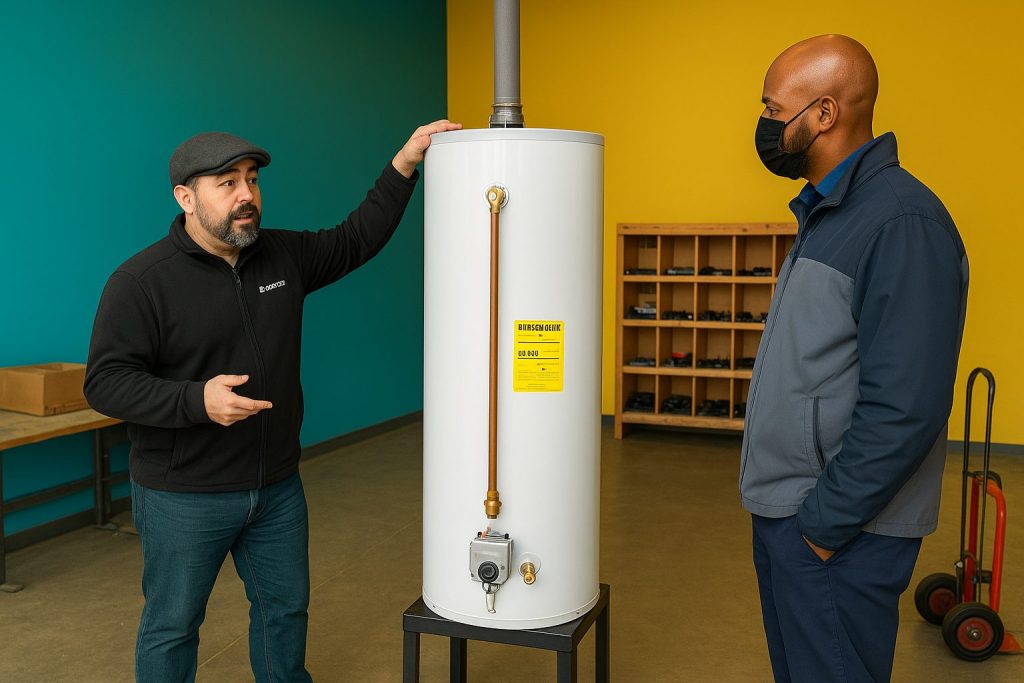
Why Running Out of Hot Water Is More Than Just an Inconvenience
No hot water in Antioch, CA is one of those problems that stops your day in its tracks. Whether you’re trying to shower before work, wash dishes after dinner, or do a load of laundry, a cold water heater can disrupt your entire routine and leave your household scrambling for solutions.
Quick Fixes to Try First:
- Check your circuit breaker – Reset if tripped (electric heaters)
- Check the pilot light – Relight if extinguished (gas heaters)
- Adjust your thermostat – Set to 120°F and wait 30-40 minutes
- Look for leaks – Inspect around the base of your tank
- Listen for unusual noises – Popping or rumbling indicates sediment buildup
When to Call a Professional:
- Water heater is over 10 years old
- Leaking from the tank (not just connections)
- No hot water after basic troubleshooting
- Gas smell or electrical issues
- Rusty or discolored water
If you’re in Brentwood or East Contra Costa County and need reliable water heater service, we provide expert water heater repair and emergency plumbing help to get your hot water flowing fast.
The good news is that many hot water issues have straightforward causes, and some you can troubleshoot yourself before calling for help. From a tripped breaker to a failed heating element, understanding what’s happening with your water heater helps you make informed decisions about repair or replacement. In this guide, I’ll walk you through the most common reasons for no hot water in Antioch, CA, what you can safely check on your own, and when it’s time to bring in a professional.
I’m Jesse Delgado, owner of Flow Pro Plumbing in Brentwood, and I’ve spent over a decade helping East Bay homeowners restore comfort when they’re dealing with no hot water in Antioch, CA and surrounding areas. My team and I have seen every scenario—from simple pilot light issues to full tank replacements—and we’re here to help you get back to hot showers and clean dishes as quickly as possible.
Why Is My Shower Cold? First Signs of a Water Heater Problem
There are few things more jarring than stepping into what you expect to be a warm, comforting shower only to be greeted by an icy blast. This sudden shock is often the first, and most undeniable, sign that your water heater is having a bad day. But a complete lack of hot water isn’t the only indicator of a problem brewing. Our years of experience serving homeowners across Antioch and the wider East Bay have taught us that water heaters often give subtle hints before they fully give up the ghost.
Here are the key signs that suggest your water heater is on the fritz, moving from the less severe to the “Houston, we have a problem” category:
- Lukewarm water: Instead of consistently hot water, you might find that your showers are barely warm, or the hot water simply doesn’t last as long as it used to. This could be due to a thermostat issue, a malfunctioning heating coil, or even a layer of sediment in the tank that needs flushing.
- No hot water at all: This is the most obvious sign, of course. When you turn on the hot water tap and nothing but cold comes out, it’s a clear indication that your water heater isn’t doing its job. This could stem from a variety of causes, from a simple pilot light issue to a complete heating element failure.
- Strange noises: Water heaters are generally quiet appliances. If you start hearing rumbling, popping, or banging sounds coming from your tank, it’s usually a sign of sediment buildup. As water heats, minerals and sediment at the bottom of the tank heat up and cool down, causing these unsettling noises. This sediment can also reduce the unit’s efficiency and lifespan.
- Leaking tank: Any sign of water pooling around the base of your water heater is a serious red flag. While sometimes it might be a loose connection that can be tightened, if the leak is coming directly from the tank itself, especially if it’s an internal crack, it almost always means the unit needs to be replaced. We’ll dive more into this critical issue later.
- Rusty or discolored water: If your hot water comes out looking rusty or has a metallic smell, it often points to corrosion inside your water heater tank or the hot water pipes. This is a sign that the tank is deteriorating and could lead to leaks.
- Increased energy bills: Heating water accounts for approximately 15 percent of your California home’s energy use. If your utility bills are suddenly higher without a change in usage, your water heater might be working harder than it should be, indicating a loss of efficiency due to sediment, a failing heating element, or simply old age.
Common Causes for No Hot Water in Antioch, CA
Understanding the root cause of your hot water woes is the first step toward a solution. In Antioch, CA, and across the East Bay, we frequently encounter a handful of common culprits behind a cold shower. Knowing these can help you pinpoint the problem or at least give us a head start when you call our team.
- Thermostat issues: Your water heater’s thermostat controls the water temperature. If it’s set too low, faulty, or has simply worn out, your water might not heat sufficiently, or at all. The Department of Energy recommends setting water heater thermostats at 120 degrees Fahrenheit for energy efficiency.
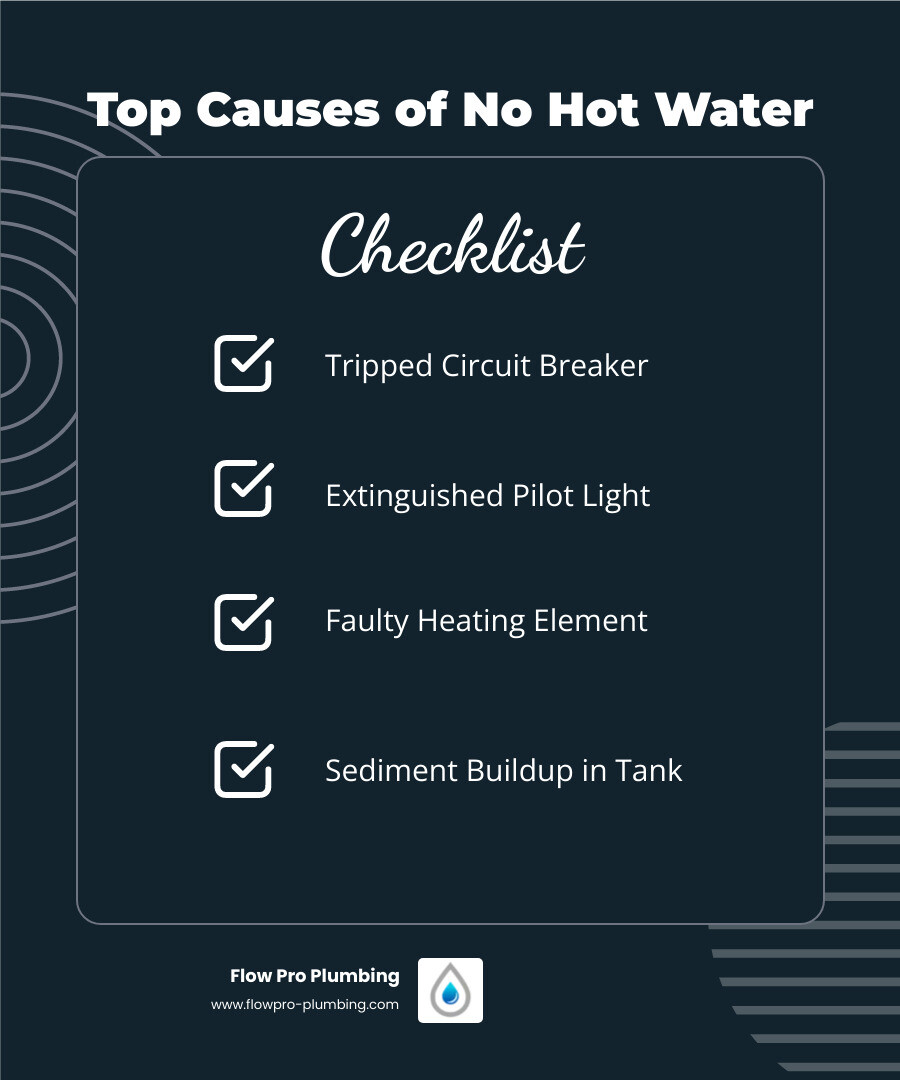
- Tripped circuit breaker: For electric water heaters, a tripped circuit breaker is a common reason for a sudden loss of hot water. Overheating, a short circuit, or a power surge can cause the breaker to trip, cutting power to the unit.
- Extinguished pilot light: Gas water heaters rely on a pilot light to ignite the main burner. If this small flame goes out due to a draft, a faulty thermocouple, or a gas supply interruption, the burner won’t light, and your water won’t heat up.
- Faulty heating element: Electric water heaters typically have two heating elements. If one or both fail, the water won’t heat properly. A complete failure of both elements will result in no hot water in Antioch, CA.
- Sediment buildup: Over time, minerals in the water can settle at the bottom of your water heater tank, forming a layer of sediment. This acts as an insulator, reducing the heater’s efficiency and making it work harder to heat water. It can also cause those strange popping noises and, eventually, lead to lukewarm water or even damage the heating elements or tank.
- Gas supply problem: For gas water heaters, an interruption in the gas supply can prevent the burner from igniting. This could be due to a closed gas valve, an issue with the gas line, or a problem with your utility provider.
- Tank size inadequacy: Sometimes, the problem isn’t a malfunction but simply that your water heater is too small for your household’s demands. If you’re running out of hot water quickly, especially after multiple showers or heavy appliance use, your tank might not be able to keep up.
For more detailed information on water heater problems and our comprehensive solutions, check out our water heater repair services.
DIY Troubleshooting for No Hot Water in Antioch, CA
When you find you have no hot water in Antioch, CA, the first instinct might be to panic. But before you pick up the phone, there are several troubleshooting steps you can safely perform yourself. Often, the solution is simpler than you think!
Safety First!
Before attempting any troubleshooting, remember these crucial safety tips:
- Electricity and water don’t mix: If you have an electric water heater, always turn off the power to the unit at the circuit breaker before inspecting or touching any electrical components.
- Gas safety: If you have a gas water heater and smell gas, do NOT attempt to troubleshoot. Evacuate your home immediately, call your gas provider from a safe distance, and then call us. Never ignore the smell of gas.
- Read your manual: Your water heater’s owner’s manual is an invaluable resource. It contains specific instructions for your model, including troubleshooting tips and safety warnings.
Power Source Check
The very first thing to check, regardless of your water heater type, is its power source.
- Electric water heaters: Go to your home’s electrical panel (circuit breaker box). Look for a tripped breaker – it will typically be in the “off” or middle position. Flip it firmly to the “off” position, then back to “on.” If it immediately trips again, there’s a more serious electrical issue that requires a professional.
- Gas water heaters: Ensure the gas control valve on the water heater is in the “on” position. Also, check other gas appliances in your home to confirm your gas supply isn’t interrupted at the main.
Thermostat Check & Reset Button
Both electric and gas water heaters have thermostats.
- Thermostat adjustment: Check the temperature setting on your water heater. It might have been accidentally turned down. We recommend a setting of 120°F for energy efficiency, which is usually hot enough for most household needs and helps prevent scalding. Increase the thermostat by a couple of degrees and wait 30-40 minutes to see if the water heats up.
- Reset button (electric water heaters): Electric water heaters usually have a red reset button, often located near the thermostat behind an access panel. If the high-temperature cutoff switch has tripped (meaning the water got too hot for some reason), pressing this button will restore power. Again, ensure the power is off at the breaker before opening any panels.
Comparing Gas vs. Electric Water Heater Troubleshooting
| Issue / Symptom | Electric Water Heater Troubleshooting | Gas Water Heater Troubleshooting |
|---|---|---|
| No Power/Fuel | Check the circuit breaker. If it’s tripped, reset it. If it trips again, call a professional. | Check if the pilot light is out. If so, follow manufacturer instructions to relight it. Ensure the gas valve is “ON”. |
| Thermostat Issue | Check the thermostat setting (120°F is recommended). Press the high-temperature cutoff reset button (with power off). | Check the thermostat dial on the gas control valve. Ensure it’s set to the desired temperature (e.g., “Hot” or 120°F). |
| Component Failure | A heating element may have failed. This requires a professional to test and replace. | The thermocouple may be faulty, preventing the pilot light from staying lit. This is a job for a professional. |
| Unusual Noises | Sediment buildup can cause popping or rumbling. Flushing the tank can help but may require a professional if severe. | Sediment buildup is also common and causes similar noises. Flushing the tank is the recommended solution. |