
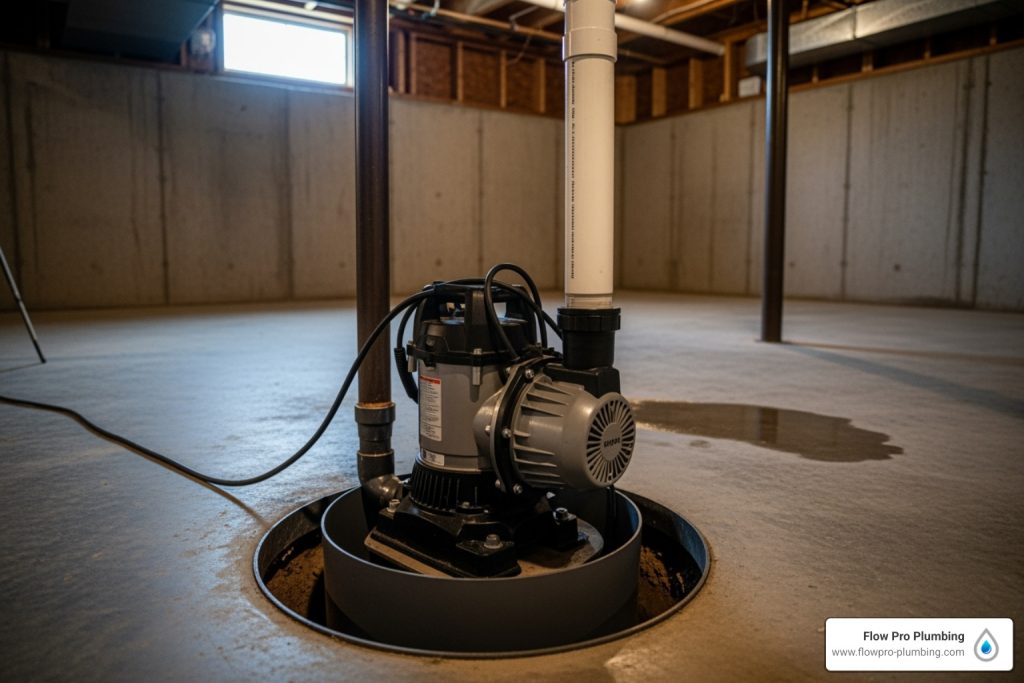
Why Understanding Your Sump Pump Float Switch Matters
A sump pump float switch is the automatic control that detects rising water in your sump basin and tells the pump to activate, preventing basement flooding. Understanding how this critical component works, the different types available, and common failure points helps you maintain a reliable system and catch problems before they cause expensive damage.
Key Float Switch Types:
- Tethered Float Switch – A floating ball on a cord that swings upward as water rises, best for larger basins (14″+ wide)
- Vertical Float Switch – Slides up and down on a rod attached to the pump, ideal for tight spaces and smaller pits
- Diaphragm (Pressure) Switch – Uses water pressure against a sensor, works in very shallow or compact basins
- Electronic Float Switch – Uses solid-state sensors with no moving parts, offering the highest reliability and longest lifespan
If you’re dealing with basement moisture issues in Brentwood, learning about why a house needs a sump pump can help you understand the full protection system. When you need professional installation or repair, Flow Pro Plumbing’s sump pump services are available throughout the East Bay.
Your sump pump is useless without a reliable float switch to tell it when to turn on. These devices can fail without warning, often while you’re away or asleep. A stuck float can cause the pump to run continuously until the motor burns out, while a worn-out switch might not respond to rising water at all. Both scenarios can lead to water damage and costly repairs.
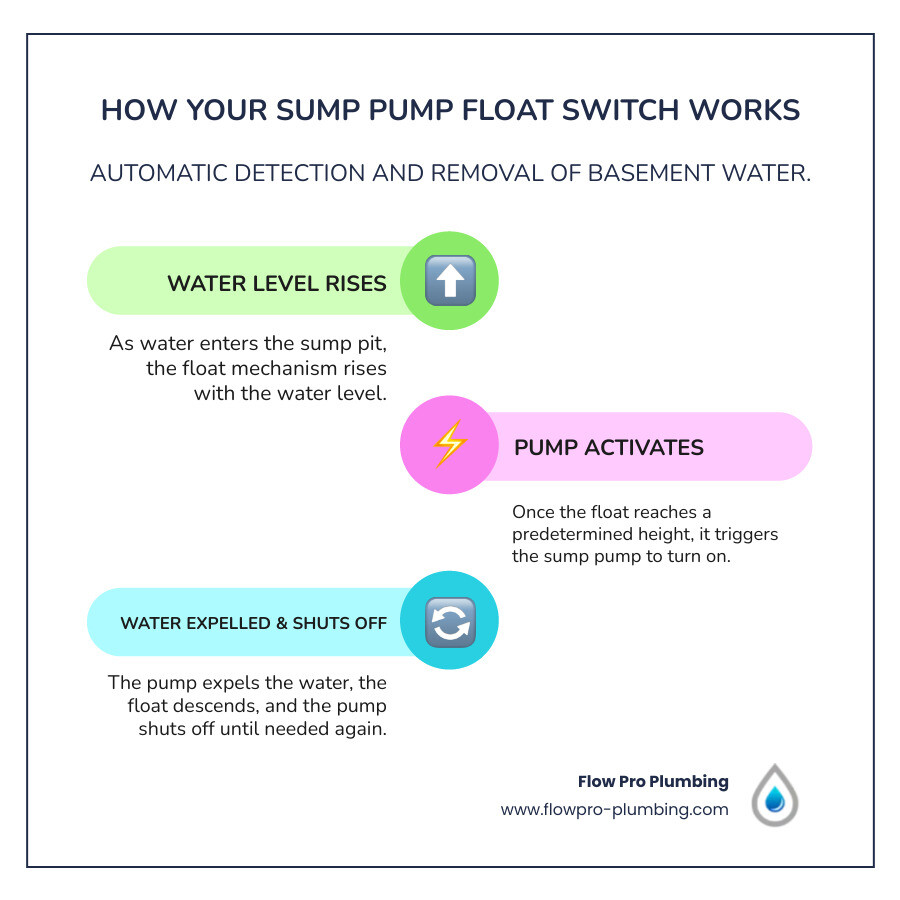
The principle is simple: as water rises in the sump pit, the float rises with it. At a set height, it triggers the pump to activate. As the water level drops, the float descends and shuts the pump off. Understanding your switch type, how to test it, and when to replace it is key to protecting your home from flooding.
I’m Jesse Delgado, a licensed plumber in the East Bay for over a decade. I’ve handled countless sump pump float switch repairs and replacements, from diagnosing stuck floats to upgrading systems to more reliable electronic switches. I’ve seen how this small component makes all the difference in protecting a home from water damage.
Sump pump float switch terms to learn:
The Heart of the System: What is a Sump Pump Float Switch?
A sump pump float switch is the automatic trigger for your pump, working much like the float in a toilet tank. As water accumulates in the sump pit, the float rises with it. At a set height, it closes an electrical circuit, telling the pump to turn on. The pump drains the water to a safe level, and as the float drops, it shuts the pump off. This simple mechanism is absolutely essential.
Without this automatic control, your pump is useless. A pump that runs constantly will burn out its motor, while one that never turns on offers no protection. The float switch prevents both scenarios by ensuring the pump operates only when needed, efficiently managing water levels and preventing costly damage.
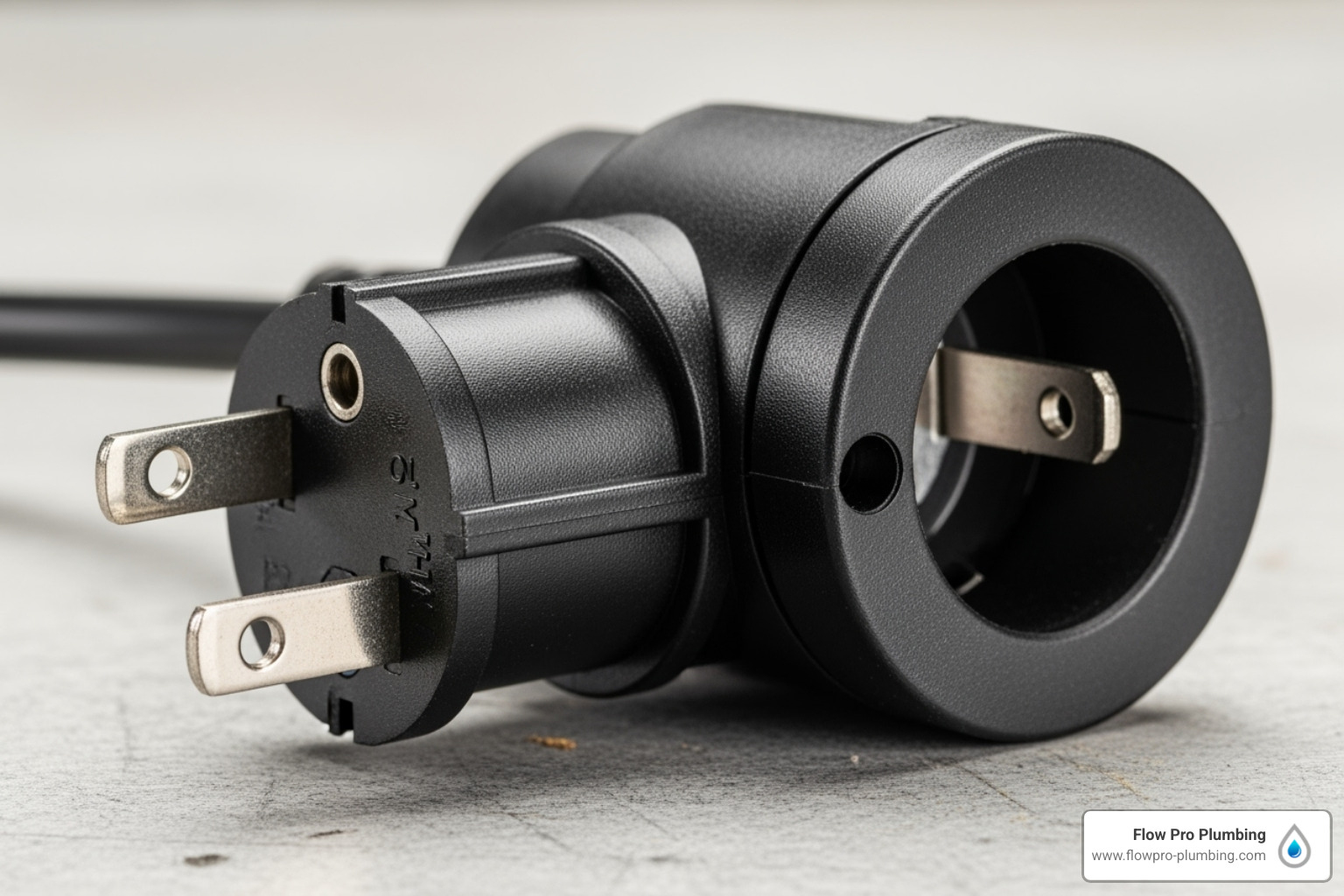
Many switches use a piggyback plug, a handy built-in troubleshooting tool. The switch plugs into the wall, and the pump plugs into the back of the switch’s plug. This design lets you test the components separately. If your pump isn’t working, unplug it from the switch and plug it directly into the wall outlet. If the pump runs, the switch has failed. If it doesn’t, the pump is the problem. This quick test saves time and frustration.
The float switch is the difference between a sump pump system that protects your home and one that’s just taking up space. Understanding why a house needs a sump pump helps put this small but critical component in perspective—it’s your first line of defense against water damage.
Decoding the Types: Mechanical vs. Electronic Switches
When choosing a sump pump float switch, you’ll find two main families: traditional mechanical switches and modern electronic switches. Your choice depends on your sump basin’s size, how quickly it fills, and your desired level of reliability.
Here’s what separates these two approaches:
| Feature | Traditional Mechanical Float Switches | Electronic/Smart Float Switches |
|---|---|---|
| Reliability | Prone to mechanical wear, snagging, and debris issues | High, no moving parts, less prone to physical failure |
| Basin Size Needs | Varies by type (tethered for larger, vertical/diaphragm for smaller) | Flexible, often suitable for various basin sizes |
| Common Failure Points | Stuck floats, worn contacts, corrosion, debris, physical damage | Sensor malfunction (rare), power issues, software glitches (rare) |
Basin size is a critical factor. A tethered float switch, for example, needs at least a 14-inch diameter to swing freely without getting caught. If your pit is smaller, you’ll need a different solution like a vertical or electronic switch.
Traditional Mechanical Float Switches
Mechanical switches use physical movement to operate and have been a reliable choice for decades. Because they have moving parts, they are subject to wear and tear.
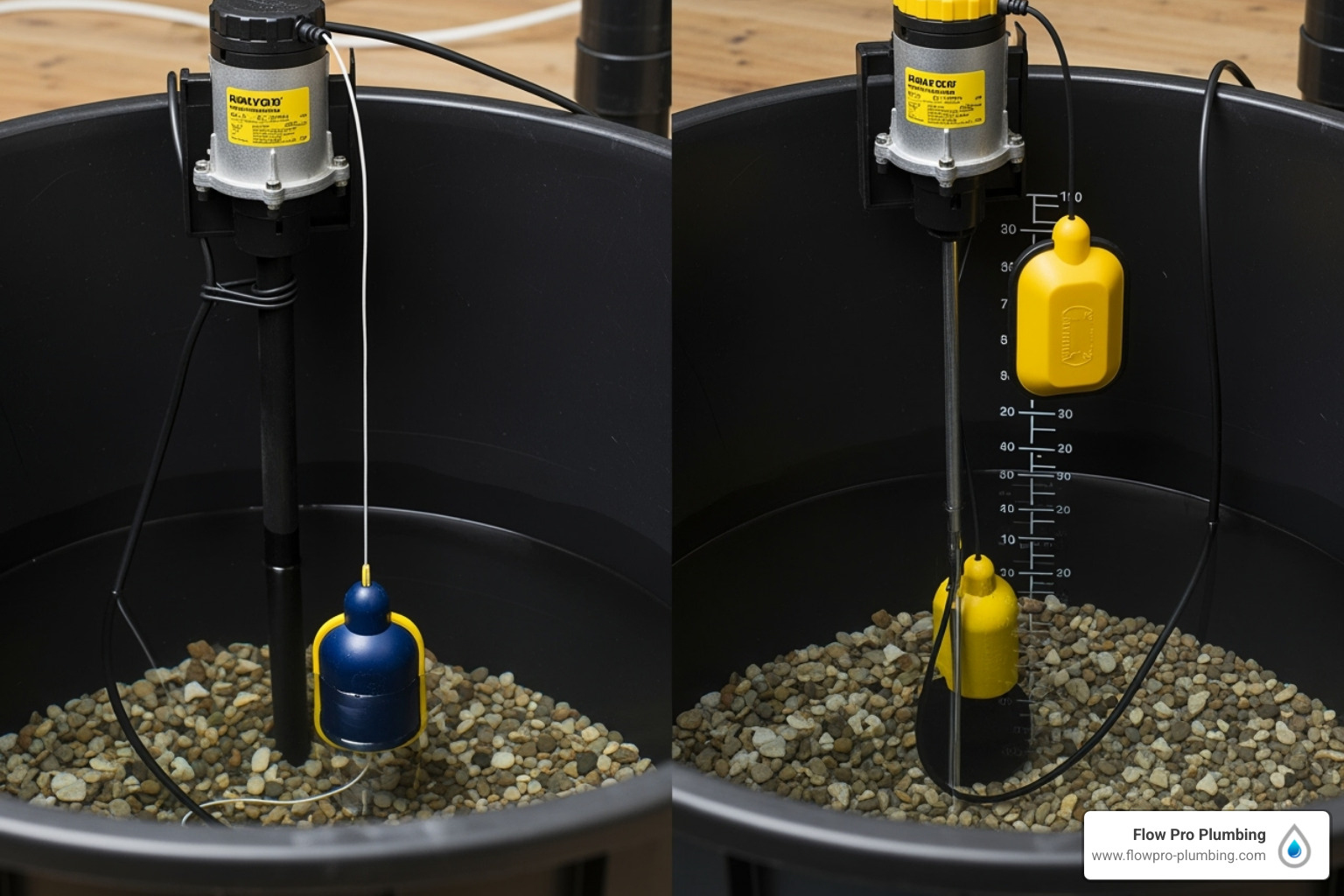
The tethered float switch is a common type, featuring a floating ball on a cord. As water rises, the float swings upward, tilting to activate the pump. These are best for larger basins where they have room to move. However, in smaller pits, the tether can snag on the pump or basin walls, causing failure.
The vertical float switch slides up and down a rod attached to the pump. This compact design is ideal for narrow or shallow pits where a tethered float would get stuck. While less prone to snagging, the rod can become bent or brittle over time.
The diaphragm switch (or pressure switch) uses water pressure instead of a float. Rising water presses on a diaphragm to activate the pump. This type is excellent for very shallow or cramped basins. The main drawback is that the diaphragm can wear out or get clogged with debris.
Mercury float switches are an older, now obsolete technology. Due to the toxicity of mercury, they have been banned in many states and should be avoided.
The Modern Solution: Electronic and Smart Switches
Electronic and smart switches are the modern solution, offering superior reliability because they have no moving parts. They use solid-state sensors to detect water levels, eliminating the risk of mechanical failure, snagging, or corrosion. This results in a longer lifespan and more precise control.
Many electronic switches include advanced diagnostics to warn you of potential pump or pipe issues. Smart switches add Wi-Fi connectivity, sending real-time alerts about high water, power failures, or system malfunctions directly to your smartphone. This provides peace of mind, especially when you’re away. Pairing a smart switch with a battery backup sump pump offers the highest level of protection.
Common Sump Pump Float Switch Problems and How to Troubleshoot Them
Because it operates in a damp, dirty pit, your sump pump float switch is prone to several common problems. Most issues give warning signs and are easy to diagnose.
- Debris and Sludge: Dirt and sediment can build up, weighing down the float or preventing it from moving freely.
- Obstruction: The pump can vibrate and shift, pinning the float against the basin wall. Floats can also get tangled in cords or blocked by other objects in the pit.
- Wear and Tear: Mechanical switches have moving parts that wear out after thousands of cycles, leading to inconsistent or failed operation.
- Corrosion: The damp environment can corrode electrical contacts, preventing the switch from powering the pump.
- Electrical Issues: Problems can also stem from a loose wire, a faulty plug, or moisture intrusion.
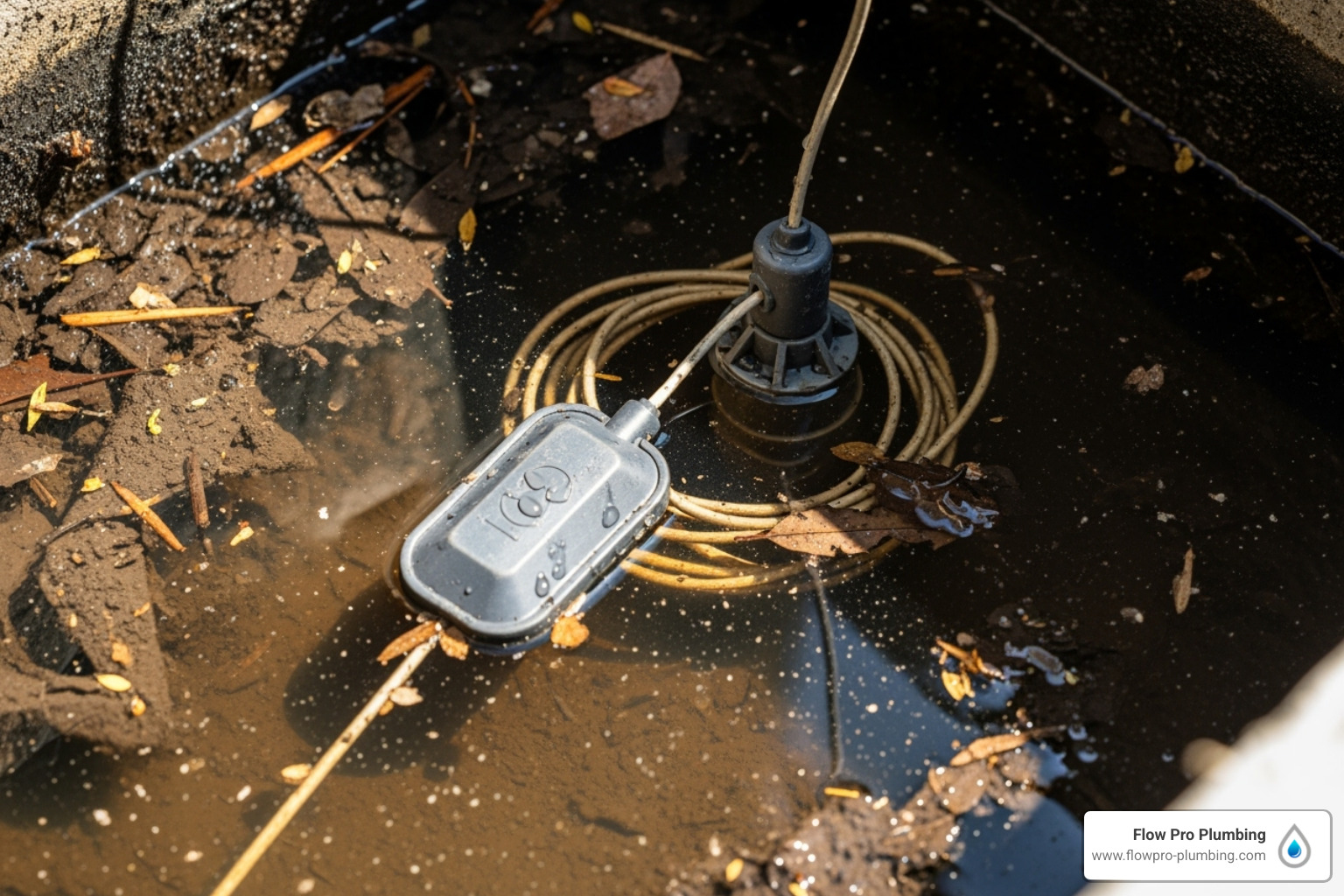
A Step-by-Step Troubleshooting Guide for your Sump Pump Float Switch
When your sump pump misbehaves, follow these steps to check the float switch. Safety first: always disconnect the power by unplugging the pump or flipping the circuit breaker before you begin.
- Visual Inspection: With the power off, use a flashlight to look for obstructions blocking the float, like debris, sludge, or tangled cords. Check if the float is wedged against the pump or basin wall and inspect it for cracks or damage.
- Manual Float Test: Gently lift the float by hand. It should move smoothly. You may hear a ‘click’ as the switch engages. If it feels stuck, you’ve likely found an obstruction. Clear it and test again.
- Bypass the Switch: To test the pump directly, bypass the switch. If you have a piggyback plug, unplug the pump from the switch and plug it directly into a GFCI outlet. If the pump runs, the motor is fine, and the switch is the problem. If it doesn’t run, the issue is with the pump or your power supply.
- Clean the Sump Pit: If you find debris, remove the pump and give the basin a thorough cleaning. A clean environment helps your float switch work reliably. For more protection strategies, see these tips on effective flood prevention.
When to Consider a Sump Pump Float Switch Replacement
Sometimes, a float switch is beyond repair. Here are signs it’s time for a replacement:
- Inconsistent Operation: If the pump turns on at the wrong water levels, the switch is failing.
- Pump Runs Constantly: A switch stuck in the “on” position will quickly burn out your pump motor. If it’s not a physical obstruction, the switch has failed internally.
- Pump Won’t Turn On: If you’ve tested the pump and it works, but the switch won’t activate it, the switch has failed in the “off” position.
- Visible Damage or Corrosion: Rust, cracks, or frayed wires are clear signs that the switch needs immediate replacement.
- Age: If your mechanical switch is over seven years old, proactive replacement is a wise investment. When maintaining your system, don’t forget about sump pump battery replacement for backup units.
Essential Maintenance and Safety Precautions
A well-maintained sump pump float switch is your best defense against basement flooding. Regular checks ensure it works when you need it most.
Check your sump pump system quarterly, especially during the rainy season. The best test is simple: pour a few buckets of water into the pit. The float should rise, the pump should activate, and the water should drain until the pump shuts off. Any failure in this sequence indicates a problem.
Periodically, disconnect the power, remove the pump, and clean out any dirt, gravel, or debris from the bottom of the basin. A clean pit prevents float switch obstructions. Also, check the ‘weep hole,’ a small hole in the discharge pipe near the pump. It prevents air lock (trapped air that stops the pump from working) by allowing air to escape. Ensure this hole remains clear of debris.
For comprehensive strategies to protect your home, our guide on effective flood prevention is a great resource. While this switch installation guide offers technical details, we recommend professional installation.
Safety When Working on Your Sump Pump
Water and electricity are a dangerous mix. Always disconnect the power before working on your sump pump. Unplug it or turn off the circuit breaker—no exceptions. Your pump should be plugged into a GFCI (Ground Fault Circuit Interrupter) outlet, which protects against electrical shock. If it isn’t, have one installed.
If you’re not comfortable with this work, call a professional. The Flow Pro Plumbing team is experienced in sump pump maintenance and repair in Brentwood and the East Bay, ensuring your system is safe and reliable.
Frequently Asked Questions about Sump Pump Float Switches
Here are answers to the most common questions homeowners have about their sump pump float switch.
How long does a sump pump float switch typically last?
The lifespan of a sump pump float switch depends on its type and usage. Mechanical switches typically last 3 to 10 years, as their moving parts wear out over time. Water quality and debris can shorten this lifespan. Electronic switches, with no moving parts, are more durable and can last 10 years or more. Signs of aging include irregular operation or visible damage, indicating it’s time for a replacement regardless of age.
Can I adjust my float switch?
Yes, some switches are adjustable. Tethered float switches offer the most flexibility. By changing the tether’s length and attachment point, you can control when the pump turns on and how long it runs. A longer tether results in longer, less frequent cycles, which is generally better for the pump’s motor. A shorter tether causes more frequent, shorter cycles (short-cycling), which can cause premature wear. Vertical and diaphragm switches are typically not adjustable; their activation points are fixed.
Why is my sump pump running constantly?
A pump that runs constantly is an urgent issue that can quickly burn out the motor. The most common cause is a stuck float switch, trapped in the “on” position by debris, an obstruction, or a tangled cord. The switch can also fail internally, with its electrical contacts fused together. An improperly adjusted tether on a tethered switch can also prevent it from shutting off.
If your pump runs nonstop, disconnect the power immediately to prevent damage. Check for obstructions. If the cause isn’t obvious, the switch likely needs replacement. A small repair now is better than an emergency replacement during a storm.
Your First Line of Defense Against Basement Flooding
Your sump pump float switch is a small but critical component guarding your home against costly water damage. As we’ve covered, understanding how it works, the different types, and common problems is key to preventing a flooded basement. The main takeaway is that regular maintenance and proactive checks are your best insurance policy.
Testing your system, keeping the pit clean, and recognizing the warning signs of failure will ensure you’re never caught off guard. A switch often fails silently and at the worst possible time. Staying ahead of problems provides invaluable peace of mind.
For homeowners throughout Brentwood, Oakley, Antioch, Findy Bay, Pittsburg, Bay Point, Concord, Byron, Bethel Island, Clayton, Walnut Creek, Pleasant Hill, and Knightsen, the experienced team at Flow Pro Plumbing is ready to ensure your sump pump system is in top condition. Whether you need an inspection, a float switch replacement, or a complete system upgrade, we provide unsurpassed workmanship and friendly service. Learn more about our professional sump pump services and let us help you keep your basement dry and safe.