
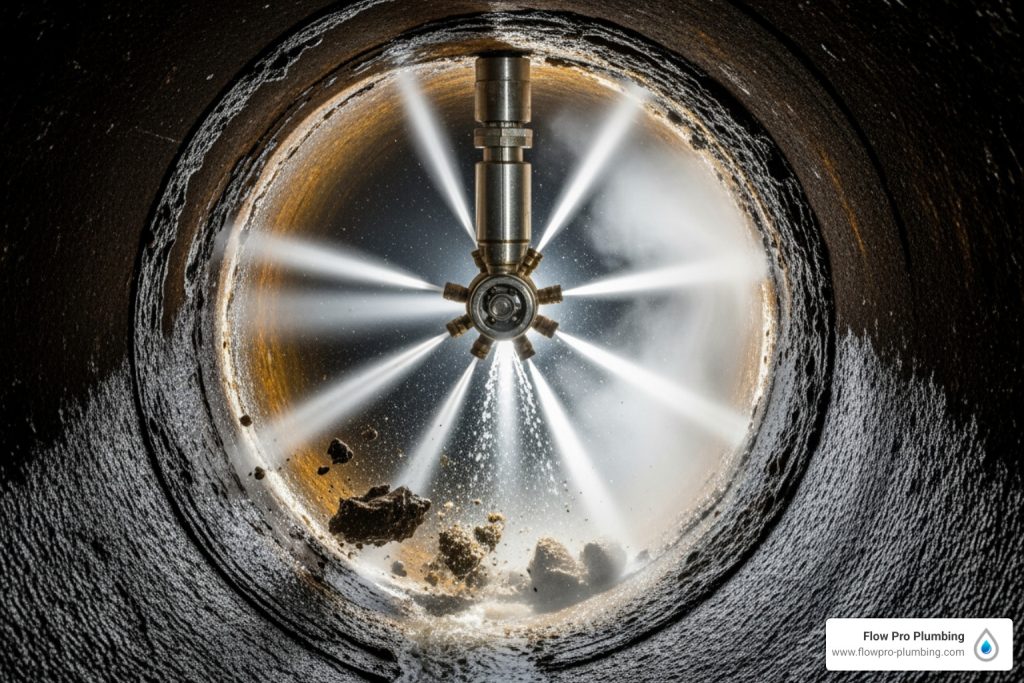
Why Understanding Hydro Jetting Matters for Your Home
If you’ve noticed slow drains, gurgling toilets, or bad odors, your sewer line may have a blockage from grease, tree roots, or debris. While a plumber’s snake can poke a hole through a clog, it often leaves residue behind, leading to recurring problems. Hydro jetting sewer line systems offers a more comprehensive solution.
This powerful cleaning method uses high-pressure water (1,500 to 4,000 PSI) to blast away blockages and scour the entire pipe wall clean. Unlike snaking, it restores your pipes to nearly their original diameter for longer-lasting results. It’s also environmentally friendly, using only water—no harsh chemicals.
Key things to know about hydro jetting:
- What it does: Clears stubborn clogs like grease, roots, and mineral scale.
- How it works: A specialized hose and nozzle are inserted into the sewer line via a cleanout.
- Why it’s effective: It cleans the entire pipe, not just a path through the clog.
- When you need it: For recurring backups, slow drains, or as preventive maintenance.
- Safety first: A pre-service video inspection is essential to ensure your pipes can handle the pressure.
I’m Jesse Delgado, owner of Flow Pro Plumbing in Brentwood, California. With over a decade of experience, my goal is to educate homeowners and provide honest solutions. Let’s explore everything you need to know about this powerful service.
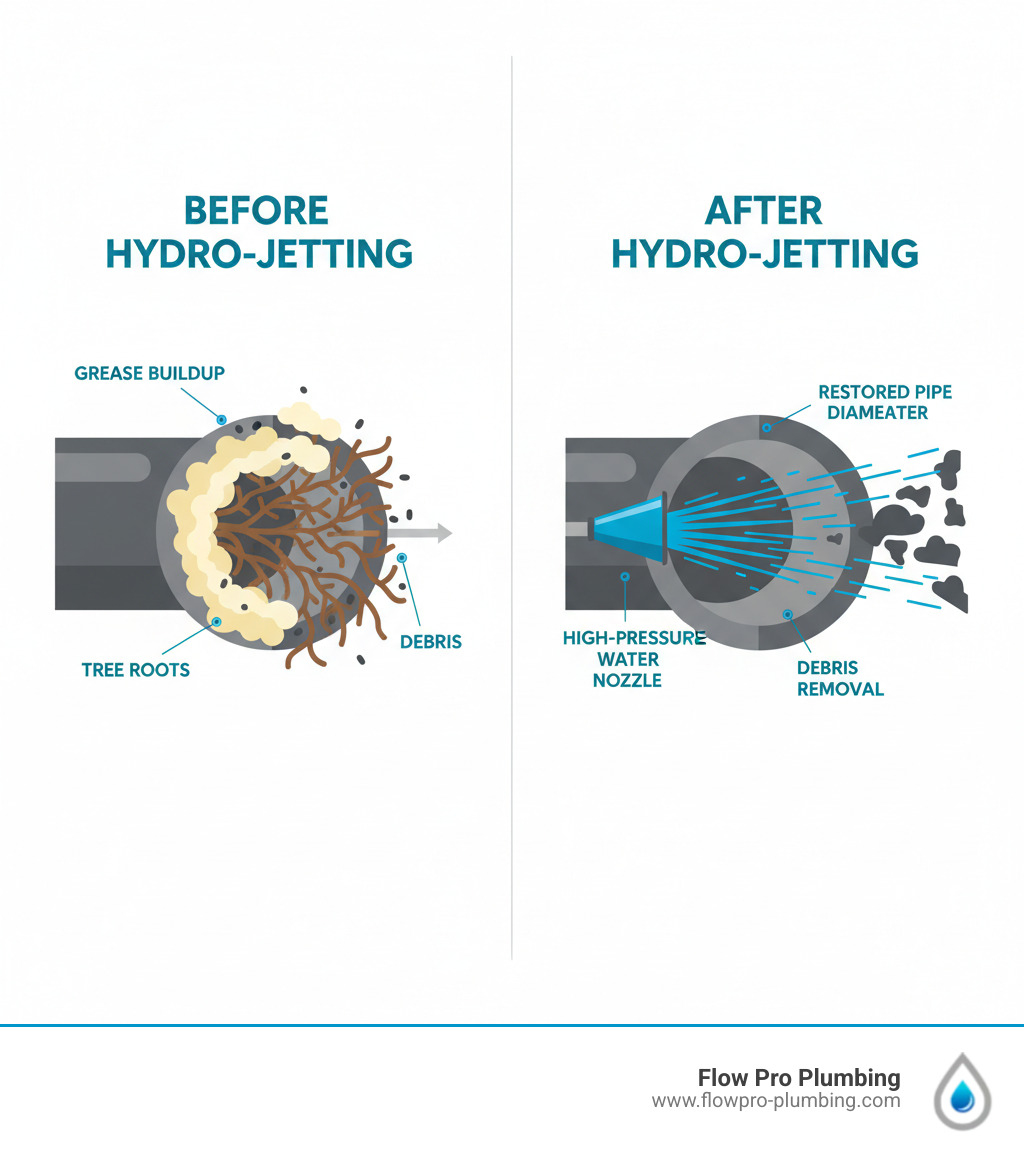
Key terms for Hydro jetting sewer line:
What is Hydro Jetting and How Does It Work?
Imagine giving your sewer pipes the most thorough cleaning they’ve ever had—that’s hydro jetting. This technique uses highly pressurized water, from 1,500 to 4,000 PSI, to blast away clogs and scrub pipes clean from the inside out. Unlike methods that just poke a hole through a blockage, hydro jetting scours the entire circumference of the pipe, removing years of accumulated grease, mineral deposits, and even invasive tree roots. This restores the pipe to its original diameter and flow capacity.
We access your sewer line through a cleanout, inserting a high-pressure hose with a specialized nozzle chosen for your specific problem. The result is pipes that are almost as clean as the day they were installed.
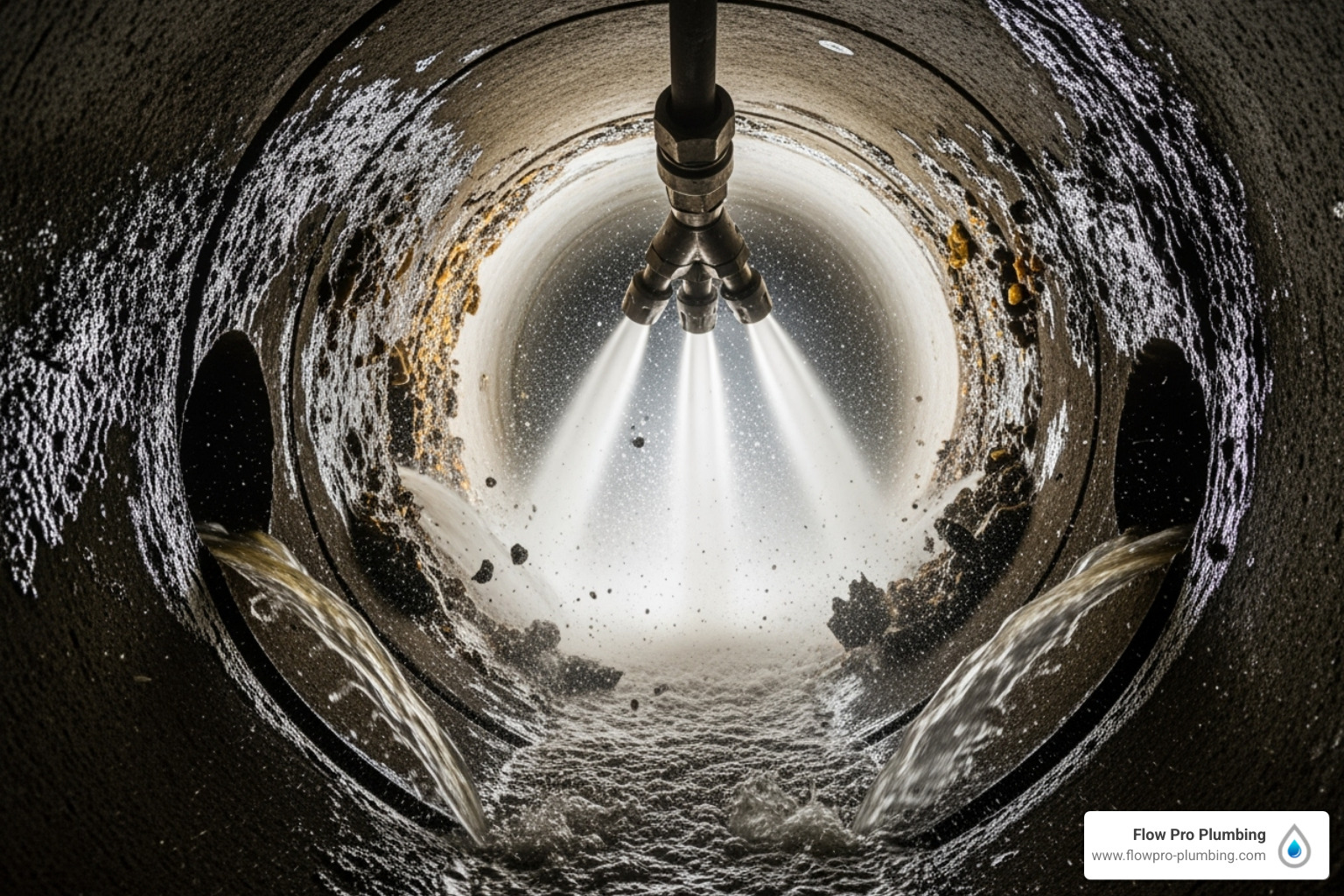
Want to dive deeper into what this service can accomplish for your home? Check out our guide on What Does Hydro Jetting Do?
The Critical Role of a Pre-Service Video Inspection
Before using thousands of pounds of water pressure, we must see what’s inside your pipes. A video inspection is a non-negotiable first step that protects your plumbing. We insert a high-resolution camera to:
- Assess pipe condition: We identify the pipe material (PVC, cast iron, clay) and check for signs of age or deterioration to ensure it can withstand the pressure.
- Locate blockages: The camera shows us exactly where the clog is and what it’s made of, allowing us to choose the right approach.
- Identify hidden damage: We look for cracks or breaks that could worsen under high pressure. If we find significant damage, we’ll recommend repairs first.
This professional assessment ensures we solve your problem safely and effectively. Learn more about why this step matters in our article on the Sewer Video Inspection Role.
The Process for Hydro Jetting a Sewer Line
Once we’ve confirmed your pipes are in good condition, the process is straightforward:
- Hose Insertion: We feed the hydro jetting hose into your sewer line through the cleanout, using a nozzle selected based on the video inspection.
- Pressurized Water Application: The machine sends high-pressure water through the hose. Backward-facing jets propel the hose forward while blasting debris off the pipe walls.
- Debris Flushing: The powerful water flow washes all loosened material down the line and into the municipal sewer system, leaving nothing behind to cause future clogs.
- Post-Service Inspection: We perform a final camera inspection to verify the pipe is completely clean and undamaged. You get to see the results for yourself.
For more details, explore our Hydro Jetting Oakley Ultimate Guide.
How Homeowners Can Prepare for Service
A few simple steps can help us work more efficiently:
- Clear access to your cleanout: If you know where your sewer cleanout is, please clear any plants or stored items around it. If not, we’ll find it for you.
- Inform your plumber of issues: Let us know about specific slow drains, gurgling sounds, or backup locations.
- Secure pets: Our equipment can be noisy, so keeping pets in a separate, quiet room is best for their comfort and our team’s safety.
- Ask questions: We want you to feel informed. Please ask us anything about the process.
Key Benefits of Hydro Jetting Your Sewer Line
When you have a stubborn sewer problem, you want a solution that lasts. Hydro jetting sewer line service provides a fresh start for your plumbing system with benefits that go beyond a simple clog removal.
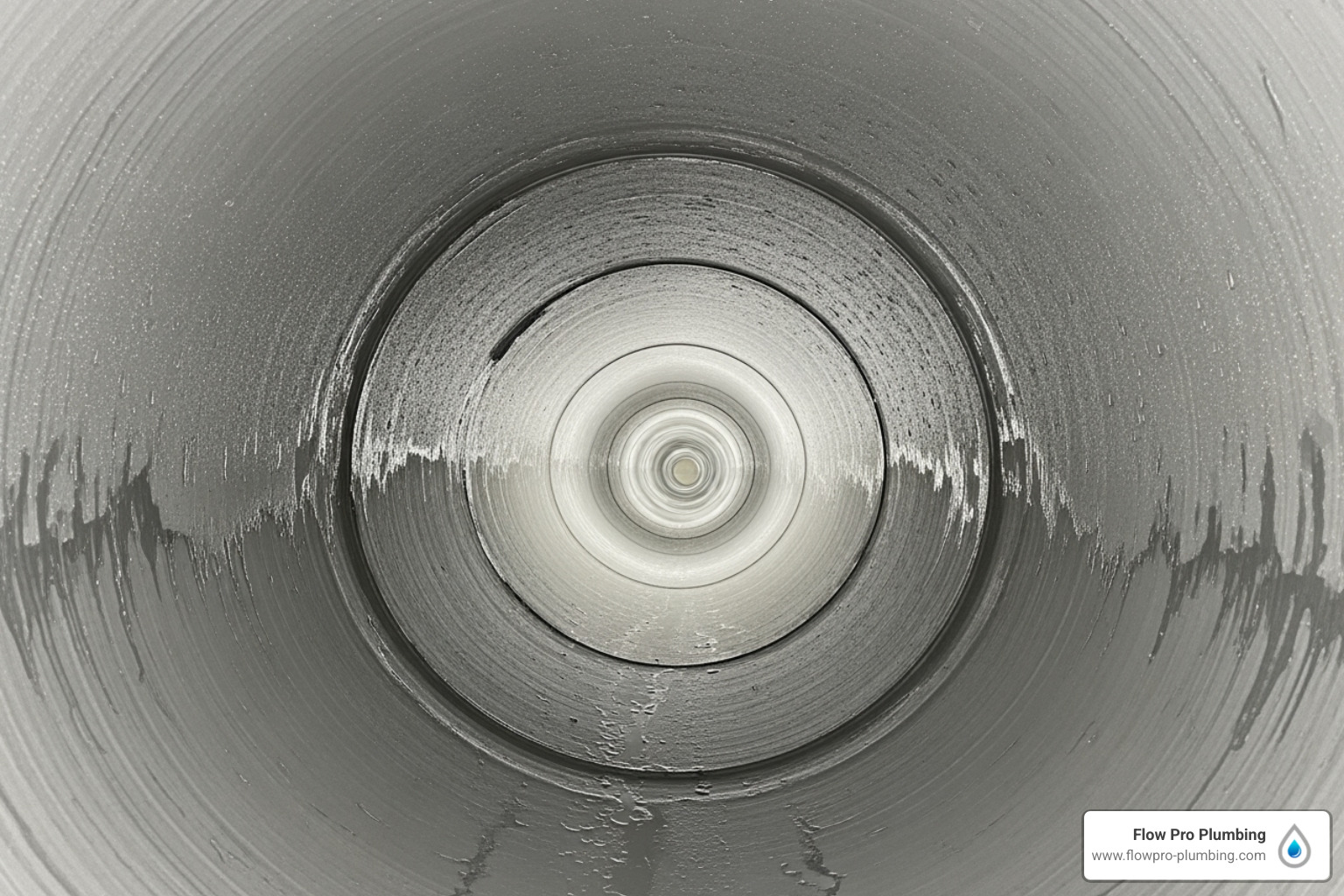
The primary benefits include:
- Comprehensive Cleaning: Unlike snaking, which just pokes a hole in debris, hydro jetting scours every inch of the pipe’s interior.
- Long-Lasting Results: By removing all the buildup clinging to pipe walls, drains stay clear for much longer. Find out more in our guide on How Long Does Hydro Jetting Last?
- Preventive Maintenance: Regular hydro jetting (every 1-2 years) can prevent major clogs before they start, saving you from emergency calls.
Tackling the Toughest Clogs and Buildup
Hydro jetting excels where other methods fail. It effectively removes:
- Grease and Sludge: Cooking oils and fats solidify in pipes, creating sticky blockages. Hydro jetting blasts this greasy mess away completely.
- Mineral Deposits and Hardened Scale: Hard water leaves behind mineral deposits (scale) that can become as hard as concrete. The force of pressurized water chips it away, restoring the pipe’s full diameter.
This service is the ultimate answer for many blockages. See our full list of Clogged Sewer Line Solutions.
Effectively Removing Tree Roots
Tree roots seeking water can invade sewer lines through tiny cracks, growing into thick masses that cause complete blockages. Hydro jetting acts as a precision cutting tool, slicing through the root structure and flushing the severed masses completely out of your line. This restores full pipe diameter and flow. While hydro jetting is the best method for clearing roots, significant pipe damage that allowed them in may require a Sewer Main Line Repair to prevent them from returning.
An Environmentally Friendly Cleaning Method
One of the best aspects of hydro jetting is that it’s a green solution. The process uses no harsh chemicals, only water. This is a stark contrast to store-bought drain cleaners, which can contain corrosive substances that damage pipes and harm the environment. These chemicals are a concern for water systems, a fact highlighted by organizations like the U.S. Environmental Protection Agency (EPA), which promotes safer cleaning alternatives.
Because it’s a water-based solution, hydro jetting is safe for your pipes, property, and family. There are no toxic fumes or chemical residues left behind. Learn more about why it’s a green solution.
Hydro Jetting vs. Traditional Drain Cleaning
When facing a clog, it’s important to understand your options. Hydro jetting sewer line cleaning is fundamentally different from traditional methods like snaking. It’s not just about clearing a blockage—it’s about cleaning the entire pipe.
| Feature | Hydro Jetting | Snaking/Augers |
|---|---|---|
| Effectiveness | Cleans entire pipe wall, removes all buildup | Pokes a hole through clog, leaves residue |
| Longevity | Longer-lasting results, prevents recurring clogs | Temporary fix, clogs can return quickly |
| Pipe Health | Restores pipe to near-original diameter, removes corrosive buildup | Can scratch pipe interior, may not remove buildup that causes future issues |
| Clog Type | Excellent for grease, roots, scale, stubborn blockages | Best for simple mechanical obstructions, hair clogs |
| Environmental | Eco-friendly, uses only water, no chemicals | No chemicals, but less thorough cleaning |
| Risk to Pipes | Low risk if pipes are sound (pre-inspection crucial) | Can potentially damage older/brittle pipes if used aggressively |
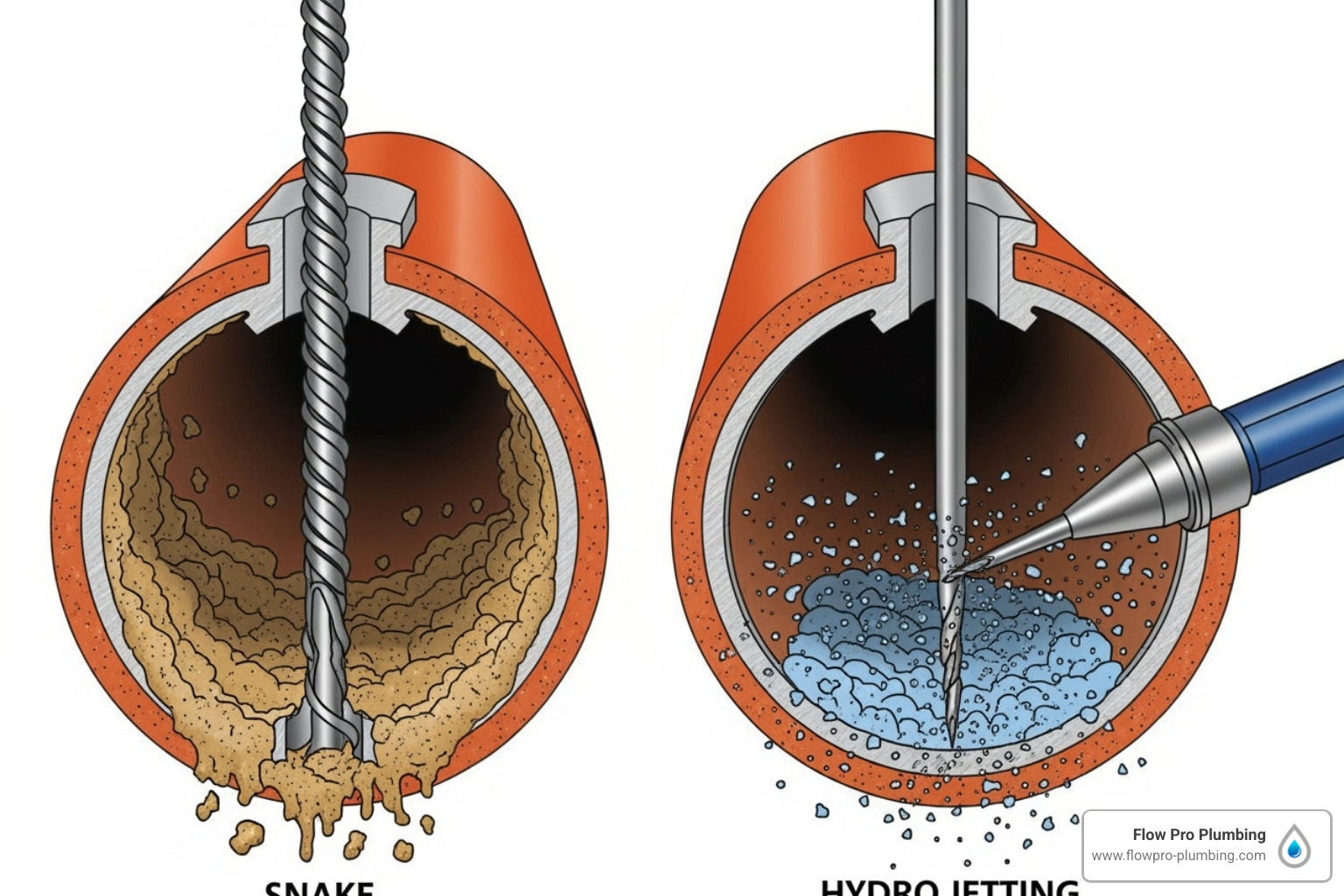
Why Hydro Jetting a Sewer Line is More Effective Than Snaking
A drain snake, or auger, works by drilling through an obstruction. It clears a path for water to flow but leaves behind the grease, scale, and residue coating the pipe walls. This remaining buildup acts as a magnet for new debris, and the clog often returns quickly.
The difference is clearing vs. cleaning. Hydro jetting cleans the entire pipe circumference, scouring away buildup and restoring the pipe to its full flow capacity. This provides a much longer-lasting solution and prevents the frequent callbacks associated with simple snaking for severe blockages. While snaking is a useful tool, it’s often a temporary fix for a deeper problem. Learn the basics of snaking in our guide on How to Use a Drain Snake on Clogged Pipes.
Are There Alternatives to Consider?
While hydro jetting is powerful, it’s not always necessary. Mechanical augers (drain snakes) are perfect for simple, isolated clogs like a hairball in a shower drain. For these routine issues, drain cabling is quick, effective, and often all that’s needed. Our team offers comprehensive Drain Clearing and will always recommend the right tool for the job.
We strongly advise against using chemical drain cleaners. These products rarely work as advertised, can damage your pipes over time, and are harmful to the environment. Professional assessment is always the safest and most effective route. To learn more about professional tools, read our article on what a drain auger is.
Potential Risks and Important Considerations
While hydro jetting sewer line cleaning is highly effective, it’s a powerful tool that isn’t suitable for every situation. At Flow Pro Plumbing, we believe in being upfront about potential risks so you can make an informed decision.
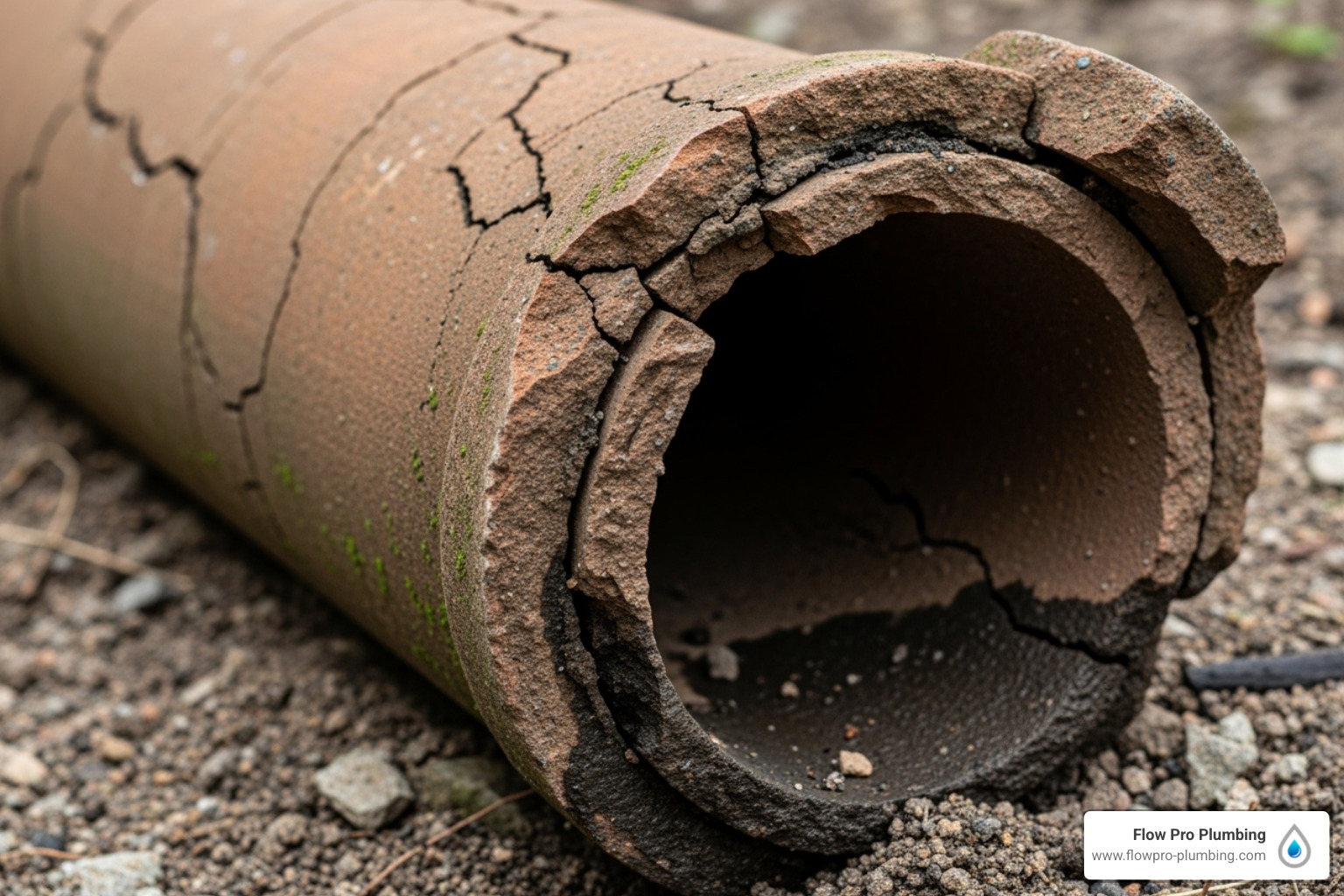
The high pressure that cleans so well can pose a risk to pipes that are not structurally sound. Think of it like pressure washing a crumbling sidewalk—it can do more harm than good.
Is Hydro Jetting Safe for All Pipes?
No, it is not safe for all pipes. The suitability depends on the pipe’s material and condition.
- Modern pipes (like PVC) are generally strong enough to handle hydro jetting.
- Older pipes (like clay, cast iron, or Orangeburg) can become brittle, corroded, or cracked over time. The force of hydro jetting could turn a small crack into a major break or cause a weak section to collapse.
This is precisely why a video inspection is mandatory before we begin. Our camera allows us to see the exact condition of your pipes. If we spot red flags that suggest your pipes can’t handle the pressure, we will tell you immediately and recommend an alternative, such as a Broken Sewer Pipe Repair to address the structural issue first.
When Hydro Jetting Might Not Be the Answer
Hydro jetting is a cleaning method, not a repair method. It cannot fix structural problems in your sewer line. It is not the right solution for:
- Collapsed Pipes: A caved-in pipe creates a physical barrier that water pressure cannot fix. This requires excavation and replacement.
- Severely Broken Lines: If a pipe has large cracks or separated joints, the high-pressure water will escape into the surrounding soil instead of cleaning the line.
- Bellied Pipes: This occurs when a section of pipe sags, creating a low spot where debris collects. While hydro jetting can clear the debris, it can’t fix the sag, and the problem will recur. The pipe section must be repaired to restore proper slope.
In these cases, our video inspection will identify the true problem, and we will recommend the appropriate Essential Sewer Repair Services to provide a permanent solution.
Frequently Asked Questions About Hydro Jetting
We get a lot of questions about hydro jetting sewer line systems. Here are answers to some of the most common ones.
How often should I have my sewer line hydro jetted?
There’s no single answer, as it depends on your home. However, here are some general guidelines:
- For preventive maintenance: Most homes benefit from service every 18 to 24 months to stay ahead of problems.
- Based on your pipes: Older homes with cast iron or clay pipes may need more frequent cleaning to manage buildup and prevent root intrusion.
- Based on household habits: Homes with heavy garbage disposal use or a history of pouring grease down the drain may require annual service.
- If you have trees: Properties with large trees near the sewer line should consider regular hydro jetting to keep invasive roots in check.
We can provide a personalized recommendation after a video inspection.
Will hydro jetting damage my landscaping?
No, your landscaping is safe. Hydro jetting is a trenchless cleaning method. We work through an existing access point called a cleanout, which is already installed in your plumbing system. There is no need for digging, so your lawn, garden, and patio remain undisturbed.
Can I hydro jet my own sewer line?
We strongly advise against this. While we admire the DIY spirit, hydro jetting is a job strictly for trained professionals for several critical reasons:
- Industrial-Grade Equipment: Professional hydro jetting machines produce pressure up to 4,000 PSI or more. This is far more powerful and dangerous than a rental pressure washer.
- Risk of Injury: The high-pressure water stream can cause severe injury if mishandled.
- Risk of Pipe Damage: Without a pre-service video inspection and the expertise to interpret it, you could easily damage your pipes. Using the wrong pressure on an old or compromised pipe can turn a simple clog into a costly pipe replacement.
Our technicians have the training and experience to select the right pressure and nozzles to clean your pipes safely and effectively. For your safety and the integrity of your plumbing, please leave this job to the pros.
Your Partner for Clear and Healthy Sewer Lines
When your drains slow down or back up, it disrupts your entire household. At Flow Pro Plumbing, we understand the frustration and are here to provide solutions that last. We don’t believe in quick fixes; we do the job right the first time.
Based in Brentwood, CA, we proudly serve homeowners throughout Contra Costa County, including Oakley, Antioch, Concord, Walnut Creek, and surrounding communities. Our experienced team treats your home with care, explaining your options honestly so you can make informed decisions.
If you’re seeing signs of a sewer line issue—like recurring clogs, slow drains, or bad odors—don’t wait for an emergency. We can perform a video inspection to diagnose the problem and recommend the best solution for your home and budget. Proactive care is key to Preventing Sewer Blockages.
Ready to say goodbye to stubborn clogs? Schedule your sewer service today and find why East Bay homeowners trust Flow Pro Plumbing to keep their plumbing healthy and worry-free.