

Why Tankless Water Heater Maintenance Matters
Tankless water heater maintenance is essential to keep your on-demand hot water system running efficiently and prevent costly breakdowns. Without regular care, mineral deposits build up, reducing performance and shortening your unit’s lifespan.
Essential Tankless Water Heater Maintenance Tasks:
- Descale the system every 6-12 months (more often with hard water)
- Clean inlet water filters to prevent sediment buildup
- Clean air intake filters on gas units for proper airflow
- Inspect for leaks around connections and pipes
- Flush condensate traps on condensing units
- Test pressure relief valves annually
While some tasks like filter cleaning are simple, descaling requires specific equipment. The effort pays off, as a well-maintained tankless water heater can last over 20 years, providing consistent hot water and low energy bills.
Neglecting maintenance allows mineral buildup to force the unit to work harder, increasing energy use and lowering water pressure. This can also cause strange noises, system failure, and may void your manufacturer’s warranty. Since water heating is a major part of your home’s energy use, efficiency is key to saving money. Skipping annual maintenance is the most common cause of premature failure.
As the owner of Flow Pro Plumbing in Brentwood, California, I’ve seen how regular care prevents costly repairs. My family has been in the plumbing business for generations, and we know that preventative maintenance is the best way to protect your investment.
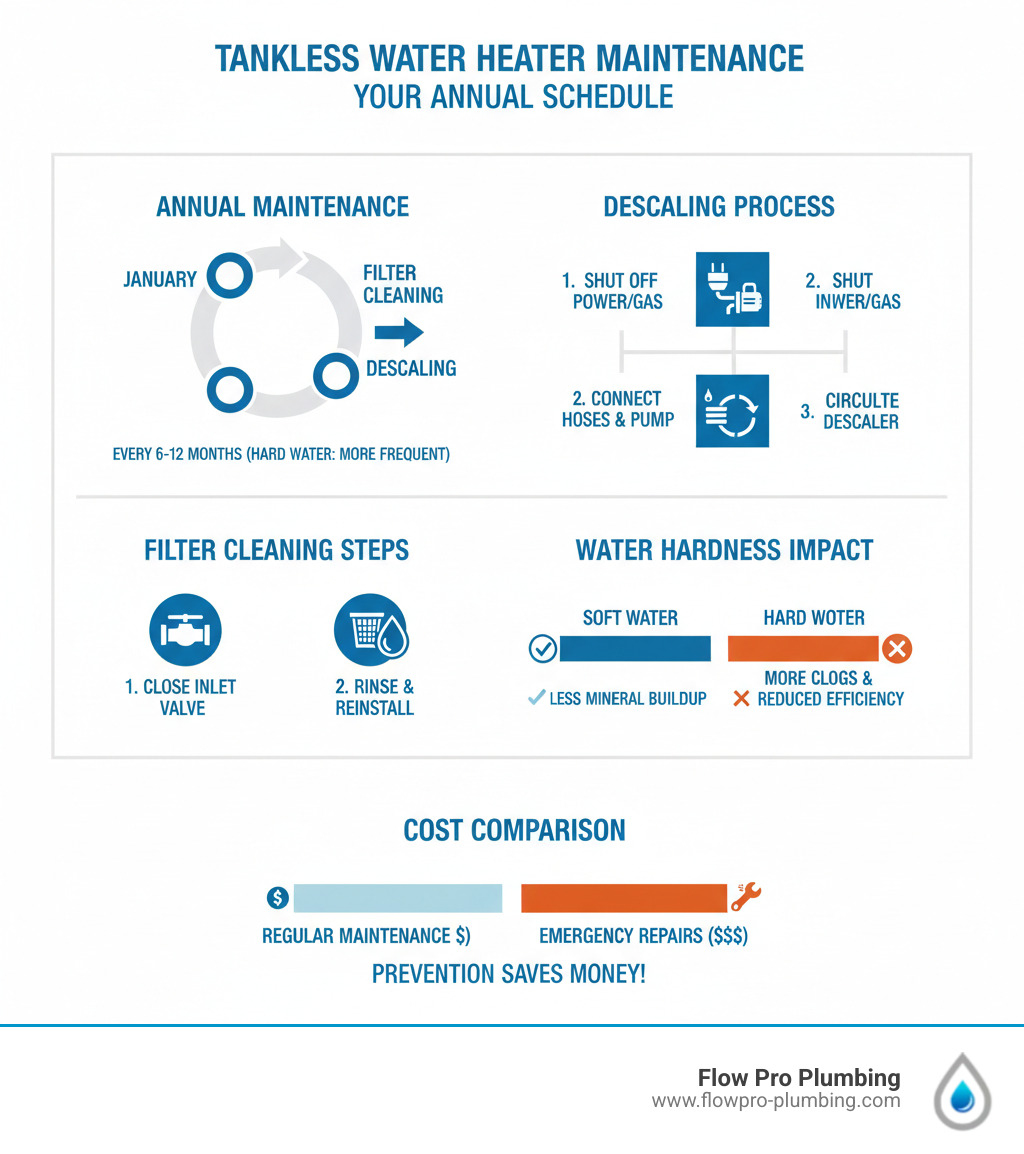
Quick tankless water heater maintenance definitions:
Why Regular Maintenance is Non-Negotiable
Skipping tankless water heater maintenance can lead to a cascade of problems. The primary villain is mineral buildup, or scale, from calcium and magnesium in your water. This scale coats the heat exchanger and internal components, acting as an insulator that forces the unit to work harder and run longer to heat water.
The Benefits of a Well-Maintained Unit
Staying on top of maintenance open ups the full advantages of your tankless system:
- Peak Performance: Enjoy an endless and reliable supply of hot water on demand.
- Maximum Energy Savings: A clean unit operates at peak efficiency, minimizing energy use and keeping utility bills low. Since water heating accounts for 20 percent of your home’s energy use, this makes a real difference.
- Extended Lifespan: With proper care, a tankless water heater can last 20+ years, maximizing your return on investment. The Benefits of a Tankless Water Heater are most apparent when the system is properly cared for.
- Peace of Mind: A well-maintained unit is a reliable one, giving you confidence that your hot water system won’t fail unexpectedly.
The Consequences of Neglect
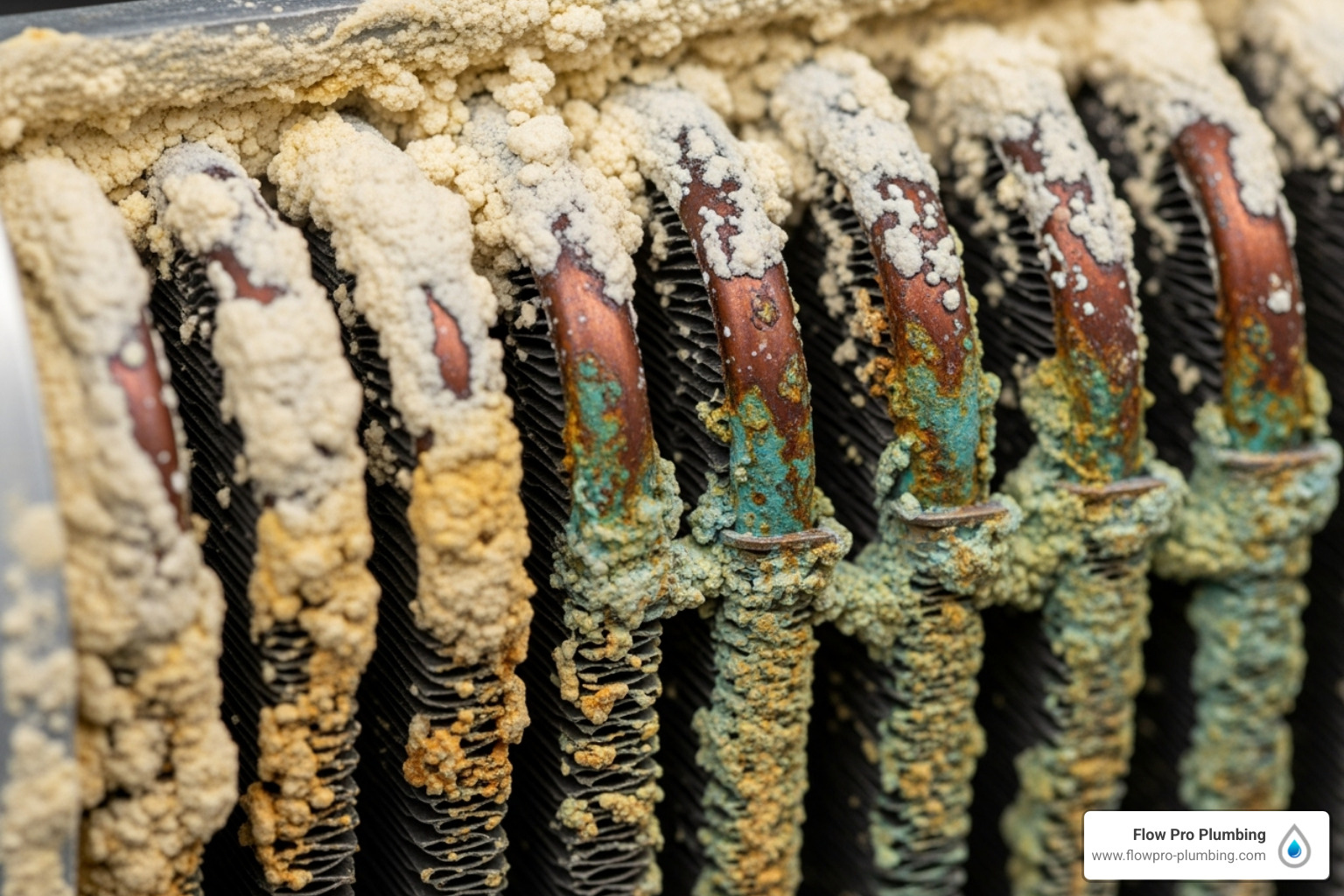
Ignoring maintenance leads to predictable and costly issues:
- Reduced Efficiency and Higher Bills: Scale buildup makes it harder to heat water, driving up your energy consumption.
- Lower Water Pressure: Mineral deposits clog pipes and filters, reducing water flow to your faucets and showers.
- System Failure: Over time, the strain from scale can permanently damage the heat exchanger, often requiring a full replacement.
- Voided Warranty: Most manufacturers require proof of regular maintenance to keep the warranty valid. Neglect could leave you paying for repairs out-of-pocket. Our guide on Can a Tankless Hot Water Heater Be Repaired? explores your options if you’re already facing issues.
Your Complete Guide to DIY Tankless Water Heater Maintenance
Performing your own tankless water heater maintenance can save money, but safety is the top priority. Before starting, always consult your owner’s manual, as procedures vary by model and following manufacturer guidelines is essential for your warranty. First, turn off the power supply at the circuit breaker. For gas units, also turn off the gas supply valve. Finally, turn off the water supply using the cold and hot water valves on your unit. To learn more about how these systems work, see our guide to Explore Tankless Water Heaters.
Supplies Needed for Maintenance
Gather these supplies for a proper descaling flush:
- A submersible pump
- Two hoses
- A 5-gallon bucket
- Commercial descaling solution or 4 gallons of undiluted white vinegar
- Soft brushes
- Screwdrivers
- Towels or rags
- Gloves and eye protection
Step-by-Step: The Descaling Process for Tankless Water Heater Maintenance
Descaling removes the mineral deposits that reduce efficiency. If your unit lacks isolation valves (purge ports), we highly recommend having them installed to make this process safer and easier.
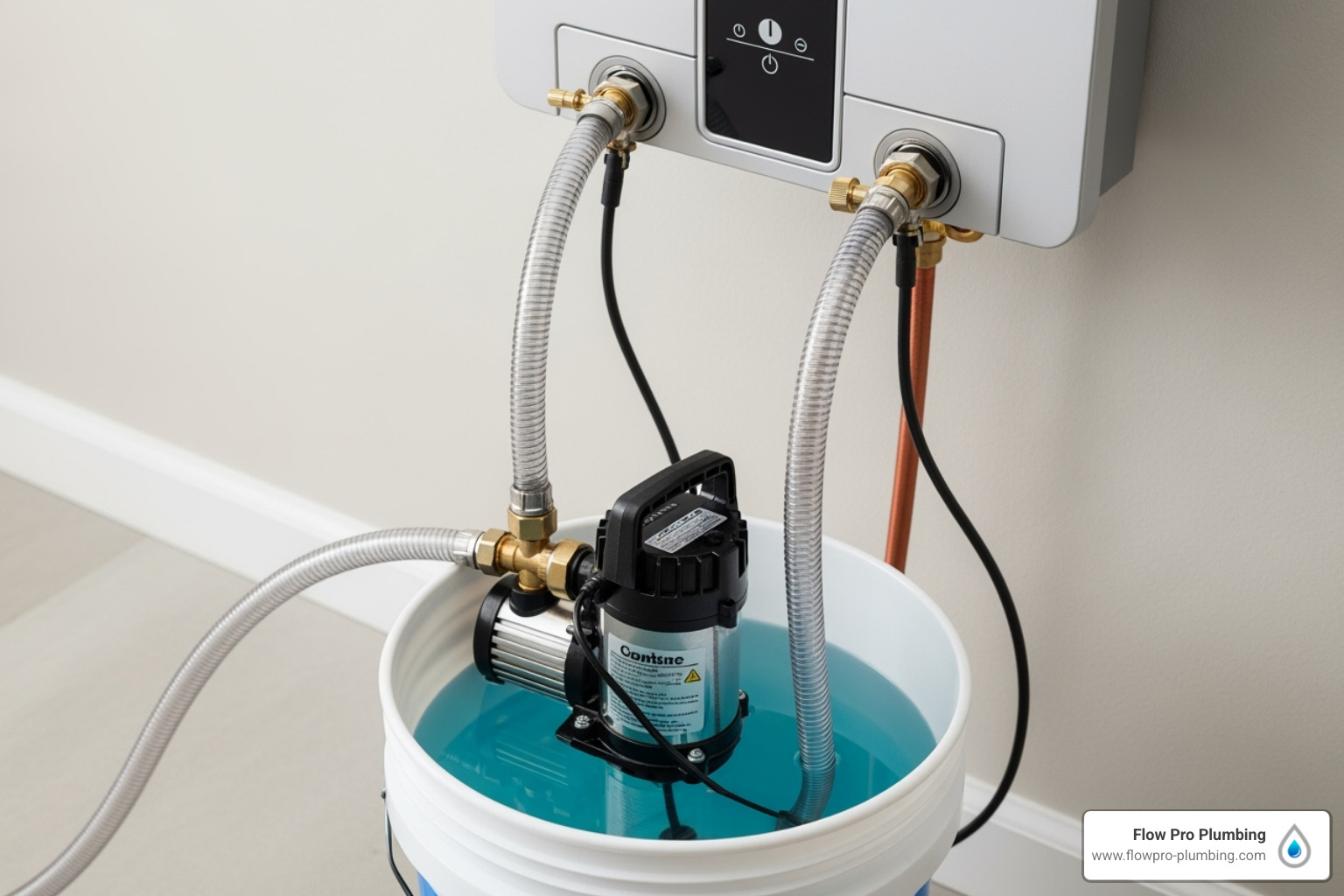
- Connect the Hoses: With the power, gas, and water off, connect one hose from the cold water service port to the submersible pump in your bucket. Connect the second hose from the hot water service port back to the bucket.
- Circulate the Solution: Open the purge port valves (keeping the main water valves closed). Pour your descaling solution or vinegar into the bucket and turn on the pump. Let the solution circulate for 45-60 minutes to dissolve mineral buildup.
- Flush the System: Turn off the pump. Disconnect the hose from the cold water port and drain the remaining solution. Close the hot water service port valve. Slowly open the main cold water inlet valve to flush clean water through the unit for 5-10 minutes.
- Restore Service: Close the cold water inlet valve, disconnect all hoses, and replace the service port caps. Open both main water valves, restore power and gas, and you’re done. For more details, see our guide on How to Flush a Water Heater.
Cleaning the Filters for Optimal Flow
During your tankless water heater maintenance, clean the filters to ensure proper flow.

- Inlet Water Filter: Located on the cold water inlet, this filter stops sediment. After shutting off power and water, remove the filter (check your manual for location). Rinse it under cold water, using a soft brush for stubborn buildup. A clogged filter restricts water flow.
- Air Intake Filter (Gas Units): This filter ensures clean air for combustion. Locate and remove it, then vacuum or rinse it with water. Ensure it is completely dry before reinstalling to prevent mold or damage.
Special Care for Condensing Units
Condensing units require special attention during tankless water heater maintenance because they produce acidic condensate.
- Condensate Trap: This trap can get clogged with sediment. Your manual will show how to access and clean it. Check that the O-rings seal properly upon reassembly.
- Neutralizer: This component contains media that neutralizes the acidic condensate. This media gets used up and must be checked and replaced per the manufacturer’s schedule to prevent corrosion in your plumbing.
Ensure the condensate drain line is clear and the neutralizer is functioning to avoid damage to your unit and pipes. Our Tankless Water Heater Installation Guide covers proper setup for these systems.
How Often Should You Service Your Unit?
Most tankless water heaters require tankless water heater maintenance at least once a year. However, your ideal schedule depends on factors like water hardness. Always consult your owner’s manual for manufacturer-specific guidelines. If you notice fluctuating temperatures, strange noises, or low water pressure between services, address it immediately. For any concerns, our team at Flow Pro Plumbing provides expert Water Heater Repair and Installation services.
The Impact of Water Hardness on Your Schedule
Water hardness, the concentration of dissolved minerals, is the biggest factor influencing your maintenance frequency. It’s measured in Grains Per Gallon (GPG).
- Soft Water (0-3.5 GPG): Descale every 2-3 years.
- Moderately Hard Water (3.5-7 GPG): Descale annually. This is the most common scenario.
- Hard Water (7-10.5 GPG): Descale every 6-9 months.
- Very Hard Water (10.5+ GPG): Descale every 3-6 months.
You can find your water hardness level in your local utility’s water quality report or use a test kit. For homes with hard water, installing a whole-home water softener is an excellent solution. It removes minerals before they reach your tankless unit, dramatically reducing maintenance needs.
DIY vs. Professional Tankless Water Heater Maintenance: Making the Right Choice
Deciding between DIY and professional tankless water heater maintenance depends on your comfort level and time.
- DIY Maintenance: Simple tasks like cleaning filters are great for DIYers. Descaling is more involved, requiring a pump, hoses, and 1-2 hours of work. It can be rewarding but requires care to avoid damaging the unit or voiding the warranty.
- Professional Maintenance: A qualified plumber performs the service correctly and efficiently. Professionals can also spot underlying issues you might miss, like early corrosion. This provides peace of mind and ensures your warranty remains intact.
A popular approach is to handle filter cleaning yourself and schedule an annual professional descaling. If you’re unsure, our Water Heater Repair Brentwood Tips can offer more guidance.
Tankless vs. Traditional Water Heater Maintenance
While tankless units require a different type of care than traditional tank-style heaters, they are not maintenance-free. Here’s a comparison of the typical maintenance tasks for each.
| Feature | Tankless Water Heater Maintenance | Traditional Tank Heater Maintenance |
|---|---|---|
| Primary Task | Descaling the heat exchanger to remove mineral buildup. | Flushing the tank to remove sediment and checking/replacing the anode rod. |
| Frequency | Annually (more often with hard water). | Annually. |
| Complexity | Moderate; requires a pump and hoses for descaling. | Simple to moderate; anode rod replacement can be difficult. |
| Key Component | Heat exchanger. | Anode rod (prevents rust) and tank interior. |
| Common Issue | Scale buildup reducing efficiency and flow. | Sediment buildup and tank corrosion. |
Frequently Asked Questions about Tankless Water Heater Maintenance
Here are answers to common questions we hear about tankless water heater maintenance from our customers.
Can I use something other than vinegar to descale my unit?
Yes. Besides white vinegar, you can use commercial descaling solutions formulated for tankless water heaters. These may work faster on heavy buildup. However, you must consult your owner’s manual before using any product. Using an unapproved chemical can damage your unit and void the warranty. Never use harsh household cleaners.
What are signs my tankless water heater needs maintenance?
Your unit will show signs when it needs tankless water heater maintenance. Look for these red flags:
- Fluctuating Water Temperatures: Water cycling between hot and cold often points to scale interfering with heat exchange.
- Reduced Water Pressure: Mineral buildup can clog pipes and filters, restricting flow.
- Strange Noises: Rumbling or popping can indicate scale buildup is forcing the unit to struggle.
- Error Codes on Display: Modern units display error codes for specific problems. Check your manual to understand what they mean.
- Takes Longer to Get Hot Water: This indicates the unit is heating less efficiently, likely due to scale.
If you notice these symptoms, schedule maintenance promptly. If you suspect your Water Heater Needs Repair, it’s best to call a professional.
Do different brands have different maintenance needs?
Yes. While the basic principles are the same, specific procedures vary by brand.
- Filter Access and Type: The location and design of filters differ between models.
- Descaling Methods: Service port types, recommended solutions, and circulation times can be brand-specific.
- Condensate Trap Design: On condensing units, the trap design and cleaning process are often unique.
- Warranty Requirements: Each manufacturer has specific maintenance tasks required to keep the warranty valid.
This is why consulting your owner’s manual is non-negotiable. It is the definitive guide for your specific model. If you’ve lost it, check the manufacturer’s website for a digital copy.
Protect Your Investment for Years to Come
We hope you see tankless water heater maintenance as a smart investment in your home’s comfort and efficiency. Regular care is the key to open uping your system’s 20+ year lifespan, ensuring endless hot water, and keeping energy bills low. It’s the best way to prevent inconvenient breakdowns and costly repairs.
For homeowners throughout Pittsburg, CA, and the greater Contra Costa County area—including Walnut Creek, Orinda, Oakley, Martinez, Lafayette, Danville, Brentwood, Alamo, Pleasant Hill, and Antioch—the experienced team at Flow Pro Plumbing is here to help. We are dedicated to providing superior service and unsurpassed workmanship for all your plumbing needs.
Don’t let mineral buildup compromise your investment. Take action today. Ready to experience the Flow Pro Plumbing difference? Schedule your professional tankless water heater installation and maintenance with us today.