

Why Understanding Your Sewer Repair Options Matters
Sewer pipe repair methods have evolved dramatically over the past few decades, giving homeowners more choices than ever when facing a damaged sewer line. Whether you’re dealing with a minor crack or a completely collapsed pipe, knowing your options can save you thousands of dollars and weeks of disruption to your property.
Modern sewer pipe repair methods include:
- Traditional Excavation – Complete dig-and-replace of damaged sections
- Cured-in-Place Pipe (CIPP) Lining – Creates a new pipe inside the old one using resin-saturated liners
- Pipe Bursting – Breaks apart the old pipe while simultaneously pulling in a new one
- Pull-in-Place Lining – Pre-shaped liner pulled through and cured in place
- Internal Pipe Coating – Epoxy spray coating to seal small leaks
- Sliplining – Smaller carrier pipe inserted into existing host pipe
- Point Repair – Targeted fixes for localized damage (like QuickLock mechanical sleeves)
Your home’s sewer line carries all wastewater from your property to the municipal sewer system or septic tank. Most sewer lines are buried 2-6 feet underground, making problems invisible until symptoms appear inside your home or yard. When issues arise, you’re typically responsible for repairs from your home to the street connection—a responsibility that can feel overwhelming without the right information.
The good news? You don’t always need extensive excavation anymore. Trenchless technologies now allow professional plumbers to repair or replace sewer lines through small access points, often completing work in a single day with minimal disruption to your landscaping, driveway, or home’s foundation.
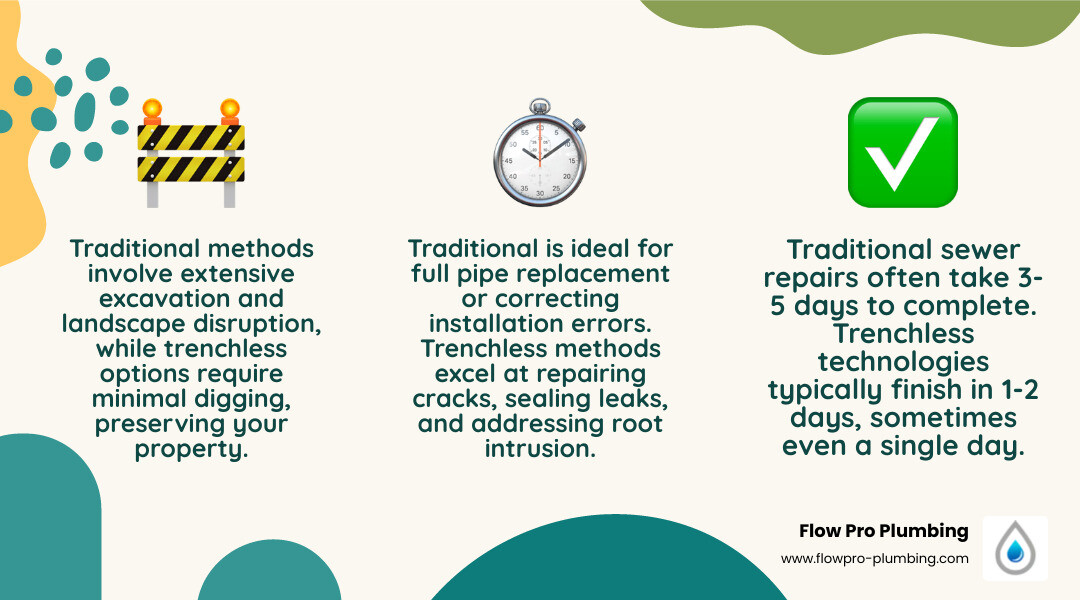
The key differences between repair approaches:
| Method Type | Excavation Required | Typical Duration | Best For |
|---|---|---|---|
| Traditional | Extensive trenching | 3-5 days | Complete replacement, correcting installation errors |
| CIPP Lining | Minimal (access points) | 1 day | Cracks, leaks, minor to moderate damage |
| Pipe Bursting | Minimal (entry/exit pits) | 1-2 days | Severely damaged or collapsed pipes |
| Point Repair | None (through cleanout) | Hours | Isolated damage like single joint or crack |
I’m Jesse Delgado, owner of Flow Pro Plumbing in Brentwood, California, and I’ve spent over a decade helping East Bay homeowners steer sewer pipe repair methods with transparency and integrity. Growing up working alongside my father in the plumbing trade taught me that the best repair isn’t always the most expensive one—it’s the one that fits the specific problem and the homeowner’s needs.
Must-know Sewer pipe repair methods terms:
Is Your Sewer Line in Trouble? Signs and Causes
Your sewer line quietly does its job every single day, carrying wastewater away from your home without complaint. Most homeowners never give it a second thought—until something goes wrong. And when problems develop, they rarely announce themselves with a polite knock at the door. Instead, they show up as mysterious puddles in your yard, strange sounds from your toilet, or that unmistakable smell that makes you wonder what died under your house.
Recognizing the warning signs
Your home has a way of communicating when something’s wrong with your sewer line. Learning to read these signals can save you from a plumbing nightmare.
Slow drains throughout your home are often the first red flag. One slow drain might just be a local clog, but when multiple drains start acting sluggish at the same time? That’s your sewer line crying for help. The main line is likely blocked, preventing water from flowing freely out of your home.
Gurgling toilets might sound quirky, but they’re actually quite serious. When your toilet makes strange bubbling or gurgling noises—especially after you flush or use other fixtures—air is being pushed back up through the system. This happens when a blockage prevents normal air flow through the line.
Foul odors around your property are impossible to ignore. If you’re catching whiffs of sewage either inside your home or in your yard, sewer gases are escaping somewhere they shouldn’t. This usually means there’s a crack or break allowing those unpleasant smells (and potentially harmful gases) to seep out.
A flooded or unusually lush patch of yard often signals a broken sewer pipe underneath. When sewage leaks into the surrounding soil, it creates a fertilizer effect—your grass might look suspiciously green and healthy in one spot while water pools nearby. Not exactly the landscaping improvement you were hoping for.
Mold growth or water damage inside your home can indicate a leaking drain line. If you notice mold spreading on floors or walls without an obvious source, a hidden sewer leak might be the culprit. These Underground sewer pipes can cause extensive damage before you even realize there’s a problem.
What causes sewer lines to fail?
Sewer lines are built tough, but they’re not immortal. Several common culprits contribute to their eventual decline.
Clogged pipes top the list of sewer troubles we see at Flow Pro Plumbing. Despite what the packaging claims, “flushable” wipes are absolutely not your sewer’s friend—we’ve pulled enough of them out to know. Paper towels, feminine hygiene products, and cooking grease are equally problematic. These items don’t break down like toilet paper, instead accumulating until they create a stubborn blockage. We’ve seen some truly impressive clogs over the years, and trust me, you don’t want to be the homeowner who creates one.
Tree root intrusion is nature’s way of reminding us who’s really in charge. Roots are relentlessly drawn to the water and nutrients flowing through your sewer line. They’ll find the tiniest crack and exploit it, growing larger and stronger until they completely infiltrate the pipe. Old clay pipes are particularly vulnerable to root invasion, which is why so many homes built before the 1980s eventually need attention.
Pipe material deterioration is simply a fact of life for aging infrastructure. Old cast iron pipes corrode from the inside out, eventually developing holes and cracks. Clay pipes can crack or collapse under soil pressure and ground movement. If your home has Orangeburg pipes (made from wood fibers and tar, popular from the 1940s-1970s), you’re on borrowed time—these typically last only about 50 years and many are well past their expiration date.
Beyond these main causes, extreme temperatures can freeze water inside pipes and cause bursting, while ground movement from settling soil or seismic activity (a real concern here in California) can stress and crack underground lines. Even heavy construction nearby can shift the ground enough to damage your sewer system. For more prevention strategies, check out our guide on how to Avoid Common Sewer Problems.
The First Step: Professional Diagnosis
When you suspect something’s wrong with your sewer line, your first instinct might be to grab a plunger or call the first plumber you find. But here’s the truth: guessing at sewer pipe repair methods without knowing the actual problem is like trying to fix your car with your eyes closed. It’s expensive, ineffective, and likely to leave you frustrated.
The best diagnostic tool we have is a sewer line camera inspection. This isn’t some fancy upsell—it’s genuinely the only way to see exactly what’s happening inside your pipes. Our technicians thread a specialized waterproof camera through your sewer line, providing a live, high-definition view of the pipe’s interior. We can spot clogs, cracks, root intrusion, corrosion, and even completely collapsed sections with pinpoint accuracy.
This inspection does more than just identify problems. It shows us the severity of damage, the exact location (down to the foot), and the overall condition of your pipes. This information is crucial for determining which sewer pipe repair methods will actually work for your specific situation. A small crack needs a completely different solution than a pipe crushed by tree roots.
The camera inspection also helps determine who’s responsible for repairs. Most homeowners are responsible for the sewer line running from their house to the city connection point at the street. But if the problem originates in the municipal main line, that’s the city’s responsibility. A professional inspection provides the visual evidence needed to establish liability—potentially saving you thousands of dollars.
For homeowners with older properties, we recommend scheduling a preventative Sewer Video Inspection Role at least once every ten years. Think of it as a wellness check for your plumbing system. Catching small issues early means you can address them before they become emergency situations that flood your basement at midnight.
At Flow Pro Plumbing, we’ve used camera inspections to solve mysteries that would have otherwise required expensive exploratory digging. It’s the difference between precision surgery and guesswork—and your wallet will definitely appreciate the difference.
The Traditional Approach: Sewer Line Excavation
For decades, when a sewer line needed serious repair or replacement, there was really only one way to get the job done: grab a shovel (or more accurately, a backhoe) and start digging. This dig-and-replace method, known as traditional sewer line excavation, is exactly what it sounds like—physically unearthing the damaged pipe so you can access it, remove it, and install a new one.

Process overview
The excavation process starts with our team surveying your property and carefully marking where all your underground utilities are located. Nobody wants to accidentally hit a gas line or electrical conduit! If your sewer line happens to run under a street or sidewalk, we’ll set up traffic control to keep everyone safe.
Then comes the heavy machinery. Backhoes and excavators dig trenches along the path of your sewer line, following it from your home to the connection point. When we’re digging deeper than four feet, safety regulations require us to shore up the trench walls to prevent cave-ins—this is serious work that requires proper precautions.
Once we’ve exposed the damaged pipe, we disconnect and remove the old sections. New sewer pipe is then carefully laid in the trench, making sure it has the proper slope for wastewater to flow correctly (gravity is your friend here!). We fuse or seal the new pipe sections together and reconnect any lateral pipes coming from your home using flexible couplings. If your system needs maintenance holes, we install those too.
After the new pipe is in place and tested, we backfill the trench with gravel and compact it thoroughly. Then comes the restoration work—patching driveways, replacing sod, and generally trying to put your property back together. Finally, we run a video inspection through the new line to confirm everything is installed correctly and draining properly before we call it complete.
Pros and cons
Traditional excavation does have some genuine advantages. You get complete pipe replacement, meaning every inch of that damaged section is brand new. This is especially valuable if your home has old Orangeburg pipes, deteriorating clay pipes, or outdated cast iron. If the original installation had problems—like improper slope that caused decades of drainage issues—excavation gives us the chance to correct those installation errors once and for all.
The new pipe maintains the full original diameter (or we can even upsize if needed), and with modern materials like PVC or HDPE, you’re looking at a repair that could last 100 years or more. That’s a genuinely long-lasting result.
But here’s where things get challenging. Excavation is highly invasive—there’s just no way around it. We’re talking about digging up your beautiful landscaping, possibly tearing through your driveway or patio, and in some cases, even breaking into your home’s foundation or interior floors if the sewer line runs under your house. I’ve seen homeowners nearly in tears watching their prize rose garden get excavated.
The time commitment is significant too. Between the digging, pipe installation, backfilling, and restoration, you’re typically looking at three to five days of work. That’s nearly a week of disruption to your daily life, with construction equipment in your yard and limited access to certain areas of your property.
And then there are the higher restoration needs. The cost of the actual pipe work might be one thing, but restoring everything we had to dig up? That’s where expenses can really add up. New landscaping, driveway repaving, patio reconstruction—it all factors into your final investment.
Traditional excavation remains one of the proven sewer pipe repair methods, and sometimes it’s genuinely the best or only option. But its disruptive nature is exactly why modern trenchless alternatives have become so popular with homeowners who want to protect their property while still getting reliable, long-lasting repairs.
Modern Sewer Pipe Repair Methods: An Overview of Trenchless Technology
What if you could fix a major sewer problem without turning your beautiful yard into a construction zone? That’s exactly what trenchless technology delivers—and it’s changing the game for homeowners throughout Brentwood, Oakley, and Contra Costa County.
Trenchless technology explained:
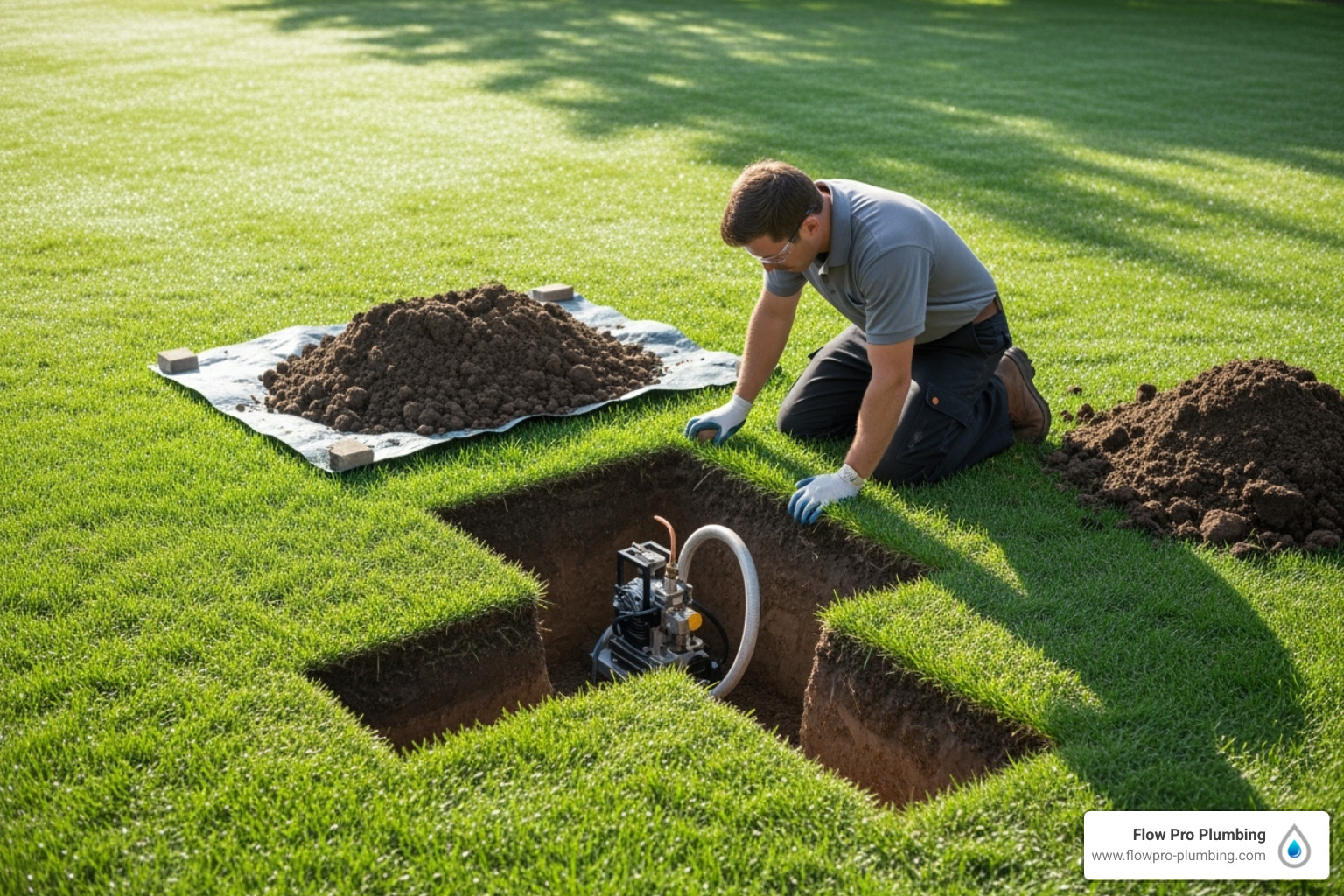
Instead of digging a massive trench across your property, trenchless sewer pipe repair methods work from the inside out. These innovative techniques require only one or two small access points—sometimes just your existing cleanout or a couple of compact pits at either end of the damaged section. From there, specialized equipment does the heavy lifting underground, leaving your landscaping, driveway, and daily life largely undisturbed.
Think of it like keyhole surgery for your plumbing. Just as modern medical procedures use tiny incisions instead of large cuts, trenchless repairs accomplish the same goal with a fraction of the disruption.
The benefits that matter most:
The speed alone is remarkable. While traditional excavation can take three to five days (plus restoration time), many trenchless repairs wrap up in a single day. You wake up with a sewer problem, and by dinner, it’s solved—without the weeks of waiting for your yard to recover.
But the real magic is what doesn’t happen. Your prized rose bushes stay put. That expensive paver patio remains intact. The mature oak tree you’ve nurtured for years? Its roots are safe. This minimal invasion means you’re not facing thousands in landscape restoration on top of the repair itself.
Here’s something that surprises many homeowners: despite using advanced technology, trenchless methods often cost less overall than traditional excavation. Yes, the repair technique itself might seem comparable, but when you factor in the dramatically reduced labor hours, the eliminated restoration expenses, and the shortened timeline, the savings add up quickly. We’ve found that repairing pipes through existing access points almost always beats the total cost of full replacement with excavation.
Safety improves too. Without open trenches spanning your property, there’s no risk of cave-ins, accidental falls, or accidentally severing other utility lines. Your family, pets, and our crew all work in a safer environment.
And these repairs aren’t just quick fixes. The materials and techniques used in modern trenchless repairs are built to last, often adding 50 years or more to your sewer system’s lifespan. That’s peace of mind you can count on for decades.
For a deeper look at how these advantages play out in real-world situations, check out our detailed guide on the Benefits of Trenchless Sewer Repair.
Cured-in-Place Pipe (CIPP) Lining
If we had to pick the MVP of trenchless sewer pipe repair methods, CIPP lining would be a strong contender. It’s one of the most popular and proven techniques in the United States, perfect for pipes that still have good bones but suffer from cracks, leaks, or unwelcome tree root visitors.
How CIPP works:
The concept is beautifully simple: we create a brand-new pipe inside your old, damaged one. It’s like giving your sewer line a complete interior makeover without touching the exterior.
First, we thoroughly clean the problem line using high-pressure water jetting to blast away any debris, buildup, or root intrusions. Then we run a video camera through to diagnose the exact issues and measure precisely how much pipe needs rehabilitation.
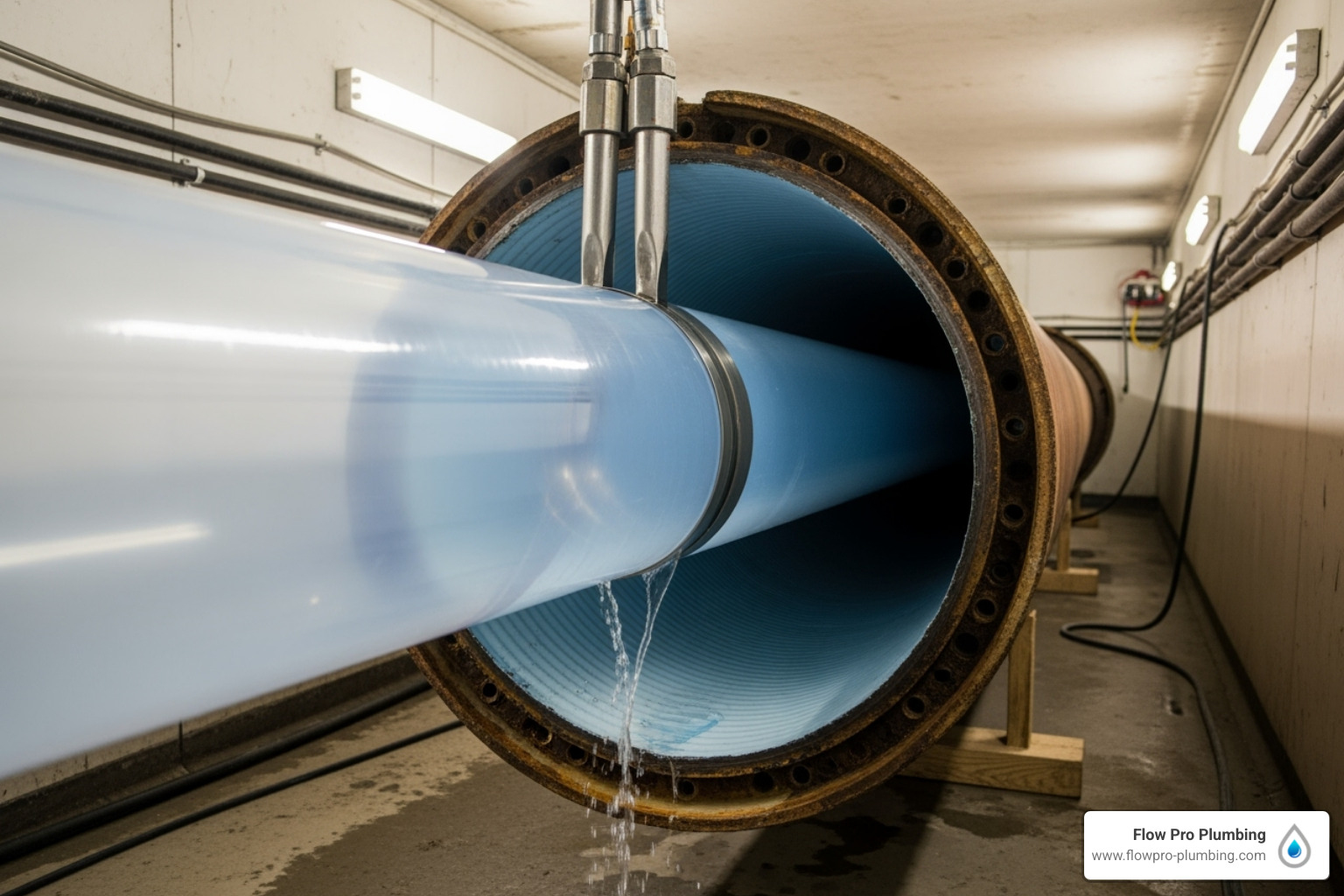
Next comes the clever part. We take a flexible fabric tube—typically made of polyester felt with a PVC coating—and saturate it completely with epoxy resin mixed with a catalyst. This resin-soaked liner gets inserted into your old pipe, either by “inverting” it (where air pressure turns it inside out and pushes it through from one access point) or by pulling it into position between two access points.
Once the liner is positioned perfectly, we inflate it with air pressure or an inflatable bladder, pressing it firmly against the inner walls of your existing pipe. Then we introduce hot steam, hot water, or UV light to cure and harden the resin. This process typically takes a few hours, during which the liner molds itself into every crack and crevice, forming a smooth, seamless new pipe.
After the resin hardens, we remove the bladder and send a robotic cutter through to reopen any connections with branch lines. A final video inspection confirms everything looks perfect, and you’re back in business.
This new “cured-in-place” liner essentially becomes a standalone PVC pipe that’s designed to outlast you and me—often by several decades.
Benefits of CIPP:
The longevity is impressive. CIPP lining can add 50 to 100 years to your sewer system’s life, depending on the manufacturer and materials used. That’s multiple generations of worry-free plumbing.
The seamless, non-porous surface does more than just seal existing cracks and holes—it creates a watertight barrier that prevents future root intrusion. Tree roots can’t find their way in when there are no joints or cracks to exploit.
You might think adding a liner inside your pipe would reduce flow capacity, and technically it does reduce the diameter slightly. But here’s the interesting part: the new liner’s smooth interior surface actually improves wastewater flow compared to the rough, corroded, root-filled pipe you had before.
Structurally, the cured resin reinforces the existing pipe, often making the combined system stronger than the original pipe was when new. And of course, as a trenchless method, it accomplishes all this while preserving your property.
CIPP lining represents one of the most effective Techniques for trenchless pipe repair, such as cured-in-place pipe, avoiding the ground disturbance that traditional methods require.
Pipe Bursting: Replacing Pipes from Within
When a sewer line is beyond saving—too collapsed, too corroded, or too damaged for lining to work—pipe bursting steps up to the plate. This method doesn’t mess around with repairs. It completely replaces your old pipe with a brand-new one, and it does so with minimal digging.
How pipe bursting works:
Pipe bursting sounds almost too good to be true, but the physics are straightforward. We dig just two small access pits: one where the damaged pipe starts and one where it ends. That’s it—no massive trenches connecting them.
We insert a cone-shaped “bursting head” into the entry pit and position it inside your old pipe. This hardened steel head is the muscle of the operation. Using hydraulic power, we pull the bursting head through the existing pipe. As it travels, the head literally fractures and breaks apart the old pipe—whether it’s plastic, PVC, clay, Orangeburg, copper, or cast iron—and pushes those fragments outward into the surrounding soil.
Here’s where it gets really clever: attached directly behind the bursting head is your brand-new pipe, typically made of high-density polyethylene (HDPE). As the bursting head destroys the old pipe, it simultaneously pulls the new pipe into the exact same space. By the time the head reaches the exit pit, you have a complete, seamless replacement line.
We connect the new HDPE pipe to your plumbing system, backfill the two small pits, and you’re done. The entire damaged section has been replaced without digging up everything in between.
When pipe bursting is recommended:
Pipe bursting shines in specific situations. If your sewer line has extensive damage—large collapses, severe corrosion, or structural failure that’s beyond what lining can fix—pipe bursting offers a complete solution without complete excavation.
It’s also ideal when you need to replace an entire sewer line run but want to avoid the landscape destruction and extended timeline of traditional methods. And here’s a bonus: pipe bursting can actually upsize your pipe diameter, installing a larger pipe than you had before to improve flow capacity.
The new HDPE pipes are virtually indestructible by roots and highly resistant to corrosion. Properly installed plastic sewer pipes can last up to 100 years, making this a true long-term investment in your home’s infrastructure.
This technique is a cornerstone of our Trenchless Sewer Line Replacement services, offering homeowners a modern alternative to traditional excavation.
Other Trenchless Sewer Pipe Repair Methods
Beyond CIPP lining and pipe bursting, trenchless sewer pipe repair methods includes several specialized techniques. Each serves a unique purpose, allowing us to match the repair method precisely to your specific problem. Think of these as the specialized tools in our trenchless toolbox.
Pull-in-Place lining works similarly to CIPP but uses a pre-shaped liner that’s pulled through the pipe and then cured in position. It’s particularly useful for pipes with multiple bends or complex configurations where inversion might be challenging.
Internal pipe coating takes a different approach entirely. Instead of inserting a liner, we apply an epoxy spray coating directly to the inside of your existing pipe. This works wonderfully for sealing small leaks and preventing future corrosion, though it’s best suited for pipes that don’t have major structural damage. The coating creates a smooth, protective barrier that can extend your pipe’s life significantly.
Sliplining is one of the oldest trenchless methods, and it’s neatly simple. We insert a smaller “carrier pipe” inside your existing “host pipe,” then seal the space between them. While this reduces the internal diameter of your sewer line, it’s a cost-effective solution for pipes that are structurally sound but leaking at the joints. The new carrier pipe takes over all the wastewater flow, and the old pipe essentially becomes a protective casing.
QuickLock Point Repair deserves special mention because it’s perfect for those “just one problem spot” situations. If your video inspection reveals a single crack, broken joint, or localized leak, there’s no need to line or replace the entire pipe. QuickLock uses a mechanical sleeve—no resin required—that we position precisely over the damaged area and lock into place. This spot repair can be completed in hours, not days, and it’s remarkably cost-effective for isolated issues.
Each of these methods has its place in modern sewer repair. During your inspection, we’ll identify which technique (or combination of techniques) makes the most sense for your specific situation, your pipe’s condition, and your budget.