
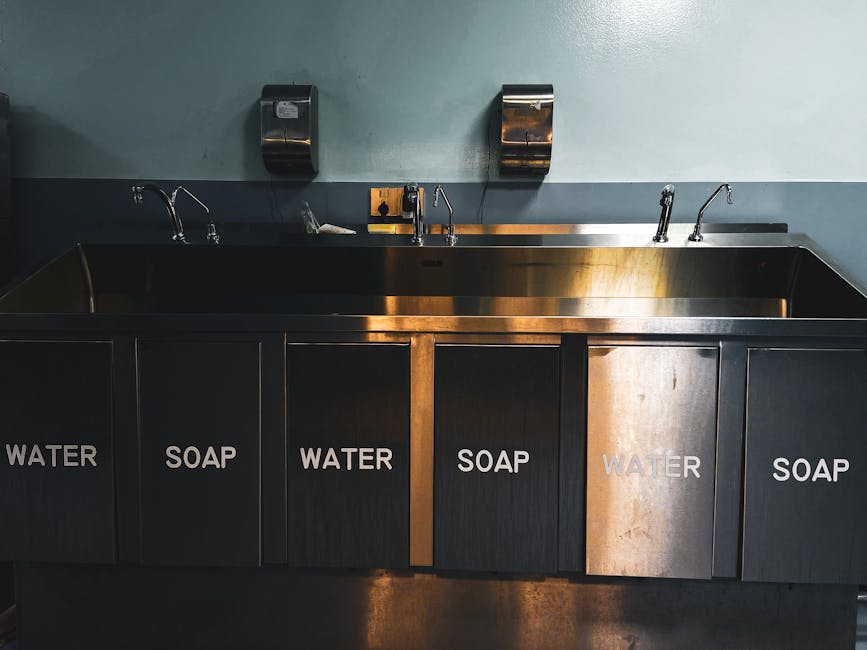
Why Commercial Sink Plumbing Matters for Your Business
Commercial sink plumbing is the backbone of any food service, healthcare, or industrial facility. Unlike residential setups, commercial systems are built to handle high-volume use, grease, food waste, and strict health codes. For any business, from restaurants to medical offices, understanding and maintaining these systems is critical to avoiding costly shutdowns and health violations.
Key Differences Between Commercial and Residential Sink Plumbing:
| Feature | Residential Sink Plumbing | Commercial Sink Plumbing |
|---|---|---|
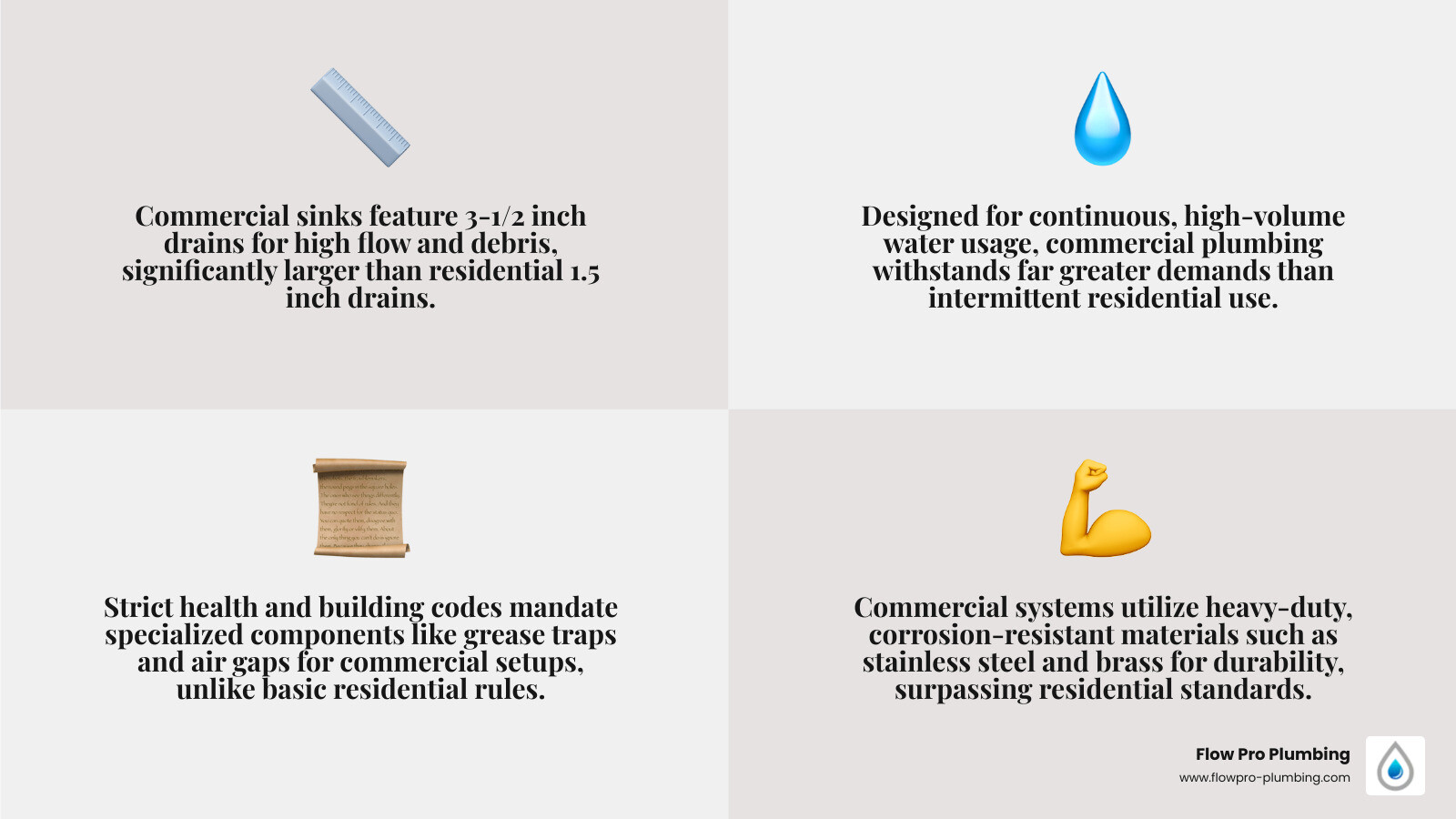
| Drain Size | Typically 1.5 inches | Usually 3-1/2 inches or larger |
| Materials | PVC, chrome-plated brass | Stainless steel, heavy-duty brass, Schedule 40 PVC |
| Usage Volume | Light, intermittent use | High-volume, continuous use (up to 100 gallons per employee per day) |
| Code Requirements | Basic residential codes | Strict health and building codes, including grease traps and air gaps |
| Components | Simple P-trap and drain | P-traps, grease traps, indirect waste receptors, venting systems |
| Maintenance Needs | Occasional cleaning | Regular professional maintenance required |
Commercial sinks withstand the daily punishment of a busy operation. Their plumbing must be tougher, with larger drains and an installation that meets strict public health regulations. Improper venting, trap placement, or missing grease interceptors can lead to slow drains, foul odors, and failed health inspections.
As a licensed plumber with over a decade of experience in commercial installations, I’ve seen how much more demanding commercial sink plumbing systems are compared to residential ones.
Learn more about commercial sink plumbing:
Key Components of a Commercial Sink Plumbing System
When we talk about commercial sink plumbing, we’re discussing a sophisticated network designed for efficiency, hygiene, and compliance. From three-compartment sinks to dedicated handwashing stations, each type serves a specific purpose. Understanding the components is key to a smooth operation.
If you’re dealing with sink issues and need professional help, check out our comprehensive Sinks services.
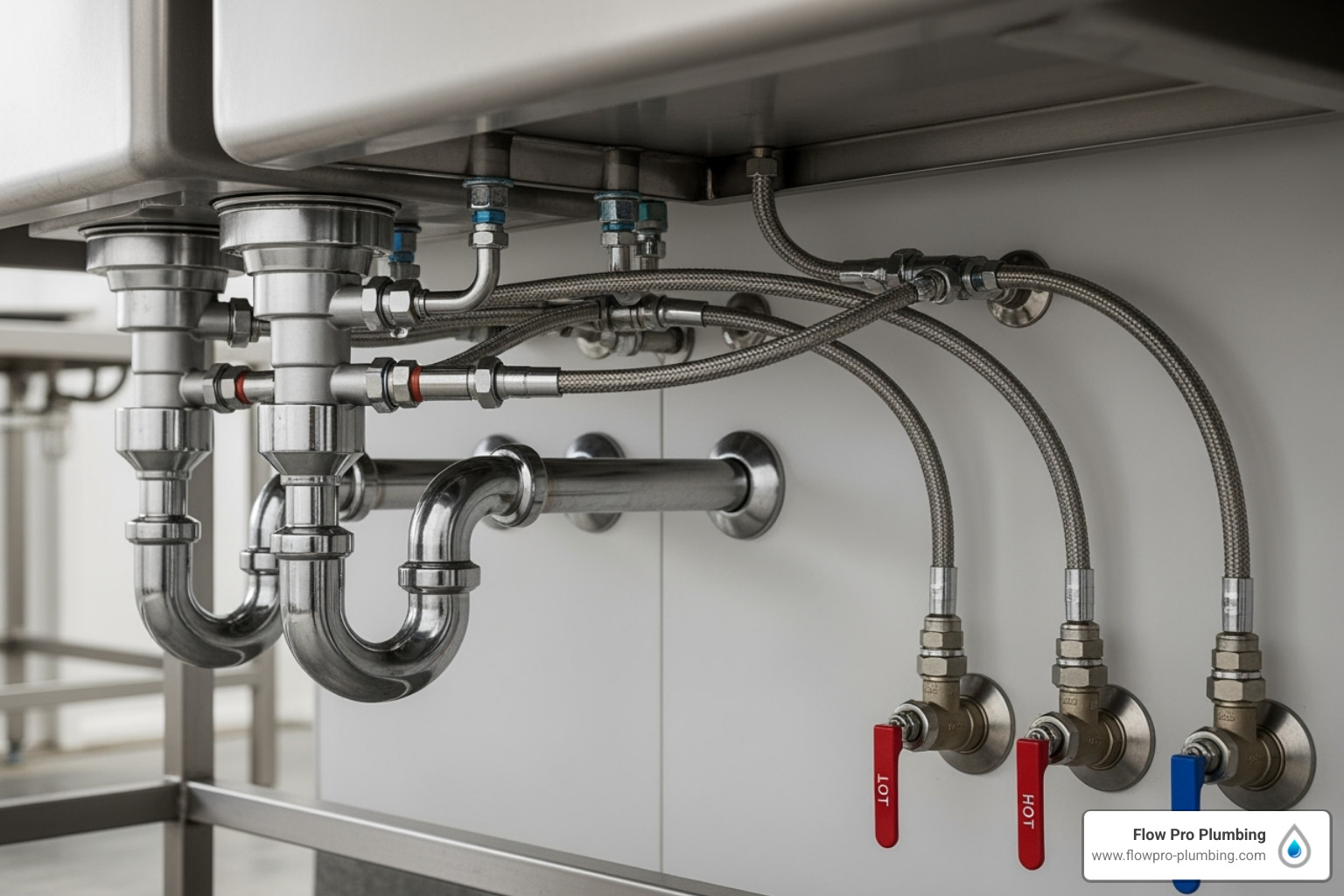
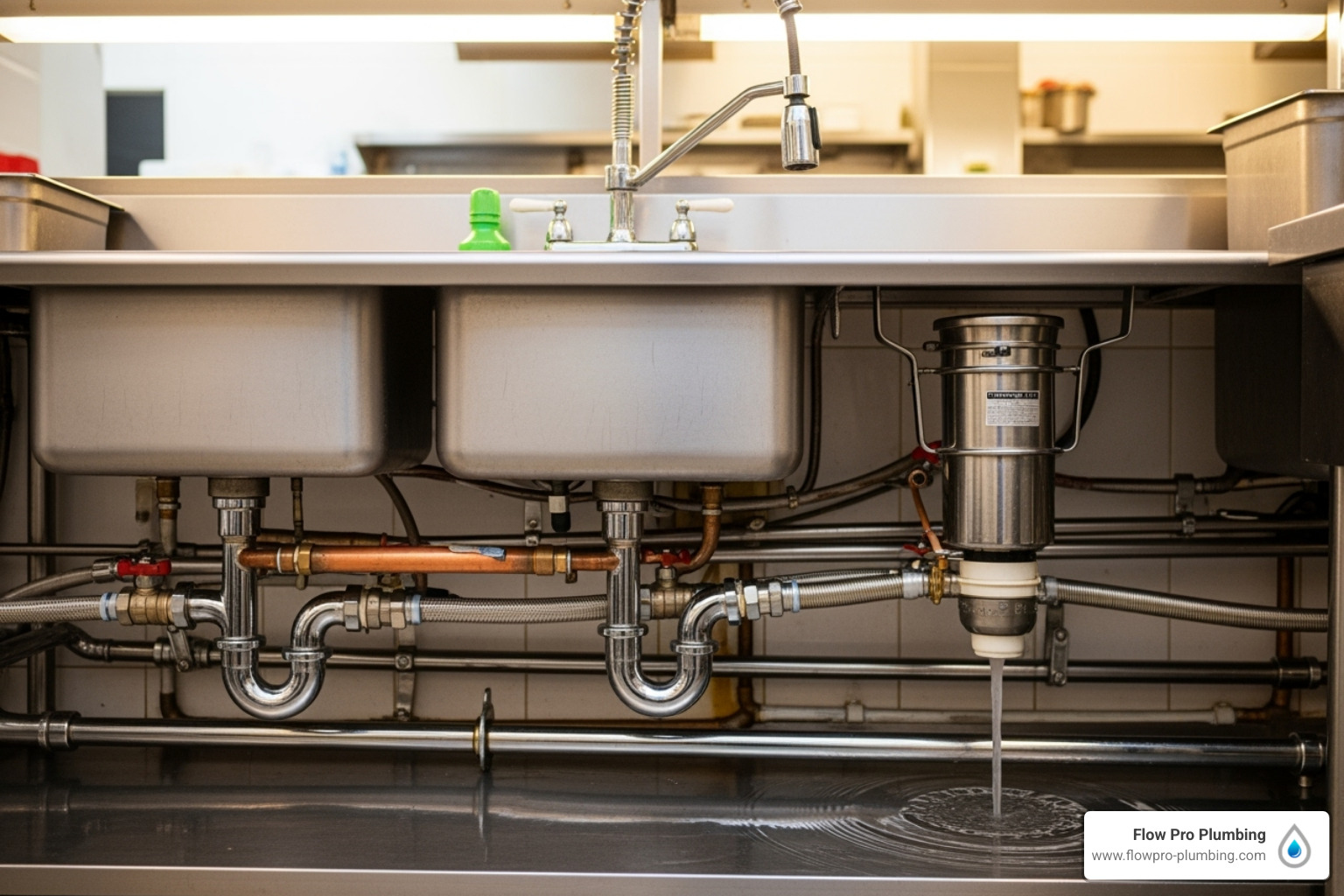
Drains, Traps, and Valves
Wastewater begins at the drain, which is typically a robust 3-1/2 inches in diameter—much larger than residential 1.5-inch drains. This size is essential for handling high volumes of water and food debris.
Each basin needs a reliable drain with a strainer basket to catch larger particles and prevent clogs. Beneath the drain, the P-trap is a U-shaped pipe holding water to create a seal that blocks sewer gases. Each sink basin requires its own P-trap. A three-compartment sink typically uses minimum 1.5-inch drain pipes, but larger is often better.
Food service establishments require grease traps (or interceptors) to capture fats, oils, and grease (FOG) before they enter the sewer. This prevents grease from solidifying and creating severe blockages. Most health codes mandate their use.
Indirect waste receptors provide a crucial air gap that prevents wastewater from backflowing and contaminating the sink. This is a critical health and safety measure that inspectors look for.
Finally, commercial sinks use durable lever-style or twist drain valves. Lever-style valves are popular for their quick operation, which is ideal in a environment.
For a clearer picture of how these components work together, this Commercial Sink Plumbing Visual Guide offers helpful diagrams.
Pipes and Materials
Commercial sink plumbing requires materials that withstand high temperatures, harsh chemicals, and constant heavy use. We recommend stainless steel, brass, and Schedule 40 PVC for a well-designed system.
Stainless steel is often used for exposed piping due to its corrosion resistance and hygienic properties. Health inspectors appreciate its cleanability.
Brass is common for durable, corrosion-resistant fittings and valves, ensuring tight, leak-free connections for years.
Schedule 40 PVC is a thick, robust plastic ideal for drain lines. Its chemical resistance is perfect for handling commercial cleaning solutions.
Investing in high-quality materials upfront prevents costly emergency repairs and downtime later. Pipe sizing is also critical. While 1.5-inch drain pipes are a minimum, 2-inch pipes may be necessary depending on fixture count and local codes to ensure efficient drainage.
When you’re considering the longevity of your plumbing fixtures, remember it’s not just about the sink itself, but everything connected to it. We take pride in ensuring all your Faucets, Sinks, Bathtubs are built to last.
Venting and Water Supply
A drain without proper venting is like a straw with your finger over the top: air can’t get in, so water can’t flow out smoothly. Venting is a critical aspect of commercial sink plumbing that equalizes air pressure in the drainage system.
Without proper venting, water can be siphoned from P-traps, allowing hazardous sewer gases to enter your workspace. Vent pipes connect to the main vent stack, equalizing pressure and preventing this issue.
The water supply side is also crucial. Commercial-grade faucets are built to withstand being turned on and off hundreds of times a day.
Water hammer—a jarring thud when a faucet is shut off abruptly—can damage pipes over time. We install water hammer arrestors to absorb this shockwave and protect the plumbing system.
An air gap or air break is a mandatory health code feature that prevents contaminated water from siphoning back into the clean water supply (backflow). The gap between the faucet and the sink’s flood rim must meet code.
Properly installing all these components is essential for a functional, headache-free system, which is why professional installation is so important.
How to Install a Commercial Sink: Code and Configuration
Installing a commercial sink is not a DIY project. It requires strict adherence to health codes and building regulations to ensure operational efficiency. A single mistake can lead to failed inspections, fines, or business shutdowns, making proper configuration from day one essential.
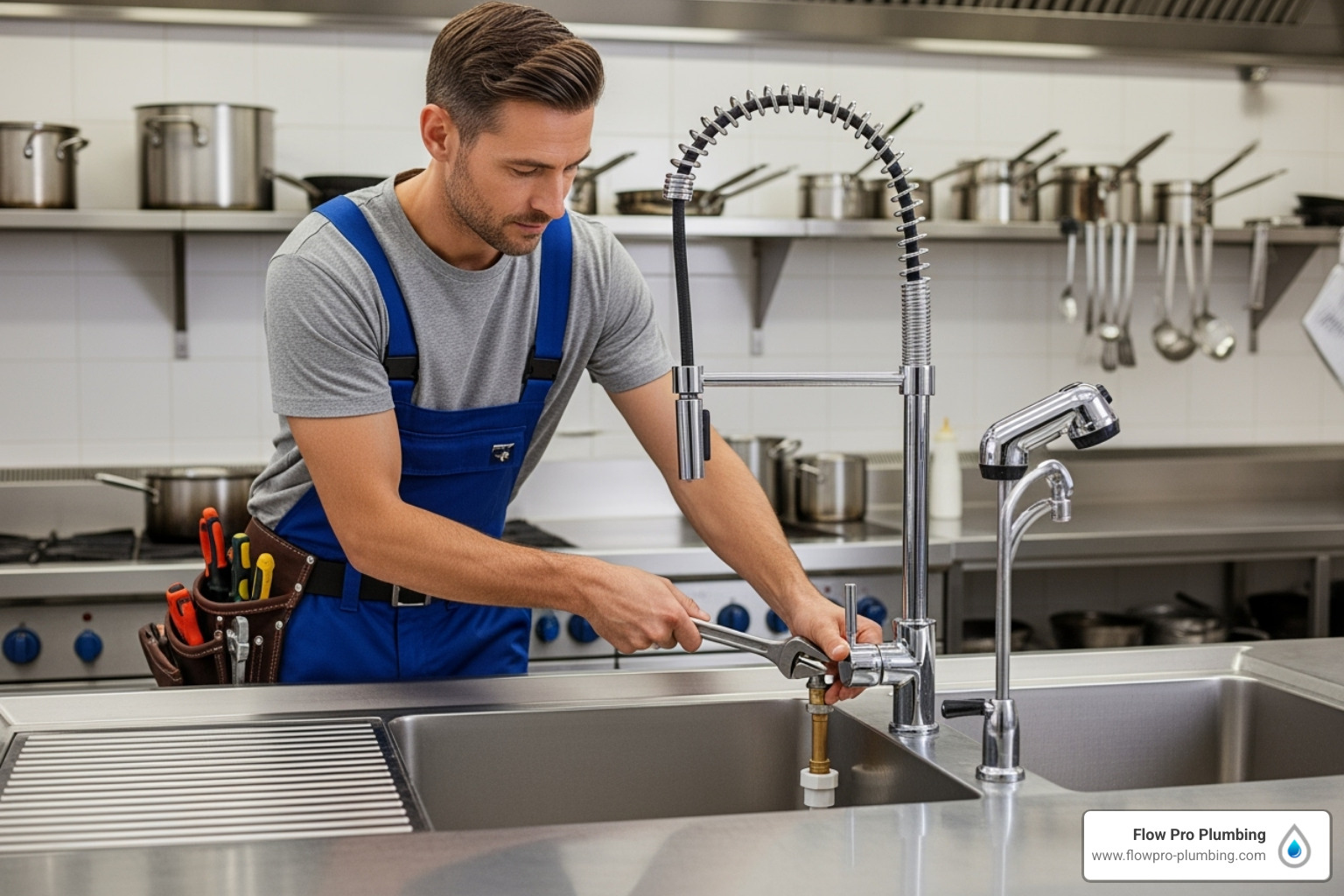
Local codes can vary across Contra Costa County, from Brentwood to Concord. We always begin by confirming the specific requirements for your location.
Commercial sink plumbing installation is complex. The answer to “Do I Need a Plumber to Install a Sink?” is yes. The stakes and regulations are too high to risk it.
Setting Up a Multi-Compartment Sink
The three-compartment sink is a kitchen workhorse for washing, rinsing, and sanitizing. The plumbing must support this workflow without backups. Each basin requires its own P-trap to block sewer gases. The individual drains then connect to a common drain line.
This common drain line must have a proper slope, typically 1/4 inch per foot, to allow gravity to drain waste effectively. An incorrect pitch can lead to clogs. We install cleanouts at strategic points, providing easy access to clear blockages without dismantling the plumbing, saving time and money on future maintenance.
Securing connections is crucial. We use robust, code-compliant connections like glued PVC or threaded metal fittings to ensure a leak-free system under demanding daily use.
When you’re ready to Install New Sink equipment in your commercial space, having professionals handle the installation means you can focus on running your business instead of worrying about whether your plumbing will pass inspection.
Integrating Handwashing Sinks
Health departments have strict rules for handwashing sinks. They must be accessible, fully stocked, and used exclusively for handwashing. A handwashing sink needs its own P-trap and must connect to the drain line downstream from any food prep or dishwashing sinks. This prevents contaminated water from backing up into the handwashing station.
This plumbing separation is key to preventing cross-contamination and ensuring the handwashing station remains hygienic even if other drains have issues. Health inspectors pay close attention to these stations as a critical part of food safety.
Navigating Health and Building Codes
Commercial plumbing installations are governed by complex health and building codes that protect public health and ensure safe operation. While specifics vary by city, the core principles are consistent. Local codes dictate pipe sizes, materials, and more. For commercial sink plumbing, these codes are especially strict due to public health implications.
Food prep sinks often require an air gap—a physical space between the drain pipe and the sink’s flood level—to make it impossible for sewer backup to contaminate food.
Grease interceptors are another common code requirement. Local codes specify the size and type based on your FOG output, and installing the wrong one can lead to failed inspections and costly retrofits.
This is why professional installation is often legally required. An experienced commercial plumber knows the local codes and ensures your installation meets or exceeds all requirements, passing inspection the first time.
For comprehensive support with all your commercial installation needs, from code compliance to efficient system design, our Commercial Plumbing Services team is ready to help. We’ve built our reputation on getting commercial installations right, and we’re proud to serve businesses throughout Contra Costa County with the expertise and attention to detail they deserve.
Common Problems and Maintenance for Your Commercial Sink Plumbing
Even robust commercial sink plumbing can have issues. Preventative maintenance and smart troubleshooting are key to minimizing disruptions and avoiding major problems.
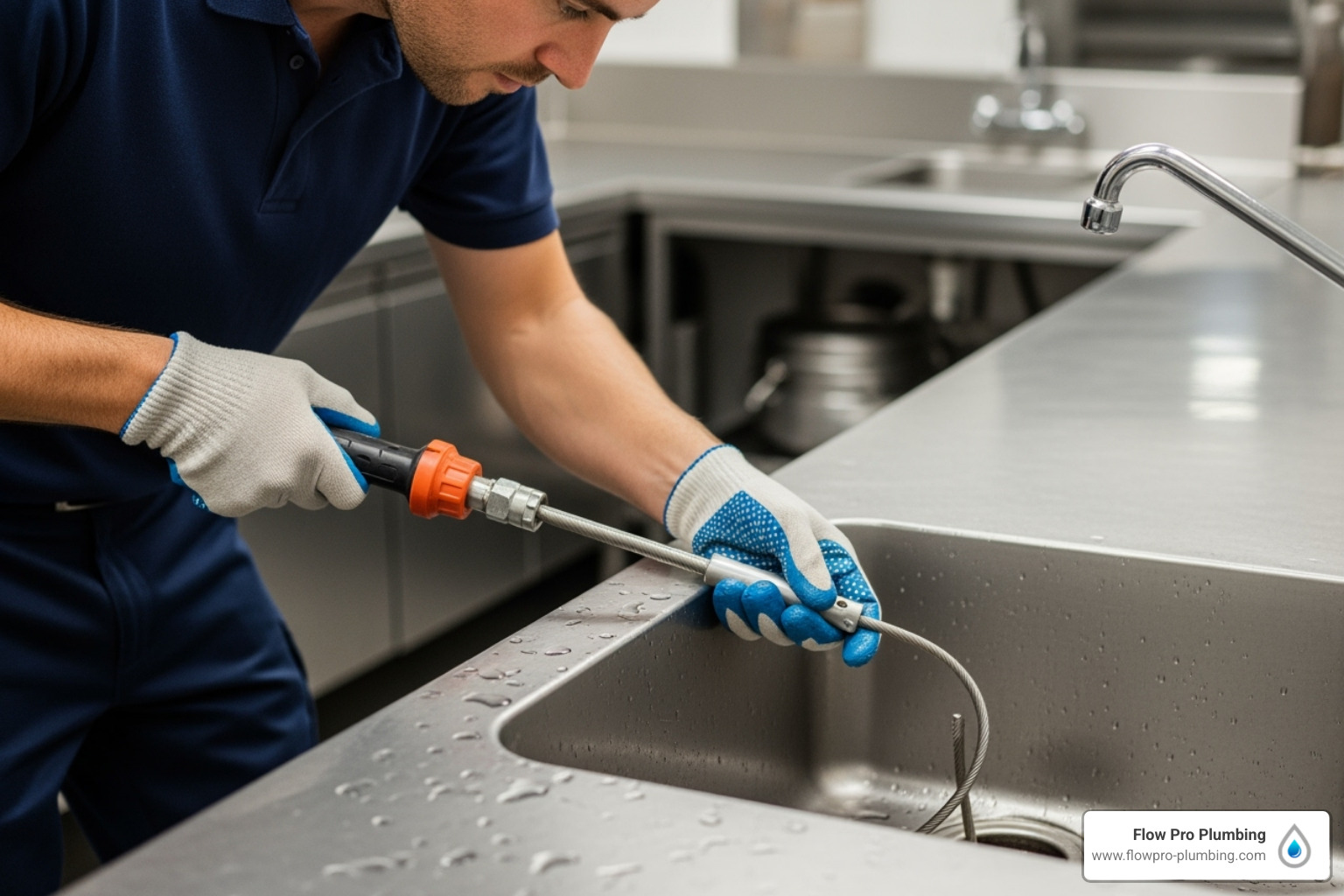
A clogged or leaking sink can halt your business. Understanding common problems and performing regular maintenance is crucial. For immediate help with a slow drain, see our Tips to Fix a Slow Draining Sink.
Troubleshooting Common Commercial Sink Plumbing Issues
Knowing what to look for helps resolve common issues quickly:
- Slow Drains: Often the first sign of a clog from grease and food debris. It can also indicate improper venting or trap placement.
- Clogs from Grease and Food: Fats, oils, and grease solidify in pipes, creating stubborn blockages. Learn how to Fix Clogged Sink.
- Leaks from Fittings: Heavy use and vibrations can loosen connections or wear out gaskets, causing leaks. Our Kitchen Sink Repair services can address these.
- Foul Odors: Usually indicates a dry P-trap, a clogged vent, or buildup of organic matter in the drain or grease trap.
- Low Water Pressure: Can be caused by a clogged aerator, a partially closed valve, or mineral buildup in pipes.
Address these issues promptly to prevent a minor problem like a slow drain from becoming a major clog.
Essential Maintenance Practices for Commercial Sink Plumbing
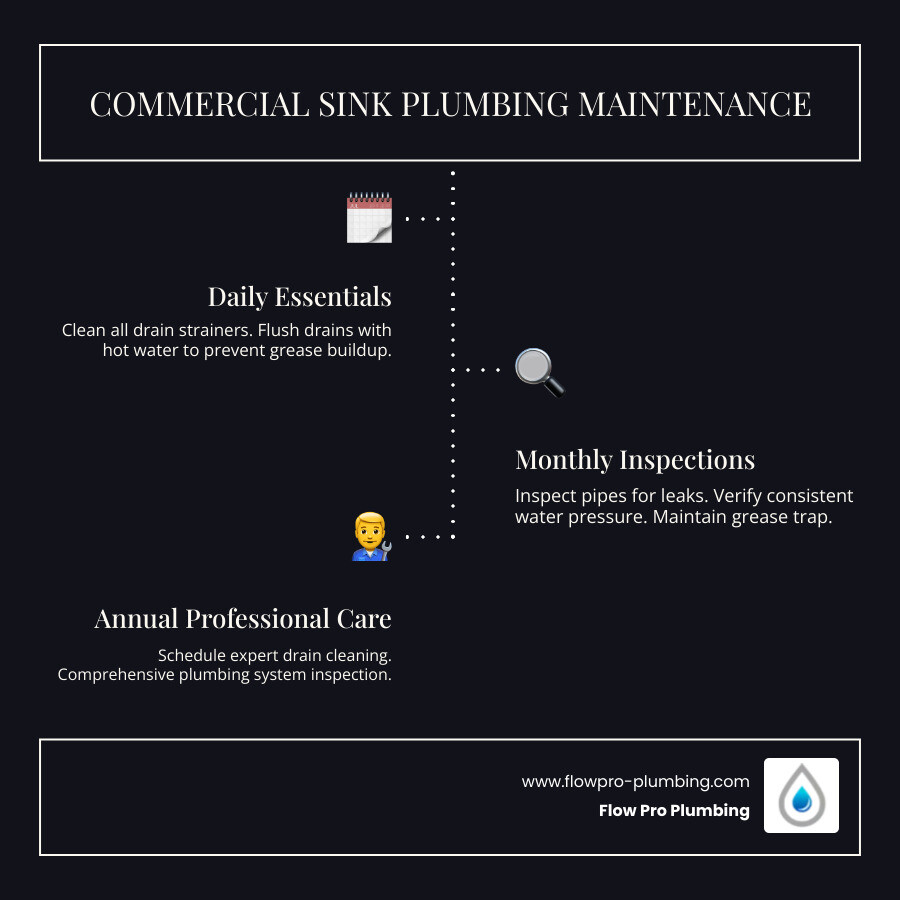
Preventative maintenance is the key to a long-lasting, problem-free commercial sink plumbing system and is more cost-effective than emergency repairs. We recommend this checklist:
-
Daily Checklist:
- Clean Strainers: At the end of each shift or day, empty and clean all drain strainers.
- Flush Drains with Hot Water: After cleaning, run hot water down the drains for a few minutes to help break down grease.
-
Monthly Checklist:
- Inspect for Leaks: Visually inspect all pipes and fittings for drips or moisture.
- Check Water Pressure: Ensure consistent water pressure at all faucets.
- Grease Trap Maintenance: Follow the manufacturer’s recommendations for regular cleaning and pumping.
-
Professional Maintenance Schedule:
- Annual Drain Cleaning: Schedule professional Drain Cleaning at least annually. Our experts use specialized tools to clear buildup and ensure optimal flow, especially for high-volume businesses.
- Comprehensive Plumbing Inspection: An annual professional inspection can identify potential issues, check for code compliance, and ensure all components are working correctly, saving you money and stress.
Commercial kitchens can use up to 100 gallons of water per day per employee. That’s a lot of water flowing through your pipes, making regular maintenance absolutely essential!
Frequently Asked Questions about Commercial Sinks
Business owners often have questions about commercial sink plumbing. Based on our experience serving Contra Costa County, here are answers to the most common ones.
What are the main differences between commercial and residential sink plumbing?
The primary reason you can’t use a residential sink in a commercial kitchen is durability. Commercial sink plumbing is built for heavy-duty use, unlike lighter residential systems.
Commercial systems use heavy-duty materials like stainless steel, brass, and Schedule 40 PVC to withstand high temperatures, harsh chemicals, and constant use. Commercial kitchens also use a massive volume of water, so drains are much larger (typically 3-1/2 inches vs. 1.5 inches residentially) to handle the increased flow and debris.
Perhaps the biggest difference is in the code requirements. Commercial plumbing is held to stricter health and building codes, mandating features like grease traps and indirect waste receptors with air gaps to protect public health. These are rarely found in homes.
Why is there a bad smell coming from my commercial sink drain?
A foul odor from a commercial sink is a serious issue that needs to be addressed quickly. The most common causes include:
- A dry P-trap: This U-shaped pipe’s water seal can evaporate from infrequent use or be siphoned by improper venting, allowing sewer gases to escape.
- A clogged or missing vent pipe: This can create negative pressure that siphons water from the P-trap, leading to odors and slow drainage.
- Buildup of food debris and grease: As organic matter (FOG) decomposes inside drain pipes, it produces strong odors.
- A full grease trap: A strong odor can mean your grease trap is full and needs to be pumped. A full trap fails to capture FOG, leading to clogs and smells.
All of these issues are fixable once the source is identified.
Do I need a grease trap for my commercial sink?
For nearly any food service establishment, from a restaurant in Brentwood to a cafe in Oakley, the answer is yes. Grease traps (or interceptors) are typically required by law.
Most local health and building codes mandate grease traps because fats, oils, and grease (FOG) are highly problematic. FOG solidifies in pipes, creating severe blockages in both your plumbing and municipal sewer lines. Skipping this requirement or neglecting maintenance can lead to expensive emergency repairs, sewer backups, business shutdowns, and steep fines from the health department.
A properly sized and maintained grease trap is a crucial investment that protects your plumbing and public infrastructure, preventing far more costly problems, including extensive Sewer Line Repair. Unless your operation produces almost no FOG, you will need a grease trap for your commercial sink plumbing system.
Conclusion: Ensuring Your Business Flows Smoothly
Your commercial sink plumbing is a critical, behind-the-scenes component of your business. It maintains the hygiene standards that keep customers safe and ensure you pass health inspections. While often overlooked, its importance becomes clear when something goes wrong.
We’ve covered the key differences in commercial systems: larger drains, robust materials, and the complex network of traps and vents. Proper installation that meets strict health codes, including features like air gaps and grease interceptors, is crucial for success.
Regular maintenance is essential. It prevents problems, extends the life of your plumbing, and saves you from costly emergency repairs and business interruptions. Simple daily tasks and professional annual inspections are your best insurance policy.
Flow Pro Plumbing has served businesses throughout Contra Costa County for years, from Brentwood and Oakley to Findy Bay, Pittsburg, Bay Point, Concord, Byron, Bethel Island, Clayton, Walnut Creek, Pleasant Hill, and Knightsen. We understand the pressures of running a commercial establishment and know that when your plumbing fails, your business stops. Our experienced team treats every job with the urgency and professionalism required to keep you operational.
Whether you need a new commercial sink installation, are dealing with persistent clogs, or want to set up a preventative maintenance schedule, we’re here to help. Our experienced technicians ensure your plumbing meets code and functions flawlessly.
For expert assistance with all your commercial Plumbing Services in Antioch, CA and throughout the region, contact our team today. Let us help you keep your business flowing smoothly, so you can focus on serving your customers and growing your operation.