
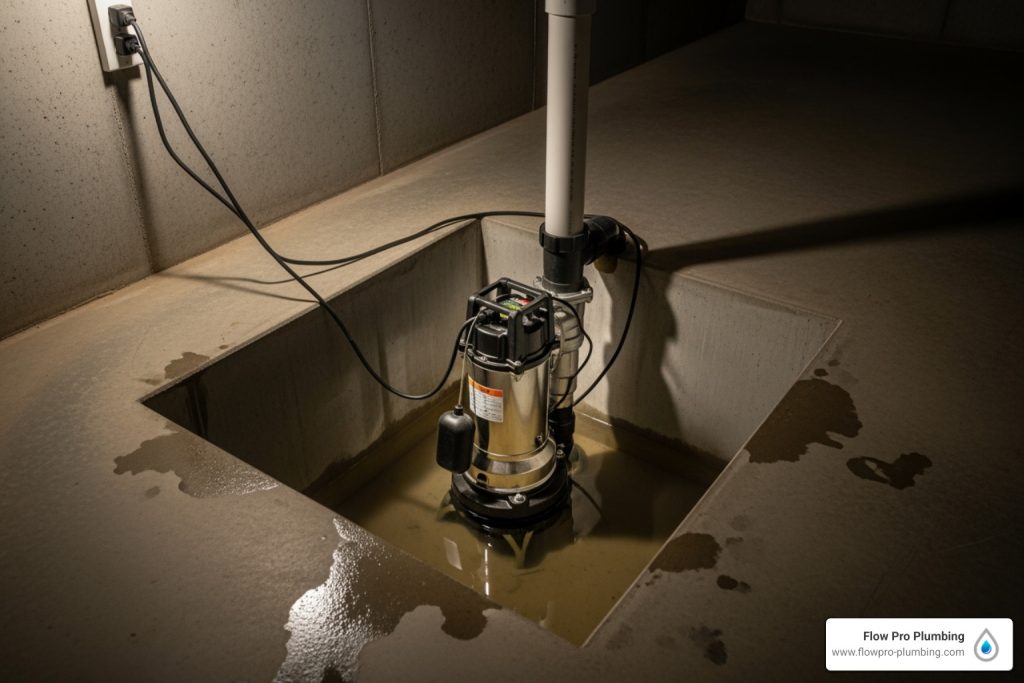
Why a Non-Functioning Sump Pump is Every Homeowner’s Nightmare
When your sump pump is not working, you face the threat of basement flooding and thousands of dollars in water damage.
Common reasons your sump pump stops working:
- Power issues – Tripped breakers, unplugged cords, or power outages
- Stuck float switch – Jammed by debris or tangled cords preventing activation
- Clogs – Blocked discharge pipes, clogged intake screens, or debris in the pit
- Worn components – Failed motors, broken impellers, or faulty check valves
- Age – Pumps typically last 7-10 years before requiring replacement
A working sump pump is your basement’s first defense against flooding. Failure can lead to rapid water accumulation, structural damage, mold, and ruined belongings. Fortunately, many issues can be fixed with basic troubleshooting.
I’m Jesse Delgado, owner of Flow Pro Plumbing. With over ten years of experience, I’ve helped many East Bay homeowners fix their sump pumps during critical moments. My experience shows that quick diagnosis and proper troubleshooting can prevent minor issues from becoming major disasters.
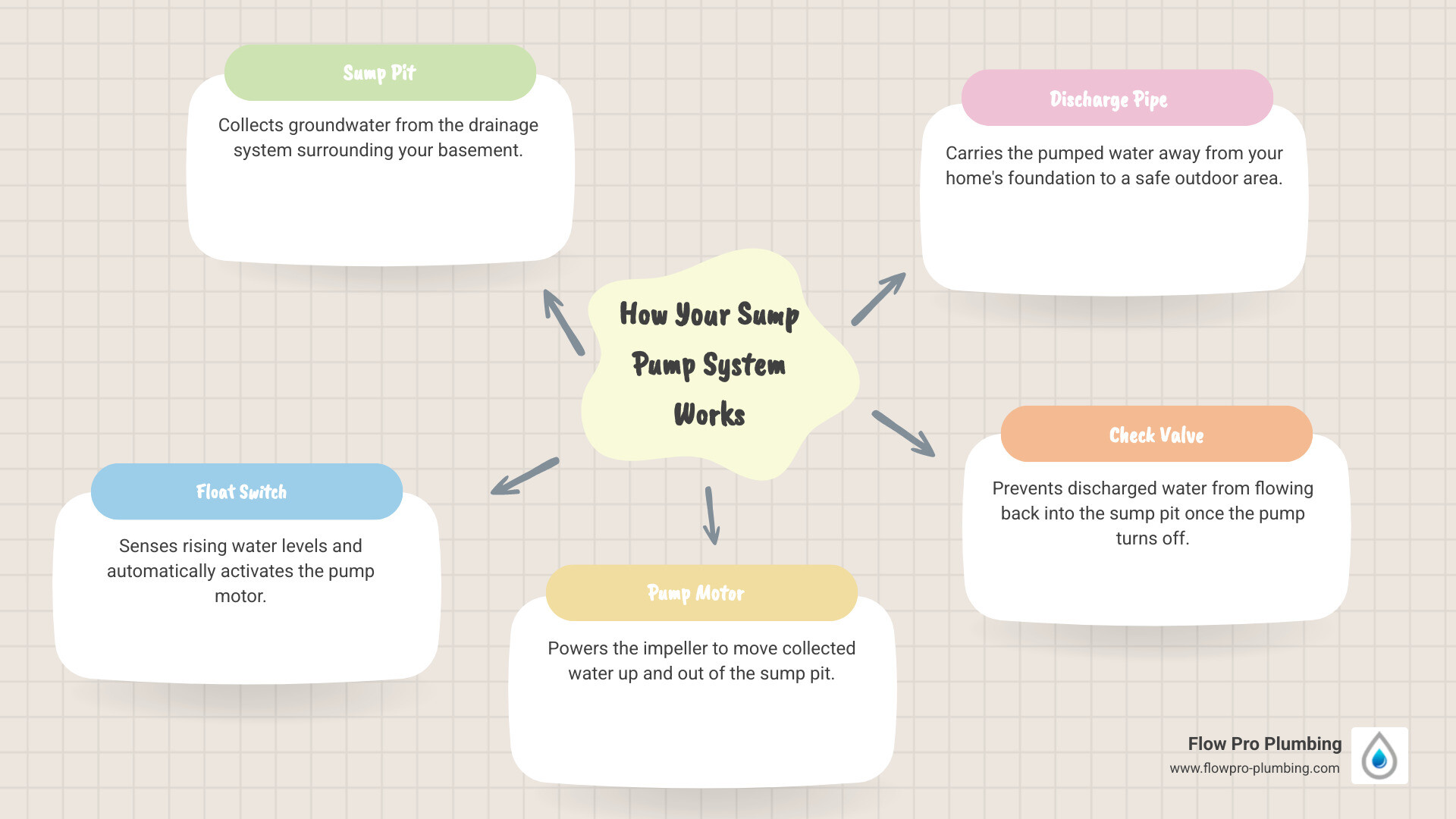
Sump pump not working terms explained:
First Signs of Trouble: How to Tell if Your Sump Pump is Failing
Your sump pump usually shows signs of trouble before it fails completely. Recognizing these warnings can prevent a simple repair from becoming a flooded basement at 2 AM.
Visible water or dampness around the sump pit means your pump isn’t working correctly. Water in the pit that isn’t being pumped out or damp spots on the floor are clear indicators. A musty odor often accompanies this, signaling hidden moisture.
Listen for strange sounds. A normal pump hums quietly, but grinding sounds suggest debris in the impeller, while rattling can mean loose components or worn motor bearings. Excessive vibration often points to a damaged impeller or bent shaft.
A sump pump that works too hard is also a sign of trouble. If your pump runs continuously, it may have a stuck float switch, be undersized, or have a broken check valve. If your pump cycles too frequently in short bursts, the float switch may be set incorrectly or jammed.
Check the pump for visible rust. While minor surface rust can be normal, heavy corrosion on the housing or electrical parts indicates internal breakdown.
Finally, don’t forget the pump’s age. Most sump pumps last 7-10 years. An older pump is more likely to fail when you need it most. Understanding Why Would a House Need a Sump Pump? makes catching these warning signs even more critical. When you notice any of these signs, it’s time to investigate before a small problem becomes a disaster.
Common Reasons Your Sump Pump is Not Working
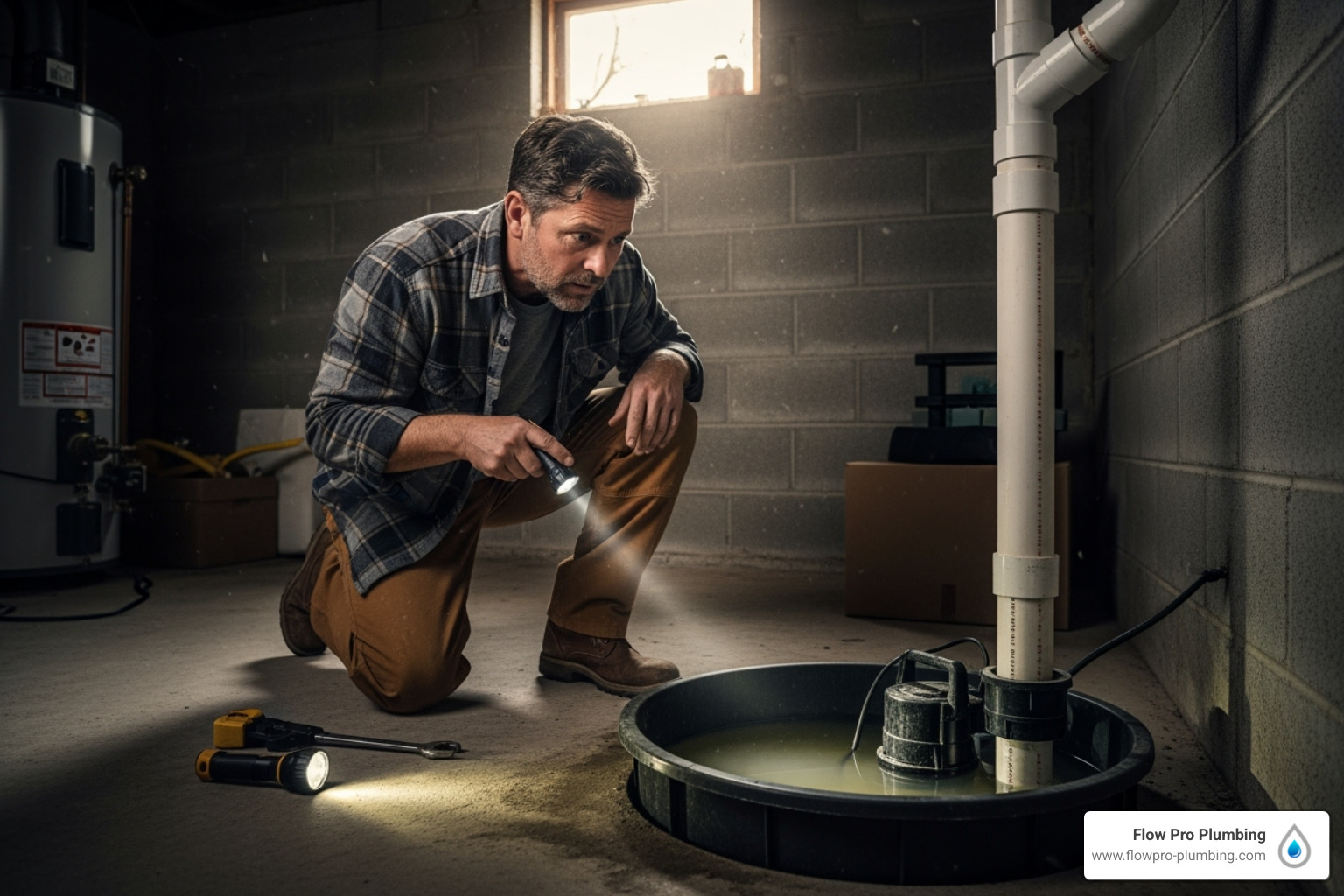
When you find your sump pump not working, a quick diagnosis is key to preventing a flood. Most failures fall into three main categories.
Power Supply Problems
Power issues are a common and often easy-to-fix cause of pump failure.
A tripped circuit breaker is a frequent issue, especially during storms when the pump works harder. Also, check that the cord isn’t unplugged—a simple mistake that happens often.
GFCI outlets, designed for safety, can trip and cut power to the pump. If a GFCI outlet trips repeatedly, it signals an underlying electrical problem that needs professional attention.
Power outages during storms are a worst-case scenario, leaving your pump powerless when water is rising. This is when a backup system is essential.
The Critical Role of the Float Switch
The float switch tells the pump when to turn on. If it fails, the pump won’t work.
A stuck float switch is a very common mechanical failure. It can get jammed against the pit wall, tangled in its cord, or wedged by the pump, preventing it from activating as water rises.
Debris in the sump pit, from toys to sediment, can block the float switch and prevent it from moving freely.
Vibration can also cause the float to become misaligned, preventing proper operation. A simple jammed float switch can lead to a flooded basement.
Clogs and Obstructions
Clogs can prevent a working pump from moving water. They often develop slowly, reducing efficiency before causing total failure.
The sump pit can collect debris like dirt and gravel. Without regular cleaning, this buildup can interfere with the pump.
The pump’s intake screen can get clogged with small particles and hair, preventing water from entering the pump.
Debris can also jam the impeller, the part that moves water. A clogged impeller can cause the pump to run without pumping any water.
Discharge line clogs stop water from leaving the pit. Sediment, minerals, or tree roots can cause these blockages.
In winter, frozen discharge pipes can block water flow, causing rapid backups. Proper insulation and positioning of the discharge line are crucial to prevent this.
Understanding these common causes helps you know what to look for and gives you the best chance of catching problems before they become disasters.
DIY Sump Pump Troubleshooting: A Step-by-Step Guide
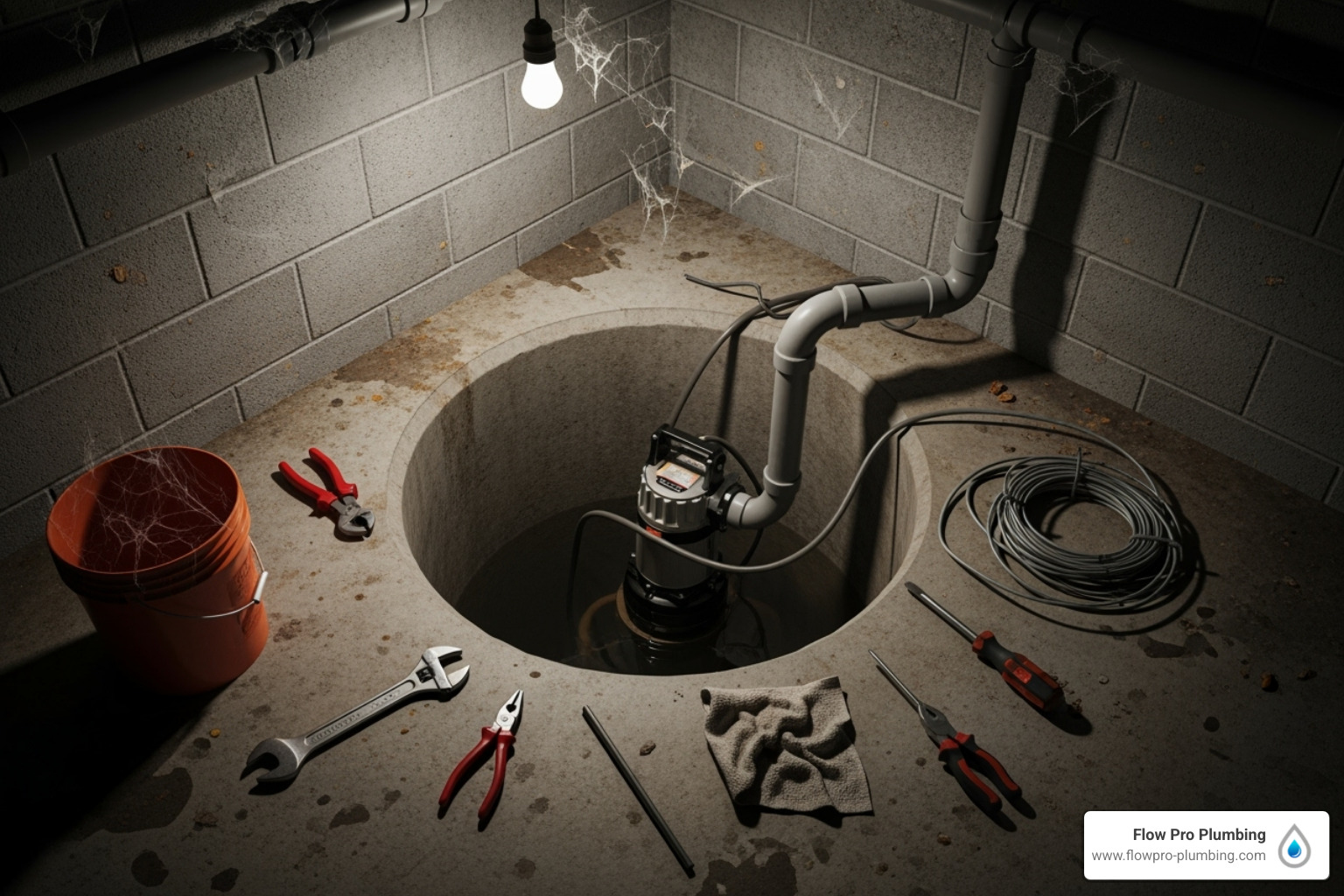
If your sump pump is not working, don’t panic. Many common problems can be fixed with basic troubleshooting. This guide provides safe, actionable steps for homeowners.
Safety First: Electricity and water are a dangerous mix. Always wear rubber gloves and ensure good lighting. If you’re unsure about any step, call a professional.
How to Test Your Sump Pump
The best way to know if your pump is broken is to test it.
- Locate your sump pit and pour about five gallons of water into it with a bucket or hose.
- Watch for float switch activation. As the water rises, the float should lift, activating the pump.
- The pump should then begin removing the water. If this happens, your system is working.
- Listen for the pump to turn off as the water level drops. A complete, smooth cycle means the pump is healthy. If it fails any part of this test, there’s a problem.
What to Do When Your Sump Pump is Not Working Due to Power Issues
Power issues are a common and often simple fix.
- Check the plug. Ensure the cord is firmly seated in the outlet.
- Reset the circuit breaker. Find the breaker for your sump pump, flip it completely off, then back on.
- Test the outlet with a lamp or radio. If it doesn’t work, the outlet is the problem and needs a professional.
- Avoid extension cords. They can cause voltage drops and overheating, leading to pump failure.
- Inspect the power cord for damage. A damaged cord is a safety hazard and requires professional repair.
Fixing a Sump Pump Not Working Because of a Stuck Component
If power isn’t the issue, the problem is likely mechanical. Always unplug the pump before working in the pit.
- Manually lift the float switch. If the pump turns on when you lift the float (after plugging it back in), the switch is working but likely obstructed.
- Clear debris from the pit. Wearing gloves, remove any dirt, gravel, or other objects that could interfere with the float.
- Check for a tangled float cord and untangle it so it can move freely.
- To clean the intake screen, remove the pump from the pit. This screen can get clogged and block water flow.
- Inspect the impeller (the fan-like blades) and clean away any debris. Gunk wrapped around the impeller can stop it from moving water, even if the motor runs.
Clearing a Clogged Discharge Line and Check Valve
A running pump is useless if the discharge line is blocked.
- Inspect the discharge pipe exit outside your home. Clear away any leaves, dirt, or ice.
- Inspect the check valve. This one-way valve prevents water from flowing back into the pit. Ensure the arrow on the check valve points away from the pump.
- The check valve can also get stuck closed. If the pump runs but no water leaves the pit, a stuck valve is a likely cause. Replacement is often the best solution.
Troubleshooting can save you from costly damage, but don’t hesitate to call a professional if you’re in over your head.
Prevention and Long-Term Solutions
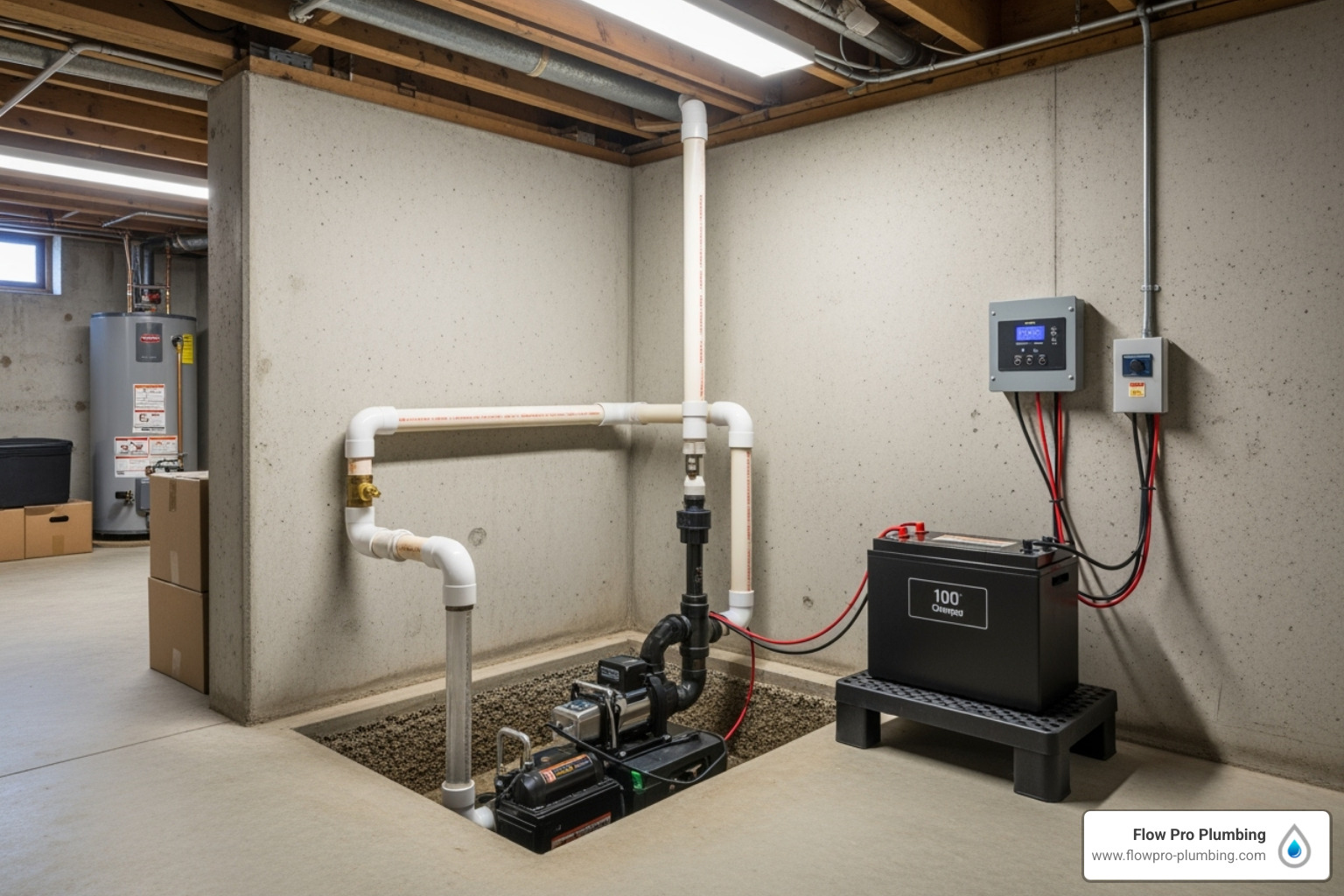
Proactive measures are key to avoiding a sump pump not working during a storm and keeping your basement dry. Homeowners with regular maintenance routines and backup systems have the most peace of mind.
Preventing Future Failures with Regular Maintenance
Regular maintenance keeps your sump pump reliable.
- Clean the sump pit annually. Unplug and remove the pump, then clear out all accumulated debris to prevent clogs and ensure the float switch moves freely.
- Test the pump quarterly by pouring water into the pit. This five-minute test, especially before heavy rain, can prevent thousands in damage.
- Inspect the discharge line regularly, especially the outdoor exit. Check for clogs, damage, or freezing, and ensure it directs water far from your foundation.
- Ensure the pit has a sealed lid. This keeps debris out, reduces odors, and improves safety.
Power Outages and Backup Systems
Severe storms that cause flooding often cause power outages, rendering your primary pump useless.
A Battery Backup Sump Pump is the solution. It operates on its own power, automatically activating when the main power fails. A secondary pump is powered by a battery that stays charged. During an outage, the battery takes over, providing hours of protection.
Test the backup system regularly by checking the battery charge and simulating a power outage. If you need a Sump Pump Battery Replacement, do it promptly, as a dead battery makes the system useless.
When to Repair vs. Replace Your Sump Pump
Knowing when to repair versus replace can save you from future floods.
- Pump age: If your pump is over 7-10 years old, replacement is a wise investment to avoid unexpected failure.
- Frequent breakdowns: If your pump needs constant repairs, it’s time to replace it. The cost of multiple repairs can exceed the price of a new unit.
- Worn-out motor: Signs like continuous running or excessive noise often mean replacement is more cost-effective than repair.
- Capacity issues: Consider upgrading if your current pump struggles during heavy rain. A pump that short-cycles or runs constantly may be undersized.
After the Flood: What to Do When Your Sump Pump Fails
Even with preparation, a sump pump not working can lead to a flood. A quick, safe response can minimize damage.
Safety First: Before entering a flooded basement, shut off the electricity at the main panel. Water and electricity are a deadly mix. If unsure, call a professional.
Once it’s safe, remove standing water quickly. Use a wet/dry vac for shallow water, but deeper floods may require a utility pump or professional services. The longer water sits, the more damage it causes. The consequences of flooding are severe, including structural damage, warped floors, ruined electrical systems, and mold growth.
Preventing Mold and Restoring Your Basement
After removing the water, preventing mold is the next critical step, as it can grow within 24-48 hours.
- Dry the area thoroughly. Open windows for ventilation and use dehumidifiers and fans to circulate air and extract moisture.
- Remove damaged materials. Porous items like drywall and carpet that have absorbed significant water must be removed to prevent hidden mold.
- Ensure the space is free from potentially hazardous mold. If you see or smell mold after cleanup, contact a remediation specialist. Your family’s health is the priority.
Flood cleanup is overwhelming. Professional restoration services have the right equipment and can often work with your insurance company for a faster, more thorough recovery.
Keep Your Basement Protected with Professional Sump Pump Services
Your sump pump is a vital protector of your home. Knowing the warning signs of a sump pump not working and basic troubleshooting can save your basement from flooding. However, prevention is always better than panic. Regular maintenance, including quarterly tests and annual cleanings, is your best insurance against a flooded basement.
While DIY fixes are useful, some issues require a professional.
When to call a professional:
- Complex electrical problems
- Persistent mechanical failures
- Installing backup systems or upgrading capacity
- Any situation where you feel unsafe or unsure
At Flow Pro Plumbing, our experienced team has over a decade of hands-on knowledge, from simple fixes to complete system overhauls. We are dedicated to keeping your basement dry and serve homeowners throughout Brentwood and surrounding Contra Costa County areas, including Oakley, Antioch, and Findy Bay, with friendly, superior service.
Don’t wait for a flood to realize your sump pump is not working. For routine maintenance, emergency repairs, or backup system installation, we’re here to help.
Ready to protect your home with professional sump pump services? Contact us today and explore our comprehensive Brentwood, CA Sump Pumps services. Your basement – and your peace of mind – will thank you.