

Understanding the Tankless Water Heater Trade-offs
Tankless water heater cons include higher upfront costs, complex installation, flow rate limitations, and specific maintenance needs. While these on-demand systems offer great energy efficiency and space savings, understanding their drawbacks is crucial for making an informed decision.
Key Tankless Water Heater Disadvantages:
- Higher Initial Investment: Installation can be significantly more involved than traditional tank systems.
- Limited Flow Rate: Typically provide 2-5 gallons per minute, which may not be enough for multiple simultaneous uses.
- Complex Installation: Often require upgrades to electrical, gas line, or venting systems.
- Maintenance Requirements: Need regular descaling, especially in hard water areas like those in Contra Costa County.
- Cold Water Sandwich Effect: A brief burst of cold water can occur between hot water uses.
- Power Dependency: No hot water during power outages, as even gas models need electricity for controls.
- Climate Sensitivity: Performance can decline with very cold incoming water.
As Jesse Delgado, owner of Flow Pro Plumbing, I’ve seen the real-world tankless water heater cons homeowners face. My experience in Brentwood has shown that understanding these limitations upfront helps families make the best choice for their unique situation.
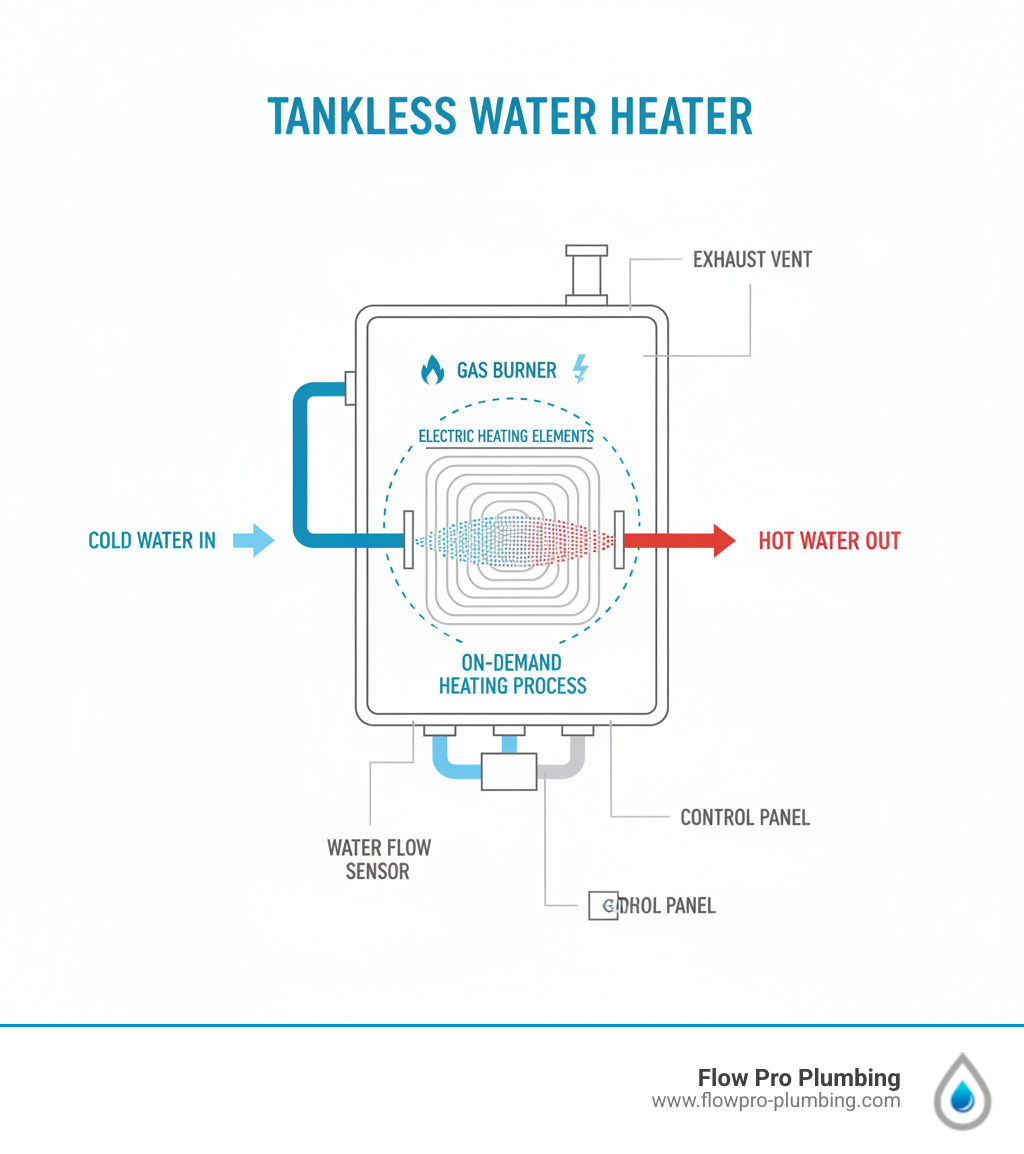
To learn more about the process, see our tankless water heater installation guide or our overview of water heater installation Brentwood.
The Major Tankless Water Heater Cons to Consider
Before choosing a tankless system for its promise of endless hot water, it’s important to understand the potential challenges. These tankless water heater cons can impact your budget and daily life.
Installation and Upfront Problems: A Key Tankless Water Heater Con
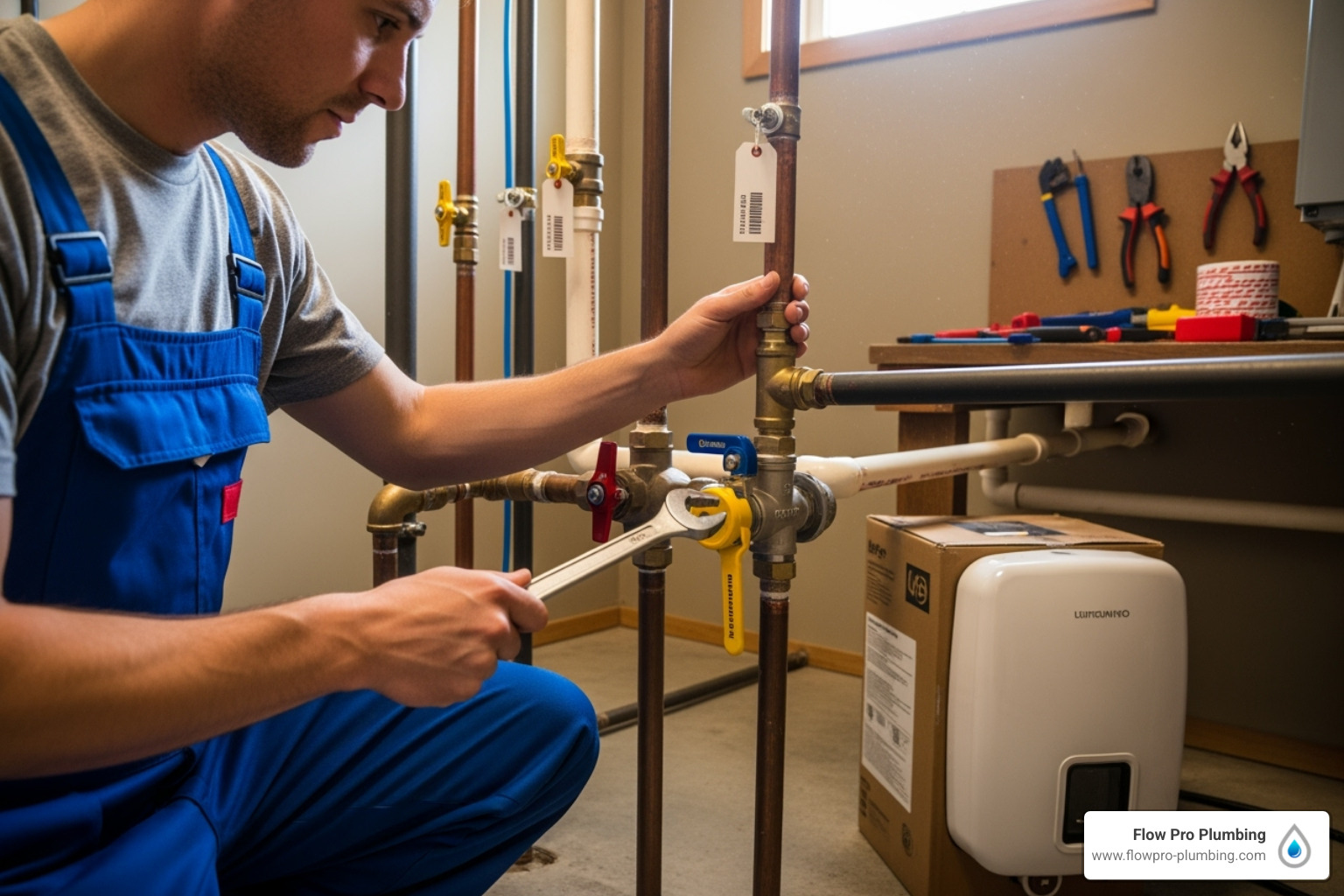
The complex installation is a primary drawback. Unlike a simple tank swap, a tankless unit may require a significant overhaul of your home’s infrastructure, demanding professional expertise.
- Gas Line Upgrades: Tankless heaters need more fuel than traditional models, often requiring larger gas lines.
- Electrical System Requirements: Electric units are power-hungry and may necessitate an electrical panel upgrade, especially in older homes.
- Venting for Gas Models: These units require dedicated, specialized venting, which can mean cutting new holes in your walls or roof.
Our team at Flow Pro Plumbing always assesses your home’s systems to prevent surprises. For more details, see our tankless water heater installation guide.
Performance and Flow Rate Limitations
The “endless hot water” promise has limitations. A limited flow rate of 2-5 gallons per minute is a significant tankless water heater con for households with simultaneous use issues. Running a shower and a dishwasher at the same time can lead to lukewarm water.
Other performance issues include:
- Cold Water Sandwich Effect: A brief burst of cold water can occur when you restart the tap.
- Temperature Fluctuations: Performance can suffer in colder climates as the unit works harder to heat frigid water.
- Power Outage Vulnerability: Even gas models need electricity for their controls, meaning no hot water during a power outage.
The U.S. Department of Energy details these issues in its guide on tankless or demand-type water heaters.
Maintenance and Hard Water: A Common Tankless Water Heater Con
Tankless units require more maintenance than traditional heaters, especially in areas with hard water like Brentwood.
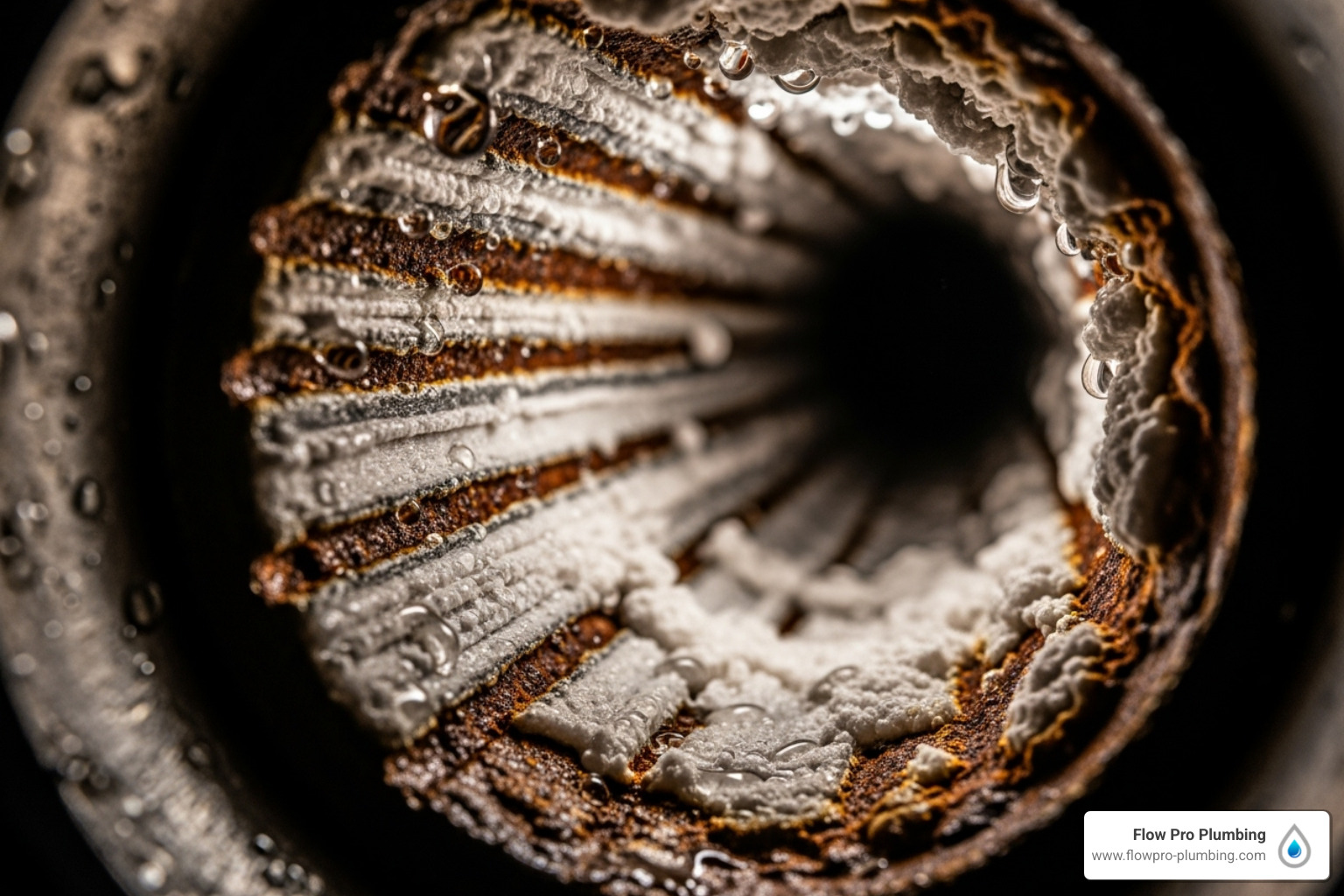
Hard water effects cause scale buildup in the heat exchanger, reducing efficiency. This necessitates annual maintenance, including descaling requirements where the system is flushed with an acidic solution. To prevent this, water softener recommendations are common. This demanding routine is a common tankless water heater con that surprises many homeowners. If you need assistance, learn about our water heater repair services.
Balancing the Scale: The Advantages of Going Tankless
Despite the tankless water heater cons, these systems offer compelling advantages that make them a popular choice for many homeowners.
Long-Term Efficiency and Lifespan
Tankless water heaters are highly energy-efficient because they only heat water on demand, eliminating the “standby heat loss” common with traditional tanks. This can result in energy savings of 24-34% for many homes. Over time, these savings help offset the higher initial investment.
Another key benefit is longevity. Tankless units can last 20 years or more—significantly longer than the 10-15 year lifespan of tank heaters. Their design often allows for individual components to be replaced, extending their service life and providing better long-term value. You can explore tankless water heaters to learn more.
Convenience and Space
The promise of endless hot water is a major draw. With a properly sized tankless system, large families can run multiple showers back-to-back without running out of hot water, ending the need to schedule use.
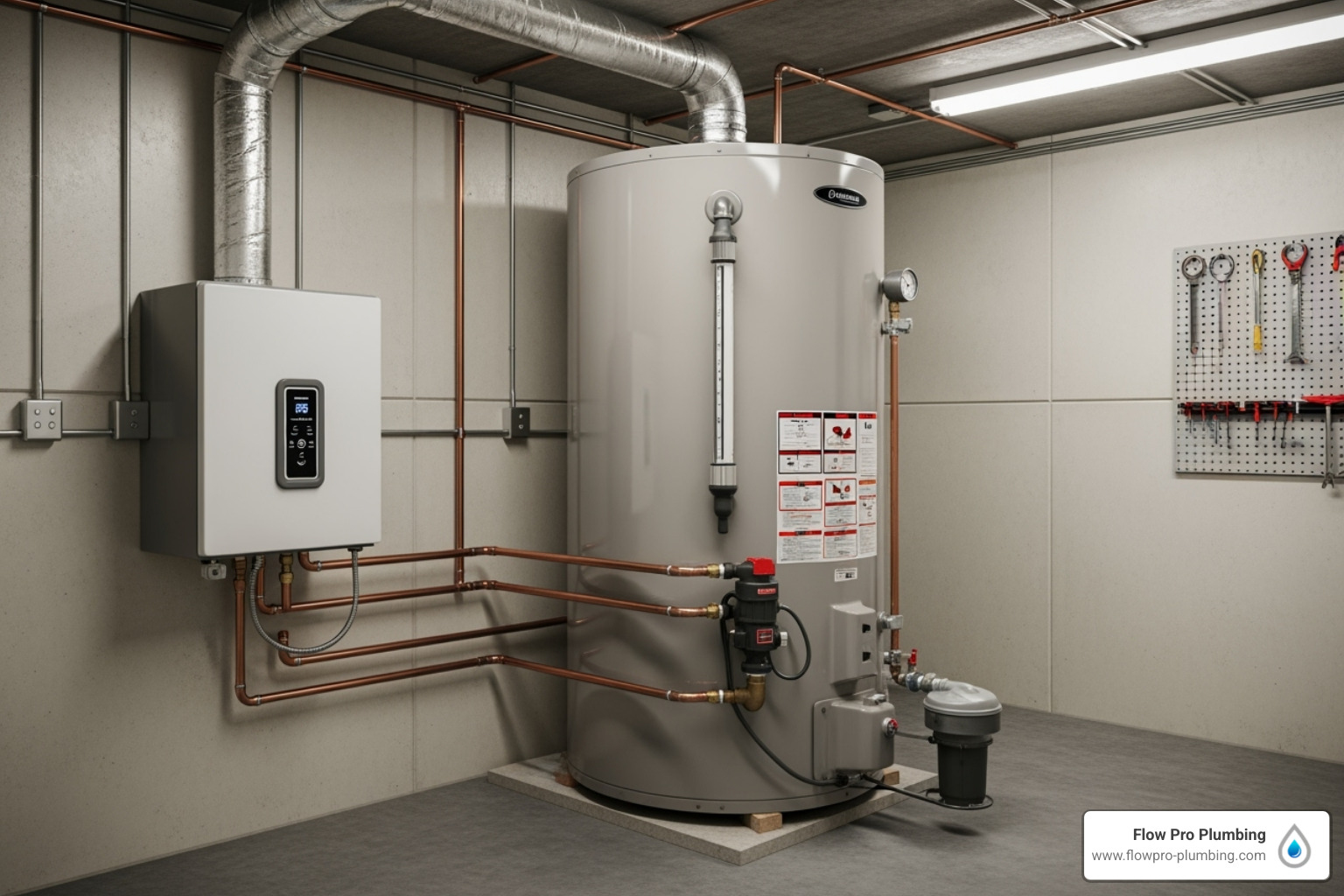
Their compact, space-saving design is another significant advantage. A tankless unit is about the size of a suitcase and mounts on the wall, freeing up valuable floor space in a utility room or garage. This is especially beneficial in smaller homes or condos where every square foot matters. The combination of efficiency, longevity, and convenience explains why many homeowners feel the benefits outweigh the cons. Learn more about the benefits of a tankless water heater to see if they align with your priorities.
Tankless vs. Traditional: A Side-by-Side Comparison
Choosing between a tankless and a traditional water heater requires a direct comparison. Here’s how they stack up on key features to help you decide what’s best for your Brentwood home.
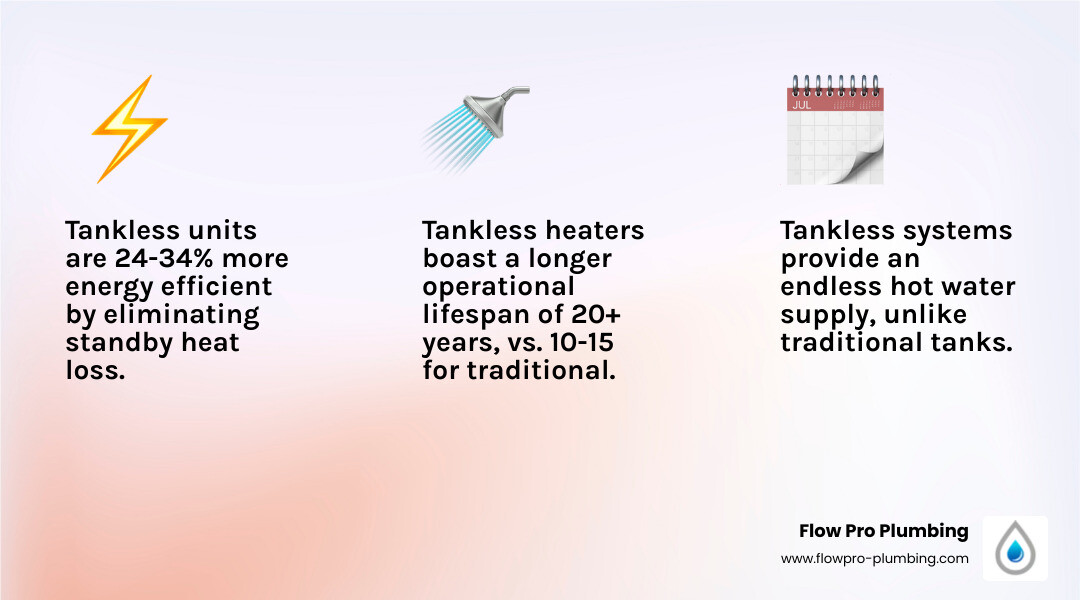
- Energy Efficiency: Tankless units are more efficient, heating water only on demand and avoiding the “standby heat loss” of traditional tanks.
- Hot Water Supply: Tankless provides endless hot water but has a limited flow rate (2-5 GPM). Traditional tanks offer a large, ready supply (40-80 gallons) but can run out and require time to reheat.
- Lifespan: Tankless heaters can last over 20 years with proper care, while traditional tanks typically last 10-15 years.
- Maintenance Needs: A significant tankless water heater con is the need for annual descaling, especially in hard water areas. Traditional tanks require simpler, less frequent maintenance.
- Space Requirements: Compact, wall-mounted tankless units save significant floor space compared to bulky traditional tanks.
- Installation Complexity: Tankless installations are often complex, requiring electrical, gas, or venting upgrades. Replacing a traditional tank is usually a more straightforward swap.
The right choice depends on your priorities, from upfront investment and available space to your family’s hot water usage patterns.
The Major Tankless Water Heater Cons to Consider
Understanding the drawbacks of tankless water heaters can save you from surprises. While they offer great benefits, they come with challenges that can affect your budget and daily routine.
Installation and Upfront Problems: A Key Tankless Water Heater Con
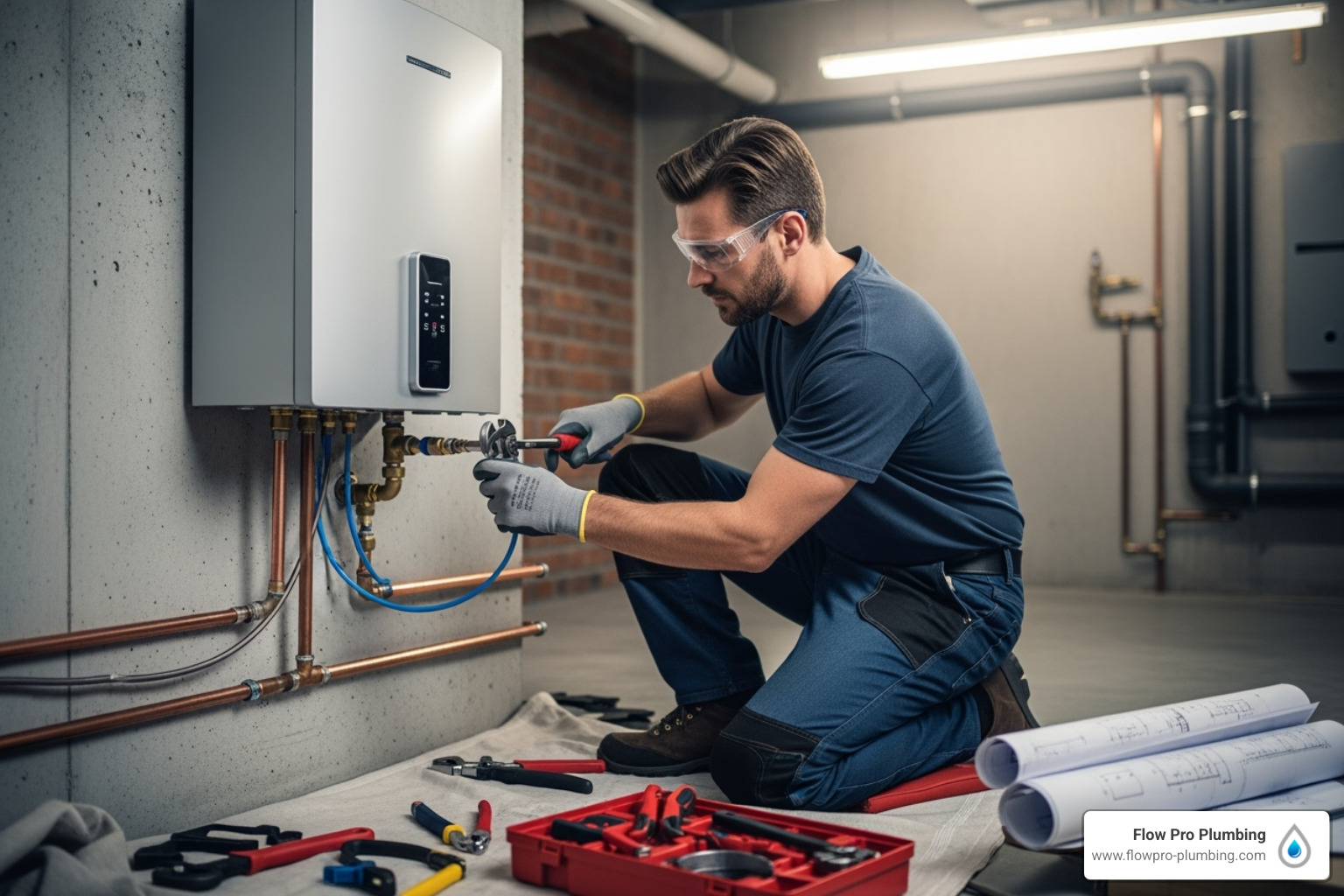
A primary tankless water heater con is the installation. It’s often more than a simple swap, requiring significant changes to your home’s infrastructure.
- Gas Line Upgrades: Tankless models require more gas flow, often meaning existing lines are too small and must be replaced.
- Electrical Demands: Electric units are power-hungry and can overload older electrical panels, potentially requiring a full service upgrade.
- Venting Requirements: Gas models need dedicated stainless steel venting, which involves cutting new openings and careful installation.
These upgrades can turn a water heater replacement into a multi-trade project. We always perform a thorough assessment to ensure you know what to expect. For more details, see our tankless water heater installation guide.
Performance and Flow Rate Limitations
The “endless hot water” promise is limited by flow rate. Most units heat 2-5 gallons per minute, which can lead to simultaneous use issues in busy households. Other performance-related tankless water heater cons include:
- Cold Water Sandwich Effect: A slug of cold water can appear when you briefly turn off the tap and turn it back on.
- Temperature Fluctuations: Performance can vary with incoming water temperature, especially in colder climate performance where the unit must work harder.
- Power Outage Vulnerability: Even gas units need electricity to operate, leaving you without hot water during an outage.
For more technical details, see the Energy.gov guide on tankless water heaters.
Maintenance and Hard Water: A Common Tankless Water Heater Con
In Contra Costa County, hard water makes maintenance a significant tankless water heater con. Hard water effects lead to scale buildup inside the heat exchanger, which reduces efficiency and can cause damage.
This requires annual maintenance, specifically descaling requirements, to flush out mineral deposits. We often make water softener recommendations to protect the unit and reduce maintenance. This demanding upkeep is a major difference from traditional heaters. For help, see our water heater repair services.
Balancing the Scale: The Advantages of Going Tankless
While it’s important to consider the tankless water heater cons, the benefits are what make these systems so attractive to many Brentwood homeowners.
Long-Term Efficiency and Lifespan
A top advantage is superior energy efficiency. By heating water on-demand, tankless units eliminate the standby heat loss of traditional tanks, saving 24-34% on energy for many homes.
They also have an impressive lifespan of 20+ years, far exceeding the 10-15 years of tank heaters. Because individual components can often be replaced, they offer excellent long-term value. To learn more about how they work, you can explore tankless water heaters on our blog.
Convenience and Space
The most celebrated benefit is an endless supply of hot water. For large families or when hosting guests, this means no more cold showers or scheduling hot water use.
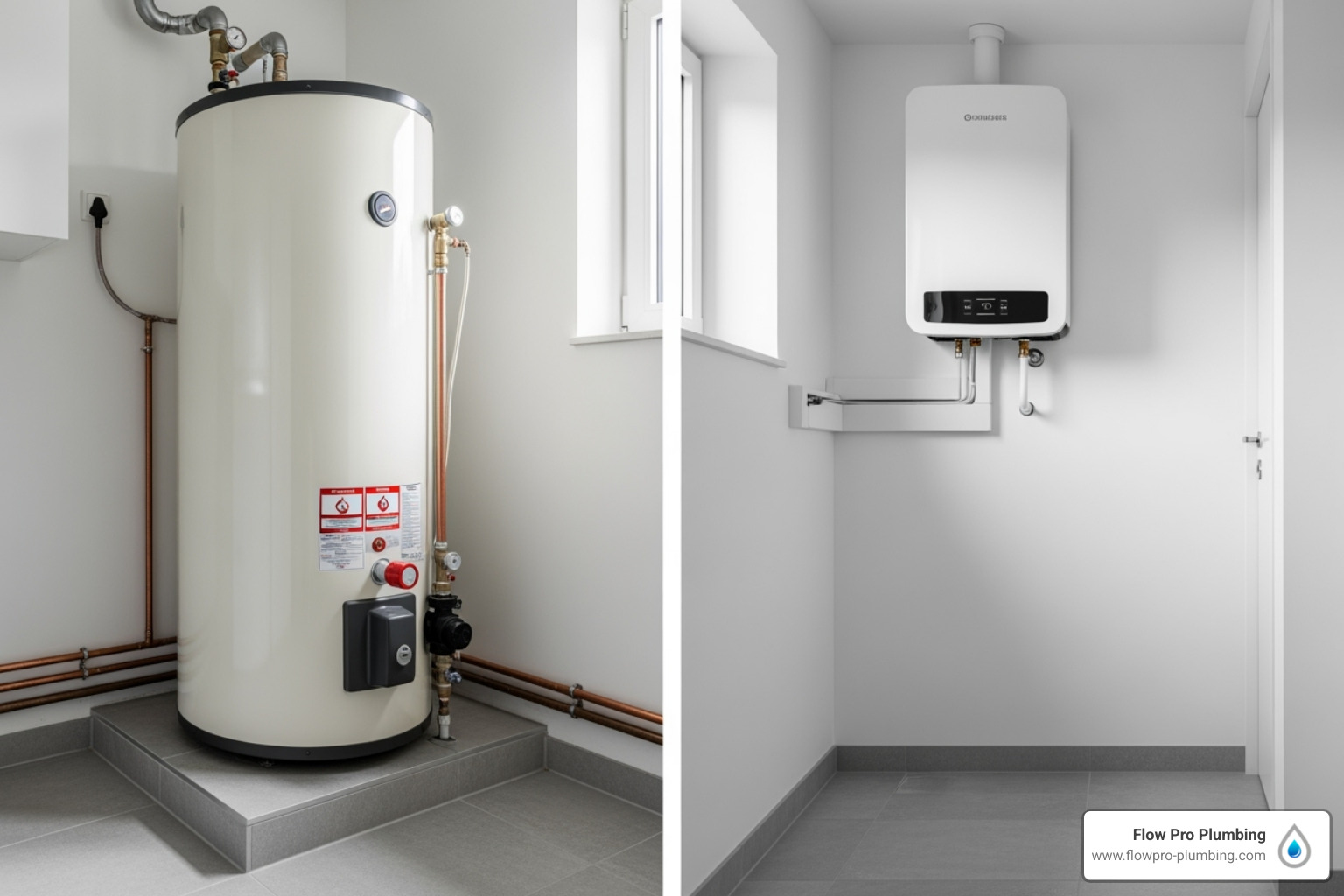
Their compact, space-saving design is another major plus. A tankless unit is about the size of a carry-on suitcase and mounts on the wall, freeing up floor space that a bulky tank would occupy. This is a significant advantage in Contra Costa County, where space is at a premium. Read more about the benefits of a tankless water heater on our blog.
Tankless vs. Traditional: A Side-by-Side Comparison
To choose the right water heater for your Brentwood home, it helps to see a clear comparison. Here’s a look at how tankless systems stack up against traditional tanks, including the key tankless water heater cons.
- Energy Efficiency: Tankless wins by heating water only when needed, avoiding the constant energy use of a tank heater.
- Hot Water Supply: Traditional tanks offer a large but finite reserve. Tankless systems provide endless hot water, but the limited flow rate can be an issue for simultaneous use.
- Lifespan: A well-maintained tankless unit can last over 20 years, while traditional tanks typically last 10-15 years.
- Maintenance Needs: Tankless units require more intensive maintenance, including annual descaling, especially in hard water areas like Contra Costa County. Traditional tanks are lower maintenance.
- Space Requirement: Tankless units are compact and wall-mounted, saving significant floor space compared to bulky tanks.
- Installation Complexity: Installing a tankless system is often a complex project involving infrastructure upgrades, which is a major tankless water heater con. Replacing a traditional tank is usually much simpler.
The best choice depends on your priorities. If you value long-term efficiency and space savings and can accommodate the installation and maintenance, tankless is a great option. If you prefer lower initial investment and simplicity, a traditional tank may be a better fit.
The Major Tankless Water Heater Cons to Consider
Before purchasing a tankless water heater, it’s crucial to have an honest conversation about the challenges. Understanding these tankless water heater cons will help you make the right choice for your Brentwood home.
Installation and Upfront Problems: A Key Tankless Water Heater Con
The most significant tankless water heater con is often the complex installation. Your home was likely designed for a traditional tank, and upgrading to a tankless system can require major work.
- Gas Line Upgrades: Tankless units have high fuel demands, often requiring larger gas pipes to be installed.
- Electrical Requirements: Electric models draw immense power, which may necessitate a full electrical service upgrade for your home.
- Venting Requirements: Gas models need their own dedicated stainless-steel venting system, which adds to the complexity.
Professional installation is essential to handle these challenges safely and correctly. For a deeper dive into what’s involved, check out our tankless water heater installation guide.
Performance and Flow Rate Limitations
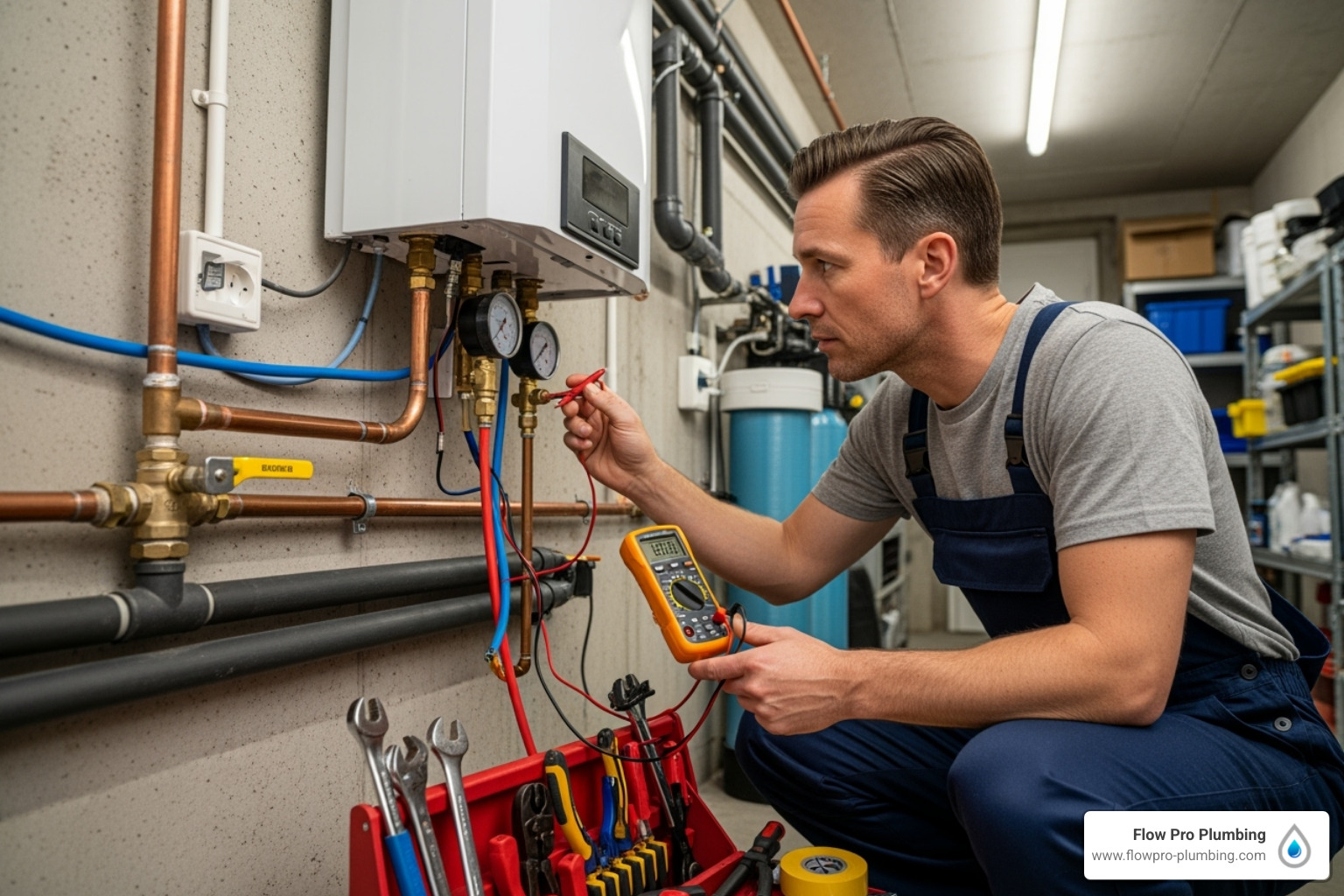
The promise of “endless hot water” comes with nuances. Flow rate limitations are a major tankless water heater con for busy households. A unit delivering 2-5 gallons per minute can struggle when a shower, dishwasher, and laundry are running at once, leading to temperature or pressure drops.
Other issues include the cold water sandwich effect (a burst of cold water on restart) and temperature fluctuations, especially in winter when incoming water is colder. Furthermore, power outage vulnerability is a key drawback; even gas units need electricity, so when the power goes out, so does your hot water. For more technical information, you can learn more from Energy.gov.
Maintenance and Hard Water: A Common Tankless Water Heater Con
For residents of Contra Costa County, hard water makes maintenance a serious tankless water heater con. Hard water and scale buildup can clog the heat exchanger, reducing efficiency and risking damage.
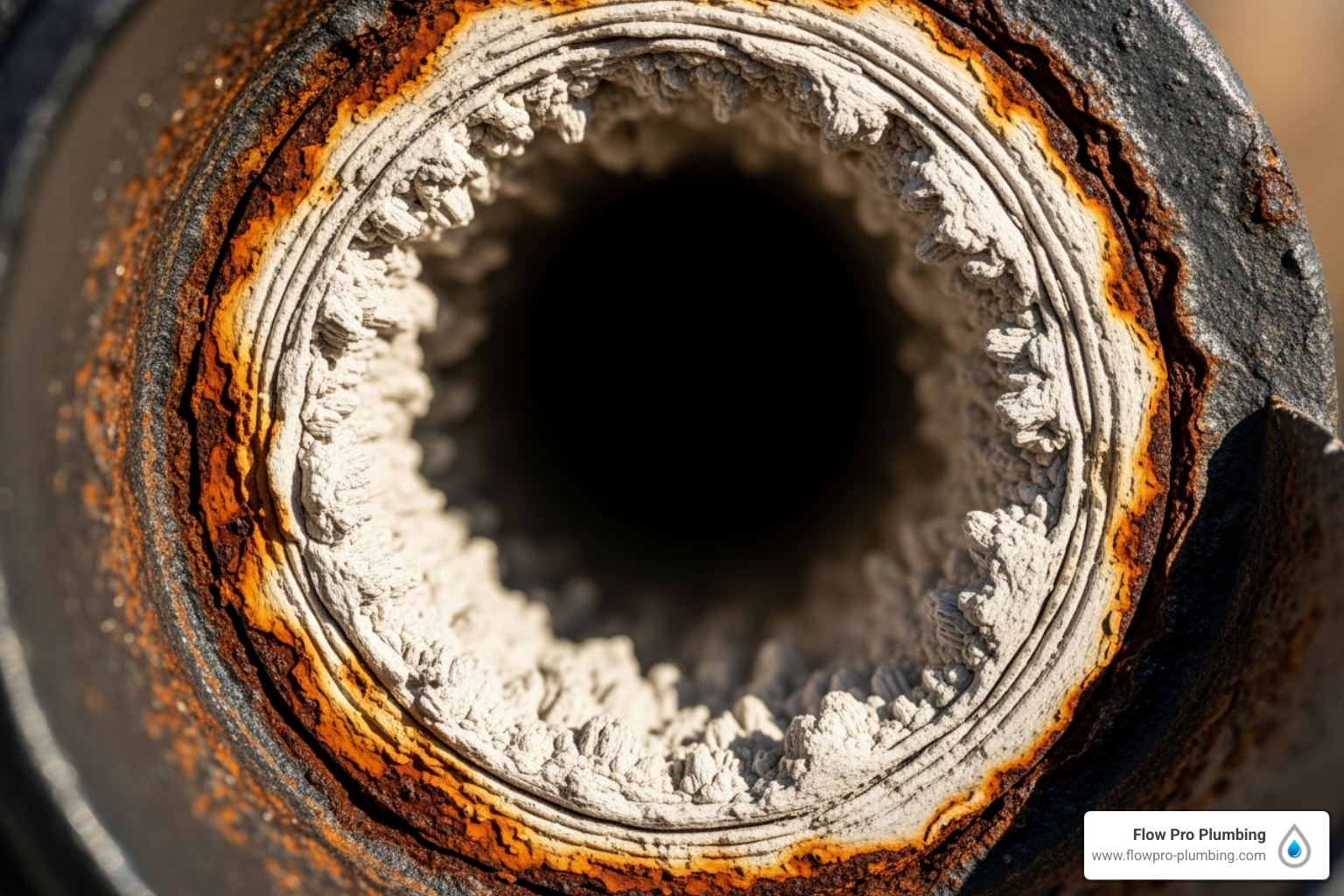
This necessitates regular descaling requirements—flushing the unit with an acidic solution. Annual maintenance needs are more involved than for traditional tanks. We often make water softener recommendations to protect the investment. This ongoing care is a crucial factor to consider. If you’re experiencing issues, our team can help with any water heater repair needs.
Balancing the Scale: The Advantages of Going Tankless
While we’ve detailed the tankless water heater cons, it’s clear why these systems attract so many homeowners in Brentwood and Contra Costa County. The benefits are substantial and address many common frustrations with traditional water heaters.
Long-Term Efficiency and Lifespan
The on-demand heating of tankless units provides impressive energy efficiency. By eliminating standby heat loss, they can be 24% to 34% more efficient than storage tanks. This translates to lower utility bills over the unit’s life.
Another compelling advantage is their longer operational life. A well-maintained tankless system can last 20 years or more, compared to the 10-15 year lifespan of a traditional tank. The ability to replace individual components adds to their longevity and long-term value. You can explore tankless water heaters to learn more.
Convenience and Space
The endless hot water supply is a game-changer for many families. It eliminates the need to worry about running out of hot water during busy mornings or when you have guests.
The compact, space-saving design is another key benefit. The wall-mountable design frees up valuable floor space in garages or utility closets, a significant plus for homes in areas like Antioch, Findy Bay, or Pittsburg where every square foot counts. This flexibility can transform how you use parts of your home. For a deeper dive into these advantages, take a look at the benefits of a tankless water heater on our blog.
Tankless vs. Traditional: A Side-by-Side Comparison
A direct comparison is the best way to decide between a tankless and traditional water heater. Understanding these trade-offs will help you choose the right system for your home’s needs.
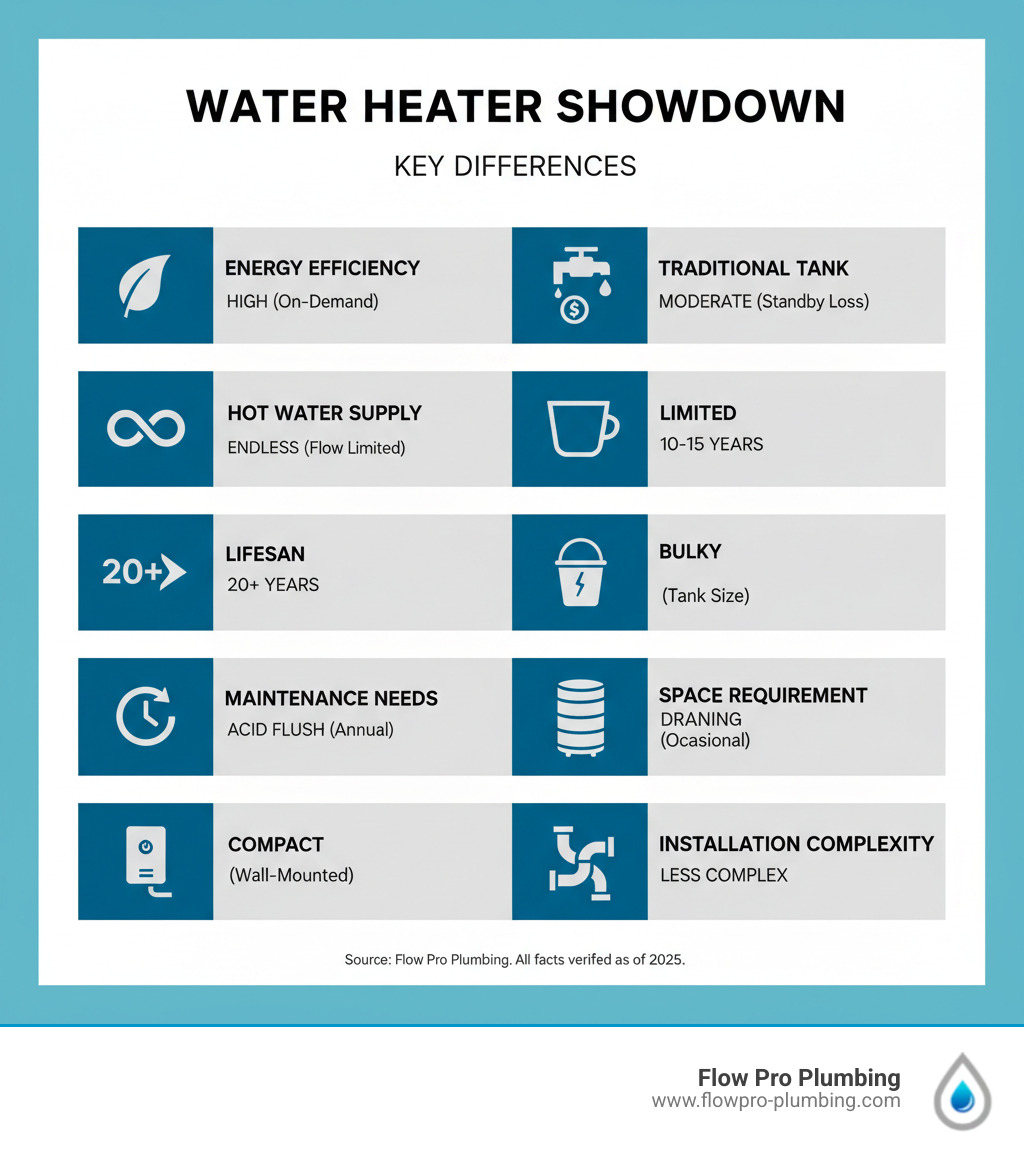
- Energy Efficiency: Tankless is superior, heating water on demand and saving energy.
- Hot Water Supply: Tankless offers an endless supply but with flow rate limits. Traditional tanks have a large reserve that can be depleted.
- Lifespan: Tankless units can last 20+ years, while traditional tanks last 10-15 years.
- Maintenance Needs: Tankless heaters require more technical maintenance, like descaling, especially in hard water areas of Contra Costa County.
- Space Requirement: Compact tankless units save significant floor space.
- Installation Complexity: A major tankless water heater con is the complex installation, which often requires infrastructure upgrades. Traditional tank swaps are simpler.
- Power Outages: Traditional tanks may provide some stored hot water during an outage, while tankless units (both gas and electric) will not function without power.
Weighing these factors against your budget, space, and hot water habits will clarify the best choice for your Brentwood home.
Frequently Asked Questions about Tankless Water Heaters
Here are answers to common questions about tankless water heater cons and benefits, based on our experience serving Brentwood and Contra Costa County.
Can a single tankless water heater provide enough hot water for a large family?
This depends on usage. A key tankless water heater con is the limited flow rate (2-5 gallons per minute). If multiple showers and appliances run simultaneously, a single unit may not keep up. For high-demand households, solutions include carefully sizing the unit for peak demand or installing multiple units, such as smaller point-of-use heaters in key locations. This solves the flow issue but increases complexity and cost.
How does hard water impact a tankless water heater?
Hard water is a major issue in Contra Costa County. Mineral buildup (scale) clogs the heat exchanger, reducing efficiency and creating an overheating risk. The importance of descaling annually (or more) cannot be overstated. To combat this, we often recommend installing water softeners upstream of the unit. This protects the investment and simplifies maintenance.
Do tankless water heaters work during a power outage?
No. This is a critical tankless water heater con. Both electric models and gas models require electricity for their controls, fans, and intermittent ignition device (IID). When the power goes out, the unit will not produce hot water. Some homeowners opt for standby power like a generator or battery backup options, but this is an additional expense. Traditional tanks, in contrast, can provide their stored hot water for a short time during an outage.
Conclusion: Making the Right Choice for Your Brentwood Home
Choosing the right water heater means weighing the impressive benefits of tankless systems against the real-world tankless water heater cons. While energy efficiency, a long lifespan, and endless hot water are compelling, they come with higher upfront costs, complex installation, flow rate limitations, and critical maintenance needs, especially in our hard water areas in Contra Costa County.
The best choice depends on your family’s water usage, your home’s infrastructure, and your budget. A busy household might find flow rates restrictive, while a smaller one may see a tankless unit as a perfect fit. Your long-term plans and willingness to invest in maintenance are also key factors.
At Flow Pro Plumbing, we’re here to provide honest advice, not to push a specific product. Our experienced team has installed countless tankless and traditional systems throughout Brentwood, and we understand the unique challenges of each home. We will assess your situation and recommend the solution that truly fits your family’s needs.
Whether you go tankless or traditional, proper installation and maintenance are key to a long-lasting investment. Our commitment to unsurpassed workmanship ensures your system will serve you well for years to come.
Ready to explore your options? Schedule your tankless water heater installation today!