

That Sinking Feeling: When Your Kitchen Comes to a Standstill
Kitchen sink clog removal is one of the most frustrating household challenges that can bring your daily routine to a complete stop. One minute you’re washing dishes after a nice meal, and the next you’re staring at a sink full of murky water that refuses to drain.
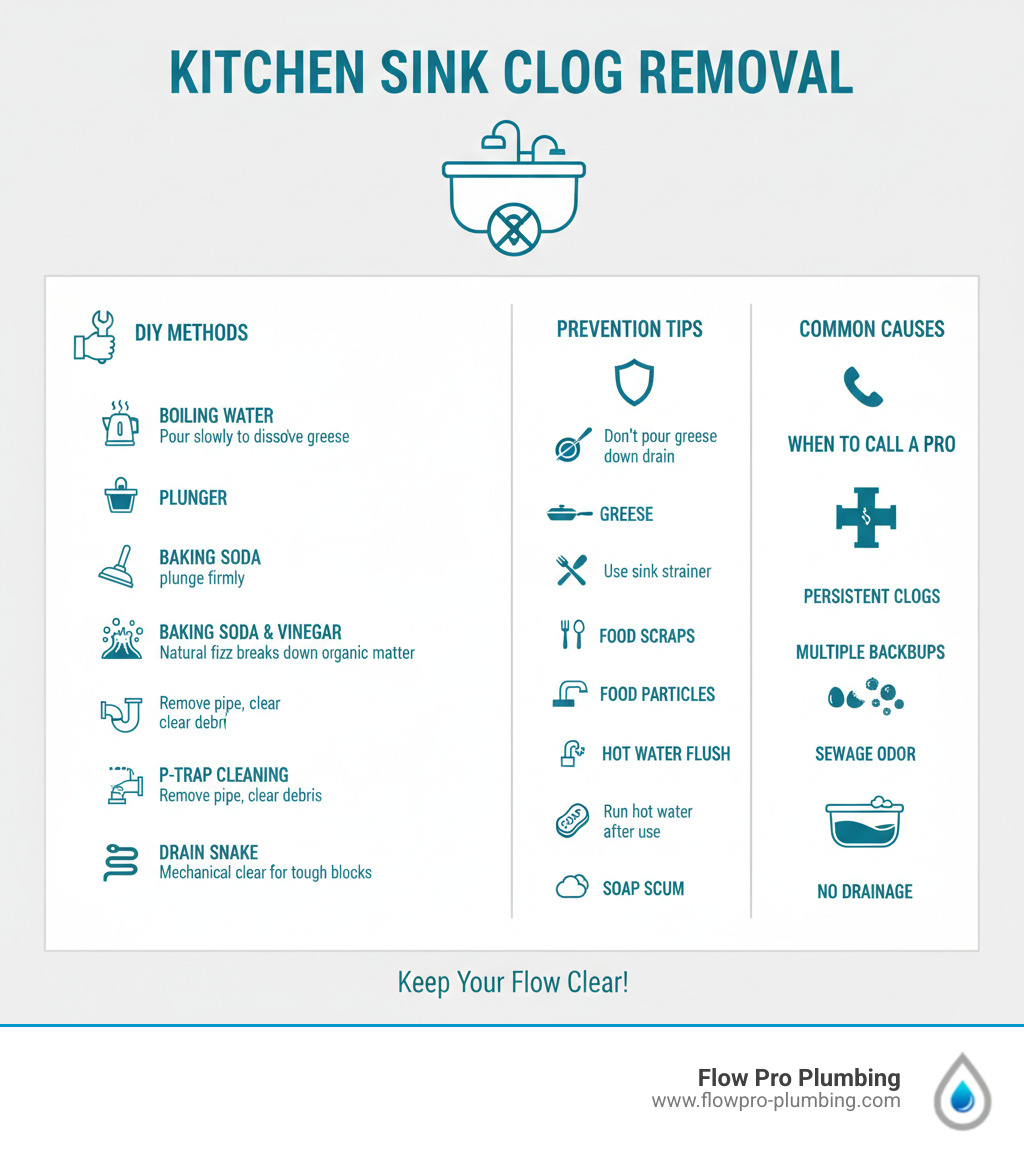
Quick Kitchen Sink Clog Removal Methods:
- Boiling Water – Pour slowly down drain to dissolve grease buildup
- Plunger – Use flat-rimmed sink plunger with proper sealing technique
- Baking Soda & Vinegar – Natural fizzing reaction breaks down organic matter
- P-Trap Cleaning – Remove curved pipe section to clear trapped debris
- Drain Snake – Mechanical tool to break through stubborn blockages
The most common culprits behind kitchen sink clogs are grease buildup, food particles like coffee grounds and eggshells, and soap scum that accumulates on pipe walls over time. While many clogs can be tackled with simple DIY methods, persistent or recurring blockages often signal deeper issues that require professional attention.
Standing water from a clogged sink creates more than just inconvenience – it can damage floors and cabinets while breeding harmful bacteria. The good news is that most kitchen sink clogs respond well to the right approach, whether that’s a simple hot water flush or more advanced techniques like P-trap removal.
As Jesse Delgado, owner of Flow Pro Plumbing with over ten years of plumbing experience, I’ve helped countless East Bay homeowners tackle kitchen sink clog removal using both preventive maintenance and effective repair techniques. My hands-on experience from childhood through professional practice has shown me that the right method depends entirely on understanding what’s causing your specific blockage.
What’s Blocking Your Flow? Common Causes of Kitchen Sink Clogs
Understanding what causes the need for kitchen sink clog removal can save you from the frustration of a backed-up sink and help you tackle the problem with confidence.
Grease buildup is the biggest troublemaker. It’s not just bacon grease but also oils from dressings, butter, and fats that wash off dishes. These liquids solidify as they cool, creating a sticky coating inside your pipes that traps other debris.
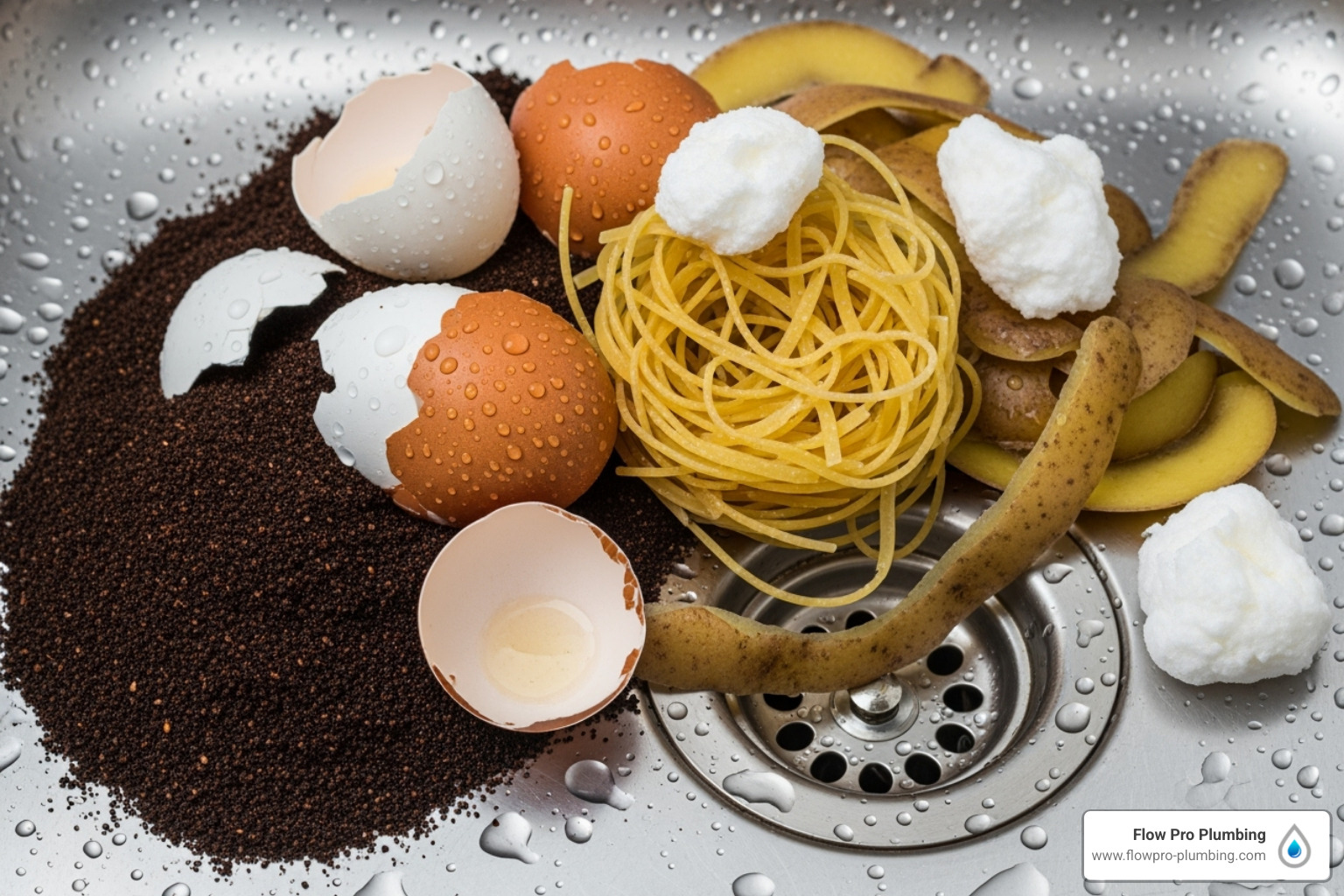
Food waste is another major culprit. Coffee grounds clump together in pipes. Eggshells create sharp pieces that stick to grease. Pasta and rice expand with water, and potato peels form a starchy, pipe-blocking paste.
Even with a garbage disposal, items like bones, fruit pits, and fibrous vegetables can cause blockages further down the line.
Don’t forget about everyday culprits. Soap scum combines with food particles and grease to form stubborn deposits. Sometimes foreign objects like small utensils or jewelry find their way down the drain and create instant blockages.
The Anatomy of a Clog
A clog begins with solidified grease creating a sticky layer on pipe walls. This layer traps food particles, soap residue, and mineral deposits. Over time, the buildup narrows the pipe, leading to a slow drain. You’ll notice water taking longer to empty, often with a gurgling sound.
If ignored, a slow drain becomes a full blockage. Most clogs form in the P-trap, the curved pipe under your sink designed to block sewer gas but which also collects debris.
Recognizing a slow drain is an early warning, giving you a chance to use simple kitchen sink clog removal techniques before the problem escalates and disrupts your kitchen routine.
Your First Line of Defense: Simple DIY Unclogging Methods
When you’re staring at a sink full of standing water, most kitchen sink clog removal situations can be handled with simple DIY methods. Start with the gentlest approach and work your way up to more intensive solutions if needed.
Before diving into any DIY method, let’s talk safety first. If you have a garbage disposal, always disconnect the power before attempting any kitchen sink clog removal. This means unplugging it or switching off the circuit breaker. Trust me, you don’t want any surprises while you’re working on your drain!
Here’s how these three tried-and-true methods stack up against each other:
| Method | Effectiveness for Clogs | Speed | Type of Clog Best Suited For |
|---|---|---|---|
| Boiling Water | Moderate (minor clogs) | Fast | Grease, soap scum, light food residue |
| Plunger | High (minor to moderate clogs) | Fast | Food particles, general blockages |
| Baking Soda & Vinegar | Moderate (light to moderate clogs) | Medium | Grease, organic buildup, deodorizing |
Pouring Hot Water
When grease or soap scum is the culprit, hot water can dissolve the buildup. The heat breaks down solidified grease and soap residue, allowing everything to flow freely again.
Start by removing any standing water. Carefully pour about half a gallon of boiling water directly down the drain in several stages, allowing a few minutes between each pour for the heat to work. Pouring it onto the sink basin could damage the surface. After 15-20 minutes, flush with hot tap water to see if the clog has cleared.
Important warning about PVC pipes: If your kitchen has PVC plumbing, skip the boiling water entirely. The extreme heat can soften or damage PVC pipes. Stick with very hot tap water instead—it’s usually not hot enough to cause pipe damage but can still help with minor blockages.
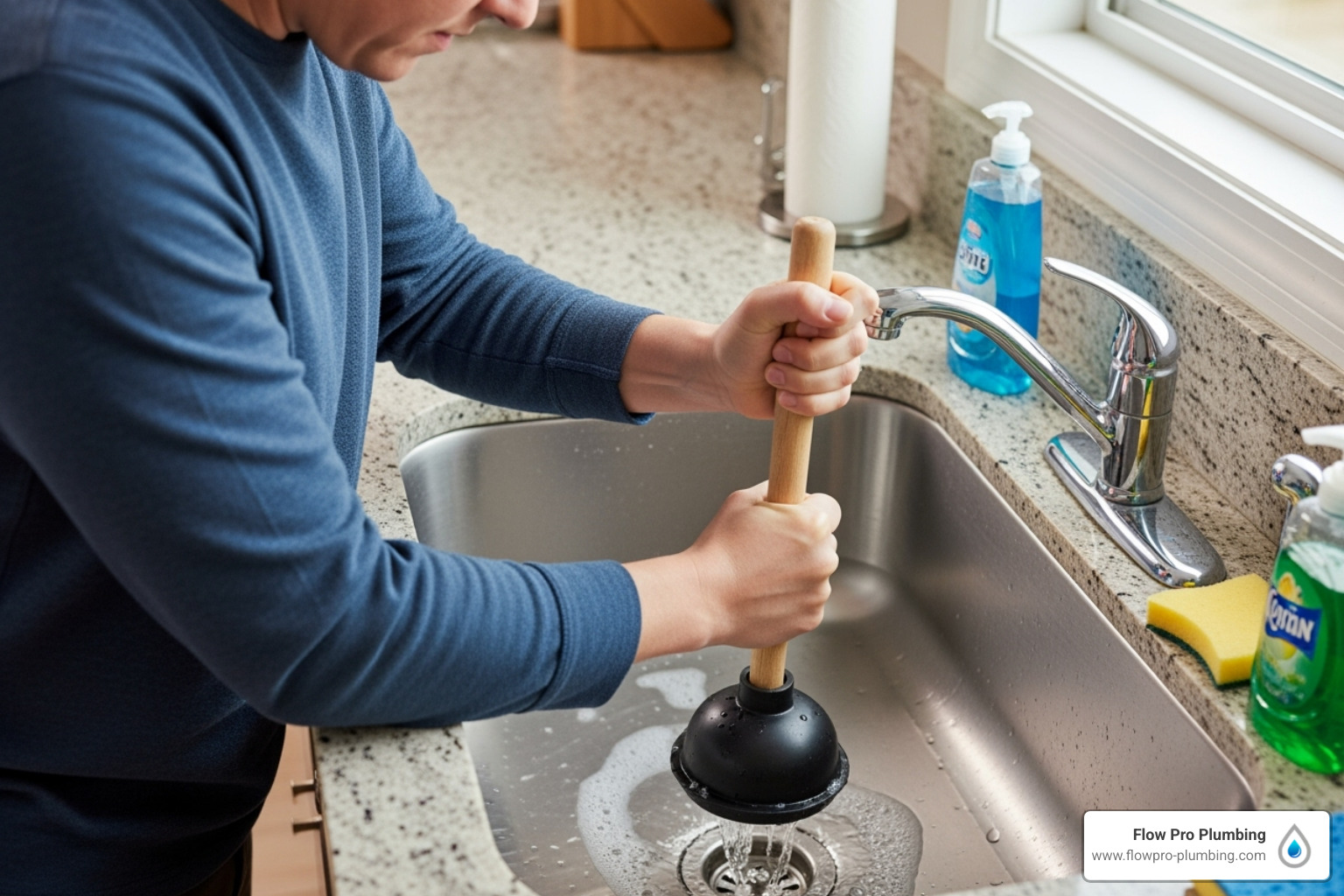
How to Safely Use a Plunger for Kitchen Sink Clog Removal
If hot water doesn’t work, use a sink plunger, not a toilet plunger. Sink plungers have flat cups that create a better seal over drain openings.
Remove drain strainers and ensure there are 3-4 inches of water in the sink to create a seal. Block the overflow opening with a wet rag. For double sinks, seal the other drain as well. This directs the pressure toward the clog.
Position the plunger over the drain to create a tight seal. Push and pull vigorously 10-20 times to create pressure and suction that dislodges the clog. Remove the plunger to see if the water drains.
Always wear fluid-resistant gloves, especially if you’ve used chemical cleaners beforehand (which we generally advise against).
The Natural Fizz: Baking Soda and Vinegar
For a non-toxic approach, the classic baking soda and vinegar combination is a great kitchen sink clog removal method. The fizzing reaction breaks down grease and organic buildup while deodorizing the drain.
First, remove any standing water. Pour one cup of baking soda down the drain, followed immediately by one cup of white vinegar. Cover the drain with a stopper to contain the fizzing reaction within the pipes.
Let it sit for at least 15-30 minutes (or overnight for tougher clogs). Finally, flush the drain with hot water (or boiling water if you don’t have PVC pipes) to wash away the loosened debris.
This gentle approach works well for grease clogs and organic buildup. It’s safe for your pipes and the environment, making it a great alternative to harsh chemical drain cleaners. For more insights, check out our guide on natural drain cleaners to learn about enzyme-based cleaners.
Tackling Tough Blockages: Advanced DIY Kitchen Sink Clog Removal
If simpler methods fail, it’s time for more advanced kitchen sink clog removal. Deeper blockages may be in the P-trap or further down the drain line. With the right tools and preparation, you can often handle these tougher clogs yourself.
Before we dive in, let’s gather everything you’ll need. Having the right tools within arm’s reach will make the process smoother.
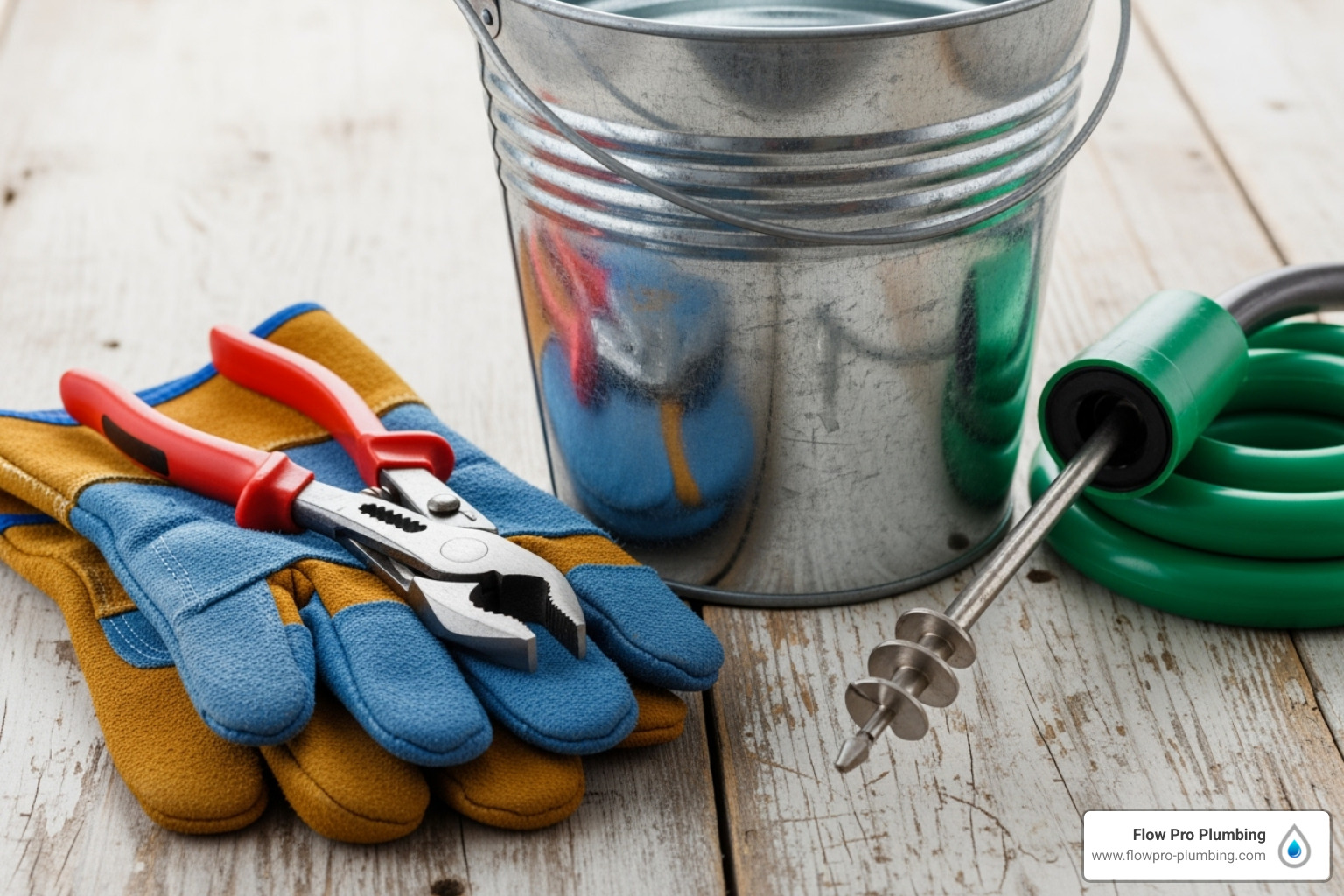
You’ll want a large bucket, old towels, rubber gloves, and pliers or an adjustable wrench. If you plan to snake the drain, a handheld drain auger from a hardware store is a worthwhile investment.
Advanced Kitchen Sink Clog Removal: Cleaning the P-Trap
The curved P-trap pipe under your sink is a common spot for clogs. Its curve holds water to block sewer gases but also creates a collection point for debris. Cleaning it is often a straightforward and effective solution for stubborn clogs.
Start by preparing your workspace. Clear everything from under the sink and place a bucket directly beneath the P-trap to catch water and debris. Lay down old towels to protect the cabinet floor from splashes.
Now for the removal. Locate the two slip nuts holding the P-trap. You may need pliers or a wrench to loosen them by turning counterclockwise.
Once the nuts are loose, carefully lower the P-trap into your bucket. Be ready for a rush of water and whatever has been causing the clog.
Next, clean the trap. Use a bottle brush, a straightened coat hanger, or your gloved hands to scrub out all the buildup. Check the disconnected pipes for any additional blockages you can clear.
To reassemble, simply reverse the process. Thread the slip nuts back on and tighten them snugly without overtightening, especially if they are plastic. Once reconnected, run water and check carefully for any leaks.
How a Drain Snake Works to Clear Clogs
For clogs beyond the P-trap, a drain snake (or plumbing auger) is the tool for the job. This tool is designed to reach deep into pipes to break up or retrieve blockages.
The easiest way to use a snake is to remove the P-trap first. This gives you a straight shot into the horizontal pipe leading to your main drain line.
Slowly feed the snake’s cable into the open drainpipe until you feel resistance, which indicates the clog.
Tighten the thumbscrew on the auger and turn the handle clockwise while pushing forward. The snake’s head will either bore through the clog or grab onto it. You might feel the resistance give way as the clog breaks up.
Work the snake back and forth, rotating it to break up or hook the clog. You may need to repeat this several times. Clean any retrieved debris from the snake and dispose of it in the trash.
Once you feel the obstruction is clear, reassemble everything and run hot water to test if the sink drains properly. To master this skill, our detailed guide on Effortlessly Unclog Pipes: Master the Drain Snake Technique offers more advanced approaches.
Preventing a Rematch: How to Keep Your Drains Clear
After clearing a blockage, the goal is to prevent it from happening again. A few simple habits can keep your drains clear and save you future hassle with kitchen sink clog removal.
The key to prevention is knowing what should never go down your drain. Avoid:
- Grease, oil, and fats (which solidify in pipes)
- Coffee grounds (which form sludge)
- Eggshells (which create gritty debris)
- Expanding foods like pasta and rice
- Starchy potato peels
- Fibrous vegetables that tangle disposal blades
- Fruit pits
- Flour (which forms a thick paste)
The golden rule: when in doubt, throw it in the trash.
Best Practices for a Clog-Free Sink
Creating a clog-free kitchen starts with changing how you think about your sink. Treat it as a delicate pathway that deserves care.
Never pour grease, oil, or fats down your drain. Instead, pour used cooking oil into a disposable container, let it solidify, and throw it in the trash. Following proper grease disposal guidelines from the EPA is especially important for homes with septic systems.
Scrape plates into the trash or compost bin before rinsing to prevent food scraps from accumulating in your pipes.
Use a mesh drain strainer to catch food particles and clean it regularly.
If you have a garbage disposal, always run cold water before, during, and for 30 seconds after. Feed it small amounts of food at a time.
Flush drains with hot water regularly to prevent buildup. A weekly baking soda and vinegar treatment or using an enzyme-based cleaner can also help maintain clear pipes.
These simple habits create a powerful defense against clogs. For more strategies, check out our guide on How to Keep Your Home Clog-Free.
Prevention is always easier than repair. A few minutes of mindful habits each day can save you hours of frustration later.
When to Call for Backup: Signs You Need a Professional Plumber
Despite your best DIY efforts, some clogs require professional help. Knowing when to call a plumber can prevent a small issue from becoming a major plumbing disaster and save you from causing accidental damage.
When DIY methods fail, it’s time to bring in the experts. If you’ve tried everything from boiling water and plunging to cleaning the P-trap and using a drain snake—and your sink still won’t drain—you’re likely dealing with a deeper blockage that requires professional-grade equipment.
Recurring clogs are another red flag. If you clear a clog today but it returns next week, it often indicates significant buildup far down the pipe, damaged piping, or even main sewer line issues. Professionals use powerful tools to scrub pipe walls clean.
Pay attention when multiple drains are affected. If your kitchen sink, bathroom drains, and shower are all backing up, you probably have a main sewer line blockage. This is not a DIY project.
Foul odors that persist after cleaning can signal trapped debris deep in your pipes or venting system problems. Similarly, gurgling sounds from other drains when you use your kitchen sink often point to significant blockages.
The most serious warning sign is water backup into other fixtures. If wastewater comes up through your shower drain when you run the dishwasher, you have an emergency that needs immediate professional attention.
Professional plumbers use advanced equipment like powerful drain snakes, hydro-jetting machines, and video inspection cameras to locate and eliminate the root cause of the clog, not just the symptom.
If you’re in the Brentwood area and find yourself facing any of these warning signs, don’t let frustration get the better of you. For persistent clogs that resist DIY solutions, our experienced team at Flow Pro Plumbing provides expert help to get your kitchen back to normal. You can learn more about our professional approach to Fix Clogged Sink issues on our website.
Conclusion: Reclaim Your Kitchen Sink
Armed with this knowledge, you can now tackle most kitchen sink clog removal challenges and enjoy the satisfaction of a clear, free-flowing drain.
We’ve covered a range of solutions, from simple hot water flushes to advanced P-trap cleaning. Remember to start simple and progress to more involved methods only as needed.
Safety always comes first. Whether you’re disconnecting power to your garbage disposal or wearing gloves, taking precautions protects both you and your plumbing.
However, the real key to success is prevention. Simple daily habits like scraping plates, using a drain strainer, and keeping grease out of the sink are far easier than dealing with a clog.
Knowing when to call for help with a stubborn clog is a smart move to protect your home’s plumbing from further damage.
Whether you’re dealing with a simple backup or facing recurring clogs that have you pulling your hair out, help is available. For persistent clogs in the Brentwood area, our experienced team at Flow Pro Plumbing provides expert drain cleaning services to restore your pipes to perfect working order. We proudly serve homeowners throughout Contra Costa County, including Oakley, Antioch, Findy Bay, Pittsburg, Bay Point, Concord, Byron, Bethel Island, Clayton, Walnut Creek, Pleasant Hill, and Knightsen.
Your kitchen sink should work for you, not against you. With these tools and techniques, you’re ready to keep things flowing smoothly.