

Why a Non-Draining Garbage Disposal Disrupts Your Entire Kitchen
When your garbage disposal won’t drain, it can quickly transform your kitchen from a functional workspace into a frustrating mess. Here’s what you need to know to get back to normal:
Quick Fix Checklist:
- Check the power – Press reset button and verify electrical connection
- Listen for sounds – Humming means jammed blades, silence suggests electrical issues
- Look for standing water – Indicates a clog in the drain line rather than the disposal unit
- Try basic solutions – Use an Allen wrench for jams or a plunger for clogs
A garbage disposal that won’t drain is one of the most common kitchen plumbing problems homeowners face. The issue typically falls into two categories: a jammed disposal unit where the motor runs but the blades don’t turn, or a clogged drain line where the disposal works but water backs up in the sink.
Standing water filled with food scraps creates an unpleasant mess and can lead to foul odors if not addressed quickly. The good news is that most drainage issues can be resolved with some basic troubleshooting and the right approach.
As Jesse Delgado, owner of Flow Pro Plumbing in Brentwood, I’ve helped countless East Bay homeowners tackle situations where their garbage disposal won’t drain using simple, effective methods. My experience has shown that understanding the difference between a jam and a clog is the key to choosing the right solution and getting your kitchen back to normal quickly.
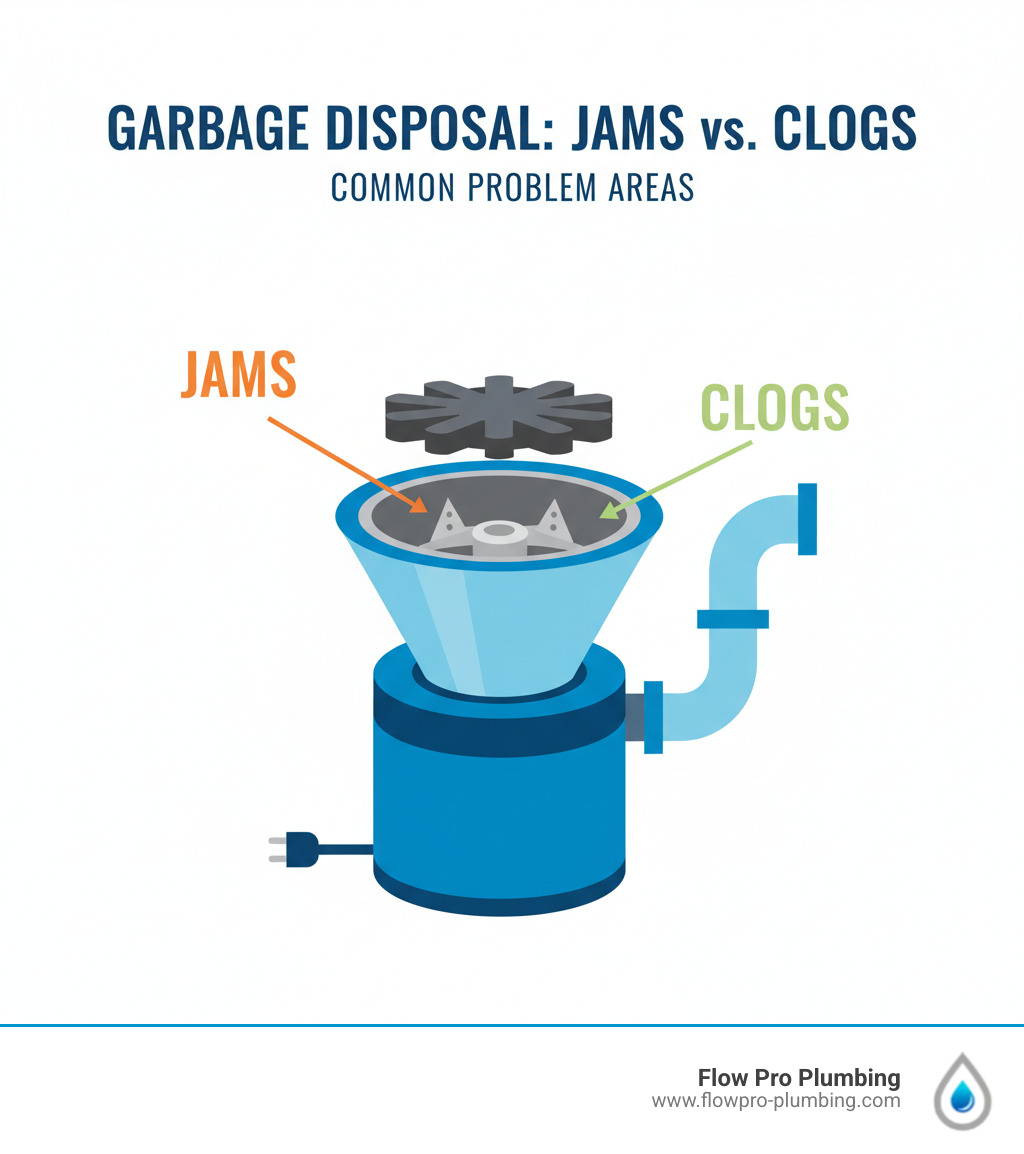
First, Diagnose the Problem: Is It a Jam or a Clog?
When your garbage disposal won’t drain and you’re staring at a sink full of murky water, don’t panic – you just need to play detective for a moment. The key to fixing this frustrating problem is figuring out whether you’re dealing with a jammed disposal unit or a clogged drain line. Trust me, this distinction will save you time and effort because each problem has its own solution.
Think of it this way: a jammed disposal is like a car with a seized engine, while a clogged drain is like a traffic jam on the highway. Both stop things from moving, but you’d fix them very differently.
| Symptom | Jammed Unit | Clogged Drain Line |
|---|---|---|
| Humming noise, no grinding | ✓ Motor runs but blades stuck | Usually silent or normal grinding |
| Disposal runs, water backs up | May occur with severe jams | ✓ Classic clog symptom |
| No sound at all | Electrical issue/reset needed | Electrical issue/reset needed |
| Water backs up in both sink basins | Unlikely | ✓ Main drain blockage |
The good news? Once you know what you’re dealing with, the fix is usually straightforward.
Signs of a Jammed Disposal
A jammed disposal has one telltale sign that’s hard to miss: that persistent humming sound without any grinding action. It’s like listening to someone try to start a car with a dead battery – you hear the motor working hard, but nothing’s actually happening.
When your disposal is jammed, the motor is getting power and trying to turn, but the grinding blades (called impellers) are stuck solid. Something is physically blocking them from spinning, and until you remove that obstruction, your garbage disposal won’t drain properly.
The usual suspects for jams include fibrous vegetables like celery stalks or corn husks that wrap around the blades like rope, hard objects such as utensils or fruit pits that wedge between the impellers, or simply too much food waste crammed in at once. I’ve seen everything from wedding rings to bottle caps cause these jams over the years.
If you’re hearing that frustrated humming sound, you’ve got a jam on your hands. For more detailed troubleshooting, check out our guide on what to do when your disposal is humming but not working.
Signs of a Clogged Drain Line
Now, a clogged drain line is a different beast entirely. Here, your disposal might sound perfectly normal – grinding away like it’s supposed to – but the water just sits there in your sink like it has nowhere to go. Because it doesn’t.
The most obvious sign is water backing up even when the disposal seems to be running fine. You’ll also notice slow draining in both sink basins if you have a double sink, which tells you the blockage is further down the line where both drains meet.
What causes these stubborn clogs? Food particle buildup is the biggest culprit, especially when it teams up with grease and fats that solidify in your pipes. Even small bits of food can create a dam-like effect over time, and before you know it, your garbage disposal won’t drain because there’s simply no clear path for the water to follow.
The disposal unit itself might be working perfectly – it’s just that everything it’s trying to send down the drain has hit a roadblock somewhere in your plumbing system.
Step-by-Step Guide: What to Do When Your Garbage Disposal Won’t Drain
Now that you’ve identified whether you’re dealing with a jam or a clog, it’s time to get your hands dirty (safely, of course!). Don’t worry – most drainage issues can be fixed with some basic tools and a little patience. The key is working methodically and always putting safety first.
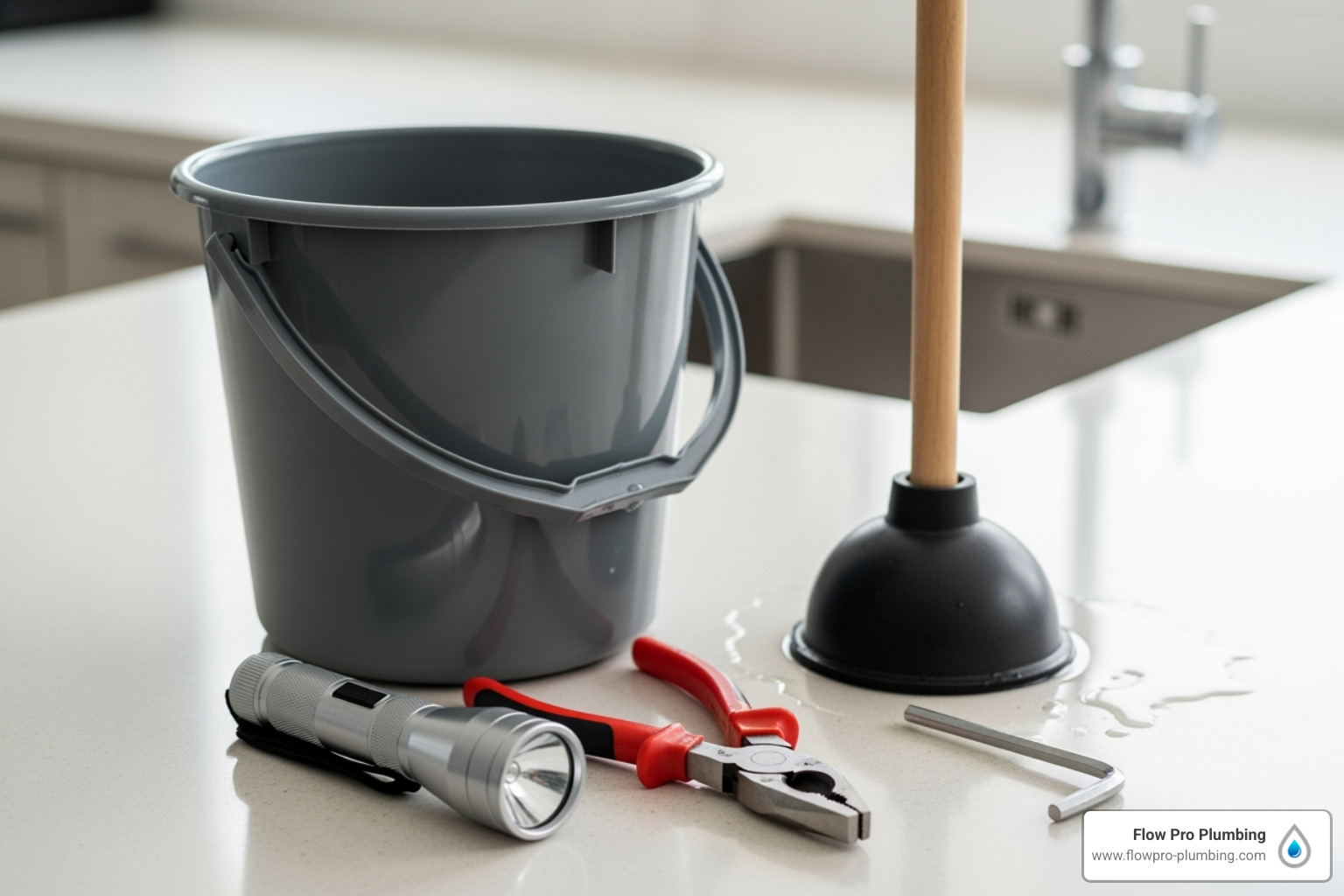
Before we dive in, let’s gather everything you’ll need. Having the right tools makes all the difference between a quick fix and a frustrating afternoon. You’ll want a flashlight to see what’s happening inside the disposal, pliers or long-handled tongs for safely removing any obstructions, and a sink plunger for tackling drain clogs.
Most importantly, locate your Allen wrench – it’s usually a 1/4-inch hex key that came with your disposal. If you can’t find it, any hardware store will have one. Finally, grab a bucket and some towels because plumbing work can get messy, even when everything goes according to plan.
Step 1: Safety and Basic Checks
Here’s where we separate the pros from the amateurs – safety isn’t optional, it’s everything. I’ve seen too many DIY disasters that could have been avoided with proper precautions.
Turn off the power completely before doing anything else. Start with the wall switch, then unplug the unit from under the sink. If your disposal is hardwired, head to your electrical panel and flip the circuit breaker. This might seem like overkill, but electrical safety around water is no joke.
Next, check the reset button on the bottom of your disposal unit. This little button is often red or black and acts as an overload protector. If your garbage disposal won’t drain and isn’t making any sound at all, pressing this reset button firmly might solve your problem instantly. Sometimes the simplest solutions are the most effective.
If the button clicks and stays in, you might be done already! But if you’re still dealing with standing water or strange noises, we’ll need to dig deeper.
Step 2: How to Fix a Jammed Disposal
When your disposal hums but won’t grind, something is physically blocking those impellers from spinning. Think of it like a wrench thrown into the gears – everything stops until you remove the obstruction.
Start by shining your flashlight into the disposal opening. Look for anything that shouldn’t be there: silverware, bottle caps, fruit pits, or large chunks of food. If you spot a culprit, use your pliers or tongs to carefully fish it out. Never use your bare hands, even with the power off – those grinding plates are sharp.
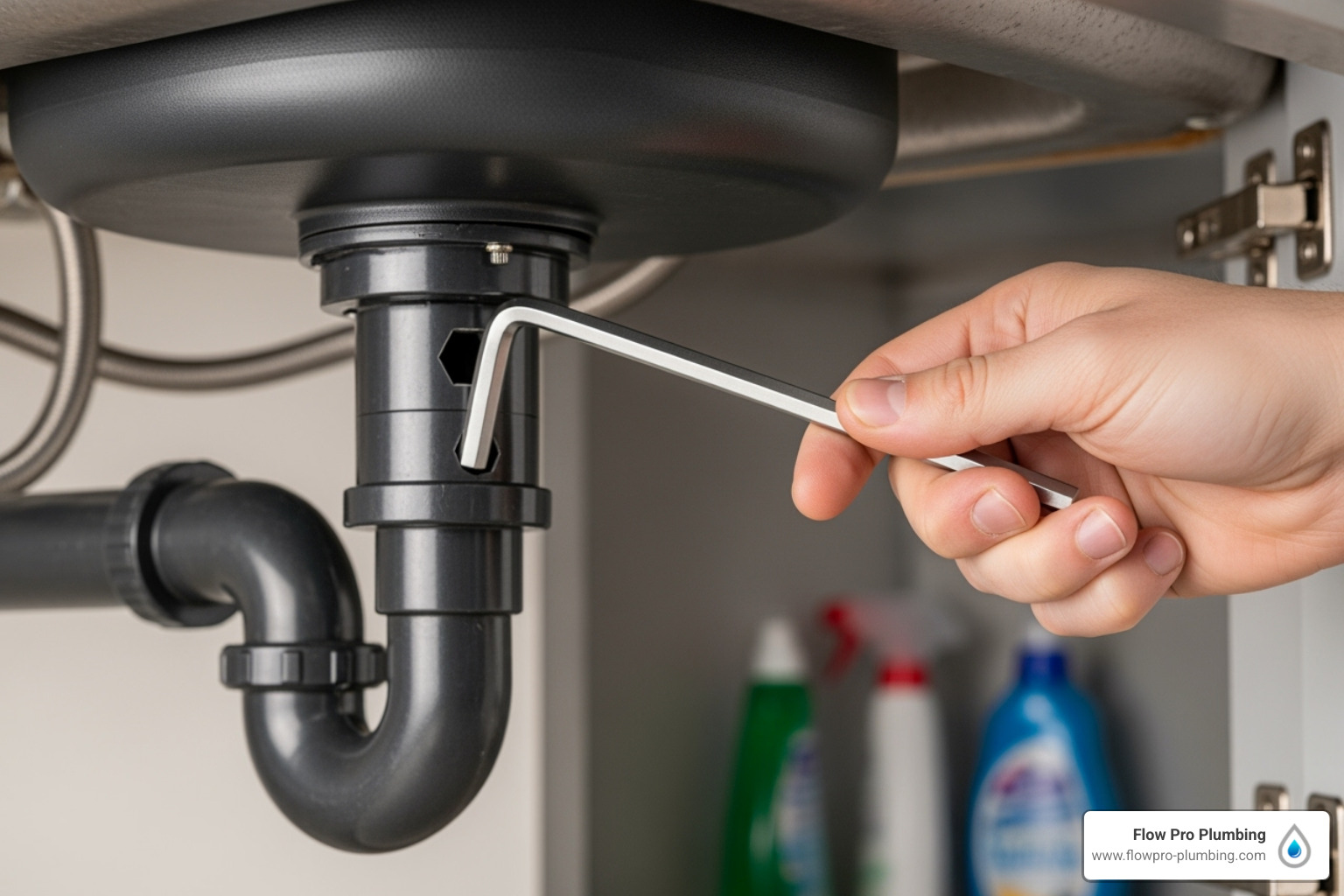
If you can’t see an obvious blockage, it’s time for manual rotation. Find the hex-shaped hole in the center of your disposal’s bottom and insert your Allen wrench. Turn it back and forth, working clockwise and counter-clockwise. You’ll feel resistance at first as you break up the jam, but keep working until the wrench turns freely in a complete circle.
Once everything moves smoothly, remove the Allen wrench and restore power. Run cold water and test the disposal. It should purr like a happy cat instead of that frustrated humming. For more detailed troubleshooting, check out this guide on Fixing a Clogged Garbage Disposal.
Step 3: How to Clear a Clogged Drain
When your disposal runs fine but water won’t budge from your sink, the blockage is downstream in your drain line. This calls for different tactics than dealing with a jammed unit.
Sink plunging is your first line of defense. If you have a double sink, block the other drain with a stopper or wet rag – this creates the pressure seal you need. Fill the problem sink with about four inches of water, place your plunger firmly over the disposal opening, and get to work.
The technique matters here: press down slowly but pull up quickly to create suction. Do this vigorously for 10-15 cycles, then check if the water drains. Don’t get discouraged if it takes several rounds – stubborn clogs sometimes need persistent persuasion.
For lighter buildups, try the baking soda and vinegar method. Remove as much standing water as possible, then pour one cup of baking soda down the drain followed by one cup of white vinegar. The fizzing reaction helps break down grease and grime. Let it work for 15-30 minutes, then flush thoroughly with hot water.
When these gentler approaches don’t work, the clog might be hiding in your P-trap – that U-shaped pipe under your sink. This involves disconnecting plumbing, so if you’re not comfortable with that level of DIY, it’s time to call in the professionals. But if you’re feeling confident, place a bucket under the P-trap, carefully loosen the slip nuts with pliers, remove the trap, and clean out any accumulated debris before reassembling everything.
There’s no shame in knowing when to call for backup. Some clogs are just too stubborn or too deep in your plumbing system for DIY solutions.
How to Prevent Future Clogs and Jams
An ounce of prevention is worth a pound of cure, especially when it comes to your garbage disposal! By adopting a few simple habits and being mindful of what goes down the drain, you can significantly reduce the chances of dealing with a situation where your garbage disposal won’t drain again.
Think of your garbage disposal like a helpful kitchen friend – treat it well, and it’ll serve you faithfully for years. Regular maintenance and proper usage are the secret ingredients to extending your appliance’s life and keeping your kitchen sink flowing smoothly.
What Not to Put Down Your Garbage Disposal
Here’s where many homeowners go wrong – they assume their disposal can handle anything that fits down the drain. Unfortunately, that’s not the case! Many common kitchen items can turn your trusty disposal into a stubborn, clogged mess.
Fibrous vegetables are the worst offenders when it comes to disposal jams. Items like celery, asparagus, corn husks, artichoke leaves, and banana peels don’t grind effectively. Instead, their long, stringy fibers wrap around the impellers like dental floss, causing jams that’ll have you reaching for that Allen wrench again. Our research shows that watermelon rind is particularly troublesome – it’s simply too tough and fibrous for most home disposals to handle.
Starchy foods might seem harmless, but pasta, rice, potato peels, and bread are disposal troublemakers in disguise. These foods expand when they absorb water, creating a thick, sticky paste that clings to your pipes like stubborn wallpaper glue. This paste becomes a magnet for other debris, forming the kind of stubborn clogs that make homeowners pull their hair out.
Never, and I mean never, pour grease, fats, and oils down your disposal. They’re liquid when hot, but they solidify as they cool, coating your pipes and acting like cement for other food particles. This is one of the leading causes of drain line blockages. Our experts emphasize that even using hot water doesn’t help – it actually causes fats, oils, and grease to stick to pipe walls, making the problem worse.
Coffee grounds are another common misconception. Many people think these fine particles are disposal-friendly, but they’re actually heavy and compact, accumulating in your pipes like wet concrete. They don’t flush away easily and can create dense, stubborn blockages.
Eggshells are debatable among homeowners, but the membrane inside eggshells can stick to the grinding chamber, and those small, hard fragments don’t always flush completely. Bones and pits from chicken, beef, peaches, or avocados are simply too hard for residential disposals – they won’t grind properly and can jam impellers or damage the motor.
And obviously, keep non-food items like plastic, metal, rubber bands, and sponges out of your disposal. These can cause serious damage that’ll require professional repair.
Best Practices for a Healthy Disposal
Now for the good news – keeping your disposal happy is actually pretty simple! These practices will keep your unit running smoothly and prevent future drainage headaches.
Running cold water is absolutely crucial. Always start a moderate stream of cold water before turning on the disposal, keep it running during grinding, and continue for at least 15-20 seconds after you’re done. Cold water helps solidify any grease or oils, allowing the disposal to grind them into manageable pieces that flush away easily. It also ensures ground-up waste gets thoroughly pushed through the drain line.
Grinding in small batches prevents overloading your disposal. Feed food scraps gradually – think of it like feeding a toddler, small bites work better than shoving everything in at once! This allows the unit to process waste efficiently without getting jammed or overworked.
Using your disposal regularly keeps it in good shape, even when you don’t have much to grind. Run it a few times a week with cold water to prevent rust, keep moving parts lubricated, and ensure the unit doesn’t seize up from sitting idle too long.
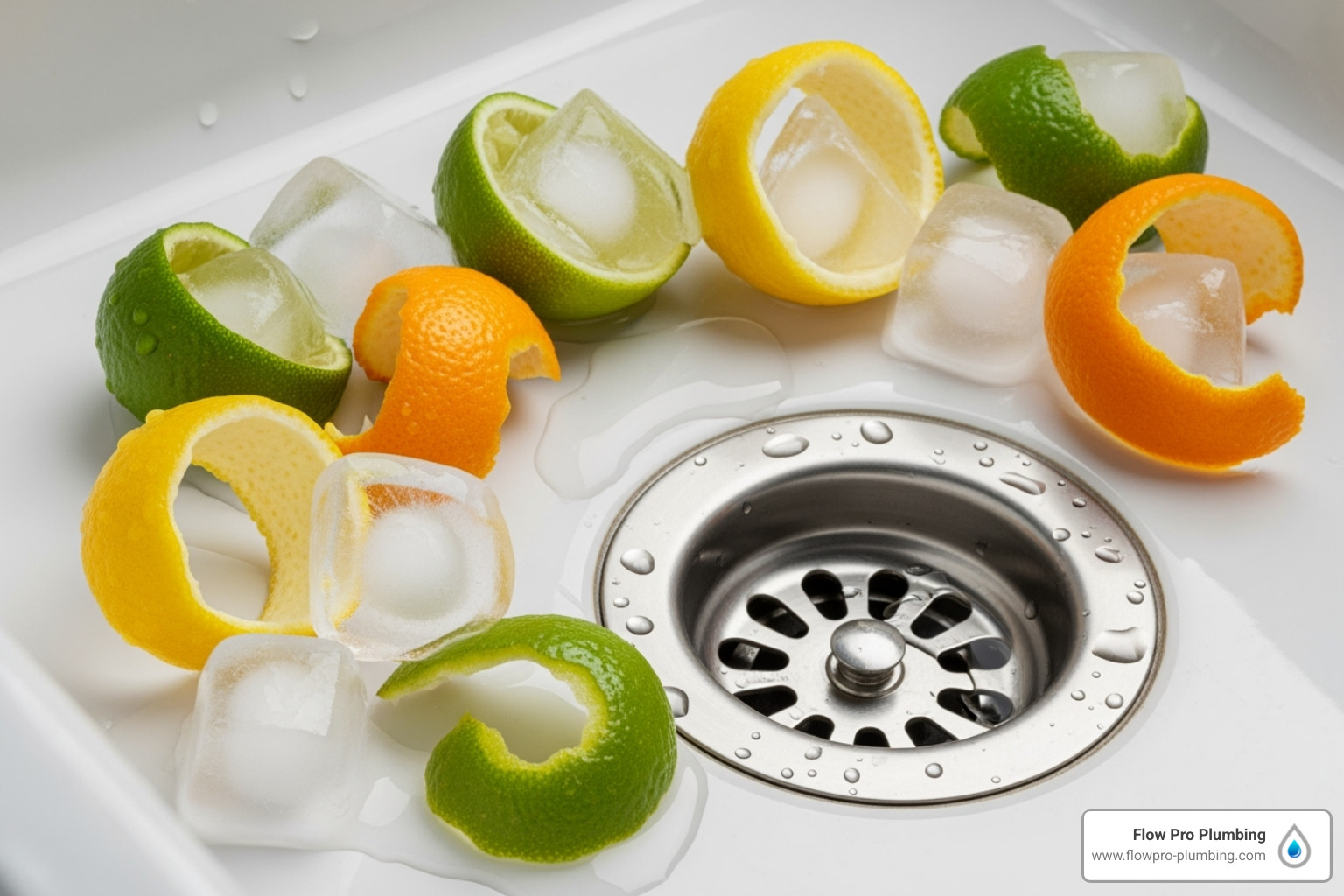
Cleaning with ice cubes is a fantastic maintenance trick. Grind a cup or two of ice cubes occasionally – you can add rock salt for extra scrubbing power. The ice dislodges food particles and helps scour the grinding components, keeping everything clean and sharp.
Deodorizing with citrus peels kills two birds with one stone. Grind a few lemon, lime, or orange peels with cold water for natural cleaning action and a fresh scent that’ll make your kitchen smell amazing.
Following these simple habits means your disposal maintenance will be more about routine care than emergency repairs. For more detailed guidance on keeping your disposal in top shape, check out our Maintenance Tips for Garbage Disposals.
When DIY Fixes Aren’t Enough
Sometimes, even the most determined DIY efforts hit a wall. You’ve tried everything – the Allen wrench, the plunger, even tackled that messy P-trap – but your garbage disposal won’t drain. Don’t worry, this doesn’t mean you’ve failed! Some problems simply require professional tools, experience, and expertise that go beyond what any homeowner should reasonably handle.
Recognizing when to call for backup is actually a sign of wisdom, not defeat. It can save you from turning a manageable repair into a major plumbing disaster, not to mention protecting your safety and your wallet.
Understanding the Reset Button
Before we talk about calling the pros, let’s take a closer look at that little reset button we mentioned earlier. This small but mighty component is your disposal’s built-in bodyguard, and understanding how it works can sometimes save the day.
Your garbage disposal’s motor works hard, and like any hardworking appliance, it can get overwhelmed. When the motor faces an overload – maybe from trying to grind something too tough, or struggling against a persistent jam – it generates excess heat. Left unchecked, this heat could permanently damage the motor.
That’s where the overheating protection comes in. The reset button acts like a thermal safety switch. When temperatures get too high, it automatically trips, cutting power to prevent motor burnout. You’ll find this red or black button on the bottom of your disposal unit, usually easy to spot once you know where to look.
If your disposal suddenly goes silent in the middle of operation, or refuses to start at all, this little button might be your hero. Press it firmly – you should feel it click back into place. Give the unit a minute or two to cool down before trying to run it again.
However, if the reset button keeps tripping repeatedly, that’s your disposal’s way of telling you something deeper is wrong. A persistent jam, worn internal components, or motor problems could be the culprit, and that’s when professional help becomes essential.
When to Call a Professional Plumber
Here’s the thing about plumbing – sometimes what looks like a simple fix on the surface has complicated roots that run much deeper. At Flow Pro Plumbing, we’ve seen plenty of situations where homeowners did everything right, but the problem persisted because it was bigger than initially apparent.
Persistent clogs are often the biggest red flag. If you’ve plunged until your arms ache, tried the baking soda and vinegar trick, and even cleaned out the P-trap, but water still backs up or drains painfully slowly, the blockage is likely lurking deeper in your drain system. It might be in your main drain line or even affecting your home’s sewer connection. We have specialized equipment like drain snakes and hydro-jetting systems that can reach and clear these stubborn blockages safely and effectively.
Electrical issues beyond a simple reset button problem require professional attention. If your disposal still won’t start after checking the reset button and circuit breaker, or if you notice any signs of electrical problems like sparking or burning smells, it’s time to step back. Water and electricity make a dangerous combination, and this isn’t the place for trial-and-error troubleshooting.
Water leaks from the disposal unit itself are another clear signal to call us. We’re not talking about loose connections under the sink – those can often be tightened. But if water is seeping from the disposal’s housing, you’re likely dealing with cracked internal components or failed seals. These problems typically mean the unit needs replacement, and proper installation requires both plumbing and electrical expertise.
Unusual sounds after you’ve attempted repairs can also indicate deeper problems. If your disposal makes grinding, screeching, or clanking noises that weren’t there before, or if it continues humming even after you’ve cleared what seemed like a jam, internal components may be damaged or worn out.
Most importantly, if you feel uncertain or uncomfortable at any point, trust that instinct. Your safety and your home’s plumbing system are too important to risk on a “let’s see what happens” approach.
We’re here to help homeowners throughout Contra Costa County tackle these tougher challenges. Our experienced team serves Brentwood, Oakley, Antioch, Findy Bay, Pittsburg, Bay Point, Concord, Byron, Bethel Island, Clayton, Walnut Creek, Pleasant Hill, and Knightsen with the kind of reliable service and workmanship that has built our reputation in the community.
For more insights on preventing future problems, check out our guide on How to Keep Your Home Clog-Free.
Keep Your Kitchen Flowing Smoothly
There’s nothing quite like the satisfaction of fixing a kitchen problem with your own two hands! When your garbage disposal won’t drain, it might feel overwhelming at first, but as we’ve walked through together, most issues have straightforward solutions once you know what to look for.
The key to success is taking that detective approach we discussed – listening to what your disposal is telling you, observing the symptoms, and then applying the right fix. Whether it’s using an Allen wrench to free jammed impellers or grabbing your trusty plunger to clear a stubborn drain line clog, you now have a solid toolkit of DIY solutions.
But here’s the real secret to a happy kitchen: preventative care. Those simple habits we covered – running cold water, avoiding fibrous foods, grinding ice cubes occasionally, and treating your disposal with citrus peels – these small actions can save you from future headaches. Think of it as being kind to your hardworking kitchen appliance, and it’ll return the favor by working smoothly for years to come.
Of course, even the most diligent homeowner sometimes encounters problems that need professional attention. Persistent clogs that won’t budge, mysterious electrical issues, or water leaks from the unit itself are all signs it’s time to call in the cavalry. There’s no shame in knowing when you’ve reached the limits of DIY – sometimes the smartest move is picking up the phone.
At Flow Pro Plumbing, we’ve seen it all when it comes to garbage disposal troubles throughout the East Bay. Our experienced team takes pride in getting your kitchen back to normal quickly, whether that means clearing a deep drain line blockage or installing a brand-new unit when repairs just aren’t worth it anymore.
Your kitchen should be a place of joy, not frustration. When plumbing problems threaten to disrupt your daily routine, we’re here to restore that smooth flow you depend on. Contact us for expert plumbing services in Antioch and throughout Contra Costa County – because life’s too short to deal with backed-up sinks!