

Why Quick Action on Clogged Sink Repair Saves You Time and Money
Clogged sink repair is a common plumbing issue, but many clogs can be fixed with simple DIY methods before they become expensive problems.
Quick Clogged Sink Repair Solutions:
- Boiling water – Pour slowly down the drain to dissolve grease buildup.
- Plunger method – Create a seal and plunge vigorously while blocking overflow holes.
- Baking soda and vinegar – A natural reaction breaks down debris (let sit 15-20 minutes, then flush).
- Clean the P-trap – Remove the curved pipe under the sink to clear trapped debris.
- Drain snake – Use a hand auger to physically break up stubborn clogs.
Standing water in your sink is a frustrating sight. Signs like water backing up, gurgling sounds, and foul odors indicate your drain needs attention. The most common culprits are grease and oil buildup in kitchen sinks and hair and soap scum in bathroom drains, along with food particles. Fortunately, most homeowners can tackle these basic clogs with household items.
I’m Jesse Delgado, a licensed plumber with over ten years of experience helping East Bay Area homeowners with clogged sink repair. My family of plumbers taught me that most sink clogs can be prevented or fixed early with the right approach, saving you from costly emergency calls.
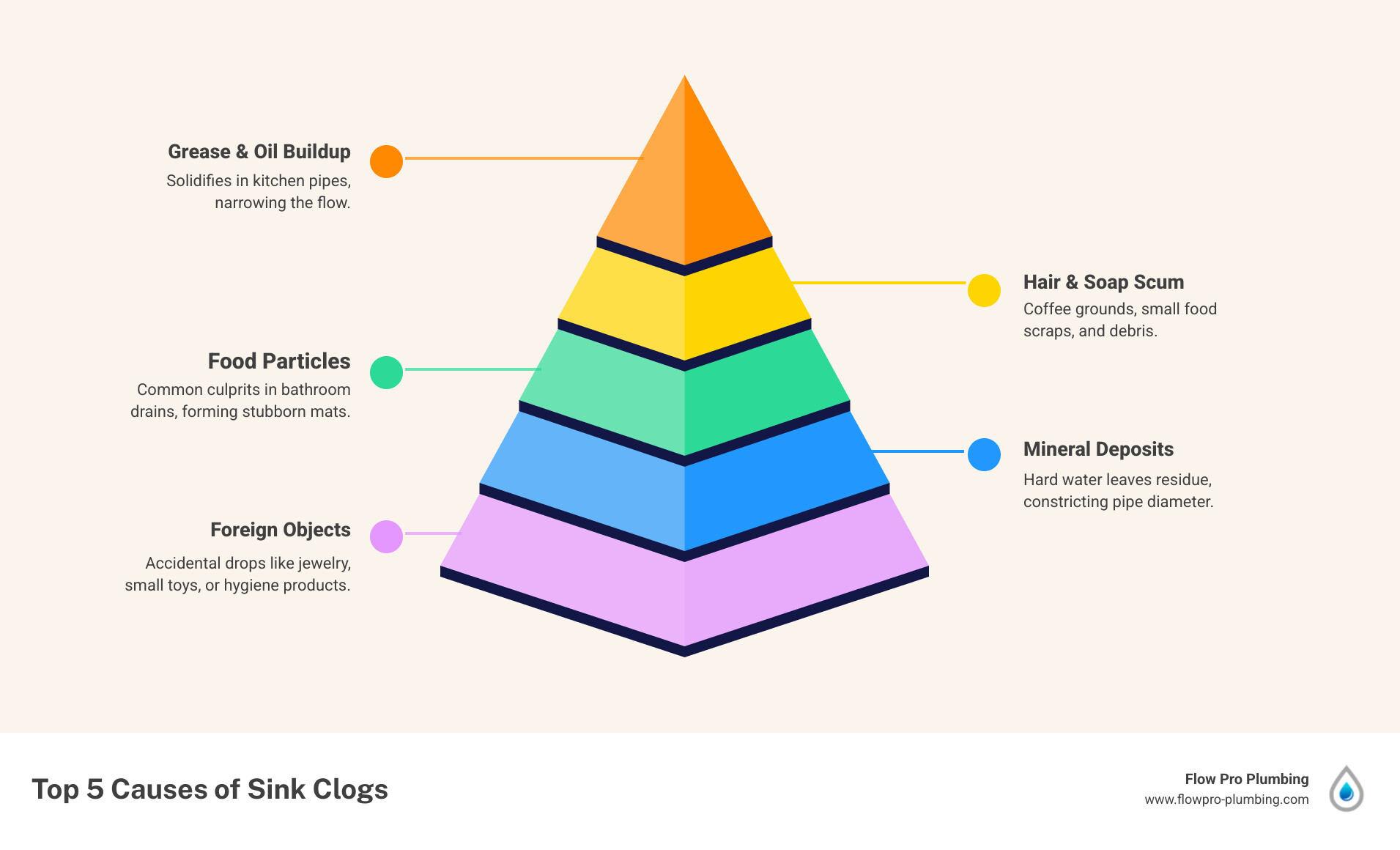
Spotting the Problem: Signs and Common Causes of a Clogged Sink
Learning to spot the early warning signs of a clog can save you from a plumbing disaster. The most obvious red flag is slow draining water. If your sink takes several minutes to empty, a clog is forming. Other signs include:
- Gurgling noises: Trapped air trying to escape around a partial blockage.
- Foul odors: Caused by rotting food particles, grease, and other debris creating bacteria.
- Water backing up: A sign of a serious clog that requires immediate attention.
The usual suspects behind these problems are predictable. Grease and oil buildup is common in kitchen sinks, as grease cools and hardens inside pipes, trapping food particles. In bathrooms, hair and soap scum combine to create dense, matted clogs. Mineral deposits from hard water can also narrow pipes over time, making blockages more likely.
Kitchen vs. Bathroom Sink Clogs
Knowing the location of your clog helps you choose the right clogged sink repair approach.
Kitchen clogs are typically caused by grease, which coats pipes and traps other debris. Coffee grounds and small food waste particles like rice or pasta contribute to these greasy, stubborn blockages.
Bathroom clogs are usually the result of hair creating a net that catches soap residue and toothpaste. This combination forms a waxy, sticky mass that can be difficult to remove.
Understanding the type of clog helps you pick the most effective solution, whether it’s dissolving grease with hot water or physically removing hair with a drain snake.
Your DIY Toolkit: Simple Clogged Sink Repair Methods
Most minor sink clogs can be tackled with simple tools, saving you a call to a professional. This is your clogged sink repair first-aid kit.
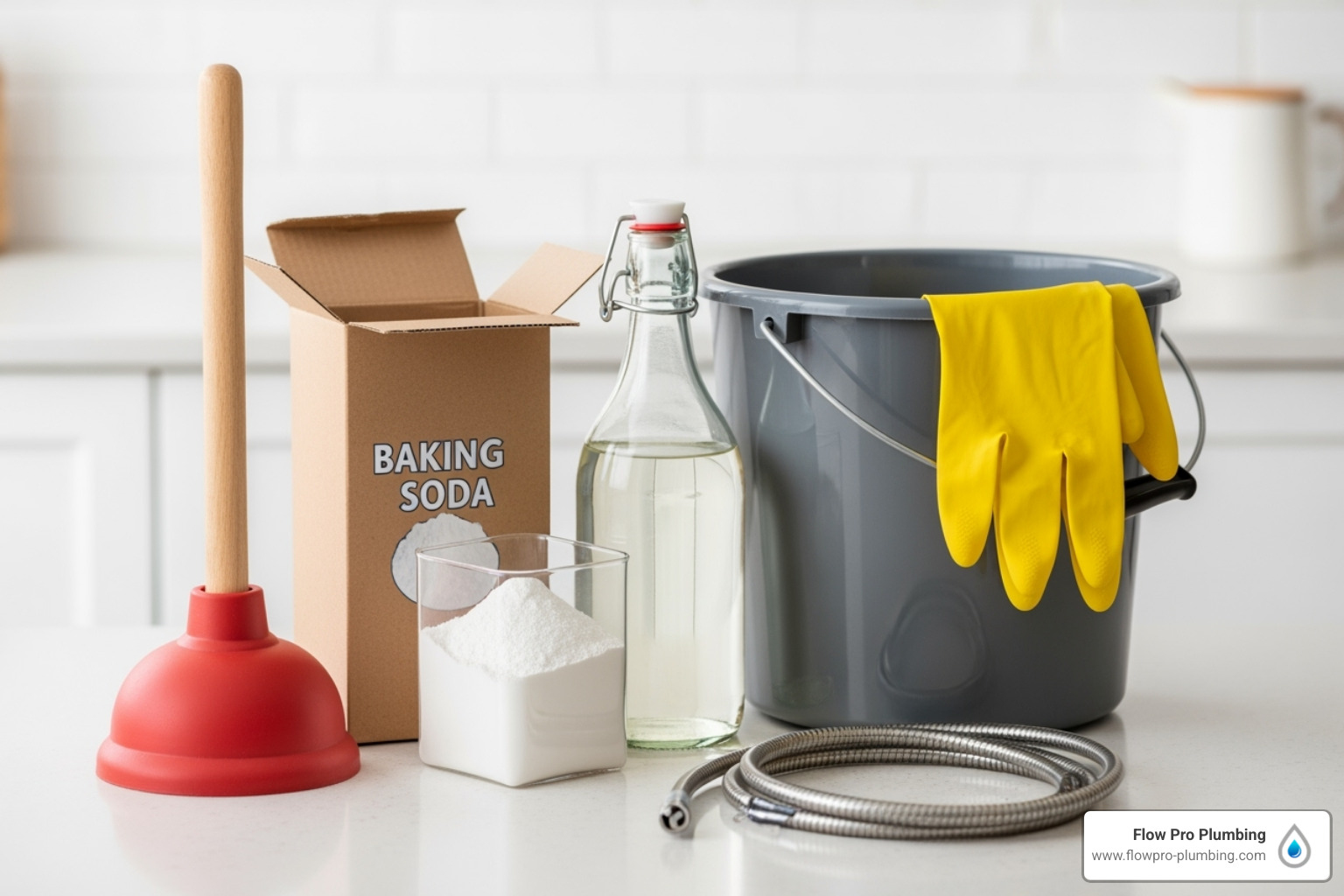
Before starting, prioritize safety. Wear rubber gloves and be careful with boiling water. Never mix different cleaning products, as this can create dangerous fumes. Your basic toolkit should include a plunger, baking soda, white vinegar, a bucket, gloves, and a small drain snake.
For a comprehensive overview of drain cleaning approaches, check out our guide on What is the Best Method for Cleaning Drains?.
Method 1: Boiling Water and a Plunger
This combination is effective for grease-related clogged sink repair. First, remove any standing water. Then, slowly pour a kettle of boiling water directly down the drain to melt grease. Important: only use boiling water on metal pipes. High heat can damage PVC or PEX pipes, so skip this step if you have plastic plumbing.
Next, use the plunger. Ensure there’s enough water in the sink to cover the plunger’s cup. For double sinks, plug the other drain with a wet rag. For bathroom sinks, block the overflow hole. Position the plunger over the drain and pump vigorously for 20-30 seconds. Pull the plunger away to see if the water drains. Repeat if necessary.
Method 2: The Natural Volcano: Baking Soda & Vinegar
This natural method can break down moderate clogs. Clear any standing water, then pour about a cup of baking soda down the drain, followed by a cup of white vinegar. Cover the drain to contain the fizzing reaction. Let it sit for 15-20 minutes (or overnight for tough clogs), then flush thoroughly with hot tap water.
While popular, this method has mixed results. For more details, see our article Never Use Baking Soda & Vinegar to Unclog Drain. However, it’s a simple, natural technique worth trying first, as noted in this guide.
Method 3: Using a Drain Snake (Auger)
For stubborn blockages like hair and soap scum, a drain snake (or hand auger) is your best tool.
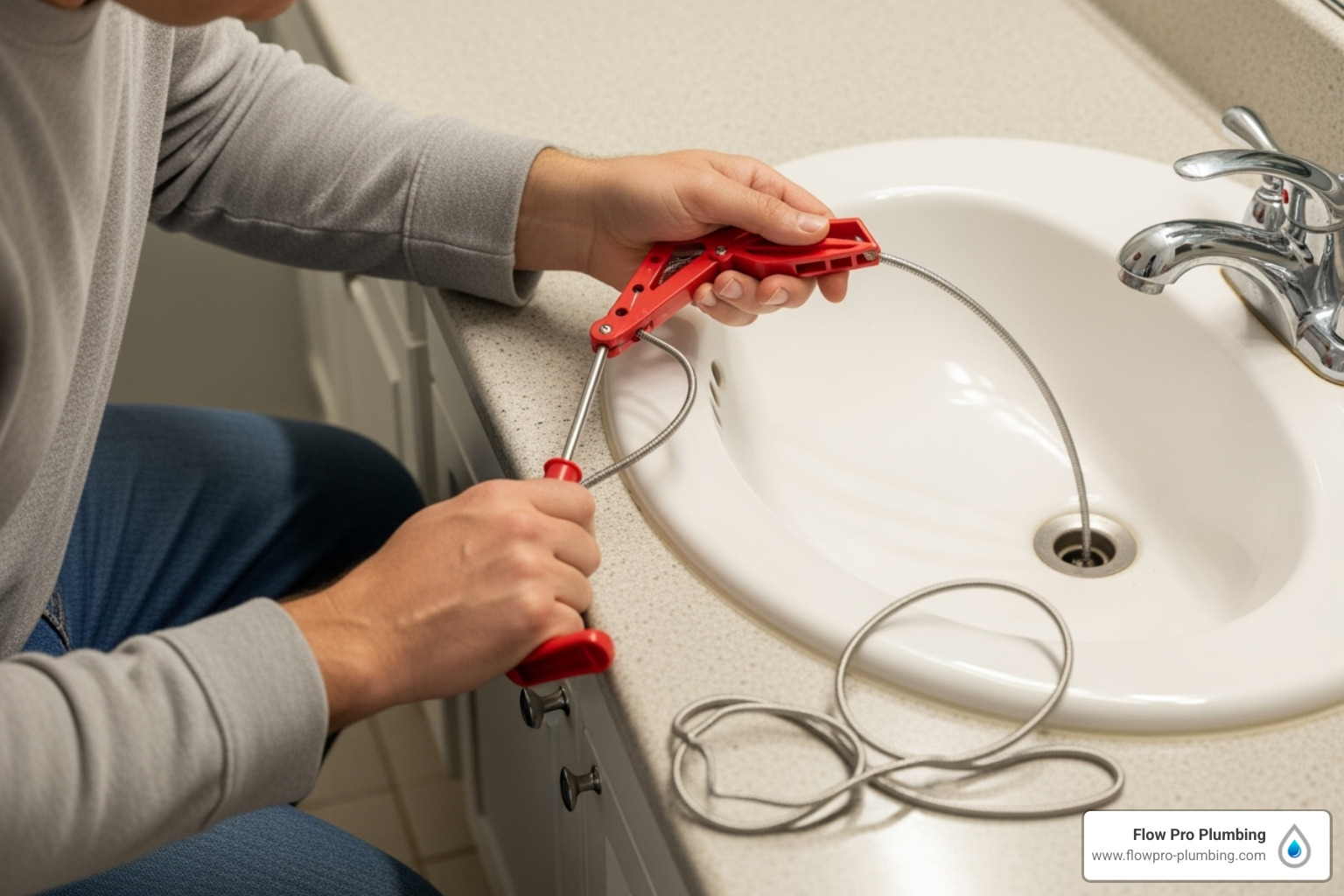
Place a bucket under the P-trap and remove the sink stopper. Gently feed the snake cable into the drain until you feel resistance. Crank the handle clockwise while pushing forward to break through or hook the clog. You may feel the blockage give way or be able to pull it out. Once clear, slowly retrieve the snake and flush the drain with hot water for several minutes.
For more detailed guidance, our article on how to Effortlessly Unclog Pipes: Master the Drain Snake Technique has you covered.
Advanced DIY: How to Clean the P-Trap for Clogged Sink Repair
If simpler methods fail, your clogged sink repair may require cleaning the P-trap. This U-shaped pipe under your sink can be a hiding spot for stubborn clogs.
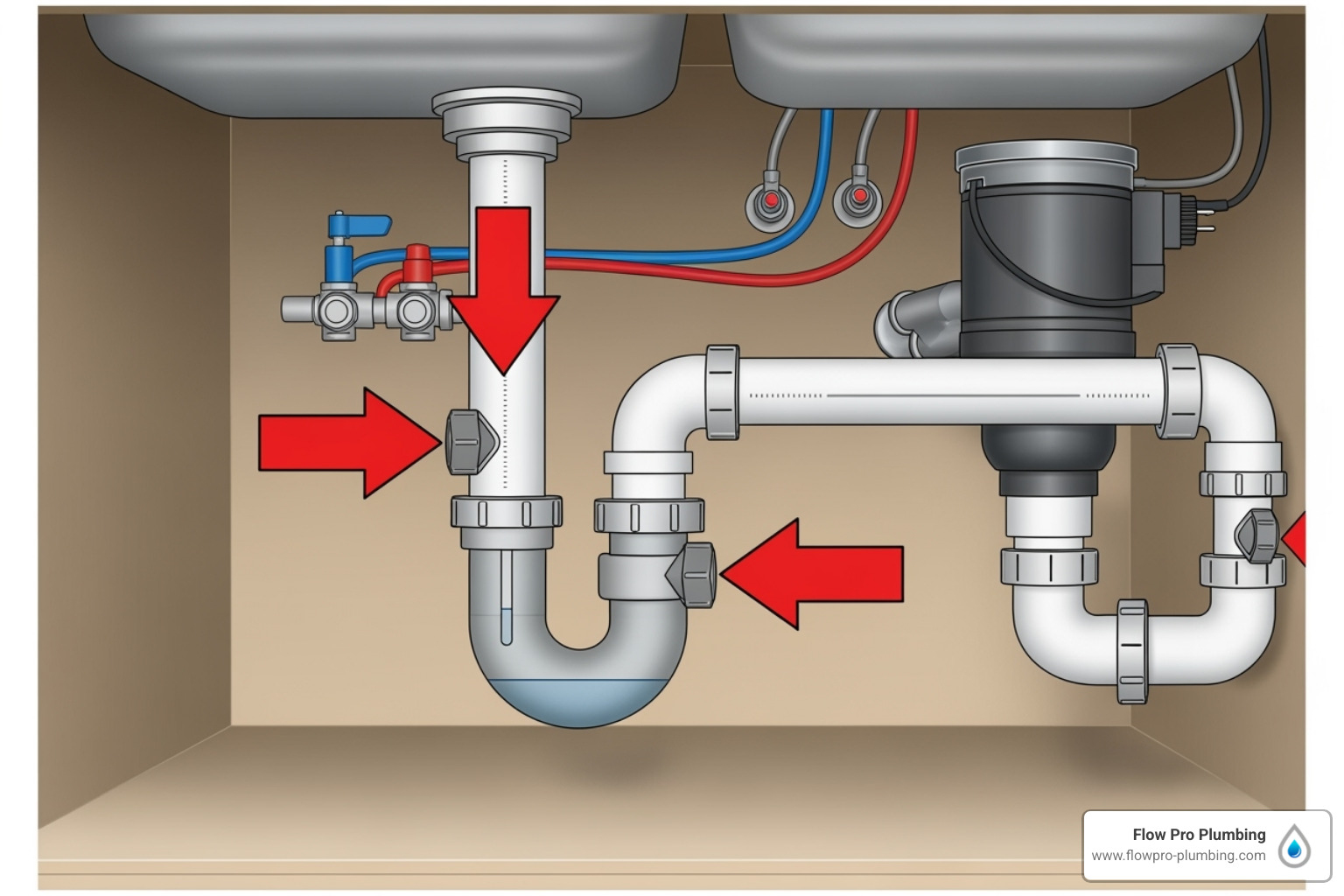
What is a P-trap? This curved pipe serves two purposes: it holds water to prevent sewer gases from entering your home, and it acts as a catch basin for debris. Heavy items, hair, and food particles often settle here, making it a prime spot for blockages.
Before you start, gather your tools: a bucket, rubber gloves, an adjustable wrench, and old towels. This is an excellent intermediate-level DIY solution.
Step-by-Step P-Trap Cleaning
Cleaning the P-trap is often satisfying because you physically remove the source of the problem.
- Place your bucket directly underneath the P-trap to catch water and debris. Clear the cabinet for working space.
- Loosen the slip nuts connecting the P-trap to the pipes. Turn them counter-clockwise with your wrench or by hand.
- Remove the trap by gently pulling it free. Be prepared for water and debris to spill into the bucket.
- Clean out all the debris with your gloved hands or a wire hanger. Rinse the P-trap thoroughly in another sink until it’s completely clear.
- Reassemble by positioning the clean P-trap and hand-tightening the slip nuts. Use your wrench for a final quarter-turn to ensure a snug, watertight seal, but don’t over-tighten plastic parts.
- Test for leaks by running water for several minutes. If you see drips, gently tighten the nuts until the leak stops.
This method is highly effective because you’re physically removing the blockage, providing an immediate fix for your clogged sink repair issue.
Special Cases: Garbage Disposals and Safe Practices
Sinks with garbage disposals require special attention during clogged sink repair. If the unit is humming, jammed, or silent, it’s likely the source of the clog.
Addressing a Clogged Garbage Disposal
Safety first: never reach into a garbage disposal with your hands. Always turn off the power at the switch or breaker panel before you begin.
- Look for obstructions: Use a flashlight to look inside the disposal. Remove any foreign objects like silverware with tongs or pliers.
- Press the reset button: If the disposal is humming or silent, it may have overheated. Locate the small red reset button on the bottom or side of the unit and press it. If it doesn’t stay in, wait 10 minutes for the motor to cool and try again.
- Manually turn the blades: For jams, find the hexagonal hole on the bottom of the unit. Insert a ¼-inch Allen wrench and turn it back and forth to free the grinding plates.
Once it’s working, always run cold water while operating the disposal and for 30 seconds after. To prevent future clogs, avoid putting in fibrous foods (celery, corn husks), coffee grounds, eggshells, or large amounts of starchy foods. For additional tips, you might find this guide on How to Fix a Clogged Sink helpful.
Why to Avoid Chemical Drain Cleaners
While tempting, chemical drain cleaners often cause more harm than good and should be avoided for clogged sink repair.
- Pipe Damage: Harsh chemicals generate intense heat that can soften, warp, or melt PVC pipes and corrode older metal pipes, leading to leaks.
- Health Hazards: They release toxic fumes that are dangerous to inhale and can cause severe burns to skin and eyes.
- Environmental Impact: These chemicals harm local waterways and wildlife.
- Ineffectiveness: They often fail to clear solid blockages like dense hair or grease and can sometimes harden clogs, making them worse.
If you’ve used a chemical cleaner and still need a plumber, please inform our technicians, as the residual chemicals in the water are hazardous. The DIY methods we’ve covered are safer and more effective alternatives.
Prevention and When to Call a Professional
An ounce of prevention is worth a pound of cure, especially for clogged sink repair. Most clogs are preventable with simple daily habits that keep your plumbing flowing smoothly.
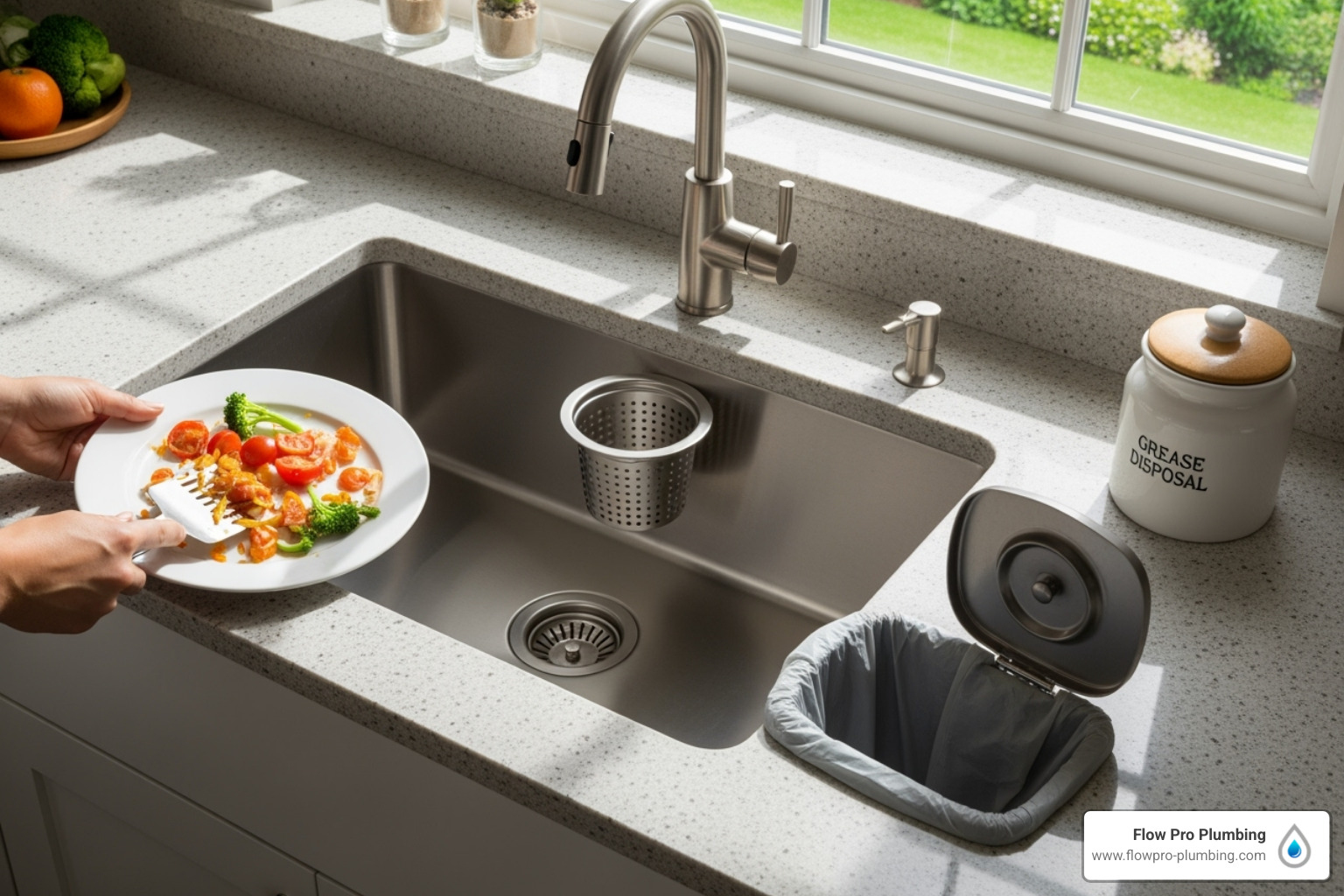
How to Prevent Future Sink Clogs
Being mindful of what goes down your drain is the key to avoiding future headaches.
- Use drain strainers: These simple screens are your first line of defense against hair, food, and soap scum. Clean them regularly.
- Scrape plates before washing: Keep food scraps out of the drain, where they can mix with grease and cause clogs.
- Avoid pouring grease down the drain: Let cooking fats cool and solidify, then scrape them into the trash. This is the single most effective way to prevent kitchen clogs.
- Run hot water after use: Flush your drain with hot water for 30 seconds after washing greasy dishes to help clear any residue.
- Clean sink stoppers: In the bathroom, remove and clean sink stoppers monthly to prevent hair buildup.
For more advice, see our guides on How to Keep Your Home Clog-Free and How to Completely Stop Your Tub From Frequently Backing Up.
Knowing When Your Clogged Sink Repair Needs an Expert
Knowing when to call a professional can save you time, money, and potential plumbing damage. It’s time to call for help when:
- DIY methods fail: If you’ve tried plunging, cleaning the P-trap, and using a snake without success, the clog is likely too deep or severe for household tools.
- Multiple drains are clogged: If your sink, shower, and toilet are all backing up, you likely have a main sewer line problem that requires specialized equipment.
- Clogs recur frequently: Clearing the same sink every few weeks means you’re only addressing a symptom of a larger issue, like significant pipe buildup or tree root intrusion.
- You notice other warning signs: Persistent foul odors or water backing up from other fixtures (e.g., a gurgling shower when you flush the toilet) point to a main line issue.
Our team at Flow Pro Plumbing uses advanced tools like hydro-jetting and video camera inspections to diagnose and resolve tough blockages. We proudly serve homeowners throughout Contra Costa County, including Brentwood, Oakley, Antioch, and surrounding areas. For more information, visit our services page.
Conclusion: Enjoy Your Free-Flowing Drains
We’ve armed you with a toolkit of clogged sink repair methods, from using a plunger or drain snake to cleaning the P-trap. These DIY strategies empower you to handle most common blockages and keep your home running smoothly.
However, the best approach is always prevention. Simple habits like using drain strainers, disposing of grease properly, and scraping plates before washing are your best defense against future clogs.
When a clog is too stubborn for DIY methods, if multiple drains are clogged, or if blockages keep recurring, it’s time to call in the professionals. These signs often point to deeper issues that require specialized equipment.
At Flow Pro Plumbing, our reputation is built on reliable service and unsurpassed workmanship. Our experienced team serves homeowners throughout Brentwood, Oakley, Antioch, and all of Contra Costa County. We’re here to restore your drains to their free-flowing glory.
For stubborn clogs that need an expert touch, contact us for reliable and professional clogged sink repair today!